Twits tweet

November 1, 2012

twit – A silly or foolish person.
to twit – to be in a state of nervous excitement: “we’re in a twit about your visit”

Are all tweeters twits? Is it only twits who tweet?

But there are many types of tweeters:

  1. Low-life tweeters who merely follow: They are rarely interesting except in contributing to trends. This group includes journalists and groupies. Journalists sift through tweets as if rummaging through dustbins looking for a scoop. For groupies there is the delusion of participation; instant and vicarious gratification. Twits
  2. Rich and famous tweeters: These are the people who need their egos to be constantly fed, who must live in the public eye and need reassurance that their fame still lives. They live in perpetual fear of the loss of their fame. Twits
  3. Politicians: They think that their expositions of political policy in 140 characters or less can get them re-elected or make them popular or can get out the young vote or ……..? Twits
  4. Activists, revolutionaries and rabble-rousers: They hunt for subjects to hang their punch lines onto. Success is in getting a trend going or getting a flash mob together. Twits
  5. Would be socialites and socialists. They set up their stalls in the hope that their 140 characters will be perceived as funny, witty, sexy, profound or insightful. They are easily gratified and are quite happy to have manged to expand a thought into something as long as 140 characters. Twits
  6. Corporate tweeters: These are usually overpaid and underworked PR types or advertisers selling something (usually something quite unnecessary) and who live in a fantasy of creating a “hit” or a “best-seller” in 140 characters or less. Twits
  7. Updates
    1. Re-tweeters: Who have nothing original to say for themselves but who try to remain in the thick of things by re-tweeting. Twits

I am unable to find a category of tweeters who could be considered high-class.

There may be tweeters who are not twits. But that remains to be demonstrated. The empirical evidence suggests that all tweeters are twits.

My hypothesis is that only twits tweet. 

“The medium is the message” – Marshall McLuhan

Perhaps the message of the Twitter medium is that the tweeter is a twit.
Superstorm Sandy fizzles to a tropical storm

October 30, 2012

Are US politics and media channels driven by fear-mongering and alarmism?

By the time it hit the US coast, the storm system Sandy which had been hyped by an alarmist media, irresponsible insurance companies and  a frightened set of politicians into the “worst storm ever to hit the US” had fizzled to be a tropical storm.

The National Hurricane Center has downgraded Sandy to a “post-tropical cyclone,” as it approaches the New Jersey coast.

It was no hurricane which hit the US coast.

It was no doubt a severe storm but was it really worth cancelling 8,000 flights for?

The Nobel prize that wasn’t: A self proclaimed scientist with a self proclaimed Nobel prize

October 28, 2012

Michael Mann is no scientist – but he likes to claim he is one.

Michael Mann is no Nobel laureate – but he likes to claim he is one.

Climate “science” is no science – but Michael Mann likes to claim it is.

Time for the so-called “climate scientists” to be held accountable for their alarmism and waste.

The Liverpool Care Pathway: Euthanasia? Or is it execution of the elderly – for convenience?

October 17, 2012

An article in The Telegraph caught my eye while watching the US Presidential debate at my hotel.

A rather disturbing development in the UK and I don’t  like the ethics of the situation. Euthanasia is voluntary but I am not sure that the Liverpool Care Pathway is. It is a pathway which leads to the death of the patient /victim in about 33 hours. I wonder who this pathway serves? At first sight it seems to be primarily for the benefit of hospitals and doctors and health care system costs. Perhaps for relatives.

The Telegraph:

Mary Cooper, 79, died a few days after being put on the Liverpool Care Pathway at the Queen Elizabeth Hospital in King’s Lynn, Norfolk.

The pathway, originally designed to ease the suffering of terminally ill cancer patients in their very last days, is being used more and more widely in NHS hospitals.

The idea behind the LCP is to give patients a ‘good death’ by avoiding unnecessary and burdensome medical interventions.

However, there have been accusations it hastens death because it can involve the removal of hydration and nutrition.

The LCP leads over 100,000 people to death every year – just in the UK. It smacks of execution of the elderly for convenience.

Daily Mail:

There are around 450,000 deaths in Britain each year of people who are in hospital or under NHS care. Around 29 per cent – 130,000 – are of patients who were on the LCP. …. Professor Pullicino claimed that far too often elderly patients who could live longer are placed on the LCP and it had now become an ‘assisted death pathway rather than a care pathway’.

An assisted death for someone who does not wish to die is an execution.

Snuff case is just the tip of the EU corruption iceberg

October 17, 2012

Over the last 30+ years of doing business around the world the one certain indicator for me that corruption is rife and that a bribe is being solicited is when unforeseen delays occur in a permitting or licencing process and/or  when an “approval” is conditional or restricted. Politicians and bureaucrats everywhere use the bidding, procurement and regulatory machinery as their opportunity to line their pockets. And the appearance of sand in bureaucratic machinery is a sure sign that a politician or a bureaucrat is available to remove the sand or to oil the machinery – for a consideration.

The EU is probably the most sophisticated and successful corruptocracy in the world.

Yahoo (Reuters) reports on the latest case of EU corruption to come to light:

 The European Union’s top health official resigned on Tuesday after an anti-fraud investigation connected him to an attempt to influence EU tobacco legislation, the European Commission said.

The EU’s anti-fraud office OLAF found that a Maltese businessman had tried to use his contacts withCommissioner John Dalli, who is Maltese, for financial gain by offering to influence future EU legislation on tobacco products.

“The OLAF report did not find any conclusive evidence of the direct participation of Mr Dalli but did consider that he was aware of these events,” the Commission said in a statement, saying that Dalli had resigned with immediate effect.

Dalli has rejected the OLAF’s findings, the statement said. 

The statement said it was up to Maltese judicial authorities to decide if they wanted to pursue the case.

The OLAF investigation followed a complaint by snuff-and- cigar-maker Swedish Match in May 2012, saying that the businessman – who was not named – sought financial advantages in return for influencing Commission proposals, particularly on the EU’s current export ban on snus, a Swedish-style moist snuff.

“It’s unpleasant that these things happen. We can only hope that the process going forward to create a new directive is transparent and honest,” Swedish Match spokesman Fredrik Peyron said.

“We don’t know all the details that have emerged in this report. But if he has been involved in this it is reasonable (that Dalli resign).”

Snus, which is Swedish Match’s main cash cow, is banned in the EU for health reasons, except in Sweden which negotiated a permanent exemption in its EU accession talks in the 1990s.

Swedish Match hopes the European Commission will lift its ban on snus, which is put under the lip, mostly in pouches. The Swedish government has been pushing for a lifting of the ban, saying the health risks are not proportionate to the ban.

Blogging will be light and sporadic

October 17, 2012

I am on the road on an assignment and shall then be attending a family wedding.

Blogging will be light and sporadic for 2 weeks or so.

Idle thoughts: On time and change and states of stasis

October 13, 2012

Idle thoughts:

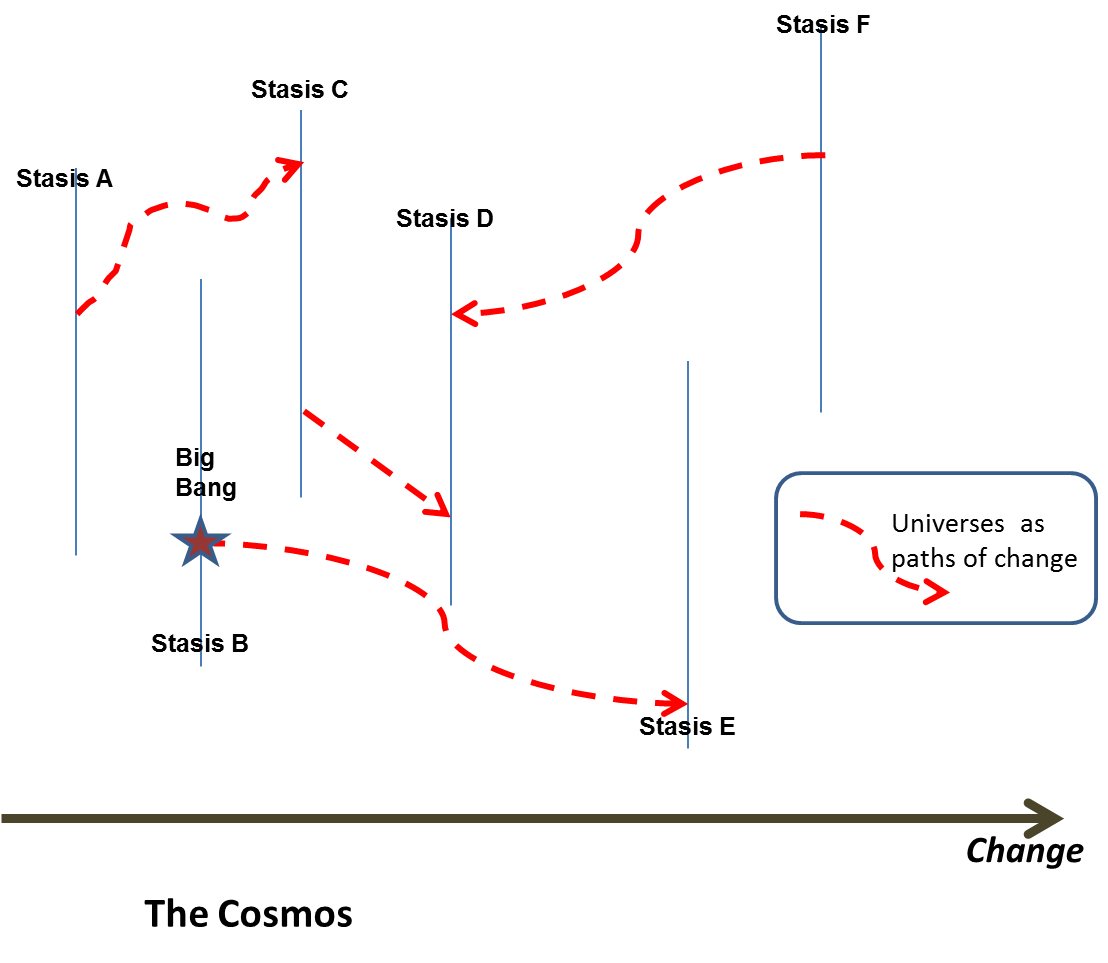
The riddle of whether change and time are interrelated or independent. And which comes first? Within our cosmos perhaps we have many different states of stasis with paths by which these states can be connected. Our universe could then just be one specific change journey, on one particular path between two states of stasis along an axis of change. Perhaps time begins after change gets going. Where the change journey started with the Big Bang and where the end will be in another state of stasis at the end of time – and the end of change.  

Time and change and states of stasis (pdf)

The Cosmos

120 years on and Chekhov’s depressive alarmism has not changed

October 13, 2012

I was listening to BBC radio this morning where somebody was talking about a new production of Chekhov’s Uncle Vanya. The play was written in 1896 and the speaker quoted this line from the play:

“There are fewer and fewer forests, rivers are drying up, wildlife has become extinct, the climate is ruined, and the earth is becoming ever poorer and uglier.”

“Prescient” commented the speaker.

Prescient? I wondered. There is no shortage of forests, climate continues its normal cycles, some species have died and new ones found and the world has become richer and cleaner. No, just a depressed Russian of the 1890’s, and one without hope or any belief in the ingenuity of humans. Not prescient, just another alarmist now proven wrong.  And his kind of Malthusianism is alive and well even today – and is just as wrong.

In 1897 the world population was 1.5 billion with about 60% living in poverty. Life expectancy was about 32 years (average). At that time some 600 million people were being fed clothed and supported in a reasonably satisfactory way. In 2012 the world population has grown to 7 billion with about 25% still living in poverty (and the threshold for poverty has changed drastically). Average life expectancy is now 67 years. Today some 5 billion people are fed and clothed and supported in a reasonably satisfactory way. Almost 10 times as many as in 1896.

In another 120 years the current sayings of the Malthusians, the climate alarmists, the energy alarmists, the food alarmists, the resource alarmists and the bio-diversity alarmists will seem equally ridiculous. World population will probably stabilise at about 10 billion (at the current rate at which fertility rates are reducing) in the next 50 years or so. The challenges then will be the complete eradication of poverty and the biggest barrier may then be a shortage of “working” population.

By 2140 we will be close to 2.1 children per woman, studying longer (say till 27), working  for 45 years (till say 72) and living much longer – say 85 years (on average). Maybe less than 5% of 10 billion people will be living in poverty. Hunger and malnourishment will have almost disappeared. It may well be that it is the proportion of “working population”  which becomes the limiting factor in satisfactorily maintaining the young and the elderly.

But there will  still be no Malthusian resource crunch.


Nobel Peace Prize committee has become ridiculous

October 12, 2012

The European Union has been awarded the Nobel Peace Prize for 2012 and the choice only confirms that the Peace Prize has become ridiculous and irrelevant and has little to do with Peace in the World. The brand value of the Nobel prize is only damaged by the bizarre choices of the Norwegian committee which chooses the recipients.

Present Norwegian Nobel Committee

The present Norwegian Nobel Committee (from left): Geir Lundestad (secretary), Gunnar Stålsett, Berit Reiss-Andersen, Inger-Marie Ytterhorn, Kaci Kullmann Five and Thorbjørn Jagland (leader) © Photo: Odd-Steinar Tøllefsen / Norwegian Nobel Institute

The recipient is selected by the Norwegian Nobel Committee, a 5-member committee appointed by the Parliament of Norway and which is now becoming a laughing-stock. The laureates chosen in this century demonstrate that the Committee is living in some dream world of its own. That the choice is a political choice is inevitable. But in this century the choices have all represented a “political correctness” which has bordered on the cowardly. The recipients have had very little – by way of achievements – to do with the furthering of peace in the world. Liu Xiaobo  may be a very worthy individual but what on earth has he done for world peace? Barrack Obama was chosen on hope and not for anything achieved. The three winners in 2011 were chosen from a politically correct desire just to prove that developing countries and women  were not being ignored. Al Gore & Co. were a sop  to politically correct alarmism and not for any achievement. The choice of the United Nations was because nobody else could be thought of. Muhammad Yunus and the Grameen Bank may well have contributed to the development of rural areas (though not without controversy) but they did nothing for world peace. Martti Ahtisaari – for one – had actually been an effective mediator and he was at least active in the right field. But his achievements were not something so very extraordinary in the world context. The International Atomic Energy Agency made a complete hash of Iraq and its WMD. And what on earth did Wangari Maathai or  Jimmy Carter or Shirin Ebadi or Kim Dae Jung actually achieve for world peace?

This year’s choice of the European Union is about as ridiculous as they come. NATO would be a more relevant choice – but politically incorrect.

Alfred Nobel would not be pleased.

2012 The European Union (EU)
2011 Ellen Johnson Sirleaf, Leymah Gbowee and Tawakkol Karman
2010 Liu Xiaobo
2009 Barack H. Obama
2008 Martti Ahtisaari
2007 Intergovernmental Panel on Climate Change (IPCC) and Albert Arnold (Al) Gore Jr.
2006 Muhammad Yunus and Grameen Bank
2005 International Atomic Energy Agency (IAEA) and Mohamed ElBaradei
2004 Wangari Maathai
2003 Shirin Ebadi
2002 Jimmy Carter
2001 The United Nations ( U.N.) and Kofi Annan
2000 Kim Dae Jung

The demise of coal has been greatly exaggerated

October 11, 2012

Reality Check.

The death of coal utilisation or the exhaustion of coal reserves is not even a glimmer on the world’s energy horizon — thank goodness.

Add to this the fact that carbon dioxide concentrations in the atmosphere (and man made CO2 emissions are a minor contribution to this concentration) simply have no significant effect on climate. Trying to control climate by reducing man-made carbon dioxide emissions must rank as one of the world’s most useless and wasteful efforts in the last 30 years.

Terence Corcoran writes in the Financial Post:

….. The idea that coal is dying seems to be mostly wishful thinking on the part of green activists, as well as some politicians and regulators in the United States and parts of Canada. Ontario aims to end dirty coal-fired power generation, at great cost to consumers who are now paying high prices for the putative clean alternatives, wind and solar. The United States, via regulation from the Environmental Protection Agency, has established rules that are said to present the coal-power industry with a “dead end.”

Read the rest of this entry »