The Cancun hype begins – but it is all about money not climate

November 22, 2010

With one week left before the Cancun circus begins (UN/ IPCC Climate Conference from 29th November to 10th December), the mainstream media hype has begun.

Global CO2 expected to rise to record levels screams the Daily Telegraph. Carbon dioxide (CO2) emissions are expected to reach record levels this year, according to a new study, despite the recession and global efforts to reduce greenhouse gases – but what that has to do with climate is uncertain. No doubt it has a great deal to do with pricing of the Carbon Trading market. As The Telegraph points out (inadvertently perhaps) this is just hype timed to come just before the UN jamboree.

The results of the study by the Global Carbon Project will be used to put pressure on environment ministers meeting in Cancun, Mexico this month for the latest UN meeting to come to a global agreement on cutting emissions.

The Cancun meeting itself is all about money and Carbon Trading. The collapse of the Chicago exchange and the growing realisation in Europe that Carbon Trading is just a scam is leading all those with a vested interest in carbon pricing to raise the spectres of carbon dioxide again.  Hopefully these efforts will be as useless as at Copenhagen but some “trading” being introduced through the back door is always a possibility.

The two main “money flows” that Cancun is concerned with is the carbon trading fraud and the diversion of funds to “developing” countries to reduce their emissions of carbon dioxide. Just as with the Nagoya biodiversity conference a key objective is the redistribution of wealth. In fact biodiversity and climate are merely convenient scare stories which can act as vehicles for arranging for the flow of funds. A UN IPCC official admitted as much when talking about climate policy:

OTTMAR EDENHOFER, UN IPCC OFFICIAL: “That will change immediately if global emission rights are distributed. If this happens, on a per capita basis, then Africa will be the big winner, and huge amounts of money will flow there. This will have enormous implications for development policy. And it will raise the question if these countries can deal responsibly with so much money at all”.

Bleak future for wind power generators in Sweden

November 22, 2010

Swedish P1 Radio had a broadcast this morning where wind turbine owners in southern Sweden were interviewed. Wind turbines in Southern Sweden operate at an average capacity of about 25% but when the wind blows in in Sweden it usually blows in Denmark as well. As Denmark builds more subsidised but intermittent wind turbines they become more dependant upon the import of hydro and nuclear power from Sweden and Norway.

It could be a dark future for wind power, at least for wind power owners in southern Sweden. As wind turbines multiply, the surplus power when the wind blows reduce prices and wind turbine revenues are reduced drastically.

The Marketing Director for Lunds Energi said that they had no plans for building any more wind turbines to add to the 6 small wind turbines they already had.  There was no chance, he said, of the Danes importing wind power from Sweden when the wind was blowing for then they had their own power. And when the wind was not blowing and prices were better there was no power to sell!

Vindkraftverk i Vänern. Foto: Fredrik Sandberg/Scanpix

Wind power plant in Lake Vännern. Foto: Fredrik Sandberg/Scanpix

Kjell Jansson, the Managing Director of Svensk Energi was also interviewed and pointed out that electricity could not be stored except as hot water. Therefore using surplus wind energy to store in heating systems was at best a partial solution but did not help the fact that industry and people needed electricity as electricity – and not just as hot water. Even the planned Danish solution of using surplus power to “charge up” heating systems for district heating as hot water or for “charging up” electric cars relied on having electricity – from nuclear and hydro power from Sweden and Norway – available to be imported for the Danish electricity system.

Therefore, he continued, when the wind did not blow in Denmark  – and then usually did not blow over the whole of Scandinavia – the high electricity price was an advantage for the hydro and nuclear generators. In any case this would require much more investment in transmission systems and in hydro power generation.

But I can see a situation where Denmark will pay swingeing prices for imported electricity when the wind is not blowing and a cold wave is sweeping across Europe. And if it is a really severe cold wave then there may be no electricity available for import.

The art of neurogenesis

November 21, 2010

http://thebeautifulbrain.com/2010/11/gallery-the-art-of-neuroscience-vol-iii/

Neurogenesis– the creation of new neurons in the brain– was conventionally believed to only occur in the growing brains of infants and children.  In the 1960s, data started appearing that showed the birth of new neurons in adult, fully formed brains.  Now, 40 years later, adult neurogenesis is one of the more robust fields of study in the neurosciences.

Jason Snyder studies adult neurogenesis in Heather Cameron’s lab at the National Institute of Mental Health in Bethesda, MD.  Snyder’s research focuses on neurogenesis in the hippocampus, highlighting the role of these new neurons in such fundamental behaviors as memory formation and learning.

Here are some of Snyder’s images made using electrophysiological techniques for studying the brain.

Further images can be enjoyed at The Beautiful Brain:

GFAP and TK staining around the ventral portion of the 3rd ventricle: image Jason Snyder

Tissue stained for doublecortin and NeuN: image Jason Snyder

Time to postpone Haitian elections?: UN cholera “unusual, swift and severe”

November 21, 2010

ff

Upplopp i Port-au-Prince under fredagen.

Protests in Port-au-Prince on Friday 19th November: image Svenska Dagbladet

The cholera in Haiti has spread to the prison in Port-au-Prince. Of the 2000 prisoners over 30 have shown signs of infection and 13 have died. The official death toll in Haiti is now over 1200 and the official number of those infected is over 20,000. The actual number infected is probably approaching 100,000.

AFP reports that:

Haiti is facing an “unusual” cholera epidemic that could be more severe than figures suggest, according to a French cholera expert who is advising Haitian health authorities. And determining who is to blame for bringing the disease here won’t help solve the crisis, he added.

The outbreak, which threatens to overwhelm Haiti as it struggles to recover from January’s cataclysmic earthquake, has left nearly 1,200 dead and prompted riots in several cities including the capital as citizens accuse the United Nations of importing the cholera.

But Doctor Gerard Chevallier, who is advising Haiti’s Health Ministry, warned that the country needs to focus on trying to halt the spread of the disease detected in Haiti one month ago.

“The mechanics of the epidemic are unusual, swift and severe,” Chevallier told AFP in an interview. “The whole country is not affected, but the epidemic will spread.” Chevallier noted that in such epidemics, especially in impoverished nations like Haiti, the toll is “under-assessed” and almost always higher than the official figure. “Reports are imperfect. There are areas where people die and nobody knows,” Chevallier said. “Two thirds of the territory is accessible only on foot.”

Chevallier is working with a French team seeking to provide Haitian authorities with tools that allow for a more complete and reliable picture of the epidemic.

To merely ignore or deny the cause of the outbreak because containing it is now the highest priority does not address the emotions in the local population which are running very high. In the local population fear is exacerbated by anger that the UN which is virtually running the country is not owning upto its responsibilities.  After a hundred years without cholera Haiti is now condemned to many decades of having the disease and the UN cannot continue in denial.

It is not the fault of the Nepalese troops who were the carriers of the disease but it is a terrible indictment of sloppy UN processes which allowed them into the country without testing and without adequate precautions.

It is time for the elections due to be held on 28th November to be postponed. Trying to pack people into polling booths while the epidemic is raging seems to be the height of stupidity. AFP also reports that four Haitian presidential candidates have called for postponing elections set for Nov 28 as the country struggles with a cholera epidemic that has claimed nearly 1,200 lives amid protests targeting UN peacekeepers.


Duke Danfu’s 3000 year old fruit cellar found

November 21, 2010

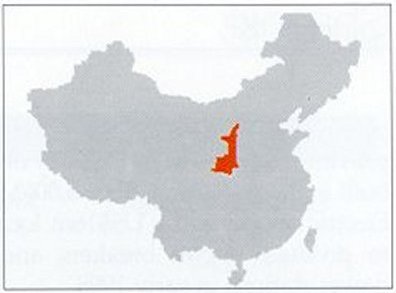
Chinese archeologists have found an ancient fruit cellar containing well-preserved apricot and melon seeds from more than 3,000 years ago in today’s Shaanxi Province reports Xinhua.

Shaanxi Province

Xian, the capitol of Shaanxi Province is better known for its tombs and terra-cotta soldiers. Xian was also the starting point of the Silk Road and home of the Banpo people, a Neolithic culture that lived in the area 8,000 years ago.

Situated at the south foot Qishan Mountain in the west of Shaanxi Province, Zhouyuan was the home of Duke Danfu, an early leader of the Zhou clan. It was the centre for the rise of the Western Zhou.

Covered ritual wine vessel (gong) 1050-900 BCE...

Western Zhou dynasty bronze c. 1000 BC: Image by mharrsch via Flickr

Nearly 800 pieces of bronzeware of the Western Zhou Dynasty, in varied sizes, have been excavated form the Zhouyuan Site, together with large palace foundations and inscribed oracle bones.

From Xinhua

The cellar was a rectangular pit about 105 cm long, 80 cm wide and 205 cm deep, said Dr. Sun Zhouyong, a researcher with the Shaanxi Provincial Institute of Archeology. Sun and his colleagues found the pit in 2002, about 70 cm underground the Zhouyuan site, ruins of Western Zhou dynasty (1046-771 BC) 100 km from Xi’an. After eight years of research, they concluded it was a cellar used to preserve fruits for aristocrats.

In each corner of the pit, Sun and his colleagues found a little round hole. “We assume the cellar had something like a shade that was fixed on the four holes but had decayed over the years.” Inside the cellar the researcher could see, even with naked eye, huge piles of nuts and seeds. “We sorted them out with care, and found about 500 apricot nuts — 108 of which were complete with carbonized pulp, at least 150 melon seeds and 10 plum seeds,” said Sun. They also found millet and grass seeds.

“Most of the seeds were intact and very few were carbonized,” said Sun. “It was so amazing that scientists who conducted lab work suspected they were actually put away by rodents in more recent times.” Sun and his colleagues sent three apricot nuts to Beta Analytic in Florida, the United states, last year for carbon 14 test to determine their age. “The test results indicated they were about 3,000 years old, dating back to a period between 1380 B.C. and 1120 B.C.,” said Sun. “Seemingly the fruits had been stored in an acidic and dry environment, so dehydration was extremely slow and the nuts were not carbonized even after so many centuries.”

Zhouyuan site, where the cellar was unearthed, was believed to be a dwelling place for Duke Danfu, an early leader of the Zhou clan. It was known as the cradle of the Western Zhou Dynasty, one of the earliest periods of China’s written history. “Presumably, the aristocrats had stored fruits in their family cellar,” said Sun. The cellar, with roughly 1.7 cubic meters of storage, could store up to 100 kilograms of fruits, he said.

The Book of Rites, a Chinese history book compiled in the Western Han Dynasty (202 BC-9), put melons, apricots, plums and peaches among the 31 categories of food favored by aristocrats of the time. It said people in the Zhou Dynasty had also learned to grow fruit trees in orchards. A poem in the “Book of Songs”, a collection of poetry from the Western Zhou Dynasty (11th century -771 BC) to the Spring and Autumn Period (770 – 475 BC), says food kept in “ling yin” — meaning cool places — will stay fresh for three days in the summer.

Before the fruit cellar was reported, archeologists in Shaanxi Province found a primitive “icebox” that dated back at least 2,000 years ago in the ruins of a temporary imperial residence of the Qin Dynasty (221 BC – 207 BC). The “icebox”, in the shape of a shaft 1.1 meters in diameter and 1.6 meters tall, was unearthed about 3 meters underground in the residence.

Flights resume from Yogyakarta, Mt. Merapi quiet

November 21, 2010

AFP reports:

Indonesia’s Yogyakarta airport, which had been closed for about two weeks by the eruption of the Mount Merapi volcano, reopened for operations Saturday, officials said.

Merapi, which means “Mountain of Fire”, has killed 283 people since it began erupting last month and more than 270,000 are still living in temporary shelters.

Volcanic ash and clouds belched high into the sky threatened the safety of aircraft, causing dozens of international flights to and from the country to be cancelled.

But the mountain’s activity level has now decreased, although an alert remains in place.

Transportation Ministry director general of aviation Herry Bhakti told AFP: “The Yogyakarta airport has resumed operation at 12:00 pm (0500 GMT) today. The effect of volcanic ash has been insignificant.”

What did Rolls Royce know and when?

November 20, 2010

Rolls Royce have been conspicuously silent but it is now emerging from the airlines that Rolls Royce knew something was amiss with the older versions of the Trent 900 long before the engine failure on QF32 on November 4th. The indications are that they had serious doubts about the unmodified engines by May this year – and perhaps even earlier.

I posted my assessments about this on November 14th and 15th.

Did Rolls Royce know about the risk for a Trent 900 failure before the Qantas accident?

Problem with Trent 900 was known before accident and raises ethical questions

From an AP report via Yahoo Finance

Rolls-Royce modified a problematic section on new models of its engine for the world’s largest jetliner months before one caught fire and blew apart over Indonesia, a Lufthansa spokesman said Thursday.

The chief executive of Qantas, meanwhile, said Rolls-Royce had made modifications to the Trent 900 engine without telling the airline or Airbus, which makes the A380 superjumbo.

The officials’ remarks were the strongest indication yet that Rolls-Royce had addressed a defect in new models of the engine while allowing Airbus A380 superjumbos to continue flying with unmodified older models.

Lufthansa’s first A380, delivered by Airbus on May 19, had three newer versions of the Trent 900 engine and one older version, airline spokesman Thomas Jachnow said.

“When we got our first aircraft it was curious that one was from an older one and three were totally new from the production line,” Jachnow said. “I think this is more or less the cusp where the old to new happened.”

The Daily Telegraph carries a similar story:

The two airlines said Rolls had not informed them about the changes to the Trent 900, although sources close to the industry played down the modifications as “continuous improvements” and said reports that the changes related to the part that caused the oil leak on the Qantas A380 were “plain wrong”.

Rolls shares fell 11½, or 2pc, to 592p.

Investors are wary that the incident could cost Rolls customers. It is understood there are 22 A380s – bought by Qatar Airways, Kingfisher, Etihad and Air Austral – which are yet to decide whether to use the Trent 900 or a rival made by GE and Pratt & Whitney.

According to Alan Joyce, Qantas chief executive, up to 40 engines could be replaced. Mr Joyce also claimed that Rolls had already been changing the engine. “Rolls-Royce have gone and modified certain parts of this engine,” he stated. “If this was significant and was known to be significant, we would have liked to have known about that. We and Airbus weren’t aware of it. But it depends on what the purpose of modifications were for. It doesn’t look like it’s a significant modification, but it is a modification that has an impact on how the engines are performing.”

A Lufthansa spokesman said it had noticed differences in newer versions of the Trent 900 it had been sent.

In addition to all their technical and logistic issues, Rolls Royce now need to urgently address their loss of credibility and provide detailed answers to:

What did Rolls Royce know and when did they know it?


Haiti response inadequate and UN Head of Mission seems incompetent

November 20, 2010

The UN after having introduced cholera to Haiti – which will now remain for many decades – is providing an “inadequate response” according to Medecins Sans Frontieres (MSF) says the BBC.

MSF said that despite the huge aid agency presence in Haiti, urgent needs were not being met. MSF’s chief in Haiti, Stefano Zannini, said the charity had treated more than 16,500 people but that there had been “no real and efficient response from other organisations. This is alarming in the sense that we haven’t reached the peak yet, that might take some time, and so the number of patients might still go up while we still don’t see actions on behalf of other people,” he said.

In a statement, Mr Zannini said more help was urgently needed to treat the sick and implement preventative measures. “There is no time left for meetings and debate – the time for action is now,” he said. Cholera was previously unknown in Haiti, so MSF said much work had to be done to reassure the population, particularly of the low risk and positive benefits of having treatment centres close to areas where people live.

Haiti - Insecurity : The alarmist statements of Edmond Mulet !

Edmond Mulet: image haitilibre.com

But the need for this reassurance to the local population is apparently not something understood by Edmond Mulet, the head of MINUSTAH (the United Nations Stabilization Mission in Haiti). He seems to be mainly engaged in justifying the UN deficiencies by blaming the lack of action on “the violent protests by people who blame peacekeepers for the spread of the disease (who) were wasting time and costing lives”.

But local Haitians are incensed by the alarmist posturing of the UN head of mission Edmond Mulet who is accused of not taking action. He is busy blaming everybody else and seems to be incompetent at basic public relations.

Judging by the response to his statements in haitilibre.com he is providing little reassurance and only succeeding to alienate the local population. They write

The alarmist statements of Edmond Mulet !

The perpetrators of these “criminals and irresponsible” acts said Mr. Mulet, “prevent the delivery of medical and sanitary assistance to the thousands of patients recently hit by the cholera epidemic, thus condemning to an unquestionable death.”

It is time to stop speaking and start acting Mr. Mulet before it is too late and that violence will spread throughout the country. 12,000 men strong, very well equipped and (with) armored vehicles, what awaits Minustah to release these roads and to restore the order in the zones concerned ? If Minustah’s mission is to maintain peace, she must first begin by eliminating the causes of these disorders, not with dramatic speeches.

If M. Mulet can only respond to the fear of people by blaming them instead of addressing their fear and anger then his competence is in question.

Now Wall Street to crack down on insider trading

November 20, 2010

Two days after the Tokyo Stock Exchange attacked the “rampant” insider trading prevalent in Japan, US federal authorities after a three-year investigation, “are preparing insider-trading charges against consultants, investment bankers, hedge-fund and mutual-fund traders and analysts across the nation” according to the Wall Street Journal. Where Tokyo calls it “rampant” the US calls it “vast” and “pervasive”.

The criminal and civil probes, which authorities say could eclipse the impact on the financial industry of any previous such investigation, are examining whether multiple insider-trading rings reaped illegal profits totaling tens of millions of dollars, the people say. Some charges could be brought before year-end, they say.

The investigations, if they bear fruit, have the potential to expose a culture of pervasive insider trading in U.S. financial markets, including new ways non-public information is passed to traders through experts tied to specific industries or companies, federal authorities say.

Among the expert networks whose consultants are being examined, the people say, is Primary Global Research LLC, a Mountain View, Calif., firm that connects experts with investors seeking information in the technology, health-care and other industries. “I have no comment on that,” said Phani Kumar Saripella, Primary Global’s chief operating officer. Primary’s chief executive and chief operating officers previously worked at Intel Corp., according to its website.

In another aspect of the probes, prosecutors and regulators are examining whether Goldman Sachs Group Inc. bankers leaked information about transactions, including health-care mergers, in ways that benefited certain investors, the people say. Goldman declined to comment.

Independent analysts and research boutiques also are being examined. John Kinnucan, a principal at Broadband Research LLC in Portland, Ore., sent an email on Oct. 26 to roughly 20 hedge-fund and mutual-fund clients telling of a visit by the Federal Bureau of Investigation.

“Today two fresh faced eager beavers from the FBI showed up unannounced (obviously) on my doorstep thoroughly convinced that my clients have been trading on copious inside information,” the email said. “(They obviously have been recording my cell phone conversations for quite some time, with what motivation I have no idea.) We obviously beg to differ, so have therefore declined the young gentleman’s gracious offer to wear a wire and therefore ensnare you in their devious web.”

The investigations have been conducted by federal prosecutors in New York, the FBI and the Securities and Exchange Commission. Representatives of the Manhattan U.S. Attorney’s office, the FBI and the SEC declined to comment.

Another aspect of the probe is an examination of whether traders at a number of hedge funds and trading firms, including First New York Securities LLC, improperly gained nonpublic information about pending health-care, technology and other merger deals, according to the people familiar with the matter.

Read the article:

http://online.wsj.com/article/SB10001424052748704170404575624831742191288.html?mod=WSJ_hp_LEFTTopStories

Rolls Royce will face costs of over 300 million $ to fix the Trent 900 problems

November 19, 2010

Rolls Royce now faces direct costs for replacement of 40 Trent 900 engines, compensation claims from Airbus and from the airlines involved and lost opportunity costs as the Trent 900 inevitably loses market share to the General Electric / Pratt & Whitney Alliance GP 7200 engine. These could add up to around 300 million $ for fixing the Trent 900 problems and that is a best case scenario which assumes that they have not been negligent in knowingly supplying unfit engines. The cost of the consequent loss of market share cannot be easily quantified.

Airbus has already signalled that it is preparing its compensation claims for the additional costs incurred by diverting new engines from the Airbus production line to the replacement of faulty engines for Qantas, Singapore Airlines and Lufthansa. Any consequent delays to the aircraft under production at Airbus will no doubt lead to further penalties for Rolls Royce. The airlines are also, I am sure, preparing their compensation claims. Qantas is said to be losing one million dollars for every day without its A380’s. The fleet has been grounded for 15 days so far and it seems likely that this may last another 2 or 3 weeks and maybe for the rest of the 2010 calendar year. Qantas has already prepared its summer schedules based on no A380’s being available. Singapore Airlines has restarted its A380 flights.

In most supply contracts the consequential business losses at the airlines would not normally accrue to Rolls Royce but if it can be shown that the faulty engines delivered by Rolls Royce were “not fit for service” or – even more damagingly – that Rolls Royce were aware of the faults when the engines were delivered then Rolls Royce could be liable for massive damages and even for criminal negligence. In fact it would be comparable to issuing a cheque with no money in a bank account which could be construed as criminal negligence and fraud. Certainly it seems that Rolls Royce has known for some time that some of the engines delivered were “not fit for service” and it is highly unlikely that they could completely escape paying some compensation to the airlines. If the method of operation or maintenance by Qantas could be shown to be a contributory factor then Rolls Royce would have had some possibility of resisting the claim and of mitigating the penalties. But if the engines were “unfit for service” to begin with, then it even becomes possible for Airbus and the airlines to make claims for “loss of reputation” in addition to claims for loss of business. There is no viable defence at all if Rolls Royce knowingly supplied unfit engines.

A Trent 900 engine has a price of about 30 million $ and a complete A380 sells for about 320 million $. The direct cost for the engine rectifications for 40 engines is likely to be around 100 million dollars and this could easily increase to 300 or 400 million dollars with the compensation claims mainly from Airbus and Qantas. The Singapore Airlines and Lufthansa claims for compensation will not be small but will be significantly lower than the claims from Qantas. But if Rolls Royce has been negligent- whether criminally or not – then all bets are off and I think costs could escalate to be of the order of one billion dollars.

While the direct costs and compensation – once settled – can be quantified, the effects of loss of market share is potentially even more damaging but much more difficult to quantify. Since there are only 2 engine suppliers I would estimate that Rolls Royce will lose at least 5% market share to its rival as a consequence of this incident.

From my previous knowledge of the costs of fixing problems with land based gas turbines (more than 1 billion $ each for General Electric with their F-class Frame 7 and Frame 9 machines and for Alstom  and Siemens with their versions of F-class machines), I would be looking for Rolls Royce to provide – as a matter of prudence – for at least 200 million £ (300 million $) during this quarter. Rolls Royce will need to sell around 100 new engines just to recover this cost.

From an investor perspective I find the lack of communication from Rolls Royce inexplicable and suggestive that there has in fact been some negligence.