Mount Merapi winds down and Indonesia plans ending of Emergency period

November 19, 2010

The Indonesian news agency ANTARA reports that:

The government is to end the emergency response period for the Mount Merapi eruption disaster on November 24, a cabinet member said.

“We will maintain the emergency response period until November 24. Whether the period will be extended or not will depend on the situation,” Social Welfare Minister Salim Segaf Al-Jufri said.
Speaking to newsmen on when visiting Magelang district on Thursday, he said Mt Merapi evacuees could return home after the volcano`s “beware” status had been lowered.

After the end of the emergency response period, the National Disaster Management Agency (BNPB) would begin implementing the reconstruction and rehabilitation programs for Mt Merapi victims, he said. “Houses that have been damaged or destroyed will be rebuilt and people who have lost cattle will be financially compensated. The funds to pay for people`s dead cows would be taken from the state and regional government budgets”, he said.
Salim Segaf Al-Jufri further said his ministry had at its disposal Rp397 billion in funds to help disaster victims. Eighty percent of the amount was to meet the victims` physical needs and the rest for operational expenses. But there also was more than Rp3 trillion in stand-by funds to respond to the needs of reconstruction and rehabilitation, he added.
Mount Merapi had erupted repeatedly in the past two or three weeks but its most fatal eruptions occurred on October 26 and November 5. As a result of the eruptions, at least 259 people had perished and many others sustained burns and became displaced.
Topographischer Atlas zur Reise durch Java: Magdeburg, Verlag E. Baensch 1845
via wikipedia.de.
Merapi from the South
File:Merapi-Suedseite.jpg

Rampant insider trading at Tokyo Stock Exchange

November 19, 2010
The main trading room of the Tokyo Stock Excha...

Tokyo Stock Exchange: image via Wikipedia

That insider training is endemic at all major stock exchanges is a modern-day legend. Evidential proof of insider trading is also notoriously difficult. Regulators are usually more concerned about the more “sexy” malfeasance a la Enron or a Madoff but usually long after the event and where recovery of losses is insignificant (Madoff caused 65 billion of losses and auction of his personal possessions by US Marshalls raised just 2 million dollars). If I am a little cynical it is because the actual creation and growth of real wealth (by actually making things that are wanted or providing real services that are needed) seems to be less important and less appreciated than the inflating of values (by creation of bubbles) and redistributing the artificially created “wealth” by “smart” methods.

Many of the statements and actions of the regulators are mainly for public relations purposes and sometimes lead to a few high-profile prosecutions. It is very rare for any small investors to recover what they may have lost as a consequence of fraud. Nevertheless it is always good to see the regulators have some success. Asahi News reports that

Financial authorities are taking action to prevent what has been embarrassingly described as “rampant” insider trading through short selling on the Tokyo Stock Exchange. The Securities and Exchange Surveillance Commission (SESC) is looking into allegations of insider trading of certain stocks on the TSE, but declined to disclose the issues or amount traded. The Financial Services Agency (FSA) and the TSE, meanwhile, are considering tighter rules on short selling.

“We hear from overseas investors that insider trading is rampant in Japan. It’s a grave issue,” a senior TSE official said. In short selling, investors borrow shares from brokerages or stockholders under expectations the price will drop. They sell them and buy them back for a profit after the price drops, returning the same number of shares to the lender.

Insider trading suspicions have been raised over the public stock offerings by Tokyo Electric Power Co. (TEPCO), Nippon Sheet Glass Co. and INPEX Corp., which were announced between July and September. The stock prices of all three firms plunged before the announcements of their public stock offerings.

TEPCO, for example, made public it would raise 550 billion yen ($6.6 billion) on Sept. 29 at 4:30 p.m.–after the close of trading. Earlier in the day, however, large volumes of TEPCO stock, six to 10 times more than usual, were traded mainly through short selling, with the issue closing 7.8 percent lower than the previous day. Likewise, there was a surge in short sales of Nippon Sheet Glass Co. and INPEX Corp. shares, causing the prices of both stocks to fall just before the companies announced their capital increase plans.

Companies issue public stock offerings to secure funds from a large number of unspecified investors by issuing new shares. Because it increases the total number of the company’s shares, the value per share drops, leading to lower stock prices in the short run. “I’m sure information got out beforehand,” a market source said about the recent cases. “Foreign hedge funds sold in large volumes.” These suspicions are nothing new. “Often, after receiving many inquiries in the morning from foreign investment banks on how many shares of a particular stock we have, we find a capital increase announcement by the company. There was such an incident just recently,” said a senior official at a securities company. An SESC official said: “If we do nothing about such practices, we could lose credibility of Japanese markets. If there are allegations, we intend to investigate and crack down on them.” One apparent source of inside information is a “demand survey” on institutional investors conducted in advance by brokerages that handle public stock offerings. The survey is intended to gauge the enthusiasm of institutional investors to see if the capital increase plan would go well. But an SESC official said, “People who got the information beforehand could abuse it.”

The SESC has already taken action. Following the Sumitomo Mitsui Financial Group’s issue of about 300 billion yen worth of preferred stock in 2003, the SESC revealed in 2004 and 2006 that employees of investment corporations in Singapore and Britain had been involved in illegal trading of the shares, using information they obtained beforehand. But such investigations take time because the SESC needs to exchange information with overseas regulatory authorities. The investigation involving Singapore spanned a year and a half. The one concerning the British investment corporation required three and a half years.

Both the FSA and the TSE are considering limiting short selling for a defined period after an announcement of a capital increase–until the issue price of the new stock is determined. Under a U.S. regulation introduced in the late 1990s, investors who conducted short selling within five business days before the issue price is set are prohibited from buying new shares issued through a capital increase.

“A (regulation) system has been established in the Untied States, but apparently not in Europe. We need to look into the background, and it will take some time before we reach a conclusion,” a senior FSA official said.


Former head of Chinese Nuclear corporation sentenced to life for corruption

November 19, 2010

Kang Rixin: photo china-defense-mashup.com

In August 2009 China National Nuclear Corporation’s head Kang Rixin (born 1953), was suspended and put under investigation for misusing $260 million that was earmarked for the construction of three nuclear plants and allegedly used for playing the stock market sustaining heavy losses. Kang Rixin was also accused of accepting bribes of several million dollars of corrupt payments from Areva, a leading French nuclear engineering company.

Sun Qin was appointed President to replace the suspended Kang Rixin.

Today Xinhua reports

that a Chinese court sentenced Kang Rixin, a former head of Chinese nuclear giant China National Nuclear Corporation (CNNC), to life imprisonment Friday for corruption and accepting almost one million U.S. dollars in bribes. Kang, CNNC’s former general manager, was also deprived of his political rights for life and had his personal assets confiscated, a statement from the Beijing No.1 intermediary court said.

Kang, 57, was convicted of having abused his power to enable others to profit. He accepted bribes totaling 6.6 million yuan (970,000 U.S. dollars) between 2004 and 2009. The sentence was lighter because Kang cooperated with investigators and returned all his ill-gotten gains.

Kang became a member of the Communist Party of China (CPC) Central Committee in October 2007. He was stripped of his post in and membership of the CPC for “serious violations of the law and discipline breaches” in December 2009.

UN cholera and protests against UN reach Port-au-Prince

November 19, 2010
Map of Haiti

Haiti: image via Wikipedia

With its official population of 1 million and its estimated population of perhaps 3.5 million with many in refugee camps, Port-au-Prince is particularly susceptible to a cholera epidemic. The hope of containing the outbreak of UN cholera and preventing it from getting established in the capital are fading as more cases appear. Yesterday the protests against the UN also spread to the capital. So far 3 protesters and over 1100 cholera victims have been killed, directly or indirectly, by the UN. The number of infected is officially said to be over 18,000 but in reality may be as many as 100,000.

The BBC reports:

Protests linked to the outbreak of cholera in Haiti have spread to parts of the capital, Port-au-Prince.

Police fired tear gas as demonstrators set up barricades and threw rocks at United Nations vehicles. On Monday, clashes between residents and UN troops in the north had left two people dead. Some Haitians blame UN peacekeepers from Nepal for bringing cholera to the country – a claim denied by the UN. Sporadic gunfire could be heard on Thursday as protesters took to the streets of Port-au-Prince, which was devastated by a massive earthquake in January.

In its latest update, the Atlanta-based Centers for Disease Control (CDC) said the course of the disease was “difficult to predict” as it was the first cholera outbreak in Haiti for more than a century.  “The Haitian population has no pre-existing immunity to cholera, and environmental conditions in Haiti are favourable for its continued spread,” it said. The CDC said about 1.3m Haitians remained in camps following the earthquake and the camps’ “ability to provide centrally treated drinking water, adequate sanitation, handwashing facilities, and health care varies”. Just 17% of Haitians had access to adequate sanitation before the quake, the CDC said, adding that the situation had considerably worsened since then. US health experts say Haiti is vulnerable to further outbreaks.

It is thought that the cholera originated from septic tanks at a base for UN peacekeepers from Nepal. While the UN denies this and undercounts the number of cases in a totally misguided public relations exercise, the Swedish sources (Ambassador Claes Hammar and Svenska Dagbladet) are adamant about the UN being the source. Over 80% of people who carry the bacteria show no symptoms and since cholera is endemic in Nepal it is very likely that the troops from Nepal exhibited no symptoms but it is apparent that the UN did not test them to ensure that they were not carriers.

Elections in Haiti are due on November 28th and the UN’s communications “experts” seem to be incompetent. Spinning the truth to under-play the extent of the disease and and to deny responsibility is a fundamental PR mistake.

Rolls Royce kept Airbus and Qantas in the dark about two key engine modifications

November 18, 2010

The CEO of Qantas has revealed that when the Trent 900 engine failed on QF32, shrapnel from the exploding engine narrowly missed the wing fuel tank which could have caused the plane to explode. The Sydney Morning Herald:

SHRAPNEL from the engine explosion on Qantas QF32 severed a fuel pipe and narrowly missed the wing’s fuel tank, according to official preliminary reports. The chief executive, Alan Joyce, also confirmed yesterday that as many as 40 Rolls-Royce Trent 900 engines fitted to A380 superjumbos worldwide might have to be replaced.

The reports, seen by the Herald, of the damage incurred on November 4 reveal the extent to which metal components tore through the wing. The debris severed wiring looms, chopping a main fuel pipe, puncturing structural spars and ribs and punching through wing surface panels.

Qantas was ”very, very lucky” that thousands of litres of highly flammable jet fuel in the wings did not ignite from the ruptured fuel pipe or from a spark from severed wiring, said Adrian Mouritz, the head of aerospace and aviation engineering at RMIT University. ”If that fuel ignited, that aircraft would have exploded,” he said.

Qantas and Rolls-Royce are still ”days away” from identifying which engines might have to be replaced. The engine maker had kept the airline and Airbus in the dark about two series of production changes to the engine’s internals.

”What Rolls-Royce have done is that they have modified certain parts of this engine. We and Airbus were not aware of it,” Mr Joyce said.

Further extracts from the official reports and pictures of the damage from

http://blogs.crikey.com.au/planetalking/2010/11/17/the-anatomy-of-the-airbus-a380-qf32-near-disaster/?utm_source=feedburner&utm_medium=feed&utm_campaign=Feed:+CrikeyBlogs+(Crikey+Blogs)&utm_content=Google+Feedfetcher

damage 01

Damage to the wing of QF32


The questions for Rolls Royce are multiplying and their lack of communications is astounding. Not only, it seems, did Rolls Royce know about the risks of engine failure before the Trent 900 exploded on QF32, but they have also modified the engine and quietly started introducing the modifications without Qantas and Airbus being aware of the significance or the risks with the unmodified engines!!!!!

https://ktwop.wordpress.com/2010/11/14/did-rolls-royce-know-the-risk-about-the-trent-900-engine-fault-before-the-qantas-failure/

https://ktwop.wordpress.com/2010/11/15/problem-with-trent-900-was-known-before-accident-and-raises-ethical-questions/

Spaceport America gets ready for first commercial passengers to space

November 18, 2010
Simplistic map of Sierra County, New Mexico, i...

Location of Spaceport America: image via Wikipedia

Reuters reports:

The New Mexico Spaceport Authority, which plans to start launching citizen astronauts on suborbital flights within 18 months, has begun soliciting contract bids from local businesses for day-to-day operations of the facility.

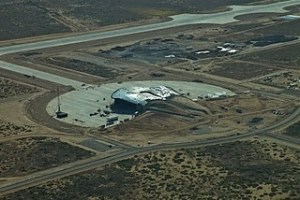
Construction of the world’s first commercial passenger space terminal, dubbed Spaceport America, is slated to be finished next year near the town of Truth or Consequences in southern New Mexico. The 2-mile-long main runway was completed in October.

Spaceport America Wednesday, 10 November 2010 04:09 :image spaceportamerica.com

Two other major structures nearing completion at the nearly $200 million facility are the air-fire rescue facility and a 110,000-square-foot hangar, authority spokesman David Wilson said.

To date, 380 wannabe space cowboys have each plunked down $200,000 each to reserve a seat aboard a Virgin Galactic six-passenger spacecraft for a 2-1/2-hour suborbital flight some 70 miles above the Earth, Wilson said.

Under a 20-year lease with the state, Richard Branson’s firm is Spaceport America’s anchor tenant and principal spaceliner, paying lease charges of up to $200 million, plus user fees to operate their own aircraft and to contract with other aerospace companies.

The site has been providing commercial launch services for the aerospace industry since 2006 and is expected to be fully operational by mid-2011. But Virgin Galactic expects to take another year to begin its private passenger service, once its test-flight program is complete.

The authority’s executive director, Rick Homans, this week issued a call for businesses to submit proposals for three major areas of operation of the spaceport.

They include general services, such as maintenance; protective services for site security, safety and environment health management; and technical services, including airfield and launch support, airspace management and flight safety engineering.

Artists impression of Virgin Galactic: image forums.finalgear.com

Virgin Galactic’s VSS Enterprise made its solo flight in October.

Belated action on scientific misconduct in India

November 18, 2010

The Calcutta Telegraph carries the sordid story of scientific fraud, establishment denial, paper retractions and finally establishment acceptance of the misconduct.

The Gopal Kundu controversy

A controversy erupted in National Centre for Cell Science (NCCS), Pune in 2006 when an anonymous mail alleged that the authors (H. Rangaswami and Colleagues from the group of Dr. Gopal Kundu) may have misrepresented data in a paper published in Journal of Biological Chemistry. The allegation was that they had rehashed the same set of data which they had published earlier. An internal committee of the NCCS advised the authors to take back their paper, however an independent committee led by G. Padmanabhan, a former director of Indian Institute of Science, Bangalore, concluded that there was no manipulation in the data. This led to some heated debate between Indian Scientists with several viewpoints being presented. On 23 February 2007, the Journal of Biological Chemistry withdrew the paper amid allegations of data manipulation. The authors still maintain that the two papers used different set of data though similar experiments.

However the panel set up was not as independent as claimed. Its members were chosen by the Government and – as often when things get politicised in India – they returned a “politically correct” white-wash. But now as The Telegraph reports:

An apex association of Indian scientists today debarred for three years a senior biologist who had been accused of plagiarism by international scientific journals three years ago but was exonerated by a government panel of top scientists.

The unprecedented action by the Bangalore-based Indian Academy of Sciences, after an internal investigation by its ethics committee, appears to vindicate claims by some scientists that the government-appointed panel had tried to shield the accused.

At its annual meeting in Goa today, the academy endorsed the decision by its ethics committee (which was accepted by the academy’s council in July) and barred Gopal Kundu from participating in the academy’s activities for three years, beginning August 2010.

Nor can Kundu, a research scientist at Pune’s National Centre for Cell Science (NCCS), propose any candidates for fellowship of the academy during this period.

The prestigious US-based Journal of Biological Chemistry(JBC) had in February 2007 withdrawn a research paper by Kundu, accusing him of reusing images he had published in an earlier paper.

Another journal, Glycoconjugates Journal, too, had withdrawn a paper by Kundu because it had substantial similarities with a paper he had himself published previously in the JBC.

Better late than never but what is more important is the relatively low value given to ethics by the scientific establishment. Ethics, misconduct and scientific rigour can always be trumped by political correctness. Rahul Siddharthan writes in his excellent post:

An internal investigation at Kundu’s institution found him guilty of misrepresenting data, but a subsequent investigation by an external committee of six eminent scientists exonerated him completely, declaring themselves entirely satisfied that the images, though visually similar, were “indeed different.” I subsequently made my own analysis and published it in Current Science, who followed it with a response from G Padmanaban, the head of the committee that exonerated Kundu.

………

To me, this case is not really about Kundu. It is about our complete lack of appreciation of scientific ethics, and our tendency to “close ranks” when trouble arrives. To succumb to this tendency even after an international journal has conducted its own investigation and made its own decision, and to justify it with a paltry two-page report, merely makes us a laughing-stock.

So it is a good thing that the Academy has, belatedly, tried to correct this.

Rolls Royce must replace 40 of 80 Trent 900 engines deployed

November 18, 2010

I posted a few days ago that Rolls Royce would need to change out about 40 of the Trent 900 engines on the A380’s in operation with Qantas, Singapore Airlines and Lufthansa.

Now -via Qantas and The Press Association – this number has been confirmed by Rolls Royce:

Up to half of the Rolls-Royce engines of the type which disintegrated on an Airbus superjumbo this month may need to be replaced by the three carriers in Australia, Singapore and Germany, Qantas’s chief executive has said.

Australia’s Qantas, Singapore Airlines and Germany’s Lufthansa fly A380s powered by four giant Rolls-Royce Trent 900 engines, with a total of 80 engines on 20 planes.

Qantas chief Alan Joyce said that Rolls-Royce had indicated that up to 40 of them may need to be replaced.

“Rolls-Royce are still working through the criteria for which engines need to be changed,” he said on the sidelines of an event in Sydney unrelated to the A380 incident. He said that 14 of the 24 engines on Qantas planes may have to be replaced.

Whether Rolls Royce knew about the engine fault and the consequent risk prior to the accident on QF32 remains unanswered and whether the European Regulator (EASA) relaxed its inspection frequency Directive in response to Rolls Royce representations also remains unanswered.

Case of UN cholera reaches Florida from Haiti while UN “spins” information

November 18, 2010

UPDATE from Operational Biosurveillance:

Current official stats are more than 18,382 cases and 1,110 fatalities.  This includes more than 1,800 cases in Port au Prince with over 30 fatalities.

  • Conservative estimates therefore suggest 75,000 cases of cholera in Haiti to-date, the majority of which were subclinical.
  • In some areas of Haiti, we have confirmation that in-patient statistics are under-reported by as much as 400%. In many areas of Haiti, we are documenting outbreaks that are not being accounted for in the official statistics.  We therefore estimate the upper bound of estimated case counts to be 250,000.
  • We are now pursuing answers to the question of uptake by indigenous zooplankton and spread along oceanic currents that pass west of the Gonave Gulf, which is where the Artibonite River discharges, north and west along the northern Cuban coastline and north to the waters east of Florida.
  • Tomorrow is Vertieres Day, where we may see some degree of population mixing, particularly in the north.  It is unclear at this time to what degree the recent violence will affect observance of the holiday.  Holidays are opportunities to spread disease further as populations intermingle.

As noted by HEAS one week ago and yesterday officially acknowledged, cholera is in the  Dominican Republic.  We expect to see medical clinic inundations inside DR in the near future.

As expected, Florida has reported a case of cholera in a returned traveler.  There will be more cases in the United States; we believe it likely more cases are inside the US unreported.  Implications for the United States are neglible.

The cholera introduced into Haiti by the UN has spread not only into the Dominican Republic but also to Florida through a traveller from Haiti. Diplomats have confirmed that the disease has come with UN troops from Nepal where the disease is endemic. It is unlikely to spread in the US since the propagation of cholera is through water or food that is contaminated by the bacterium Vibrio cholerae.  For an epidemic, the source is often the feces of infected people. The New York Times reports:

The first known case of cholera in the United States linked to the outbreak in Haiti was confirmed Wednesday by health officials who said a southwest Florida woman contracted the disease while visiting family in a region at the heart of Haiti’s epidemic.

The Florida Department of Health was investigating several suspected cases of the disease elsewhere in the state. They were not believed to be connected to the verified patient, who sought treatment this month at a hospital emergency room in Collier County. The woman spent five days in hospital after developing diarrhea and dehydration, classic symptoms of cholera, following her return from Haiti, where she had spent time in the Artibonite region. She is expected to recover fully.

“We are lucky in the state of Florida, and the U.S. generally, to have a very sound infrastructure for our food, water and sewage,” said Rob Hayes, spokesman for the Florida Department of Health. “With that in place, and with our aggressive public health practices, we are not concerned about this being a significant public health threat.”

The situation is more dangerous in the Dominican Republic where conditions are more conducive to the spread of the disease. In Haiti official reports give over 1100 deaths and over 18,000 infected.

There are reports that the actual number of cases may be being grossly under-reported.

On November 14, Operational Biosurveillance said it confirmed statistics of up to 400% undercounting.

“We now have nearly 60k cases shedding pathogen into the environment. We believe the true statistic to be closer to more than 100k based on the degree of under-reporting. It is extremely difficult to estimate the true scale of this epidemic now. (It’s) grossly uncontrolled, uncontained, (and) has exceeded public health capacity to investigate and assess every site reported and every sample received.”

It seems that political considerations are now leading to all information being subject to political “spin”.

  1. For reasons of not upsetting the Nepalese Government and to defuse the local anger, the UN officially denies that the cholera originated with the troops from that country.
  2. With elections due in Haiti in just two weeks all information about the cause of the outbreak and the extent of the spread is being down-played to avoid further exploitation by some politicians and further riots.

Haiti – till now – had been free of cholera for over a hundred years. No doubt the priority now must be to treat those infected and contain the spread of the disease. But UN processes are clearly wanting and the sooner they come out of “denial” and address their own methods and processes the better.

Birds “engulf” US Navy plane

November 17, 2010

The Telegraph:

http://www.telegraph.co.uk/news/newstopics/howaboutthat/8140997/Dramatic-moment-birds-engulf-plane.html

This is the moment a swarm of birds flew up from a runway, engulfing a U.S. Navy E-6B plane as it came in to land.

Birds that were feeding on grass near the runway swarmed upwards as a U.S. Navy E-6B plane approached to land Photo: AP


The pilot was able to land the £88 million plane safely – in the past, when birds are caught in the engine of a plane, it has caused engine failure.

The birds were feeding on grass next to the runway at the Fort Smith Regional Airport in Fort Smith, Arkansas, US, and for an unknown reason took off just as the plane made its final descent.

The dramatic images were captured by photographer Kaia Larsen as she drove past the airport on Oct 29.