“Be Afraid”:15,000 gather for Cancun jamboree, down from Copenhagen’s 45,000

November 24, 2010
The cub scout salute

"Be Afraid" :Image by anyjazz65 via Flickr

After the cold shower at Copenhagen, the UN Climate groupies are gathering in 5 days at Cancun in Mexico for their next jamboree. Unlike Baden-Powell’s scouts whose motto was to “Be Prepared” the motto in Cancun is “Be Afraid” and their symbol is the Hockey Stick. But the number of attendees at 15,000 is expected to be just a third of the 45,000 at Copenhagen.

In the run-up to Cancun, the public relations exercises have started. The scare stories are proliferating. The objective is to strike fear into the hearts of the non-believers. They are couched in scientific terms but they all have one simple message:

“Be Afraid”

It is perhaps worth noting that in the history of mankind not one of the soothsayers’ prophecies of doom have yet come to pass. In the scientific age and since Malthus, prophecies of impending catastrophe have always been coated with the semblance of rationality and scientific rigour. Whether prognosticating catastrophe due to population growth or due to depletion of resources ( food, oil, coal, metals, animals, plants,……..), they have all been wrong. But in almost every case a few people have gained economic advantage by spreading fear. That climate change happens and will continue to happen is both inevitable and obvious. The idea that man can have more than a very minor part to play in climate – whether intentionally or unintentionally – is a more recent phenomenon of the last 100 years. Before that catastrophes were caused by angry or avenging Gods. Change was then effected by assuaging the angry Gods or by mobilising some other more beneficial God. Of course there were certain individuals – priests, shamans, witch-doctors and their favoured Kings, chieftains and merchants – who always claimed special understanding of the problems and exclusive access to the required God and took benefit from that. These days the angry Gods have been replaced by Divine Computer Models and the scientists and politicians who see a benefit in the forecasts (sometimes pre-determined) of the models.

But Cancun is not really about science. It is about money – for those expecting to make a windfall from carbon trading or for nations looking for funding or for “idealists” looking to redistribute wealth or politicians looking to win their next election.

As I write this I have a foot of snow outside my window which came last night. This is going to be a long and cold winter just as we had last year. But it is just weather not climate. I have no doubt the weather in Cancun will be much warmer and much more salubrious next week. But it is just weather not climate.

“Be Afraid”

Qantas to fly one A380 again on Saturday, Rolls Royce may limit Trent 900 thrust

November 23, 2010

Qantas will have one A380 ready to fly again on Saturday 27th, 23 days after the engine explosion on QF32. Bloomberg reports:

Chief Executive Officer Alan Joyce will be on the first flight, which will go to London from Sydney via Singapore, he said at a media briefing today. The carrier will conduct further inspections with Airbus, regulators and engine-maker Rolls-Royce Group Plc before resuming other routes, it said in a statement.

The carrier will have four 450-seat A380s in service before Dec. 25, including two new ones, Joyce said. The airline is also due to receive two superjumbos next year. Joyce said it is too early to estimate the cost of the disruption caused by grounding the A380s or to comment on whether the carrier will seek compensation.

The Financial Times reports that Rolls Royce are likely to restrict the operating regime of the Trent 900 by limiting the maximum thrust that can be used,

Reports in Australia said Rolls-Royce was about to impose new guidelines on users of its Trent 900 engines stipulating that they cannot be operated at above 70,000 pounds of thrust.

Downgrading thrust to 70,000 pounds would knock out Qantas’s A380 services from Sydney and Melbourne to Los Angeles, a worrying development for the Australian airline that dominates the Pacific route.

“72,000 pounds of thrust is needed for the Pacific route,” a Qantas spokesman said. The airline would not comment on reports that at 70,000 pounds of thrust, Qantas A380s would be forced to fly to Los Angeles less than half full. It said the voluntary suspension on the Pacific route remains “until further operational experience is gained or possible additional changes are made to engines”.

“Pilots still have access to maximum certified thrust [of 72,000 pounds] if they require it during flight. It is not a manufacturer’s directive,” the company added.

Al Gore does a U-turn and admits the obvious

November 22, 2010

From Wattsupwiththat:

Former Vice President Al Gore has admitted that his “support for corn-based ethanol in the United States was “not a good policy”, weeks before tax credits are up for renewal.”

Gore was the tie-breaking vote in the Senate mandating the use of ethanol in 1994.

From Reuters:

“It is not a good policy to have these massive subsidies for (U.S.) first generation ethanol,” said Gore, speaking at a green energy business conference in Athens sponsored by Marfin Popular Bank.

“First generation ethanol I think was a mistake. The energy conversion ratios are at best very small.

“It’s hard once such a programme is put in place to deal with the lobbies that keep it going.”

He continues (admitting more of the obvious):

“One of the reasons I made that mistake is that I paid particular attention to the farmers in my home state of Tennessee, and I had a certain fondness for the farmers in the state of Iowa because I was about to run for president.”

He never did get a Nobel prize for his vote in 1994, so

………..  don’t make the mistake that he has had an epiphany on climate change:

Read the whole post at:

http://wattsupwiththat.com/2010/11/22/gore-admits-the-obvious-us-corn-ethanol-was-not-a-good-policy/

Borobodur courtyard reopened but 90% of ash remains to be removed

November 22, 2010
Borobudur temple view from northeast plateau, ...

Borobudur temple view from the northeast: image via Wikipedia

The Borobodur site was closed to the public after the eruptions of Mount Merapi began on Oct. 26. The temple complex was partly reopened for tourists over the weekend. Yogyakarta airport is now open. The Jakarta Globe reports:

Officials are concerned the acidic soot will hasten the wearing of the temples, Borobudur in particular, which is covered in up to 3 centimeters of ash. “Since Nov. 11, we’ve taken emergency action to keep Borobudur clear of ash by cleaning up 72 stupas and the main stupa, and wrapping them in plastic,” Junus Satrio Atmojo, the Culture and Tourism Ministry’s head of historical and archeological sites, said Saturday.

The government has allocated a total of Rp 600 million ($67,200) to clean up the Buddhist temples of Borobudur, Pawon and Mendut, as well as the Hindu temple complex of Prambanan, he said. “Cleaning up Borobudur and the three other temples requires that we be extra careful and work step by step to prevent the ash lodging in the pores of the rock surface,” Junus said.

“It’s not a question of hiring more people to help clean up, but of the equipment that we need to buy.” That includes Rp 248 million for Borobudur. “Cleaning up Borobudur and the three other temples requires that we be extra careful and work step by step to prevent the ash lodging in the pores of the rock surface,” Junus said. “It’s not a question of hiring more people to help clean up, but of the equipment that we need to buy.”

“Our experience from the Aceh tsunami in 2004 tells us that cultural heritage and historical buildings are always the last to be budgeted for in the disaster recovery fund, and that’s why we need outside donors,” he said.

“Donors don’t necessarily have to give us cash. We’d be grateful for items such as plastic sheets, hoses, baking soda and anything else we can use to clean the monuments.”  Junus added that Unesco, which lists Borobudur as a world heritage site, had only been able to offer sending an expert to gauge the damage, as it had no experience dealing with volcanic clean-ups. “We politely declined, as we have plenty of Indonesian experts,” he said.

Temple officials have reopened the Borobudur yard and the first of the temple’s nine levels to the public, but the rest of the site remains closed for cleaning.

“That’s because we haven’t been able to remove all the volcanic ash covering the temple,” Iskandar M Siregar, head of technical services for Borobudur management, said on Saturday. “We’re using brooms and dust pans to clean it up, so we can’t go any faster,” he said. “So far, we’ve collected 20 cubic meters of ash.” Iskandar said this represented less than a tenth of the total volcanic ash at the site.

He also rebuffed calls to wait for the rains to wash away the ash, pointing out that this would only complicate matters. “That’s because the ash would wash into the temple’s drainage system and damage it,” he said.

Clean-up crews are trying as much as possible not to use mechanical equipment, which could damage the rock surface of the temple, he said.
“We have to hurry because the ash has a corrosive character, that accelerates the weathering of the stupas and stones,” Iskandar said.

Rolls Royce shares, time to sell? Trent 900 hit will last at least 18 months

November 22, 2010

In the first half of 2010 Rolls Royce had revenues of £5.421 billion with a PBT of £465 million (8.6%) of revenues. Cash position was strong with net cash for the period at £915 million. But it looks less impressive considering the order backlog of £58.4 billion. How much of the net cash was due to order down-payments is not clear. Orders received during the period were £5.9 billion (and backlog was virtually unchanged) and this would have provided net cash of around £550 million. So operating cash flow (excluding financial posts) was probably only £350 million.

The Trent 900 debacle will probably eat up at least £200 million – and perhaps more – over the next 12 -18 months. The immediate effect will also be the loss of some expected orders and 22 A380s – bought by Qatar Airways, Kingfisher, Etihad and Air Austral – are yet to decide whether to use the Trent 900 or the rival GP7200 made by the GE / Pratt & Whitney Alliance. Any loss of market share will be difficult to recover. To sell the 100 additional engines that will be needed to recover the costs of this fix will take a few years. Even though all the costs will not be incurred in this quarter, some significant provision will have to be made this year (and it will be a real warning sign if such provision is not made).

The financial and technological position of Rolls Royce is strong and they should be able to make the fix and weather the storm. But profits will be hit hard for at least the next 12 months and perhaps even longer if Trent 900 sales suffer or if the Trent 1000 is further delayed.

Until the Trent 1000 is established in the Dreamliner (which depends on the Boeing 787 coming into service through next year), Rolls Royce share value is capped and with a big downside. It is perhaps time to sell and it could be time to re-enter in about 12 months if some of the major uncertainties are resolved by then.

ROLLS-ROYCE Share Graph

ROLLS-ROYCE Share Graph: graphs.lse.co.uk


The Cancun hype begins – but it is all about money not climate

November 22, 2010

With one week left before the Cancun circus begins (UN/ IPCC Climate Conference from 29th November to 10th December), the mainstream media hype has begun.

Global CO2 expected to rise to record levels screams the Daily Telegraph. Carbon dioxide (CO2) emissions are expected to reach record levels this year, according to a new study, despite the recession and global efforts to reduce greenhouse gases – but what that has to do with climate is uncertain. No doubt it has a great deal to do with pricing of the Carbon Trading market. As The Telegraph points out (inadvertently perhaps) this is just hype timed to come just before the UN jamboree.

The results of the study by the Global Carbon Project will be used to put pressure on environment ministers meeting in Cancun, Mexico this month for the latest UN meeting to come to a global agreement on cutting emissions.

The Cancun meeting itself is all about money and Carbon Trading. The collapse of the Chicago exchange and the growing realisation in Europe that Carbon Trading is just a scam is leading all those with a vested interest in carbon pricing to raise the spectres of carbon dioxide again.  Hopefully these efforts will be as useless as at Copenhagen but some “trading” being introduced through the back door is always a possibility.

The two main “money flows” that Cancun is concerned with is the carbon trading fraud and the diversion of funds to “developing” countries to reduce their emissions of carbon dioxide. Just as with the Nagoya biodiversity conference a key objective is the redistribution of wealth. In fact biodiversity and climate are merely convenient scare stories which can act as vehicles for arranging for the flow of funds. A UN IPCC official admitted as much when talking about climate policy:

OTTMAR EDENHOFER, UN IPCC OFFICIAL: “That will change immediately if global emission rights are distributed. If this happens, on a per capita basis, then Africa will be the big winner, and huge amounts of money will flow there. This will have enormous implications for development policy. And it will raise the question if these countries can deal responsibly with so much money at all”.

Bleak future for wind power generators in Sweden

November 22, 2010

Swedish P1 Radio had a broadcast this morning where wind turbine owners in southern Sweden were interviewed. Wind turbines in Southern Sweden operate at an average capacity of about 25% but when the wind blows in in Sweden it usually blows in Denmark as well. As Denmark builds more subsidised but intermittent wind turbines they become more dependant upon the import of hydro and nuclear power from Sweden and Norway.

It could be a dark future for wind power, at least for wind power owners in southern Sweden. As wind turbines multiply, the surplus power when the wind blows reduce prices and wind turbine revenues are reduced drastically.

The Marketing Director for Lunds Energi said that they had no plans for building any more wind turbines to add to the 6 small wind turbines they already had.  There was no chance, he said, of the Danes importing wind power from Sweden when the wind was blowing for then they had their own power. And when the wind was not blowing and prices were better there was no power to sell!

Vindkraftverk i Vänern. Foto: Fredrik Sandberg/Scanpix

Wind power plant in Lake Vännern. Foto: Fredrik Sandberg/Scanpix

Kjell Jansson, the Managing Director of Svensk Energi was also interviewed and pointed out that electricity could not be stored except as hot water. Therefore using surplus wind energy to store in heating systems was at best a partial solution but did not help the fact that industry and people needed electricity as electricity – and not just as hot water. Even the planned Danish solution of using surplus power to “charge up” heating systems for district heating as hot water or for “charging up” electric cars relied on having electricity – from nuclear and hydro power from Sweden and Norway – available to be imported for the Danish electricity system.

Therefore, he continued, when the wind did not blow in Denmark  – and then usually did not blow over the whole of Scandinavia – the high electricity price was an advantage for the hydro and nuclear generators. In any case this would require much more investment in transmission systems and in hydro power generation.

But I can see a situation where Denmark will pay swingeing prices for imported electricity when the wind is not blowing and a cold wave is sweeping across Europe. And if it is a really severe cold wave then there may be no electricity available for import.

The art of neurogenesis

November 21, 2010

http://thebeautifulbrain.com/2010/11/gallery-the-art-of-neuroscience-vol-iii/

Neurogenesis– the creation of new neurons in the brain– was conventionally believed to only occur in the growing brains of infants and children.  In the 1960s, data started appearing that showed the birth of new neurons in adult, fully formed brains.  Now, 40 years later, adult neurogenesis is one of the more robust fields of study in the neurosciences.

Jason Snyder studies adult neurogenesis in Heather Cameron’s lab at the National Institute of Mental Health in Bethesda, MD.  Snyder’s research focuses on neurogenesis in the hippocampus, highlighting the role of these new neurons in such fundamental behaviors as memory formation and learning.

Here are some of Snyder’s images made using electrophysiological techniques for studying the brain.

Further images can be enjoyed at The Beautiful Brain:

GFAP and TK staining around the ventral portion of the 3rd ventricle: image Jason Snyder

Tissue stained for doublecortin and NeuN: image Jason Snyder

Time to postpone Haitian elections?: UN cholera “unusual, swift and severe”

November 21, 2010

ff

Upplopp i Port-au-Prince under fredagen.

Protests in Port-au-Prince on Friday 19th November: image Svenska Dagbladet

The cholera in Haiti has spread to the prison in Port-au-Prince. Of the 2000 prisoners over 30 have shown signs of infection and 13 have died. The official death toll in Haiti is now over 1200 and the official number of those infected is over 20,000. The actual number infected is probably approaching 100,000.

AFP reports that:

Haiti is facing an “unusual” cholera epidemic that could be more severe than figures suggest, according to a French cholera expert who is advising Haitian health authorities. And determining who is to blame for bringing the disease here won’t help solve the crisis, he added.

The outbreak, which threatens to overwhelm Haiti as it struggles to recover from January’s cataclysmic earthquake, has left nearly 1,200 dead and prompted riots in several cities including the capital as citizens accuse the United Nations of importing the cholera.

But Doctor Gerard Chevallier, who is advising Haiti’s Health Ministry, warned that the country needs to focus on trying to halt the spread of the disease detected in Haiti one month ago.

“The mechanics of the epidemic are unusual, swift and severe,” Chevallier told AFP in an interview. “The whole country is not affected, but the epidemic will spread.” Chevallier noted that in such epidemics, especially in impoverished nations like Haiti, the toll is “under-assessed” and almost always higher than the official figure. “Reports are imperfect. There are areas where people die and nobody knows,” Chevallier said. “Two thirds of the territory is accessible only on foot.”

Chevallier is working with a French team seeking to provide Haitian authorities with tools that allow for a more complete and reliable picture of the epidemic.

To merely ignore or deny the cause of the outbreak because containing it is now the highest priority does not address the emotions in the local population which are running very high. In the local population fear is exacerbated by anger that the UN which is virtually running the country is not owning upto its responsibilities.  After a hundred years without cholera Haiti is now condemned to many decades of having the disease and the UN cannot continue in denial.

It is not the fault of the Nepalese troops who were the carriers of the disease but it is a terrible indictment of sloppy UN processes which allowed them into the country without testing and without adequate precautions.

It is time for the elections due to be held on 28th November to be postponed. Trying to pack people into polling booths while the epidemic is raging seems to be the height of stupidity. AFP also reports that four Haitian presidential candidates have called for postponing elections set for Nov 28 as the country struggles with a cholera epidemic that has claimed nearly 1,200 lives amid protests targeting UN peacekeepers.


Duke Danfu’s 3000 year old fruit cellar found

November 21, 2010

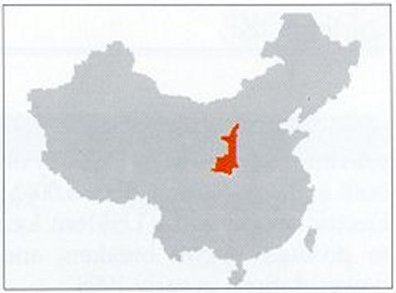
Chinese archeologists have found an ancient fruit cellar containing well-preserved apricot and melon seeds from more than 3,000 years ago in today’s Shaanxi Province reports Xinhua.

Shaanxi Province

Xian, the capitol of Shaanxi Province is better known for its tombs and terra-cotta soldiers. Xian was also the starting point of the Silk Road and home of the Banpo people, a Neolithic culture that lived in the area 8,000 years ago.

Situated at the south foot Qishan Mountain in the west of Shaanxi Province, Zhouyuan was the home of Duke Danfu, an early leader of the Zhou clan. It was the centre for the rise of the Western Zhou.

Covered ritual wine vessel (gong) 1050-900 BCE...

Western Zhou dynasty bronze c. 1000 BC: Image by mharrsch via Flickr

Nearly 800 pieces of bronzeware of the Western Zhou Dynasty, in varied sizes, have been excavated form the Zhouyuan Site, together with large palace foundations and inscribed oracle bones.

From Xinhua

The cellar was a rectangular pit about 105 cm long, 80 cm wide and 205 cm deep, said Dr. Sun Zhouyong, a researcher with the Shaanxi Provincial Institute of Archeology. Sun and his colleagues found the pit in 2002, about 70 cm underground the Zhouyuan site, ruins of Western Zhou dynasty (1046-771 BC) 100 km from Xi’an. After eight years of research, they concluded it was a cellar used to preserve fruits for aristocrats.

In each corner of the pit, Sun and his colleagues found a little round hole. “We assume the cellar had something like a shade that was fixed on the four holes but had decayed over the years.” Inside the cellar the researcher could see, even with naked eye, huge piles of nuts and seeds. “We sorted them out with care, and found about 500 apricot nuts — 108 of which were complete with carbonized pulp, at least 150 melon seeds and 10 plum seeds,” said Sun. They also found millet and grass seeds.

“Most of the seeds were intact and very few were carbonized,” said Sun. “It was so amazing that scientists who conducted lab work suspected they were actually put away by rodents in more recent times.” Sun and his colleagues sent three apricot nuts to Beta Analytic in Florida, the United states, last year for carbon 14 test to determine their age. “The test results indicated they were about 3,000 years old, dating back to a period between 1380 B.C. and 1120 B.C.,” said Sun. “Seemingly the fruits had been stored in an acidic and dry environment, so dehydration was extremely slow and the nuts were not carbonized even after so many centuries.”

Zhouyuan site, where the cellar was unearthed, was believed to be a dwelling place for Duke Danfu, an early leader of the Zhou clan. It was known as the cradle of the Western Zhou Dynasty, one of the earliest periods of China’s written history. “Presumably, the aristocrats had stored fruits in their family cellar,” said Sun. The cellar, with roughly 1.7 cubic meters of storage, could store up to 100 kilograms of fruits, he said.

The Book of Rites, a Chinese history book compiled in the Western Han Dynasty (202 BC-9), put melons, apricots, plums and peaches among the 31 categories of food favored by aristocrats of the time. It said people in the Zhou Dynasty had also learned to grow fruit trees in orchards. A poem in the “Book of Songs”, a collection of poetry from the Western Zhou Dynasty (11th century -771 BC) to the Spring and Autumn Period (770 – 475 BC), says food kept in “ling yin” — meaning cool places — will stay fresh for three days in the summer.

Before the fruit cellar was reported, archeologists in Shaanxi Province found a primitive “icebox” that dated back at least 2,000 years ago in the ruins of a temporary imperial residence of the Qin Dynasty (221 BC – 207 BC). The “icebox”, in the shape of a shaft 1.1 meters in diameter and 1.6 meters tall, was unearthed about 3 meters underground in the residence.