Tenacious life – a new species of snail fish found at depth of 7000m

October 14, 2010


The new type of snailfish was found living at a depth of 22,966ft (7,000m) in the Peru-Chile trench of the South East Pacific Ocean.

Snailfish found living at a depth of 22,966ft Peru-Chile trench of the South East Pacific Ocean. Photo: Oceanlab, University of Aberdeen


Hot on the heels of discovering a biological oasis of life in hot, inky-black waters at the bottom of Yellowstone Lake in the midst of hundreds of geothermal vents comes news of  a new type of snailfish found living at a depth of 22,966ft (7,000m) in the Peru-Chile trench of the South East Pacific Ocean.

The Telegraph reports:

The 10 inch long tadpole-shaped creature with a large head, tiny eyes and pelvic fins has adapted to living in an icy cold, pitch black environment under constant, crushing pressure. Mass groupings of cusk-eels and large crustacean scavengers were also found living in the narrow abyss despite the inhospitable conditions.

The findings, in one of the deepest places on the planet, were made by a team of marine biologists from the University of Aberdeen and experts from Japan and New Zealand. The team took part in a three-week expedition, during which they used deep-sea imaging technology to take 6,000 pictures at depths between 14,764ft (4,500m) and 26,247ft (8,000m) within the trench.

The Peru-Chile Trench

The Peru-Chile Trench: Image via Wikipedia

The mission was the seventh to take place as part of HADEEP, a collaborative research project between the University of Aberdeen’s Oceanlab and the University of Tokyo’s Ocean Research Institute, supported by New Zealand’s National Institute of Water and Atmospheric research (NIWA).

Oceanlab’s Dr Alan Jamieson, who led the expedition said these latest discoveries helped shed new light on life in the depths of the Earth. “Our findings, which revealed diverse and abundant species at depths previously thought to be void of fish, will prompt a rethink into marine populations at extreme depths,” he said.

“This expedition was prompted by our findings in 2008 and 2009 off Japan and New Zealand where we discovered new species of snailfish known as Liparids inhabiting trenches … at depths of approximately 7,000 metres – with each trench hosting its own unique species of the fish.

“To test whether these species would be found in all trenches, we repeated our experiments on the other side of the Pacific Ocean off Peru and Chile, some 6,000 miles (9,656km) from our last observations.

“What we found was that indeed there was another unique species of snailfish living at 7,000 metres – entirely new to science – which had never been caught or seen before.”

The new snailfish will not be named until it is officially confirmed as a new species.

The estimates of the number of unknown marine species may be at the top end of the range estimated between 1 million and 10 million species. However, plant and animal diversity looks insignificant compared to the sea’s micro-organisms, which may number 1 billion. Their diversity is “spectacular”.

A second Mayack paper gives cause for concern

October 14, 2010

Earlier today I posted about the retraction of a Nature paper due to doubts about the work done by the lead author Shane R. Mayack.

The Journal “Blood” has now posted a Notice of concern for: Mayack and Wagers:
Blood, 1 August 2008, Vol. 112, No. 3, pp. 519-531. Prepublished online as a Blood First Edition Paper on May 2, 2008; DOI 10.1182/blood-2008-01-133710.

Based on information provided by the corresponding author, Amy J. Wagers, Blood wishes to post a Notice of Concern for this August 1, 2008 article.

As a result of an internal review by the corresponding author, serious concerns with some of the reported data were raised, specifically regarding the osteolineage differentiation of small numbers of sorted osteopontin+ niche cells. This matter is currently under further review. Blood will inform the readers of the outcomes.

It seems that Mayack’s employment at  the Joslin Diabetes Center of Harvard Medical School which started on 1st March 2005 ended on 1st October 2010.

Pachauri stays at IPCC: Ultimately it’s a question of cowardice

October 14, 2010


Pachauri's racy thesis


The IPCC has just completed its 3 day meeting in Busan. The absence of any courage by any of the delegates or by their Chairman is apparent. Rather than implement all the recommendations of the IAC review they have just accepted all the easy bits and shuffled off the more painful corrections to be studied in committee. The Chairman himself has not had the courage to swallow his overweening pride and return quietly to Almora.  (A psychiatrist might be able to explain the connections between his public utterances and his steamy novel).

The BBC reports:

(The IPCC) meeting in South Korea closed with many other reforms proposed in a recent review being passed to committees for further consideration. Chairman Rajendra Pachauri confirmed his intention to stay in post until the next assessment is published in 2014. In its recent review of the IPCC, the InterAcademy Council (IAC) – an umbrella group for the world’s science academies – highlighted a case in the 2007 assessment where studies projecting rapidly declining crop yields in Africa were given more weight than they merited, in the absence of supporting evidence.

The revised guidance emphasises that in future, authors must assess both the quality of research available and uncertainties within that research.

t urges authors to be careful of “group-think”, but maintains that it “may be appropriate to describe findings for which the evidence and understanding are overwhelming as statements of fact without using uncertainty qualifiers”.

Enhanced guidance on the use of “grey literature” – material not published in peer-reviewed scientific journals – has also been drawn up, and will be finalised by chairs of the IPCC’s working groups in the coming months.

Procedures for correcting errors should they arise were also approved – which means that the most serious error in the 2007 report, on the projected melting date for Himalayan glaciers, can be formally repaired.

Commonwealth Games: A stirring closing under way and a metaphor for investment in India

October 14, 2010


Delhi 2010 logo


The Closing Ceremony for the 2010 Delhi Commonwealth Games is underway. The final verdict will come in the weeks and months ahead but after the incredibly chaotic, tainted and incompetent beginning the fact that it appears now as a qualified success is a tribute to those who finally mobilised themselves and further evidence of the “last-minute fix syndrome” that India suffers from.

Delhi virtually shut down on Thursday 2 hours ahead of the Commonwealth Games closing ceremony, with government offices, banks and major markets closed for the day. The Jawaharlal Nehru stadium, the venue for the event, is swarming with thousands of security personnel.

Around 60,000 spectators are expected to attend the event, that will start at 7 pm and end 10.30 pm. Around 7,500 security personnel have been deployed at the JN stadium. “A multi-layered security arrangement is in place for the closing ceremony, similar to the opening event,” Rajan Bhagat, spokesperson Delhi Police, told reporters.

Spectators will be put through manual and mechanical security checks at four points at the stadium, while Indian Air Force choppers will survey the skies. The stadium has 19 entry points where card readers, door frame metal detectors and X-Ray baggage machines have been installed. Mobile quick reaction teams have also been deployed on the outer perimeter of the stadium.

High-tech security equipment, including devices to check CBNR (chemical, biological, nuclear and radiological) assaults have been put in place. Delhi Police Commissioner YS Dadwal reviewed the security arrangements at a meeting with senior officials.

Delhi Police has also deployed snipers, commandos on Light Armoured Troops Carrier (LATC) and specially trained men from paramilitary personnel along with Delhi Police personnel at the Games venues. Unmanned Aerial Vehicles are also in place to scan the ground.

There are 3 hours to go before the ceremony draws to a close and fingers remain crossed.

ABC Online says that after a chaotic start, Games organisers have given themselves a pat on the back for delivering a functional, if somewhat bumpy, ride to the finish line. “The athletes and the competitions have gone very well,” Commonwealth Games Federation president Michael Fennell said today. Australia finished the Games well atop the medal tally with 74 gold, 55 silver and 48 bronze. India narrowly pipped England for second spot, winning 38 golds to 37.

The Economic Times sees the Games as a metaphor for investment in India. Chaotic, difficult to enter, bumpy journeys but immensely rewarding at the end.

For many Indians who only two weeks ago labelled the event the “Shame Games”, it was an unprecedented success, with the country’s best-ever gold medal tally. “The Games has turned out to be better than worst feared,” said V. Ravichandar, head of Feedback consulting in Bangalore, which advises multinationals. “The Games were really a metaphor for investment in India. It’s not a smooth ride but things work out in the end.

After sparse crowds ruined the atmosphere in the first week of the two-week event, crowds soon swelled, with the medal results providing a respite for Prime Minister Manmohan Singh and his ruling Congress party, which before the Games had been under pressure to save India from international embarrassment.

The wider and much publicised chaos of the preparations highlighted the gap between India and China when it comes to infrastructure. When organisers called on luxury hotel chains to clean up the athletes’ village, it underscored the fact that the private sector motor that drives India had been left out of a Games run by a state immersed in red tape, cronyism and graft. Thus, the Games failed to be the coming-out party the 2008 Beijing Summer Olympics was for China. For foreigners, delegations threatening to quit with filthy rooms, dog faeces and dengue-carrying mosquitoes in the Games Village were the overarching memory.

It was a sign of the health of India’s business that the blue-chip Sensex stock index hit a near-three year high during the Games. India has attracted a record $21.4 billion in foreign funds into stocks this year — one-third of that since September. State-run Coal India is poised to launch a $3.5 billion IPO, the country’s largest that is expected to see heavy investor demand. It underscores how private industry in India is booming, thanks to tens of millions of Indians aspiring to the middle class.

“In a sense, India stands out internationally,” said Amit Tandon, managing director of Fitch rating agency in India. “It may be difficult to come in, but once you are in you make money.” That may signal more complacency ahead from India’s leaders, increasingly focused on state elections next year rather than long-term economic reforms. “I do hope at the end of the Games, someone in Congress or the prime minister will sit down and take stock of the situation,” said Tandon.

Another Harvard paper retracted – post-doc’s research suspect

October 14, 2010

The paper in NatureSystemic signals regulate ageing and rejuvenation of blood stem cell niches” by Shane R. Mayack, Jennifer L. Shadrach, Francis S. Kim & Amy J. Wagers has been retracted at the request of 3 of the authors.

According to the Boston Globe story the retraction was not signed by Shane R Mayack, the lead author of the article, who was a postdoctoral researcher in Wagers’s laboratory.

The paper, published in January in Nature, examined aging of blood stem cells. The retraction, published yesterday, was signed by Amy Wagers, a stem cell biologist at Joslin Diabetes Center and two of her coauthors.

Joslin spokesman Eric Bender said he could not comment on whether Mayack was still working in the laboratory. The retraction did not explain whether it was an innocent mistake, possible research misconduct, or some other issue — nor did it make clear who, if anyone, was at fault.

Two months ago, Harvard confirmed that a high-profile psychology professor, Marc Hauser, had engaged in eight instances of scientific misconduct, leading to the retraction of one paper he coauthored and raising concerns about two others.


Flight accuracy gives Chang’e-2 new options

October 14, 2010


Chang'e flies to the moon.

Chang'e flies to the moon: Image via Wikipedia


After requiring only one course correction en route to the moon the fuel left on board Chang’e-2 keeps open all its future options after it completes its 6 month mission. Since Chang’e-1 was already crashed intentionally onto the moon, a return to earth or a flight into outer space are more likely than another descent to the moon’s surface. If the instruments remain in working order a continued flight past other targets in space could be more rewarding than a tame return to Earth.

Xinhua reports:

Chang’e-2 was carried into lunar orbit by a rocket, and only corrected once during the transfer from earth orbit to lunar orbit, so a large amount of fuel will be left after its mission, Zhou Jianliang, the vice chief-designer of BACC, said.

It is s expected to have enough fuel to fly back to earth, the vice chief-designer of the Beijing Aerospace Control Center (BACC) said Tuesday.

Zhou said there are three possible “fates” for Chang’e-2 after it finishes its six-month mission: landing on the moon; flying to outer space; or returning to earth. The fate of Chang’e-2 will be decided according to its condition when the mission is complete.

The Long March-3C carrier rocket took Chang’e-2 into space from southwest China on Oct. 1. The probe completed its final braking on Oct. 9 and is now orbiting the moon at a 100 km-high orbit.

Chinese Science Ministry vindicates academic fraud journalists

October 13, 2010
Chinese Academy of Sciences

Chinese Academy of Sciences: Image via Wikipedia

The case of the two crusading journalists in China who were brutally attacked after they had exposed academic fraud has been reported by Retraction Watch and the risks they take has been reported here.

In one case after a quick trial, a local court in Beijing convicted urologist Xiao Chuang-Guo on 10 October of assaulting two well-known advocates of academic integrity in China.
One victim of the attacks was Fang Shimin, freelance writer and self-appointed watchdog of research misconduct. Fang had questioned Xiao’s academic achievements, but this was not what prompted the attack, Xiao claimed. Xiao told the court that he had a decade-long personal conflict with Fang, mainly because Fang had insulted Xiao’s wife and teacher.
http://news.sciencemag.org/scienceinsider/2010/10/doctor-sentenced-in-beijing-for.html

But the Chinese Science Ministry has today issued a statement castigating Xiao.

China’s Ministry of Science and Technology has lambasted a doctor at the center of an academic fraud scandal who masterminded two violent attacks on his critics, and denied he was still on the payroll of a medical research project. The ministry issued a statement on its website late Tuesday, claiming Doctor Xiao Chuanguo had no respect for the law and disrupted social order.

It said Xiao should be condemned for his vicious misconduct and lack of integrity. Xiao, 55, head of the Urology Department of Wuhan Union Hospital, was sentenced Sunday to five and a half months in detention by the Shijingshan District People’s Court of Beijing. The court found Xiao hired four men to attack two writers who had accused him of academic fraud.

Xiao believed the accusation had led to his failing to become a member of the Chinese Academy of Sciences.

The victims of the violent attacks were Fang Zhouzi, a science writer with a reputation for exposing academic fraud, and Fang Xuanchang, an editor at the economic journal, Caijing.

The ministry denied claims that Xiao was still a chief scientist on a ministry-sponsored science project.

According to the statement, Xiao used to be the chief scientist researching neurological damage repair on the “973 Plan,” a key national science project. The statement said Xiao’s program ran from 2003 to 2008 and that Xiao was no longer responsible for any “973 plan” projects. It said “chief scientist” was not an honorary title.


Indian stock market and cricket performance

October 13, 2010


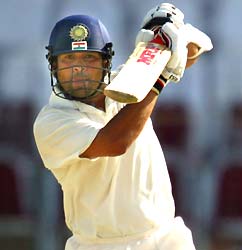
The Little Master: image rediff.com


Today Indian won the 2nd cricket test against Australia in Bangalore by a handsome 7 wickets. Sachin Tendulkar scored a second innings fifty after his double- century in the first innings which was his 49th Test century.

The Bombay Stock Exchange (Sensex) surged 484 points to 20,688 today.

This was immediately taken as corroboration of the street wisdom that the two are closely tied. The Indian Express is euphoric. Sensex wins on day of India’s triumph.

A superb ending for the stock markets happened in tandem with Team India’s victory against Australia in Bangalore. Coincidence? The 484-point surge in BSE benchmark Sensex today coincided with the triumph of Indian cricket team against Australia –thus corroborating claims of a correlation between trends in stock markets and cricket field.

A recent paper by Monash University economists did find a link between Cricket performance and the BSE Sensex.

Mishra, Vinod & Smyth, Russell, 2010. “An examination of the impact of India’s performance in one-day cricket internationals on the Indian stock market,” Pacific-Basin Finance Journal, Elsevier, vol. 18(3), pages 319-334, June 2010.

This study examines the impact of the Indian cricket team’s performance in one day international cricket matches on returns on the Indian stock market. The main conclusion of the study is that there exists an asymmetric relationship between the performance of the Indian cricket team and stock returns on the Indian stock market. While a win by the Indian cricket team has no statistically significant upward impact on stock market returns, a loss generates a significant downward movement in the stock market. When Sachin Tendulker, India’s most popular cricketer, plays the size of the downward movement in returns is larger.

So in fact the stock market surge today is not quite in line with the paper’s conclusions.

But, for once, a masterly performance by Tendulkar the “Master Blaster” has coincided with an India win!!

So the correlation is permitted some poetic licence.

Habitable exoplanet Gleise 581g may not exist

October 13, 2010


Artist's impression of the planetary system ar...

Gleise 581 system: Image via Wikipedia


An earlier post reported on the finding of a potentially habitable exoplanet.

But the planet may not exist:

Yesterday at an exoplanet meeting in Turin, Italy, Switzerland-based astronomers announced that they could find no trace of the prized planet in their observations of the same planetary system.

All the excitement has been over the subtlest of wiggles in the motion of the star Gliese 581 that lies just 20 light-years from the sun in the direction of the constellation Libra. A consortium of institutions led by the Observatory of Geneva in Switzerland had already discovered four planets circling Gliese 581 by sorting out the subtle motions of the star that are induced by the gravitational tugs of any orbiting planets.

On 29 September, a U.S.-based team led by astronomer Steven Vogt of the University of California, Santa Cruz, announced that it had discovered a fifth planet. The American team used a combined set of observations: One 11-year-long set consisted of 122 measurements made by the team, while the other set was 4.3 years long and consisted of 119 measurements published by the consortium.

Designated Gliese 581g, the new planet has at least three times the mass of Earth—large enough to hold on to a watery atmosphere—and orbits at a distance from its star that would allow any water to remain liquid. That would make 581g a happy home for life as we know it.

But at this week’s Astrophysics of Planetary Systems meeting, astronomer Francesco Pepe of the Geneva Observatory and the Swiss group reported that he and his colleagues could find no reliable sign of a fifth planet in Gliese 581’s habitable zone. They used only their own observations, but they expanded their published data set from what the U.S. group included in its analysis to a length of 6.5 years and 180 measurements. “We do not see any evidence for a fifth planet … as announced by Vogt et al.,” Pepe wrote Science in an e-mail from the meeting. On the other hand, “we can’t prove there is no fifth planet.” No one yet has the required precision in their observations to prove the absence of such a small exoplanet, he notes.

Currency war of words continues – time to be in Yuan?

October 13, 2010

For the layman currency investor these are dangerous times. Countries are intervening in currency markets to hold the value of their currencies down as a way of helping their own exports. The currency market is not that “free”. The only certainty for the long term is that the Chinese Yuan is undervalued. Even Gold where the price may keep rising in Dollars may not keep pace – in the long term – with the Yuan. The Korean Won is also undervalued  but whether this will hold in the long term is uncertain. In the Eurozone the Euro will not rise till the lowish values now can get the economies of Spain and Ireland and Greece and Portugal moving again. But the current values can help the export engines in Germany and the UK  to keep going.

The G20 finance ministers will meet in South Korea from October 22 and its leaders are to gather in Seoul next month to try to reach a consensus on the global currency system to prevent competitive devaluation from damaging growth. A weekend International Monetary Fund meeting failed to defuse tensions reports Reuters.

“As chair of the G20, South Korea’s role will be seriously questioned,” Japanese Finance Minister Yoshihiko Noda told a parliamentary panel when asked about South Korea’s currency intervention and its place in G20. Japan intervened in the currency market last month for the first time in more than six years to try to stem a rise in the yen that is putting a fragile economic recovery at risk. Noda declined to say whether Japan would step in again as the Japanese currency hovers near a 15-year high against the dollar. He drew a distinction, however, between Japan’s intervention, which appears so far to have been a one-off move, and more frequent intervention by South Korea and China. “In South Korea, intervention happens regularly, and in China, the pace of yuan reform has been slow.

“Our message is that we have confirmed at the Group of Seven that emerging market countries with current account surpluses should allow their currencies to be more flexible.”

Analysts say Tokyo is worried about Japanese exporters’ waning competitiveness against South Korean rivals, given that the yen has risen about 13 percent against the dollar so far this year, while the won has gained only about 4 percent.

Hopes for a G20 currency consensus look slim. “It’ll be impossible for the G20 to reach a consensus on currencies. Many emerging economies feel that they are being forced to intervene because of a weak dollar,” said Etsuko Yamashita, chief economist at Sumitomo Mitsui Banking Corp.

Japanese Prime Minister Naoto Kan urged Seoul and Beijing to act responsibly but acknowledged Tokyo’s delicate position. “I want South Korea and China to take responsible actions within common rules, though how to say this is difficult because Japan has also intervened,” he told the same parliamentary panel.

Japan sold 2.1 trillion yen ($25.65 billion) last month in its first currency intervention in more than six years to curtail the yen’s strength against the dollar. South Korea has intervened to the tune of about $13 billion since late September to try to cap the won’s rise, but analysts said its intervention had been more aggressive in relative terms.