WW 1 is finally over

September 29, 2010
Montage for the World War I Main Page in Wikipedia

Image via Wikipedia

Der Speigel

“Germany will make its last reparations payment for World War I on Oct. 3, settling its outstanding debt from the 1919 Versailles Treaty and quietly closing the final chapter of the conflict that shaped the 20th century”.


Oct. 3rd, the 20th anniversary of German unification, will also mark the completion of the final chapter of World War I with the end of reparations payments 92 years after the country’s defeat.


Source: http://www.spiegel.de/international/germany/0,1518,720156,00.html

“CO2 is a valuable resource” – New Scientist

September 29, 2010
Carbon dioxide

CO2 molecule

Greenhouses to negate greenhouse effects?

The New Scientist today saysCarbon dioxide may be bad for the climate, but it’s good for the roses. Perhaps it’s time we rehabilitated this gaseous villain”.

While plenty of commercial greenhouses top up their air with extra CO2, what is unusual about this one is where its CO2 comes from. Until a few years ago, the greenhouse’s operators used to burn natural gas for the sole purpose of generating CO2. Today it is piped from a nearby oil refinery. Each year, 400,000 tonnes of CO2 are captured and then piped to around 500 greenhouses between Rotterdam and The Hague, where it is absorbed by the growing plants before they are shipped for sale around the world .

“It’s time we stopped thinking of CO2 solely as a pollutant and viewed it as a valuable resource,” says Gabriele Centi, a chemist at the University of Messina, Italy.

Cash for carbon

Capturing carbon dioxide from smokestacks and then pumping it underground is going to be an expensive way to combat climate change. For a coal-fired power plant, for instance, the process is expected to add 30 per cent to the cost of generating electricity. However, a handful of entrepreneurs are already beginning to turn a costly waste product into a valuable commodity.

Wikipedia

Take some flower-growing greenhouses in the Netherlands. There, CO2 emitted from a nearby oil refinery is piped to the plants, boosting their growth (pictured, and see main story). The scheme began in 2005, when Organic Carbon Dioxide for Assimilation of Plants (OCAP), a newly formed gas supplier, began pumping waste CO2from the refinery to the greenhouses along a disused oil pipeline. The refinery sells the CO2 to OCAP at a profit, which then sells the gas to greenhouses at a price lower than what they were paying to burn natural gas to generate CO2. “I think the best way to fight climate change is making money out of it, otherwise our efforts wouldn’t survive in the long term,” says OCAP director Hendrik de Wit.

Source: http://www.newscientist.com/article/mg20727791.100-emission-control-turning-carbon-trash-into-treasure.html?full=true

A ramble through electricity consumption and aspirations.

September 29, 2010

From the IEA 2010 World Energy Statistics, the country with the lowest electricity consumption is Haiti at 23 kWh /capita. The country with the highest consumption is Iceland with 49,818 kWh/capita. In between come Ethiopia at 42 kWh/capita, Kenya at 156, India at 566, Iraq at 1267, China at 2453, France at 7,703, the US at 13,647, Canada at 17,053 and Norway at 24,868 kWh/capita. For the world as a whole the average consumption is 2,782 kWh/capita.

The average is 18 times less than the maximum and the minimum is 120 times less than the average. And of course the average in every country itself represents an enormous spread between individuals.

To put this into the perspective of living standards and the quality of life, the electricity consumption of household goods is typically as follows:

  • One 60 W light –bulb for 8 hrs per day consumes 175 kWh/annum,
  • Typical 19” colour TV (70 W) for c. 5 hrs per day 125 kWh/annum
  • Table fan (20 W) for c. 12 hours per day 88 kWh/annum
  • Desktop computer (100 W) for 8 hours per day 290 kWh/annum
  • Refrigerator (80 W), continuously, 700 kWh/annum
  • Freezer 150 W continuously, 1300 kWh/annum

To have access to one 60 W light bulb when you have none is an enormous improvement in the quality of one’s life. To have access to a fridge so that shopping and cooking every day while also holding down a full-time job is no longer necessary is the difference between freedom and slavery for many women in the developing world. It is a sobering thought that if every Haitian used just one 60 W light bulb for 8 hours every day, the electricity consumption in Haiti (and therefore electricity generation) would increase seven-fold!

Read the rest of this entry »

Tile Drainage: A boon for farming but cause of dead zones in the gulf

September 28, 2010

Tile drainage is an agriculture practice that removes excess water from soil subsurface to enable farming in wetlands. Whereas irrigation is the practice of adding additional water when the soil is naturally too dry, drainage brings soil moisture levels down for optimal crop growth.

Tile drainage ditch (Credit: Todd Royer)

A new paper in the Journal of Environmental Quality by Mark B. David, Laurie E. Drinkwater and Gregory F. McIsaac, Sources of Nitrate Yields in the Mississippi River Basin confirms that the run-off Nitrates from farming in the Missisipi river basin into the Gulf of Mexico leads to seasonal hypoxia. In the summer of 2010 this dead zone in the Gulf spanned over 7,000 square miles. The increased production of crops in this region for ethanol production has only exacerbated the problem. The dead zone in the gulf is a yearly event to be compared to those caused by sporadic oil spills.

gulf of mexico dead zone image

Gulf areas affected by hypoxia: NOAA

(Journal of Environmental Quality 2010 39:1657-1667) via EurekAlert

Tile drainage in the Mississippi Basin is one of the great advances of the 19th and 20th centuries, allowing highly productive agriculture in what was once land too wet to farm. In fact, installation of new tile systems continues every year, because it leads to increased crop yields. But a recent study shows that the most heavily tile-drained areas of North America are also the largest contributing source of nitrate to the Gulf of Mexico. Scientists from the U of I and Cornell University compiled information on each county in the Mississippi River basin including crop acreage and yields, fertilizer inputs, atmospheric deposition, number of people, and livestock to calculate all nitrogen inputs and outputs from 1997 to 2006. For 153 watersheds in the basin, they also used measurements of nitrate concentration and flow in streams, which allowed them to develop a statistical model that explained 83 percent of the variation in springtime nitrate flow in the monitored streams. The greatest nitrate loss to streams corresponded to the highly productive, tile-drained cornbelt from southwest Minnesota across Iowa, Illinois, Indiana, and Ohio.

Farmers are not to blame,” said University of Illinois researcher Mark David. “They are using the same amount of nitrogen as they were 30 years ago and getting much higher corn yields, but we have created a very leaky agricultural system. This allows nitrate to move quickly from fields into ditches and on to the Gulf of Mexico. We need policies that reward farmers to help correct the problem. A lot of people just want to blame fertilizer, but it’s not that simple,” David said. “It’s fertilizer on intensive corn and soybean agricultural rotations in heavily tile-drained areas. There is also an additional source of nitrogen from sewage effluent from people, although that is a small contribution. It’s all of these factors together.”

Rolls Royce Trent 1000 fix is in place

September 28, 2010

RR Trent 1000 cutaway

On August 2nd a  production standard ‘Package A’ Rolls-Royce Trent 1000 engine suffered an engine failure while on the test stand at the company’s Derby, UK facility. The ‘Package A’ engines do not incorporate upgrades planned for the ‘Package B’ engines, which will bring the specific fuel consumption target within 1% of planned spec. The failure – which has been described as an “uncontained failure” – of the Trent 1000 engine, which powers the Dreamliner, resulted in “limited debris being released into the test facility,”
At the time a Rolls-Royce spokesman rejected speculation that the unavailability of the engine that Boeing required was related to the incident earlier this month at one of its test facilities in Derby, England, saying the events were “unrelated,” though he declined to elaborate.

Aviation Week: Rolls-Royce says it is already testing an upgrade to the Trent 1000 engine to mitigate a component problem that caused a failure of one of the turbofans this month. The engine maker suffered a Trent 1000 engine failure this month on a test stand in Derby, England, with the powerplant in a sea-level testbed configuration at high power. The engine suffered an intermediate pressure turbine-related failure because of what is being called an “inappropriate operating regime.”

Rolls officials note that ground and flight trials have not been affected, nor is the miscue expected to affect the larger 787 schedule. Rolls supplies the Trent 1000 to Boeing 787 lead customer All Nippon Airways.

Although some elements of what transpired are understood, a Rolls-Royce official notes that “we are now investigating in detail and have made good progress in understanding the issue.” The company was aware of the issue, so later model Trent 1000 builds already have a fix in place, which is now also being installed on engines built to the earlier standard.

The grapevine as to what transpired on August 2nd points to an oil fire in the high pressure compressor drum leading to a failure of the intermediate pressure (IP) shaft. One industry source says once the IP shaft failed, the mounted IP turbine disk moved rearward, causing its blades to impact the low pressure (LP) turbine inlet guide vanes. The result was the separation of the IP turbine disk, which subsequently spun out of the casing and into the test stand.  The same source adds that the “non-adherence to test procedures” was the root cause of the failure, saying that the “stand crew ran more cold starts in close succession than allowed without purging of fuel and oil that accumulate within the engine in places these fluids are not supposed to be.”

Bloomberg reports today that Boeing delayed the 787’s first delivery last month for the sixth time, saying Rolls-Royce wasn’t going to be able to supply an engine needed to finish flight testing. A $17 million Trent 1000 blew up during testing on Aug. 2, forcing Rolls-Royce to close the plant for repairs to the Derby, England, site used to test engines for the 787 and the Airbus SAS A350.

Dreamliner with RR Trent 1000 engines

Boeing Co. said Rolls-Royce Group Plc has a remedy for the August blowout of a jet engine for the 787 Dreamliner aircraft and the two companies will discuss it in meetings in Seattle this week.

A Rolls-Royce team will brief Boeing on a plan that supports the latest target for delivering the delayed Dreamliner at the beginning of next year, Boeing Commercial Airplanes President Jim Albaugh said. Boeing parked one of its five Dreamliner test jets earlier this month to replace one of its two Rolls-Royce Trent 1000 engines that had experienced a power surge before takeoff. Albaugh said a fix is already in place to address the issue, which Boeing has said was unrelated to the engine blowout.

Saudi Arabia vulnerable to volcanoes

September 28, 2010

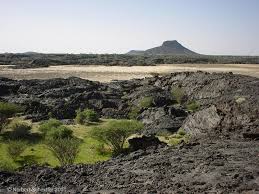
Saudi Arabia’s deserts are not usually associated with volcanic activity but Reuter’s reports that:

Fissures formed in western Saudi Arabia during the earthquake swarm

Magma has worked its way up to just under the surface in a remote region of northwest Saudi Arabia, causing a flurry of small to moderate quakes and threatening to form a new volcano, researchers said Sunday. A swarm of 30,000 quakes shook the region of Harrat Lunayyir from May to June last year and opened an 5-mile long rift, the U.S. Geological Survey team reported.

A wary Saudi government evacuated 40,000 residents at the time but has since let them move back home. But the residents should be ready to leave again if the ground starts to shake, the USGS team reported in the journal Nature Geoscience.

Harrat Lunayyir volcano is located in NW Saudi Arabia

“This finding indicates that the region is at risk from significant geohazards,” John Pallister of the USGS and colleagues at King Abdullah University of Science and Technology in Saudi Arabia and elsewhere wrote. The area is known for its lava fields, called harrat in Arabic, as well as small volcanic cones and volcanic ash called tephra. “The 2009 intrusive episode at Harrat Lunayyir, along with geomorphically young lava and tephra deposits are reminders that, although eruptions are not frequent, the harrat fields remain active and potentially hazardous,” they wrote.

Ancestors to the rescue? Mammoth ivory could reduce elephant poaching.

September 28, 2010

Elephant poaching in Africa continues fuelled by the demand for ivory – even illegal ivory. Yesterday 90kg of illicit ivory was seized entering Thailand from Ethiopia.

African elephant

Twenty years after the international trade in ivory was banned the killing of elephants for their tusks is still widespread. From a population of about 5 million African elephants in 1950, numbers reduced to about 450,000 in 1989 due to loss of habitat and the ivory trade. Since the ban in 1990 numbers have increased but only by about 100,000 and significantly less than hoped for. In 2007 45 elephants were killed by poachers in Kenya alone and in 2009 this had increased to 271. Mass poaching still occurs all over Africa and last year elephants in Sierra Leone were wiped out at its only Wildlife Park. One ton of ivory from about 100 elephants was seized in Cameroon last year on its way to China.

The Woolly Mammoth at the Royal BC Museum, Vic...

Wikipedia: Woolly Mammoth

But modern day elephants may get help from an unlikely source. Their woolly mammoth ancestors who became extinct 4000 years ago are beginning to throw their dead weight around as they emerge from under the Siberian permafrost. Every spring and summer mammoth carcases are revealed in Siberia and it is estimated that there are more than 150 million carcases preserved and recoverable. They have been recovered for thousands of years whenever they have been found. But now with the use of aerial surveys and with the high demand for ivory, mammoth ivory is beginning to be recovered in large quantities and used instead of illegal ivory. It is promoted as “ethical” ivory and the prices are high enough for Russian entrepreneurs to expand their digging.

“Russia’s mammoth ivory industry expands: what effect on elephants?”

by Esmond Martin, Chryssee Martin, Pachyderm No. 47 January–June 2010
http://www.pachydermjournal.org/index.php/pachy/article/view/171/107

Abstract: The commerce in woolly mammoth tusks (Mammuthus primigenius) in Russia, the main source for this raw material, has been going on for thousands of years, but during the communist period (1917-1989) the trade declined sharply. Since the early 1990s the domestic and international trade in these tusks has greatly expanded due to the freeing up of the Russian economy, more foreign visitors to the country and greater demand due to the prohibition of international trade in elephant ivory in 1990. In recent years, 60 tonnes of mammoth tusks have been exported annually from Russia, mostly to Hong Kong for carving in mainland China. Additionally, there are local carving industries in several areas of Russia, but most of the objects emerging from these locales are sold within the country. Many thousands of recently-made mammoth ivory items are for sale in Asia, Europe and North America. People wishing to buy an elephant ivory object may purchase a similar one crafted from mammoth ivory that is legal and free of cumbersome paperwork. Mammoth ivory items are not for sale in Africa. If mammoth objects were to be offered in Africa, they could serve as cover for elephant ivory items. There are pros and cons for supporting a mammoth ivory trade in respect to elephant conservation. At the moment, however, there is no evidence that the worldwide mammoth ivory trade is adversely affecting the African or Asian elephant. For this reason, and because the species is extinct and large quantities of tusks are still available in Siberia, the commerce in mammoth ivory should not be banned.

The Telegraph reports:

It is a phenomenon that has Russia’s businessmen rubbing their hands together as mammoth ivory can command a much higher price than elephant ivory and sells for as much as £330 per kilogram. Elephant conservationists are hoping that the guilt-free mammoth ivory trade continues to flourish and eventually squeezes out the illegal trade in elephant tusks altogether.

“The large quantities of mammoth tusks imported into Hong Kong, which are mostly sent to the Chinese mainland for carving, probably reduce demand for elephant ivory from Africa,” the report, in a specialist journal called Pachyderm, concluded. “This may in the long run lower elephant ivory prices and reduce incentives to poach elephants.”

Size comparison animalpicturesarchive.com

Is Greenpeace fabricating data?

September 28, 2010

In July this year Greenpeace trumpeted

rain forest

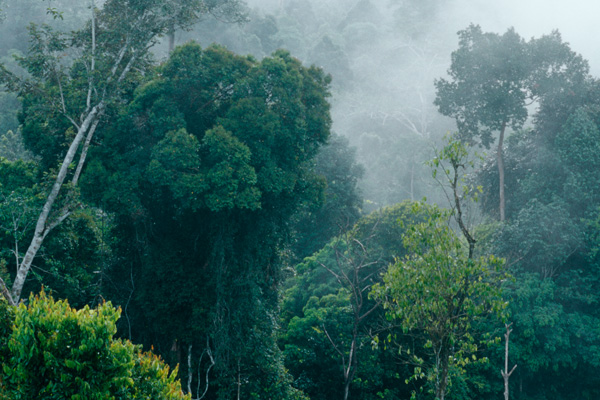
“A new investigative report from Greenpeace, ‘How Sinar Mas is Pulping the Planet’, shows how major brands like Walmart, Auchan and Kentucky Fried Chicken (KFC) are fueling climate change and pushing Sumatran tigers and orang-utans towards the brink of extinction. These companies are using or selling paper made from Asia Pulp and Paper (APP), part of the notorious Sinar Mas group that is destroying Indonesia’s rainforests and carbon-rich peatlands.”

The Jakarta Globe reports

Sinar Mas commissioned an independent audit which has now accused Greenpeace of “false and misleading information to attack a company’s credibility”. International Trade Strategies Global (ITS) conducted a peer-review on Greenpeace’s report, “How Sinar Mas is Pulping the Planet.”

“The evidence shows that Greenpeace provided quotes that don’t exist, maps that show concessions that don’t exist, and used source material with high margins of error that was cited as absolute fact,” said Alan Oxley, chief executive office of the Melbourne-based ITS Global on the press release.

Oxley said the Greenpeace report was highly misleading and indefensible. In addition, the audit stated that a map in the Greenpeace report shows four concessions which don’t exist. “Sadly this is not an isolated incident. Greenpeace has exaggerated claims in the past.  When we see reports like this with such obvious factual inaccuracies it makes us call into question the real Greenpeace agenda, risking the greater good to achieve its own political ends.”

However, Bustar Maitar, lead forest campaigner for Greenpeace Indonesia, dismissed ITS’s report, saying it was biased. “If they claim it’s an independent report, it’s a joke because Alan Oxley is speaking as an APP representative,” he said.

New Zealand to use dung beetles to combat global warming!

September 27, 2010
Allot of dung beetles having a feast on horse ...

Dung beetles feasting on horse manure

The Dung Beetle Release Strategy Group (it really does exist) says the introduction of up to 11 foreign species of dung beetle into New Zealand, which hoover up animal dung for food, will lead to a reduction in the greenhouse gas byproduct of dung, nitrous oxide.

Group spokesman Andrew Barber said the introduction of the beetles from Australia, the south of France, Spain and South Africa, would bring several benefits for farmers. Among these were the beetles’ ability to improve pastures and soil profile by tunnelling 30cm to 60cm to bury manure, aerating the soil and enabling better water penetration, reducing the need for fertilisers.

Mr Barber said they would also reduce greenhouse gas emissions from dung. The beetles aid carbon sequestration by storing the carbon contained in the organic matter deep in the soil.

Dung beetle

Image via Wikipedia: Dung beetle

Entomologist Ruud Kleinpaste doubted the introduction of dung beetles would cause an ecological upheaval, despite earlier animal imports such as possums, rabbits and mustelids that have become expensive problems. He said it was unlikely that they would compete with the 17 species of native dung beetles in native forests. But he urged caution. “We have mammals here now and the poo is causing nitrification and causing major pollution on our farms,” he said.

Mr Barber said that if the idea were approved it could take 15 to 20 years for the beetles to become fully established and for their labours to become obvious.

Source: http://www.nzherald.co.nz/the-changing-world/news/article.cfm?c_id=1502962&objectid=10675713

UN appoints an “Alien Ambassador” – Alien travel to earth suspended.

September 27, 2010
Logo of UN Office for Outer Space Affairs

UNOOSA

This is probably the kiss of death for any prospective alien visits to earth.

An Alien Ambassador is to be appointed by the United Nations to act as the first point of contact for aliens trying to communicate with Earth.

In the midst of a global financial meltdown and a painful recovery the UN is displaying a remarkably insensitive – but not unsurprising – sense of priorities.

But the required quota of Malaysian UN appointees has probably been filled.

Take me to your leader

But good luck anyway to Mrs Mazlan Othman, a Malaysian astrophysicist, who is going to co-ordinate humanity’s response if and when extraterrestrials make contact. This sounds like a well-paid and tenured appointment which should last at least for life. Mrs Othman is currently head of the UN’s little known Office for Outer Space Affairs (Unoosa).

She is quoted to have said:

“The continued search for extraterrestrial communication, by several entities, sustains the hope that some day human kind will received signals from extraterrestrials. When we do, we should have in place a coordinated response that takes into account all the sensitivities related to the subject. The UN is a ready-made mechanism for such coordination.

Under the Outer Space Treaty of 1967, which Unoosa oversees, UN members agreed to protect Earth against contamination by alien species by “sterilising” them.

Alien travel agents must now be striking Earth off their tours.

Oh Dear !