Commonwealth Games and the “last minute fix”

October 2, 2010

CWG 2010 New Delhi

The adjectives being used a week ago were a public relations disaster for India:

“filthy, unlivable, uninhabitable, unhygenic, rampant corruption, chaotic, unfinished, disease-prone, dengue, terrorism risk …”

Even allowing for the fact that all projects in India believe implicitly in the “last minute fix”, the situation was desperate. Athletes were pulling out, some countries were considering pulling out of the games entirely, politicians and administrators were busy positioning themselves, pointing fingers at others and all denying any personal involvement in the corruption. The Australian  national pastime of India-bashing was having a field day.

The view today – just one day away from the opening of the Games – is slightly more optimistic. Athletes are living in the Games village and are finding it quite good if not salubrious- Australian athletes included (though many of the “softer” and less adventurous athletes from the UK have opted for 5-star hotels).

Sydney Morning Herald: Australian athletes have hit the Twittersphere to give the thumbs up to their accommodation and security in New Delhi ahead of the Commonwealth Games.

Toronto Star: New Delhi ready for Commonwealth Games, athletes say

A major fiasco is less likely than a week ago but this is India where everything is possible and anything can be impossible.

IG Stadium

More than 5,800 athletes and officials have already arrived in Delhi. With more arrivals scheduled in the coming days, to reach 6,700, Delhi 2010 is well on the way to becoming the biggest in history. The 2006 Melbourne Commonwealth Games saw the participation of 5,766 athletes and officials. The adjectives being used have changed to be “comfortable, satisfactory, acceptable…..”

My fingers are crossed and hope it is a great games  for all.

Life flows back into the Murray-Darling Basin

October 1, 2010

From the Sydney Morning Herald:

An aerial view of the Choke (north and south lagoon) of the Coorong. Photo: David Mariuz

The long wait is almost over at the mouth of Australia’s greatest river. A decade after it last spilt into the sea, the Murray River will reconnect with the Southern Ocean in a matter of days.

The Murray-Darling Basin is having its fourth wettest year (to date) on record, the Bureau of Meteorology said yesterday. The Murray’s famous Lower Lakes – surviving on environmental ”death row” last year – have swollen close to 150 centimetres higher than the nadir of 2009, thanks mostly to summer downpours in northern Australia and the September floods in Victoria.

Chief executive of South Australia’s environment and water department Allan Holmes is bullish about the future, saying the region was already ”an entirely different environment” to the one he was managing six months ago. ”These systems, provided you don’t tip them over the edge, are enormously resilient and they come back with a vengeance,” he said.

Just a month ago The plight of Australia’s Murray-Darling Basin was being attributed to climate change:

“Australian climate scientists see the country as ‘extremely vulnerable’ to climate change and the Murray-Darling Basin as a ground zero for global warming. Climate change advisors to Australia’s government have warned that agricultural production in the basin could fall by up to 92% by 2100”.

“Global warming will trigger more frequent and severe droughts, as well as more devastating bushfires, cyclones and floods”–Kathy Marks.

Next week is Nobel week: My layman forecasts

October 1, 2010

This week I won a $10 prize in a lottery and my belief in my crystal ball is high (but I ignore the fact that the lottery tickets cost me $30).

Nobel Prize® medal - registered trademark of the Nobel Foundation

Nobel prize medal

Next week is Nobel week and the winners for Medicine will be announced on Monday 4th, for Physics on Tuesday 5th and for Chemistry on Wednesday 6th. I pass over the Literature, Economics and Peace prizes in silence but address my crystal ball as to the areas of research that will be honoured.

Medicine: The 2 areas that spring to mind are stem cells and genetic cancer research. To choose one I go for stem cells with Dr. Yamanaka included in there somewhere.

Physics: The 2 areas I see as most likely are either quantum physics or the expanding universe. To choose one I plump for the universe and Prof. Perlmutter among the recipients.

Chemistry: I am fascinated by new materials and with graphene being the flavour of the decade I choose work related to graphene as being the winner. To name a name it would be just if the first person to discover graphene received recognition and so I hope that Hanns-Peter Boehm is on the list.

In spite of my lottery win, I put the probability of being right on one count at no more than 1%, on two counts at 0.1% and being right on all 3 at 0.01%.

Add your favourites if you have any.

Rain and lack of wind hit UK renewable generation

October 1, 2010

The Guardian reports that

The UK has suffered a second fall in renewable energy production this year, raising concern about the more than £1bn support the industry receives each year from taxpayers.

Wind turbine accident

Lower than expected wind speeds and rainfall led to a 12% fall in renewable electricity generated between April and June, compared to the same period in 2009. This setback follows a smaller but still notable decline between January and March, again compared to last year.

The DECC admits that “The intermittent nature of wind means that we do need alternative back-up generation, for when wind speeds drop” but should have added that alternative capacity is also necessary when it blows too hard and when it is too cold and when the foundations are cracking and …

Seasonal power generation can contribute marginally to energy needs but cannot provide base-load power generation.

Wind is not always as benign as it is made out. The “Summary of Wind Turbine Accident Data to 31 December 2008” reports 41 worker fatalities.

BBC balance: 1 PR = 2 x FRS

October 1, 2010

The BBC carries a short article about the Royal Society’s rewritten “Short guide to the science of climate change”.

Professor Anthony Kelly, one of the 43 Fellows who called for the change, says he is reasonably satisfied with the new guidance. “It’s gone a long way to meeting our concerns,” he said. “The previous guidance was discouraging debate rather than encouraging it among knowledgeable people. The new guidance is clearer and a very much better document.”

Professor Kelly is one of two Fellows who are advisers to Lord Lawson’s Global Warming Policy Foundation, which says it wants to bring balance to a “seriously unbalanced, irrationally alarmist” debate about the impact of human activities on the Earth’s climate system.

Having named the GWPF the BBC feels it incumbent for the sake of balance to also mention the Grantham Research Institute on Climate Change and the Environment, But to do this they are forced to quote a certain Bob Ward who is the PR hack of the Grantham Institute.

But the BBC which is far from neutral in the climate disruption / change debate, reveals its governing mathematics when it implies that one public relations hack is sufficient to balance two Fellows of the Royal Society:

1 x PR = 2 x FRS

Russian hotel enters space tourism race

September 30, 2010

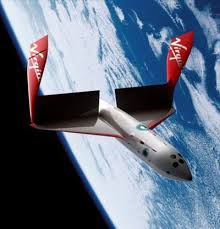
Virgin Galactic

In 2007, Genesis II, an experimental spacecraft designed to test the viability of a space hotel, was successfully sent into orbit by Bigelow Aerospace. Boeing have announced that they will be able to take tourists into space in 5 years.

The Galactic Suite

Virgin Atlantic has announced its intention to begin redeeming tickets on commercial space flights within the next 18 months – by some time in early 2012. In 2009 the Barcelona-based developers of The Galactic Suite Space Resort said their orbiting hotel was on target to accept its first paying guests by 2012.

Today the BBC reported that a Russian company has unveiled an ambitious plan to launch a “cosmic hotel” for wealthy space tourists. Orbital Technologies says its “comfortable” four-room guest house could be in orbit by 2016, Russia’s RIA Novosti news agency reports. Guests would be ferried to the hotel on a Soyuz shuttle of the type used to transport cosmonauts to the International Space Station (ISS). The new hotel would offer greater comforts, according to Sergei Kostenko, chief executive of Orbital Technologies. “Our planned module inside will not remind you of the ISS. A hotel should be comfortable inside, and it will be possible to look at the Earth through large portholes,” he told RIA Novosti.

It is not clear how the “cosmic hotel” would be built, but the company’s website names Energia, Russia’s state-controlled spacecraft manufacturer, as the project’s general contractor. Energia builds the Soyuz capsules and Progress cargo ships which deliver crew and supplies to the ISS.

China’s second moon probe Chang’e-2 to launch this weekend

September 30, 2010

From Space.com:

On Thursday, workers will begin fueling the Long March rocket that will blast the unmanned Chang’e-2 probe into space from Xichang Satellite Launch Center in Sichuan province, Xinhua reported. Launch will occur “at an appropriate time” between Friday — China’s National Day, when the country marks 61 years of Communist rule — and Sunday (Oct. 3).


Chang'e-2 lunar probe


Chang’e-2 is the second step in China’s three-phase Chang’e moon exploration program, which is named after China’s mythical moon goddess. Chang’e-2 will test out technology and collect data on possible landing sites for the Chang’e-3 spacecraft, which is scheduled to land on the moon in 2013. According to the state news agency, Chang’e-2 should arrive at lunar orbit about five days after launch. It will eventually swoop down to an orbit just nine miles (15 km) above the lunar surface to take high-resolution pictures of landing areas for Chang’e-3. After snapping the photos, Chang’e-2 will retreat to an altitude of about 62 miles (100 km) to conduct a study of the lunar surface and dirt.

The Chang’e-1 probe  launched in October 2007 and conducted a 16-month moon observation mission, after which it crash-landed on the lunar surface by design, in March 2009.


The launch of Long March 3B Rocket, Xichang Sa...

Image via Wikipedia:Long March 3B Rocket launch


Michibiki navigation satellite in position over Japan

September 30, 2010

Japan’s first navigation satellite has arrived on station more than 20,000 miles over Asia to improve positioning coverage in mountainous terrain and urban centers.

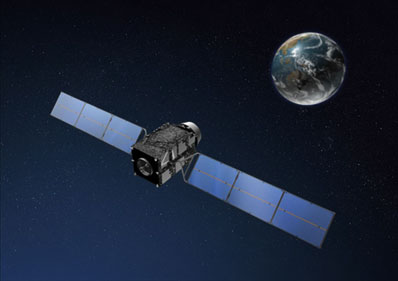
Artist's concept of the Michibiki satellite. Credit: JAXA

MICHIBIKI injected into the quasi-zenith orbit with its center longitude of about 135 degrees.

The First Quasi-Zenith Satellite MICHIBIKI, which was launched by the H-IIA Launch Vehicle No. 18 on Sept. 11 (JST,) has been maneuvered to shift its orbit from the drift orbit to the quasi-zenith orbit starting on the 21st. The satellite is now confirmed to be inserted into the quasi-zenith orbit over Japan with its center longitude of about 135 degrees through the final orbit control performed at 6:28 a.m. on Sept. 27. The MICHIBIKI was launched from the Tanegashima Space Center at 8:17 p.m. on September 11, 2010 (JST.)

Yoshinobu Launch Complex

Yoshinobu Launch Complex at the Tanegashima Space Center: JAXA

JAXA’s press release is here:

http://www.jaxa.jp/press/2010/09/20100927_michibiki_e.html

“Gliese 581g”: Habitable planet found?

September 30, 2010
Habitable zone-he

Image via Wikipedia: Habitable zone

From just a week ago “Two researchers have used the pace of past exoplanet finds to predict that the first habitable Earth-like planet could turn up in May 2011″.

A pessimistic forecast perhaps because astronomers may have found the most Earth-like alien planet to date, and it’s located only a short distance away, cosmically speaking. The team says that the planet’s proximity to its sun, coupled with the ease with which it was detected, suggests that the galaxy could be teeming with habitable worlds.

Science reports that:

Gliese 581g looks like a game-changer. Detected from the minuscule amount of gravitational influence it exerts on its star, the planet lives a mere 20 light-years away in the constellation Libra. Gliese 581g is the sixth world discovered around its sun—and the fourth most distant. Yet its orbit brings it closer to its parent star than Mercury is to our sun. Still, it’s squarely within the habitable zone, because the planet’s star, which is a type known as a red dwarf, contains only about 30% of the sun’s mass and shines with only about 1% of its brightness, the researchers will report in an upcoming issue of the Astrophysical Journal.

Read the article:

http://news.sciencemag.org/sciencenow/2010/09/astronomers-find-most-earth-like.html

Sydney shivers! Can’t be climate must be weather.

September 30, 2010

Temperatures in Los Angeles must be due to climate but the cold in Sydney is probably only weather !!!

From the Sydney Morning Herald:

After their coldest winter in 13 years Sydney residents have just experienced their coldest September in five years. “September was an unusual month in terms of the lack of warm days across much of south-eastern Australia,” weatherzone meteorologist Brett Dutschke said.

When both daytime and overnight temperatures were combined, Sydney’s average temperature this month came in at just under 17 degrees. This made it the coldest September in five years, despite being one degree above the long-term norm. It was also the coldest September in terms of daytime temperatures in three years.

Sydney Winter Festival 2010

As far as rainfall goes, Sydney failed to receive the long-term monthly average of 69mm, despite having the normal number of rain days, 10. The city gained only 42mm, the lowest for September since 2007.

“With La Nina likely to peak in the next few months, we are expecting rainfall to increase, trending to near or above average into summer,” Mr Dutschke said. “During this period, daytime temperatures should be near or below average. Overnight temperatures are likely to be close to normal.”

Residents of Melbourne have just experienced their coldest September days in 16 years, Mr Dutschke said. Warmer days ahead will provide Adelaide residents with a good thawing out after enduring their coldest September in 18 years, Mr Dutschke said.