Microbes ate the BP oil plume

September 12, 2010

There is still some oil left of course but “the micro-organisms were apparently stimulated by the massive oil spill that began in April, and they degraded the hydrocarbons so efficiently that the plume is now undetectable, said Terry Hazen of Lawrence Berkeley National Laboratory”. These so-called proteobacteria — Hazen calls them “bugs” — have adapted to the cold deep water where the big BP plume was observed and are able to biodegrade hydrocarbons much more quickly than expected, without significantly depleting oxygen as most known oil-depleting bacteria do. Long before humans drilled for oil, natural oil seeps in the Gulf of Mexico have put out the equivalent of an Exxon Valdez spill each year, Hazen said.

NewsDaily reports that “A Manhattan-sized plume of oil spewed deep into the Gulf of Mexico by BP’s broken Macondo well has been consumed by a newly discovered fast-eating species of microbes”.

http://www.mcclatchydc.com/2010/07/13/97433/heres-some-hope-for-gulf-spill.html

The hysteria surrounding the BP accident (almost as if it had been intentionally engineered) has focused on the photo opportunities presented by oil-coated birds and beaches and has almost obscured the fact that 11 people were killed. The accident has been dubbed “the greatest environmental disaster ever” and has been used as evidence of the evils of technology. It has not suited the environmental “do gooders” to acknowledge that “green” activities cause more damage in the Gulf of Mexico than accidental oil spills.

In the media, blame and the allocation of blame has been the order of the day rather than  analysis of the mistakes made and the engineering and technical lessons to be learnt.

That doesn’t mean there is no oil left from the 4.9 million barrels of crude that spilled into the Gulf after the April 20 blowout at BP’s Deepwater Horizon rig. The U.S. government estimated on August 4 that 50 percent of the BP oil is gone from the Gulf and the rest is rapidly degrading.

For Hauser it was worth faking data to get tenure, it seems

September 10, 2010

The Harvard Crimson reports that it is rare for cases of misconduct to result in any loss of tenure at Harvard.

The obvious conclusion is that it was probably worthwhile for Hauser to fake data if the resultant spate of publications and fame led to tenure as it probably did. A disclosure of the fakery and any resulting sanctions – none so far – will still turn out to be less than the gains made due to the acquiring of tenure. If the cost-benefit analysis is in favour of faking data it undermines and negates the entire system of getting tenure.

As psychology professor Marc D. Hauser faces allegations of research misconduct—which the American Association of University Professors states may be grounds for revocation of tenure—some in the scientific community question whether Hauser should keep his teaching position at Harvard.

But a review of Harvard’s recent history of faculty scandals suggests those calling for the University to dismiss Hauser should not hold their breath.

IPCC: Self adulation or just simple plagiarism

September 7, 2010

It would appear that large sections of the IPCC 1995 Working Group 2 report has just lifted sections from a book published by its lead author.

It could be just simple plagiarism or is perhaps the self-adulation to be expected from lead authors – or the IPCC report being used for marketing the book??

http://www.rescuepost.com/.a/6a00d8357f3f2969e2013485bc0fc9970c-250wi

The Book the IPCC Plagiarized

by Donna Laframboise.

Read the rest of this entry »

Michael Mann and Marc Hauser

September 4, 2010

I am not sure if the cases of Marc Hauser(Harvard)  of Hausergate and Michael E Mann (Penn State and the University of Virginia) of Climategate are strictly comparable since the two gates follow different routes in the faking of science.

Climategate was more of a group activity by a small clique with a great deal of group-think, whereas Hausergate was much more solitary.  The peer-review process was perverted to an end by the Climategate gang but this is not apparent with Hauser. Mann’s “hockeystick” was more a “fudging” of some data, “cherry-picking” and massaging statistical method to support a pre-determined result while Hauser seems to have just plain faked the data he wanted to support his personal theories. The pursuit of tenure and publications and fame (and some associated fortune) are probably common to both cases.

Climategate however affected policy and had a clear political agenda. Many involved around Climategate and the IPCC have murky ties to the multi-billion carbon scam. In Hausergate the political agenda, if any, is rather soft.

But what is noteworthy is the increase in the number of such comparisons being made and that such comparisons seem appropriate:

  1. If Michael Mann Had Worked At Harvard Instead Of Uva, Would He Now Be Working At Burger King Or Mcdonald’s?
  2. David Sheffield ’11: Scientific misconduct
  3. Monkey business?
  4. “HAUSERGATE” IS GOOD FOR SCIENCE
  5. Two Different Approaches to Academic Monkey Business

The Czar’s lost gold may have been found

September 4, 2010
A map of Baikal

Image via Wikipedia

The search for Lost Treasures still goes on.

Source: Der Spiegel

Fearing that German troops might get their hands on it during World War I, Czar Nicholas II had had 500 tons of gold transported from St. Petersburg to Kazan.

Admiral Aleksandr Kolchak led the “White Guards” under his command over the Ural Mountains. Kolchak and his forces drove the Bolsheviks out of Kazan, a city east of Moscow, and took control of a major part of Russia’s gold reserves. The gold, worth about 650 million rubles, reportedly filled 5,000 crates and 1,700 sacks; the “Whites” required 40 railway cars for the journey.

The “Czechoslovakian corps” which had been fighting the Bolsheviks alongside Kolchak, handed over 410 million rubles’ worth of the gold over to the government in Moscow in return for safe passage home.

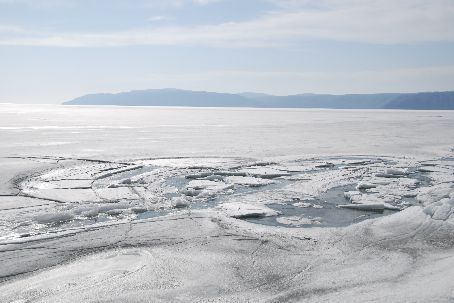
But what happened to the rest? The last traces of the gold have disappeared in the wide open spaces of Siberia. According to legend, members of the “White Guards” tried to cross Lake Baikal with the railway cars while it was frozen over with winter ice. But the weight of the cars caused them to crash through the ice and the gold sank into the depths. In fact, the frozen lake is still used as a route for traffic in the winter. During the Russo-Japanese War (1904-1905), railway tracks were even laid across the meter-thick ice.

This week, researchers, exploring the depths by submarine, may have found the Russian royals’ lost gold.

As Bair Tsyrenov slowly guided his Mir submersible up an underwater slope, a shimmer of gold was caught in the vehicle’s headlights, 400 meters (1,300 feet) below the surface of Lake Baikal. First the ship’s three-man crew discovered “steel girders that looked like railway bridges.” Then they struck upon the “bars with a particular golden radiance,” Tsyrenov, a researcher from the Lake Baikal Protection Fund, reports.

The find, made by researchers at the beginning of this week, was a spectacular one. For the last two years, the two Mir submersible research vehicles, usually at work in the Atlantic Ocean and the Indian Ocean, have been operating in Siberia’s Lake Baikal, the world’s largest freshwater body. These are the same two mini-submarines that brought the world the first underwater images of the Titanic.

The Mir expedition to Lake Baikal was actually supposed to be finishing up around now. But the vessels are currently hot on the trail of a legend: the last czars’ hoard of gold, which has been missing for 90 years and which, according to legend, lies in the depths of the Siberian lake.

Frozen Lake Baikal

http://aphs.worldnomads.com/nomadnorrie/10484/DSC_0985.jpg

Amazing: Hauser “solely responsible” but still maintains control of his lab!!

September 3, 2010

Amazing!

The Harvard Crimson reports that:

Harvard Psychology Professor Marc D. Hauser will remain in charge of his laboratory in William James Hall under “supervision established by the Dean of the [Faculty of Arts and Sciences],” a University official said yesterday.

FAS spokesman Jeff Neal declined to elaborate on the nature of the supervision, stating only that FAS Dean Michael D. Smith had imposed the additional oversight.

Neal added that graduate and post-doctoral students were given the option of switching advisers or continuing their research under Hauser “in order to avoid potential disruption to their careers.

Meanwhile, University of Washington Psychology Professor Michael D. Beecher said “people should be patient and let this thing play out and not rush to judgment on Marc.”

“I’m not sure to what extent the problem is Marc was fast and sloppy—and I don’t think he will be anymore,” he said.

“Fast and sloppy” is the current euphemism it seems at the University of Washington for faking results. Fatuous words about “not rushing to judgement”. 15 years ought to be enough. Hauser has been playing this game at least since 1995.

The wagons indeed are circling but while Hauser’s ethics are in tatters those of Harvard with their reluctance to take a stand do not impress much either.

http://www.nonprofituniversityblog.org/wp-content/uploads/double-standards.png


Behaviour, law and ethics: A practical view

September 3, 2010
Le Penseur, Musée Rodin, Paris

Image via Wikipedia

Whether in scientific endeavour, the business world or in politics we see daily scandals where behaviour is considered lacking in integrity or in ethics. In recent days we have had the Hausergate scandal, the Commonwealth Games corruption scandals, the money-down-the-drain in Iraq scandals and the HP procurement scandal.

For clarity in my own mind I reason as follows:

My values lead to my behaviour.

Values are comparative standards or norms and they calibrate and motivate my behaviour but in themselves they have no inherent goodness or badness. My values are my behavioural standards. They allow me to make comparisons (faster, better, pleasing, irritating, bearable, acceptable, good, just, right ….).

Behaviour may be lawful or unlawful or ethical or unethical.

Laws are what the society I operate in, or wish to operate in, uses to define what is unacceptable behaviour. But lawful behaviour does not address whether it is ethical or unethical (though that may be implied). Where law is silent, behaviour is, by default, lawful but may still be either ethical or unethical.

My ethics tell me what behaviour is correct and desirable behaviour. This may or may not be consistent with the ethics of the society surrounding me which specifies what that society considers the right and proper and desirable behaviour. Ethical values and ethical behaviour thus represents a sub-set of all the values I may have and all the consequent behaviour they might lead to. Ethical behaviour is not necessarily lawful. Unlike the limits set by law, behaviour does not become ethical by default if ethics are silent. Behaviour which is not unethical is not therefore necessarily ethical.

Ethical values and moral values are almost synonymous. The only difference I can find is that what I consider ethical codes or values rely more on logic or a rationale and less on faith. And I take faith or belief to be that which exists in the space of the “unknown unknowns” where ” I don’t know what I don’t know”. Faith or belief then allows formulating the answer (and even the question) in the absence of evidence. But both ethical codes and moral codes specify  right and proper and desirable behaviour. Behaviour that is not unethical or immoral does not by default become ethical or moral.

In practice therefore;

  1. My values lead to my behaviour,
  2. Laws tell me what I ought not to do,
  3. Ethics tell me what I ought to do.

Many corporations and organisations and enterprises take the easy way out and adopt so-called ethical codes which are merely  a set of rules (codes of law). But this is merely relying on what not to do and is an abdication of the responsibility to come to a view on what is the right and proper thing to do. The right and proper behaviour must – I think – include a conscious choice from the various options available of what can be done and cannot be merely an exclusion of unacceptable or undesirable behaviour.

A child first accepts its parents view of what is right or wrong. As it grows it brings in and integrates what others consider right or wrong. Eventually a mature thinking individual develops his own views of what is right or wrong and integrates that with the views of the surrounding society. In this sense, most corporations and other organisations are still in their infancy and are content to rely only on what law excludes as being unacceptable. This in turn leads to a minimalist ethical code where anything which is not explicitly unlawful is perfectly OK.

Hence Enron and Satyam and Siemens and British Aerospace and …………

It is the having of an ethical code that matters.

Hawking, God, creation and gravity

September 2, 2010

There have been headlines today regarding Stephen Hawking’s new book The Grand Design (co-written by US physicist Leonard Mlodinow) to be published on 9th September.


Defense Meteorological Satellite Program

Image via Wikipedia


“God did not create the Universe”

is the BBC headline.

Citing the 1992 discovery of a planet orbiting a star other than our Sun, he said: “That makes the coincidences of our planetary conditions – the single Sun, the lucky combination of Earth-Sun distance and solar mass – far less remarkable, and far less compelling as evidence that the Earth was carefully designed just to please us human beings.” He adds: “Because there is a law such as gravity, the universe can and will create itself from nothing. ….Spontaneous creation is the reason there is something rather than nothing, why the universe exists, why we exist…..It is not necessary to invoke God to light the blue touch paper and set the universe going.”

But if The Big Bang and  all the subsequent creation events flow naturally and inevitably from the law of gravity, what still remains is to explain where the law of gravity came from or from what it flows naturally and inevitably……….

No matter how much more is discovered by science we will still have the space of the “unknown unknowns” (a la Rumsfeld) where we do not even know what questions are feasible – let alone what question to ask.

A reprieve for incandescent bulbs?

September 2, 2010

I still have hope that the Edison bulb will survive – in spite of all the do-gooders who want to be Nanny.

New research may provide the answer.

http://www.greenzer.com/blog/blog_image_store/2009/09/eu-bans-incadescent-light-bulbs.jpg

According to an article in The New York Times,

Incandescent Bulbs Return to the Cutting Edge

“Researchers across the country have been racing to breathe new life intoThomas Edison’s light bulb, a pursuit that accelerated with the new legislation. Amid that footrace, one company is already marketing limited quantities of incandescent bulbs that meet the 2012 standard, and researchers are promising a wave of innovative products in the next few years.

“There’s a massive misperception that incandescents are going away quickly,” said Chris Calwell, a researcher with Ecos Consulting who studies the bulb market. “There have been more incandescent innovations in the last three years than in the last two decades.”

For lighting researchers involved in trying to save the incandescent bulb, the goal is to come up with one that matches the energy savings of fluorescent bulbs while keeping the qualities that many consumers seem to like in incandescents, like the color of the light and the ease of using them with dimmers.

“Due to the 2007 federal energy bill that phases out inefficient incandescent light bulbs beginning in 2012, we are finally seeing a race” to develop more efficient ones, said Noah Horowitz, senior scientist with the Natural Resources Defense Council.

Some of the leading work is under way at a company called Deposition Sciences here in Santa Rosa. Its technology is a key component of the new Philips bulb line.

Normally, only a small portion of the energy used by an incandescent bulb is converted into light, while the rest is emitted as heat. Deposition Sciences applies special reflective coatings to gas-filled capsules that surround the bulb’s filament. The coatings act as a sort of heat mirror that bounces heat back to the filament, where it is transformed to light.

Despite a decade of campaigns by the government and utilities to persuade people to switch to energy-saving compact fluorescents, incandescent bulbs still occupy an estimated 90 percent of household sockets in the United States. Aside from the aesthetic and practical objections to fluorescents, old-style incandescents have the advantage of being remarkably cheap”.

There is still hope.

Human pylons across Iceland

September 1, 2010

Human Engineering !

From The Beautiful Brain

“Like the statues of Easter Island, it is envisioned that these one hundred and fifty foot tall, modern caryatids will take on a quiet authority, belonging to their landscape yet serving the people, silently transporting electricity across all terrain, day and night, sunshine or snow.”

From http://www.wired.co.uk/news/archive/2010-08/16/human-pylons

An architecture and design firm called Choi+Shine has submitted a design for the Icelandic High-Voltage Electrical Pylon International Design Competitionwhich proposes giant human-shaped pylons carrying electricity cables across the country’s landscape.

The enormous figures would only require slight alterations to existing pylon designs, says the firm, which was awarded an honourable mention for its design by the competition’s judging board. It also won an award from the Boston Society of Architects Unbuilt Architecture competition.

http://cdni.wired.co.uk/674×281/o_r/pylons.png

Human pylons carry electricity across Iceland

http://img.wired.co.uk.s3.amazonaws.com/659×425/o_r/pylons2.png

Pylons

http://www.choishine.com/port_projects/landsnet/landsnet.html

Despite the large number of possible forms, each pylon-figure is made from the same major assembled parts (torso, fore arm, upper leg, hand etc.) and uses a library of pre-assembled joints between these parts to create the pylon-figures’ appearance. This design allows for many variations in form and height while the pylon-figures’ cost is kept low through identical production, simple assembly and construction.