Remembering an escape from Singapore — 75 years on

August 12, 2017

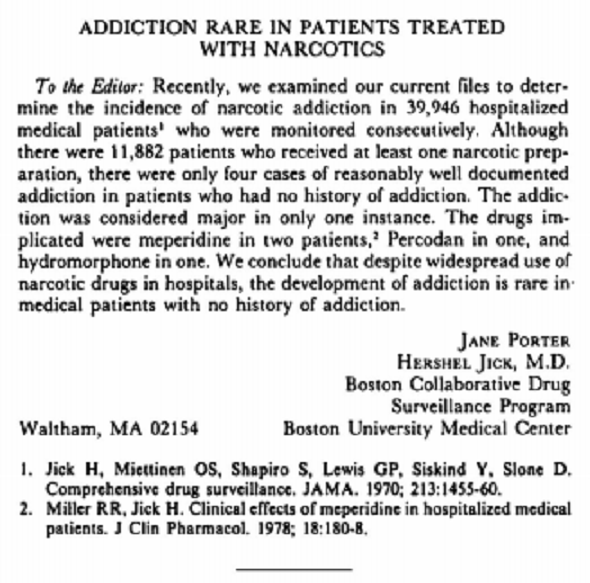
Capt. Mark Pillai c. 1950

My father would have been 106 years old yesterday.

Seventy five years ago he was the first Allied officer (the first of only five) to escape from being a Japanese prisoner-of-war and successfully return to India. He left Singapore on 7th May 1942 and managed to reach India on 26th August 1942.

First Allied POW escape from Singapore in 1942

He was the first Allied prisoner of war to escape from Changi and return to India. He used to tell us that he had travelled a thousand miles on foot, a thousand miles by boat and a thousand miles by train to make his journey of 3000 miles to freedom. In 1968 he tried to get a copy of his official debriefing report from the War Office in London to cross-check his manuscript written from memory long after the event. But he found that the report had been classified to be held secret for 50 years.

In 1942, the Allies were desperate for “good news” and the story of the escape was widely distributed – though labelled top secret – and only within Allied military circles. Recognition was rushed through as “Most Urgent” and he was awarded the Military Cross. However, the official documents remained secret for 50 years and were not released till 1992. Apparently the 50 year secret classification was because his debriefing included not only the names of people who had helped him along the way but also the names of people he felt were Japanese collaborators.

The documents below are the Royal Approval for that award initialed by King George VI on 11th September just two weeks after his return. He received the award from Field Marshal Wavell.

“3000 Miles to Freedom” by Brig. M. M Pillai M.C.


Did religions originate as death rituals long before we were human?

August 7, 2017

The roots of religion lie very deep and probably go back to before our ancestors had become hominids.

The sequence probably began with rituals, possibly death and birth rituals in that order. The gods came later. They were likely invented and invested with magical powers to call for desired weather or to avoid natural disasters. Organised religions and their troublesome priests came even later. The use of death rituals most likely goes back to before our ancestors came down from the trees which would be before bipedalism and before the control of fire.

Animals may have religion:

First, animal responses to death show striking similarities to how humans religiously respond to death. For instance, magpies, gorillas, elephants, llamas, foxes, and wolves all use ritual to cope with the death of a companion. Magpies will peck the dead body and then lay blades of grass next to it. Gorillas hold something so similar to a “wake” that many zoos have formalized the ritual. Elephants hold large “funeral” gatherings and treat the bones of their deceased with great respect. Llamas utilize stillness to mourn for their dead. Foxes bury their dead completely, as do wolves, who, if they lose a mate, will often go without sex and seek solitude. In all of these cases, the animals rely on ritual to ease the pain of death. Even if one will not grant their rituals the title “religious,” at the very least the overlap between animal and human death rituals stands out as striking.

Hominids first appeared around 7 -8 million years ago. It is quite likely that they already had death rituals not unlike what we see in gorillas today. These rituals probably became quite complex over the next few million years as communication within and between social groups increased. It is also during this period that the “awe” engendered by natural catastrophes and nature in general was probably formalised into rituals.

…. primates respond to what appears to be the “awe” of nature in ways that could be described as “religious.” The chimpanzees of Gombe “dance” at the base of an enormous waterfall in the Kakombe Valley. This “dance” moves slowly and rhythmically alongside the riverbed. The chimps transition into throwing giant rocks and branches, and then hanging on vines over the stream until the vines verge on snapping. Their “dance” lasts for ten minutes or longer. For humans, this waterfall certainly instills awe and majesty. Obviously, no one can know the internal processes of a chimpanzee. That said, given the champanzees’ reaction to the waterfall and their evolutionary nearness to humans, it is not far-fetched to think that they too may experience feelings of awe when they encounter that waterfall.

Another set of primates, the savanna chimps of Senegal, perform a fire dance. Most animals flee from wildfires, fearing for their lives. To the contrary, these chimps only slowly move away from it, and at times even move closer to it. One dominant male went so far as to make a slow and exaggerated “display” at the fire.

For one last example of primates possibly exhibiting a reaction to the awe of nature, Gombe baboons perform a “baboon sangha.” Without signal or warning, these baboons sat in silence before a stream with many small pools and simply gazed at the water. They did this for over 30 minutes, without even the juveniles making a peep. Again without signal or warning, they resumed their normal activities.

The first god?

The control of fire only comes with homo erectus around 1.6 million years ago. By this time the idea of a sun-god and a moon-god and wind-gods had probably been established. The advent of fire gave rise to fire-gods as offshoots of the sun-god. Initially, I have no doubt, the priority was that the gods were to be placated. With survival the primary objective, natural disasters were to be avoided at all costs. Earthquakes, volcanic eruptions, hurricanes and storms unleashed unimaginable and inexplicable power and were ascribed to angry gods. Angry gods needed to be placated. It seems to me that explicitly seeking the favour of the gods – prayer – must have come much later.

The idea of priests as having a special position as the mediators between the rabble and the gods, probably coincides with the organisation of rituals and gods into religions. That, of course, is much more recent and probably no more than around 20,000 years ago.

Related: Do Animals Have Religion? Interdisciplinary Perspectives on Religion and Embodiment


There is a cognitive limit (the Wordsmith number) to the number of words you can know?

August 5, 2017

Most people know around 20,000 – 35,000 words (in any language). Extremely gifted people – very rarely – may approach a vocabulary of 60,000 words. Even multi-lingual people seem to have a total vocabulary not exceeding the limits of mono-lingual people. Twenty years ago when I lived in Japan, my English conversations included many words which I no longer have in my active memory. Similarly Chinese, Hindi, Tamil and German words that I once used regularly as part of my social conversations in English, are no longer in my active memory.

But why does each of us know so few words of all the words that are available?

It cannot be memory capacity in the brain that sets the limit. My hypothesis is that just like there seems to be a cognitive limit to the number of significant social connections a person can maintain (the Dunbar number – averaging around 150 with a minimum of around 50 and a maximum of perhaps 250), there is a cognitive limit (the Wordsmith Number) to the size of the active vocabulary that a person can maintain. (I note that the number of Facebook friends or Twitter followers do not represent significant social relationships).

The more you read the bigger your vocabulary. The more you write the more likely you are to have a larger vocabulary. The more diverse your social connections the larger vocabulary you need and have. But yet, each of us knows only a fraction of the active words available in any language. The active words in a language form only a fraction of the total words in that language. And the total words in a language are a tiny fraction of all the words that could be formed by an alphabet a and a set of rules.

In any language, the rules of grammar together with about 2,000 base words would be sufficient to get by.  In any language a degree of proficiency would have been achieved with a vocabulary of around 10,000 base words. Over 20,000 words would be considered a high level of fluency.

The number of words needed to enable most communication needs is thus not so large. Equally, knowing words that are not used is pointless. Words that others don’t know is of no great use either. Yet, we have all at some time complained of  “not having the words to express our feelings”. We are often “lost for words”. Our eyes can distinguish shades of colour for which there are no specific words. But we use adjectives and combine words to express emotions or shades of colour rather than invent specific words for just that shade or that emotion.

In any alphabet where the length of a word is not restricted, there are an infinite variety of ways of creating combinations of letters to be words. In practice most languages have working vocabularies of a few hundred thousands and even if all possible variations and forms, past and present, are counted, the vocabulary may be around one million words. The Oxford English Dictionary has around 177,000 words as being in current usage and another 50,000 as obsolete. Similarly German has around 150,000 words as being in current use and Swedish has around 125,000. However current usage is not the whole story. Current usage is only a part of the total number of words available in a language where the total number depends on the age of the language. It is said that Japanese has around 100,000 active words in a total vocabulary of around 500,000. The OED estimates the total number of words in English to be around 750,000. Other estimates put the total English vocabulary at just over one million words.

Atkinsbookshelf:

According to the Global Language Monitor’s (GLM) “English Language WordClock,” there are 1,005,366 words in the English language. …… The Google/Harvard Study of the Current Number of Words in the English Language also arrived at a similar number — 1,022,000 (a difference of .o121%) ……… The Oxford English Dictionaries (OED) comes up with an estimate of 750,000, when counting only distinct senses and excluding variants.

The number of words that any person knows in a language is also not so easily determined. I would generalise to say that all modern languages have each around 100 – 200 thousand active words with a total vocabulary depending upon the age of the language and ranging from 300,000 to about 1 million. But, in most extant languages today, any single individual generally has a personal vocabulary which is only around 10 – 20% of the active words (or 2 – 5% of the total number of words) available in that language. An exceptionally gifted person might come up to around 30% of active words (or less than 10% of the total number of words). Depending on how words are defined Shakespeare is thought to have had command over about 8% of all the English words of that time but only used about 4% in an all his writings. In modern times James Joyce is thought to have had an extraordinarily large personal vocabulary and perhaps it was even a little more than 10% of the total number of English words. Ulysses alone – by one count – contains a larger vocabulary than all of Shakespeare’s works.

According to lexicographer and Shakespeare scholar David Crystal, the entire English vocabulary in the Elizabethan period consisted of about 150,000 words. ……… Crystal believes that Shakespeare had a vocabulary of about 20,000 words (13.5% of the known lexicon). Compare that to the size of the vocabulary of the average modern person (high school-level education) that is 30,000 to 40,000 words (about 6% of the 600,000 words defined in the Oxford English Dictionary). Other lexicographers estimate that Shakespeare’s vocabulary ranged from 18,000 to 25,000 words.

….. In their 1976 study, “Estimating the Number of Unseen Species: How Many Words Did Shakespeare Know,” statisticians Bradley Efron (Stanford University) and Ronald Thisted (University of Chicago) used word-frequency analyses to predict more accurately Shakespeare’s actual vocabulary, including the words he used in his writing (active or manifest vocabulary) and the words he knew but didn’t use in his writing (passive or latent vocabulary). Efron and Thisted turned to the Harvard Concordance and the 31,654 different words from a grand total of 884,647 words, including repetitions. …….. Thus to calculate Shakespeare’s total working vocabulary, we add 31,534 different words found in his writings to the 35,000 words he probably knew, to arrive at an estimate of 66,534 words. 

Taking only current words in English as an example (< 200,000) , most individuals considered fluent would have between 25,000 – 40,000 words in their personal vocabularies. (There may be the extremely rare person with a personal vocabulary approaching 60,000 words, though that is doubtful. But there is surely nobody with a personal vocabulary greater than that). Even for those who are multilingual, the sum of the words they command in all languages seems to be limited to be no different to those who are monolingual.

Psychologytoday:

the rate and pace of development of the bilinguals’ lexical knowledge were similar to those of monolingual children. In addition, the total vocabulary count of these children (taking into account both languages) was not different to that of the monolinguals, but their single language vocabularies were somewhat smaller. So we have known for some time that bilingual children do have as many words as their monolingual counterparts when both languages are taken into account but maybe not so when one examines only one language.

Why this apparent limit to the number of words one can know?


My hypothesis is that there is a stable level – the Wordsmith Number – which the brain establishes. It is a cognitive limit to the size of the active vocabulary that a person can maintain. It is established by the manner in which the brain learns, stores and retrieves active and passive words. It is a dynamic level and varies as our activities change (reading, writing, speaking, diversity of social relationships ..). Words that are not active are shunted out of active memory. In very rare circumstances is a Wordsmith Number of greater than about 30,000 established.


Time precedes existence

August 4, 2017
While Ilya Prigogine (Nobel prize in 1977 for nonequilibrium thermodynamics) claimed that time precedes existence, Einstein, Newton, and others held a symmetric view of time where time and existence occur simultaneously.
I am inclined to Prigogine’s view.
Causality, time, entropy, heat transfer, plastic deformation and spontaneous chemical reactions are all examples of irreversible processes.
I note that even in the statement “I think, therefore I am”, a “before” and an “after” is implied.
In fact, even the statement “I exist” implies that I exist “in time”.
Real time precedes the Big Bang.
Thereafter we have perceived time.
Time is causal.
It is not just past events which cause future events, past time causes future time.
Time precedes existence.

Manliness has more than halved in western men since 1973

July 26, 2017

There is a new paper, a meta-review, receiving much attention.

The manliness of western men has more than halved between 1973 and 2011. It reports a significant ongoing decline in sperm concentration and sperm counts of Western men. It seems that “between 1973 and 2011, the researchers found a 52.4 percent decline in perm concentration, and a 59.3 percent decline in total sperm count, among men from North America, Europe, Australia and New Zealand ….  In contrast, no significant decline was seen in South America, Asia and Africa.”

Being a meta-review this study does not shed light on the causes of this drastic decline in the manliness of western men. It speculates that this may be due to chemicals or lifestyle or smoking or obesity or pesticides or some other factor. This speculation is just speculation and smoking or pesticide use would have caused stronger effects in Asia. They are quite right, however, in not following the sheep and including global warming as a possible cause. However they seem to be ignoring some other relevant factors.

I am inclined to think that the decrease of manliness among western men sounds more like a psychological reaction to political trends. Western society just values “manliness” much less than it used to. So other factors which probably need to be considered include:

  1. the increase of gender ambiguity
  2. the decrease in men’s social status
  3. the decline of political leadership in the west,
  4. the spread of political indecisiveness,
  5. the decline of corporal punishment in schools,
  6. the decline of femininity

It stands to reason that if gender difference is eliminated then sperm count and concentration will also decline. It follows that eliminating gender difference will result in the elimination of reproduction and species extinction.

Hagai Levine et al. Temporal trends in sperm count: a systematic review and meta-regression analysis. Human Reproduction Update. DOI: 10.1093/humupd/dmx022

MedicalXpress writes:  ….. between 1973 and 2011, the researchers found a 52.4 percent decline in perm concentration, and a 59.3 percent decline in total sperm count, among men from North America, Europe, Australia and New Zealand ….  In contrast, no significant decline was seen in South America, Asia and Africa. ….. The study also indicates the rate of decline among Western men is not decreasing: the slope was steep and significant even when analysis was restricted to studies with sample collection between 1996 and 2011. ….. 

While declines in sperm count have been reported since 1992, the question has remained controversial because of limitations in past studies. However, the current study uses a broader scope and rigorous meta-regression methods, conservatively addresses the reliability of study estimates, and controls for factors that might help explain the decline such as age, abstinence time, and selection of the study population.

“Given the importance of sperm counts for male fertility and human health, this study is an urgent wake-up call for researchers and health authorities around the world to investigate the causes of the sharp ongoing drop in sperm count, with the goal of prevention,” said Dr. Hagai Levine, the lead author and Head of the Environmental Health Track at the Hebrew University-Hadassah Braun School of Public Health and Community Medicine, in the Hebrew University of Jerusalem’s Faculty of Medicine.

The findings have important public health implications. First, these data demonstrate that the proportion of men with sperm counts below the threshold for subfertility or infertility is increasing. Moreover, given the findings from recent studies that reduced sperm count is related to increased morbidity and mortality, the ongoing decline points to serious risks to male fertility and health.

“Decreasing sperm count has been of great concern since it was first reported twenty-five years ago. This definitive study shows, for the first time, that this decline is strong and continuing. The fact that the decline is seen in Western countries strongly suggests that chemicals in commerce are playing a causal role in this trend,” Dr. Shanna H Swan, a professor in the Department of Environmental Medicine and Public Health at the Icahn School of Medicine at Mount Sinai, New York.

While the current study did not examine causes of the observed declines, sperm count has previously been plausibly associated with environmental and lifestyle influences, including prenatal chemical exposure, adult pesticide exposure, smoking, stress and obesity. Therefore, sperm count may sensitively reflect the impact of the modern environment on male health across the lifespan and serve as a “canary in the coal mine” signaling broader risks to male health.

It also follows that western men pose less of a risk to women looking for promiscuity, but that western women who wish to have children have a better chance with men having a higher level of manliness.


Known, unknown and unknowable

July 22, 2017

Donald Rumsfeld was often the butt of cheap jokes after this quote. In reality, Rumsfeld was absolutely spot on and close to philosophic.

Starting from where Rumsfeld left off we come to the distinction between the knowable and the unknowable

These are things we don’t know that we don’t know. There are knowable unknowns. That is to say, there are things that we could know but we don’t know which we don’t know. But there are also unknowable unknowns. There are things we cannot know that we don’t know that we can never know. 

a la Rumsfeld

I am coming to the conclusion that the sum of all human cognition lacks some of the dimensions of the universe. It may be increasing with time, but human cognition is limited. The expanding universe may be infinite or it may be boundless. For human cognition to grasp the universe is then like trying to measure an infinite length with a ruler of finite length, or of trying to measure some unknown parameter with a ruler marked in inches. Those measurements will never reach a conclusion.


Global population will likely start reducing by 2070

July 19, 2017

The alarmist meme of a global population explosion leading to catastrophic depletion of resources and mass famines was already obsolete 20 years ago. The alarmism reached its peak in the 1970s and 1980s  (peak oil, peak food, peak water, peak resources ….). At least the panicky stridency of the alarmism about a population explosion has long gone (though it has now shifted to become panicky stridency about catastrophic global warming).

The 2017 Revision of the UN World Population Prospects is now available.

  • the world’s population reached nearly 7.6 billion in mid-2017. The world has added one billion people since 2005 and two billion since 1993. In 2017, an estimated 50.4 per cent of the world’s population was male and 49.6 per cent female.
  • the global population is expected to reach 8.6 billion in 2030, 9.8 billion in 2050 and 11.2 billion in 2100, according to the medium-variant projection

However the projections are very sensitive to fertility rates and their development – especially in Africa. Actual fertility rates have always tended to be below UN projections of fertility.

In the 2017 review, the sensitivity to fertility rate is highlighted;

  • Future population growth is highly dependent on the path that future fertility will take, as relatively small changes in the frequency of childbearing, when projected over several decades, can generate large differences in total population.
  • In the medium-variant projection, it is assumed that the global fertility level will decline from 2.5 births per woman in 2010-2015 to 2.2 in 2045-2050, and then fall to 2.0 by 2095-2100.
  • fertility levels consistently half a child below the assumption used for the medium variant would lead to a global population of 8.8 billion at mid-century, declining to 7.3 billion in 2100.
  • fertility has declined in virtually all regions of the world. In Africa, where fertility levels are the highest of any region, total fertility has fallen from 5.1 births per woman in 2000-2005 to 4.7 in 2010-2015. Over the same period, fertility levels also fell in Asia (from 2.4 to 2.2), Latin America and the Caribbean (from 2.5 to 2.1), and Northern America (from 2.0 to 1.85). Europe has been an exception to this trend in recent years, with total fertility increasing from 1.4 births per woman in 2000-2005 to 1.6 in 2010-2015. Total fertility in Oceania has changed little since 2000, at roughly 2.4 births per woman in both 2000-2005 and 2010-2015.

As with Asia, I expect that the decline of fertility in Africa will accelerate with development and GDP growth. If global fertility turns out to be as much as 0.5 children/woman less than the medium assumption, global population will start declining already by 2050. It may not happen quite that fast but it is now very likely that the decline will have begun by 2070. By the end of this century global population may not be much more than it is today.

It is only a matter of time before the alarmists start getting panicky and strident about the impending population implosion.


The edge of the universe is to humans as the surface of the water is to fish

July 18, 2017

Things become weird and wonderful when physicists or cosmologists or astronomers talk about the “edge of the universe” or the “finitely bounded but infinite universe” or the “expanding universe” which does not expand into anything but creates space as it expands (the balloon analogy). I read that the Big Bang occurred 13.8 billion years ago but the size of the universe is said to be a diameter of (around) 93 billion light-years. Some photons, they say, have traveled 46-47 billion light-years since the Big Bang. Now how did they do that in just 13.8 billion years? The answer, say the physicist-philosophers, is that things aren’t moving away from each other so much as that the space between them is expanding. Really!

How can the universe be 93 billion light-years across if it is only 13.8 billion years old? Light hasn’t had enough time to travel that far…? Ultimately, understanding this facet of physics is the key to understanding what lies beyond the edge of the observable universe and whether we could ever get there. 

To break this down, according to special relativity, objects that are close together cannot move faster than the speed of light with respect to one another; however, there is no such law for objects that are extremely distant from one another when the space between them is, itself, expanding. In short, it’s not that objects are traveling faster than the speed of light, but that the space between objects is expanding, causing them to fly away from each other at amazing speeds.

Ultimately, this means that we could only reach the edge of the observable universe if we develop a method of transport that allows us to either 1) Travel faster than the speed of light (something which most physicists think is impossible) 2) Transcend spacetime (by using wormholes or warp drive, which most physicists also think is impossible).

The reality, I think, is that human cognition is limited. I reject the converse, that human cognition is unlimited, because, if it was, we would not have imponderable questions. Stephen Hawking has often said that “outside the universe” makes no sense, because if the universe came from nothing and brought everything into existence, then asking what lies beyond the universe is an invalid question. When physicists invoke dark energy and dark matter and, in the same breath, point out that they are unknown and undetectable, then it follows that human understanding is incomplete because of the limits to human cognition.

If human cognition is limited, whether at the level we have reached or ten times that level, our understanding of the universe around us is, and will be – and must be – also limited. We will always have a “conceptual edge” to the universe around us corresponding to our cognitive limits. Beyod this edge lies what is “unknowable”. The edge of the real universe lies at at the furthest reaches of our cognitive abilities.

As most fish (with exceptions for flying fish and lung fish) cannot conceive of the world beyond the surface of the water, so can humans not conceive a universe beyond the “conceptual edge” defined by their cognitive ability.

We can never observe what is beyond the “observable universe” because light will never get there. But it isn’t just light that doesn’t get there. Our minds don’t reach there either. There may be a multiverse out there – or maybe not. There may be just the ultimate void being converted into space-time as our universe eats into it. Or maybe there is The Restaurant at the End of the Universe awaiting the intrepid few who get there. Or maybe there is a Thing with a long white beard observing us to see if any human-fish manage to leap through the “edge of the universe”.


Humanity’s existential threats (sans alarmism)

July 13, 2017

Many so-called “scientists” indulge in phony-science which is entirely geared to winning funding. Alarmism is often misused. Such “scientists” and insurance companies cannot be trusted with risk assessments. They have a vested interest in exaggerating the risk, either to get more funding or to increase the sale of highly profitable insurance products.

(Insurance companies are expert at assessing risk. However their business is built on perceived risk being higher than actual risk. Their profits provide the evidence for how well they have succeeded both in raising perceptions of risk and in accurately predicting actual risk. “Scientific” papers authored or sponsored by insurance companies and their reports must always be taken with a large bushel of salt. Their publications are all about building up risk perceptions. They are probably very good at assessing the real risk, but that material will never get published. The risk of alarmism is multiplied when scientists are sponsored by insurance companies).

Politicians like exaggerated risk assessments where the causes of the risk are outside their control. This provides a bottomless pit of “allowable taxes”, ostensibly to “fight” against causes which are not understood and outside their control, but  provide for increased budget revenues.

Scientists, politicians and insurance companies inevitably try to arouse emotions and “fear level” to their own purposes.

The actual existential risks for humanity are a long way below what the alarmists would have us believe and need to be considered unemotionally. Risk assessment is an exercise which primarily needs common sense and which must not get mired in  “political correctness”.

The most serious existential threats facing humanity in the next 1,000 years come from the almost inevitable eruption of a super-volcano (which is overdue) and the continuing decline in global fertility which could give serious depopulation by 2100.

(I am quite happy to offer odds of 10 million to one to anybody who wishes to place money on a large asteroid impacting earth – say – within the next 5 years. The risk that the punter and I will both survive such an event. such that I have to pay out, is as close to zero as you can get).


The Ship of Theseus paradox is no paradox

July 12, 2017

A dictionary definition would define identity as the characteristics uniquely determining what makes a thing, whether living or inanimate. Consider what is necessary and sufficient to define an identity.

Inanimate things can have identity. The Great Pyramid, or the Empire State building or even that particular, nondescript boulder just there, has an identity. That particular boulder, with that volume and that physical composition and which now is located in my garden in Sweden, may have been formed when it was ejected after a volcanic eruption on Gondwanaland some 500 million years ago. Or it may have been formed 100 years ago when rocks in this region were blasted to build a road. The key point here is that this particular thing had a beginning on the time line of the universe. This beginning, this begin-time, is inextricably tied to the identity of this boulder. This identifiable boulder may have lost some mass by erosion over the years or it may have (though much less likely) grown in mass by accretion. Its mass may have changed over time and its shape and volume may have changed. Even its composition may have changed somewhat as chemical reactions with the surrounding atmosphere slowly occurred. At any given time however, the thing having identity uniquely occupies a physical space.

The Ship of Theseus (see Theseus paradox) had an identity.

The ship of Theseus, also known as Theseus’s paradox, is a thought experiment that raises the question of whether an object that has had all of its components replaced remains fundamentally the same object. The paradox is most notably recorded by Plutarch in Life of Theseus from the late first century. Plutarch asked whether a ship that had been restored by replacing every single wooden part remained the same ship.

I now borrow the concept of a control surface from fluid dynamics

In an inertial frame of reference, a control volume is a volume fixed in space or moving with constant velocity, through which the fluid (gas, or liquid) flows. The surface enclosing the control volume is referred to as the control surface.

Analogous to a control surface, I define an identity control surface. It is abstract (no mass, no thickness, no volume, no energy) but it is definable in 3-dimensional physical space at any instant of time. Unlike in fluid dynamics, this control surface does not enclose a fixed control volume, but physically encloses that which has identity. Whenever that boulder was formed, it was physically enclosed within an elastic identity control surface. The identity control surface is dynamic, elastic and permeable. It is not however fixed in space along the time axis. Its permeability allows the flow of material in both directions, but the integrity of the identity within is not compromised as long as the flow is small relative to the material enclosed. The elastic identity control surface maintains the identity enclosed as it accommodates gradual growth or a shrinkage of the enclosed physical material. The dynamic ability of the identity control surface maintains the continuity over time of the identity enclosed. An identity control surface may be embedded within another identity control surface as would happen if our boulder was used in a building which had its own identity.

This now gives me the two characteristics necessary to define identity. A thing has an identity if it has:

  1. an identity control surface which is physically definable at any instant of time, and
  2. a discrete beginning for that identity control surface on the time line of the universe (a history)

Both are necessary and are together sufficient to define the identity of an inanimate thing. The Great Pyramid and the Empire State Building comply. Their identities will end when the identity control surface is breached sufficiently to create a death on the time line of the universe.

With an identifiable identity control surface and an identified begin-time, Theseus’s ship no longer presents a paradox. As long as the replacements to the ship are small relative to the whole, its identity continues. Even if 100% of the original ship’s timbers are eventually replaced it retains its identity. However another ship gradually built up from the original (discarded) timbers would have a new beginning and a new identity surface and a new identity. Note that each timber as it was discarded would no longer be a part of identity that was Theseus’s Ship. The rebuilt ship would be a reconstruction, albeit with the original materials, of Theseus’s ship but it could never have the identity of Theseus’s ship. There is no ambiguity about identity.

It seems to me that these two characteristics would also be necessary and sufficient to define the identity not only of inanimate things but also of all living things including humans.

For all living things the identity control surface would come into being when the unique genetic make up of that entity was established. For a tree it would enclose the seed or enclose the fertilised egg for a chicken or for a human. For humans, conception or the point at which a fertilised egg embeds itself in the uterus, would seem to be appropriate as the begin-time of that identity. Initially the newly created fetus identity would be enclosed within the identity control surface of the mother and would separate at birth. As humans grow, the elastic identity control surface expands to accommodate that growth. At any time this control surface can be physically defined. The identity within remains continuous, from its begin-time till that identity control surface ceases to exist (and of course that could be some little time after death). Suppose bodies could be put into cryo-storage. Mr. X’s frozen corpse would retains its identity (as Mr. X’s body), even if Mr. X was long since dead, until decomposition destroyed the identity control surface. There is no contradiction here. The fact of being alive or not is then merely a characteristic of the identity.

The brain is not then necessary for an identity to exist. After a brain transplant – if such was possible – the identity continuing would that of the person receiving the brain. Neither is a soul a necessary condition for an identity though that does not say anything about whether a soul exists or not. The identity of each living thing, and that includes the 7 billion humans on the planet, is each uniquely characterised by its identity control surface and its begin-time. This does not address what makes a living thing human, and that would surely involve the brain and whatever one may define as being soul.

There have been suggestions that identity is virtual and based on information (Budimir Zdravkovic in The Oxford Philosopher):

….. when an entire individual is cloned; not just their DNA but their memories and experiences, too. If we assume that a person’s memory and experience is just information stored in the human brain (and the rest of the human nervous system) then in theory it should be possible to completely clone an individual with all his or her experiences, habits and memories included, providing we can reconstruct their body and nervous system.

The concept of complete human cloning is very much in line with the idea that biological identity consists in virtual information as opposed to material constitution. Since information is virtual, a person can be reconstructed eons after his death and still continue to live his life. The person’s identity becomes a function of all the information stored in his DNA, brain, and the rest of the body. After we have sufficient knowledge of the entire human brain and nervous system, in principle we ought to be able to achieve immortality via this complete human cloning.

But this is about creating replicas and not really about identity. You may be able to create an identical, cloned human, but the clone would have a different begin-time and a different identity control surface. A clone might be identical to an original but would have a completely different identity. The clone and the original would have both different begin-times and different identity control surfaces. As identical twins also have completely different identities. Even if their begin-times are identical, they occupy separated physical spaces and different identity control surfaces.

So, the reconstruction of Theseus’s ship would give rise to a new identity with a different identity control surface and a different begin-time.