“Putin personally hacked Clinton” – US unintelligence agencies in a post-truth world

December 15, 2016

This is the post-truth world.

Now we have unintelligence agencies. In their world, Saddam had WMD, ISIS does not exist, the US won the Vietnam war and Saudi Arabia is a democratic paradise.

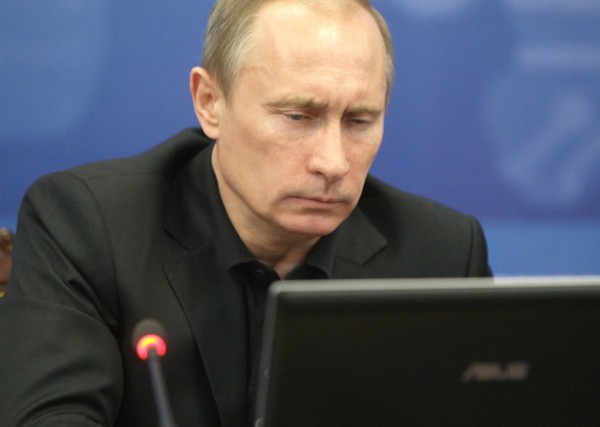
And Putin personally hacked Hillary Clinton and DNC.

They lost the election, they lost the recount and now, the plan is to subvert the Electoral College. It seems the Clinton campaign and the Democratic party and media surrogates are still in denial.

putin-huffpo

Of course this is based on hard evidence from the unintelligence agencies. (How come all this evidence has come only after a lost election).

Oh Dear!

The evidence

putin-hacking

Putin hacking personally

I like this from the American Thinker

image American Thinker

image American Thinker


“Anti-social” individuals can be identified at age 3

December 13, 2016

A new paper in Nature: Human Behaviour.

A. Caspi et al, Childhood forecasting of a small segment of the population with large economic burdenNature Human Behaviour 1, Article number: 0005 (2016), doi:10.1038/s41562-016-0005

The study following 1000 children in New Zealand found that by age 38,

A segment comprising 22% of the cohort accounted for 36% of the cohort’s injury insurance claims; 40% of excess obese kilograms; 54% of cigarettes smoked; 57% of hospital nights; 66% of welfare benefits; 77% of fatherless child-rearing; 78% of prescription fills; and 81% of criminal convictions.

But, the study goes on, the high social cost segment could be identified by age 3:

Moreover, variation in cohort members’ brain health at three years of age predicted with considerable accuracy which individuals would be members of the multiple-high cost segment 35 years later.

They define “brain health”:

At 3 years of age, each child in the cohort participated in a 45 minute examination that included assessments of neurological soft signs, intelligence, receptive language and motor skills. The examiners (having no previous knowledge of the child) then rated each child’s frustration tolerance, resistance, restlessness, impulsivity and lack of persistence in reaching goals. This examination yielded a summary index that we have termed brain health, a global index of the neurocognitive status of three-year-old children. Variation in brain health at three years of age significantly predicted economically burdensome outcomes in each sector, except injury claims.

They conclude

This research yielded two results. First, the study uncovered a population segment that featured as high cost across multiple health and social sectors. ……… Second, by linking administrative data with individual-level longitudinal data, the study provides the strongest effect sizes yet, measuring the connection between an at-risk childhood and costly adult outcomes in the population.

Suppose this study does indeed apply to developed societies generally. The question then becomes what should be done if a predictive test at age 3 reveals those likely to pose a high societal burden. Ideally one should identify the genetics or the development (or lack of development) upto age 3 which gives rise to the result and attack those. An obvious problem arises if genetics – which cannot be remedied – has a large influence. Since even the non-genetic causes are mainly unknown, it then becomes a case of finding remedial methods that can be applied after age 3 to reduce the social burden they could potentially pose.

A fascinating study but it again poses the challenge we will increasingly face as we learn to predict the potential behaviour of humans at an early age. If a potential sociopath can clearly be identified at a very early age, what then becomes the strategy for management of risk? Lock him up before he kills someone? Send him to behaviour correctional institution based on a prediction? If there is a large genetic component do we ban the parents from having further offspring?

Abstract: 

Policymakers are interested in early-years interventions to ameliorate childhood risks. They hope for improved adult outcomes in the long run that bring a return on investment. The size of the return that can be expected partly depends on how strongly childhood risks forecast adult outcomes, but there is disagreement about whether childhood determines adulthood. We integrated multiple nationwide administrative databases and electronic medical records with the four-decade-long Dunedin birth cohort study to test child-to-adult prediction in a different way, using a population-segmentation approach. A segment comprising 22% of the cohort accounted for 36% of the cohort’s injury insurance claims; 40% of excess obese kilograms; 54% of cigarettes smoked; 57% of hospital nights; 66% of welfare benefits; 77% of fatherless child-rearing; 78% of prescription fills; and 81% of criminal convictions. Childhood risks, including poor brain health at three years of age, predicted this segment with large effect sizes. Early-years interventions that are effective for this population segment could yield very large returns on investment.

Around the world, the population is ageing and total fertility rates are declining. As a result, nations increasingly view children and young people as valuable resources for the economic and social well-being of whole societies. This view is accompanied by public-policy interest in early interventions to help as many children as possible achieve their full potential. A key question concerns the potential size of the impact that might be brought about by interventions in the early years of children’s lives1,2 . Research teams that have followed up on small samples of children who were enrolled in intervention experiments carried out decades ago point to reductions in school leaving, unemployment, crime, obesity and even blood pressure3,4,5,6 . Some argue that today’s better-designed interventions might achieve greater reductions in adult problems than previous efforts7 (see also www.nuffieldfoundation.org, www.blueprintsprograms.com, http://ies.ed.gov/ncee/wwc and http://incredibleyears.com). Others assert that interventions for the youngest children will bring an even greater return on investment compared with interventions that begin when children are older8 . However, a skeptic could point out that return on investment for society will depend not only on an intervention’s capacity to ameliorate childhood risks, but also on how relevant those risks are for downstream adult functioning in the general population. Thus, to a large extent, the question of how much early-years intervention can lift health and social well-being and reduce costs depends on how strongly early-years risk factors are tied to adult outcomes in the population. Our own research and that of others suggests that while childhood risk factors do predict adult outcomes with statistical significance, the effect sizes are typically modest9,10,11 . The interpretation of these modest child-to-adult effect sizes is polarizing, and has sown confusion among scientists, policy makers and the public12,13,14 . On the one hand, claims are made that the ‘child is father of the man’, because continuity from childhood risks to adult outcomes is stronger than expected, given the long duration of follow-up. On the other hand, on the basis of the same data, warnings are issued about the myth of early-childhood determinism and about unwarranted overemphasis on childhood.

Here, we tackled the prediction question anew in the context of the Dunedin Longitudinal Study, a population-representative 1972–1973 birth cohort of 1,037 New Zealanders assessed at ages 3, 5, 7, 9, 11, 13, 15, 18, 21, 26, 32 and 38 years and followed from birth to midlife with 95% retention (Supplementary Information). We first integrated our longitudinal survey data and clinical data with multiple nationwide government administrative databases and electronic medical records. Then, using a novel segmentation approach, we tested the hypothesis that a small segment of the adult population accounts for a large cumulative economic burden and that this segment can be predicted with good accuracy from early childhood.


Japan rejects Washington opposition as Putin visits Tokyo

December 13, 2016

The impact Trump is having even before he assumes office is becoming apparent, both domestically and on the international stage.

He is just the President-elect but it seems that shifts are already taking place in geo-political alignments. It seems that Trump is going to be a non-ideological, transactional and rather pragmatic President. Everything is going to be on the table and everything is going to be about negotiation.  China already has understood that they will have to “offer” something to get the new US to continue with the One-China policy. Iran has also understood that a new negotiation is underway. Ideological regime change is no longer an objective. Domestically, the defense industry is understanding that their normal cosy, bloated, overcharging of the government will be resisted. Trump needs to cut public spending drastically to allow his infrastructure projects to go ahead. Industry in general is getting the message loud and clear that there will be tax breaks for creating jobs and tax penalties for shifting them abroad.

Well, we shall see.

In the meantime the Obama administration has been trying to get Prime Minister Abe to cancel or, at least, postpone an Abe/Putin summit in Japan. But what the Obama administration wants no longer carries much weight.

Prime Minister Shinzo Abe and Russian President Vladimir Putin hold talks on the sidelines of an Asia-Pacific Economic Cooperation summit in Lima last month. | KYODO

The Japan Times:

Japan has disregarded U.S. opposition to a planned bilateral summit between Prime Minister Shinzo Abe and Russian President Vladimir Putin in Tokyo later this week, diplomatic sources said.

Last month Washington repeatedly conveyed its objection to the Abe-Putin meeting in the capital out of concern that it might relieve pressure on Moscow by the Group of Seven economies, but on Thursday Japan formally announced the summit for Friday, as well as another meeting in Yamaguchi Prefecture on Thursday. The administration of President Barack Obama has been critical of Russia over its annexation of Crimea in 2014 and for backing the government of Syrian President Bashar Assad.

But Abe wants to maintain good relations with Russia in hopes of achieving a breakthrough in the decades-old territorial dispute between the two nations and concluding a postwar peace treaty. The Japanese government’s decision to go ahead with staging a summit with Putin in Tokyo highlights a rift between Tokyo and Washington on the issue. …..

The U.S. government voiced concern that staging such a meeting in Tokyo could send the wrong message that the Group of Seven (G-7) industrialized nations is not totally united in pressuring Moscow, the sources said.

The Japanese government is believed to have told Washington that the Russian leader’s visit should not be seen as according Putin special favors as he will not be granted a meeting with Emperor Akihito.

A Japanese government source said, “Although Japan needs to play a role as a G-7 member, it is also natural for us to pursue national interests and holding a summit meeting in Tokyo causes no problem.”


Russia accuses US coalition of assisting ISIS attack Palmyra to save Al-Nusra front rebels in Aleppo

December 13, 2016

What has been apparent is that the US led coalition (and France in particular) have a lot vested with the Assad-rebels holed up in Aleppo. France has been particularly active in trying to get the Russians and Assad’s forces to agree to a cease-fire in Aleppo – ostensibly for humanitarian aid – but also for relieving the besieged rebels that they support. Of course the US coalition attacking Mosul in Iraq have not been quite so concerned about the civilians being used as human shields by ISIS.

Of course this could just be Russian propaganda but there is some logic to their claim that the US-led coalition have allowed ISIS forces from Mosul to attack Palmyra to try and force Assad’s forces away from retaking Aleppo and instead to defend Palmyra. It is not inconceivable that the US and France are quite desperate to save the Al-Nusra front rebels they support and are even prepared to ease off on ISIS to that end:

RT: 

A new Islamic State attack on Palmyra from the Mosul region could be ‘orchestrated’ to divert the attention of Syrian government forces from Aleppo and spare the militants entrenched in the city, Russian Foreign Minister Sergey Lavrov said.

The fact that Islamic State (IS, former ISIS/ISIL) militants launched their offensive on Palmyra from Iraq and “apparently from Mosul” and marched through the “territories patrolled by the aircraft of the US-led coalition makes one think that – and I really hope to be wrong here – that it was orchestrated and coordinated to give a respite to those thugs, who are entrenched in eastern Aleppo,” the foreign minister said during a press conference in Belgrade, Serbia, as he answered a question asked by RT. 

Lavrov went on to say that the US has been conducting a two-faced policy towards terrorist groups in Syria from the very beginning of the Syrian crisis. The US-led coalition is fighting Islamic State but is studiously avoiding targeting another terrorist group, which is Al-Qaeda-linked Al-Nusra Front, he said.

“There is a significant number of reasons to believe that [Al-Nusra] is being spared as the most effective combat-capable force, which opposes the governmental [forces] of the ground in order to be used for overthrowing the legitimate Syrian government when the time comes,” Lavrov told journalists. …..

That the US is – even now – focused on regime change in Syria and is trying to assist the Al-Qaeda-linked Al-Nusra Front is not at all illogical. The Obama/Kerry strategy in Syria and Iraq is a maze of inconsistencies and fundamentally flawed.

I wouldn’t be at all surprised if this Russian report held a great deal of truth.


The CIA has been producing fake news for a long time and can “get a journalist cheaper than a good call girl”

December 12, 2016

cia

It sounds like just another conspiracy theory. The Russians hacked the Democrats and the Republicans the story goes. They released selected material from the Democrats via Wikileaks but did not do the same with the Republican material. This was to help Trump win. This is an “assessment” by the CIA (and 16 other intelligence agencies). The FBI is not so certain in their assessments. Note however that it is not contested that the material released by Wikileaks was genuine. 

In the 1980s most of the Iran-Contra stories were planted by the CIA. One remembers of course how the same constellation of agencies, led by the CIA, concluded on the presence of Saddam Hussain’s WMD. Here they even invented evidence for Colin Powell to present to the UN and make an utter fool of himself. One notes also that these same intelligence agencies all missed 9/11 though they had links with Bin Laden. They also missed – or chose to miss – the rise of ISIS completely.

While the war of words continue about Russian hacking and the US Election, it is not fanciful to conclude that the CIA is “faking” news again. The CIA has and does spend a lot of effort on manipulating news not only abroad but also on US soil. Operation Mockingbird has now been well documented and was reported on by the US Congress in 1976.

Operation Mockingbird was a campaign by the United States Central Intelligence Agency (CIA) to influence media during the 1950s, 1960s, and 1970s. Begun in the 1950s, it was initially organized by Cord Meyer and Allen W. Dulles, and was later led by Frank Wisner after Dulles became the head of the CIA. The organization recruited leading American journalists into a propaganda network to help present the CIA’s views. It funded some student and cultural organizations and magazines as fronts. As it developed, it also worked to influence foreign media and political campaigns, in addition to activities by other operating units of the CIA. The CIA’s use of journalists continued unabated until 1973, when the program was scaled back, finally coming to a halt in 1976 when George H.W. Bush took over as director.

In addition to earlier exposés of CIA activities in foreign affairs, in 1966, Ramparts magazine published an article revealing that the National Student Association was funded by the CIA. The United States Congress investigated the allegations and published a report in 1976. Other accounts were also published. The media operation was first called Mockingbird in Deborah Davis’s 1979 book, Katharine the Great: Katharine Graham and The Washington Post.

The CIA fake news activities never stopped. Even the Washington Post wrote 2 weeks ago. I particularly like the quote from a CIA operative that “you could get a journalist cheaper than a good call girl, for a couple hundred dollars a month”.

But – as we document below – the government and mainstream media are by far the biggest purveyors of fake news.

The Government’s Been Deploying Propaganda On U.S. Soil for Many Years

The United States Senate Select Committee to Study Governmental Operations with Respect to Intelligence Activities found in 1975 that the CIA submitted stories to the American press:

Wikipedia adds details:

After 1953, the network was overseen by Allen W. Dulles, director of the CIA. By this time, Operation Mockingbird had a major influence over 25 newspapers and wire agencies. The usual methodology was placing reports developed from intelligence provided by the CIA to witting or unwitting reporters. Those reports would then be repeated or cited by the preceding reporters which in turn would then be cited throughout the media wire services.

The Office of Policy Coordination (OPC) was funded by siphoning off funds intended for the Marshall Plan [i.e. the rebuilding of Europe by the U.S. after WWII]. Some of this money was used to bribe journalists and publishers.

In 2008, the New York Times wrote:

During the early years of the cold war, [prominent writers and artists, from Arthur Schlesinger Jr. to Jackson Pollock] were supported, sometimes lavishly, always secretly, by the C.I.A. as part of its propaganda war against the Soviet Union. It was perhaps the most successful use of “soft power” in American history.

A CIA operative told Washington Post owner Philip Graham … in a conversation about the willingness of journalists to peddle CIA propaganda and cover stories:

You could get a journalist cheaper than a good call girl, for a couple hundred dollars a month.

Famed Watergate reporter Carl Bernstein wrote in 1977:

More than 400 American journalists … in the past twenty‑five years have secretly carried out assignments for the Central Intelligence Agency, according to documents on file at CIA headquarters.

***

In many instances, CIA documents show, journalists were engaged to perform tasks for the CIA with the consent of the managements of America’s leading news organizations.

***

Among the executives who lent their cooperation to the Agency were [the heads of CBS, Time, the New York Times, the Louisville Courier‑Journal, and Copley News Service. Other organizations which cooperated with the CIA include [ABC, NBC, AP, UPI, Reuters], Hearst Newspapers, Scripps‑Howard, Newsweek magazine, the Mutual Broadcasting System, the Miami Herald and the old Saturday Evening Post and New York Herald‑Tribune.

***

There is ample evidence that America’s leading publishers and news executives allowed themselves and their organizations to become handmaidens to the intelligence services. “Let’s not pick on some poor reporters, for God’s sake,” William Colby exclaimed at one point to the Church committee’s investigators. “Let’s go to the managements.

***

The CIA even ran a formal training program in the 1950s to teach its agents to be journalists. Intelligence officers were “taught to make noises like reporters,” explained a high CIA official, and were then placed in major news organizations with help from management.

***

Once a year during the 1950s and early 1960s, CBS correspondents joined the CIA hierarchy for private dinners and briefings.

***

Allen Dulles often interceded with his good friend, the late Henry Luce, founder of Timeand Life magazines, who readily allowed certain members of his staff to work for the Agency and agreed to provide jobs and credentials for other CIA operatives who lacked journalistic experience.

***

In the 1950s and early 1960s, Time magazine’s foreign correspondents attended CIA “briefing” dinners similar to those the CIA held for CBS.

***

When Newsweek was purchased by the Washington Post Company, publisher Philip L. Graham was informed by Agency officials that the CIA occasionally used the magazine for cover purposes, according to CIA sources. “It was widely known that Phil Graham was somebody you could get help from,” said a former deputy director of the Agency. “Frank Wisner dealt with him.” Wisner, deputy director of the CIA from 1950 until shortly before his suicide in 1965, was the Agency’s premier orchestrator of “black” operations, including many in which journalists were involved. Wisner liked to boast of his “mighty Wurlitzer,” a wondrous propaganda instrument he built, and played, with help from the press.)

***

In November 1973, after [the CIA claimed to have ended the program], Colby told reporters and editors from the New York Times and the Washington Star that the Agency had “some three dozen” American newsmen “on the CIA payroll,” including five who worked for “general‑circulation news organizations.” Yet even while the Senate Intelligence Committee was holding its hearings in 1976, according to high‑level CIA sources, the CIA continued to maintain ties with seventy‑five to ninety journalists of every description—executives, reporters, stringers, photographers, columnists, bureau clerks and members of broadcast technical crews. More than half of these had been moved off CIA contracts and payrolls but they were still bound by other secret agreements with the Agency. According to an unpublished report by the House Select Committee on Intelligence, chaired by Representative Otis Pike, at least fifteen news organizations were still providing cover for CIA operatives as of 1976.

***

Those officials most knowledgeable about the subject say that a figure of 400 American journalists is on the low side ….

“There were a lot of representations that if this stuff got out some of the biggest names in journalism would get smeared” ….

An expert on propaganda testified under oath during trial that the CIA now employs THOUSANDS of reporters and OWNS its own media organizations. Whether or not his estimate is accurate, it is clear that many prominent reporters still report to the CIA.

A 4-part BBC documentary called the “Century of the Self” shows that an American – Freud’s nephew, Edward Bernays – created the modern field of manipulation of public perceptions, and the U.S. government has extensively used his techniques.

The activity has continued under the Obama Administration and is clearly still ongoing.

And the government is treating the real investigative reporters like criminals … or even terrorists:

  • The government admits that journalists could be targeted with counter-terrorism laws (and here). For example, after Pulitzer Prize winning journalist Chris Hedges, journalist Naomi Wolf, Pentagon Papers whistleblower Daniel Ellsberg and others sued the government to enjoin the NDAA’s allowance of the indefinite detention of Americans – the judge asked the government attorneys 5 times whether journalists like Hedges could be indefinitely detained simply for interviewing and then writing aboutbad guys. The government refused to promise that journalists like Hedges won’t be thrown in a dungeon for the rest of their lives without any right to talk to a judge
  • In an effort to protect Bank of America from the threatened Wikileaks expose of the bank’s wrongdoing, the Department of Justice told Bank of America to a hire a specific hardball-playing law firm to assemble a team to take down WikiLeaks (and see this)

Postscript: See this and this.


Trump’s choice for Energy Secretary will be a coal supporter

December 12, 2016

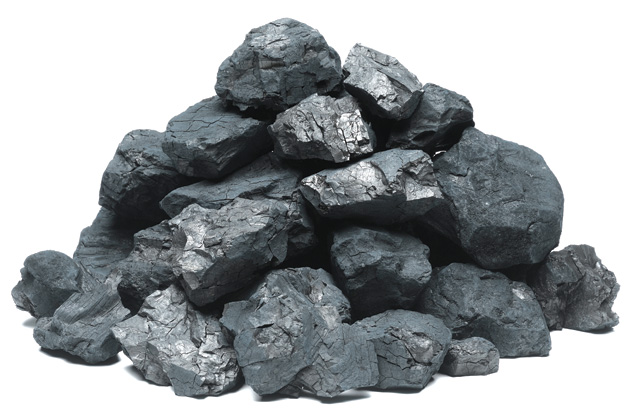
coal

It is reported that Donald Trump has a short-list of four for Energy Secretary. What seems clear is that whoever it is will be making coal jobs a priority. One of the four (Rick Perry) would be a fierce opponent of  all the fake science masquerading as “climate science”, while two (Heidi Heitkamp and Joe Manchin) are coal protectors rather than climate change opponents. The fourth (Ray Washburne) has been involved primarily in economic and finance matters and has (for me) unknown positions about coal and AGW. But he is from Texas and is unlikely to ignore the bottom line (which is of no consequence for the AGW orthodoxy).

Bloomberg: Donald Trump has narrowed his search for energy secretary to four people, with former Texas Governor Rick Perry the leading candidate. People familiar with the president-elect’s selection process said two Democratic senators from energy-producing states — Heidi Heitkamp of North Dakota and Joe Manchin of West Virginia — are also in the mix, along with Ray Washburne, a Dallas investor and former chairman of the Republican National Committee.

If Trump picks any of the four he’ll break with recent tradition of putting scientists at the top of the Energy Department. Among other things, the agency is responsible for policies on the safe handling of nuclear material and on emerging energy technologies.

A quick search gives the positions of the four on coal production and the global warming fantasy.

Rick PerryRick Perry said Wednesday morning that he does not believe in global warming science and suggested it is grounded in scientists manipulating data for financial gain. …….. Perry said scientists are coming forward almost daily to question “the original idea that man-made global warming is what is causing the climate to change.” He said the climate is changing but that it has been changing “ever since the earth was formed.” ……….. Perry added that “the issue of global warming has been politicized,” and argued that America should not spend billions of dollars addressing “a scientific theory that has not been proven, and from my perspective is more and more being put into question.”

Rick Perry could be expected to be quite active in cleaning out the muck in the Department of Energy Climate Change stables.

Heidi Heitkamp: I applaud the President’s efforts to address climate change and its effects. …… However, several of the initiatives introduced today by the President, while not new, amplify the Administration’s continuing war on coal and coal-fired power. While the President claims to believe in an all-of-the-above energy policy, he consistently fails to step-forward and truly commit to such a policy. Instead the Administration continues developing regulations that do nothing more than choke off good-paying American jobs, and threatening millions of Americans with the loss of a reliable and affordable energy source. Instead of taking this route, we need to find a path forward for the coal industry and coal-fired power by encouraging continued investments in new and existing technologies to further reduce emissions through clean coal technology projects including commercially scalable carbon capture and sequestration. 

Heitkamp is only concerned about jobs and will subordinate her thinking to that end. Her apparent belief in carbon capture and sequestration though suggests that her logical thinking is a little suspect. To be kind, it may just be her attempt to save coal jobs and not any strong belief in nonsense technology which which has no real purpose and which has a fundamental “floor” energy cost which makes it meaningless.

Joe ManchinSenator Joe Manchin (D-WV) went on Fox News on Wednesday to slam President Obama’s renewed push to take action on climate change.However, returning to the refrain that Obama has declared a “war on coal” appears not to be enough this time. Now, the coal-backed senator has upgraded his rhetoric to a “war on America.”

STEVE DOOCY (HOST): The President of the United States declared a war on coal and a war on jobs and essentially a war on West Virginia.

MANCHIN: Well, really a war on America. When you look at it from that standpoint, 8 billion-tons of coal is being burned in the world as we speak. The United States of America consumes about one billion tons. Now, what’s going to happen to the other 7 billion-tons? What’s going to happen to the countries that are consuming and using 7 billion and it’s increasing rapidly? Nothing is being done there. We have done more to clean the environment than ever in the last two decades. And there is more that can be done.

Manchin, like Heitkamp, is primarily concerned about jobs in the coal industry. He has not dared, politically, to be heretical about global warming orthodoxy but has fought for coal jobs.

Ray WashburneMr. Ray W. Washburne has been the Chief Executive Officer of Charter Holdings since 1990 and its President. Mr. Washburne has been National Finance Chairman at Republican National Committee Inc., since February 2013. He is a Managing Partner at HP Village Partners Ltd., and served as Managing Director. He was the Chairman of Charter Holdings since 1990. He also serves on the board of directors for M Crowd Restaurant, which he co-founded in 1991. He serves as Director of Baylor Health Care System Foundation. He has been Director of Entrust Inc. since June 5, 2006. He has been an Independent Director of Veritex Holdings, Inc., since 2009 and serves as Director of Veritex Community Bank. Mr. Washburne is also a Director for Colonial Bank, Southern Methodist University-21st Century Council, and Dallas Citizens Council. He is an Adjunct Professor at SMU’s Cox School of Business and graduated from Southern Methodist University (“SMU”) in 1984.

It is not apparent that Washburne has any strong position on coal or energy or AGW. Nevertheless he can be expected to have a clear view of the bottom line and therefore, not a great supporter of subsidising non-commercial technologies for religious or ideological reasons.

If I had to bet, I would put a small amount of money on Rick Perry.


Cold weather in Alberta gives record electricity consumption (thank goodness for coal)

December 11, 2016

Canada has been experiencing some rather cold weather with windchill factors down to -40°C.

Environment Canada has issued an extreme cold warning starting in northwestern B.C., going west through central and northern Alberta, central and southwestern Saskatchewan and southeastern Manitoba. By Friday afternoon, the extreme cold warning extended to most of central and northern Alberta, including High Level and Fort Chipewyan and as far south as Airdrie and Cochrane.

The Alberta Electric System Operator AESO reports record electricity consumption due to the cold spell.

Extremely cold weather across Alberta this week contributed to the province setting three records in a row for electricity consumption.

On December 8, 2016 between 5-6 p.m., Alberta was using a record hourly average amount of electricity at 11,442 MW. This surpassed the December 7 record of 11,404 MW, and the December 5 record of 11,400 MW.

The new winter peak usage was set due to cold weather, reduced daylight hours and the convergence of Christmas lighting load at homes, businesses, malls and buildings across the province. Another factor that contributed was the low market price for electricity – this prevented price sensitive industrial facilities from going offline during peak hours. The average wholesale price for electricity during that peak hour was approximately $30/MWh.

In Alberta the installed capacity and energy generation shows the reliance on fossil fuels in general and coal in particular. It’s a good thing they have coal to fall back on.

alberta-electricity

Reality.


74 questions from the Trump transition team which are bothering the Department of Energy

December 10, 2016

Whatever one may think of Trump, his transition team’s questions for the Department of Energy are penetrating. They are causing some little worry among the adherents of the man-made global warming religion.

Willis Eschenbach has the list of questions and his comments over at WUWT.

doe-vs-ugly-reality

Man-made climate change (actually the lack of such), vast grants to companies which go bankrupt in the night, jaunts to resorts for climate meetings, prolonging nuclear power …. are all apparently within the sights of the transition team.

The questions and Willis Eschenbach’s comments are reproduced below

Questions for DOE

This memo, as you might expect, is replete with acronyms. “DOE” is the Department of Energy. Here are the memo questions and my comments.

1. Can you provide a list of all boards, councils, commissions, working groups, and FACAs [Federal Advisory Committees] currently active at the Department? For each, can you please provide members, meeting schedules, and authority (statutory or otherwise) under which they were created? 

If I were at DOE, this first question would indeed set MY hair on fire. The easiest way to get rid of something is to show that it was not properly established … boom, it’s gone. As a businessman myself, this question shows me that the incoming people know their business, and that the first order of business is to jettison the useless lumber.

Read the rest of this entry »

Aleppo almost retaken but Mosul must wait for a while

December 9, 2016

The ongoing downfall of ISIS really only began with the Russian intervention in Syria. Even in Iraq, the gradual success against ISIS only really took hold once the Russians showed the resolve in Syria. It has been a repudiation of the absence of an Obama/Kerry strategy. It has also shown quite clearly that it was the US/NATO/ France/UK/ EU/ Turkey obsession with getting rid of Assad which allowed ISIS to grow and then prevented any effective strategy against ISIS from being implemented.

Now Aleppo and its Al Qaeda/ISIS related rebel groups are on the verge of being driven out by Syrian troops with Russian support. In Mosul what was intended to be a liberation of the city – in time for a Clinton success at the US General election – has progressed much more slowly than expected. It has stalled from time to time and it may not even be complete before Obama leaves office. The retaking of Aleppo cannot strictly be compared with retaking Mosul, but it does reconfirm the differences between first, the resolve of Assad’s Syrian troops and the Iraqi army, and second, the difference between the US and Russian implementation of strategies.

Two Reuters reports today caught my eye:

Syrian army’s Aleppo advance slows, but victory in sight

The Syrian army’s advance in Aleppo slowed on Thursday but a victory was still firmly in sight after President Bashar al-Assad vowed that retaking the city would change the course of the six-year-old war. Russia’s RIA news agency quoted Russian Foreign Minister Sergei Lavrov as saying the Syrian army, which has captured territory including Aleppo’s historic Old City in recent days, had halted military activity to let civilians leave rebel-held territory. 

The last two weeks have seen rebels driven from most of their territory in what was once Syria’s largest city, the eastern section of which the insurgents have controlled since 2012. Although there are still many rural areas in rebel hands, Aleppo is their last big urban redoubt. The prospect of its fall, following months of government gains elsewhere, has brought Assad closer to victory than at any point since the early months of a civil war that has killed hundreds of thousands and made half of Syrians homeless.

“Aleppo will completely change the course of the battle in all of Syria,” Assad said, speaking in an interview with the Syrian newspaper al-Watan.

Iraqi troops pull out from Mosul hospital after fierce battle

Iraqi troops who briefly seized a Mosul hospital believed to be used as an Islamic State base were forced to withdraw from the site, but managed to establish a base for army tanks nearby after days of fierce back-and-forth fighting, residents said.

The rapid advance into the Wahda neighborhood where the hospital is located marked a change of tactic after a month of fighting in east Mosul in which the army has sought to capture and clear neighborhoods block by block.

The ferocity of the fighting reflects the importance of the army’s push from southeast Mosul towards the center, their deepest advance in a grueling seven-week offensive to crush Islamic State in Iraq’s largest northern city.

The soldiers seized Salam hospital, less than a mile (just over 1 km) from the Tigris river running through central Mosul, on Tuesday but pulled back the next day after they were attacked by six suicide car bombs and “heavy enemy fire”, according to a statement by the U.S.-led coalition supporting Iraqi forces.

Coalition warplanes, at Iraq’s request, also struck a building inside the hospital complex from which the militants were firing machine guns and rocket-propelled grenades, it said.

The soldiers involved in the action are at the spearhead of a U.S.-backed, 100,000-strong coalition of Iraqi forces including the army, federal police, Kurdish peshmerga fighters and mainly Shi’ite Popular Mobilization forces battling to crush Islamic State in Mosul.

Mosul may still take some time but that it will be retaken before too long  seems almost certain.


Fake News at the NYT

December 6, 2016

It is conveniently forgotten – now – by the main-stream media that they are themselves experts in the art of publishing “Fake News”.

Lest we forget, this was one of the articles at the time claiming the presence of WMD in Iraq before the invasion.

NYT:

AFTEREFFECTS: PROHIBITED WEAPONS; Illicit Arms Kept Till Eve of War, An Iraqi Scientist Is Said to AssertAPRIL 21, 2003