Posts Tagged ‘global warming’

Upto130 years of global warming — but March is immune!

March 29, 2013

No comment!

Der Spiegel

Germany Faces Coldest March Since 1883

Complaining about the weather has reached epidemic proportions in northern Germany this “spring.” And with good reason. With Easter just around the corner, meteorologists are telling us this could end up being the coldest March in Berlin and its surroundings since records began in the 1880s. …… Meteorologists are keeping close tabs on thermometers to determine whether this March will go down as the coldest ever — since records began in the 1880s. And wiseacres on the streets of Berlin have not yet tired of noting that Easter promises to be colder than last Christmas.

The Guardian: 

Britain set for coldest March since 1962

This weekend’s great Easter getaway will be accompanied by some of the coldest March weather in decades, with temperatures in the UK set to drop to their lowest levels since 1962.

Met Office figures show that from 1 March to 26 March the UK mean temperature was 2.5C (36.5F) – three degrees below the long-term average.

This makes it the joint fourth coldest in the UK, in records going back to 1910. The coldest March in the UK was in 1962, at 1.9C (35.4F).

Real Science:

US Second Coldest March Since 1969 (So Far)

US temperatures are forecast to be far below normal for the rest of the month, so it is difficult to determine where March 2012 will end in the rankings. Possibly the coldest in 44 years.


Are global warmists preparing exit strategies?

March 28, 2013

Are global warmists preparing their arguments so that they can have exit strategies ready for when they have to abandon the global warming religion?

The purpose of an exit strategy is – as a minimum – to save face and minimise losses. In the best case it ends an engagement while realising potential benefits and protecting past gains. This is common enough in – and a necessary part of  – business and military planning. Politicians – at least the skilled ones – always have exit strategies in place when they choose to follow a particular “path of principle”. It is less likely that ideologues or religious leaders have prepared exits from dogmatic positions. However even they do have to change their colours from time to time. (Fanatics of course are not permitted exit strategies. They are expected to fall on their swords and die for their cause).

To escape from a discredited or outdated or bankrupt “faith-based” dogma usually requires some strong, visible reason for leaving a dogmatic position. A divine “revelation” is best though “new data” or  just “seeing the light” are also acceptable. This provides both a new faith as a destination and a reason for leaving the current position. A good exit strategy will also include a high profile “conversion” from one faith to another such that much credit can accrue, first for an”honourable” mea culpa for having followed the wrong path and then for the “principled and difficult” shift to the new path! Damage control may also require that the new converts repudiate their former “brothers of the faith”. In fact it is often “converts” who become the most fanatical about their new “religion”. The success of an exit strategy can be judged by how much baggage or stigma the ideologue or politician can avoid after the conversion.

James Hansen has been one of the most vocal and active proponents of the global warming hypothesis that it is caused by man-made emissions of carbon dioxide. He has been seen as one of the high priests of the global warming religion and qualifies as an ideologue:

Hansen is best known for his research in the field of climatology, his testimony on climate change to congressional committees in 1988 that helped raise broad awareness of global warming, and his advocacy of action to avoid dangerous climate change. In recent years, Hansen has become an activist for action to mitigate the effects of climate change, which on a few occasions has led to his arrest.

But he has a new (open access)  paper which makes me wonder whether he is preparing a position for the execution of an exit strategy when it becomes necessary.  He now admits that less of human made CO2 is entering the atmosphere than it should but that it is due to the increased use of coal which has increased aerosol particulates. He argues that this short term masking by aerosols of global warming will eventually have to appear and his doomsday messages have not changed. But he is adjusting his arguments quite fundamentally to account for the real life observations which he can no longer ignore. The “fertlisation of the biosphere” to account for man-made carbon dioxide not entering the atmosphere sounds a lot like back-pedalling to me. That the biosphere feeds on and relishes carbon dioxide is obvious. It does not much care  where it comes from.

James Hansen et al 2013 Environ. Res. Lett. 8 011006 doi:10.1088/1748-9326/8/1/011006

Climate forcing growth rates: doubling down on our Faustian bargain

As The Hockey Schtick reports some of the contents are startling – coming from Hansen:

  • the effect [forcing] of man-made greenhouse gas emissions has fallen below IPCC projections, despite an increase in man-made CO2 emissions exceeding IPCC projections
  • the growth rate of the greenhouse gas forcing has “remained below the peak values reached in the 1970s and early 1980s, has been relatively stable for about 20 years, and is falling below IPCC (2001) scenarios (figure 5).”
  • the airborne fraction of CO2 [the ratio of observed atmospheric CO2 increase to fossil fuel CO2 emissions] has decreased over the past 50 years [figure 3], especially after the year 2000
  • Hansen believes the explanation for this conundrum is CO2 fertilization of the biosphere from “the surge of fossil fuel use, mainly coal.”
  • “the surge of fossil fuel emissions, especially from coal burning, along with the increasing atmospheric CO2 level is ‘fertilizing’ the biosphere, and thus limiting the growth of atmospheric CO2.”
  • “the rate of global warming seems to be less this decade than it has been during the prior quarter century”

From the paper:

The simple Keeling airborne fraction, clearly, is not increasing (figure 3). Thus the net ocean plus terrestrial sink for carbon emissions has increased by a factor of 3–4 since 1958, accommodating the emissions increase by that factor.

Figure 3.

Figure 3. Fossil fuel CO2 emissions (left scale) and airborne fraction, i.e., the ratio of observed atmospheric CO2 increase to fossil fuel CO2 emissions. Final three points are 5-, 3- and 1-year means.

Remarkably, and we will argue importantly, the airborne fraction has declined since 2000 (figure 3) during a period without any large volcanic eruptions. The 7-year running mean of the airborne fraction had remained close to 60% up to 2000, except for the period affected by Pinatubo. The airborne fraction is affected by factors other than the efficiency of carbon sinks, most notably by changes in the rate of fossil fuel emissions (Gloor et al 2010). However, it is the dependence of the airborne fraction on fossil fuel emission rate that makes the post-2000 downturn of the airborne fraction particularly striking. The change of emission rate in 2000 from 1.5% yr-1 to 3.1% yr-1 (figure 1), other things being equal, would have caused a sharp increase of the airborne fraction (the simple reason being that a rapid source increase provides less time for carbon to be moved downward out of the ocean’s upper layers). ……

…… We suggest that the surge of fossil fuel use, mainly coal, since 2000 is a basic cause of the large increase of carbon uptake by the combined terrestrial and ocean carbon sinks. One mechanism by which fossil fuel emissions increase carbon uptake is by fertilizing the biosphere via provision of nutrients essential for tissue building, especially nitrogen, which plays a critical role in controlling net primary productivity and is limited in many ecosystems (Gruber and Galloway 2008). Modeling (e.g., Thornton et al 2009) and field studies (Magnani et al 2007) confirm a major role of nitrogen deposition, working in concert with CO2 fertilization, in causing a large increase in net primary productivity of temperate and boreal forests. Sulfate aerosols from coal burning also might increase carbon uptake by increasing the proportion of diffuse insolation, as noted above for Pinatubo aerosols, even though the total solar radiation reaching the surface is reduced.

The paper concludes

The principal implication of our present analysis probably relates to the Faustian bargain. Increased short-term masking of greenhouse gas warming by fossil fuel particulate and nitrogen pollution represents a ‘doubling down’ of the Faustian bargain, an increase in the stakes. The more we allow the Faustian debt to build, the more unmanageable the eventual consequences will be. Yet globally there are plans to build more than 1000 coal-fired power plants (Yang and Cui 2012) and plans to develop some of the dirtiest oil sources on the planet (EIA 2011). These plans should be vigorously resisted. We are already in a deep hole—it is time to stop digging.

Climate sensitivities are not what they have been made out to be

March 27, 2013

A far from settled science! In fact – Climate Science may well be a discipline but it is a long, long way from being a science.

But the bottom line is that when “the observed trends are pushing down, whereas the models are pushing up” and “the mismatch between rising greenhouse-gas emissions and not-rising temperatures is among the biggest puzzles in climate science just now. it is time to stop fudging the models and to start examining the assumptions in the models again.

An important article and a “Must Read” even if I would take exception to their uncritical and naive acceptance of the effect of  carbon dioxide in the atmosphere.

The Economist:

OVER the past 15 years air temperatures at the Earth’s surface have been flat while greenhouse-gas emissions have continued to soar. The world added roughly 100 billion tonnes of carbon to the atmosphere between 2000 and 2010. That is about a quarter of all the CO₂ put there by humanity since 1750. And yet, as James Hansen, the head of NASA’s Goddard Institute for Space Studies, observes, “the five-year mean global temperature has been flat for a decade.”

Temperatures fluctuate over short periods, but this lack of new warming is a surprise. Ed Hawkins, of the University of Reading, in Britain, points out that surface temperatures since 2005 are already at the low end of the range of projections derived from 20 climate models (see chart 1). If they remain flat, they will fall outside the models’ range within a few years.

The mismatch between rising greenhouse-gas emissions and not-rising temperatures is among the biggest puzzles in climate science just now. It does not mean global warming is a delusion. Flat though they are, temperatures in the first decade of the 21st century remain almost 1°C above their level in the first decade of the 20th. But the puzzle does need explaining.

The mismatch might mean that—for some unexplained reason—there has been a temporary lag between more carbon dioxide and higher temperatures in 2000-10. Or it might be that the 1990s, when temperatures were rising fast, was the anomalous period. Or, as an increasing body of research is suggesting, it may be that the climate is responding to higher concentrations of carbon dioxide in ways that had not been properly understood before. This possibility, if true, could have profound significance both for climate science and for environmental and social policy. ……..

………… So what does all this amount to? The scientists are cautious about interpreting their findings. As Dr Knutti puts it, “the bottom line is that there are several lines of evidence, where the observed trends are pushing down, whereas the models are pushing up, so my personal view is that the overall assessment hasn’t changed much.”

Economist article

Reality Check – Climate does not much care for Acts of Parliament

March 24, 2013

Two interesting articles today and perhaps they presage the return of some sanity to the ludicrous, Canute-like attempts to try and control climate. The first is in Die Welt (which is usually a most politically correct adherent of global warming dogma) about the nonsense that the Greens have wrought in German policy (by Sebastian Lüning and Fritz Vahrenholt reported by P. Gosselin). The second is a leader in the Telegraph calling for the repeal of the Climate Change Act in the UK.

NoTricksZone: Germany’s Energiewende [energy transition over to renewables] is being watched closely in foreign countries. Already bets are being made on whether the expensive experiment is going to work. Meanwhile increasing numbers of international experts are expressing serious doubts. In the March 20th print edition of German national daily Die Welt, Daniel Wetzel reports on a survey by the World Energy Council in an article titled “The Energiewende is an international flop”. An online version of the report is now available and bears the watered down title: “Other countries disdaining the Energiewende”:

Worldwide doubt about the success of the German Energiewende is growing. International experts are sure that the German economy is weakening. This is the finding of a survey from the World Energy Council. […] A rapid short-term shutdown of nuclear power plants along with unlimited subsidies for renewable energies: In Germany this has been viewed as the silver bullet for energy policy since the Fukushima accident. However in Europe and globally, there’s hardly a nation that views the German ‘Energiewende”’ as worth copying. These are the findings of the German section of the World Energy Council in 23 member countries, made exclusively available to Die Welt. […] The rising doubt is possibly related to the unexpectedly rapidly rising electricity prices in Germany, which are having a dissuasive effect. Stotz believes: ‘Obviously one has to be able to afford an energy transition.’ (Read more at Welt Online).

In a commentary appearing at Die Welt titled, “Germany, the odd one out”, Daniel Wetzel pleads for more prudence, and rejects climate alarmism as the most important argument for an Energiewende:

Also the necessity to rapidly end the use of fossil fuels no longer appears as urgent as it was just a few years ago. Indeed, in the meantime, fear of climate change appears to have evaporated worldwide. Global warming has been taking a break for over 10 years, and politicians in many countries appear as if they would rather await a good explanation for this phenomenon before again making the fight against climate change a high priority. Quite apart from this: one other large industrial country has just succeeded in reducing its per capita CO2 emissions to levels of the early 1960s. The best in the class when it comes to climate politics is the USA. Thanks to fracking technology in natural gas drilling, they have been able to switch off dirty coal power plants.”

“The Tory part of the Coalition is beginning to recognise some painful truths, but it is time for the Coalition to tear up its energy policy before the lights go out” says The Telegraph:

……  Because of a misguided faith in green energy, we have left ourselves far too dependent on foreign gas supplies, largely provided by Russian and Middle Eastern producers. Only 45 per cent of our gas consumption comes from domestic sources. All it takes is a spell of bad weather, and the closure of a gas pipeline from Belgium, to leave us dangerously exposed, and to send gas prices soaring. Talk of rationing may be exaggerated, but our energy policy is failing to deal with Britain’s fundamental incapacity to produce our own power.

…… It is time for the Coalition to tear up its energy policy before the lights really do go out. The first priority must be to repeal the Climate Change Act of 2008, with its brutal, punishing targets: ………  But green technology – in its current incarnation, anyway – is just too inefficient and expensive to meet our energy needs. In some of the worst weather for more than 30 years, green power still only provides a tiny fraction of our energy needs. Solar power is of limited use in our cold, dark, northern climate. And wind power isn’t much better – cold weather doesn’t necessarily mean windy weather. 

…….. He will know that American gas prices have plummeted, thanks to the US embracing the shale gas revolution. ………. Our energy problems have been deepened by the greener-than-green Liberal Democrats, with their seeming stranglehold on the Cabinet post of Energy Secretary. ………….

There is some good news, however. As we report today, government sources have said that wind power subsidies are to be cut again. This is a move in the right direction and we very much welcome it. It is to be hoped that there will be more such announcements, and concrete actions, from a government that has neglected a fundamental duty – to keep the lights on, energy affordable and our houses warm.

The McIntyre – The Bane of Climate Dogma and Mighty Slayer of Hockey Sticks

March 17, 2013

Steve McIntyre is

known in particular for his statistical critique, with economist Ross McKitrick, of the controversial hockey stick graph, which shows a sharp, and arguably unprecedented, increase in late 20th century global temperature.

He is at his sleuthing best again and Science will soon have to retract this new “hockey stick” paper

A Reconstruction of Regional and Global Temperature for the Past 11,300 Years, by Shaun A. Marcott, Jeremy D. Shakun, Peter U. Clark and Alan C. Mix, Science 8 March 2013: Vol. 339 no. 6124 pp. 1198-1201 DOI: 10.1126/science.1228026

This paper is apparently based on Marcott’s PhD thesis but the thesis contains no hockey stick!

By the time the paper was published a hockey stick had appeared.  In the most generous interpretation  the paper was “modified” to fit in with global warming dogma before being published in Science. A less generous – but more likely –  interpretation is that this is just fraud instigated probably by the global warming pundits who were the reviewers of the Science paper.

McIntyre’s latest post is a breathtaking indictment of the paper:

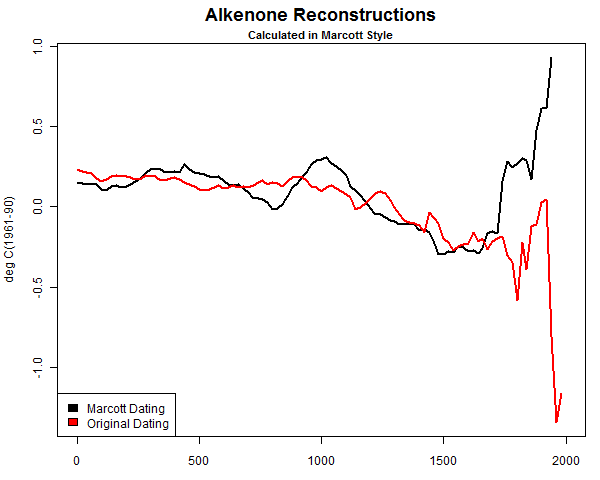
Marcott, Shakun, Clark and Mix did not use the published dates for ocean cores, instead substituting their own dates. The validity of Marcott-Shakun re-dating will be discussed below, but first, to show that the re-dating “matters” (TM-climate science), here is a graph showing reconstructions using alkenones (31 of 73 proxies) in Marcott style, comparing the results with published dates (red) to results with Marcott-Shakun dates (black). As you see, there is a persistent decline in the alkenone reconstruction in the 20th century using published dates, but a 20th century increase using Marcott-Shakun dates. (It is taking all my will power not to make an obvious comment at this point.)
alkenone-comparison
Figure 1. Reconstructions from alkenone proxies in Marcott style. Red– using published dates; black– using Marcott-Shakun dates.

Read More

The media went bonkers in reporting the Marcott paper  and this diagram will now go down in infamy:

marcott et al

This scandal is causing much attention ( here and here) but there is a deafening silence from the authors, from Science and from the – no doubt – anonymous reviewers.

I cannot draw but I have a clear image of a lone McIntyre battling against the Hockey Sticks. Perhaps a Josh can do justice to the image in my head.

The McIntyre slaying the Hockey Stick

The McIntyre slaying the Hockey Stick

Prof. Peter A. Ziegler: Solar effects drive climate change not CO2

March 14, 2013
Peter Ziegler

Peter Ziegler: image The Geological Society

Prof. Peter Ziegler (b. 1928) is a Swiss geologist  and Titular Professor of Global Geology at the Geological-Paleontological Institute, University of Basel. He is a member of the Royal Netherlands Academy of Sciences, the Polish Academy of Arts and Sciences, the Russian Academy of Natural Sciences and the Academia Europaea. His presentation on the “Mechanisms of Climate Change” from February this year is pretty self-contained and self explanatory and my comments would only be superfluous.

Climate Change Ziegler 2013 (pdf)

I reproduce his conclusions slide below:

  • Climate change during industrial times can be fully explained by natural processes
  • During the last 550 Million years major natural climate changes involved large fluctuations in temperature and atmospheric CO2 concentrations
  • Apart from orbital forcing and the distribution of continents and oceans, variations in solar activity and the galactic cosmic ray flux controlled climate changes during the geological past and probably still do so
  • Despite rising atmospheric CO2 concentrations we may experience during the coming decades a serious temperature decline akin to the Maunder Minimum due to decreasing solar activity
  • There is overwhelming evidence that Temperature forces the Carbon Cycle and not vice-versa, as postulated by IPCC
  • IPCC underestimates the effects of direct and indirect solar climate forcing but overestimates CO2 forcing by assuming unrealistic positive temperature feedbacks from a concomitant water vapor and cloud increase
  • The IPCC consensus on anthropogenic CO2 emissions causing Global Warming cannot be reconciled with basic data and is therefore challenged

Global warming on hold (courtesy of the sun)

March 2, 2013
  • CO2 lags global temperature.
  • CO2 keeps increasing while temperature stands still.
  • Man made CO2 is about  3.6 % of all CO2 production

An inconvenient truth it’s the sun stupid!

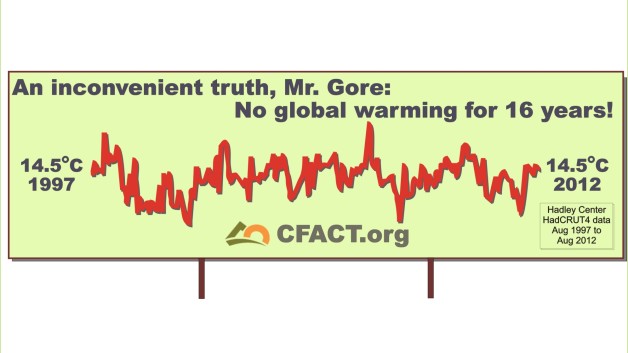
16 years

CFACT Billboard

CO2 is bad, bad, bad……

February 12, 2013

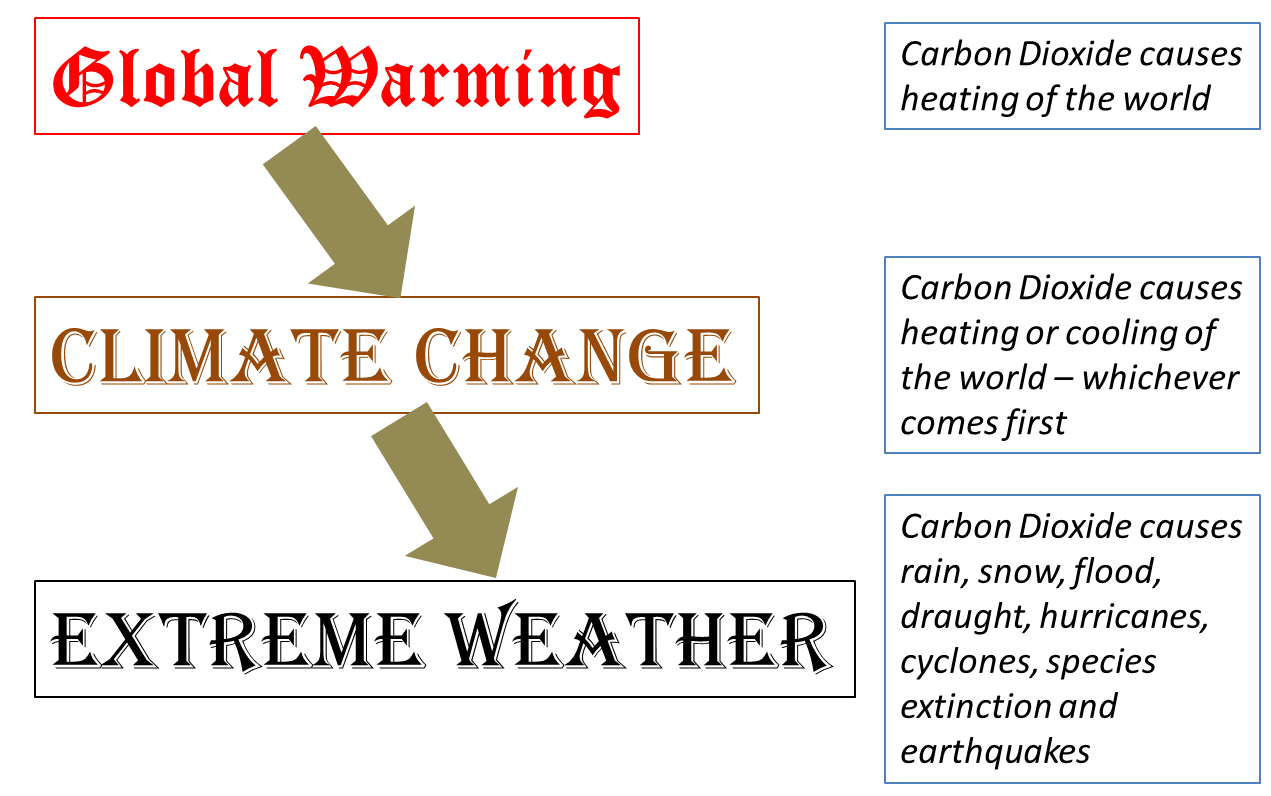
Global warming morphs to climate change which morphs to extreme weather but CO2 is just plain bad!!!

CO2 is bad

Ice-age coming: Heaviest snowfall in Jerusalem in 20 years

January 10, 2013

Not much comment needed.

The Jerusalem Light Rail on a snow covered Jaffa Road on Wednesday (photo credit: Miriam Alster/Flash90)

The Jerusalem Light Rail on a snow covered Jaffa Road on Wednesday (photo credit: Miriam Alster/Flash90 – The Times of Israel)

Jerusalem Post: 

Greatest snowfall since 1992 sees Jerusalem municipality announce closure of schools, kindergartens; police shut Jerusalem-Tel Aviv highway as snow predicted to persist until afternoon.

.. Elisha Peleg, an official in charge of emergencies with the Jerusalem Municipality, urged the city’s residents to remain at home and stay off the streets, telling Army Radio the area had overnight seen its greatest snowfall since 1992. He said 10 to 15 centimetres (4 to 6 inches) of snow had piled up in the city center and more than that in outlying areas. “The downtown area is bathed in white,” Peleg said.

“The elders of Jerusalem don’t remember such a snowstorm in years,” Peleg also said.


Finally — a climate model is revised

January 9, 2013

UPDATE! The important point of this story is not whether global warming has stopped or is continuing or if the world is cooling. Climate will go the way it will. The real significance of this story is that climate models are not just far from perfect – they are plain wrong. And what is worse is that when a model is not borne out by reality, the “politically correct” but false assumptions (such as that man-made CO2 causes significant  warming or that solar effects are minor) are not even reviewed.

This has been doing the rounds for a few days now but the BBC – which tends to be one of the pillars of the Global Warming religion – has finally come round to reporting that the British Met Office has predicted that global temperatures could decrease somewhat over the next decade. Of course it is good to see that a climate model is being revised in the face of reality. Unfortunately most climate models just retain their assumptions and add fudge factors every time reality fails to meet their forecasts where – instead – they ought to be questioning the very assumptions their models are built on. But that loss of face would be too expensive in terms of the funding already flowing into continuing with discredited models and would be too much to take in one go. But the fundamental requirement of good science is that when models don’t fit it is time to question the assumptions in the model – not to find fudge factors.

BBCClimate model forecast is revised

The UK Met Office has revised one of its forecasts for how much the world may warm in the next few years. …. If the forecast is accurate, the result would be that the global average temperature would have remained relatively static for about two decades.

…. Climate scientists at the Met Office and other centres are involved in intense research to try to understand what is happening over the most recent period.

The most obvious explanation is natural variability – the cycles of changes in solar activity and the movements and temperatures of the oceans.

Infographic (Met Office)

Infographic (Met Office): The forecasts are based on a comparison with the average global temperature over the period 1971-2000

Of course the BBC report then goes on to proclaim that this not a global cooling and that global warming will continue.

But of course neither this or any of the other exaggerated models will remove the assumed global warming – man-made carbon dioxide link for which there is no direct evidence whatever.

Tallbloke reported on the story here a few days ago.