Posts Tagged ‘Human rights’

Declaring a “human right” does not make it one (part 1)

February 27, 2018

There are no human rights which follow as an inevitable consequence of the natural laws of the universe.

Consider what is needed to create a right. Mere declaration does not suffice. A right is entirely a social construct. When encompassed within a legal, moral or ethical system, it could be taken as a social contract. As a contract it requires to be between two parties; the grant-giver and a recipient. In fact, our entire conception of rights has meaning only when applied to the social interaction between humans.  All rights are about the behaviour of humans.

I take a right to be an entitlement. It is a possession of status within some specified human society which gives its owner a privilege to act or not act in some specific manner, and/or a claim on other entities within the relevant society to act or not act in some specified manner

The granting of a right is a necessary condition but it is not sufficient for a right to exist. It must be granted by a party such that

  • ownership of the right is vested in the receiver, and
  • exercise of the right by the recipient is guaranteed by the grant-giver

Rights can not – and do not – exist except when vested by a competent grant-giver in a qualified recipient. The grant-giver must have the power to grant. The competence of the grant-giver is fundamentally necessary (but also not sufficient) to the creation of a “right”. An individual can grant a right to another individual only if it is within his power to do so. A grant which is outside the competence of the grant-giver to give creates no right for the receiver.

It is also a necessary condition – though not sufficient – for the recipient to be qualified to possess and exercise the granted right. No rights can exist if the grant-giver does not have the wherewithal to vest ownership of those “rights” in the recipient.  Nor can they exist if the recipient is not capable of exercising such vested rights or if such exercise is not ensured. Declaration of so-called animal rights does not create any animal recipient qualified to possess or exercise that right. Such declarations do not vest privileges or claims in any animal and are actually about human behaviour.

Anybody can declare a right but for any grant to be meaningful, the granting party must be able to guarantee and ensure the exercise of that right by the right-holder. A right which cannot be exercised is vitiated and empty. It fails, in fact, to be a right, whether of claim or of privilege. The grant of such empty rights then becomes merely a statement of wishes. A party which can only grant empty rights, where the exercise of such “rights” is not guaranteed, is a party not sufficiently competent to grant rights.

Human rights are neither universal nor absolute. They are not written into the laws of the universe. They are an expression of desires and wishes and hopes about standards of human behaviour. In reality there are no human, or even divine, agencies which have a competence sufficient to grant so-called human rights. They are declared – always – by bodies or entities which lack the full competence first, to vest ownership of the rights in the recipients and second, to guarantee and ensure their exercise.

The UN Declaration of Human Rights (UN DHR) is just that – a declaration.  What it describes are not rights. The UN can neither guarantee nor ensure the ownership or the exercise of those  declared rights or of the implied duties. Neither can the governments of the UN’s member countries guarantee the exercise of the rights declared. Without the ability to guarantee the exercise, the rights declared are not, in fact, rights at all but are merely pious hopes.

UN Declaration Human Rights

The UN Declaration of hopes and wishes is only as good as it is allowed to be, by the assumptions it starts with. The assumptions are not sound. It is a declaration of desirable standards of human behaviour. Unfortunately it ignores the basic requirements for any rights to exist. It does not specify the parties involved. It ignores the competence required of the party granting the rights and ignores the qualifications of the receiver of the rights. The fundamental claim in the UN DHR that “all humans”, independent of their behaviour, should possess these “rights” is untenable. How? Who is competent to grant such ownership? To whom? And who guarantees the exercise of these “rights”.

Whatever the UN Declaration of Human Rights may be, it is not about rights at all.
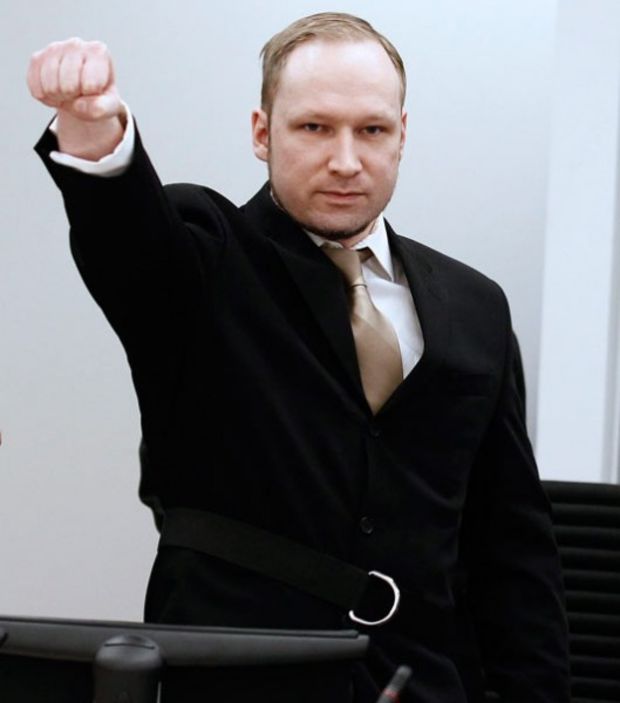


How does Breivik qualify for “human” rights?

March 13, 2016

There is something obscene in the manner in which so called “human rights” are being exploited by the mass murderer Anders Behring Breivik in suing the Norwegian government for keeping him in isolation. Apart from the fact that he has been sentenced to just 21 years in prison for the murder of 77 people (which is less than 100 days in prison for every person murdered), I find it objectionable that

  1. he is considered “human”, and
  2. he is allowed to sue

Of course it is up to any society to make whatever rules it wants and to decide what it wants to consider “human rights”. It is also up to any society to be as stupid as it wishes, and if the Norwegian people wish to treat Breivik with the respect due to a human then they can do so.

But surely they don’t have to treat a criminal lunatic as a sane rational being?

Breivik

Breivik

Euronews:

Mass killer Anders Behring Breivik is about to return to court – but this time it is to sue the Norwegian state, claiming it is violating his human rights by keeping him in isolation.

The right-wing extremist will appear in a gym-turned-courtroom within the prison in which he is being held on Tuesday. It will be a testing time for his victims’ families and survivors of his attacks.

“Personally I think it is a little bit hilarious but many of the others…the support group, doesn’t like him being in the media again,” said Dag Andre Anderssen, who survived Breivik’s island shooting massacre.

“That is actually the most important thing for us – that he gets to be in the spotlight again – and we don’t like that. We would rather that he be forgotten.”

It was 2011 when Breivik detonated a bomb at Oslo’s central government building, killing eight people and injuring more than 200. He then headed to the island of Utoeya where his gun rampage killed 69 people at a Labour Party camp, most of them teenagers.

Jailed for 21 years, Breivik has his own cellblock at Skien prison, south of Oslo as well as access to a computer, TV and Playstation.

“Human rights” are not absolute and certainly not some divine right. They are just privileges afforded by societies to their members. There is no reason for them not to be subordinate to common sense. There is no reason for stupidity in the name of “human rights”.


“That is not who we are” – Barack Obama. Oh Yes it is!

December 10, 2014

I heard Barack Obama trying to make the best of the CIA torture report released by the Senate yesterday. “One of the things that sets us apart from other countries is that when we make mistakes, we admit them. ……… brutal, and as I’ve said before, constituted torture, in my mind. And that’s not who we are.

But of course it is “who we are”. Certainly admitting a self-judged, wrong-doing – after the event – is also part of “who we are”. But the fact of the wrong-doing remains part of the behaviour which constitutes “who we are”. It does not vanish with a subsequent apology.

While behaviour includes what one says, what one does always overrides if the two are in conflict. So, while the US is certainly to be commended on admitting some wrong-doings after the event, it is also quite clear that that behaviour is – at times – quite acceptable. “American Values” clearly do allow torture under certain conditions. Abu Ghraib and My Lai are part of the reality of the behaviour of the US military. Such behaviour is what they are, notwithstanding that the behaviour was later declared to be “wrong”. Those values are ingrained and it is almost certain that some “torture”and some mistreatment of detainees is ongoing right now, to be apologised for later – if revealed. I conclude that torture itself is not against American Values. The Value could actually be formulated thus:

Torture is wrong but permitted, as a last resort, in special circumstances and must be apologised for if later revealed.

The map of all the countries who were complicit – actively or passively – with CIA’s torture program includes most of the countries who speak loudest and most sanctimoniously about human rights. Add to this all the other countries (Russia, China, India, South American countries, …. ) who also use torture in some form, and I come to the conclusion that there is not a single country today where some form of torture (physical as well as mental) is not at least tolerated under some specific conditions. Nobody claims that torture is a “good thing”, but every country also accepts that it can be justified. The concept of “absolute human rights” is fundamentally flawed. The “human rights” that any society is prepared to bestow upon those within or without that society is dynamic and variable.

Currently “what humans are”, all around the world, includes the use of torture – knowing that it is “wrong” – under certain conditions when deemed absolutely necessary.

There are no absolute values either, just as there are no absolute human rights. How should we judge the behaviour of an ISIS executioner with that of a CIA torturer? An ISIS executioner carries out his bloody beheadings in the belief that he is doing “right” in accordance with his values. A CIA torturer carries out his miserable activities knowing that it is “wrong” but that it is in a “good” cause and justified by his values.

I suppose they will both be gathered to the bosoms of their angry gods in their respective heavens.

China issues report on US Human Rights record

February 28, 2014

Pots calling kettles black and the kettles claiming the pots are even blacker!!

For the sake of balance…..

From Xinhua News:

BEIJING, Feb. 28 (Xinhua) — China published a report on the United States’ human rights record on Friday, in response to U.S. criticism and “irresponsible remarks” about China.

“The Human Rights Record of the United States in 2013” was released by the Information Office of the State Council, China’s cabinet, in response to “Country Reports on Human Rights Practices for 2013” made public by the U.S. State department on Thursday.

  • The U.S. government spies on its own citizens to a “massive and unrestrained” degree, the report says. The report calls the U.S. PRISM surveillance program, a vast, long-term mechanism for spying on private citizens both at home and abroad, “a blatant violation of international law” and says it “seriously infringes human rights.” The U.S. intelligence services, by virtue of data provided by Internet and telecom companies — including Microsoft, Google, Apple, Facebook, and Yahoo — “recklessly” track citizens’ private contacts and social activities. 
  • Since 2004, the U.S. has carried out 376 drone strikes killing 926 civilians. 
  • The U.S. has not ratified, or participated in, a series of core UN conventions on human rights, such as the International Covenant on Economic, Social and Cultural Rights, the Convention on the Elimination of All Forms of Discrimination against Women, the Convention on the Rights of the Child, and the Convention on the Rights of Persons with Disabilities. 
  • Solitary confinement is prevalent in the U.S., the report says. In U.S. prisons, inmates in solitary confinement are enclosed in cramped cells with poor ventilation and little or no natural light, isolated from other prisoners; a situation that takes it toll on inmates’ physical and mental health. About 80,000 U.S. prisoners are in solitary confinement. Some have been held in solitary confinement for over 40 years. 
  • Rampant U.S. gun culture breeds violence that results in the death of 11,000 Americans every year. 
  • Firearms were used in 69.3 percent of the nation’s murders, 41 percent of robberies, and 21.8 percent of aggravated assaults. 
  • In 2013, 137 people were killed in 30 mass murder events (four or more deaths each). A rampage in the headquarters of the Naval Sea Systems Command in Washington D.C. left 12 people dead. 
  • Unemployment for low-income families has topped 21 percent. 
  • The homeless population in the U.S. has climbed 16 percent from 2011 to 2013. 
  • There are also many child laborers in the agricultural sector in the U.S. and their physical and mental health is seriously compromised.

A “right” to bear arms must be constrained not to be a “freedom” to kill

December 16, 2012

I don’t believe there is any such thing as a “fundamental” human “right” or “freedom”.

Of course any society can establish whatever laws or rules and regulations it likes and insist – if it can – that its members follow these. Societies can define and adopt long lists of “fundamental human rights” or “freedoms” as privileges for their members. The granting of such “rights” does not – in itself – guarantee that members of that society always enjoy the rights accorded. Compliance with laws and rules and regulations is not in-built as with natural laws. Many of these “rights” and “freedoms” are contradictory and can be in conflict with each other. Some rights are used by some members to breach other rights and freedoms accorded to others. “Fundamental” freedoms are found to be unworkable and are then constrained or subjugated to other laws or rights. Some are made applicable to some and not to others. The will of the majority is expressed as laws for the majority which are sometimes used as a means for the oppression of minorities. Rights granted to individuals are subjugated to the rights assumed by the state. (It strikes me also that any “law” which does not in itself guarantee compliance is just a made-up rule and has no special “sanctity”. The “sanctity” of human laws is fundamentally suspect.)

None of the so-called human rights or freedoms are in fact fundamental or absolute in practice. Nor should they be. Common sense dictates that they must be constrained and circumscribed. But common sense is lost when the fanatical defense of any particular “right” takes on ideological proportions.

  1. The “right to life” is never absolute and is always circumscribed. States – and their organs – ascribe to themselves the right to take life in specific circumstances. Exceptions are made in cases of self-defense or abortions or accidents or actions in the service of the state.
  2. The “right of universal suffrage” is never absolute. There are always groups of individuals who are denied the right to vote (children, mentally disabled, resident non-citizens, criminals, certain occupations….)
  3. “Freedom of speech” is never absolute. What society considers to be libel, slander, blasphemy, hate or even politically incorrect is banned under pain of punishment.
  4. “Freedom of thought” is not as absolute as one may think. Thinking “terrorist” or “conspiratorial” thoughts is a punishable crime in many societies.
  5. The “right to liberty” is always constrained by the right of a state to incarcerate those it considers dangerous to society. Parents are allowed to curtail this right for their children. Doctors and hospitals are allowed to curtail the movement of their patients.

In the US it is self-evident that the “right to bear arms” is not sufficiently circumscribed. In spite of its implied “freedom to kill” it is fanatically defended to the point of absurdity.

The latest tragedy at Sandy Hook is part of a  long history of school shootings in the US  but the almost religious fanaticism surrounding  gun rights has so far held common sense at bay.

The spirit of the Inquisition is alive and well

April 22, 2012

The recent BBC story about the Catholic Church’s Office of the Inquisition pressurising some US nuns who are considered too liberal by the Church hierarchy got me to wondering whether our behaviour today is much different to that in medieval times.

To make the parallel to medieval times we have to substitute modern institutions. Governments and their institutions ( such as the United Nations or the IMF or the ICC) are today the equivalent of the medieval monarchs and their Catholic Church. They bless some countries and excommunicate others. They tolerate the same behaviour (for example the quest for nuclear weapons) in favoured countries and condemn it in others. They support uprisings against some of their less-favoured member countries and help suppression of rebellion in others. They enforce sanctions – even with the use of collective force – against some and ignore the same behaviour in others. And like the college of cardinals a select group of 5 nations and the 15-member Security Council makes up the holy inner circle controlling these institutions.

(more…)