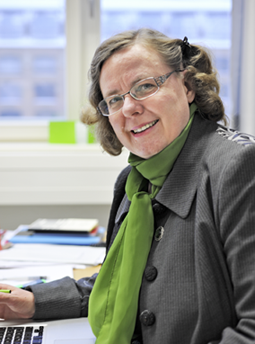
Prof. Dr. Debora Weber-Wulff
The Guttenberg plagiarism saga continues while he has gone off to Afghanistan for a surprise visit – probably because it is less dangerous there right now.
Prof. Dr. Debora Weber-Wulff is Professor for Media and Computing at the HTW Berlin. She was involved in the BMBF flagship project “Virtuelle Fachhochschule” developing eLearning materials and carries out Internet- and eLearning-related projects. She also works on detecting plagiarism and has a plagiarism blog.
Following the apparently blatant plagiarism carried out by Germany’s Defence Minister for his PhD thesis, she was interviewed by TheLocal.de which includes the folllowing:
What is your assessment of the Guttenberg situation?
What the rest of the thesis is like, and which chapter the alleged plagiarism is in – that’s another question. There are communities here who say it’s OK to plagiarize a little in your methodology section, but not in others. I think this is completely bizarre. Germans have a way of talking the problem down.The excerpts that the Süddeutsche Zeitung has online are scary, because they are one-to-one copies. And that’s not OK.
What is the real issue then?
This has to do with the German tendency to love titles, they are title-fixated, and people in politics love to have a doctor title so they seem wiser. But it should be about science, for scientists to prove that they can work by themselves – it’s the first proof that they can do research on their own.Would you say there is a culture of plagiarising and cheating among German students?
I wouldn’t go that far. There’s a download culture. Young people download their music, videos, and why not download their thesis, because they just see it as busy work – something that stands between them and the degree they think they want or need so they can make lots of money and don’t have to work any longer.
Guttenberg, the conservative German defense minister from Bavaria, has left the country and gone to Afghanistan. They say this was planned, but right now, he’s probably safer there than in the streets of Berlin. The opposition is gleefully taking potshots at him (metaphorically, you understand).
His supporters accuse the scientist who discovered the plagiarism of being part of a commie plot to undermine the country, if I understand their tone of voice correctly.
No one believes that a professor might sit down one evening at the computer, in the midst of writing a review of a doctoral thesis that had been around for a while, but had a very prominent author, currently under fire for other things. The professor, Andreas Fischer-Lescano of the University of Bremen, poured himself a glass of Argentine red wine, looked over the thesis and put three words into Google: “säkularer laizistischer multireligiöser” (secular lay multireligious – the thesis includes a chapter on putting references to a god in a constitution).
And he got a hit. From an article in the Neue Züricher Zeitung by Klara Obermüller, written a few years before his thesis was published. Oops. He poured another glass and tried some other terms, and some more. Fischer-Lescano wrote a scathing review, and includes as an appendix 24 word-for-word passages that are not quoted and not referenced. The review will be published the end of the month in Kritische Justiz, 44(1), pp. 112-119.
A number of journalists have spoken with me today to question this way of working. How do I look for plagiarists? “Well,” I said, “pretty much the same. Except that I prefer Austrian wine.”
As a sociological phenomenon, the rise of the “cut-and-paste” culture together with the German love of academic titles is a worthy subject for study. But what does not seem to be in doubt is that Guttenberg is just another politician who is just another fraud. And a misuse of position – whether to get an academic degree or to amass huge sums of money – is still corruption.
Why voters continue to vote for frauds is an even more interesting subject for study.

 The k2p blog