Archive for the ‘Australia’ Category

Now Queensland faces “David and Goliath” cyclones

January 30, 2011

After the floods (even if some of the flooding in Brisbane was due to poor operation of the Wivenhoe Dam), Queensland faces a cyclone due to cross the coast today and another larger cyclone which could hit on Thursday.

SMH reports:

An infra-red image shows Cyclone Anthony bearing down on the Queensland coast, with a large tropical depression off Vanuatu expected to develop into another, more devastating cyclone.

An infra-red image shows Cyclone Anthony bearing down on the Queensland coast, with a large tropical depression off Vanuatu expected to develop into another, more devastating cyclone. Photo: US National Environmental Satellite, Data and Information Service

The two cyclones bearing down on the Queensland coast could be a case of “David and Goliath”, with the second system expected to be bigger and more devastating, Premier Anna Bligh said today.

Cyclone Anthony intensified to a category-two system just before 2pm (local time) today and is expected to cross the coast between Ayr and Bowen, in north Queensland, late tonight. …….

Cyclone Anthony was at 5pm located 255 kilometres east of Townsville and 125 kilometres northeast of Bowen, with a warning zone stretching along the coast from Lucinda to Sarina, the Bureau of Meteorology said. The bureau tonight warned of destructive wind gusts up to 130km/h and abnormally high tides between Ayr and Bowen, with large waves likely along the beachfront between Townsville and Sarina. It said heavy rainfall and flooding was developing about the coast near and to the south of the cyclone, extending as far south as Sarina. Gales up to 100km/h were battering Hamilton Island late this afternoon.

However, the bureau is more worried about Cyclone Yasi, lurking near Vanuatu, which could potentially cross the Queensland coast on Thursday morning. The meteorological centre in Fiji this afternoon upgraded the low-pressure system to a category-one cyclone, which was moving west at 13km/h and intensifying.

The prospect of two cyclones crossing the Queensland coast within four days of each other comes after three quarters of the state was recently declared a disaster zone in the wake of devastating flooding. ……. Ms Bligh today described the two cyclones as “David and Goliath”, with Cyclone Anthony expected to be “quite smaller than the second event”.

But Ms Bligh said Anthony should not be underestimated, with wind gusts of more than 120km/h likely and damage expected.
La Niña driving severe rains and floods in Brazil and Australia

January 12, 2011

The La Niña event established this year is particularly intense and maybe the most severe in a 100 years. Such events are known to give warm sea surface temperatures and greater evaporation giving heavy rains in the Western Pacific in Australia, less rain in the Eastern Pacific on the western coast of S. America (coastal Chile and Peru) but increased rain on the east coast in southern Brazil and  northern Argentina.

Yesterday, heavy rainfall and floods in Brazil  claimed 80 lives.

UPDATE!! This morning the death toll is reported to be over 250.

UPDATE 2!! 13th January: Now death toll is around 400.

BBC:

More than 80 people have died in towns near Rio de Janeiro as heavy rains continue to cause flooding and mudslides in south-eastern Brazil. Overnight downpours triggered landslides in the mountain town of Teresopolis, where more than 50 were reported to have died. At least three firefighters were among several people buried in mudslides in Nova Friburgo.

Brazil has seen severe flooding this year which has left thousands homeless.

The death toll is expected to climb as rescuers reach remote villages in the mountains. One report, compiling official and media figures, put the toll so far at 93.

This week, torrential rains in neighbouring Sao Paulo state left 13 people dead and brought traffic chaos to Brazil’s biggest city. In Teresopolis, 100km (62 miles) north of Rio Janeiro, a river burst its banks, submerging buildings, while the rainfall set off several mudslides.

The rains and floods in Queensland have claimed 13 lives so far but the peak in Brisbane a few hours ago was fortunately about 1 m lower than in the 1974 floods. Nevertheless many thousands of homes have been inundated and the damage to Queensland industry and agriculture is severe. The final death toll is likely to be higher since it is feared that some bodies will only be discovered after the waters recede. Now heavy rain and flash floods have hit Victoria as well.

The Guardian:

The devastating flooding in Queensland is the result of Australia being in the grip of an unusually strong “La Niña”, a periodic climate phenomenon that brings more rain to the western Pacific, and less to South America along the eastern Pacific.

“The Queensland floods are caused by what is one of the strongest – if not the strongest – La Niña events since our records began in the late 19th century,” said Prof Neville Nicholls at Monash University and president of the Australian Meteorological and Oceanographic Society. “The La Niña is associated with record warm sea-surface temperatures around Australia and these would have contributed to the heavy rains.” Warmer oceans produce damper air and hence more rain. This is driven onshore by the stronger east-to-west trade winds characteristic of La Niña.

In both Australia and S. America the rains have about another 2 months to run.

related posts:

June 2010 – https://ktwop.wordpress.com/2010/06/26/high-probability-of-la-nina/

October 2010 – https://ktwop.wordpress.com/2010/10/25/la-nina-strengthens-further/

Qantas A380 flights to LA to restart on 17th January

January 5, 2011

While Qantas had restarted flying its A380 aircraft with Rolls Royce Trent 900 engines on  27th November after the engine failure on 4th November, its flights to Los Angeles remained grounded since the engines had not been cleared for operating at the higher thrust levels necessary for reaching LA.

Reuters reports that flights to LA could now resume on 17th January:

Qantas said on Wednesday it hoped to resume normal A380 operations from January 17 but it would still need the go-ahead from Australia’s aviation regulator before flying the superjumbo aircraft on the lucrative route……. Qantas said on Wednesday it expected to have eight A380 aircraft in the air by early February, up from five currently. The airline is scheduled to take delivery of a new A380 aircraft in mid-January and another new aircraft by early February. A third A380 currently grounded in Sydney was also due to be operating by mid-January……. Analysts estimate damages to Qantas could reach $60 million, although forecasts vary. The LA route is one of Qantas’ most profitable.

For Rolls Royce, getting Qantas back to full operation is critical to bringing this chapter to a close and to limiting at least one part of the inevitable claims that will come. They will also face claims from Airbus who announced a few days ago that they would only deliver 18 A380’s during 2010 and would not reach their already reduced target of 20 planes. This delay is put down to the extra inspections caused by the fault in Rolls Royce engines. No doubt Singapore Airlines and Lufthansa will also have claims on Rolls Royce. I still estimate that the total costs to Rolls Royce will reach $300 million.

King Coal: The global battle to control resources

December 26, 2010

Riversdale Mining Ltd. has 13 billion metric tonnes of known coking and thermal coal reserves in its Benga and Zambeze projects in Mozambique. A global battle is now hotting up for the acquisition of Riversdale and the potential bidders clearly have no doubts about the continued use of coal and are not greatly impressed by the passing fad of Global Warming alarmism.

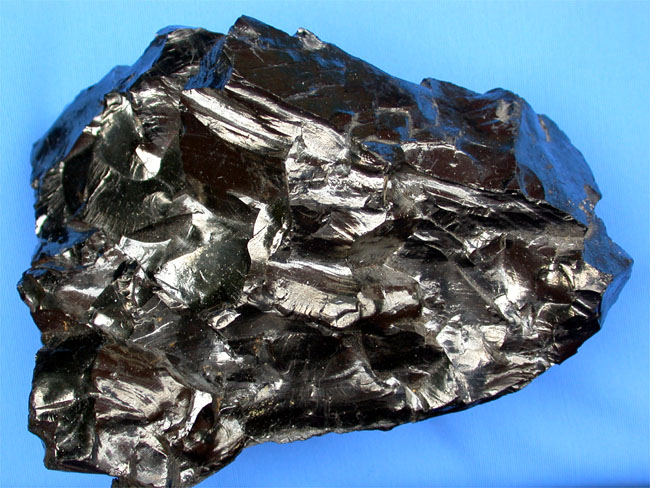
King Coal: image pitt.edu

Bloomberg reports:

International Coal Ventures Ltd., an Indian state-run joint venture, is studying an offer for Riversdale Mining Ltd. to counter a A$3.9 billion ($3.9 billion) bid from Rio Tinto Group.

ICVL appointed Citigroup Inc. to examine a possible takeover offer for the Sydney-based coal company with mines in Mozambique, the venture’s chairman C.S. Verma said yesterday. London-based Rio yesterday bid A$16 a share for Riversdale, securing 14.9 percent of the company in pre-bid agreements.

Indian companies are seeking coal mines overseas to ensure raw material supplies for producing steel and electricity. Brazil’s Vale SA or Eurasian Natural Resources Corp. may make bids, according to Sanford C. Bernstein & Co., as Tata Steel Ltd., Riversdale’s biggest holder, said it will study Rio’s offer “in the context of other alternatives” available to Tata. “The A$16 cash offer is unlikely to secure acceptance from all of Riversdale’s shareholders,” analysts led by Hayden Bairstow at CLSA Asia-Pacific Markets, said yesterday in a report, raising his price target for Riversdale by 3 percent to A$18. Riversdale’s “Benga and Zambeze coal projects are world class and we believe other suitors may show an interest in Riversdale now a formal bid has been tabled,” he said.

Tata Steel holds 24 per cent stake in Riversdale and is its largest shareholder. Sources say there have been talks between ICVL and Tata Steel for a joint bid or at the very least support from Tata Steel for ICVL’s bid. However, ICVL did not confirm that any talks took place between the consortium and Tata Steel reports The Hindu Business Line.

But more bidders are appearing and it is likely that the shareholders of Riversdale can expect a much higher price than what is on the table now. The Guardian reports that:

The global battle for control of the world’s natural resources flared again when it emerged that Anglo American could gatecrash Rio Tinto’s plans to buy Riversdale Mining, the Australian coking coal group, for £2.5bn.

Headed by chief executive Cynthia Carroll and chairman Sir John Parker, Anglo has joined a list of possible counter-bidders for Riversdale, whose African business produces coal for the fast-growing Asian steel industry.

Evidence of the importance of coking coal to China surfaced recently when Riversdale signed an agreement with Wuhan Iron and Steel to jointly develop Riversdale’s huge Zambeze coal reserves in Mozambique.

Anglo, which is believed to have appointed Morgan Stanley to advise on its options, will face stiff competition, with the Wall Street Journal reporting that Tata Steel of India, which controls 24% of Riversdale, is considering an offer.

Another potential bidder is ICVL, an Indian consortium that has appointed Citigroup as a financial adviser and mandated the bank to report back on the viability of a bid that would top Rio’s promise of A$16 a share.

Tata Steel has just received shareholder approval “for raising of additional long-term resources through issue of securities, including equity shares with differential rights as to voting and dividend, up to Rs 7,000 crore ($1,550 million)”. A company press release said “Tata Steel notes the takeover bid for Riversdale Mining announced by Rio Tinto. Tata Steel will evaluate the takeover bid in the context of other alternatives available to Tata Steel.” Riversdale is important for the long-term coking coal security for Corus. Tata Steel is already entrenched in its Mozambique coal mining project with a strategic stake and long-term supply contract. With Tata Steel’s share of Riversdale valued at almost $1 billion by the Rio Tinto bid it is likely that the final selling price will be significantly higher than Rio Tinto’s bid.

An educated guess would suggest a final selling price of over $5 billion or over A$20 per share.


A380 resumes flying but Qantas has another engine failure on a B747

November 27, 2010

http://www.news.com.au/travel/news/grounded-jet-mars-return-of-airbus-a380/story-e6frfq80-1225962092705#ixzz16VrjhJ7P

As Qantas staged a major PR exercise to mark the return of its A380 fleet to service, another plane from Sydney, a 747, was grounded last night with engine failure.

The flight, QF1 from Sydney to London, was due to leave at 6.05pm – but passengers were pulled off the plane after a loud noise emanated from the engine while they were taxiing towards the runway. The flight was later cancelled.

Earlier, passengers watched as Qantas CEO Alan Joyce staged a media conference to assure the public the company was now “100 per cent confident” A380 planes were safe. But while passengers on the A380 flight to London got away on time, passengers on board flight QF1 to London via Bangkok were pulled off their flight because of an engine fault.

The passengers disembarked about 7pm and were given meal vouchers, while engineers examined the engine. But at 9pm they were told the flight was cancelled. It was expected to leave at 9am today.A passenger on the plane told The Sunday Telegraph he could hear the engine die. “We were on the tarmac and then the captain said there was a mechanical problem; he said there was an electrical fault and that every time they tried to start the engine up it cut out,” he said. “We sat for 45 minutes and then they took us off the plane.”

The captain of yesterday’s flight, David Evans, who was part of the cockpit crew onboard flight QF32, said as “a precaution” Qantas had decided to use “reduced thrust” on the engines for the initial flights.

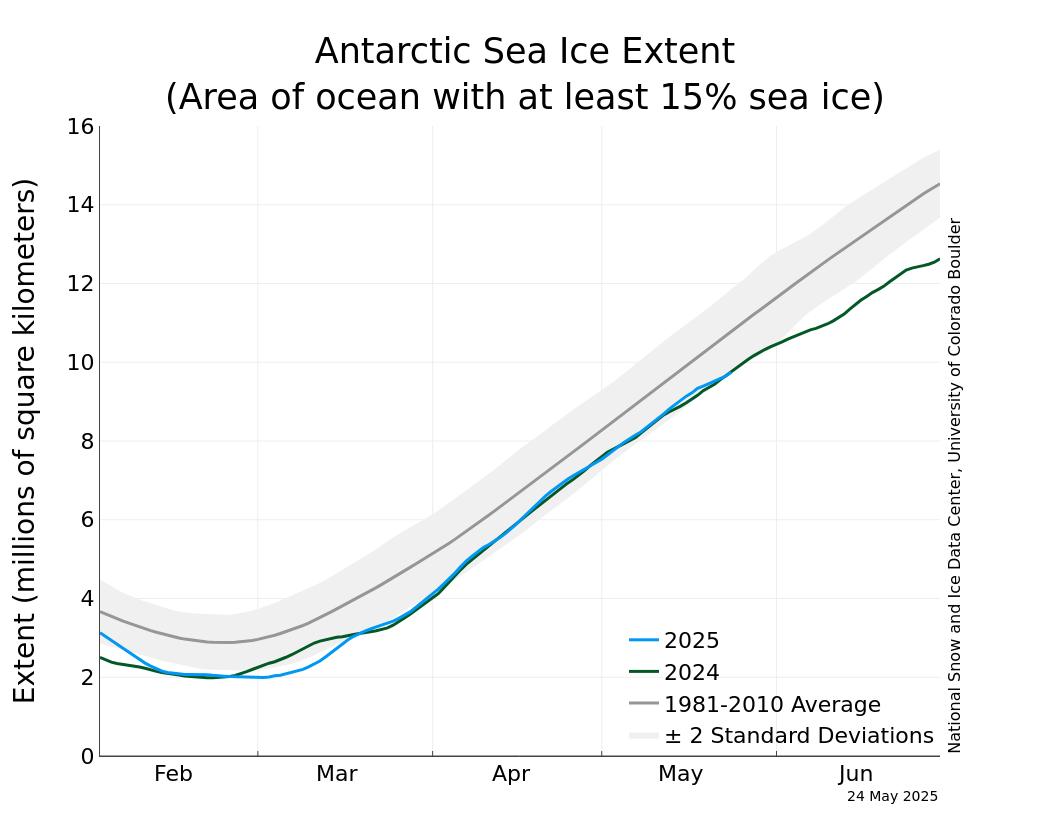
Antarctic sea ice extent almost 3 SD’s higher than “average”

November 25, 2010

Source:

http://nsidc.org/data/seaice_index/images/daily_images/S_stddev_timeseries.png

The Southern Hemisphere is coming into summer but seems significantly cooler (and wetter in Australia) than usual.

The ice extent in the Antarctic is reducing much slower than normally and currently the sea ice extent is about 1.3 million sq. km or 9%  or 3 Standard Deviations higher than the 1979 – 2000 average.

The Pacific Oscillation – or La Nina – is probably responsible.

Water levels in the Murray-Darling basin are highest since 2001

November 14, 2010
Second version of a Murray catchment map

Murray Darling Basin: image via Wikipedia

After 10 years of drought, heavy rainfall has left the Murray-Darling Basin now so full of water that controlled spillages are having to be made to prevent levels becoming too high. The Sydney Morning Herald:

AFTER years of drought, there are dams and reservoirs across the Murray-Darling Basin where controlled spilling is taking place to keep levels within specified limits. The amount of water stored in the basin is close to 19,000 gigalitres, the highest level since November 2001. The Bureau of Meteorology water storage website, which monitors more than 25,000 gigalitres of storage, reports that basin storages are now more than 74 per cent full, compared to 29 per cent a year earlier.

Several reservoirs have reached capacity, including the Menindee Lakes, Burrendong Dam and Blowering Reservoir in NSW, and the Hume Dam on the NSW-Victoria border near Albury. A year ago the Hume Dam was at 39 per cent and the Blowering Reservoir at 36 per cent.

A spokeswoman for the Murray-Darling Basin Authority confirmed it had been forced to spill water from the Hume Dam and Lake Menindee to prevent the storages rising above specified levels. More rain is forecast for the Murray-Darling Basin tomorrow and on Monday, but the bureau’s deputy director for water, Robert Vertessy, said it was ”50/50” whether storages would break through the 75 per cent mark because a lot of the rain was expected to fall in areas that have no further capacity.

”What is spectacular is how much it has gone up in the last year,” Dr Vertessey said. In the long term it was very unlikely that basin storages would ever reach 100 per cent because rainfall patterns varied across the basin and some dams, such as the Dartmouth in north-eastern Victoria, had enormous capacity compared to the drainage area they serviced, Dr Vertessey said.

Replenished water storages mean that many farmers are now receiving their full general allocation of water. Trading of temporary water allocations has ground to a halt in many areas and the price of water in one exchange has fallen to $45 per megalitre, down from $200 a year ago and a peak of about $1200 in late 2007.

Meanwhile the Guide prepared by The Murray-Darling Basin Authority came under fire because the computer models used to prepare the Guide did not (or could not) account for some 20% of the water flows in the basin. The Guide has proposed drastic cuts in irrigation flows and this not at all popular with farmers. The Australian reports:

KEY assumptions about water flows in the Murray-Darling Basin guide are under challenge from newly released figures. It emerged that 20 per cent of basin water flows were not included in scientific models. The models were used to recommend cuts of up to 37 per cent in irrigators’ water entitlements.

In technical volumes published with the guide, the Murray-Darling Basin Authority said the complexity of hydrologic modelling made it difficult to consider a large range of scenarios on sustainable diversion limits in a timely way. Hydrologic models have been developed for all major rivers in the basin in conjunction with the states and the CSIRO. “Overall, about 80 per cent of current surface water use under current diversion limits in the basin is explicitly represented in the hydrologic modelling framework,” the guide says.

The National Farmers Federation seized on the concession, saying it would challenge key assumptions in the guide. NFF chief executive Ben Fargher said he would challenge how the plan had identified environmental assets for protection and the modelling for environmental water requirements. “They are saying because of the complexity of all the hydrological models it has been difficult for them to do the modelling, and so they’ve used analytical tools,” he said. “We are not confident in that. In our view it is not robust, not good enough and we are going to challenge it.” NSW Irrigators Council chief executive Andrew Gregson said the guide’s modelling “has holes in it” and the authority needed to be 100 per cent certain, given the enormous ramifications for the communities along the river.

Last night the authority defended the guide and Wentworth Group of Concerned Scientists chief executive Peter Cosier described the science behind it as “some of the best in the world”. The authority said the 20 per cent of water flows not represented in hydrologic models would not affect recommendations about water allocations or environmental flows.

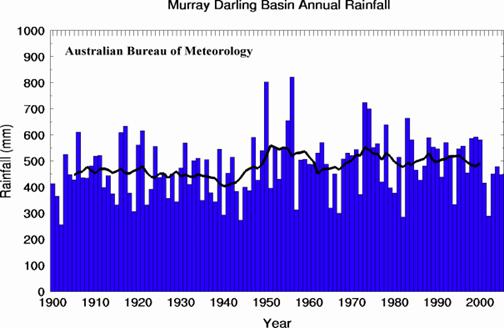
The 10 years of drought have often been attributed to climate change but rainfall records over the last 100 years  suggest that the variation of rainfall and of the subsequent water levels are nothing unusual. Online opinion has this to say:

The Australian Bureau of Meteorology has information on rainfall right back to 1900. The rainfall record for the Murray Darling Basin (see chart below) shows there have been periods of as low rainfall in the past. The 11-year rolling average, the trend line shown in chart, indicates there has been no general increase or decrease in rainfall over the last 100 years. Carbon dioxide levels have increased by about 30 per cent over this same period.

Indeed the rainfall record for the Murray Darling Basin would suggest it is drawing a long bow to blame the current drought on climate change.

Murray Darling Basin Annual Rainfall

Damage to Qantas A380 aircraft was more severe than thought

November 9, 2010

The Australian:

New suggestions have emerged that a spectacular engine failure near Singapore last week caused more damage to the plane involved than first thought. The No 2 engine’s violent disintegration ripped a hole through the Airbus A380’s left wing, destroying wiring that prevented the pilots from turning off the No 1 engine and causing a fuel leak. Suggestions have now emerged that there was also significant damage to hydraulic systems that prevented spoilers, panels on the wing that create drag to slow the plane down, from deploying.


The wrecked engine after the plane landed in Singapore.

The wrecked engine after the plane landed in Singapore.


The suggestions came as the Australian Transport Safety Bureau yesterday interviewed the flight crew of the stricken A380 and performed the first boroscope inspection of the Rolls-Royce Trent 900 engine. Investigators are continuing their search for the rest of a turbine disc that broke up in the incident and have set up a schedule for examining a recovered piece that has been sent to Britain for forensic tests.

Inspections of the grounded planes continued yesterday amid suggestions European regulators were poised to issue an airworthiness directive on the checks.

With this amount of damage to the wing it is a tribute to the pilots and to the Airbus A380 aircraft that the landing in Singapore was as smooth as it was and with no injuries at all.

Rolls Royce has said that the issues are specific to the Trent 900 and there are further indications that the issues may be specific to the engines as used by Qantas.

Meanwhile

Rolls-Royce says that the uncontained engine failure on a Qantas Airbus A380 en route from Singapore to Sydney on November 4 “is specific to the Trent 900. We can be certain that the separate Trent 1000 event which occurred in August 2010 on a test bed in Derby is unconnected,” Rolls-Royce said in a statement yesterday. “This incident happened during a development program with an engine operating outside normal parameters. We understand the cause and a solution has been implemented.”

The engine maker added that it would provide a further update on the investigation with its interim management statement on November 12.

Three more RR Trent 900 engines removed from Qantas A 380’s after testing

November 7, 2010

The Age reports that Qantas has removed three more Rolls Royce Trent 900 engines on A380’s parked in Sydney and Los Angeles after putting them through 8 hour tests recommended by Rolls Royce.


Engine trouble: An Airbus A380's Rolls-Royce engine.

Engine trouble: An Airbus A380's Rolls-Royce engine. Photo: Reuters via The Age


QANTAS has found issues with three more Rolls-Royce engines on its grounded Airbus A380 fleet that have required their removal from the wings, dashing the prospect of an early return to the skies.

Two of the engines taken off for closer inspection were on an A380 parked in Sydney and one is from a craft in Los Angeles. They were removed after the eight-hour tests Rolls-Royce recommended for each engine after the fleet was grounded.

The airline has one A380 in Singapore under investigation, one in Germany for servicing, one in Sydney and three in Los Angeles undergoing checks in the wake of the mid-air engine explosion last Thursday.

While Qantas will not say what the nature of the engine issues are, or whether the three engines are being examined for the same or different matters, the concern was sufficient to warrant their removal from the wings.
There is a disturbing silence from Rolls Royce and also from Singapore Airlines and Lufthansa who with Qantas use Trent 900’s on their A 380 aircraft.

More woes for Rolls Royce?: Now a Qantas B747-400 in engine scare

November 5, 2010

BBC news has the story:

A Qantas airline jumbo jet has been forced to return to Singapore because of an engine problem. The Boeing 747-400 turned back shortly after take-off from Changi Airport, airline officials said. It comes a day after a Qantas Airbus A380 was forced to make an emergency landing in Singapore after one of its engines exploded. Qantas grounded its six-strong fleet of A380s and an investigation is under way into what caused the failure.

The latest incident affected Sydney-bound flight QF6, which managed to land safely. “Shortly after take-off the captain experienced an issue with one of its engines,” a Qantas spokeswoman said.

Qantas Boeing 747-400’s are usually equipped with 4 Rolls-Royce RB211-524G-T engines of the type which suffered an in-flight failure in August this year.


A Qantas jet was forced to turn back to San Francisco after a hole was blown in the shell of the engine.

Flight QF74 failure of RB211-524 engine in August 2010: Photo: Channel Ten