Archive for the ‘History’ Category

Hindus were eating beef for much longer than they haven’t been

October 26, 2015

For Hinduism, the cow is not an object of worship (it attracts no gods or goddesses) but it has become both a symbol (of what exactly?) and a taboo. In any urban environment, cows in India provide ready examples of how ill-fed and ill-nurtured they actually are. My grandmother was a strict – but quite normal – vegetarian (no fish, meat or eggs). Unlike the Jains she had no problem with dairy products or root vegetables or honey. I once tried to convince her that beef, coming from complete herbivores, was “more fundamentally vegetarian” than poultry, who were known to relish worms and insects when they were available. She was not amused. (She was not amused either by my arguments that whiskey was strictly vegetarian).

In the current political circus in India where all the ardent, self-styled Hindu fanatics (BJP, Shiv Sena, RSS, VHP ….) are castigating the eating of beef and all beef-eaters, they are attempting to rewrite a history which they conveniently forget. They have gone so far – and have fallen as low – as to justify the lynching of a Muslim for slaughtering and eating a cow.

Eating of beef only began to be discouraged when the Brahmins became significant land-owners and cattle-owners from about 500- 600 CE. The “general” ban on the killing of cows and the eating of beef by Hindus only goes back to about 1200 CE. Taking the roots of Hinduism as having first germinated at the time of the Indus-Saraswati Valley Civilisation, that would have been about 3,000 BCE (5,000 years ago). Which of course means that Hindus were eating beef for some 4,200 years while they have abstained from the practice for only about 800 years. As the practice of eating beef declined, cow-slaughter for religious sacrifice was increasingly restricted to very special and rare events. Inevitably the resulting beef was insufficient for all the multitude and so was reserved for just the most important Brahmins present. So the Brahmins were probably the last of the castes to give up the practice. Others couldn’t afford it anyway.

Holy Cow

Back in 2001, Professor D N Jha published “the best-kept secret in Indian history — the beef-eating habits of ancient Hindus, Buddhists and even early Jains” in his book Holy Cow—Beef in Indian Dietary Conditions. His scholarly work is probably the most definitive work ever on the subject. It is not available in India of course. A civil court in Hyderabad banned it. Some Government Ministers (BJP, who else) demanded ritualised book burnings. He was threatened and had to have police protection for a while. It was reprinted as the The Myth of the Holy Cow and can still be obtained – with some difficulty – outside India.

There were a few favourable reviews in 2001 and 2002 but generally his book was ignored by academia and kept hidden for fear of “hurting Hindu sensibilities” or of other reprisals. The Indian academic establishment is not known for its political bravery. Their views are incredibly supple and bend with whichever political wind is blowing strongest. Many of the reviews are still available on the internet but many from that time have been removed. Jha retired in 2007. Jha was a socialist and that has also been used as a stick to criticise his views on communalism and the BJP’s saffronisation program. But it seems to me that his arguments are generally correct on the subject of beef in Hindu history  As Outlook reported in 2002

“Old and tired out” Jha may call himself, but there’s something irrepressible about him. Bans and fatwas haven’t stopped him from beginning work on his next book. “It will be called,” says Jha with deadpan face, “Adulterous Gods and their Inebriated Women”.

A few quotes from his final chapter:

“Although Manu (200Bc – 200 AD) extols the virtue of ahimsa, he provides a list of creatures whose flesh was edible. He exempts the camel from being killed for food but does not grant this privilege to the cow.”

“The Mahabharata also makes a laudatory reference to the king Rantideva in whose kitchen, 2000 cows were butchered each day …. being distributed among the brahmanas.”

“Sita assures the Yamuna .. that she would worship the river with a 1000 cows and a hundred jars of wine when Rama accomplishes his vow.”

Reviews:

  1. The Hindu – Beef eating: strangulating history
  2. Outlook – A Brahmin’s Cow Tales
  3. The Guardian – One man’s beef …..

A few days ago the Wall Street Journal conducted an email interview with DN Jha.

The killing of an Indian Muslim man allegedly lynched last month by a Hindu mob who suspected him of having slaughtered and eaten a cow, has refocused attention on attitudes toward the animal in a constitutionally secular country with a Hindu majority.

Historian Dwijendra Narayan Jha, who has drawn fire from Hindu nationalists for writing that Hinduism hasn’t always regarded beef-eating as an offense, said the recent cow-related violence was part of a “dangerous trend of increasing intolerance  in the country.”

The former Delhi University professor, who is now retired, says he received death threats after the publication of a 2001 book about beef in Indians’ dietary traditions and based on ancient texts, “The Myth of the Holy Cow. 

In an email interview with The Wall Street Journal, Mr. Jha discussed the emergence of the cow as a sacred animal and the politics of meat among conservative Hindus.

Mr. Jha: It was only in the early Christian centuries, around the middle of the first millennium A.D., that the Brahminical texts began to discourage and even disapprove of cow slaughter.

This change of attitude can be understood against the general background of the transformation of the rural society in post -Mauryan centuries, especially from around the middle of the first millennium A.D., which ushered in a phase of unprecedented agrarian expansion.  Brahmins emerged as  a feudal land owning class and, unlike in the earlier period, became more and more involved in agriculture. This led to the recognition of the pivotal role of animal husbandry, and the disapproval of killing of cattle by the Brahmins. All this is encapsulated in the concept of kali age in which many age-old  practices came to be  forbidden.  

WSJ: Is eating cow meat incompatible with Hinduism today?

Mr. Jha: There is substantial evidence in ancient Indian texts which testify to the prevalence of the practice of beef eating for many centuries in ancient India. The practice gradually disappeared in those regions, which are now called the “cow belt.” But it has continued in many other parts of the country, especially Kerala and north eastern states. In Kerala, 72 communities eat beef and many of them are Hindus. So, I would not say that beef eating is incompatible with Hinduism. But, at the same time there are many Hindus who would not even touch beef or even meat or fish.

What may be unacceptable to one set of Hindus may be acceptable to another. …..

The discouragement of cow-slaughter and the eating of beef was essentially an economic necessity of the time and had little to do with religion then. It came in when the value of a living cow far exceeded the value of a dead one, and when the wealth of the Brahmins was counted in cows. What easier way of maintaining their wealth than by introducing a regulation beneficial to themselves and justifying it on the grounds of the religion that they were the custodians of?
Europe’s refugees just follow the ancient routes for the peopling of Europe in the Neolithic

September 17, 2015

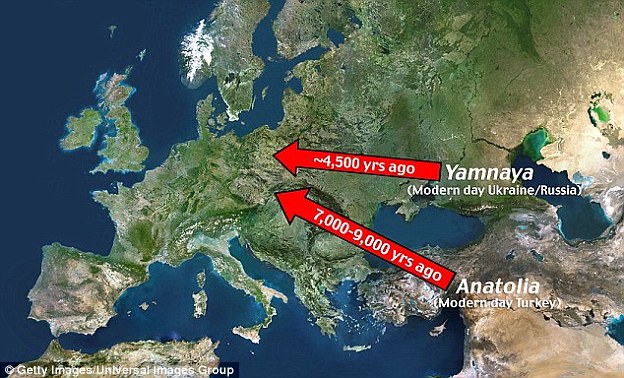
Compared to the population of Europe of 740 million (500 million in the EU), the total refugee numbers of some 400,000 are not large enough to talk about “invasions” or being “over-run”. (In the short-term numbers may, of course, be locally overwhelming). But the routes being travelled now are the same routes that were used for the peopling of Europe in the neolithic. Neanderthals probably retreated westwards as the hunter gatherers from central Asia arrived. They had been absorbed and were long gone as a separate “race” by the time the 2 main agricultural waves arrived.

And now the refugee numbers are beginning to be large enough to be a not insignificant impact on the populations of Europe. It could well be a new “peopling of Europe”. Or it could turn out to be not so large or important. But history will probably show that the migrations of peoples into Europe in the early 22nd century was of similar importance to the neolithic migrations. History will probably show that this  migration is what stemmed the downward population spiral that was troubling Europe.

In ancient times –

First came the movement of peoples westwards into Europe. This was during the paleolithic some 40,000 – 20,000 years ago with hunter-gatherers coming from the east. The “admixture” events between the Neanderthals and modern humans could have been along the westward moving front.

Then came the advent of agriculture, starting earlier but in earnest perhaps about 10,000 years ago. Genetic evidence indicates 2 waves of farmers from the east who then mixed with the hunter-gatherers already there.

So it would seem that hunter-gatherers mixed with farmers from the east who spread across Europe about 9,000 years ago. They formed the first agricultural settlements. Then came the invasion of the nomadic Yamnaya culture around 5,000 years ago. The Yamnayans were much more individualistic than the peoples they replaced and gave rise to the prominence of the nuclear family and the development of large family holdings of cleared lands, rather than the clusters of people in village settlements. They came on horses and brought livestock. But by about 4,000 years ago they too were overrun by the warlike Sintashta.

peopling of europe in the neolithic - via daily mail

peopling of europe in the neolithic – via daily mail

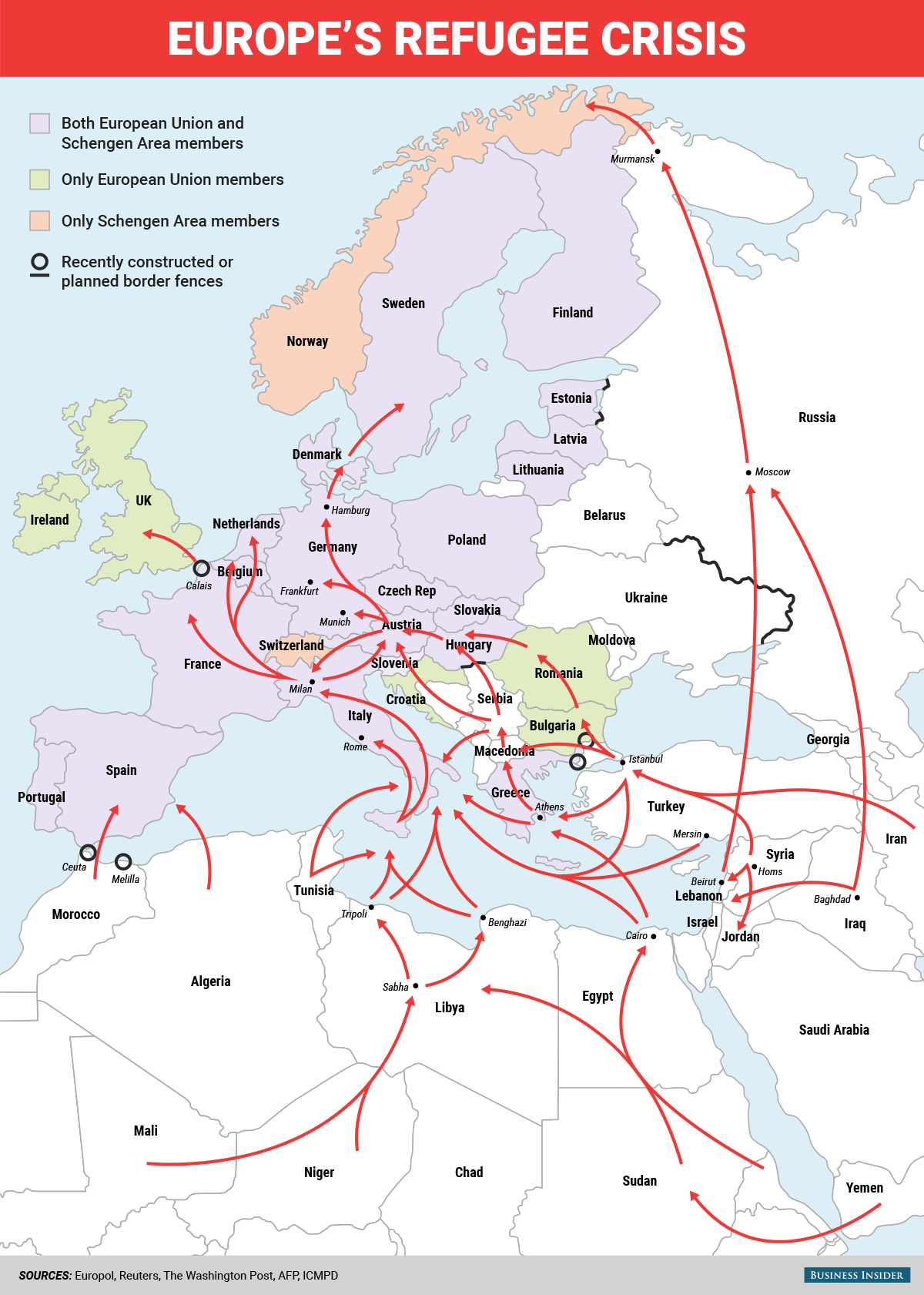
and now the current refugee crisis has about 400,000 people moving north westwards –

Business InsiderAccording to the United Nations Human Rights Council (UNHRC), EU countries received 437,384 asylum applications from January to July. The UNHRC also reports that during that time, Germany was by far the country that received the most asylum applications, with 188,486. Hungary came second in place with 65,415 applications, and Sweden took third with 33,234 applications. Italy was fourth with 30,223, and France was fifth with 29,832 demands. Many refugees fleeing the Syrian civil war and ISIS have been entering the European Union through Greece — 258,365 refugees entered Greece by boat so far this year — after going through Turkey.

europe's refugee crisis - business insider graphics

europe’s refugee crisis – business insider graphics

Nothing new under the sun.

Rome in 320CE

July 30, 2015

Our town planners could look, with some advantage, to their predecessors from 1700 years ago.

And all that without electricity or even steam power.

Uploaded on Aug 25, 2011 by Bernie Frischer

This video presents a fly-through of the latest version of Rome Reborn (2.2). The new version incorporates some new content (including the Pantheon) and for the first time includes animations.

Rome Reborn is an international initiative to create a 3D digital model of the ancient city as it might have appeared in A.D. 320. For more about the project, please see: http://www.romereborn.virginia.edu.

Music “Long Past Gone (Jami Sieber)” by Sieber, Kammen, Fulton and Schatz

Hitler has long inspired the British Royals

July 18, 2015

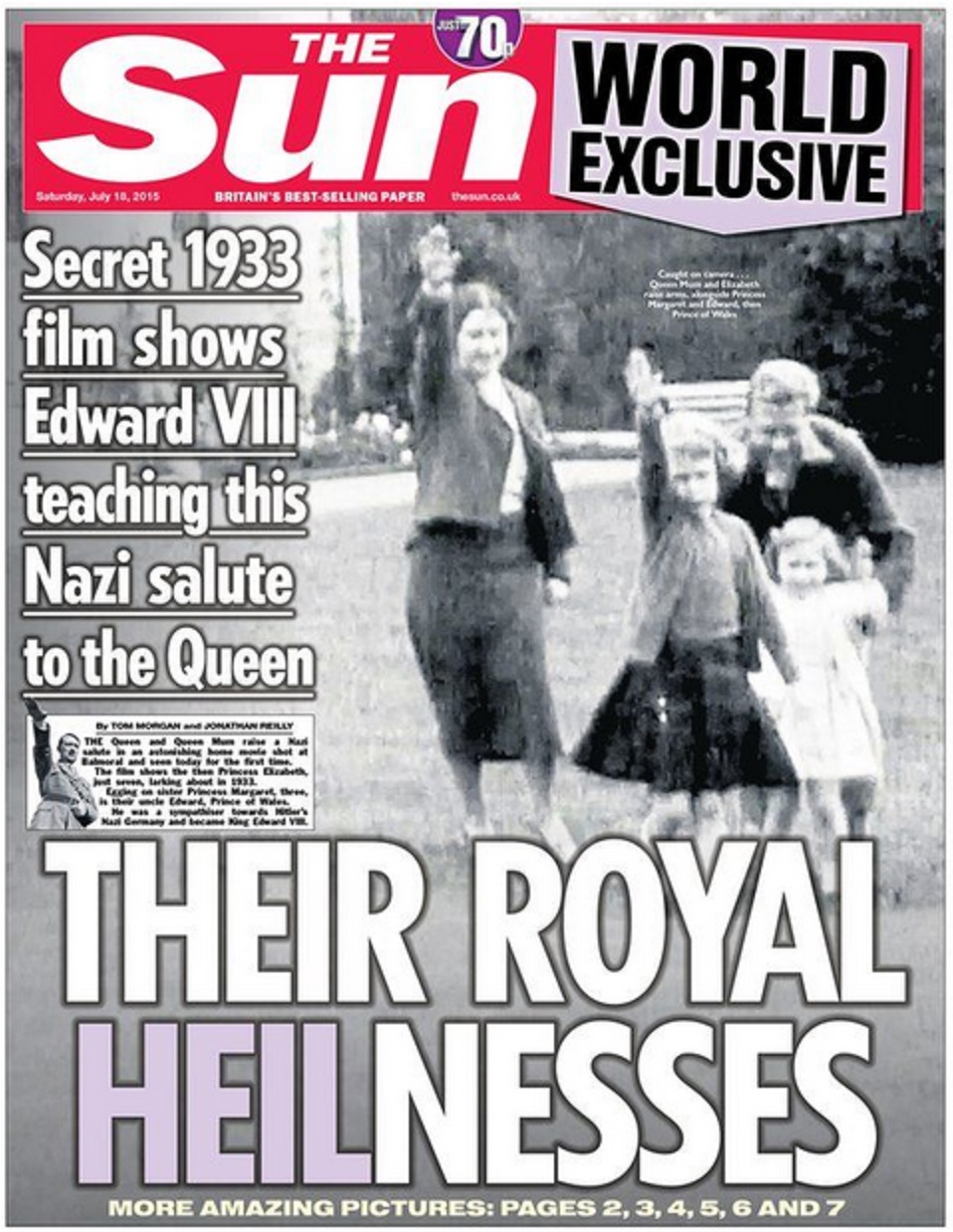
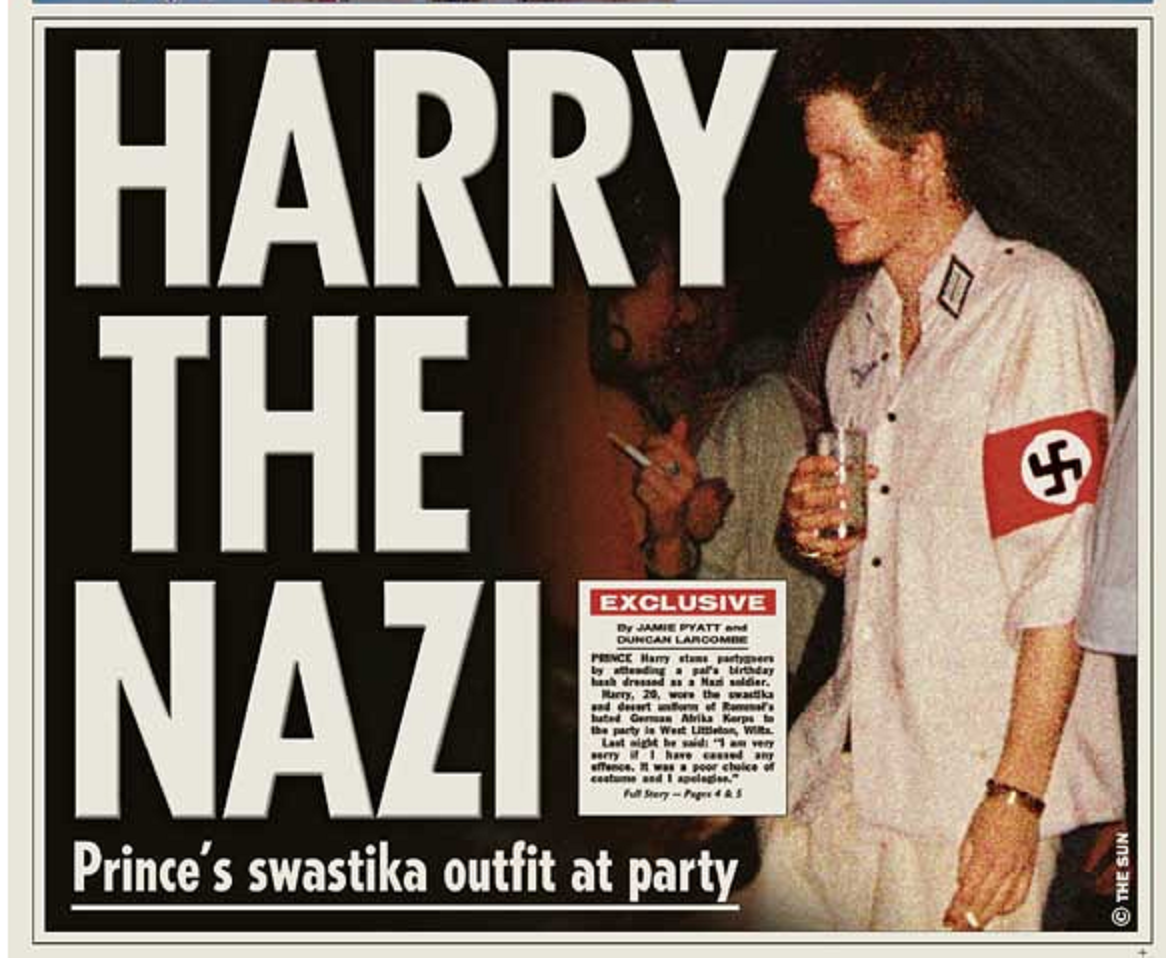
The Saxe-Coburg and Gothas may have changed their names to Windsor, and the current British Royals are certainly not the Tudors, but they do have a hankering for the “good old days” when forelocks were properly tugged and dissenting heads could be “offed”.  That Edward and Wallis were fairly committed supporters of the Nazi cause has been well documented. But The Sun has now acquired some home movies where Edward is shown teaching his nieces and his mother the Nazi salute in 1933. Of course in 1933 most of the Royal Houses of Europe supported Hitler as the scourge of the communists and the potential saviour of Royalty. Mind you, as recently as 2005, the Nazi sympathies of the Windsors were on display with Harry Windsor.

The Editor of The Sun would be high on their list of people to be sent to The Tower.

(I find it a little amusing when present members of ruling Royal families extol the virtues of monarchic democracies).

1933 – (The Sun- 2015)

Royals Hitler 1933 The Sun

Royals Hitler 1933 The Sun

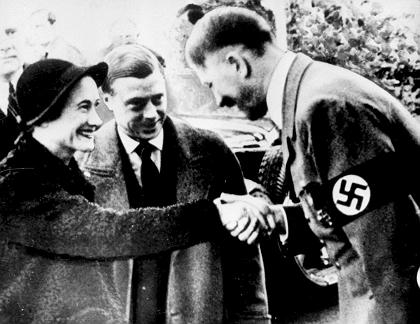
1937

23 October 1937 Edward and Wallace with Hitler

23 October 1937 Edward and Wallis with Hitler – Wikipedia

2005 – (The Sun – 2005)

Harry Swastika 2005 The Sun

Harry Swastika 2005 The Sun

“Let there be cesium” and there was a leap second

June 28, 2015

On 30th June 2015 at 23:59:60, a leap second will be added before 1st July 2015, 00:00:00 because the difference between Coordinated Universal Time (UTC) and Universal Time (UT1) would have reached 0.9 seconds. Universal Time also known as Astronomical Time is based on the Earth’s rotation around its own axis, which determines the length of a day. Since 1972, 25 leap seconds have been inserted to synchronise these two clocks and this leap second will be the 26th. The differences are so irregular that the need for a leap second cannot be predicted more than about 6 months in advance.

The leap second is for synchronising the two clocks and not – directly – for compensating for the slowing down of the earth and the lengthening of the day. That adds about 1 second every 58,800 years (1.7ms per century). Since modern humans arrived on the scene some 200,000+ years ago the length of the day has increased by about 4 seconds.

International Atomic Time (TAI) is the “standard” used to synchronise the other two clocks and is built up by combining the output of some 200 highly precise atomic clocks worldwide and where the second is defined by the resonant oscillation frequency of cesium 133.

Atomic clocks use the second as the base unit and hours, days and years are taken to be multiples.

“The second is the duration of 9 192 631 770 periods of the radiation corresponding to the transition between the two hyperfine levels of the ground state of the cesium 133 atom.”

The wise men of our age believe (they cannot know) that this resonant frequency of the cesium 133 atom will remain “stable” for millions of years and is far more stable than the period of rotation of the irregular orbit of the earth around the sun or the even more irregular (and slowing) rotation period of the earth on its own axis.

All we measure, or try to measure, are periods of time – provided of course that time exists. Cesium would not have come into existence until about 3 minutes after the Big Bang, but time, presumably, began with the Big Bang. Initially there was only hydrogen and then came Big Bang Nucleosynthesis (BBN), which after about 10 seconds (cesium 133 seconds, though cesium still didn’t exist) started producing helium. The heavy elements came about 3 minutes after the BB and after about 20 minutes BBN ceased. Light would have been created as soon as the fusion of hydrogen started with the BB itself.

Rephrasing Genesis

The Big Bang was the Beginning and then came Fusion. The expanse was without form and void, and dark energy was over the face of the deep. And the Spirit of Gravity hovered over the face of the aether. And Gravity said, “Let there be Coalescence” and the stars of the heavens came to be. “Let there coalesce a Sun” said Gravity, and so there was light. “Let coalescence proceed” and under Gravity came the earth bathed in the light of the Sun. And the light was good. 

And the rest is history.


Viking Voyages

June 25, 2015

From thinglink

Click image for a larger map.

Viking voyages – 700 – 1050 CE

Nordic Science:

“Viking Age people knew about sails, at least since the birth of Christ, because they had contact with the Romans who had sails on their ships. But it is not until around the seventh and eighth century that we see the sail introduced in Scandinavia,” says Dr Morten Ravn, an archaeologist and curator from the Viking Ship Museum in Roskilde, Denmark.

“We don’t know why they didn’t have sails earlier, perhaps they just chose not to use it” says Ravn, who believes that the Norsemen must have known about the use of sails in the seventh century.

With the sail began a historical period when the Norse reached all the way down to the Caspian Sea, Gibraltar, Iceland, Greenland, and America.

….. 

“We do not know what was happening in between the time of the Nydam society’s boats and ships of the third and fourth century AD which were exclusively propelled by oars, and the seventh century where we begin to find pictorial depictions of ships. We cannot rule out that at some point we will find a ship from the year AD 500, but right now it is one of archaeology’s great questions,” he says.

The Nydam boat is 23 meters long and 3.5 meters wide. It is clinker built, a technique where the edges of hull planks overlap and planks are joined end to end into a strake. This was developed in northern Europe and successfully used by the Norsemen, and it represents a step in evolution in shipbuilding between the sewn plank boats and the new Viking ships.

During the Viking Age, they developed different types of ships for different purposes — either for crew, food, or merchandise.

Some ships were built for navigating along coasts and rivers, whereas the ships that went to England, Iceland, Greenland, and America were likely to have been large oceangoing vessels that could carry up to 80 people or a large amount of cargo. ……

Written sources indicate that Vikings travelled, traded, and raided, throughout most of Europe.

The annals from the Franciscan monastery of St. Bertin in 841 AD describe how the Danish Vikings sailed down from the North Sea and entered the English Channel to attack Rouen, a town in Normandy, Northern France. The scribes tell how the Vikings raged and plundered, used swords and fire, destroyed the town, killed and enslaved monks and other townspeople, ravaged all monasteries and settlements along the Seine or left them terrified after taking their money as bribes.

The Icelandic sagas written in the Middle Ages are another example, and perhaps the most famous written accounts of the Viking travels. One tells the story of the Norwegian King Harald Hardrada and his travels to Miklagård (modern day Istanbul). He entered into service as the Emperor’s bodyguard and returned home to Norway a wealthy man.

Boozy chimps, Hanuman and the “drunken monkey” hypothesis

June 11, 2015

A new paper reports on chimpanzees in Guinea exhibiting long-term and recurrent ingestion of ethanol. The study was carried out over 17 years and found chimpanzees using leaves to drink fermented palm sap. Many consumed sufficient to produce “visible signs of inebriation”. Local humans also tap the sap of the raffia palm trees to make a palm wine.

The human trait of imbibing intentionally fermented drinks is at least as old as the oldest known archaeological records of ancient civilizations. Stone jugs for alcoholic drinks have been found which date back to at least 10,000 BCE . It is quite likely that the origin of alcoholic drinks predates the arrival of agriculture some 15,000 years ago. And that would suggest that the origin lies with the accidental (and fortuitous?) consumption of over-ripe and partially fermented fruits and berries leading eventually to an intentional fermentation. But that takes the origin back to the time before modern humans had even arrived on the scene and when their primate ancestors relied on fruits and berries for their diet.

Kimberly J Hockings, et al, Tools to tipple: ethanol ingestion by wild chimpanzees using leaf-sponges, Royal Society of Open Science

AbstractAfrican apes and humans share a genetic mutation that enables them to effectively metabolize ethanol. However, voluntary ethanol consumption in this evolutionary radiation is documented only in modern humans. Here, we report evidence of the long-term and recurrent ingestion of ethanol from the raffia palm (Raphia hookeri, Arecaceae) by wild chimpanzees (Pan troglodytes verus) at Bossou in Guinea, West Africa, from 1995 to 2012. Chimpanzees at Bossou ingest this alcoholic beverage, often in large quantities, despite an average presence of ethanol of 3.1% alcohol by volume (ABV) and up to 6.9% ABV. Local people tap raffia palms and the sap collects in plastic containers, and chimpanzees use elementary technology—a leafy tool—to obtain this fermenting sap. These data show that ethanol does not act as a deterrent to feeding in this community of wild apes, supporting the idea that the last common ancestor of living African apes and modern humans was not averse to ingesting foods containing ethanol.

The study provides support for the “drunken monkey” hypothesis which “proposes that human attraction to ethanol may derive from dependence of the primate ancestors of Homo sapiens on ripe and fermenting fruit as a dominant food source. Ethanol naturally occurs in ripe and overripe fruit when yeasts ferment sugars, and consequently early primates (and many other fruit-eating animals) have evolved a genetically based behavioral attraction to the molecule”.

In fact there were natural selection benefits in being “drunken monkeys”. The chimpanzee paper begins:

The ‘drunken monkey hypothesis’ states that natural selection favoured those primates with an attraction to ethanol (commonly referred to as alcohol) because it was associated with proximate benefits (e.g. acting as an appetite stimulant or a cue to finding fruit, or as an unavoidable consequence of a frugivorous diet, etc.), consequently increasing caloric gains.

Hanuman chasing the Sun — image Wikipedia

It is a short mental step from monkey-ancestors to ancient civilizations and mythology. The Indian monkey-god, Hanuman was supposed to be both celibate and teetotal. But his depiction as a “monkey” is probably a later invention. Ancient texts suggest that the young Hanuman was so enamoured of red fruit that he tried to eat the Sun, thinking it was just another ripe fruit. Quite possibly his red fruit were over-ripe, partially fermented and intoxicating. The resulting disfigurement to his jaw and face (burnt and swollen) is what may have given him his appearance. There is a hint that he was of an ancient people (species), half-human and half-monkey, which has become extinct. An ancient ancestor perhaps, and one addicted to intoxicating fruit. Clearly he was put off alcohol for ever. Interestingly, mythology and ancient ayurvedic medicine agree that alcohol in moderation is medicinal and good but taken in excess is a poison and bad. Of course in the Ramayana, all the good guys are vegetarians and teetotal while all the bad guys eat meat and consume an excess of alcohol. The Mahabharata is much more equivocal. Here even the good guys are allowed to drink.

Ignoble Royals

June 9, 2015

Monarchy and monarchists, by their very nature, must tend towards dictatorship.  A hundred years ago, the Labour revolutions and adoption of universal suffrage forced the opposing concept of benevolent dictatorships to harden into a concept of fascist dictatorships. Nobility and noblesse oblige, which characterised and made palatable the behaviour of benevolent monarchs, were no longer required. They are now a thing of the distant past. Since the early part of the 20th century and following World War 1, the very idea of “nobility” died. Members of royal families were now concerned with retaining their positions, their privileges and their personal wealth, and had not the freedom or the room to exercise or demonstrate their “nobility”. Most Royalty in Europe had little choice – if they were to remain Royalty – other than to become Ignoble. Leading up to and during World war 2, three common factors – a controlled breeding of the masses,  a hatred of the Jews and opposition to the Reds, made the now Ignoble Royals natural allies of the Nazis and Hitler.

That the Duke of Windsor – probably encouraged by his wife Wallis Simpson – was quite a strong Nazi sympathiser is no great secret. A new book by Karina Urbach – Go Betweens for Hitler  (OUP £20) – brings out some further details of his extensive contacts and his actions in support of a Nazi victory (which would have brought him back to the throne). He even supported the bombing of Britain to bring the war quickly to a close in favour of Germany. Since Royal correspondence between the British and German branches of the House of Windsor (actually the House of Saxe-Coburg & Gotha, renamed in 1917) is still being kept secret, it can only be deduced from other records that the British Royals had quite extensive links with their German  cousins – who were nearly all Nazi sympathisers.

Members of the Royals (in any country) are inherently opposed to communism. In Europe they were very often anti-semitic and were already eugenicists (in the Nazi style) with their support of their own breeding programs. (In the event, inbreeding has actually led to a clear decline in intelligence among the Royals, with significant non-royal admixtures only coming through to strengthen their gene pool in the last 2 generations or so). A belief in controlling the breeding of the masses, a hatred of the Jews and an implacable opposition to communism – made the Royals natural allies of the Nazis and Hitler.

Urbach writes about her book in The Conversation:

Intelligence reports and German, Spanish and Russian documents show members of the British royal family were indeed far closer to Nazi Germany than has previously been recognised. …. One key to this Anglo-German network is Charles Edward Duke of Coburg (1884-1954). …… Coburg was part of a wider group of go-betweens – private individuals who were used for secret negotiations by Hitler. My investigation into Coburg’s work sheds new and damning light on the Duke of Windsor, a relative and confidante of Coburg. …….

After the failed Hitler Putsch of 1923, Coburg hid several Hitler supporters on the run in his castles. Hitler would not forget this great favour and later rewarded Coburg by making him a general. But he also needed him for something more secretive. In 1933 the Führer was short of international contacts and did not trust his own foreign ministry.

He therefore used members of the German aristocracy for secret missions to Britain, Italy, Hungary and Sweden. Coburg was particularly useful in London from 1935 to 1939 and was received in Britain due to his sister Alice Countess of Athlone’s tireless work. She was Queen Mary’s sister-in-law and fought for Coburg’s acceptance. This resulted in him not just being welcomed in British drawing rooms, but most importantly, by the royals, including the Duke of Windsor.

……. The Soviet intelligence services were convinced of the Duke of Windsor’s treachery when war broke out. …….. In 1940 they reported that he was conducting negotiations with Hitler to form a new English government and conclude a peace with Germany contingent on a military alliance against the USSR. …….. 

Like his relative Coburg, the Duke of Windsor was anti-Semitic. In June 1940 Don Javier Bermejillo, a Spanish diplomat and old friend of Windsor – he had known him since the 1920s – reported a conversation he had had with the Duke to his superiors …. that the Duke of Windsor blamed “the Jews, the Reds and the Foreign Office for the war”. Windsor added that he would like to put Anthony Eden and other British politicians “up against a wall”. Bermejillo stated that Windsor had already made similar remarks about the Reds and the Jews to him long before he became King in 1936. In another conversation on June 25 1940 Bermejillo reported that Windsor stressed if one bombed England effectively this could bring peace.

…….

Prince Philip’s connections are no secret but they are now part of the convenient loss of collective memory.

Ryan Paul: ….. Not only was he trained in the Hitler Youth curriculum, but his German brothers-in-law, with whom he lived, all became high-ranking figures in the Nazi Party. ……. 

During 1931-1932, Philip’s four older sisters married as follows: Margarita to a Czech-Austrian prince named Gottfried von Hohenlohe-Langenburg, a great-grandson of England’s Queen Victoria; Theodora to Berthold, the margrave of Baden; Cecilia to Georg Donatus, grand duke of Hesse-by-Rhine, also a great-grandson of Queen Victoria; and, Sophie to Prince Christoph of Hesse.

Three of Philip’s brothers-in-law were part of a group of German aristocrats who were Anglophile and pro-Nazi at the same time …… 

The Ignoble Royals were not just in Britain and were quite widespread. Prince Bernhard, the consort of Queen Juliana and the the father of Queen Beatrix of the Netherlands, was a member of the Nazi party and of the SS. After the War he converted his fascist tendencies to become eco-fascism as the first head of the WWF. (When he was forced to resign after the Lockheed scandal, he handed over the eco-fascist baton to Prince Philip). Gustav V and the remaining aristocracy in Sweden approved of Nazi actions against the Red Menace. Currently he is said to have been opposed to their Jewish policies but there is some whitewashing involved. Leopold III of Belgium was born Prince Leopold of Belgium, Prince of Saxe-Coburg and Gotha and tried to walk the tightrope between Hitler and the Allies. He did try to keep Belgium neutral but he surrendered to the Germans without his government’s approval and was seen by some as a traitor.

While many Royals eventually opposed Hitler and the Nazis (especially after it was clear that they would not win), royalty and business and bankers (of the non-Jewish kind) all over Europe, were strong, and even enthusiastic supporters of Hitler before the War. In fact, they helped with funding the growth of the National Socialists and his “election” to power.

Nobility is not something that is a characteristic of European royalty any longer. It is not even a behavioural requirement since they have no power to wield. And so they have degenerated to the point that much of their behaviour is that of spoilt brats and ignoble.

Turbines in the orangery

May 26, 2015

Today, in the orangery in the grounds of Finspång Manor, a little gem of a museum was opened. A website is in its infancy. It records the quite remarkable, more than 100 year old, history of the manufacture of steam and gas turbines in this little town. Finspång town has a population of a little over 15,000 today but has an industrial tradition dating back to 1641 and was for 200 years at the forefront of cannon manufacturing (before the advent of the rifled barrel). They had a reputation for usually supplying cannons to both sides of many European wars of the 18th and 19th centuries.

Stal Laval logo

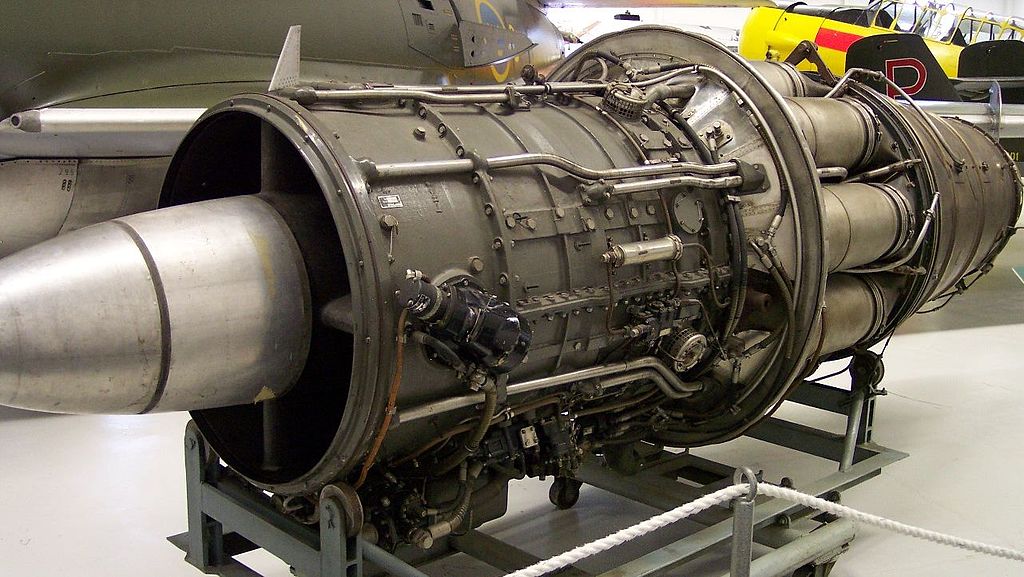
Turbines have been manufactured in Finspång since 1913 but the technology also has a thread going back to Gustaf de Laval who invented his steam  turbine in 1883 and put it into production in 1893 in Stockholm. (In the UK, CA Parsons invented his steam turbine in 1899). The Finspång manufacture of turbines by the STAL company built on the ingenious inventions of the brothers Ljungström, Birger and Fredrik. The two strands of the de Laval and Ljungström technologies came together later in 1959 and STAL became STAL-Laval. Ownership of the factory in due course shifted to ASEA and then to ABB and for a short while was with Alstom and then eventually moved to Siemens who are the current owners. Gas turbines came into the picture in 1945 with the development of a jet engine (the Dovern) for the Swedish Air Force. That engine flew only once (under another aircraft for a test) and never “in anger”. The Swedish Air Force chose Rolls Royce for their engines and STAL converted the development for industrial use. The engine morphed into an industrial gas turbine, the GT35, which first went into operation in 1957 and this engine – with a further development or two – is still around in the Siemens stable. In 1959, STAL delivered a 40MW gas turbine, the GT120, which at the time, was the world’s largest.

STAL Dovern.jpg

“STAL Dovern”. Licensed under CC BY-SA 3.0 via Wikimedia Commons

The Finspång Orangery (built in 1832) in the grounds of Finspång Manor is, at first sight, a most unlikely place for a Museum of Turbine History. But even with its wall frescoes and painted ceilings which evoke a long-gone age of gracious living, the turbines do not seem at all out of place. An older Orangery burnt down in 1830 and the current building was designed by Lars Jakob von Röök.  On two of the back, north-facing walls are frescoes said to be by the Italian painter Guido Reni. (But since Reni was born in 1575 and died in 1642, that is either wrong or the walls are much older and survived the fire of 1830. Since the manor was only built between 1668 and 1685, it is more likely that the artist was someone other than Guido Reni).

Finspångs Orangery juli_2005 (wikipedia)

Finspångs Orangery juli 2005 (wikipedia)

Orangery frescoes (image khaladsphotoblog)

Siemens has provided the Orangery as a home for the Museum, which has been put together by volunteers. They are still working to organise the wealth of material and drawings and pictures and films and models that are gathering dust in the catacombs under Finspong Manor.

Through the summer it is hoped to be able to have the museum open on Wednesdays and Thursdays. In any event the Finspong Manor grounds are well worth a visit and for anyone interested in rotating machinery, the museum should prove fascinating. (The manor itself is used as offices and is closed to the public. However the chapel – now run by the Swedish Church – is a little jewel of a chapel).

Finspång Manor from the SE. (image http://www.skyscrapercity.com)

Chapel in Finspång Manor (photo credit Per Svensson http://www.sfoto.se)

Currently the Finspång facility is the main centre for Siemens’ range of industrial gas turbines and ceased manufacturing steam turbines earlier this year. But the turbine tradition is now into a 6th generation.

Runes and elvish in the Valley of the Älv

May 21, 2015

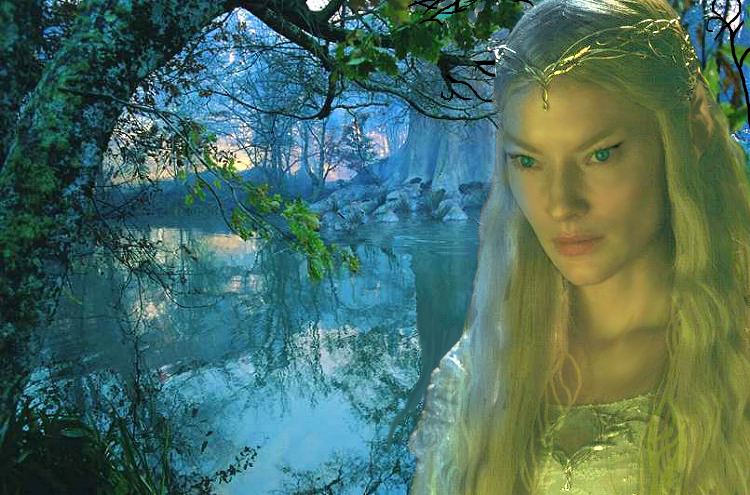
“Älv” in Swedish means “river”. But the origin of “elf” in English is the old English “ælf”. So when it is found that in Älvdalen, runes were used just 100 years ago and they still speak their own ancient Norse language, Elfdalian, it is difficult not to conjure up visions of Legolas and Elrond and of Galadriel in Lothlórien.

ScienceNordic: Elfdalian (älvdalska in Swedish and övdalsk in the language itself) sounds like something you would more likely encounter in Tolkien’s Lord of the Rings rather than in a remote Swedish forest. But the small town of Älvdalen, which gives the language its name, is not an Elven outpost. It is one of the last strongholds of an ancient tongue that preserves much of Old Norse, the language of the Vikings. …. has preserved linguistic features that are to be found nowhere else in Scandinavia, and that had already disappeared from Old Norse by 1200AD. ….

Because of its relative isolation, Elfdalian evolved in an entirely different direction than the modern Scandinavian languages. Its sounds, grammar and vocabulary differ radically from Swedish. So, while speakers of Swedish, Danish and Norwegian can easily understand each other in simple conversations, Elfdalian is completely unintelligible to Swedes who are not from the area.

Only about 2,500 people still speak Elfdalian but it is now being taught again in primary schools in the region.

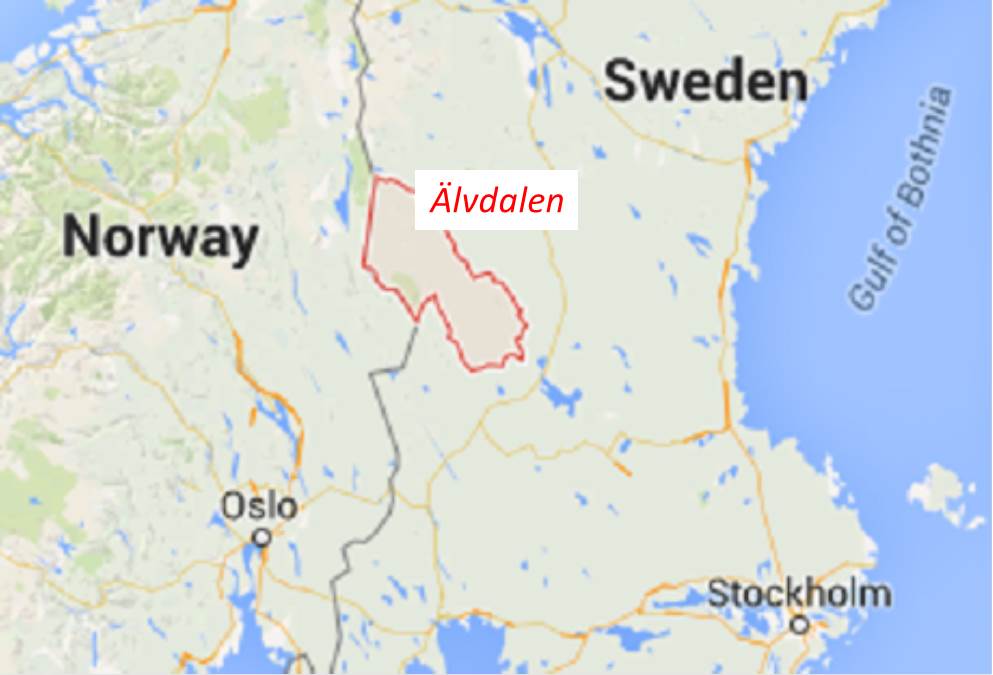
Älvdalen is a municipality in Sweden and the name actually means River Valley. It is isolated from the rest of Sweden by its mountains, forests and lakes.

Älvdalen

ScienceNordic: “Älvdalen lies extremely deep within the Swedish forests and mountains. You can get there by boat up the river, Dalälven — a journey of more than 100 kilometres — and getting there and back used to be quite an expedition. So people in the area weren’t particularly mobile and were able to preserve this very special culture, considered in Sweden to be extremely traditional and old fashioned,”

The runic script was the dominant written language in Denmark and the rest of Scandinavia until the advent of Christianity in the ninth and tenth century introduced the Latin alphabet.

By the 15th century the Latin alphabet had almost wiped out the use of runes – but not in Älvdalen. Here, the Swedish linguist Henrik Rosenkvist recently saw a letter dated 1906 written partly in runes.

“The runes we see in Älvdalen are probably the most recent use of the script we know of. Runes otherwise died out in the Middle Ages so their use in so recent times is exceptional,” says Rosenkvist who speaks and studies the unique language spoken in Älvdalen.

The runes of Älvdalen — dalrunerne — are reminiscent of those used on runes stones in Denmark but there are a number of differences. Dalrunerne developed over time, influenced partially by the Latin alphabet. Here are the runes as they looked in the period leading up to the 20th century. (Illustration: Tasnu Arakun/Wikimedia Commons)

Nielsen agrees. “The use of runes in Scandinavia gradually ceased during the 15th century. There are the odd areas of Gotland in Sweden and in Iceland where the rune tradition survived until the 17th century, but in Älvdalen their use was widespread until the early 20th century,” he says.

According to Nielsen the runes in Älvdalen were most commonly found on houses and inscribed in furniture. In addition to this, they were also engraved into ’message blades’ which were sticks of wood that were circulated among the farms in the area. “The people who herded the cattle up in the mountains would write messages to each other in runes,” says Nielsen.

Tolkien took much of his inspiration for his elves (and fairies) from a mixture of Norse and Celtic mythologies and medieval writings. But his elves and their love of ships and their writing are straight out of Norse mythology. In that sense the real world Älvdalen is probably as close to  the enchanted – but fictional – forests of Lothlórien as it is possible to get.