Archive for the ‘History’ Category

100 million expected at Maha Kumbh Mela starting today

January 14, 2013

It is a festival which has been going on for at least 1500 years and probably much longer. The earliest record of the Kumbh Mela is from the writings of Xuanzang who visited in 629 CE. But similar festivals are known to have been going on hundreds of years earlier.

It could be the largest ever gathering of humanity in one place as the Maha Kumbh Mela begins today at Sangam in Allahabad. The festival will continue for 55 days and is expected to attract over 70 million and perhaps upto 100 million people this year. It is a little mind-numbing to consider that almost 8% of the entire population of India will be in this one location over the next two months.

The 2001 Maha Kumbh – which was was a once in 144 year event – saw around 60 – 70 million attending with an estimated one million visitors from abroad. On Sunday night it was estimated that around 1.5 million people were already in place in various tent cities around Allahabad. Mark Twain was a visitor in 1895 and wrote:

It is wonderful, the power of a faith like that, that can make multitudes upon multitudes of the old and weak and the young and frail enter without hesitation or complaint upon such incredible journeys and endure the resultant miseries without repining. It is done in love, or it is done in fear; I do not know which it is.

The Mela tales place at Sangam at the confluence of the three holy rivers; the Ganga, the Yamuna and the mythical Saraswati. It was here that the Gods spilt a drop of Amrita, the nectar of life and it is by bathing here that one can be washed free of sin (and gain a portion of immortality – though this is not the purpose of the pilgrimage and the rituals). The story goes that the Amrita was contained in a pitcher (Kumbh) over which the gods fought the demons. During the battle which raged across the heavens, the God Vishnu flew away with the Kumbh and in his flight spilt some Amrita in 4 places –  Allahabad, Haridwar, Nasik and Ujjain. The battle between the gods and the demons lasted 12 “divine” days which translates to 12 human years. The location of the Mela is governed by astronomy and astrology. The location depends upon the astrological positions of the Sun and Jupiter and the timing is set by the lunar calendar.

The festivities start today with the ritual procession and bathing of the 13 akharas (sects of Sadhus and ascetics whose existence dates back to 2500 BC). The Naga Sadhus will lead the way. The order in which the 13 akharas participate was fixed during the British Raj (to prevent queue jumping and fighting among the various groups) and continues today. Twenty million people are anticipated on Basant Panchami which falls on February 15th. This year the other particularly auspicious bathing days are January 14th, January 27th, February 10th, February 25th and March 10th.

Times of India: The akharas have been allotted fixed time, ranging from 30 minutes to about an hour depending upon the size of their respective procession, for bathing with routes for going to and returning from Sangam so separated as to ward off possibility of members of rival akharas coming in contact with each other.

The mela administration said it has made elaborate arrangements for devotees who would be flocking to the city over the next 55 days. In fact, around 10-15 lakh pilgrims are already living in Sangam city’s sprawling quarters, day and night. Most of them are in tents, make-shift shelters or with sectoral groups called akharas that are administered by sadhus and mahants.

There are people from virtually every state, with those from rural areas of UP, MP, Gujarat and Maharashtra accounting for the largest numbers. The administration has received applications from more than 100 organizations seeking land to pitch more tents, and their numbers are growing.

Nash Papyrus, Newton’s notebooks, Kalpasutra go on-line

December 16, 2012
Nash Papyrus at Cambridge

Nash Papyrus at Cambridge

(Reuters)A copy of The Ten Commandments dating back two millennia and the earliest written Gaelic are just two of a number of incredibly rare manuscripts now freely available online to the world as part of a Cambridge University digital project.

The Nash Papyrus — one of the oldest known manuscripts containing text from the Hebrew Bible — has become one of the latest treasures of humanity to join Isaac Newton’s notebooks, the Nuremberg Chronicle and other rare texts as part of the Cambridge Digital Library, the university said on Wednesday.

“Cambridge University Library preserves works of great importance to faith traditions and communities around the world,” University Librarian Anne Jarvis said in a statement.

“Because of their age and delicacy these manuscripts are seldom able to be viewed – and when they are displayed, we can only show one or two pages.”

The university’s digital library is making 25,000 new images, including an ancient copy of the New Testament, available on its website (cudl.lib.cam.ac.uk/), which has already attracted tens of millions of hits since the project was launched in December 2011.

The latest release also includes important texts from Judaism, Christianity, Islam, Buddhism, Hinduism and Jainism.

In addition to religious texts, internet users can also view the 10th century Book of Deer, which is widely believed to be the oldest surviving Scottish manuscript and contains the earliest known examples of written Gaelic.

Treasures of the Library

Nash Papyrus

The Nash Papyrus is a second-century BCE fragment containing the text of the Ten Commandments followed by the Šemaʿ. Prior to the discovery of the Dead Sea Scrolls it was the oldest known manuscript containing a text from the Hebrew Bible.

Kalpasutra

Traditionally attributed to Bhadrabāhu, the Kalpasūtra is a major canonical text of the Śvetāmbara Jains, composed in ArdhamāgadhīPrakrit, in a mixture of prose and verse, and containing the life-stories of the twenty-four Jinas, in particular Neminātha, Pārśvanātha and Mahāvīra.

Kalpasutra

CO2 concentration is not a major driver of earth’s temperature – may not even be a minor driver.

October 6, 2012

This paper is about the Warm Period in the Late Bronze Age (3100-3300 Years Before Present), which preceded the Roman Warm Period, the Medieval Warm Period and the current Warm Period.

Journal of Archaeological Science Volume 39, Issue 6, June 2012, Pages 1862–1870

The influence of climatic change on the Late Bronze Age Collapse and the Greek Dark Ages by Brandon L. Drake, Department of Anthropology, University of New Mexico, Albuquerque

(more…)

Vostok 3KA-2 Soviet space capsule from 1961 to be auctioned at Sotheby’s

February 28, 2011

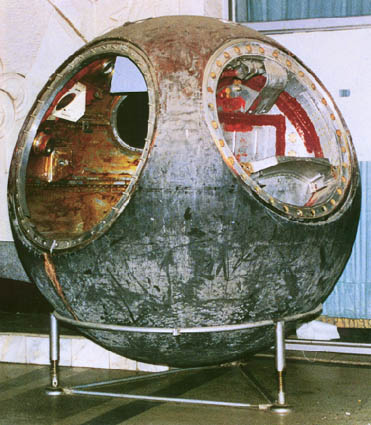
Before blasting the first human into space in 1961, the Soviet Union fired off one last test flight of the tiny capsule that would carry Cosmonaut Yuri Gagarin on his historic mission.

The test capsule, Vostok 3KA-2, still scorched from re-entry, will be sold at Sotheby’s in New York on April 12, the 50th anniversary of Gagarin’s flight. Sotheby’s, which is displaying the capsule at its New York headquarters ahead of the sale, estimates it will fetch between $2 million to $10 million.

Vostok 3KA-2, one of three Vostok space capsules produced for Yuri Gagarin's historic space flight. On March 23, 1961, it took a test flight for 115 minutes with a dummy and a dog onboard: image csp.co.jp

The Vostok space program, conceived by the architect of the Soviet space program Sergei Korolev, first made history by blasting two dogs, Belka and Strelka, into space — the first animals to survive the voyage in 1960.

The capsule’s spherical cabin, no more than 2.5 meters (8 feet) in diameter and made of aluminum alloy, was then adapted to carry humans.

Just weeks before Gagarin’s mission, in a final test flight the capsule carried a life-size cosmonaut mannequin and a dog named Zvezdochka.

The capsule completed one orbit, re-entered the earth’s atmosphere and landed in a snow-filled gully near the Soviet town of Izhvesk, paving the way for Gagarin historic mission in an exact copy of the capsule.


Review of “3000 Miles to Freedom”

December 25, 2010

I posted in August about my father’s manuscript describing his escape from Singapore after its fall in 1942.

Mark Pillai as a Captain

Three Thousand Miles to Freedom

A review by Abhimanyu Singh appeared in last Sunday’s  New Sunday Express entitled:

Two takes on an obscure, yet epic journey

Duke Danfu’s 3000 year old fruit cellar found

November 21, 2010

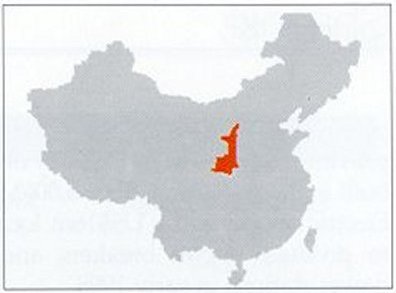
Chinese archeologists have found an ancient fruit cellar containing well-preserved apricot and melon seeds from more than 3,000 years ago in today’s Shaanxi Province reports Xinhua.

Shaanxi Province

Xian, the capitol of Shaanxi Province is better known for its tombs and terra-cotta soldiers. Xian was also the starting point of the Silk Road and home of the Banpo people, a Neolithic culture that lived in the area 8,000 years ago.

Situated at the south foot Qishan Mountain in the west of Shaanxi Province, Zhouyuan was the home of Duke Danfu, an early leader of the Zhou clan. It was the centre for the rise of the Western Zhou.

Covered ritual wine vessel (gong) 1050-900 BCE...

Western Zhou dynasty bronze c. 1000 BC: Image by mharrsch via Flickr

Nearly 800 pieces of bronzeware of the Western Zhou Dynasty, in varied sizes, have been excavated form the Zhouyuan Site, together with large palace foundations and inscribed oracle bones.

From Xinhua

The cellar was a rectangular pit about 105 cm long, 80 cm wide and 205 cm deep, said Dr. Sun Zhouyong, a researcher with the Shaanxi Provincial Institute of Archeology. Sun and his colleagues found the pit in 2002, about 70 cm underground the Zhouyuan site, ruins of Western Zhou dynasty (1046-771 BC) 100 km from Xi’an. After eight years of research, they concluded it was a cellar used to preserve fruits for aristocrats.

In each corner of the pit, Sun and his colleagues found a little round hole. “We assume the cellar had something like a shade that was fixed on the four holes but had decayed over the years.” Inside the cellar the researcher could see, even with naked eye, huge piles of nuts and seeds. “We sorted them out with care, and found about 500 apricot nuts — 108 of which were complete with carbonized pulp, at least 150 melon seeds and 10 plum seeds,” said Sun. They also found millet and grass seeds.

“Most of the seeds were intact and very few were carbonized,” said Sun. “It was so amazing that scientists who conducted lab work suspected they were actually put away by rodents in more recent times.” Sun and his colleagues sent three apricot nuts to Beta Analytic in Florida, the United states, last year for carbon 14 test to determine their age. “The test results indicated they were about 3,000 years old, dating back to a period between 1380 B.C. and 1120 B.C.,” said Sun. “Seemingly the fruits had been stored in an acidic and dry environment, so dehydration was extremely slow and the nuts were not carbonized even after so many centuries.”

Zhouyuan site, where the cellar was unearthed, was believed to be a dwelling place for Duke Danfu, an early leader of the Zhou clan. It was known as the cradle of the Western Zhou Dynasty, one of the earliest periods of China’s written history. “Presumably, the aristocrats had stored fruits in their family cellar,” said Sun. The cellar, with roughly 1.7 cubic meters of storage, could store up to 100 kilograms of fruits, he said.

The Book of Rites, a Chinese history book compiled in the Western Han Dynasty (202 BC-9), put melons, apricots, plums and peaches among the 31 categories of food favored by aristocrats of the time. It said people in the Zhou Dynasty had also learned to grow fruit trees in orchards. A poem in the “Book of Songs”, a collection of poetry from the Western Zhou Dynasty (11th century -771 BC) to the Spring and Autumn Period (770 – 475 BC), says food kept in “ling yin” — meaning cool places — will stay fresh for three days in the summer.

Before the fruit cellar was reported, archeologists in Shaanxi Province found a primitive “icebox” that dated back at least 2,000 years ago in the ruins of a temporary imperial residence of the Qin Dynasty (221 BC – 207 BC). The “icebox”, in the shape of a shaft 1.1 meters in diameter and 1.6 meters tall, was unearthed about 3 meters underground in the residence.

George Bush “memoirs” plagiarise advisors’ books

November 13, 2010

Huffington Post runs an analysis of George W Bush’s memoirs “Decision Points” and it seems he (or his ghost writer) has managed a great deal of  “cut and paste” from his advisors’ books. Bush even filches descriptions of events which others witnessed as his own even though he was not present! Considering Nixon’s inability to operate the erase button on a tape recorder, it would seem Bush has come a long way if he actually manged all the “cutting and pasting” on his own.

When Crown Publishing inked a deal with George W. Bush for his memoirs, the publisher knew it wasn’t getting Faulkner. But the book, at least, promises “gripping, never-before-heard detail” about the former president’s key decisions, offering to bring readers “aboard Air Force One on 9/11, in the hours after America’s most devastating attack since Pearl Harbor; at the head of the table in the Situation Room in the moments before launching the war in Iraq,” and other undisclosed and weighty locations.

Crown also got a mash-up of worn-out anecdotes from previously published memoirs written by his subordinates, from which Bush lifts quotes word for word, passing them off as his own recollections. He took equal license in lifting from nonfiction books about his presidency or newspaper or magazine articles from the time. Far from shedding light on how the president approached the crucial “decision points” of his presidency, the clip jobs illuminate something shallower and less surprising about Bush’s character: He’s too lazy to write his own memoir.

Many of Bush’s literary misdemeanors exemplify pedestrian sloth, but others are higher crimes against the craft of memoir. In one prime instance, Bush relates a poignant meeting between Afghan President Hamid Karzai and a Tajik warlord on Karzai’s Inauguration Day. It’s the kind of scene that offers a glimpse of a hopeful future for the beleaguered nation. Witnessing such an exchange could color a president’s outlook, could explain perhaps Bush’s more optimistic outlook and give insight into his future decisions. Except Bush didn’t witness it. Because he wasn’t at Karzai’s inauguration.

In a separate case of scene fabrication, though, Bush writes of a comment made by his rival John McCain as if it was said to him directly. “The surge gave [McCain] a chance to create distance between us, but he didn’t take it. He had been a longtime advocate of more troops in Iraq, and he supported the new strategy wholeheartedly. “I cannot guarantee success,” he said, “But I can guarantee failure if we don’t adopt this new strategy.” A dramatic and untold coming-together of longtime rivals? Well, not so much. It comes straight from a Washington Post story. McCain was talking to reporters, not to Bush.

In a final irony, Bush appears to draw heavily from several of Bob Woodward’s books and also from Robert Draper’s “Dead Certain”. The Bush White House called the books’ accuracy into question when they were initially published.

The similarities between the way Bush recollects his and other quotes may be a case of remarkable random chance or evidence that he and his deputies were in an almost supernatural sync. If so, he essentially shares a brain with General Tommy Franks.

Bush writes: “Tommy told the national security team that he was working to apply the same concept of a light footprint to Iraq… ‘If we have multiple, highly skilled Special Operations forces identifying targets for precision-guided munitions, we will need fewer conventional grounds forces,’he said. ‘That’s an important lesson learned from Afghanistan.’ I had a lot of concerns. … I asked the team to keep working on the plan. ‘We should remain optimistic that diplomacy and international pressure will succeed in disarming the regime,’ I said at the end of the meeting. ‘But we cannot allow weapons of mass destruction to fall into the hands of terrorists. I will not allow that to happen.’

Franks, in his memoir American Soldier, writes: “‘For example, if we have multiple, highly skilled Special Operations forces identifying targets for precision-guided munitions, we will need fewer conventional ground forces. That’s an important lesson learned from Afghanistan.’ President Bush’s questions continued throughout the briefing…. Before the VTC ended, President Bush addressed us all. ‘We should remain optimistic that diplomacy and international pressure will succeed in disarming the regime.’ … The President paused. ‘Protecting the security of the United States is my responsibility,’ he continued. ‘But we cannot allow weapons of mass destruction to fall into the hands of terrorists.’ He shook his head. ‘I will not allow that to happen.’

A Crown official rejected the suggestion that Bush had done anything inappropriate, suggesting that the similarities speak to its inherent accuracy!!

Huffington Post goes on to document at least 16 cases of plagiarism (so far) in the book.

DNA evidence shows farming was not indigenous but was imported into Europe from the East

November 10, 2010

A new paper published in PLoS Biology today uses “high precision ancient DNA methods” to  create a detailed genetic picture of one of the first farming communities in Europe (from central Germany) which reveals that this ancient farming population was radically different to the nomadic populations already present in Europe.

Haak W, Balanovsky O, Sanchez JJ, Koshel S, Zaporozhchenko V, et al. (2010) Ancient DNA from European Early Neolithic Farmers Reveals Their Near Eastern Affinities. PLoS Biol 8(11): e1000536. doi:10.1371/journal.pbio.1000536

The hunter-gatherers of Europe it seems did not change rapidly to become farmers. The farmers moved in (invaded?) from the near east and some 8,000 years ago gradually dominated the scene. From Science Daily:

A team of international researchers led by ancient DNA experts from the University of Adelaide has resolved the longstanding issue of the origins of the people who introduced farming to Europe some 8000 years ago. A detailed genetic study of one of the first farming communities in Europe, from central Germany, reveals marked similarities with populations living in the Ancient Near East (modern-day Turkey, Iraq and other countries) rather than those from Europe.

Project leader Professor Alan Cooper, Director of the Australian Centre for Ancient DNA (ACAD) at the University of Adelaide, says: “This overturns current thinking, which accepts that the first European farming populations were constructed largely from existing populations of hunter-gatherers, who had either rapidly learned to farm or interbred with the invaders.”

“We have finally resolved the question of who the first farmers in Europe were — invaders with revolutionary new ideas, rather than populations of Stone Age hunter-gatherers who already existed in the area,” says lead author Dr Wolfgang Haak, Senior Research Associate with ACAD at the University of Adelaide. “We have also been able to use genetic signatures to identify a potential route from the Near East and Anatolia, where farming evolved around 11,000 years ago, via south-eastern Europe and the Carpathian Basin (today’s Hungary) into Central Europe,” Dr Haak says.

The Author summary:

The transition from a hunter–gatherer existence to a sedentary farming-based lifestyle has had key consequences for human groups around the world and has profoundly shaped human societies. Originating in the Near East around 11,000 y ago, an agricultural lifestyle subsequently spread across Europe during the New Stone Age (Neolithic). Whether it was mediated by incoming farmers or driven by the transmission of innovative ideas and techniques remains a subject of continuing debate in archaeology, anthropology, and human population genetics. Ancient DNA from the earliest farmers can provide a direct view of the genetic diversity of these populations in the earliest Neolithic. Here, we compare Neolithic haplogroups and their diversity to a large database of extant European and Eurasian populations. We identified Neolithic haplotypes that left clear traces in modern populations, and the data suggest a route for the migrating farmers that extends from the Near East and Anatolia into Central Europe. When compared to indigenous hunter–gatherer populations, the unique and characteristic genetic signature of the early farmers suggests a significant demographic input from the Near East during the onset of farming in Europe.

Magna Germania: Ptolemy’s map deciphered

October 2, 2010

Der Spiegel reports: Berlin Researchers Crack the Ptolemy Code

A 2nd century map of Germania by the scholar Ptolemy has always stumped scholars, who were unable to relate the places depicted to known settlements. Now a team of researchers have cracked the code, revealing that half of Germany’s cities are 1,000 years older than previously thought.

Magna Germania

Link to larger map.

A group of classical philologists, mathematical historians and surveying experts at Berlin Technical University‘s Department for Geodesy and Geoinformation Science has produced an astonishing map of central Europe as it was 2,000 years ago.

Ptolemy: Bildarchiv Hansmann/Interfoto

The map shows that both the North and Baltic Seas were known as the “Germanic Ocean” and the Franconian Forest in northern Bavaria was “Sudeti Montes.” The map indicates three “Saxons’ islands” off the Frisian coast in northwestern Germany — known today as Amrum, Föhr and Sylt.

It also shows a large number of cities. The eastern German city that is now called Jena, for example, was called “Bicurgium,” while Essen was “Navalia.” Even the town of Fürstenwalde in eastern Germany appears to have existed 2,000 years ago. Its name then was “Susudata,” a word derived from the Germanic term “susutin,” or “sow’s wallow” — suggesting that the city’s skyline was perhaps less than imposing.

This unusual map draws on information from the mathematician and astronomer Ptolemy, who, in 150 AD, embarked on a project to depict the entire known world. Living in Alexandria, in the shadow of its monumental lighthouse, the ancient scholar drew 26 maps in colored ink on dried animal skins — a Google Earth of the ancient world, if you will.

Read the full article

The Roman Empire in 116 AD and Germania Magna,...

Image via Wikipedia. Roman Empire in 116 AD

“Wiglesdor” found: Gateway to the Viking Empire

August 29, 2010

The Danevirke is a system of Danish fortifications inSchleswig-Holstein (Northern Germany). This important linear defensive earthwork was constructed across the neck of the Cimbrian peninsula during Denmark’s Viking Age.

http://upload.wikimedia.org/wikipedia/commons/thumb/f/f3/Map_danavirki.JPG/800px-Map_danavirki.JPG
The Danevirke (shown in red) on the 16th-century Carta Marina

For a century, archeologists have been looking for a gate ( the “Woiglesdor”) through a wall built by the Vikings in northern Europe. This summer, it was found. Researchers now believe the extensive barrier was built to protect an important trading route.

Archeologists have now taken a closer look at part of the construction — a three-meter-thick (10 feet) wall from the 8th century near Hedeby (known as Haithabu in German). It is constructed entirely out of stones collected from the surrounding region. Some of them are only as big as a fist, while others weigh as much as 100 kilograms (220 pounds). “The Vikings collected millions of rocks,” says archeologist Astrid Tummuscheit, who works for the state archeology office of Schleswig-Holstein.

A Customs Station, an Inn and a Bordello

(more…)