Archive for the ‘Technology’ Category

Trent 900: Rolls Royce and Airbus statements

November 12, 2010

Trent 900 update

Friday, 12 November 2010

Rolls-Royce is now in a position to provide an update on its statement of 8 November concerning the engine failure on the Trent 900 powered A380 Qantas flight QF32 on 4 November 2010.

Immediately following this incident a regime of engine checks was introduced on the Trent 900s to understand the cause and to ensure safe operation. These have been conducted in parallel with a rigorous examination of all available evidence, including data from the damaged engine and its monitoring system, analysis of recovered material and interrogation of the fleet history.

These investigations have led Rolls-Royce to draw two key conclusions. First, as previously announced, the issue is specific to the Trent 900. Second, the failure was confined to a specific component in the turbine area of the engine. This caused an oil fire, which led to the release of the intermediate pressure turbine disc.

Rolls-Royce continues to work closely with the investigating authorities.

Our process of inspection will continue and will be supplemented by the replacement of the relevant module according to an agreed programme.

These measures, undertaken in collaboration with Airbus, our Trent 900 customers and the regulators have regrettably led to some reduction in aircraft availability. This programme will enable our customers progressively to bring the whole fleet back into service.

Safety continues to be Rolls-Royce’s highest priority.

This undated image provided by the Australian Transport Safety Bureau shows a jagged and bent piece of a turbine disc from a Qantas superjumbo Rolls-Royce engine that exploded Thursday, Nov. 4, 2010. The Australian Transport Safety Bureau, which is leading an international investigation into the blowout on the world's newest and largest airliner, appealed for help from residents of Indonesia's Batam island to find the missing chunk of a turbine disc. (AP Photo/ATSB) EDITORIAL USE ONLY - No Sales

image provided by the Australian Transport Safety Bureau shows a jagged and bent piece of a turbine disc from a Qantas superjumbo Rolls-Royce engine that exploded Thursday, Nov. 4, 2010. (AP Photo/ATSB)

Rolls Royce does not identify the faulty component in its stement but there are reports that it was a faulty bearing box from Airbus.

Washington Post:

An Airbus executive said Friday that Rolls-Royce has identified a faulty bearing box as the cause of the oil leak problem implicated in the midair disintegration of an engine on one of the world’s largest airliners, an Australian newspaper reported.

Airbus Chief Operating Officer John Leahy told reporters in Sydney that Rolls-Royce had at some point fixed the bearing box on newer versions of the massive Trent 900 engine, a model designed for the massive A380 superjumbo. He said Rolls was now fixing it on older versions. The Herald Sun reported his comments on its website. His comments did not address why Rolls-Royce had not fixed the bearing box in older versions of the engine. Airbus did not elaborate and Rolls-Royce declined to comment on his remarks.

The box in question contains the metal ball bearings that allow movement of the drive shaft that spins the turbines inside jet engines. Investigators have said that leaking oil caused a fire in the engine of a Qantas A380 that heated metal parts and made the motor disintegrate over Indonesia last week, sending shrapnel into the wing and cutting vital safety systems before the jetliner landed safely in Singapore. They have focused on broken pieces of the engine’s heavy turbine disc, a plate that holds the turbine blades that move air through the motor. Engines on the A380 malfunctioned four times before the disintegration on the flight from Singapore to Sydney. All of the planes landed safely.

The problems dating to 2008 led to two warnings for airlines to check parts of the Trent 900. Three of the four problems centered on the turbines or oil system. Rolls-Royce Group PLC said in an update to investors Friday that the disintegration of the Qantas engine resulted from a problem in a specific component in the Trent 900, but it did not provide details. “The failure was confined to a specific component in the turbine area of the engine. This caused an oil fire, which led to the release of the intermediate pressure turbine disc,” Rolls-Royce said.

The statement supports a report from the European Aviation Safety Agency, which issued an emergency order Thursday requiring airlines to re-examine their Trent 900s and ground any planes with suspicious leaks.

Leahy said the new models of the Trent 900 had been redesigned to eliminate the problem of excess oil causing turbine fires. He said that Rolls-Royce was retrofitting the older versions with new parts to stop the oil leaks and computer software that would shut down an engine with leaking oil before it was put at risk of disintegration. “In the future the computer will have software that can identify a problem at the outset and it will shut down an engine before a turbine disc can go out of control and come apart,” Leahy told the Herald Sun. Leaks or oil stains have been discovered on six of the total of twenty A380s operated by Qantas, Lufthansa and Singapore Airlines that use the Trent 900, a technologically advanced model designed to be lighter, quieter and more efficient than older engines. Qantas and Singapore Airlines have grounded nine of the world’s largest airliner between them while Germany’s Lufthansa has already replaced an engine on one of its A380s.

Rolls-Royce’s chief executive said the company will be replacing the relevant part to enable its customers to bring the whole fleet back into service. Airbus will take Rolls-Royce engines off the final assembly line in Toulouse, France, and send them to Qantas “so we can get Qantas back up and flying,” the Airbus press office said. The disintegration on the Qantas A380 was far more serious than the airline has implied in its public statements, however, experts said.

Damage from engine shrapnel to the wing over the engine occurred very close to the wing’s front spar, one of two support beams in the wing that attach the wing to the plane, said John Goglia, a former member of the National Transportation Safety Board and an expert on airline maintenance. If the shrapnel had hit the spar it could possibly have weakened the spar and even have caused the wing to fall off, he said.

As it was, the shrapnel appears to have damaged electrical cables and hydraulic lines inside the wing, Goglia said. Pilots were unable to close the landing gear doors, an indication of hydraulic damage, and had difficulty shutting down the engine next to the engine that disintegrated, an indication of an electrical problem, he said. The A380 has four engines.

Photos and video of the incident and its aftermath show the shrapnel clearly ruptured a hydraulic line and an electric line in the wing, cutting off the pilots’ control of half the brake flaps and the remaining engine on the affected wing, along with the door of the landing-gear compartment, said Joerg Handwerg, a spokesman for the pilots’ union for Lufthansa.

In its trading update Friday, London-based Rolls-Royce said the incident will cause full year profit growth “to be slightly lower than previously guided,” but it also said that the company’s other operations will help to offset any losses. Back in July, the company said that its underlying profits would grow by 4-5 percent compared to 2009.

Shares in the company rose after the update – a signal that investors are happy to see a definitive statement after days of silence from the world’s second-biggest engine maker behind General Electric and one of the last globally important industrial manufacturing companies in Britain.

Rolls-Royce shares were up 4 percent at 607.5 pence ($9.74) in midmorning trade on the London Stock Exchange.

Handwerg said that minor problems are routine for any jet engine, but it is possible that the issues were an indication that regulators did not adequately check the engine before approving it for commercial use.

“When you see we have a problem with not just one of these engines but several then it points towards that we have a problem in the certification process,” Handwerg said.

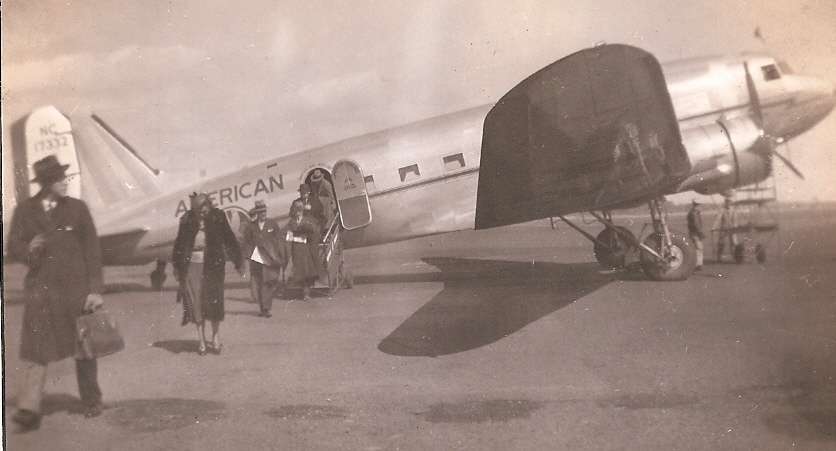
 

The DC3 lives on

November 12, 2010

Translated freely from Ny Teknik:

When  German polar researchers needed to acquire a further research plane,  they selected the Basler BT-67, a newly built version of the classic DC3.

The Basler BT-67 fitted with skis: image Ny Teknik

The Alfred Wegener Institute for Polar and Marine Research needed to supplement its fleet of aircraft that can fly over the Arctic and Antarctic. They already had good experience with their Polar 5 and have now ordered another, Polar 6, to perform measurements simultaneously over the two poles.

The plane chosen is a Basler BT-67, basically a modern version of the classic DC3 built today by Basler Turbo Conversions of Oshkosh, Wisconsin, USA.
Compared with a classic DC3 the Basler is 40 inches longer, has 35 percent more volume, can load 43 percent more cargo, is 24 percent faster and carries twice as much fuel.
Instead of reciprocating engines in the original DC3 the Basler is equipped with turboprop engines from Pratt & Whitney.
Warren Basler, who founded the company, thought it was a pity that such a sound design as the DC3 would not live on. The company has been making planes since 1990.

From Wikipedia:

The Basler BT-67 is a conversion of the DC-3. Basler refurbishes DC-3s at Oshkosh, Wisconsin, fitting them with Pratt & Whitney Canada PT6A-67R turboprop engines, lengthening the fuselage by 40 in (100 cm) with a fuselage plug ahead of the wing and strengthening the airframe in selected areas. The airframe is rated as having “zero accumulated fatigue damage.” This and extensive modifications to various systems and avionics result in a practically brand-new aircraft. The BT-67s have been supplied to civil and military customers in several countries.

The 75th Anniversary of the DC-3’s first flight will be on December 17, 2010.

The Classic DC3 has been flying since 1935: image http://www.wmof.com

Rolls Royce to announce “solution” to Trent 900 problem later today

November 12, 2010

Rolls Royce are due to make a Trading Report today. They have informed their customer airlines and Airbus that they will announce that they have found the cause of the Trent 900 engine failure on the Qantas A 380 and have a planned solution. But Airbus expects that implementing the solution will take some time and will not be a quick fix.

Qantas Airbus A380 after making emergency landing at Singapore's Changi airport

Uncontained failure of the QF 32 RR Trent 900

Sydney Morning Herald:

British jet engine manufacturer Rolls-Royce will announce this afternoon that it has found a solution to the engine failure that caused a Qantas A380 to make an emergency landing in Singapore last week. Rolls-Royce is due to release a statement at 6pm AEST revealing that it has identified the problem with the Trent 900 engines and will make changes to their software.

This is aimed at enabling the engines to be shut down before they reach a stage at which they are about to disintegrate. Airbus’s chief operating officer, John Leahy, said in Sydney today that he had been informed that Rolls-Royce would issue a statement late today stating that they had found the cause of the engine explosion last week.

“They know they have found a solution to what caused the problem. They know how to fix that now but it will take some time,” he said.

Mr Leahy said he did not know how long it would take to make the changes.

Rolls-Royce’s investigation into the midair incident involving QF32 on November 4 had focused on an oil fire which had caused the failure of the number two engine’s intermediate turbine disc.

Rolls Royce investors will be watching closely:

RR one month share price

Qantas preparing for summer schedules without their A 380 fleet?

November 11, 2010

It seems that Qantas are preparing their summer schedules allowing for a potentially long non-availability of their A380s.

SMH (Business Day) reports that signs have emerged (that) Qantas’ flagship A380 aircraft may be out of service over the summer holidays, with its new schedule for international flights in coming weeks not including the A380.

Fairfax media says the airline’s A330 aircraft have replaced Boeing 747s on several Asian routes, freeing up the Boeing 747s to fly on the long-haul routes to Los Angeles and London. Fairfax quoted aviation insiders as saying that the Qantas A380 fleet was likely to remain grounded for weeks with the engine problem likely to be taking quite some time.

Qantas says it still hopes the A380s will be cleared within days, but at this stage it can provide no update and it won’t return the A380s to service until it can guarantee absolute safety.

Aviation Week reveals that all the changes and inspections of the engines on the A380s are straining the operations of Qantas, Singapore Airlines and Lufthansa.

The decisions by Singapore Airlines (SIA) and Lufthansa to replace Trent 900 engines on parts of their Airbus A380 fleets indicates continued uncertainty over what prompted the uncontained engine failure on a Qantas Airways A380 and is highlighting the operational strains when one of the mega-transports is not available.

But the upheaval in A380 operations – the first significant disruptions for the Airbus flagship since it entered service in 2007 – also is highlighting the challenges airlines face when having to replace an A380 in day-to-day operations. To mitigate the effects, Lufthansa, for instance, is rushing to make its engine change so it will not have to miss another flight.

One issue for Lufthansa is that the latest engine change will consume its last available spare Trent 900.

With three of its 12 A380s grounded for engine changes, an SIA spokesman acknowledges that there will be flight disruptions to passengers. All three aircraft are displaced from the airline’s home base, with one located in London and the other two at Sydney.

The Age also reports that Airlines are frustrated with Roll-Royce’s reluctance to communicate publicly. Even Emirates – which uses different engines on its A380 – said it was worried that passengers might be frightened off.

“We really don’t want this aircraft tarnished with a reputation for failures in certain areas,” said Emirates’ president Tim Clark. ”One thing we will not allow is a contagion effect.”

Emergency Airworthiness Directive issued for Trent 900

November 11, 2010

The European Aviation Safety Agency have released Emergency Airworthiness Directive (EAD) 2010-0236-E requiring operators of Trent 900 engines to perform inspections of their engines.

The Directive is applicable to the following engine variants: RB211 Trent 900 series engines, variants RB211 Trent 970-84, RB211Trent 970B-84, RB211 Trent 972-84, RB211 Trent 972B-84, RB211 Trent977-84, RB211 Trent 977B-84 and RB211 Trent 980-84, all serialnumbers.These engines are known to be installed on, but not limited to, AirbusA380 series aeroplanes.

Reason: An uncontained engine failure has recently occurred on a Rolls-RoyceTrent 900 involving release of high energy debris and leading to damage to the aeroplane.Analysis of the preliminary elements from the incident investigation showsthat an oil fire in the HP/IP structure cavity may have caused the failure ofthe Intermediate Pressure Turbine (IPT) Disc.This condition, if not detected, could ultimately result in uncontained engine failure potentially leading to damage to the aeroplane and hazardsto persons or property on the ground.For the reasons described above and pending conclusion of the incidentinvestigation, this AD requires repetitive inspections of the Low PressureTurbine (LPT) stage 1 blades and case drain, HP/IP structure air buffercavity and oil service tubes in order to detect any abnormal oil leakage,and if any discrepancy is found, to prohibit further engine operation.The requirements of this AD are considered as interim action. If, as a result of the on-going incident investigation, a terminating action is later identified, further mandatory actions might be considered.

Required as indicated, unless accomplished previously:

(1) Within the compliance times indicated in Table 1 of this AD, accomplish the following actions in accordance with Rolls-RoyceNon Modification Service Bulletin (NMSB) 72-AG590, Par 3. Accomplishment Instructions, 3.A or 3.B as applicable to the engine configuration:

(1.1) Carry out an extended ground idle run.

(1.2) Inspect the Low Pressure Turbine (LPT) stage 1 blades andcase drain.(1.3) Inspect the HP/IP structure air buffer cavity and oil service tubes.

(2) If any discrepancy is found during the inspections required by paragraph (1) of this AD, any further engine operation is prohibited. Within one day after the accomplishment of the inspection, report the findings to Rolls-Royce.

(3) Inspections accomplished in accordance with the content of NMSB72-AG590 before the effective date of this AD, are acceptable to comply with the initial inspections required by this AD.

(4) After the effective date of this AD, do not operate an engine on an aeroplane unless it has been inspected in accordance with the requirements of this AD.

The Aviation Herald points out that:

An oil fire possibly similiar to the Qantas Trent 972 led to an uncontained engine failure of a Trent 772 engine on Edelweiss’ Airbus A330-200 registration HB-IQZ near Miami, see Final Report: Edelweiss A330 at Miami on Oct 5th 2003, uncontained engine failure during departure. In their safety recommendations released in December 2006 following the conclusion of the investigation the NTSB wrote:

“Disassembly of the No. 1 engine revealed evidence of heat damage and distress in the HP/IP turbine bearing chamber consistent with the presence of an oil fire. Microstructure examination of the fracture surfaces on the IP turbine disk drive arm revealed damage consistent with a localized fire that caused the drive arm to eventually fail and separate, allowing the IP turbine disk to overspeed. The overspeed condition resulted in the liberation of all IP turbine disk blades through the IP turbine case, with some blades striking the airplane. Because thermal damage within the HP/IP turbine bearing chamber and associated hardware prevented identifying the exact cause of the fire based solely on the physical evidence from the No. 1 engine, the No. 2 engine was examined to help establish possible causes or contributors to the bearing chamber fire in the No. 1 engine.

A borescope inspection of the No. 2 engine revealed that the HP/IP turbine bearing chamber internal vent tube was obstructed with a black substance. An airflow check of the vent tube revealed that the air passage was not completely blocked. A nondestructive three-dimensional neutron tomography analysis revealed that the substance was not solid and was characterized by nodules of carbon deposits (also known as coke) with areas of voids. Although coke formations within oil tubes are not uncommon, the morphology, amount, and location of the carbon deposits found in the vent tube of the No. 2 engine were unusual and inconsistent with coke formation seen on other Trent engines or from other service experiences.”

The NTSB had concluded in April 2006 the probable cause of the Trent 772’s failure was:
“the coking (carbon build-up) in a vent tube which led to a fire and the subsequent liberation of the IP turbine blades. Contributing to the cause of the uncontained engine failure was the absence of measures to adequately monitor the in-service performance of a new engine/oil combination.”

Son of Hubble may not launch till after 2015

November 11, 2010

Earlier this year it became clear the the son of Hubble the James Webb Space Telescope, was late and over budget. Costs had ballooned to 5 billion dollars (from the earlier 3.5 billion dollars) and launch was expected in 2014. It has now been acknowledged that costs will be not less than 6.5 billion dollars and launch even in 2015 is optimistic. The management is now being changed and reorganised.

The BBC has the story:

The scale of the delay and cost overrun blighting Nasa’s James Webb Space Telescope has been laid bare by a panel called in to review the project. The successor to Hubble will probably cost at least $6.5bn to launch and operate, and may get into orbit by September 2015.

But even that assessment is optimistic, say the panel members. The head of the US space agency has accepted that “cost performance and coordination have been lacking”. Charles Bolden has ordered a reorganising of the project and has changed the management at its top. Estimates for JWST’s total cost to build, launch and operate have steadily increased over the years from $3.5bn to $5bn. Along with the cost growth, the schedule has also eroded.

The most recent projected launch of 2014 has looked under pressure for some time. The independent panel chaired by John Casani of Nasa’s Jet Propulsion Laboratory (JPL) in Pasadena, California, believes it to be unrealistic. The group was convened to examine the root causes of JWST’s problems. It found the original budget for the project to be insufficient and poorly phased, and blamed the management for failing to pick up and deal with the issue.

“This is a very large complex project and to estimate something with any real degree of precision that’s never been done before is a tough job,” John Casani told reporters. “But the bottom line is that there was never enough money in the budget to execute the work that was required. The panel did however commend the technical success of the project. Mr Casani said the technology on JWST was in “very good shape”. The telescope was always regarded as major undertaking. Its primary mirror is 6.5m (21ft) across – close to three times wider than Hubble’s. The huge reflector will sit behind an even more expansive sun shield, the area of a tennis court. This structure will protect the observatory from radiation from the Sun and the Earth. Whereas Hubble sees the Universe mostly in visible light, JWST will observe the cosmos at longer wavelengths, in the infrared. It will see deeper into space and further back in time, to the very first population of stars.

When it is finally built, it will be launched on Europe’s Ariane 5 rocket and sent to an observing position 1.5 million km from Earth. It is expected to have a 10-year lifespan. Its distance from Earth means the telescope cannot be serviced by astronauts, as was the case with Hubble.

Herschel (BBC)

Now Boeing 787 Dreamliner delayed by fire on test flight

November 11, 2010
2nd Boeing 787 First Flight

First flight of Boeing 787 No.2: Image via Wikipedia

An electrical fire could have a myriad of causes and does not necessarily have any fundamental design implications, but the Dreamliner does not need further delays even for fairly trivial faults.

The Press Association reports:

Boeing has grounded its test fleet of new 787 passenger jets while it investigates an electrical fire that forced one of the planes to make an emergency landing. On Tuesday, a 787 on a six-hour test flight had to make an emergency landing in Texas after the crew reported smoke in the rear of the plane.

Boeing said it would take several days to analyse flight data and stopped flights for all of its 787 test planes “until we better understand the cause of the incident”. Spokeswoman Loretta Gunter said it is not yet clear how long it will be until test flights resumed. “We don’t have a schedule in mind right now,” she said.

The company plans ground tests on the planes while they are not flying.

Ms Gunter said the fire started in a power control panel in a rear electronics bay on the test plane. Boeing is inspecting the power panel and the area around it to see if other repairs are needed. The fire cut the plane’s electrical power. Boeing said back-up systems including a ram air turbine – essentially a wind-powered generator – functioned as expected.

The Federal Aviation Administration is investigating Tuesday’s incident and the National Transportation Safety Board is monitoring the situation but has not sent investigators to the scene.

It is the latest setback for a plane that is already about three years behind schedule. Boeing had hoped to deliver the first 787, which it calls the Dreamliner, to Japan’s All Nippon Airways in the first quarter of next year.

“We are committed to finding the cause quickly but will not rush the technical team in its efforts,” the company said.

Rolls Royce faces 3 different engine issues as Singapore Airlines changes engines on 3 A 380s

November 10, 2010

It seems that Rolls Royce are facing  issues with three different engines; the Trent 900 for the A380s, the RB211-524s having Trent features and the Trent 1000.

Singapore Airlines are grounding three of their A380s for engine change-outs as a precautionary measure.

AFP:

Singapore Airlines (SIA) said Wednesday it had grounded three Airbus A380 planes to carry out “precautionary” engine changes following a mid-air engine failure on a Qantas-operated superjumbo. “Based on further analysis of inspection findings as the investigation into last week’s incident involving another operator’s Airbus A380 is progressing, Singapore Airlines will be carrying out precautionary engine changes on three A380s,” the carrier said in a statement.

An SIA spokeswoman told AFP that Rolls Royce had advised the carrier to change the engines after tests showed oil stains on them. “We were advised by Rolls-Royce in particular that these three engines had signs of oil stains,” she said, stressing the issue was different from the problem that affected the Qantas A380 plane last week.

The three planes are now in London, Sydney and Melbourne pending the engine changes, and SIA could not confirm the duration of their grounding nor the cost of replacing the engines.

My simplistic view of what is certainly a very complicated picture is that there are certain operating conditions at which the Trent 900 is subject to oil leaks (possibly because some oil carrying pipes are susceptible to vibration based cracks). These operating conditions are probably when the Trent 900 is being “pushed” close to maximum thrust conditions and Qantas’ method of operation has these engines operating at these conditions for more of the time than other airlines. This mode of operation probably occurs more often at or soon after take-off.

Even though Rolls Royce has said that the issues with the Trent 1000 are entirely different and have been fixed, there remains the issue of whether the Trent based improvements when introduced into the RB211-524 engine also creates a “dangerous” operating zone.

It seems to me that Rolls Royce is wrestling with at least 3 different engine issues:

  1. with the Trent 900 for the A 380’s, especially at high-thrust conditions which Qantas uses more than other airlines,
  2. with the RB211-524 (xT) where the (T) represents the use of Trent features and used mainly in Boeing 747-400’s, and
  3. with the Trent 1000 for the Boeing Dreamliner where some issues have been fixed but where delays are still in the air.

I have no doubt that they are going to get fixed but the direct cost will be high and my guess is that Rolls Royce will have to bear the brunt of the cost with some costs incurred by Qantas for their own fleet. It will need the sale of many Trent 900s before Rolls Royce can amortise all the development and “teething” costs for this engine. It is of some small comfort that the number of engines to be “fixed in the field” is relatively small. The costs for Airbus will be mainly indirect for the loss of reputation and for some lost opportunities. But the A 380’s ability to land safely even after one wing was heavily damaged is not unimpressive.

Damage to Qantas A380 aircraft was more severe than thought

November 9, 2010

The Australian:

New suggestions have emerged that a spectacular engine failure near Singapore last week caused more damage to the plane involved than first thought. The No 2 engine’s violent disintegration ripped a hole through the Airbus A380’s left wing, destroying wiring that prevented the pilots from turning off the No 1 engine and causing a fuel leak. Suggestions have now emerged that there was also significant damage to hydraulic systems that prevented spoilers, panels on the wing that create drag to slow the plane down, from deploying.


The wrecked engine after the plane landed in Singapore.

The wrecked engine after the plane landed in Singapore.


The suggestions came as the Australian Transport Safety Bureau yesterday interviewed the flight crew of the stricken A380 and performed the first boroscope inspection of the Rolls-Royce Trent 900 engine. Investigators are continuing their search for the rest of a turbine disc that broke up in the incident and have set up a schedule for examining a recovered piece that has been sent to Britain for forensic tests.

Inspections of the grounded planes continued yesterday amid suggestions European regulators were poised to issue an airworthiness directive on the checks.

With this amount of damage to the wing it is a tribute to the pilots and to the Airbus A380 aircraft that the landing in Singapore was as smooth as it was and with no injuries at all.

Rolls Royce has said that the issues are specific to the Trent 900 and there are further indications that the issues may be specific to the engines as used by Qantas.

Meanwhile

Rolls-Royce says that the uncontained engine failure on a Qantas Airbus A380 en route from Singapore to Sydney on November 4 “is specific to the Trent 900. We can be certain that the separate Trent 1000 event which occurred in August 2010 on a test bed in Derby is unconnected,” Rolls-Royce said in a statement yesterday. “This incident happened during a development program with an engine operating outside normal parameters. We understand the cause and a solution has been implemented.”

The engine maker added that it would provide a further update on the investigation with its interim management statement on November 12.

Qantas pushes its Trent 900 engines harder than other airlines

November 9, 2010

It would seem that while there may well be a fundamental issue with the Trent 900 as used by Qantas, the manner in which Qantas operates the engines may be a significant contributing factor. Sources indicate that Qantas run their engines “harder” than the other Trent 900 users (Singapore Airlines and Lufthansa) primarily, it seems, for economic reasons. Competitive pressures on airlines as well as those on the engine makers may be coming into play.

Reuters:


Qantas cracking the whip too hard? (image:aerospaceweb.org)


Qantas Airways  is reviewing the way it operates its A380 planes after last week’s engine blowout, a source said on Tuesday, amid reports that it worked its Rolls-Royce  engines harder than other airlines.

Qantas operates its A380 engines at higher thrust levels, which could result in resonating vibrations that cause oil lines to crack, The Australian newspaper said. The higher maximum thrust setting is used on some Qantas A380 take-offs on long-haul routes between Los Angeles, Sydney and Melbourne than other operators such as Singapore Airlines, the daily said, quoting unnamed engineers. However, the extra thrust setting of 72,000 pounds remained 3,000 pounds below the engine’s design limits and within operating guidelines, it added.

Chief Executive Alan Joyce said on Monday that its engines had a “slightly higher level of power” than those used in Singapore Airlines or Lufthansa planes, but they were certified to operate at those levels. The way Qantas operated the engines was part of a wider review, said an airline source, who was not authorised to talk publicly about the matter. “The operations are one of the things Qantas are reviewing along with the components,” said the source.

Qantas, which declined to comment on the report, said on Friday it suspected a material failure or a design issue may have caused last Thursday’s engine failure over Indonesia which forced the aircraft to make an emergency landing in Singapore.