Archive for the ‘UK’ Category

King Coal: The global battle to control resources

December 26, 2010

Riversdale Mining Ltd. has 13 billion metric tonnes of known coking and thermal coal reserves in its Benga and Zambeze projects in Mozambique. A global battle is now hotting up for the acquisition of Riversdale and the potential bidders clearly have no doubts about the continued use of coal and are not greatly impressed by the passing fad of Global Warming alarmism.
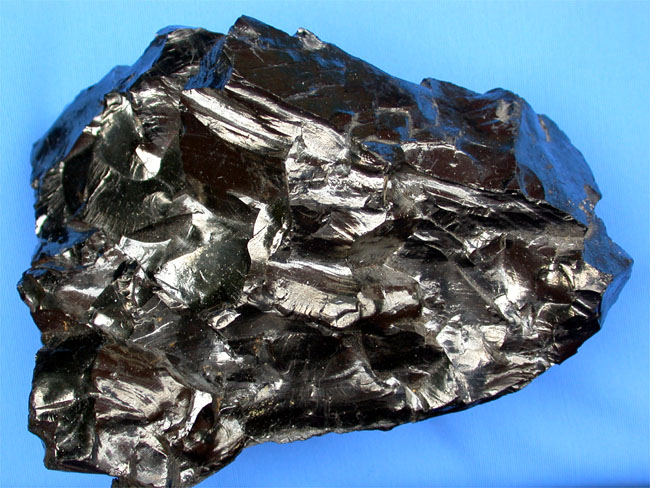
King Coal: image pitt.edu

Bloomberg reports:

International Coal Ventures Ltd., an Indian state-run joint venture, is studying an offer for Riversdale Mining Ltd. to counter a A$3.9 billion ($3.9 billion) bid from Rio Tinto Group.

ICVL appointed Citigroup Inc. to examine a possible takeover offer for the Sydney-based coal company with mines in Mozambique, the venture’s chairman C.S. Verma said yesterday. London-based Rio yesterday bid A$16 a share for Riversdale, securing 14.9 percent of the company in pre-bid agreements.

Indian companies are seeking coal mines overseas to ensure raw material supplies for producing steel and electricity. Brazil’s Vale SA or Eurasian Natural Resources Corp. may make bids, according to Sanford C. Bernstein & Co., as Tata Steel Ltd., Riversdale’s biggest holder, said it will study Rio’s offer “in the context of other alternatives” available to Tata. “The A$16 cash offer is unlikely to secure acceptance from all of Riversdale’s shareholders,” analysts led by Hayden Bairstow at CLSA Asia-Pacific Markets, said yesterday in a report, raising his price target for Riversdale by 3 percent to A$18. Riversdale’s “Benga and Zambeze coal projects are world class and we believe other suitors may show an interest in Riversdale now a formal bid has been tabled,” he said.

Tata Steel holds 24 per cent stake in Riversdale and is its largest shareholder. Sources say there have been talks between ICVL and Tata Steel for a joint bid or at the very least support from Tata Steel for ICVL’s bid. However, ICVL did not confirm that any talks took place between the consortium and Tata Steel reports The Hindu Business Line.

But more bidders are appearing and it is likely that the shareholders of Riversdale can expect a much higher price than what is on the table now. The Guardian reports that:

The global battle for control of the world’s natural resources flared again when it emerged that Anglo American could gatecrash Rio Tinto’s plans to buy Riversdale Mining, the Australian coking coal group, for £2.5bn.

Headed by chief executive Cynthia Carroll and chairman Sir John Parker, Anglo has joined a list of possible counter-bidders for Riversdale, whose African business produces coal for the fast-growing Asian steel industry.

Evidence of the importance of coking coal to China surfaced recently when Riversdale signed an agreement with Wuhan Iron and Steel to jointly develop Riversdale’s huge Zambeze coal reserves in Mozambique.

Anglo, which is believed to have appointed Morgan Stanley to advise on its options, will face stiff competition, with the Wall Street Journal reporting that Tata Steel of India, which controls 24% of Riversdale, is considering an offer.

Another potential bidder is ICVL, an Indian consortium that has appointed Citigroup as a financial adviser and mandated the bank to report back on the viability of a bid that would top Rio’s promise of A$16 a share.

Tata Steel has just received shareholder approval “for raising of additional long-term resources through issue of securities, including equity shares with differential rights as to voting and dividend, up to Rs 7,000 crore ($1,550 million)”. A company press release said “Tata Steel notes the takeover bid for Riversdale Mining announced by Rio Tinto. Tata Steel will evaluate the takeover bid in the context of other alternatives available to Tata Steel.” Riversdale is important for the long-term coking coal security for Corus. Tata Steel is already entrenched in its Mozambique coal mining project with a strategic stake and long-term supply contract. With Tata Steel’s share of Riversdale valued at almost $1 billion by the Rio Tinto bid it is likely that the final selling price will be significantly higher than Rio Tinto’s bid.

An educated guess would suggest a final selling price of over $5 billion or over A$20 per share.


Piers Corbyn forecasts a 3rd solar-influenced wave of snow in UK

December 23, 2010


Reproduced from Climate Realists.com:
Image Attachment

A THIRD period of “Solar Climate Change” on the UK will take place from Christmas Day to the End of December, this comes right after the first & second periods correctly predicted by WeatherAction.com & Piers Corbyn

The forecast made in November says….Snow deluges and blizzards in most of England and Wales, heaviest in East parts. Snow showers in Scotland. Sleet/rain and less cold in far West Ireland.

This “triple hit” of “Solar Climate Change” announced to WeatherAction.com users in November, means that the UK will go on to complete the “worst ever” December for High street retailers and business with the lack of essential public service due to road/rail/airport closures and again bring the country to it’s knees, and with “road salt” running out fast this “third” wave will take it’s toll on the “holiday” work force.

This is likely to add to one of the worst if not THE worst period of disruption in the UK to have been seen in modern times.

I will repeat what was said on the previous statement as this will still apply….

There are potential “life threatening” conditions that will be underestimated by the media (inc. Met Office).

With the aid of this forecast we hope to give some advance warning to those of you who are already suffering hardship and warn you of a very real risk of further and even bigger snow storms and blizzard conditions set for Scotland & England and Eastern Europe.

Please spread news of this forecast to all of those who are vulnerable and try to ensure that food supplies are sufficient to cope with this impending crisis.


Rolls Royce shares, time to sell? Trent 900 hit will last at least 18 months

November 22, 2010

In the first half of 2010 Rolls Royce had revenues of £5.421 billion with a PBT of £465 million (8.6%) of revenues. Cash position was strong with net cash for the period at £915 million. But it looks less impressive considering the order backlog of £58.4 billion. How much of the net cash was due to order down-payments is not clear. Orders received during the period were £5.9 billion (and backlog was virtually unchanged) and this would have provided net cash of around £550 million. So operating cash flow (excluding financial posts) was probably only £350 million.

The Trent 900 debacle will probably eat up at least £200 million – and perhaps more – over the next 12 -18 months. The immediate effect will also be the loss of some expected orders and 22 A380s – bought by Qatar Airways, Kingfisher, Etihad and Air Austral – are yet to decide whether to use the Trent 900 or the rival GP7200 made by the GE / Pratt & Whitney Alliance. Any loss of market share will be difficult to recover. To sell the 100 additional engines that will be needed to recover the costs of this fix will take a few years. Even though all the costs will not be incurred in this quarter, some significant provision will have to be made this year (and it will be a real warning sign if such provision is not made).

The financial and technological position of Rolls Royce is strong and they should be able to make the fix and weather the storm. But profits will be hit hard for at least the next 12 months and perhaps even longer if Trent 900 sales suffer or if the Trent 1000 is further delayed.

Until the Trent 1000 is established in the Dreamliner (which depends on the Boeing 787 coming into service through next year), Rolls Royce share value is capped and with a big downside. It is perhaps time to sell and it could be time to re-enter in about 12 months if some of the major uncertainties are resolved by then.

ROLLS-ROYCE Share Graph

ROLLS-ROYCE Share Graph: graphs.lse.co.uk


Indra Dhanush 2010 concludes but UK hopes of selling Harriers is dashed

November 3, 2010

By all accounts both the IAF and the RAF are very satisfied with the joint exercise Indra Dhanush 2010 which has just concluded. But UK hopes of selling the Harrier seem to have stalled. The Financial Times reports that

Britain has hit an early obstacle in its bid to sell its fleet of Harrier jump jets after India, the most promising potential buyer, described the aircraft as “iffy” and obsolete.

Air Chief Marshall PV Naik, the head of the Indian Air Force, said on Tuesday he would be looking to acquire modern aircraft of fourth-generation capabilities or better. “The Harrier doesn’t fit into that category,” the Air Chief Marshall said. His dismissive remarks over the “iffy” Harrier came soon after Air Chief Marshal Sir Stephen Dalton, the chief of the UK air staff, acknowledged the possibility of a sale while paying a visit to India to boost military co-operation and exports.

The distinct lack of interest shown in the Harrier, which was decommissioned in the defence review primarily on grounds of cost, will be a blow to ministers who are seeking to generate some much-needed revenue from the disposal.

Air Chief Mashall Naik’s words will particularly sting because the Ministry of Defence has spent more than £500m upgrading the Harrier avionics over the last five years and the jets could potentially remain in service until the mid 2020s.

Sify News reports the conclusion of the exercise:

The joint air force drill between India and United Kingdom (UK) held under the banner of ‘Indradhanush’-III at Air Force Station Kalaikunda in West Bengal’s West Midnapore District concluded on Tuesday. The Royal Air Force of UK participated with modern Typhoon Eurofighters, the E-3D Sentry, and VC-10 mid air re-fueller, while the Indian Air Force (IAF) fielded the SU-30 MKIs, Mirage 2000s, Mig 27s and its AWACS for the first time in a joint Air Exercise.


Eurofighter Typhoon

Eurofighter Typhoon: Image by Destinys Agent via Flickr


Pilots of the Royal Air Force said that the purpose of this exercise was to enhance understanding between the Royal Air Force and the Indian Air Force. “The whole purpose of the exercise of the ‘Indradhanush’ has been to enhance understanding between the Royal Air Force and the Indian Air Force and whosoever increase…competence as an Air Force and it’s been on air front a very, very successful exercise,” said Guy Lockwood, a pilot of the Royal Air Force of United Kingdom.

“We have learned good things from them. They follow the NATO procedures, we follow our own. When we fought together we realised they have got some good things, they realised that we have also got some good tactics, we fought together, so it was a good experience,” said Susil Kumar, a pilot of the IAF.

During the initial two-days of the exercise on October 18 and 19, elaborate briefings on standard operating procedures, rules of exercise and familiarisation of the local flying area was carried out.

The exercise ‘Indradhanush’ began on October 21 and continued for 12-days.


Day 3 at Kalaikunda: image http://chhindits.blogspot.com


“What the Green Movement got wrong” – Channel 4

October 31, 2010


green = nuclear


Channel 4 in the UK is running a documentary this week called “What the Green Movement got wrong”.

A group of environmentalists are challenging the movement they helped to create. These life-long diehard greens advocate radical solutions to climate change, including GM crops and nuclear energy.

In this film, these life-long diehard greens advocate radical solutions to climate change, which include GM crops and nuclear energy. They argue that by clinging to an ideology formed more than 40 years ago, the traditional green lobby has failed in its aims and is ultimately harming its own environmental cause.

As author and environmentalist Mark Lynas says, ‘Being an environmentalist was part of my identity and most of my friends were environmentalists. We were involved in the whole movement together. It took me years to actually begin to question those core, cherished beliefs. It was so challenging it was almost like going over to the dark side. It was a like a horrible dark secret you couldn’t share with anyone.’

The Telegraph reports on the change of heart:

Mark Lynas, a campaigner who has been a member of action groups on GM foods and climate change, said the environmental lobby was losing the battle for public opinion on climate change because it had made too many apocalyptic prophecies and exaggerated claims.

He said: “We have got to find a more pragmatic and realistic way of engaging with people.”

Stewart Brand, an American activist and former editor of Whole Earth Catalog, said: “I would like to see an environmental movement that says it turns out our fears about genetically engineered food crops were exaggerated and we are glad about that. It is a humble and modest stance to take to the real world. Environmentalists did harm by being ignorant and ideological and unwilling to change their mind based on actual evidence. As a result we have done harm and I regret it.”

What the Green Movement Got Wrong will be broadcast on Thursday 4 November at 9pm and will be followed by a live studio debate hosted by Channel 4 News presenter Krishnan Guru-Murthy.

Joint RAF / IAF exercise Indra Dhanush 2010 enters final phase

October 31, 2010
Eurofighter Typhoon

Eurofighter Typhoon: Image via Wikipedia

The joint UK / India air exercise Indra Dhanush 2010 which began on October 18th at Kalaikunda Airbase in West Bengal’s West Midnapur District has entered its final phase and is due to end on November 3rd.  The RAF is participating with its Euro-fighters, VC-10 mid- air refuellers and E 3 D Sentry Airborne Early Warnings and Control Systems (AWACS) while the IAF is flying the SU 30s, Mirage 2000s, Mig-27s and their newly acquired AWACS.

So far some 120 flying missions have been flown. In the final phase a large number of aircraft in offensive and defensive roles are expected to be launched in ‘Waves’ in a limited airspace to test the skills of the fighter pilots, the AWACS and the ground controllers. High Value Air Asset (HVAA) protection missions which require a large number of aircraft are also to be carried out.

The exercise takes place with the backdrop of the 11 billion $ order for 126 MMRCA fighters that is to be placed soon by the Indian Air Force. The six competing fighters that the IAF has flight-tested over the last year include Boeing’s F/A-18 Super Hornet, Lockheed Martin’s F-16IN Super Viper, Dassault’s Rafale, the Russian MiG-35, the Swedish Saab Gripen NG and the Eurofighter.

Following fiasco in Spain, electric car sales slump in the UK

October 23, 2010


G-Wiz Electric Vehicle parked outside 37 Savil...

G-Wiz Electric Car:Image via Wikipedia


In August it was apparent that Spain’s much-publicized plans to put thousands of electric cars on the road as part of a drive for a greener economy were way off target, with only 16 sold so far compared to the 2000 target for this year.

The Guardian reported today that

Sales of new electric cars in the UK plummeted by nearly 90% in 2009 compared with their peak in 2007, according to motoring trade association figures released this week. Just 55 of the green cars – whose fans include Boris Johnson, Jonathan Ross and Jade Jagger – were registered in 2009, in contrast to 397 in 2007, says the Society of Motor Manufacturers and Traders.

The huge fall is a blow to UK efforts to meet tough carbon emission cut targets in a decade, and comes just months before the government introduces a subsidy of up to £5,000 off new electric cars.

Nearly half of the electric vehicles sold last year were the tiny G-Wiz car. The latest modelhas a top speed of 50mph and a range of 48 miles between charges.

In January, the coalition will begin offering up to £5,000 towards the price of a series of newly launched electric cars, as part of a subsidy announced by the former Labour government. The Department for Transport (DfT) anticipates around 8,600 of the cars will be sold in the first year of the scheme. The government has so far committed £43m for the scheme to run until March 2012, with a review taking place in January 2012, but in yesterday’s spending review it talked of “supporting consumer incentives for electric and other low-emission cars throughout the life of this parliament,” suggesting the subsidy would continue after March 2012 though possibly at a lower rate.

In Spain the Industry Ministry’s plan was to have 2,000 electric cars on the road by the end of 2010 and 20,000 electric and hybrid vehicles operating the following year.

I cannot help concluding that most of these highly artificial “green” subsidies – whether for cars or for solar energy or  for wind turbines – are badly thought through, are chasing a mirage and will be counter-productive.

Now UK joins the nuclear renaissance with 8 plants approved

October 18, 2010

The quiet nuclear renaissance continues with the UK now announcing its plans.

http://www.telegraph.co.uk/earth/energy/8070810/Eight-new-nuclear-power-stations-despite-safety-and-clean-up-concerns.html

Chris Huhne, the UK Energy Secretary, has given the go-ahead for eight new nuclear power stations in Britain despite concerns about safety and the clean-up costs.

The new nuclear power stations will be built near existing sites in in Bradwell in Essex, Hartlepool, Heysham in Lancashire, Hinkley Point in Somerset, Oldbury in South Gloucestershire, Sellafield in Cumbria, Sizewell in Suffolk and Wylfa in Anglesey.

Three sites in Dungeness in Kent and Braystones and Kirksanton in Cumbria were ruled out due to concerns over the impact on wildlife and the Lake District National Park. The new stations will not start generating power until 2018 so the Government also plans to allow existing nuclear stations to extend their life.

Nuclear Engineering International reports that


AREVA EPR


The government also signed a regulatory justification for the AP1000 and EPR reactor designs. Following 2004 regulations, it is required to justify that new reactors are worth the potential radiological risk. Following three consultations have taken place—one on the regulatory review, and one on each design—the government decided not to launch a further public consultation on the matter.

The AP1000 is a Westinghouse designed  1154 MWe PWR nuclear power plant. The EPR reactor is an advanced Pressurized Water Reactor (PWR) offered by AREVA and which is being built in Finland, France and China.


Westinghouse AP1000: Westinghouse


Rain and lack of wind hit UK renewable generation

October 1, 2010

The Guardian reports that

The UK has suffered a second fall in renewable energy production this year, raising concern about the more than £1bn support the industry receives each year from taxpayers.

Wind turbine accident

Lower than expected wind speeds and rainfall led to a 12% fall in renewable electricity generated between April and June, compared to the same period in 2009. This setback follows a smaller but still notable decline between January and March, again compared to last year.

The DECC admits that “The intermittent nature of wind means that we do need alternative back-up generation, for when wind speeds drop” but should have added that alternative capacity is also necessary when it blows too hard and when it is too cold and when the foundations are cracking and …

Seasonal power generation can contribute marginally to energy needs but cannot provide base-load power generation.

Wind is not always as benign as it is made out. The “Summary of Wind Turbine Accident Data to 31 December 2008” reports 41 worker fatalities.