We communicate emotions faster with sounds than with words

January 20, 2016

If we include the vocalisations and sounds that we regularly use to express emotions (frustration, anger, amusement, satisfaction ….), our vocabularies are far larger than just the words we know. Very often, and this happens every day, such sounds alone are sufficient for a complete communication.

“Aaaaaaaargh” as your son storms out of the room — for example.

the scream

the scream  edvard munch

A new paper describes a study where brain EEG’s were used to measure how and how quickly the brain responds to such sounds.

M.D. Pell, et al, Preferential decoding of emotion from human non-linguistic vocalizations versus speech prosody. Biological Psychology, 2015; 111: 14 DOI: 10.1016/j.biopsycho.2015.08.008

From the McGill University press release

It takes just one-tenth of a second for our brains to begin to recognize emotions conveyed by vocalizations, according to researchers from McGill. It doesn’t matter whether the non-verbal sounds are growls of anger, the laughter of happiness or cries of sadness. More importantly, the researchers have also discovered that we pay more attention when an emotion (such as happiness, sadness or anger) is expressed through vocalizations than we do when the same emotion is expressed in speech.

The researchers believe that the speed with which the brain ‘tags’ these vocalizations and the preference given to them compared to language, is due to the potentially crucial role that decoding vocal sounds has played in human survival. 

“The identification of emotional vocalizations depends on systems in the brain that are older in evolutionary terms,” says Marc Pell, Director of McGill’s School of Communication Sciences and Disorders and the lead author on the study that was recently published in Biological Psychology. “Understanding emotions expressed in spoken language, on the other hand, involves more recent brain systems that have evolved as human language developed.” ………

The researchers found that the participants were able to detect vocalizations of happiness (i.e., laughter) more quickly than vocal sounds conveying either anger or sadness. But, interestingly, they found that angry sounds and angry speech both produced ongoing brain activity that lasted longer than either of the other emotions, suggesting that the brain pays special attention to the importance of anger signals.

“Our data suggest that listeners engage in sustained monitoring of angry voices, irrespective of the form they take, to grasp the significance of potentially threatening events,” says Pell.

The researchers also discovered that individuals who are more anxious have a faster and more heightened response to emotional voices in general than people who are less anxious.

“Vocalizations appear to have the advantage of conveying meaning in a more immediate way than speech,” says Pell. “Our findings are consistent with studies of non-human primates which suggest that vocalizations that are specific to a species are treated preferentially by the neural system over other sounds.”

….. 

Abstract

This study used event-related brain potentials (ERPs) to compare the time course of emotion processing from non-linguistic vocalizations versus speech prosody, to test whether vocalizations are treated preferentially by the neurocognitive system. Participants passively listened to vocalizations or pseudo-utterances conveying anger, sadness, or happiness as the EEG was recorded. Simultaneous effects of vocal expression type and emotion were analyzed for three ERP components (N100, P200, late positive component). Emotional vocalizations and speech were differentiated very early (N100) and vocalizations elicited stronger, earlier, and more differentiated P200 responses than speech. At later stages (450–700 ms), anger vocalizations evoked a stronger late positivity (LPC) than other vocal expressions, which was similar but delayed for angry speech. Individuals with high trait anxiety exhibited early, heightened sensitivity to vocal emotions (particularly vocalizations). These data provide new neurophysiological evidence that vocalizations, as evolutionarily primitive signals, are accorded precedence over speech-embedded emotions in the human voice.

I have no doubt that human need for communication first gave rise to our vocalisations from the very beginnings of the species homo, but the invention of words – also driven by communication needs – came very much later. So it is not surprising that communication using vocalisations of sounds, which are not words, lies much deeper in our make-up.


We’re having a heat wave, …..

January 18, 2016

After 16 consecutive days with daily high temperatures between -12ºC and -18ºC, and daily lows between -15ºC and -24ºC, a blast of hot air is now passing over us from the south west. For about 12 hours we are told we may see temperatures as high as -6ºC before returning to less than -12ºC for the rest of the week.

Though the sun rises at 0831 and sets at 1543, the days are getting perceptibly longer.

Roll on summer.

heat wave 20160118

heat wave 20160118

We’re having a heat wave
A tropical heat wave
The temperature’s rising
It isn’t surprising …

Irving Berlin

In winter we spend most of our time in heated spaces at around +20ºC. In summer we cool our spaces to about 22-24ºC. We are after all, evolved for tropical climates.

If only the global warming fantasy were true (which it isn’t).


Remember Solar Impulse 2? Walking around the world would be faster

January 18, 2016

Remember all the hype last year?

The journey around the world started in March 2015 and was supposed to be completed in August 2015.

solar impulse 2 planned track

solar impulse 2 planned track

Leaving from Abu Dhabi they reached Hawaii in mid-July. But their batteries overheated and they are now stuck there till April 2016.  The flight is more hype than substance though there is some clever engineering and pilot endurance involved. It is supposed to be a flight which uses no fuel though reports that the batteries (when working) were recharged at every stop using grid power persist. What is not appreciated is the enormous support entourage that travels with Solar Impulse 2. Tony Thomas has an article about the “stranded monster” in The Spectator, and he points out:

To keep this gossamer confection airborne, an Ilyushin 76 strategic airlifter flies ahead with a blow-up hangar and all the high-tech servicing gear. Aviation buffs call the airlifter a ‘bad-ass’, not just because of its ugly nose and four droopy jets, but because its takeoffs are real Russian screamers. Once aloft, it burns eight tons of CO2-spewing avgas per hour.

This behemoth is accompanied by a   twin-turboprop ATR72 which can carry a support crew of up to 60, apart from the dozens left at Monaco mission control. The ATR burns a more modest tonne of fuel per 90 minutes.

Not quite ‘without using a drop of fuel’. It is “green delusionism” as Tony Thomas names it.

What is also worth noting is

This futuristic plane cruises at about the top speed of a postie’s bike, but can sometimes accelerate away to 90km/h.

Charitably assuming the plane does make it round the world in 18 months, that compares with other round-the-worlders such as:

  •  The Graf Zeppelin in 21 days in 1929.
  • Wiley Post in his Winnie Mae, in nine days in 1933
  • The Rutan Voyager, non-stop non-refuelled in nine days in 1986
  • Bertrand Piccard and Brian Jones by balloon in 20 days in 1999.
  • Solo yachter Francis Joyon, in 58 days in 2008, using that other clean fuel, wind.

Someone could walk the plane’s route (somehow) in two years, not much longer than the flight time.

The flight and the engineering involved for Solar Impulse 2 are not unimpressive. But there is not very much which demonstrates anything which is new about solar energy. The entire enterprise is really about battery technology rather than solar energy. And what it does show is that battery technology has still quite some way to go.

I do dislike the ridiculous hype and the manner in which the “politically correct” and the fame-seekers jump on board.


Queen Rania’s response to Charlie Hebdo — a difference of class

January 16, 2016

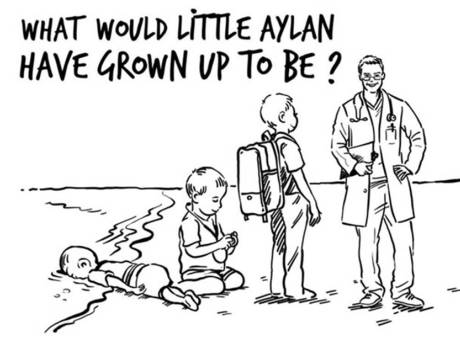
This was Charlie Hebdo’s tasteless, vulgar, crude, attempt at satire using the Aylan picture

what would little Aylan have grown up to be? image Charlie Hebdo

what would little Aylan have grown up to be? image Charlie Hebdo

This was Queen Rania of Jordan’s response on Twitter – “a doctor, a teacher, a loving parent …….”

rania on twitter

Rania on Aylan by Osama Hajjaj

Rania on Aylan by Osama Hajjaj

A difference of class

Class:

Class is not appearance and it is not personality or charisma; it is a style and elegance of behaviour and a consistency of actions.

The privileged life of fat-cats at a Swedish trade union

January 15, 2016

Kommunal, the Swedish Municipal Workers’ Union, is Sweden’s largest trade union with 515,000 members. Their members tend to be among the lower wage-earners in the country, consist of many women members and their 17-strong managing group contains 12 women.

Kommunal members take care of the elderly, do lunches for school pupils, and take care of children in preschool. We drive buses, put out fires, sweep chimneys and drive ambulances. We who look after the animals kept in zoos, tend to the green on the golf course and drive combine harvesters in the country’s fields are also members of Kommunal.

Like many other trade-unions, they have strong rhetoric against elitism and privilege. The rich are bad because they are rich. But, also like in many other trade unions, their “fat-cats” when in power are easily corrupted by their own might and tend to disburse largesse and privilege, among themselves, with gay abandon.

Sweden is currently being entertained by another scandal at the top of a trade union (this happens regularly with big scandals usually appearing about every 5 years). This time it is Kommunal. The “scandal” has been revealed by fearless, intrepid, investigative journalism at Aftonbladet – which is a Social Democrat leaning newspaper – and is generally very sympathetic to the trade unions (except if they have a scoop).

Kommunal union's hot spot - metropol palais image aftonbladet

Kommunal union’s hot spot – The Metropol Palais image aftonbladet

Aftonbladet has revealed that

  1. Kommunal owns and operates a luxury restaurant/night club, The Metropol Palais, which has lost some 320 million kronor (just an investment), and which has arranged porn and strip shows. Male strippers, it seems, are quite regular (which, of course, is not sexist).
  2. They own and operate a fancy conference centre, comprising a number of villas , on an island in the Stockholm archipelago. These villas have been used regularly by the union leadership and their families for free, holidays.
  3. Kommunal own a number of apartment buildings in central Stockholm which are used by leading and privileged union members. They do not, as is general practice even with private apartment block owners, provide half of their apartments to the general housing pool. That practice has built up because of the long waiting lists in Stockholm.
  4. One apartment has even been provided – with a little bit of queue jumping – to the Swedish, Social Democratic, Foreign Minister Margot Wallström. It is all above board since she pays 12,432 kronor per month in rent. However, she recovers 12,400 kronor of that from Parliament. (A net rental of 32 kronor per month for an apartment in in central Stockholm is a pretty good deal).

As a consequence of the revelations Anders Bergström, the kommunal union treasurer has resigned. (He was stupid enough to actually be caught in a lie on TV). I note that the only resignation so far is of a male. Other transgressors including the leader of the union, Annelie Nordström, are female – and they are a protected species in Sweden. For his resignation he gets 78% of his salary for 34 months which works out to be about 2 million kronor — which is also a pretty good deal. All the other union leaders are however toughing it out and have no intention of giving up their privileges so easily.

1,400 members have left the union in disgust – so far.


Alan Rickman – RIP: From Obadiah Slope to Severus Snape

January 14, 2016

Alan Rickman has died at 69. RIP.

I had read the Barchester chronicles as a teenager but the whole thing came to life when Alan Rickman brought the Reverend Obadiah Slope to life in 1982. He became an immediate favourite for me and even now, more than 30 years later, the deliciously sneaky, slimy, smarminess he imbued Slope with is difficult to match.

His remarkable voice just one of his many assets. He could denote the depth of evil with a quirk of his eyebrow. Of course he went from strength to strength and Severus Snape was – in a sense a return to Slope. A richer, deeper, darker, more sinister Slope who had been to Dante’s inferno and returned. But you only have to watch Rickman as Slope to see where he brings Snape from. He even brought a depth to Col. Brandon which even Jane Austen had not imagined.

Alan Rickman enriched my life and I shall miss his performances.

But I shall always remember him as Obadiah Slope.

The Rise and Fall of Obadiah Slope


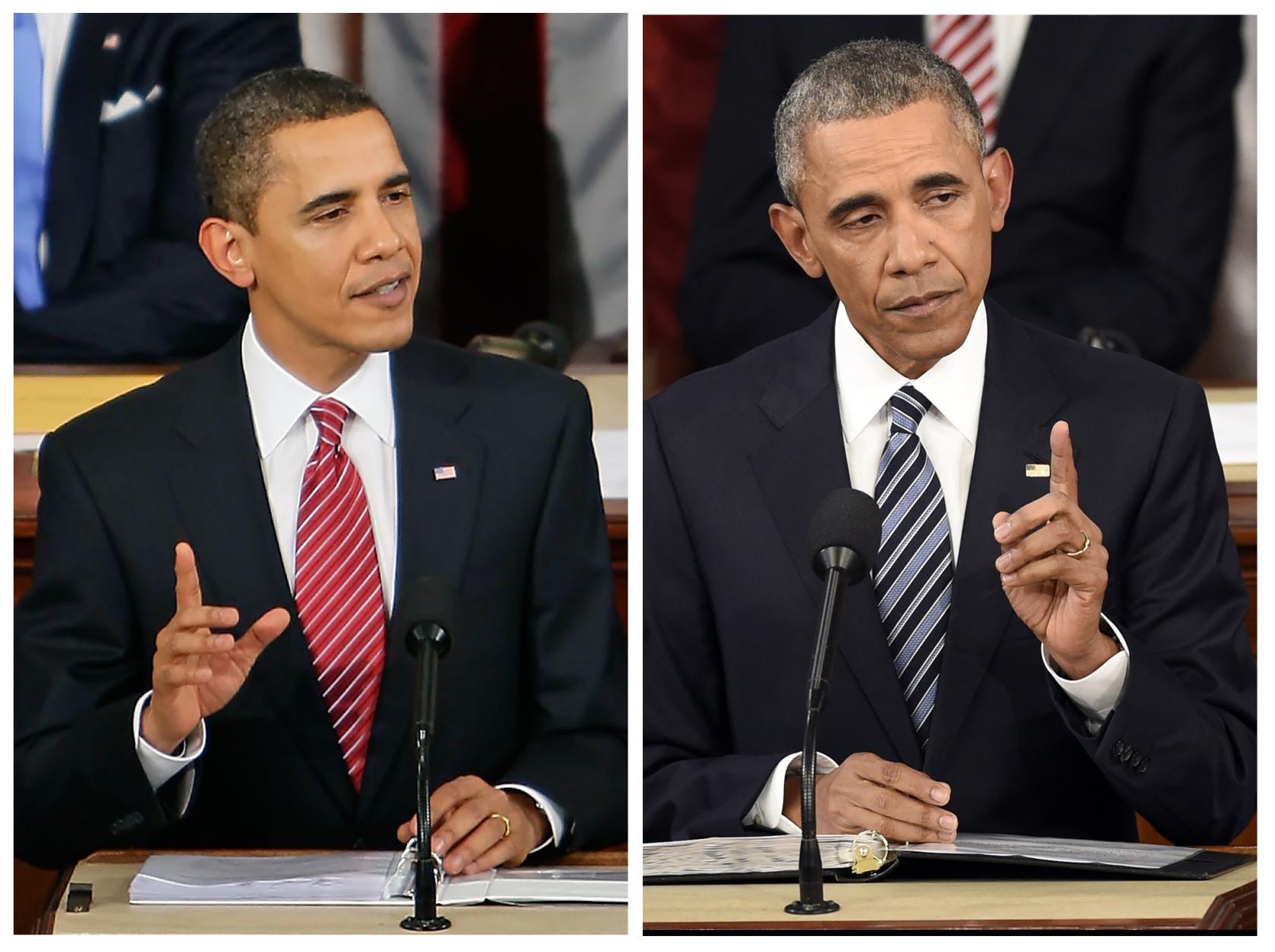
7 years on, 20 years older

January 14, 2016
Image Time magazine

Image Time magazine

Independent Scotland would have been in dire straits now

January 14, 2016

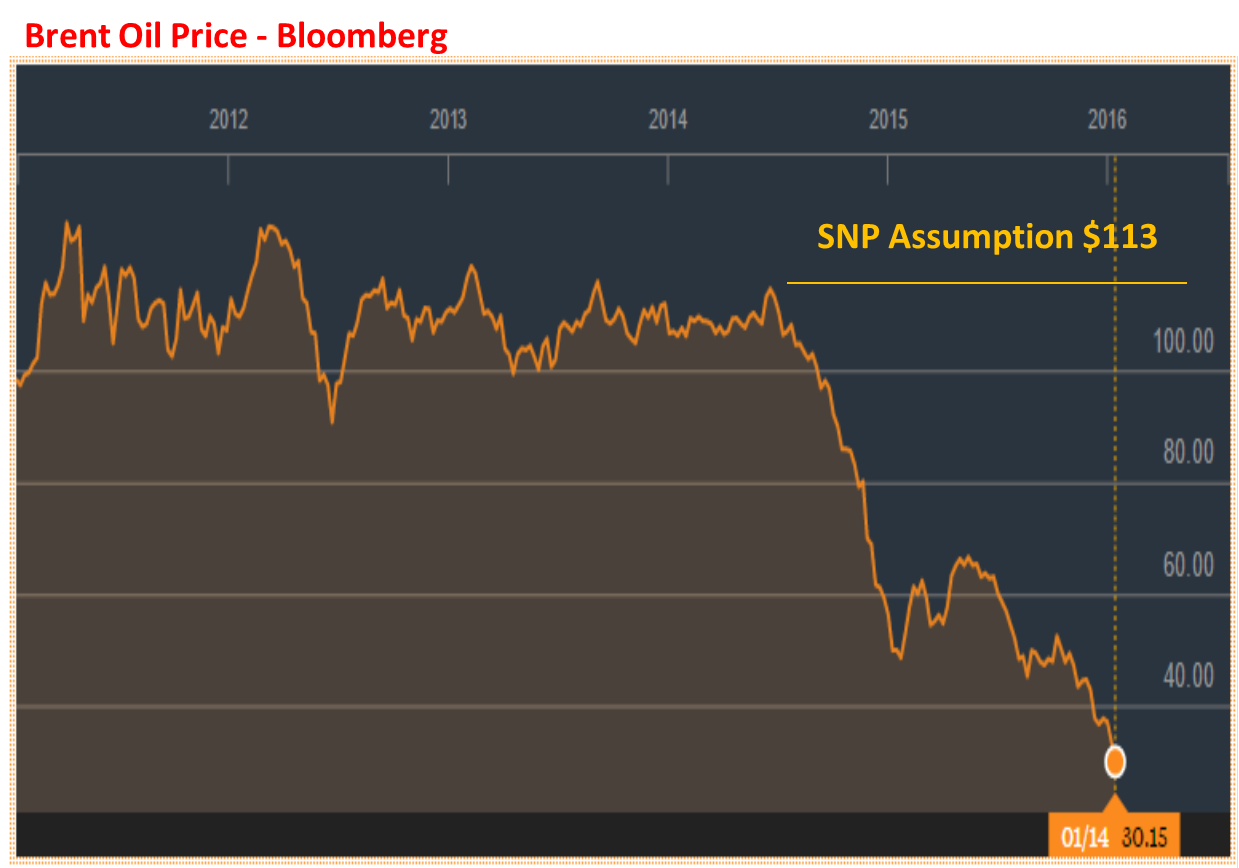
This morning Brent oil fell to less than $30 for the first time in 12 years.

During the Scotland independence campaign, the Scottish National Party based its projections and campaign on an oil price of $113 going forward and that would have provided revenues of about £7 billion per year.

SNP assumption - actual Brent oil price

At current prices the oil revenue accruing to the Scottish budget would be less than £0.1 billion compared to the planned for £7 billion per year. Back in July 2015, the expected revenue (at $45/barrel) was reduced to be about £0.16 billion per year (£800 million in 5 years). This is just the impact of price. Considering the reduction in market share and reduced volume, the revenue is likely to fall well short of that and not much more than £0.08 billion per year (£400 million over 5 years).

With actual oil revenues at just 10-15% of what was assumed, an independent Scotland would now be close to default and a declaration of bankruptcy. At least Scotland is a little more diverse and not quite as dependent on oil revenues as Norway is. But Norway is now dipping heavily into the huge oil fund it has stashed away over the good years. But even with the fund, the Norwegian kronor has lost about 30% of its value in the last year. Scotland, of course, has no such fund to fall back upon.

It seems highly unlikely that there will be any new independence referendum in Scotland until either

  1. the budget oil dependence is reduced drastically, or
  2. the oil price is over $60 per barrel.


GE to cut 6,500 jobs in Europe after Alstom acquisition

January 13, 2016

Back in September I predicted that GE would cut about 8,000 jobs (12%) after the Alstom acquisition. It looks like my analysis was not too far off as GE announced today that 6,500 jobs in the energy units would go just in Europe. Possibly the total number of jobs cut worldwide within 12 – 18 months will have to exceed 10,000 if GE is to come close to the cost reductions it has promised its shareholders.

YahooNews:

General Electric said Wednesday it plans to cut up to 6,500 jobs in Europe in the energy units it acquired from France’s Alstom last year.  

“The restructuring plan will touch several European countries and impact potentially 6,500 jobs out of 35,000,” a GE spokesman told AFP, confirming in part a report in the L’Est Republican newspaper saying up to 10,000 jobs could go worldwide.

The US industrial giant completed in November its acquisition of the power and grid businesses of Alstom for 9.7 billion euros ($10.5 billion) after making a number of pledges to win the support of the French government and fend off competition from rivals like German company Siemens.

One of those pledges was to create a net 1,000 high-skilled jobs in France, a promise that GE intends to honour, the spokesman said, despite 765 jobs due to go in France as part of this restructuring.

French government spokesman Stephane Le Foll said it would monitor the company’s implementation of its commitments. …….

… GE hasn’t provided any details about the job cuts in Europe, but L’Est Republican said 1,735 posts in Germany were slated to go, 1,219 in Switzerland, 467 in Spain and 250 in Italy.

It looks like Germany and Switzerland will bear the brunt of the cuts. I was expecting Baden in Switzerland to be hard hit but had perhaps underestimated the “French protectiveness” which disadvantages Germany. Still Siemens may be able to pick up some very good people in Germany and elsewhere (though the market is not exactly in a very expansive mood).

Obama’s goodbye elevates Trump

January 13, 2016

I didn’t stay up to watch Obama’s final State of the Union address live, but have just read the transcript and a few reports.

It was a goodbye speech. He came in hope and leaves still counselling hope. Though the country’s economic position is inevitably better now than it was in 2009 in the valley of the financial crash, he leaves, as I perceive, a country with a much higher level of fears than of hope.

I was a little surprised that he attacked Trump (though not by name) as much as he did. I suspect that being elevated to the level of being the subject of a State of the Union address, by a sitting President, can only benefit Trump. Especially as Trump was being written off as not worthy of any consideration, of any kind, just a few months ago. His playing down of the monsters of Al Qaida and ISIS, born of twisted interpretations of Islam, but nurtured largely by US policy (including Obama’s), also fuels Trump’s narrative.

Obama has not lived up to the expectations that his own rhetoric had engendered. “Yes, we can” has morphed to “Well, we could have”.

History may remember Obama, vaguely, for his Syrian misadventures. He may even be remembered as having attempted to introduce universal health care. History may also record that his tenure was characterised by an aversion to risk and some paralysis-by-analysis. But he will primarily be remembered as having been the first half-black President of the US and of having served for 8 years, but without special distinction.

A passing grade then for the speech, a C+ and maybe even a B-, but not much more.