Jade Bunny paralysed but still taking pictures

February 26, 2014

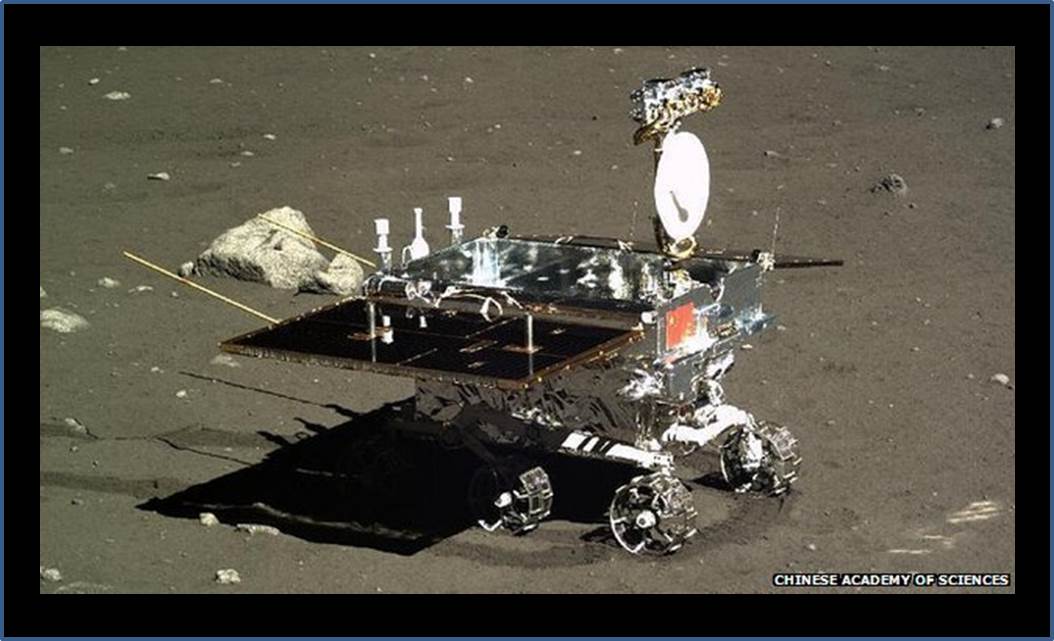
Chang’e 3’s Jade Bunny is not quite dead. It is stuck in its present position but can still take pictures.

Jade Bunny on the moon (undated)

Jade Bunny on the moon (undated)

The Chang’e-3 lander entered its third dormancy on early Feb. 23, 2014. China’s lunar rover Yutu also entered the dormancy on Feb. 22, with the mechanical control issues that might cripple the vehicle still unresolved. According to the State Administration of Science, Technology and Industry for National Defence (SASTIND), Yutu only carried out fixed point observations during its third lunar day, equivalent to about two weeks on Earth. Yutu’s radar, panorama camera and infrared imaging equipment are functioning normally, the control issues that have troubled the rover since January persist. (Xinhua/SASTIND)

The Black Death altered European genes

February 25, 2014

A fascinating study and further support for my view that evolution is not about survival of the fittest but is about the deselection of the weakest.

Reblogged from Science magazine:

The Black Death didn’t just wipe out millions of Europeans during the 14th century. It left a mark on the human genome, favoring those who carried certain immune system genes, according to a new study. Those changes may help explain why Europeans respond differently from other people to some diseases and have different susceptibilities to autoimmune disorders.

Geneticists know that human populations evolve in the face of disease. Certain versions of our genes help us fight infections better than others, and people who carry those genes tend to have more children than those who don’t. So the beneficial genetic versions persist, while other versions tend to disappear as those carrying them die. This weeding-out of all but the best genes is called positive selection. But researchers have trouble pinpointing positively selected genes in humans, as many genes vary from one individual to the next.

Enter Mihai Netea, an immunologist at Radboud University Nijmegen Medical Centre in the Netherlands. He realized that in his home country, Romania, the existence of two very distinct ethnic groups provided an opportunity to see the hand of natural selection in the human genome. A thousand years ago, the Rroma people—commonly known as gypsies—migrated into Europe from north India. But they intermarried little with European Romanians and thus have very distinct genetic backgrounds. Yet, by living in the same place, both of these groups experienced the same conditions, including the Black Plague, which did not reach northern India. So the researchers sought genes favored by natural selection by seeking similarities in the Rroma and European Romanians that are not found in North Indians.

Celebrating differences. The migration of gypsies from India 1000 years ago (see map) set the stage for a telling study about how diseases can influence the genome.

Celebrating differences. The migration of gypsies from India 1000 years ago (see map) set the stage for a telling study about how diseases can influence the genome.

Netea; evolutionary biologist Jaume Bertranpetit of Pompeu Fabra University in Barcelona, Spain; and their colleagues looked for differences at more than 196,000 places in the genomes of 100 Romanians of European descent and 100 Rroma. For comparison, the researchers also cataloged these differences in 500 individuals who lived in northwestern India, where the Rroma came from. Then they analyzed which genes had changed the most to see which were most favored by selection.

Genetically, the Rroma are still quite similar to the northwestern Indians, even though they have lived side by side with the Romanians for a millennium, the team found. But there were 20 genes in the Rroma and the Romanians that had changes that were not seen in the Indians’ versions of those genes, Netea and his colleagues report online today in the Proceedings of the National Academy of Sciences. These genes “were positively selected for in the Romanians and in the gypsies but not in the Indians,” Netea explains. “It’s a very strong signal.”

Those genes included one for skin pigmentation, one involved in inflammation, and one associated with susceptibility to autoimmune diseases such as rheumatoid arthritis. But the ones Netea and Bertranpetit were most excited about were a cluster of three immune system genes found on chromosome 4. These genes code for toll-like receptors, proteins which latch on to harmful bacteria in the body and launch a defensive response. “We knew they must be important for host defense,” Netea says.

What events in history might have favored these versions of the genes in gypsies and Romanians, but not in Indians? Netea and his colleagues tested the ability of the toll-like receptors to react to Yersinia pestis, the bacterium that caused the Black Death. They found that the strength of the immune response varied depending on the exact sequence of the toll-like receptor genes.

Netea and Bertranpetit propose that the Rroma and European Romanians came to have the same versions of these immune system genes because of the evolutionary pressure exerted byY. pestis. Other Europeans, whose ancestors also faced and survived the Black Death, carried similar changes in the toll-like receptor genes. But people from China and Africa—two other places the Black Death did not reach—did not have these changes. (There have been multiple plagues throughout history around the world, but none have been so deadly as the Black Death, which killed an estimated one in every four Europeans, and so exerted very strong selection.) The similarities in the other genes were likely caused by other conditions experienced by Rroma and Europeans, but not Indians.

“The use of two populations living in the same geographic area is very clever,” says human population geneticist Oscar Lao of Erasmus MC in Rotterdam, the Netherlands, who was not involved in the study. “This experimental evidence is very important,” he adds. It shows that the Black Death bacterium does indeed interact with the proteins coded for by the genes favored by natural selection. “That should be the goal for all those type of analyses.”

“It’s a nice hypothesis that they are putting forward,” agrees Lluis Quintana-Murci, a human population geneticist at the Pasteur Institute in Paris who was not involved in the study. The genetic changes may have modern-day effects. “The presence of these particular versions of these genes may give the evolutionary basis for why certain populations are more at risk” for certain types of diseases, says Douglas Golenbock, an immunologist at the University of Massachusetts Medical School in Worcester. “The side effect seems to be that the Europeans have a more proinflammatory immune system than those who have never experienced Black Death.”

However, Lao and Quintana-Murci wonder if the convergence in these genes might be explained another way. It’s possible that these favorable versions were introduced into the Rroma by interbreeding between the Rroma and the Romanians, they suggest. Additional sequencing of the converged genetic regions should answer this question, Quintana-Murci says. It’s also important to check how these toll-like receptors respond to other deadly bacteria to see if other diseases might have been the cause of the changes. That will likely happen, Quintana-Murci adds. “This will inspire other labs to see if other bacterial infections could also explain the [selection].”

Airport security and the monetisation of distrust

February 25, 2014

I am just back after a trip of 10 days and have suffered the travails of airport security at 5 airports.

It occurs to me that the behaviour of the security personnel (by definition composed of people required to follow a particular protocol and required NOT TO THINK) is primarily a measure of distrust.

  1. The “security” industry is just too large and too lucrative to disappear.
  2. Whether or not airport security achieves its purpose is not measurable and it is to the industry’s benefit that it not be measurable.
  3. The greater the inconvenience and hassle generated, the greater the perception that something useful is being achieved. (Hassle free security checks – which could be done – is not beneficial to the industry).
  4. The security checks are the single most disruptive and stressful part of the journey.
  5. Idiot security staff (chosen so since they are not required to think) are vested with a power to ruin your travel experience and doing so is one of the little pleasures they have in their jobs. They are more formidable than any immigration control officer.

Distrust has been monetised and some industries are making a killing. It is the monetisation of the precautionary principle where it pays handsomely to be alarmist.

I will not see a return in my lifetime to the days when the travel itself was a pleasurable experience. Those days are long since gone and will probably never return.

Fortunately it is still exciting to arrive.

Light blogging

February 17, 2014

Traveling for a week in foreign parts.

Partly on assignment and partly to  meet class-mates, 50 years after graduation.

Blogging will necessarily be extremely light.

Evolution is not – and never has been – the “survival of the fittest”

February 15, 2014

I was listening to a Professor expounding on evolution on the radio and found his glib assertions about the “survival of the fittest” both irritating and lightweight. (A person who talks down to his audience or who is incapable of explaining his theses to a lay audience should never – I think – be allowed to become a “Professor”).

Evolution does not lead to the excellence of survival traits.

While the individuals of any species best fitted to survival will likely survive, they are not the only individuals to survive. All those not weak enough to perish will also survive. And if these individuals – who only just clear the survival stakes – are adept (or lucky) in the reproduction competition then it is their genes which are carried forward. And the resultant genes carried forward we call “evolution”.

Evolution is only the result of survival x reproduction. As the environment around the individual changes (climate, competition…), the traits that will permit survival will also change. If a species has a wide variety of traits available among its individuals then it is more likely that some individuals will survive in the changing conditions. If this variability of the available traits is insufficient to cope with the magnitude of the change that species will become extinct as all its individuals perish.

Those individuals who succeed best in the “fitness for survival” stakes are not necessarily those who reproduce most. And in the reproduction stakes it is the number of offspring that counts. As genetic studies are now showing the leading lion in a pride is not always the sole male producing offspring. Sneaky young lions from outside the pride and some of the lionesses who have roving eyes often succeed in cuckolding the dominant male. Even birds who were presumed to mate for life apparently have little flings on the side from time to time. Birds of Paradise who have the showiest and most colourful displays are not necessarily the strongest or the fastest but they are the most expert at getting their way with their ladies. The traits needed for individual survival are not necessarily those most suited to successful reproduction (number of offspring).

Survival is not of the “fittest” but of all those not weak enough to perish.

Evolution is thus controlled first by individuals who are just good enough to survive but –  more importantly – who excel at reproduction. 

Human society now sees to it – or tries to – that a lack of “fitness” of any kind is not a bar to either survival or reproduction. In consequence the evolution of humans will then be controlled by individuals in stories like these who – by any stretch of the imagination – are far from being the “fittest”:

  1. Father of 22 children by 11 women …
  2. Man who fathered THIRTY kids ….
  3.  ….. fathered up to 600 children through sperm bank ….. 

Denmark continues its campaign to exterminate giraffes named Marius

February 14, 2014

Denmark is a dangerous place to be a giraffe especially if your name is Marius.

I suspect that Jyllands Park Zoo is desperate for a little publicity. Though just killing giraffes named Marius as a publicity stunt seems a little drastic. They might have been better off starting a campaign to keep their Marius alive.

The Telegraph:The Danish Jyllands Park Zoo said on Wednesday it may put down one of its giraffes, which by coincidence has the same name, Marius, as the giraffe Copenhagen Zoo slaughtered on Sunday to the disgust of animal lovers around the world, according to Danish news agency Ritzau. …

Jyllands Park Zoo in western Denmark might put down its seven-year-old Marius if the zoo manages to acquire a female giraffe, which is most likely, zoo keeper Janni Lojtved Poulsen told Ritzau. The zoo also has a younger male called Elmer.

“We can’t have two males and one female. Then there will be fights,” Poulsen said.

Related:

Petition

Copenhagen Zoo’s justifications for killing Marius if applied to humans

I hope visitors to Copenhagen Zoo dry up….

When molluscs and plovers take precedence – the “green” contribution to drought and flooding

February 13, 2014

Do-gooding idiocy has its consequences.

High rains (which happen from time to time) and undredged rivers will inevitably result in escape channels for the water being restricted and increase the possibility of water breaking out of the river channels and finding their own way to the sea. In the UK it seems rainfall levels have been very high this winter – but not as high as in 1929/1930. People are now living in much more vulnerable areas than they did before and the lack of dredging – mainly to protect some form of plant or wildlife – has led to – or at least contributed to – some of the flooding that is currently being experienced. Sections of the Thames have been left undredged to protect molluscs!

Apparently the same form of green idiocy  has also been prevalent in the US. In South Dakota plovers take precedence over humans and in northern California, the Delta Smelt – a small fish – is preventing the release of waters which could alleviate the drought being experienced by many farmers.

Human Lives Being Imperiled to Save the Mollusc and the Plover

It’s time for the American Environmental Protection Agency (EPA) and its British counterpart the Environment Agency (EA) to put humans first on their epic Endangered Species Lists. 

The new mantra of everyday people who make the populations of the U.S. and Britain should be: ‘People First, Rare Molluscs, Plover, & Delta Smelt Last’.

Thousands of people in both nations are being flooded out of house and home and lives are being imperiled because weak western leaders like Barack Obama and David Cameron allow their environment protection agencies to continue to cower to the demands of radical environmentalists.

Out of decency for the devastated, photo ops for Prime Minister David Cameron and politicians visiting Britain’s flooded areas wearing “wellies” (as in Wellington rubber boots) should be curtailed. …… 

It now turns out that in spite of the afflicted region being one of the most ‘undefended flood plains in England’, the Thames was not dredged in case a rare mollusc was disturbed. (Daily Mail, Feb. 13, 2014)

The EA,  of course is claiming that the mussels were not the only reason the Thames was not dredged, even though in a 2010 report, seen by the Mail, they ruled out dredging between Datchet and Staines because the river bed was home to the vulnerable creatures. ….. 

Even with devastation as the result, in South Dakota the waters of the mighty Missouri River are held back each spring to protect the plover, a shore bird that nests along the Missouri. 

“If they let out too much water in the spring, it drowns out their nests and kills the baby birds.  So the corps holds it back to allow the birds to hatch.” (William Kevin Stoos,CFP, June 1, 2011)

“Fast forward to the spring of 2011.  As I watch my friends in Dakota Dunes frantically trying to escape the mighty flood waters released in record amounts by the Corps this week, while their houses are ruined by the Muddy Mo, and my friends, neighbors, and family members work feverishly to protect our own homes and each others’ homes in Wynstone, South Dakota—up river a ways—I thought about the plover. ……

That’s the true tawdry tale of the plovers saved by environmentalists along the Missouri.

Then there’s the never-ending curious story of the Delta Smelt, a tiny fish that is exclusive to the Sacramento-San Joaquin Delta, a once fertile area that serves as a transition for water originating in northern California, ending in water delivery west of the delta for agriculture and south of the Delta for citizens of southern California.

According to Save-the-Fish radical environmentalists, pumping stations used for water delivery were pulverizing the smelt and leading to a dramatic decrease in population and possible extinction.

“The Delta smelt is not edible, does not eliminate pests or have any meaningful commercial value.  Sometimes, despite environmentalist’s protestations to the contrary, certain species reach a natural evolutionary dead end,” wrote William Busse in the Maricopa County Conservative Examiner back in September of 2009.

“However, using the weapon of the Endangered Species Act, environmental groups sued, and on December 14, 2007, Judge Oliver Wanger of the United States District Court for the Eastern district of California, issued an Interim Remedial Order

“The impact on farmers in the area has been devastating with the San Joaquin Valley unemployment rate reaching 14% and leaving thousands of previously productive farming acres scorched and unusable.  In addition, water utilities in southern California have already begun raising rates and creating tiered pricing to address the 85% reduction in imported water.”

To this day California is still under deadly drought—and still diverting water to save the Delta Smelt.

The incredulous headlines today are about a snowstorm in Washington. A snowstorm in winter! Who could possibly have anticipated that?

Environmentalism gives little priority to humans.

Jade Bunny declared dead – reincarnation possible?

February 12, 2014

UPDATE!

BEIJING, Feb. 13 (Xinhua) — China’s moon rover Yutu is awake after its troubled dormancy but experts are still trying to find out the cause of its abnormality, a spokesman with the country’s lunar probe program said on Thursday.

“Yutu has come back to life,” said Pei Zhaoyu, the spokesman. ….. “Yutu went to sleep under an abnormal status,” Pei said, adding that experts were concerned that it might not be able to survive the extremely low temperatures during the lunar night.

“The rover stands a chance of being saved now that it is still alive,” he said.

================================================

The Jade Bunny which was discovered to be in a coma on January 25th on the moon has now been declared dead.

RIP

Jade Bunny RIP

Jade Bunny RIP

Copenhagen Zoo’s justifications for killing Marius if applied to humans

February 12, 2014

Copenhagen Zoo has been marshalling support on the scientific and the ethical plane to try and justify their decision to kill Marius the healthy giraffe. They protest too much and it is a revealing exercise to apply their argumentation to humans.

Their basic theme is that He died so that others could live

Capital punishment could be applied for all humans convicted of murder or  causing a fatal accident or whose genes are defective in any way so that others may live. In current Danish politics, the wrong skin colour in a human is indicative of defective genes.

Culling is for the greater good of the giraffes

The man who pulled the trigger, the zoo’s own veterinarian Mads Frost Bertelsen, says that a very positive situation lies behind the Zoo’s action. 

”Up until now, we have not had to cull the giraffes. But now we have reached the point where the population is doing so well that a giraffe like Marius could not be relocated. Then the best solution is to put him down,” says Mads Frost Bertelsen.

The vet explains that a central European coordinator keeps track of pedigrees, and which genes are represented by individual giraffes in European zoos. The coordinator estimated from these data that Marius’ genes were already well represented and recommended that Marius was killed to protect the population best suited to the gene pool.

But now we have reached the point where the human population is doing so well in so many countries. Many individuals cannot be relocated. From East Europe or Africa to Europe for example. Then the best solution is to put them down, especially if their genes are already well represented. Something like the policy China had. Enforced abortion for all children after the first. 

The right time for Marius to die

Marius was allowed to live for one and a half years, then that was it. At that age he can, according to Bertelsen, be described as a ‘teenager’. It was an age when his father had also started roughing him up.

“In the wild he would leave the herd. If he were lucky, he would meet and join up with other young male giraffes. If he were  unlucky, he would be killed by lions,” says Mads Frost Bertelsen, explaining that it was not unnatural for Marius to die young.

In fact, the young male giraffes are most at risk of being killed and eaten on the savannah, because they do not have the protection of the herd when they are looking for females to mate.

If contraception or abortion are not permitted then the individual can be allowed to live for a while and put down just before it reaches child-bearing age. Lions and other carnivores could soon develop a liking for human flesh.

How to lead a natural life in the zoo

The Copenhagen Zoo lets the animals breed because one of the biggest challenges of keeping animals in captivity is that they are bored. …… a great activity for the captive animals is to find a partner, nest, have offspring, feed an raise their offspring, and finally spend energy on throwing the kids out.

“The side effect is that we have a surplus of animals. It is in fact fortunate that we can use them as food. Instead of killing 20 goats or a cow, we can use the giraffe,” says Mads Frost Bertelsen. ….. 

“Our function is not to keep the individual animal alive, but to keep the species alive,” says the Jens Sigsgaard and continues:

“We have decided that even if an animal is over-represented in the gene pool, we will let it breed and have as normal a life as possible. We prefer to kill ‘surplus animals’ rather than send them to zoos we cannot approve.”

For defective humans or humans of low intelligence, breeding could be encouraged as an antidote to boredom. Surplus individuals produced by such breeding can always then be culled and used as food. They should be killed rather than being sent to countries unwilling to accept them or to countries which cannot be approved.

The adult animals breed – the young must die

Aalborg Zoo has several arguments for allowing animals to breed, even if it may result in too many babies. …. “The animals are allowed to breed because it is an important part of their natural behavior to have offspring and experience the process of taking care of the them. Looking after the young is one of the best and most natural ways to occupy animals in captivity, In the wild there comes a time when the baby is old enough to break away from the mother and maybe become part of another group. That is the time when we try to find another well-suited zoo for it. If that is not possible, the young animal must be put down,” ”says Jens Sigsgaard. 

The animals can also be adversely affected if they are not allowed to breed and have offspring. They may find it difficult ever to start breeding again. And if there are no kids in the flock, the younger animals will not get the experience of what it is like to care for babies. 

The humans with the defective genes are allowed to breed as part of their natural behaviour. But when any young individual is old enough to break away from the mother we can try and find a new location for the individual. If that is not possible then it must be put down.

It is not the killing of an animal that is the problem; it is allowing the individual to be bred with the intention of killing it (and where the feeding of the carcass to lions is only incidental). And there is a difference in the breeding of mice for the purpose of being fed to snakes.

Animals are kept captive and alive in zoos just for gawking at. Once upon a time we did that with human “freaks”. I would like to think that we are more “civilised” now where I take “civilised” to be elegance in behaviour. The behaviour of Copenhagen Zoo with Marius was particularly inelegant.

The fundamental issue is that Copenhagen Zoo – like all zoos – are places for human entertainment.  They fool themselves – and others – into thinking that they are performing a scientific or conservation function – but that is just twaddle. (That is also the fundamental flaw in the conservation of species in zoos where – instead of trying to get the species to adapt genetically – the zoos try to “freeze” the animals genetically in a frozen and artificially maintained habitat).

There is something lacking in the ethics of Copenhagen Zoo – and all zoos for that matter.

Global Big Maconomics

February 11, 2014

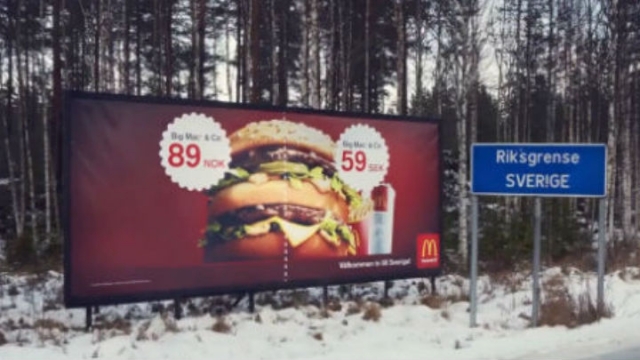
Norway is a lot more expensive than Sweden. This is not lost on McDonald’s advertising agency DDB in Stockholm and they have installed this billboard straddling the border to persuade Norwegians to cross over for their burgers. Many Norwegians cross the border in any case to shop and most road borders have retail outlets and supermarkets on the Swedish side to cash in on this. Food alcohol and, it seems, Big Macs offer significant savings.

Norway - Sweden Big Mac

Norway – Sweden Big Mac

Eighty nine Norwegian kronor is about 93 Swedish kronor and so the Big Mac meal (including a drink and fries) is about 30% cheaper in Sweden. McDonalds have not revealed how effective this has been in attracting Norwegians.

TheLocalNorway once again boasts the world’s most expensive Big Mac, the UK’s Economist magazine has reported, with the ubiquitous double-decker burger now costing 48 kroner, or $7.80. 

Venezuela slips into second place with a $7.15 burger. Switzerland, which briefly stole the top spot last year on the back of a burgeoning Swiss franc, is now in third place with its $7.14 burger, followed by Sweden ($6.29) in fourth. 
 
The burger in Norway is on average 68.8 percent more expensive than it would be in a McDonald’s in the US. 

The cheapest Big Mac in the world is in India at $1.54. China at $2.74 and Japan at $2.97 are surprisingly close. Of course the current currency exchange rates also have an impact.

The Economist invented the global Big Mac Index in 1986. The 2014 Big Mac index was released a few days ago with January 2014 exchange rates.

THE Big Mac index was invented by The Economist in 1986 as a lighthearted guide to whether currencies are at their “correct” level. It is based on the theory of purchasing-power parity (PPP), the notion that in the long run exchange rates should move towards the rate that would equalise the prices of an identical basket of goods and services (in this case, a burger) in any two countries. For example, the average price of a Big Mac in America in January 2014 was $4.62; in China it was only $2.74 at market exchange rates. So the “raw” Big Mac index says that the yuan was undervalued by 41% at that time. 
 
Burgernomics was never intended as a precise gauge of currency misalignment, merely a tool to make exchange-rate theory more digestible. Yet the Big Mac index has become a global standard, included in several economic textbooks and the subject of at least 20 academic studies. For those who take their fast food more seriously, we have also calculated a gourmet version of the index.

This adjusted index addresses the criticism that you would expect average burger prices to be cheaper in poor countries than in rich ones because labour costs are lower. PPP signals where exchange rates should be heading in the long run, as a country like China gets richer, but it says little about today’s equilibrium rate. The relationship between prices and GDP per person may be a better guide to the current fair value of a currency. The adjusted index uses the “line of best fit” between Big Mac prices and GDP per person for 48 countries (plus the euro area). The difference between the price predicted by the red line for each country, given its income per person, and its actual price gives a supersized measure of currency under- and over-valuation.

Click here for the interactive map.

big mac index - the economist

big mac index – the economist