“Preoccupied” and “fearful” types use Facebook for partner surveillance

August 23, 2013

Yet another Facebook survey. This time to try and discern types of people who use Facebook to monitor their partners. It’s all data I suppose. But I’m not sure if a plethora of little surveys such as this one (328 college students surveyed) allows greater insight or just muddies the ever expanding pool of “data”.

It is probably advisable to keep a large bucket of salt handy when looking at the conclusions of Facebook surveys.

In any case there are some new terms to show up my ignorance. IES stands for Interpersonal Electronic Surveillance and SNS stands for Social Networking Sites. There are apparently four distinct attachment styles: secure, preoccupied, dismissing, and fearful. Relationship Uncertainty ia also a parameter to bear in mind.

The authors surveyed 328 college students who were Facebook users and tested 3 hypotheses:

  1. H1: Higher levels of relationship uncertainty will be associated with greater IES of the current or ex-partner.
  2. H2: Preoccupied individuals will report greater relationship uncertainty than secure, dismissing, or fearful individuals.
  3. H3: Preoccupied individuals will report greater IES than secure, dismissing, or fearful individuals.

It seems that Relationship Uncertainty – surprisingly – was not a predictor for IES. However preoccupied and fearful types were more likely to carry out surveillance of their partners via Facebook.

Jesse Fox and Katie M. Warber, Social Networking Sites in Romantic Relationships: Attachment, Uncertainty, and Partner Surveillance on Facebook, Cyberpsychology, Behavior, and Social Networking, doi:10.1089/cyber.2012.0667

Abstract:Social networking sites serve as both a source of information and a source of tension between romantic partners. Previous studies have investigated the use of Facebook for monitoring former and current romantic partners, but why certain individuals engage in this behavior has not been fully explained. College students (N=328) participated in an online survey that examined two potential explanatory variables for interpersonal electronic surveillance (IES) of romantic partners: attachment style and relational uncertainty. Attachment style predicted both uncertainty and IES, with preoccupieds and fearfuls reporting the highest levels. Uncertainty did not predict IES, however. Future directions for research on romantic relationships and online surveillance are explored.

It will not perhaps come as a complete surprise that for preoccupied and fearful types, their surveillance of their partners may well reinforce their preoccupations and their fears.

From Discussion:

This study contributed to recent research on attachment and new media technologies, and revealed that attachment theory is an effective framework for understanding interpersonal electronic surveillance between romantic partners and ex-partners on Facebook. Likely due to their high levels of relationship anxiety, preoccupied and fearful individuals experienced the highest levels of relational uncertainty and engaged in the highest levels of IES. Previous studies have noted the prevalence of using Facebook to monitor partners, and this study shed light on those findings by recognizing the role of attachment style in this process.It is important to recognize who engages in IES because it may affect levels of satisfaction, stability, and security within the relationship. Preoccupied and fearful individuals often identify or create problems in their relationship due to their levels of anxiety. Given the additional information available about one’s partner and their social interactions, Facebook may exacerbate preoccupieds’ and fearfuls’ anxiety about the relationship. For example, they might be more likely to interpret ambiguous content on Facebook in a negative way, which may create conflict or strain the relationship. ……

….. The lack of a relationship between uncertainty and IES was surprising. However, Muise et al. also found no relationship between relational uncertainty and Facebook-related jealousy. This finding may be an artifact of the sample, however; many college students may perceive their relationships as transient. Thus, although they are uncertain about the relationship, it may not concern them or influence their Facebook behaviors. Future studies should investigate different variables such as the desire to be in a relationship with the partner.

It was interesting that preoccupieds did not differ from fearful individuals in their levels of uncertainty or IES, but it may be because it is attachment-related anxiety rather than avoidance that predicts these outcomes. Our findings mirror previous studies on attachment which have shown that anxious attachment leads to more distress and partner monitoring after breakups. Facebook may appeal to these two types for different reasons. Preoccupieds might feel more control and closeness by using Facebook. Because fearfuls are both anxious and avoidant, Facebook may provide them with the perfect opportunity to monitor the partner and perceived relational threats passively without having to interact with or confront him or her directly. Future research should investigate different attachment styles’ motivations to engage in IES.

Humans are enabling some animals to evolve larger brains

August 23, 2013

As humans implement artificial selection on themselves – a process and a force for evolution operating much faster than natural selection could  – they are also changing the environment for evolutionary selection in which many animals live. Some of these species are enormously successful in adapting to their new environments while others cannot cope with the change. The changes are so profound that the evolutionary trajectories of these species are changing. It could be that the “urbansisation” of these species has led some species to follow an evolutionary path which includes increasing brain size in their new, man-made surroundings. Carl Zimmer writes in the New York Times:

Are We Making Animal Brains Bigger? 

Evolutionary biologists have come to recognize humans as a tremendous evolutionary force. In hospitals, we drive the evolution of resistant bacteria by giving patients antibiotics. In the oceans, we drive the evolution of small-bodied fish by catching the big ones.

In a new study, a University of Minnesota biologist, Emilie C. Snell-Rood, offers evidence suggesting we may be driving evolution in a more surprising way. As we alter the places where animals live, we may be fueling the evolution of bigger brains.

Dr. Snell-Rood bases her conclusion on a collection of mammal skulls kept at the Bell Museum of Natural History at the University of Minnesota. Dr. Snell-Rood picked out 10 species to study, including mice, shrews, bats and gophers. She selected dozens of individual skulls that were collected as far back as a century ago. An undergraduate student named Naomi Wick measured the dimensions of the skulls, making it possible to estimate the size of their brains.

Two important results emerged from their research. In two species — the white-footed mouse and the meadow vole — the brains of animals from cities or suburbs were about 6 percent bigger than the brains of animals collected from farms or other rural areas. Dr. Snell-Rood concludes that when these species moved to cities and towns, their brains became significantly bigger.

…..  Studies by other scientists have linked better learning in animals with bigger brains. In January, for example, researchers at Uppsala University in Sweden described an experiment in which they bred guppies for larger brain sizes. The big-brained fish scored better on learning tests than their small-brained cousins.

Animals colonizing cities and towns have to learn how to find food in buildings and other places their ancestors hadn’t encountered. ..

Anil Ambani chooses the “selective memory defense”

August 23, 2013

The saga continues.

The potential connection between the Indian 2G scam and the menagerie of companies in the Anil Ambani group (Swan, Tiger, Parrot, Zebra, Penguin and Giraffe.) surfaced in early 2011. But now it is reaching Court and Anil Ambani deposed yesterday. His wife Tina is due to depose today. His ADAG Group has lost much of its former gloss and he may not command the same level of political support and protection that he could a few years ago. He no longer has the unquestioning shareholder admiration his father once had (and which to a large extent his brother still has)

Amban's and friend

Ambani’s and friend

(Commentary removed – October 2014)

In Court, Ambani’s memory has suddenly become remarkably selective as the Hindu reports:

‘I am unable to recall if I was on the board of this company in 2007’

“I am not aware of any company by the name of Swan Telecom (P) Limited. Reliance Telecom Limited is a subsidiary of Reliance Communication Limited and I am non-executive chairman of the latter company. Earlier I was on the board of Reliance Telecom but I do not recall the period. I am unable to recall if I was on the board of this company in 2007,” Mr. Ambani said in reply to a prosecutor’s query, while recording his evidence as prosecution witness in the court of Special Judge O.P. Saini here.

But when he was shown a form for opening a bank account on behalf of Swan Consultants (P) Limited at an ICICI Bank branch in Mumbai and his attention was drawn to the signatures and photographs of persons authorised to operate the account, Mr. Ambani admitted that it bore his signature and that of his wife Tina.

He also admitted that copies of his and his wife’s PAN cards, tagged with the account opening form, bore their signatures. But he refused to identify a document captioned “declaration for promoter owned company.”

“I have also been shown annexure 2 under the caption ‘declaration for promoter owned companies’, which mentions the name of the parent company as Reliance Energy Limited and the names of common promoters as Anil Ambani [myself] and Tina Ambani … I am aware of neither this document nor the contents mentioned therein, as this is a document of the bank,” Mr. Ambani said.

However, he identified three of the accused. “I have been shown photographs of Gautam Doshi, Surendra Pipara and Hari Nair … against their names and I identify them. However, I cannot identify their signatures. I identify these three persons as they are part of the group. However, I cannot recall their designation now.”


(Commentary deleted)

Back in February Tehelka reported:

THE 2G spectrum scam is getting murkier by the day. A well-known Maharashtra politician and a Delhi- based real estate group have now come under the probe agencies’ scanner for their suspected role in the scam.

….

Now evidence is forthcoming from the banks involved in the jungle of transactions  involving the menagerie of companies controlled by Anil Ambani’s ADAG Group and which confirms that Anil Ambani was central to the games being played:

Anil Ambani and wife Tina were the only two individuals with unlimited powers to transfer money and make payments for the sevenAnil Dhirubhai Ambani Group (ADAG) companies that are now under CBI investigation for their links to the 2G scam-linked Swan Telecom, according to the testimony of Amit Khot, deputy branch manager of ICICI Bank’s Nariman Point branch, where these seven companies have their accounts. 

The menagerie included Swan, Tiger, Parrot, Zebra, Penguin and Giraffe.

The 2G Zoo

The 2G Zoo

Beetles reduce methane production from cowpats

August 22, 2013

Leaving aside all the extraneous nonsense about global warming and cattle flatulence – which was not actually studied at all – this paper by an intrepid Finnish researcher does address the effect of dung beetles on methane production in dung. Perhaps someday it will not be necessary to wrap-up otherwise good research in a “global warming” cloak just to ensure publication or funding or both

 Penttilä A, Slade EM, Simojoki A, Riutta T, Minkkinen K, and Roslin T. (2013) Quantifying Beetle-Mediated Effects on Gas Fluxes from Dung Pats. PLoS ONE 8(8): e71454. doi:10.1371/journal.pone.0071454

Abstract: Agriculture is one of the largest contributors of the anthropogenic greenhouse gases (GHGs) responsible for global warming. Measurements of gas fluxes from dung pats suggest that dung is a source of GHGs, but whether these emissions are modified by arthropods has not been studied. A closed chamber system was used to measure the fluxes of carbon dioxide (CO2), methane (CH4) and nitrous oxide (N2O) from dung pats with and without dung beetles on a grass sward. The presence of dung beetles significantly affected the fluxes of GHGs from dung pats. Most importantly, fresh dung pats emitted higher amounts of CO2 and lower amounts of CH4 per day in the presence than absence of beetles. Emissions of N2O showed a distinct peak three weeks after the start of the experiment – a pattern detected only in the presence of beetles. When summed over the main grazing season (June–July), total emissions of CH4proved significantly lower, and total emissions of N2O significantly higher in the presence than absence of beetles. While clearly conditional on the experimental conditions, the patterns observed here reveal a potential impact of dung beetles on gas fluxes realized at a small spatial scale, and thereby suggest that arthropods may have an overall effect on gas fluxes from agriculture. Dissecting the exact mechanisms behind these effects, mapping out the range of conditions under which they occur, and quantifying effect sizes under variable environmental conditions emerge as key priorities for further research.

Dung beetles like Aphodius pedellus may aerate cow pats- Drawing of beetle by Kari Heliövaara

From EurekAlert:

Atte Penttilä, who undertook the study for his Masters, explains: “Cow pats offer a prime food for a large number of organisms. In fact, there are probably as many beetle species living in dung as there are bird species on this planet.”

Of the dung beetles living in Northern Europe, most spend their entire lives within the dung pats. “We believe that these beetles exert much of their impact by simply digging around in the dung. Methane is primarily born under anaerobic conditions, and the tunneling by beetles seems to aerate the pats. This will have a major impact on how carbon escapes from cow pats into the atmosphere.”

“You see, the important thing here is not just how much carbon is released” explains Tomas Roslin, head of the research team. “The question is rather in what form it is released. If carbon is first taken up by plants as carbon dioxide, then emitted in the same format by the cows eating the plants, then the effect of plants passing through cattle will be small in terms of global warming. But if in the process the same carbon is converted from carbon dioxide to methane – a gas with a much higher impact on climate – it is then that we need to worry.”

“If the beetles can keep those methane emissions down, well then we should obviously thank them – and make sure to include them in our calculations of overall climatic effects of dairy and beef farming.”


Australian election: The battle of the zeros

August 22, 2013

The campaign is half over and two and a half weeks remain.

Maybe it is very exciting to those close the campaign. But to an observer on the other side of the world, it has all been rather dull and disappointing so far.  Gillard versus Abbott would surely have generated more heat and energised the voters a little more. Kevin Rudd’s ubiquitous  smiling – after his “treachery” in deposing Gillard – now seems more sinister than avuncular. If Kevin Rudd smiles at you – it is time to watch your back! Rudd had a little honeymoon in the polls but seems to have lost all his initial gains and is now at about the same level as Gillard was. If the present poll numbers hold till the election, the Coalition will win by 10 – 20 seats.

Rudd and Abbott have had two TV debates so far. The first was apparently a tie but Rudd is said to have won the second one on points. But the campaign – at least from this distance – has been lacking in any real energy. No major scandals revealed. No scintillating wit. No “cut and thrust” of great repartee. No fire. No brimstone.

Even after yesterday’s debate – which was a little difficult to watch in its entirety – only two real issues – of substance – came up.

1. Kevin Rudd was very unpleasant to the lady doing his make-up before the debate,

Bridal make-up artist and hair stylist Lily Fontana worked on both Mr Rudd and Opposition Leader Tony Abbott ahead of the televised debate at the Broncos Leagues Club on Wednesday.

Caused a stir: Lily Fontana put this post on Facebook.
Caused a stir: Lily Fontana put this post on Facebook. Photo: Screen grab via SMH

Ms Fontana took to Facebook afterwards to compare her interactions with the two leaders.

2. Tony Abbott told Rudd to “shut up”  though there is some talk that this was not a mistake by Abbott but was actually deliberate strategy. Such deviousness would have been consistent with Rudd’s methods but – I think – is beyond Abbott. Video of Abbott’s shut up moment is here.

Of course the Liberals are trying to make capital out of Rudd’s rudeness  to the make-up lady and Labour are trying to make capital of Abbott’s rudeness to Rudd.

(And why is it that Socialist leaders are always rudest to others of the “working classes”?)

Simple arithmetic tells us that there should be no difference between a few empty words and many empty words.

(zero substance x few words) = 0 = (zero substance x many words) 

But watching last night’s debate (or at least some parts of it), I realised that there was a significant difference.  Even with zero substance there can be a substantial difference in the level of irritation engendered in the audience. Many empty words produce a great “ZERO” while a few empty words only give us a little “zero”.

And in the battle of the ZEROs Kevin Rudd won hands down. Rudd spoke 5320 “empty” words while Abbott could only manage 3910 “empty” words and Rudd can therefore be declared the bigger zero (so far)!

What energy shortage?

August 21, 2013

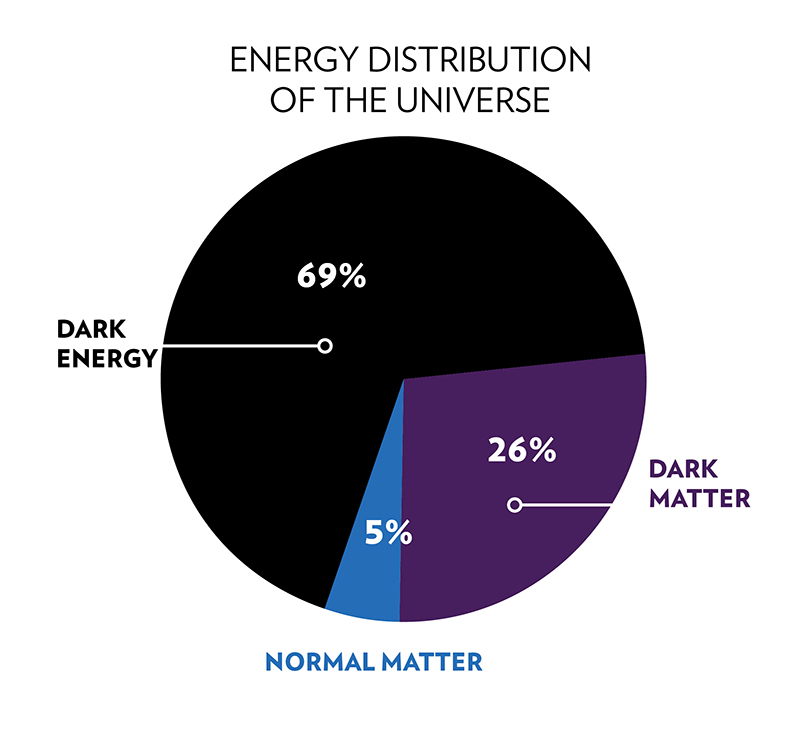
Energy Distribution of the Universe: Chandra

Most of the Universe is dark. The protons, neutrons and electrons that make up the stars, planets and us represent only a small fraction of the mass and energy of the Universe. The rest is dark and mysterious. X-rays can help reveal the secrets of this darkness. X-ray astrophysics is crucial to our understanding not only of the Universe we see, but the quest to determine the physics of everything.

  • Dark Energy

    At the close of the 20th century, our perception of the Universe was jolted. Instead of slowing down after the Big Bang, the expansion of the Universe was found to be accelerating. Was the cosmic acceleration due to Einstein’s cosmological constant, a mysterious form of “dark energy,” or perhaps a lack of understanding of gravity? The answer is still out there. By studying clusters of galaxies, X-ray astronomy is tackling this question using powerful techniques that are independent of other methods currently being employed or proposed for the future.

  • Dark Matter

    The next chunk of the Universe’s budget is another unknown: dark matter. Of all of the material we know about because we can see its gravitational effects, about 85% is composed of matter that emits no light and is radically different from material found in planets and stars. X-rays can be used to study the effects of dark matter in a variety of astronomical settings, and thus probe the nature of this mysterious substance that pervades the Universe.


Humans still have monkey feet

August 21, 2013

Humans may have split from chimpanzees at least 7 million years ago and  left the trees to become ground-dwellers sometime after that. By 4 million years ago humans had developed bipedalism. Since the 1930’s the prevailing view has been that the evolution of human bipedalism has led to – or has been enabled by – human feet functioning very differently to those of other apes, “due to the development of arches in the mid-foot region and the supposed rigidity of that on the outside edge of the foot“.

But it now appears that human feet are not that unique and not so different to those of our ape cousins.

“Our limbs, however, did not adapt to life on the ground anywhere near as much as those of other ground-dwelling animals such as horses, hares and dogs. Our tests showed that our feet are not as stiff as originally thought and actually form part of a continuum of variation with those of other great apes.”

Karl T. Bates et al, The evolution of compliance in the human lateral mid-foot, Proc. R. Soc. B 22 October 2013 vol. 280, no. 1769, 2013.1818

rspb.royalsocietypublishing.org/lookup/doi/10.1098/rspb.2013.1818

Abstract:Fossil evidence for longitudinal arches in the foot is frequently used to constrain the origins of terrestrial bipedality in human ancestors. This approach rests on the prevailing concept that human feet are unique in functioning with a relatively stiff lateral mid-foot, lacking the significant flexion and high plantar pressures present in non-human apes. This paradigm has stood for more than 70 years but has yet to be tested objectively with quantitative data. Herein, we show that plantar pressure records with elevated lateral mid-foot pressures occur frequently in healthy, habitually shod humans, with magnitudes in some individuals approaching absolute maxima across the foot. Furthermore, the same astonishing pressure range is present in bonobos and the orangutan (the most arboreal great ape), yielding overlap with human pressures. Thus, while the mean tendency of habitual mechanics of the mid-foot in healthy humans is indeed consistent with the traditional concept of the lateral mid-foot as a relatively rigid or stabilized structure, it is clear that lateral arch stabilization in humans is not obligate and is often transient. These findings suggest a level of detachment between foot stiffness during gait and osteological structure, hence fossilized bone morphology by itself may only provide a crude indication of mid-foot function in extinct hominins. Evidence for thick plantar tissues in Ardipithecus ramidus suggests that a human-like combination of active and passive modulation of foot compliance by soft tissues extends back into an arboreal context, supporting an arboreal origin of hominin bipedalism in compressive orthogrady. We propose that the musculoskeletal conformation of the modern human mid-foot evolved under selection for a functionally tuneable, rather than obligatory stiff structure.

Liverpool University Press Release:

In a study of more than 25,000 human steps made on a pressure-sensitive treadmill at the University’s Gait Laboratory, scientists at Liverpool have shown that despite having abandoned life in the trees long ago, our feet have retained a surprising amount of flexibility, the type seen in the feet of other great apes, such as orang-utans and chimpanzees, that have remained largely tree-dwelling.

Professor Robin Crompton, from the University’s Institute of Ageing and Chronic Disease, explains: “It has long been assumed that because we possess lateral and medial arches in our feet – the lateral one supposedly being rigid and supported in bone – that our feet differ markedly to those of our nearest relatives, whose mid-foot is fully flexible and makes regular ground contact.

“This supposed ‘uniqueness’, however, has never been quantitatively tested.  We found that the range of pressures exerted under the human mid-foot, and thus the internal mechanisms that drive them, were highly variable, so much so that they actually overlapped with those made by the great apes.”

It has previously been thought that humans who make contact with the ground with the mid-foot region are primarily those that suffer from diabetes or arthritis, both of which can impact on the structure of the feet.  Research showed, however, that two thirds of normal healthy subjects produced some footfalls where the mid-foot touches the ground, with no indication that this is other than an aspect of normal healthy walking.

 Dr Karl Bates, from the University’s Institute of Ageing and Chronic Disease, said: “Our ancestors probably first developed flexibility in their feet when they were primarily tree-dwelling, and moving on bendy branches, but as time passed and we became more and more ground-dwelling animals, some new features evolved to enable us to move quickly on the ground.

“Our limbs, however, did not adapt to life on the ground anywhere near as much as those of other ground-dwelling animals such as horses, hares and dogs. Our tests showed that our feet are not as stiff as originally thought and actually form part of a continuum of variation with those of other great apes.

“We hypothesise that despite becoming nearly exclusively ground dwelling we have retained flexibility in the feet to allow us to cope effectively with the differences in hard and soft ground surfaces which we encounter in long distance walking and running.  The next part of our study will be testing this theory, which could offer a reason why humans can outrun a horse, for example, over long distances on irregular terrain.”

Update on the Dorta-Drinkel paper

August 20, 2013

To “close” the story on my previous posts (here and here), this post at the Chemistry blog brings a kind of “closure” though some more details will no doubt surface.

Prof Dorta has apparently responded recognising that his “just make up an elemental analysis..” comment was “inappropriate”. The Editor of Organometallics has also made a lengthy response – quite unusual for an Editor to be so forthcoming and to “step-up”:

….

Best wishes,

John Gladysz
(on whose desk “the buck stops” for everything, good and bad, at Organometallics)

He also leaves a comment at ChemBark (which itself is worthy of note as an interaction between the Editor of a Peer-reviewed Journal and a blog)

…..

Thus, with respect to the Dorta manuscript and Drinkel thesis, we will be focusing (apart from many other questions) on whether the reported procedures give solvated or unsolvated products (it cannot be both), and then whether the yields given are correct (we have done the calculations both ways, and also looked at the NMR spectra per the group handout).

Quite possibly there has been carelessness and there are clearly some mistakes, but – hopefully –  not much in the way of “underhand behaviour” or misconduct.

The full responses from Prof. Dorta and John Gladysz are over at the Chemistry blog.

Faroe Islands were colonised 300-500 years before the Vikings

August 20, 2013

Somebody got there before the Vikings did – some 300 and 500 years earlier. Norse settlers reached Iceland in the 9th century and probably reached Greenland around the 11th century. But the archaeological evidence is that some unknown colonists had already reached the Faroes in the 4th- 6th century and again between the 6th -8th centuries. There is a theory that they could have been monks from Ireland (St. Brendan?) but I think it is still highly likely that these early explorers/colonists were sea-faring peoples out of Scandinavia.

Mike J. Church, Símun V. Arge, Kevin J. Edwards, Philippa L. Ascough, Julie M. Bond, Gordon T. Cook, Steve J. Dockrill, Andrew J. Dugmore, Thomas H. McGovern, Claire Nesbitt and Ian A. Simpson, The Vikings were not the first colonizers of the Faroe Islands, Quaternary Science Reviews (2013), 

dx.doi.org/10.1016/j.quascirev.2013.06.011

Faroe Islands -Google Earth

Faroe Islands -Google Earth

Abstract

We report on the earliest archaeological evidence from the Faroe Islands, placing human colonization in the 4th–6th centuries AD, at least 300–500 years earlier than previously demonstrated archaeologically. The evidence consists of an extensive wind-blown sand deposit containing patches of burnt peat ash of anthropogenic origin. Samples of carbonised barley grains from two of these ash patches produced 14C dates of two pre-Viking phases within the 4th–6th and late 6th–8th centuries AD. A re-evaluation is required of the nature, scale and timing of the human colonization of the Faroes and the wider North Atlantic region.

Durham University Press Release:

The Faroe Islands were colonised much earlier than previously believed, and it wasn’t by the Vikings, according to new research.

New archaeological evidence places human colonisation in the 4th to 6th centuries AD, at least 300-500 years earlier than previously demonstrated. 

The research, directed by Dr Mike J Church from Durham University and Símun V Arge from the National Museum of the Faroe Islands as part of the multidisciplinary project “Heart of the Atlantic”, is published in the Quaternary Science Reviews.

The research challenges the nature, scale and timing of human settlement of the wider North Atlantic region and has implications for the colonisation of similar island groups across the world.

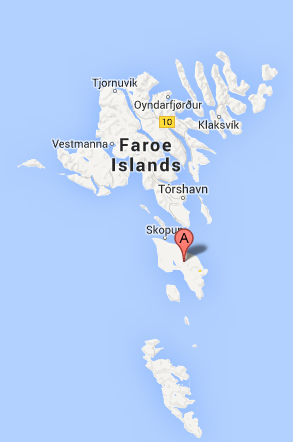
Sandoy, Faroes - Google Maps

Sandoy, Faroes – Google Maps

The Faroes were the first stepping stone beyond Shetland for the dispersal of European people across the North Atlantic that culminated on the shores of continental North America in the 11th century AD, about 500 years before Columbus made his famous voyage.

The research was carried out on an archaeological site at Á Sondum on the island of Sandoy. 

Analysis showed an extensive windblown sand deposit containing patches of burnt peat ash from human activity, dating human settlement to pre-Viking phases. These ash spreads contained barley grains which were accidentally burnt in domestic hearths and were then spread by humans onto the windblown sand surface during the 4th-6thcenturies and 6th-8th centuries, a common practice identified in the North Atlantic during this period to control wind erosion.

Lead author Dr Mike Church, from Durham University’s Department of Archaeology, said: “There is now firm archaeological evidence for the human colonisation of the Faroes by people some 300-500 years before the large scale Viking colonisation of the 9th century AD, although we don’t yet know who these people were or where they came from.

“The majority of archaeological evidence for this early colonisation is likely to have been destroyed by the major Viking invasion, explaining the lack of proof found in the Faroes for the earlier settlement. This also raises questions about the timing of human activity on other islands systems where similarly evidence may have been destroyed.”

Co-author, Símun V Arge from the National Museum of the Faroe Islands, said: “Although we don’t know who the people were that settled here and where they came from, it is clear that they did prepare peat for use, by cutting, drying and burning it which indicates they must have stayed here for some time.

Clean air legislation reinstated the global warming suppressed by industrial pollution

August 20, 2013

A fascinating post at WUWT:

The story so far;

  1. The earth was warming naturally after the Little Ice Age (1350 – 1850).
  2. Along came the industrial revolution. Dust and aerosol pollution covered large parts of the earth and blocked out the Sun. This caused a gradually increasing suppression of the global warming that was occurring as the industrialisation of the world proceeded. This suppression reached a maximum during the 1970’s.
  3. Then came clean air legislation around the world, cleaned up the atmosphere and the Earth basked in the sunlight again.

Global warming was rediscovered.

And now as the LIA temperature recovery is coming to a natural end, global temperatures will decrease again.

Well it is a settled science after all.

Shocker: Global warming may simply be an artifact of clean air laws

global-dimming-brightening

Figure 1 from Wild et al 2012 showing radiation balance differences due to aerosols (via WUWT)