Social psychology may be rigorous but it is not a science

August 18, 2013

Scientific American carries an article by a budding psychologist who is upset that many don’t accept that it is a science – but I think she protests too much. I have no doubt that many social psychologists study their discipline with great rigour. And so they should. (And I accept the rigour of most of the researchers in this field notwthstanding the publicity seeking, high profile fraudsters such as Stapel and Hauser who did not).

But it is not any lack of rigour which makes psychology “not a science”. It is the fact that we just don’t know enough about the forces driving our sensory perceptions and our subsequent behaviour (via biochemistry in the body and the brain) to be able to formulate proper falsifiable hypotheses.  Behaviour is fascinating and many of the empirical studies trying to pin down the causes and effects are brilliantly conceived and carried out. But behaviour is complicated and we don’t know the drivers. Inevitably measurement is complicated and messy.

Even the alchemists made rigorous measurements. But they never knew enough to elevate alchemy to a science. And so it is with psychology and with social psychology in particular. We are waiting for the body of evidence to grow and the insight of a John Dalton and a Antoine Lavoisier to lift psychology from an alchemy-like art to the true level of a science.

Her article is interesting but a little too defensive. And she misses the point. Just having rigour in measurement is insufficient to make an art into a science.

Psychology’s brilliant, beautiful, scientific messiness

 Melanie Tannenbaum

Melanie TannenbaumMelanie Tannenbaum is a doctoral candidate in social psychology at the University of Illinois at Urbana-Champaign, where she received an M.A. in social psychology in 2011. Her research focuses on the science of persuasion & motivation regarding political, health-related, and environmental behavior.

Today, sitting down to my Twitter feed, I saw a new link to Dr. Alex Berezow’s old piece on why psychology cannot call itself a science. The piece itself is over a year old, but seeing it linked again today brought up old, angry feelings that I never had the chance to publicly address when the editorial was first published. Others, like Dave Nussbaum, have already done a good job of dismantling the critiques in this article, but the fact that people are still linking to this piece (and that other pieces, even elsewhere on the SciAm Network, are still echoing these same criticisms) means that one thing apparently cannot be said enough:

Psychology is a science.

Shut up about how it’s not, already.

But she gets it almost right in her last paragraph. Indeed psychology is still an art – but that is not additional to its being a science (by definition).

.. The thought, the creativity, the pure brilliance that goes into finding measurable, testable proxies for “fuzzy concepts” so we can experimentally control those indicators and find ways to step closer, every day, towards scientifically studying these abstractions that we once thought we would never be able to study — that’s beautiful. Quite frankly, it’s not just science — it’s an art. And often times, the means that scientists devise to help them step closer and closer towards approximating these abstract concepts, finding different facets to measure or different ways to conceptualize our thoughts, feelings, and behaviors? That process alone is so brilliant, so tricky, and so critical that it’s often worth receiving just as much press time as the findings themselves.

To keep psychology in the realms of art rather than science is not to demean the discipline or to attack the rigour of those working the field. And maybe psychologists should consider why they  get so upset at being called artists rather than scientists and why they wish to be perceived as something they are not.

There is much of the study of psychology which is brilliant and beautiful and messy – but it is not a science – yet.

Increasing Antarctic sea ice correlates with global cooling

August 18, 2013

A new paper shows that for the last 30 years Antarctic ice is increasing and correlates best with a cooling global temperature.

Qi Shu, Fangli Qiao, Zhenya Song and Chunzai Wang, Sea ice trends in the Antarctic and their relationship to surface air temperature during 1979–2009, Clim Dyn (2012) 38:2355–2363, DOI 10.1007/s00382-011-1143-9

Abstract: Surface air temperature (SAT) from four reanalysis/analysis datasets are analyzed and compared with the observed SAT from 11 stations in the Antarctic. It is found that the SAT variation from Goddard Institute for Space Studies (GISS) is the best to represent the observed SAT. Then we use the sea ice concentration (SIC) data from satellite measurements, the SAT data from the GISS dataset and station observations to examine the trends and variations of sea ice and SAT in the Antarctic during 1979–2009. The Antarctic sea ice extent (SIE) shows an increased trend during 1979–2009, with a trend rate of 1.36 ± 0.43% per decade. Ensemble empirical mode decomposition analysis shows that the rate of the increased trend has been accelerating in the past decade. Antarctic SIE trend depends on the season, with the maximum increase occurring in autumn. If the relationship between SIC and GISS SAT trends is examined regionally, Antarctic SIC trends agree well with the local SAT trends in the most Antarctic regions. That is, Antarctic SIC and SAT show an inverse relationship: a cooling (warming) SAT trend is associated with an upward (downward) SIC trend.

The variations of local  SIC and SAT anomalies in autumn during the past 30 years

The variations of local
SIC and SAT anomalies in
autumn during the past 30 years

Summary: ….

The SAT and SIC trends illustrate an inverse relationship in most of the Antarctic regions, especially in summer and autumn. This indicates that a cooling (warming) SAT trend is associated with an upward (downward) SIC trend in the Antarctic. The station observations also confirm the inverse relationship between SAT and SIC. In most of the Antarctic regions, a cooling trend of SAT in summer and autumn is associated with an increased trend of SIC. …

Our analyses show that the relationship between sea ice and SAT trends should be examined regionally rather than integrally.

Using Facebook undermines well-being

August 18, 2013

The Facebook phenomenon continues with more studies and some idiot “research”. But the phenomenon is real. Narcissism is on the rise, circles of acquaintances are apparently getting very wide, perceptions of having many friends way beyond the Dunbar Number is increasing, anonymous bullying has found a new medium to exploit and we know more useless things about more people than ever before. We believe we are “in communication” with many people but that may just be an illusion.

Another “study” addresses “whether Facebook use influences subjective well-being over time is unknown. We addressed this issue using experience-sampling, the most reliable method for measuring in-vivo behavior and psychological experience. We text-messaged people five times per day for two-weeks to examine how Facebook use influences the two components of subjective well-being: how people feel moment-to-moment and how satisfied they are with their lives”.

Kross E, Verduyn P, Demiralp E, Park J, Lee DS, et al. (2013) Facebook Use Predicts Declines in Subjective Well-Being in Young Adults. PLoS ONE 8(8): e69841. doi:10.1371/journal.pone.0069841

AbstractOver 500 million people interact daily with Facebook. Yet, whether Facebook use influences subjective well-being over time is unknown. We addressed this issue using experience-sampling, the most reliable method for measuring in-vivo behavior and psychological experience. We text-messaged people five times per day for two-weeks to examine how Facebook use influences the two components of subjective well-being: how people feel moment-to-moment and how satisfied they are with their lives. Our results indicate that Facebook use predicts negative shifts on both of these variables over time. The more people used Facebook at one time point, the worse they felt the next time we text-messaged them; the more they used Facebook over two-weeks, the more their life satisfaction levels declined over time. Interacting with other people “directly” did not predict these negative outcomes. They were also not moderated by the size of people’s Facebook networks, their perceived supportiveness, motivation for using Facebook, gender, loneliness, self-esteem, or depression. On the surface, Facebook provides an invaluable resource for fulfilling the basic human need for social connection. Rather than enhancing well-being, however, these findings suggest that Facebook may undermine it.

Facebook well being doi:10.1371/journal.pone.0069841.g001

Facebook well being doi:10.1371/journal.pone.0069841.g001

Figure 1. Facebook use predicts declines in affect and life satisfaction over time.

Interacting with Facebook during one time period (Time1–2) leads people to feel worse later on during the same day (T2) controlling for how they felt initially (T1);  Average Facebook use over the course of the 14-day experience-sampling period predicts decreases in life satisfaction over time.

The more participants used Facebook, the more their life satisfaction levels declined over time, B = −.012, β = −.124, t(73) = −2.39, p = .02, …

The human need for social connection is well established, as are the benefits that people derive from such connections. On the surface, Facebook provides an invaluable resource for fulfilling such needs by allowing people to instantly connect. Rather than enhancing well-being, as frequent interactions with supportive “offline” social networks powerfully do, the current findings demonstrate that interacting with Facebook may predict the opposite result for young adults—it may undermine it.

The BANŪ SĀSĀN – a fraternity of medieval Islamic poets, rogues and charlatans

August 16, 2013

It could be a tale told by Scheherazade from the 1001 nights and set in the times of the Great Abbasid Caliph Haroun al-Rashid.  A tale of the Banu Sasan. A tale of poets and rogues, of vagabonds and bandits and of charlatans and disinherited second sons.

Fraternities of criminals and outlaws have probably existed from the earliest time when “laws” were first invented and “outlaws” were banished. Of course “laws” were established by whoever was strong enough to enforce them and the label of “criminality” applied to a group only as long as the group was not dominant. (Once a gang was strong enough it became legitimate and would now be called a “political party”). Organised crime and criminal fraternities that we might recognise as “gangs” therefore date back at least to the initial formation of cities and the exclusion of people outside those early city walls. The origin of gangs probably lies in the loose cooperation between such “outsiders” and “outlaws” and probably goes back some 5,000 years. In Ancient Greece, in the 7th and 8th centuries BCE, “criminal gangs” – for want of a better term – had to be put down when the city states were established.  There are suggestions of “criminal fraternities” / rebels in the Roman Empire, in Byzantium and even among the Aztecs.

The romanticism of Robin Hood and his ilk comes later but is still alive today. The success of The Godfather would suggest that even the Mafia can be seen through romanticised eyes. Certainly modern day gangs – whether in the Balkans or in Los Angeles or in Afghanistan or in the jungles of Chattisgarh – still succeed in recruiting young members who see themselves as “freedom fighters” or rebels against an unjust society. As Kings and Vagabonds.

The Smithsonian’s Past Imperfect Blog carries the story of the Banu-Sasan.

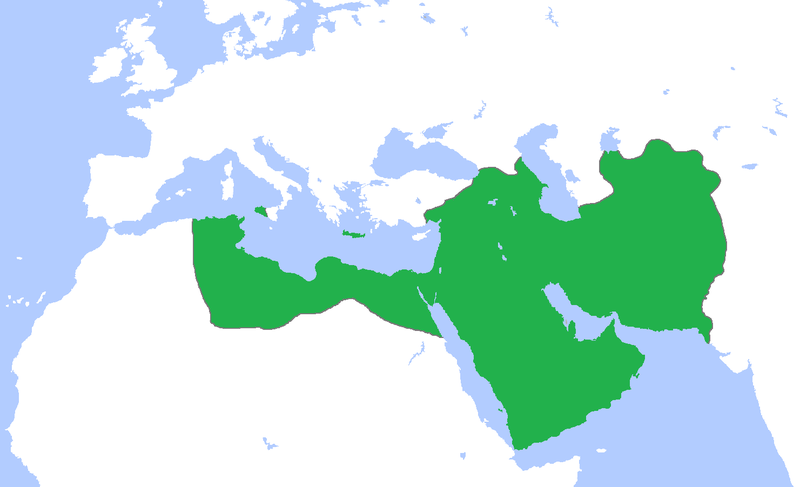
Abbasid Caliphate at its greatest extent, c. 850: Wikipedia

Islam’s Medieval Underworld

The year is—let us say—1170, and you are the leader of a city watch in medieval Persia. Patrolling the dangerous alleyways in the small hours of the morning, you and your men chance upon two or three shady-looking characters loitering outside the home of a wealthy merchant. Suspecting that you have stumbled across a gang of housebreakers, you order them searched. From various hidden pockets in the suspects’ robes, your men produce a candle, a crowbar, stale bread, an iron spike, a drill, a bag of sand—and a live tortoise.

The reptile is, of course, the clincher. There are a hundred and one reasons why an honest man might be carrying a crowbar and a drill at three in the morning, but only a gang of experienced burglars would be abroad at such an hour equipped with a tortoise. It was a vital tool in the Persian criminals’ armory, used—after the iron spike had made a breach in a victim’s dried-mud wall—to explore the property’s interior.

We know this improbable bit of information because burglars were members of a loose fraternity of rogues, vagabonds, wandering poets and outright criminals who made up Islam’s medieval underworld. This broad group was known collectively as the Banu Sasan, and for half a dozen centuries its members might be encountered anywhere from Umayyad Spain to the Chinese border. Possessing their own tactics, tricks and slang, the Banu Sasan comprised a hidden counterpoint to the surface glories of Islam’s golden age. They were also celebrated as the subjects of a scattering of little-known but fascinating manuscripts that chronicled their lives, morals and methods..

According to Clifford Bosworth, a British historian who has made a special study of the Banu Sasan, this motley collection of burglars’ tools had some very precise uses:

The thieves who work by tunneling into houses and by murderous assaults are much tougher eggs, quite ready to kill or be killed in the course of their criminal activities. They necessarily use quite complex equipment… [The iron spike and an iron hand with claws] are used for the work of breaking through walls, and the crowbar for forcing open doors; then, once a breach is made, the burglar pokes a stick with a cloth on the end into the hole, because if he pokes his own head through the gap, [it] might well be the target for the staff, club or sword of the houseowner lurking on the other side.    

The tortoise is employed thus. The burglar has with him a flint-stone and a candle about as big as a little finger. He lights the candle and sticks it on the tortoise’s back. The tortoise is then introduced through the breach into the house, and it crawls slowly around, thereby illuminating the house and its contents. The bag of sand is used by the burglar when he has made his breach in the wall. From this bag, he throws out handfuls of sand at intervals, and if no-one stirs within the house, he then enters it and steals from it; apparently the object of the sand is either to waken anyone within the house when it is thrown down, or else to make a tell-tale crushing noise  should any of the occupants stir within it.    

Also, the burglar may have with him some crusts of dry bread and beans. If he wishes to conceal his presence, or hide any noise he is making, he gnaws and munches at these crusts and beans, so that the occupants of the house think that it is merely the cat devouring a rat or mouse.

The Iranica informs us:

BANŪ SĀSĀN, a name frequently applied in medieval Islam to beggars, rogues, charlatans, and tricksters of all kinds, allegedly so called because they stemmed from a legendary Shaikh Sāsān. A story frequently found in the sources, from Ebn al-Moqaffaʿ onward, states that Sāsān was the son of the ancient Persian ruler Bahman b. Esfandīār, but, being displaced from the succession, took to a wandering life and gathered round him other vagabonds, thus forming the “sons of Sāsān.” 

The Smithsonian continues:

Who were they, then, these criminals of Islam’s golden age? The majority, Bosworth says, seem to have been tricksters of  one sort or another,

who used the Islamic religion as a cloak for their predatory ways, well aware that the purse-strings of the faithful could easily be loosed by the eloquence of the man who claims to be an ascetic or or mystic, or a worker of miracles and wonders, to be selling relics of the Muslim martyrs and holy men, or to have undergone a spectacular conversion from the purblindness of Christianity or Judaism to the clear light of the faith of Muhammad.

Amira Bennison identifies several adaptable rogues of this type, who could “tell Christian, Jewish or Muslim tales depending on their audience, often aided by an assistant in the audience who would ‘oh’ and ‘ah’ at the right moments and collect contributions in return for a share of the profits,” and who thought nothing of singing the praises of both Ali and Abu Bakr—men whose memories were sacred to the Shia and the Sunni sects, respectively. Some members of this group would eventually adopt more legitimate professions—representatives of the Banu Sasan were among the first and greatest promoters of printing in the Islamic world—but for most, their way of life was something they took pride in. One of the best-known examples of the maqamat (popular) literature that flourished from around 900 tells the tale of Abu Dulaf al-Khazraji, the self-proclaimed king of vagabonds, …

“I am of the company of beggar lords,” Abu Dulaf boasts in one account,

the cofraternity of the outstanding ones,

One of the Banu Sasan…

And the sweetest way of life we have experienced is one spent in sexual indulgence and wine drinking.

For we are the lads, the only lads who really matter, on land and sea.

Scheme of Indo-European migrations from ca. 4000 to 1000 BCE according to the Kurgan hypothesis.

Scheme of Indo-European migrations from ca. 4000 to 1000 BCE according to the Kurgan hypothesis. Wikipedia

The ethnic composition of the Banu Sasan is the subject of much speculation. The nomadic Banu Sasan are said by some to have been one of the drivers of the spread of “indo-European”peoples and languages. Perhaps the Banu Sasan may have had links with the ancient Tocharians. But it is more likely that the Banu Sasan was more a fraternity of occupation(s) and not of ethnicity. There are suggestions that there may be genetic connections between those of the Banu Sasan to present-day Roma (the Boyash or the Rudari) and to Parsis and even some Jews. That of course is quite possible for no doubt these vagabond poets and beggar-lords had their share of girl-friends at every caravanserai to be found.

Simple harmonic model – without carbon dioxide – fits reality better than the IPCC climate models

August 16, 2013

A new post at the Norwegian GeoForskning (Geological Research) site by Jan-Erik Solheim and Ole Humlum is quite significant I think. Solheim is Professor (emeritus) at  Institutt for teoretisk astrofysikk, University of Oslo while Humlum is professor of Physical Geography at the University of Oslo and an adjunct Professor at UNIS (University Centre in Svalbard). The post shows that a simple harmonic model (movements of the sun, moon and planets together with linear trends) provides a better fit to the global temperature data since 1850 and likely a better predictor than the assembly of 44 climate models used by the IPCC. They find no signal since the 1950’s which could correspond to any significant impact of carbon dioxide concentration and find no need to include such an influence. If such an effect is present its influence is miniscule.

Models need to be parsimonius to exclude parameters and mechanisms whose effects cannot be discerned. Otherwise they cannot be anchored in reality. A problem with many of the so-called climate models is that they include hypothetical effects which cannot be discerned in the available data, then apply forcing feedbacks to such hypothetical effects and then conclude that the results are valid!

If we’d had a warming due to CO2, this should appear as a deviation from the simple harmonic model since 1950. There are no signs of any additional heating due to CO2 as IPCC claims in their reports. Also CO2 effects of climate models for the IPCC based are exaggerated. The net effect of CO2 is thus so modest that it can not be seen in this data.

A simple, empirical, harmonic climate model

by Jan-Erik Solheim and Ole Humlum

(The paper is in Norwegian and this English version is from the HockeySchtick)
Read the rest of this entry »

Australian betting points to Labour losing by 22 seats

August 15, 2013

The Australian election campaign is still fairly low-key. The most exciting event in the last few days was Abbott’s remark praising a fellow candidate that she had “sex appeal”. He should have known better than to say something so politically incorrect. Kevin Rudd is trying to make political capital out of that but his denial that “sex appeal” exists seems a little contrived. The difference between the genders will not change by legislation.

The polls have not been very exciting either.  But I suppose that money talks and following the money may be a better predictor of the Australian general election results than just simply asking people how they intend to vote. The Financial Review carries a forecast of the election results based on betting on the elections. The money is on Kevin Rudd and Labour losing by a substantial margin. Of course it could be biased in that betting odds generated by gamblers may not be representative of the electorate,  but presumably the algorithms converting betting odds to election results try and take that into account.

From the Financial Review:

Election results forecast based on betting data from 11th August

Labor won’t have to stay up late on the evening of September 7 for the bad news of the electoral result, according to a new analysis of betting market odds.

Prime Minister Kevin Rudd’s party will lose the election by 22 seats, collecting 63 seats to the oppositions’s 85, according to analysis done for The Australian Financial Review by statisticians Kaighin McColl and Leng Lee.

The analysis is based on betting data from 11 August.

The number of seats Labor is expected to win dropped from 65 to 63 in the five days between August 6 and August 11.

Mr McColl notes that the ALP has now slid backwards twice since the analysis began.

“It is still early days, but the ALP has consistently been a long way behind according to the electorate-level betting data. What they’ve had going for them is momentum. That momentum appears to be slowing or reversing,” he said.

The analysis, which takes betting market data and subjects it to an algorithmic process known as Monte Carlo simulation in order to determine odds, predicts just two seats will be won by non-major parties. ….

Religion, democracies and the “restraint” which kept the death-toll to only 275

August 15, 2013

The numbers killed in Egypt were well over 250 yesterday. According to the Muslim Brotherhood the number could be as high as in the thousands. But half of Egypt approves of the actions of the security forces.

The US and Europe don’t really know how to react to the chaos in Egypt. The US  will still not acknowledge that they are dealing with a “military coup”. They have all “deplored” the violence but are secretly relieved that the Muslim Brotherhood was removed from power.  A strange view of democracy prevails – a blend of wishful thinking and a very flexible definition of what constitutes democracy and the values to be upheld. The West is willing to go along with the military actions – which of course they publicly deplore – if it can ensure that the Muslim Brotherhood is not voted into power again. So if it is mainly members of the Muslim Brotherhood who have been killed then perhaps it is time to express one’s regrets and just move on.

What nobody wishes to acknowledge is that Religions and Democracies do not – can not –  mix. With all the failings and weaknesses of democracies, “religious parties” still lead to a fundamental clash between the supremacy of the laws of the majority and the supremacy of the perceived – or proclaimed – laws of god (or gods). As long as any country permits political parties which are religious in nature, then any kind of real supremacy of the laws of the majority is not feasible. The fanatics of any religious political party always claim the over-riding demands of their gods and the supremacy of such demands whether to conduct jihad or to burn down mosques. And this applies to Egypt as well as to Israel or Indonesia or Malaysia or India or Sri Lanka.  Around the world, there are many more Islamist political parties than there are for other religions but there are plenty of “Christian Democratic” parties in Europe and in other countries. All of these religious parties – without exception –  are fundamentally opposed to – and have values inconsistent with –  the supremacy of the laws of man (only the majority of course) over the laws of their gods.

The Arab Springs will not lead to any real “democracies” in the Middle East and North Africa as long as inherently self-contradictory “religious, democratic parties” are around. For there is no religious party – in any country – which would accept that the laws of man could override the imaginary laws of their imaginary gods.

According to Reuters,

Egypt’s interim prime minister defended the government decision to storm pro-Mursi demonstrations on Wednesday. He says they had no choice after attempts at mediation with Mursi supporters failed. 

”When freedom of expression becomes terrorizing the public, carrying arms, blocking roads and violating public property — it is not freedom of expression. It becomes aviolation of the people and the people. For the government to continue to operate, it has to be respected. That’s why we had to take a stand and say this cannot continue. It should be stopped.”

Security forces shot and killed scores of people. By evening the death toll was well over 200 and the number injured was around 2,000. Prime Minister Hazem el-Beblawi praised the way forces handled the operation.

“I have to take this opportunity to thank the police because it has behaved with high levels of self-restraint. There were human rights observers and everything was publicized and there was filming. And it turned out that there were weapons and ammunition and other illegal material.”

Now under curfew Cairo’s streets were markedly different from earlier in the day. Asked how long the situaton could last el-Beblawi offered no specific dates, saying the state of emergency would go on for as short a period as possible. would go on for as short a period as possible, adding that the government is eager to restore democracy.

Observer’s political correspondent caught plagiarising

August 14, 2013

Picture of Andrew Rawnsley

Andrew Nicholas James Rawnsley (born 5 January 1962, Leeds), according to his Guardian profileis the Observer’s award-winning chief political commentator. He is also a critically acclaimed broadcaster and author.

But – and in the best tradition of Johann Hari’s  techniques and ethics – he is not above lifting a few paragraphs of text from others when it suits his purpose.

The revelations about Rawnsley came 2 weeks ago from Guido Fawkes on his blog (run by Paul Staines and is probably the most read right-of-centre political blog in the UK):

Catching up with Andrew Rawnsley’s “award winning” column yesterday, Guido could not help think he had read the same points being made, with all the same examples and the same anecdotes, somewhere before. Rawnsley tackles the great North/South divide debate with a remarkable similarity to Jeremy Cliffe, the Economist’s UK politics correspondent, who wrote extensively on the issue in April. Cliffe’s two pieces are online here and here.

Guido first smelt a rat at the mention of Alastair Campbell, who Rawnsley writes “secured his two, even more whopping landslides in 1997 and 2001 by winning for Labour in places that had been previously thought unreachable. On the night of his first victory, he thought his staff were pulling his leg when they reported that Labour had won St Albans.”Something Economist readers would know from April, minus the insider anecdote.

“Alastair Campbell, Mr Blair’s spin doctor, recalls the party’s astonishment at the results: “seats were falling that we would never have imagined standing a hope in hell of winning.” The greatest swing was in the south-east and eastern regions, where Labour won 44 constituencies, including such leafy, middle-class suburbs as St Albans (now comfortably Tory once more).”

A coincidence, surely? So Guido started compare the rest of Rawnsley’s column to the Economist pieces, and it does not look good. See if you can spot the differences here:

Economist:

“Of the 158 seats that make up the three northern English regions, only 43 are Conservative […] Of the 197 MPs representing the English south beyond the capital, just ten are now Labour. The Tories hold only two seats in the north-east and one in Scotland.”

Rawnsley:

“Of the 158 seats in the three northern English regions, only 43 have a Conservative MP. The Tories hold just two seats in the north-east and have only one MP in the whole of Scotland. […] Under a line drawn from the Wash to the Bristol Channel, there are 197 seats outside London. Just 10 of those seats are represented by a Labour MP.”

Lifting statistics from the Economist is one thing, but what about whole chunks of analysis?

Economist:

“well-off people in the north are more likely to vote Labour than the poor are in the south […] northerners from the highest social class are more likely to vote Labour than are southerners from the lowest social class.”

Rawnsley:

“Well-heeled parts of the north are these days much more likely to vote Labour than their counterparts in the south. […] Affluent northerners (the As and Bs of pollsters’ jargon) are more likely to vote Labour than poorer southerners (the Ds and the Es).” 

The Guide Fawkes post contains many more examples of the filching of text/ideas

Somebody else filled in for Rawnsley last week and Guido reports that he is still away and may be replaced for next week’s column as well.

Perhaps he is on extended gardening leave!

Young coral reefs will be unaffected by any ocean acidification due to increased carbon dioxide

August 14, 2013

Well now!

File:PH Scale.svg

pH scale : Wikipedia

While I have no belief in the fanciful theory that man-made carbon dioxide emissions will have any significant effect on global warming, I have no doubt that an increasing carbon dioxide concentration in the atmosphere will lower the pH of the ocean (and they will only be more acidic in the sense of reducing alkanity though with a pH remaining well over 7.0). In fact it is likely that oceans will maintain a pH over 8.0 even in the worst scenarios. (Liquid solutions are usually described as acidic with a pH of less than 7.0 and as alkaline with a pH over 7.0 though on the continuous pH scale any reduction of alkanity is per force an increase of acidity and vice versa).

A new paper shows that the hypothesised catastrophic scenarios about ocean “acidification” (more correctly – a reduction of alkanity) and the consequent effects on coral reefs are little more than fantasy because they find that “there will be no direct ecological effects of ocean acidification on the early life-history stages of reef corals, at least in the near future”.

CM Chua, W Leggat, A Moya, AH Baird. Near-future reductions in pH will have no consistent ecological effects on the early life-history stages of reef coralsMarine Ecology Progress Series, 2013; 486: 143 DOI:10.3354/meps10318

Abstract: Until recently, research into the consequences of oceanic uptake of CO2 for corals focused on its effect on physiological processes, in particular, calcification. However, events early in the life history of corals are also likely to be vulnerable to changes in ocean chemistry caused by increases in the atmospheric concentration of CO2 (ocean acidification). We tested the effect of reduced pH on embryonic development, larval survivorship and metamorphosis of 3 common scleractinian corals from the Great Barrier Reef. We used 4 treatment levels of pH, corresponding to the current level of ocean pH and 3 values projected to occur later this century. None of the early life-history stages we studied were consistently affected by reduced pH. Our results suggest that there will be no direct ecological effects of ocean acidification on the early life-history stages of reef corals, at least in the near future.

ScienceDaily:

Corals can survive the early stages of their development even under the tough conditions that rising carbon emissions will impose on them says a new study from the ARC Centre of Excellence for Coral Reef Studies. …. 

Dr Andrew Baird, Principal Research Fellow at the ARC Centre of Excellence for Coral Reef Studies and James Cook University, was part of the research team and explains their findings.

“The prevailing view is that ocean acidification will act like a toxin to corals, but we were unconvinced by results from previous work on young corals and ocean acidification so we tested critical early stages of development in several coral species at several different acid (or ‘pH’) concentrations of seawater.

“Our results showed no clear response to increasing ocean acidification in any of the stages, or for any of the coral species,” says Dr Baird. “In fact, in only one of nine experiments did we get the response expected if CO2 was acting like a toxin. More often than not we found no effect.”

By bubbling CO2 through seawater the research team was able to simulate future levels of ocean acidification expected to result from rising human carbon emissions. They tested the success of embryo development, the survival of coral larvae and finally their success in settling on coral reefs.

The rest of the reporting by ScienceDaily is almost embarassing as they try to pay lip-service to the orthodoxy of the “the carbon dioxide is evil” fantasy. They waste space in trying to emphasise that even if young corals are not affected this “study does not discount the possibility that coral larvae may suffer other ill-effects from increasing ocean acidification, for example, their swimming speeds may slow down, but because coral larvae typically settle on the reef two or three weeks after birth it is unlikely that these effects will have a major impact on the survival or settlement of coral larvae”.

Social media anonymity encourages and nurtures the herd mentality

August 14, 2013

It seems to me that the anonymity afforded by social media encourages and nurtures the “herd” mentality in human behaviour. A herd mentality is the essence of “mob behaviour” and it would seem that social media – like mobs – remove or suppress the controls and judgement calls that individual behaviour is usually subject to. I suspect that it is the anonymity available together with the potential for a “flash, online crowd”  which together contribute to reaching the “critical mass” needed for the establishment of an “unthinking mob”.

Mob behaviour is characterised by being reactive and where individuals try to “outdo” the behaviour of their fellows under the cover of being anonymous. But it needs a sufficient number of individuals to reach some critical mass to qualify as a mob. It is visible in the positive sense during rapturous calls for an encore after a concert and in the reaction to high oratory. Or it shows up in a negative way in the behaviour of a lynch mob or in the reaction to the speech of a demagogue. It has shown up in the on-line, “mob-bullying” by social media of some vulnerable teenagers which has even led to their suicides. It shows up with the internet trollls hovering on the fringes looking for a “mob” to join on-line.

A member of a mob gains anonymity in the crowd and his individual actions – while contributing to the behaviour of the mob as a whole – are no longer identifiable as the actions of a specific individual. More importantly the individual behaviour is not subject to identification or to being sanctioned. Just as with a stampeding herd of impala being chased by a predator, it is anonymity and running faster than your neighbour but still staying within the mob which provides this perception of protection. It is this feeling of being protected – I think – which switches off the normal human need for risk assessment and rational judgement to be applied before actions and which shifts behaviour away from the conscious plane. Aping and “outdoing” your “neighbour” from within the mob is then prioritised over the exercise of mind and judgement.

A new study shows that what we “like” on social media clearly exhibits a “herd mentality” and depends mainly on what others before us and around us have “liked”. It seems that random “dislikes” however are compensated for.

Lev Muchnik, Sinan Aral and Sean J. Taylor, Social influence bias: a randomized experiment. Science. Vol. 341, 9 August 2013, p. 647. doi: 10.1126/science.1240466

(The paper is paywalled but there is a related discussion here  with the authors about “The effect of free access on the diffusion of scholarly ideas”)

AbstractOur society is increasingly relying on the digitized, aggregated opinions of others to make decisions. We therefore designed and analyzed a large-scale randomized experiment on a social news aggregation Web site to investigate whether knowledge of such aggregates distorts decision-making. Prior ratings created significant bias in individual rating behavior, and positive and negative social influences created asymmetric herding effects. Whereas negative social influence inspired users to correct manipulated ratings, positive social influence increased the likelihood of positive ratings by 32% and created accumulating positive herding that increased final ratings by 25% on average. This positive herding was topic-dependent and affected by whether individuals were viewing the opinions of friends or enemies. A mixture of changing opinion and greater turnout under both manipulations together with a natural tendency to up-vote on the site combined to create the herding effects. Such findings will help interpret collective judgment accurately and avoid social influence bias in collective intelligence in the future.

ScienceNews writes:

When rating things online, people tend to follow the herd. A single random “like” can influence a comment’s score at a social news site, researchers report in the Aug. 9 Science.

Users of the site discuss news articles and rate each other’s comments with “up votes” (positive ratings) and “down votes” (negative ratings). Votes affect each comment’s overall score. To test whether previous ratings sway users, Sinan Aral of MIT and colleagues randomly assigned all comments submitted to the site over a five-month period an up vote, a down vote or no vote.

An unearned up vote packed a surprising punch. The first person to view a randomly liked comment was 32 percent more likely to rate it positively than to do the same with a comment that had received no vote. In the long run, boosted comments’ final scores were 25 percent higher than scores of untouched comments. Random negative votes did not affect a comment’s final rating because users compensated with extra up votes.

The findings may help researchers analyze herding behavior or manipulation in other kinds of rating systems, including electoral polls and stock market predictions, the authors suggest.