Fun and games at the US Senate hearing on Global Warming

July 21, 2013

A US Senate hearing has just been held under the Chairmanship of Senator Barbara Boxer “to focus on Climate Change and the serious threat it poses to our nation”.

(As an aside – I wonder if the proponents of global warming are so nervous and uncertain about their own creed that they need to use “Climate Change” as a euphemism. If they mean “global warming” why don’t they just say “global warming”? Or could they be just preparing their own fall-back positions in case “global warming” turns out to be “global cooling”?).

But if the good Senator’s hope was that the case for global warming (aka Climate Change) was going to be established beyond all reasonable doubt then it seems the hearings have spectacularly backfired.

From WUWT:

Quite a performance yesterday. Steve Milloy is calling it the “Zapruder film” implying it was the day the AGW agenda got shot down. While that might not be a good choice of words, you have to admit they did a fantastic job of shooting down some of the ridiculous claims made by panelists prior to them. While this may not be a Zapruder moment, I’d say that it represented a major turning point.

…..

Video link and links to PDF of testimonies follow.

Here is the video link, in full HD:

http://www.senate.gov/isvp/?type=live&comm=epw&filename=epw071813

Dr. Spencer writes about his experience here and flips the title back at them:

http://www.drroyspencer.com/2013/07/senate-epw-hearing-climate-change-its-happened-before/

The PDF’s of each person’s testimony can be accessed by click on their names below:
Panel 1

Dr. Heidi Cullen
Chief Climatologist
Climate Central
Mr. Frank Nutter
President
Reinsurance Association of America
Mr. KC Golden
Policy Director
Climate Solutions
Ms. Diana Furchtgott-Roth
Senior Fellow
Manhattan Institute for Policy Research
Dr. Robert P. Murphy
Senior Economist
Institute for Energy Research

Panel 2

Dr. Jennifer Francis
Research Professor
Institute of Marine and Coastal Sciences, Rutgers University
Dr. Scott Doney
Director, Ocean and Climate Change Institute
Woods Hole Oceanographic Institution
Dr. Margaret Leinin
Executive Director, Harbor Branch Oceanographic Institute
Florida Atlantic University
Dr. Roger Pielke, Jr.
Professor, Center for Science and Technology Policy Research
University of Colorado
Dr. Roy Spencer
Principal Research Scientist IV
University of Alabama, Huntsville

Noted in passing 21st July 2013

July 21, 2013
map projections galore

Map Projections Galore

More on cartography and map projections.

The linguistic forensics which unmasked JK Rowling as the mystery author Robert Galbraith.

The drop of tar pitch finally fell after 69 years.

Singing in unison in a choir leads to heart beats being synchronised.

The Indian monsoon is almost half-over and rainfall is running 16% above the long term average. In spite of the floods in Uttrakhand this monsoon will probably be classified as a “good” monsoon.

A Viking trading post,  Steinkjer, mentioned in the Norse sagas and dating from 1000 years ago has probably been identified.

The evidence is mounting that there was a pre-Toba expansion Out of Africa and into Asia around 90-100,000 years ago followed by another post-Toba expansion which then went all the way to Australia. The second wave would have mixed with the first wave survivors of the Toba eruption who were probably the first AMH to intermingle with the Denisovans.

The shale gas bonanza continues in the UK and the advantages are being pushed hard even by Bjorn Lomborg.

Great Barrier Reef bombed by US jets

July 21, 2013

US jets on a training exercise – said to have gone wrong – have dropped  four 500lb  bombs on the Great Barrier Reef Marine Park. The bombs are said to have been unarmed and did not explode – apparently.

BBC: US fighter jets dropped inert bombs on the Great Barrier Reef off Australia’s coast during a training exercise that went wrong, it has emerged. The two planes jettisoned four bombs in more than 50m (165 ft) of water, away from coral, to minimise damage to the World Heritage Site, the US navy said.

The jets had intended to drop at a bombing range on a nearby island, but Tuesday’s mission was aborted. The AV-8B Harriers were low on fuel and could not land loaded, the navy added. The emergency happened during the training exercise Talisman Saber, involving US and Australian military personnel. The two jets had been instructed to target the bombing range on Townshend Island. However, the mission was aborted when hazards were reported in the area.

The planes then dropped the bombs in the marine park off the coast of Queensland. None of the devices exploded.

blog post photo

King of the Coral Reef

The Reef put up no resistance and is expected to surrender shortly, The worlds largest coral reef is known to harbour many dangerous species. It is uncertain if any are affiliated to Al Qaeda. The King of the Coral Reef was unavailable for comment.

The animals of the Great Barrier Reef include some 1500 species of marine fish, 360 species of hard corals, between 5000 and 8000 species of mollusks, 600 species of echinoderms, 17 species of sea snakes, 1500 species of sponges, 30 species of whales and dolphins, 6 species of marine turtles, 22 species of seabirds and 32 species of shorebirds which breed on the reef’s many small islands.

On birth rates, abortions and “eugenics by default”

July 20, 2013

Selective breeding works.

Humans have applied it – and very successfully – for plants and animals since antiquity.

There is nothing “wrong” conceptually with eugenics for the selective breeding of humans. But the Nazis – and not only the Nazis – brought all of eugenics into disrepute by the manner in which they tried to apply the concept.  Because of the Nazis and the coercive treatment of some minorities in Europe and of the Aborigines in Australia where forced sterilisation, forced abortions, genocide, euthanasia and mass murder were used to try and control the traits of future generations, eugenics has come to be inextricably associated with the methods used. Even in more recent times genocide, mass rapes and mass murder have been evident even if not openly for the purpose of controlling the genetic characteristics of the survivors.

I note that evolution by “natural selection” does not intentionally select for any particular traits. Surviving traits are due to the deselection of individuals who have not the wherewithal to survive until reproduction. Natural Selection in that sense is not pro-active and evolution is merely the result of changing environments which causes individuals of a species who cannot cope with the change to perish. Evolution has no direction of its own and is just the result of who survives an environmental change. It is not not some great force which “selects” or  leads a species into a desired future. Species fail when the available spread of traits and characteristics among the existing individuals of that species is not sufficient to generate some individuals who can survive the environmental change. Natural Selection is therefore not an intentional selection process but represents the survivors of change. Of course, not all traits have a direct influence on survival. All “collateral” traits are carried along – coincidentally and unintentionally –  with those traits which do actually help survival in any particular environment. But as conditions change what was once a collateral trait may become one which assists in survival.

As breeding techniques go, “Natural Selection” relies on a wide variation of traits throwing up viable individuals able to cope no matter how the environment changes, while “Artificial Selection” chooses particular traits to promote but runs the risk of unwanted collateral traits showing up (as with some bulldogs unable to breathe or with the development of killer bees). Natural selection is the shot-gun to the rifle of artificial selection. The shot gun usually succeeds to hit the target but may not provide a “kill”. But the rifle usually kills but it could easily miss or even kill the wrong target!

Of all the babies conceived today about 1% are conceived by “artificial” means (IVF or surrogacy) and include a measure of genetic selection. Even the other 99% include a measure of partner selection and – though very indirectly – a small measure of genetic selection. A significant portion (perhaps around 20%?) are through “arranged” marriages where some due diligence accompanies the “arrangement”. Such due diligence tends to focus on economic and social checks but does inherently contain some “genetic selection” (for example by excluding partners with histories of mental or other illnesses in their families). If eugenics was only about deliberate breeding programs seeking particular traits then we would not be very far down the eugenics road. But more importantly around 20-25% of babies conceived are aborted and represent a genetic deselection. As a result, a form of “eugenics by default” is already being applied today.

(The rights and wrongs of abortion is another discussion which – in my opinion – is both needless and tainted. Abortion, I think, is entirely a matter for the pregnant female and her medical advisors. I cannot see how anybody else – male or female – can presume to impose the having or not having of an abortion on any pregnant person. Even the male sperm donor does not, I think,  warrant any decisive role in what another person should or should not do. No society requires that a female should get its approval for conceiving or having a child (with the exception of China’s one-child policy). Why then should not having a child require such approval? While society may justifiably seek to impose rules about infanticide, abortion – by any definition – is not the same as infanticide. Until the umbilical is severed, a foetus is essentially parasitic, totally dependent upon its host- mother and not – in my way of thinking – an independent entity. I cannot and do not have much respect for the Pope or other religious mullahs who would determine if I should shave or not or if a woman may or may not have an abortion).

Consider our species as we breed today.

In general the parents of children being conceived today share a geographical habitat. Apart from the necessity – so far – of the parents having to meet physically, it is geographical proximity which I think has dominated throughout history. Victors of war, conquerors, immigrants, emigres and wanderers have all succumbed to the lures of the local population within a few generations. In consequence, partners often share similar social and religious and ethnic backgrounds. But the geographical proximity takes precedence. Apart from isolated instances (Ancient Greece, the Egypt of the Pharaohs, the persecution of the Roma, European Royalty, Nazi Germany and the caste-system on the Indian sub-continent), selective breeding solely for promoting or destroying specific genetic traits has never been the primary goal of child-bearing. Even restrictive tribes where marrying outside the “community” (some Jews and Parsis for example) is discouraged have been and still are more concerned about not diluting inherited wealth than any desire to promote specific genetic traits.

But it is my contention that we are in fact – directly and indirectly –  exercising an increasing amount of genetic control in the selection and deselection of our offspring . So much so that we already have “eugenics by default” being applied to a significant degree in the children being born today.

Currently the global birth rate is around 20 per 1000 of population (2%), having been around 37 in 1950 and projected to reduce to around 14 (1.4%) by 2050.
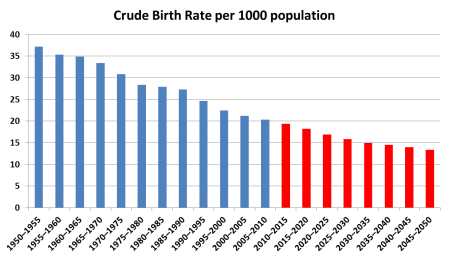
Crude birth rate actual and forecast UN data

Crude birth rate actual and forecast: UN data

Of these the number conceived by artificial means (IVF and surrogacy) is probably around 1% (around 0.2 births per 1000 of population). For example for around 2% of live births in the UK in 2010 , conception was by IVF. In Europe this is probably around 1.5% and worldwide it is still less than 1%. But this number is increasing and could more than double by 2050 as IVF spreads into Asia and Africa. By 2050 it could well be that for around 3% of all live births, conception has been by “artificial” means and that there will be a much greater degree of genetic screening applied.

Abortion rates increased sharply after the 1950’s as the medical procedures developed to make this a routine procedure. Done properly it is a relatively risk-free procedure though there are still many “unsafe” abortions in the developing and religiously repressive countries. Since 1995 abortion rates worldwide have actually decreased from about 35 per 1000 women of child-bearing age to about 28 today.  These numbers would indicate that the number of abortions taking place today is around 20-25% of the number of live births.

http://www.economist.com/blogs/graphicdetail/2012/01/daily-chart-7
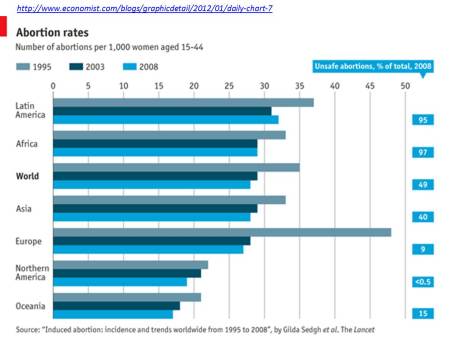
Global abortion rates: graphic Economist

Global abortion rates: graphic Economist

So of every 100 babies conceived around 25% are deselected by abortion and 75 proceed to birth. Only 1 of these 75 would have been conceived by “artificial” means. The genetic deselection by abortion is both direct and indirect. The detection of genetic defects in the foetus often leads to abortion and this proportion can be expected to increase as techniques for the early identification of defects or the propensity for developing a debilitating disease are perfected. In many cases abortion is to safeguard the health of the mother and does not – at least directly – involve any deselection for genetic reasons. In many countries – especially India – abortions are often carried out to avoid a girl child and this is a direct genetic deselection. It seems to apply particularly for a first child. The majority of abortions today are probably for convenience. But if the “maternal instinct” is in any way a genetic charateristic, then even such abortions would tend to be deselection in favour of those who do have the instinct.

The trends I think are fairly clear. The proportion of “artificial births” is increasing and the element of genetic selection by screening for desired charateristics in such cases is on the increase. The number of abortions after conception would seem to be on its way to some “stable” level of perhaps 25% of all conceptions. The genetic content of the decision to abort however is also increasing and it is likely that the frequency of births where genetic disorders exist or where the propensity for debilitating disease is high will decrease sharply as genetic screening techniques develop further.

It is still a long way off to humans breeding for specific charateristics but even what is being practised now is the start of eugenics in all but name. And it is not difficult to imagine that eugenics – without any hint of coercion – but where parents or the mothers-to-be select for certain characteristics or deselect (by abortion) to avoid others in their children-to-be will be de rigueur.


 

Chimpanzees and orangutans have long term memories too

July 19, 2013

image The Telegraph

Interesting work in a new paper is published in Current Biology. It supports my view that life is a continuum from simple to complex with no place for – or any need to invoke – a “soul”. At what point the brain of a species is large enough and complex enough not only to be able to “save” memories but also to then access these data at a later time is also unknown. I have little doubt from the  dogs and cats that I have known that they can “remember” people and behaviour from many years before  – even if they are often  supposed to live only in the “now”. At what point in this continuum “self-awareness” emerges is not known but I suspect that it depends on the definition of “self-awareness” and some level of self-awareness lies very close to the “simple” end of the scale of life.

(Certainly the mosquito which got trapped in my study yesterday was not just “self-aware”, it was also maliciously aware of me. If it had a soul it has now been consigned to mosquito hell!!)

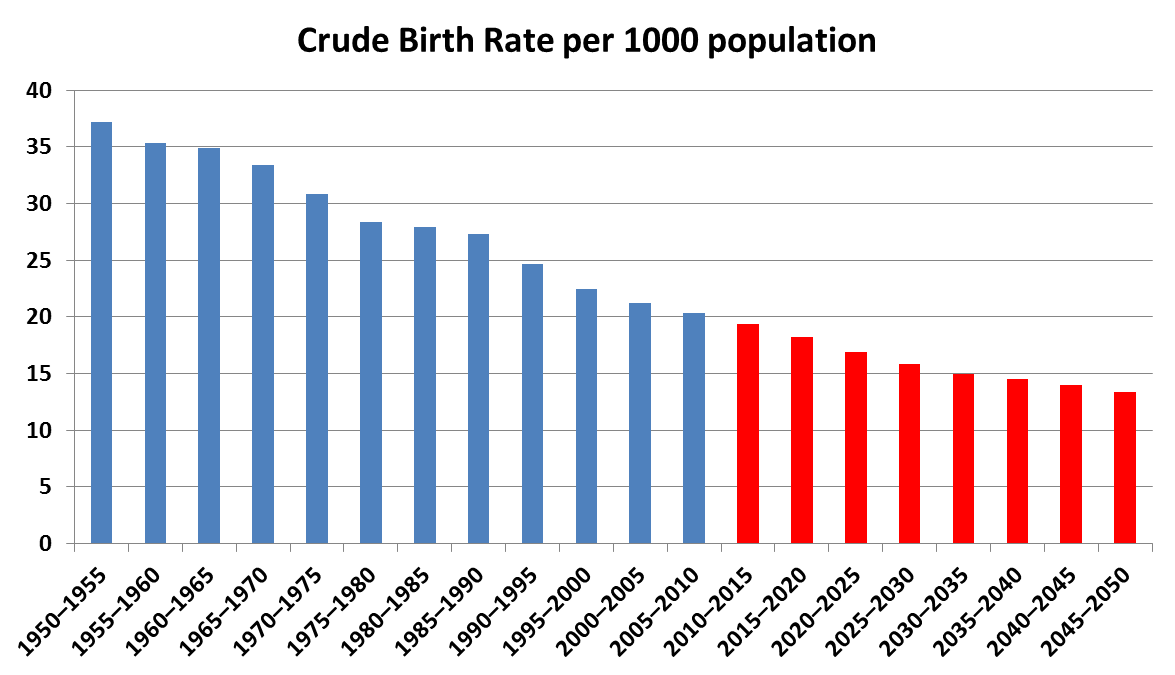
This work shows that chimpanzees and orangutans have the ability to “remember events that happened two weeks or three years ago, but also that they can remember them even when they are not expecting to have to recall those events at a later time” 

Gema Martin-Ordas, Dorthe Berntsen, Josep Call. Memory for Distant Past Events in Chimpanzees and OrangutansCurrent Biology, 2013; DOI: 10.1016/j.cub.2013.06.017

Highlights

  • First study addressing unexpected and cued recall of both general and unique events
  • Chimpanzees and orangutans recalled events that happened weeks and years earlier
  • Subjects also showed evidence of binding
  • Chimpanzees and orangutans share this form of autobiographical memory with humans

Summary

Determining the memory systems that support nonhuman animals’ capacity to remember distant past events is currently the focus an intense research effort and a lively debate. Comparative psychology has largely adopted Tulving’s framework by focusing on whether animals remember what-where-when something happened (i.e., episodic-like memory). However, apes have also been reported to recall other episodic components after single-trial exposures. Using a new experimental paradigm we show that chimpanzees and orangutans recalled a tool-finding event that happened four times 3 years earlier (experiment 1) and a tool-finding unique event that happened once 2 weeks earlier (experiment 2). Subjects were able to distinguish these events from other tool-finding events, which indicates binding of relevant temporal-spatial components. Like in human involuntary autobiographical memory, a cued, associative retrieval process triggered apes’ memories: when presented with a particular setup, subjects instantaneously remembered not only where to search for the tools (experiment 1), but also the location of the tool seen only once (experiment 2). The complex nature of the events retrieved, the unexpected and fast retrieval, the long retention intervals involved, and the detection of binding strongly suggest that chimpanzees and orangutans’ memories for past events mirror some of the features of human autobiographical memory.

From Science Daily:

…. “Our data and other emerging evidence keep challenging the idea of non-human animals being stuck in time,” says Gema Martin-Ordas of Aarhus University in Denmark. “We show not only that chimpanzees and orangutans remember events that happened two weeks or three years ago, but also that they can remember them even when they are not expecting to have to recall those events at a later time.” ….. 

“I was surprised to find out not only that they remembered the event that took place three years ago, but also that they did it so fast!” Martin-Ordas says. “On average it took them five seconds to go and find the tools. Again this is very telling because it shows that they were not just walking around the rooms and suddenly saw the boxes and searched for the tools inside them. More probably, it was the recalled event that enabled them to find the tools directly.”

Going East the Vikings were seen as “handsome but filthy”

July 18, 2013

ScienceNordic reports on a new doctoral thesis by an Icelandic historian:

The Icelandic historian Thorir Jonsson Hraundal has studied comments about what we call Vikings in original texts by Arab historians and geographers. The texts described Arab encounters with Scandinavians in areas around the Caspian Sea and the Volga River. 

Their depictions differ radically from images of fearsome Viking conquerors handed down from the British Isles and France in the same era. 

“A major difference between the Scandinavians who travelled eastwards and those who sailed west was that in the East they were far more subordinated in societies they came to,” says Jonsson Hraundal.

He recently presented his doctoral dissertation at the University of Bergen about the so-called Rus ― Scandinavian merchants and warriors who travelled to Eastern Europe, Central Asia and the Middle East.

“The Scandinavians appear to have been versatile people who were really good at adapting to diverse regions and participating in various power structures,” he says. …

…. For a number of reasons, the East-bound Vikings have been neglected by scholars in comparison to those who headed west. Political problems hampered Western archaeologists for decades. During much of the 20th century it was hard for West European researchers to access artefacts collected behind the Iron Curtain.

“We have a lot more source information from the West because of the linguistic and writing culture that dominated there,” adds Archaeology Professor Jan Bill of the University of Oslo.

“This doesn’t mean that the contact in the East was unimportant, but perhaps we haven’t had as much opportunity to study it.”

There are exceptions and Bill mentions that Arab silver coins and other artefacts from Kazakhstan and neighbouring areas have been found at Heimdalsjordet, a former marketplace not far from the Gokstad Viking Ship Mound in Sandefjord, southwest of Oslo.

“They come from the Silk Road and show that the Vikings definitely had contact with Islamic areas,” he says.

He draws on and analyses the writings of Ahmad ibn Fadlān ibn al-Abbās ibn Rāšid ibn Hammād.

He was a 10th-centuryArab traveler, famous for his account of his travels as a member of an embassy of the Abbasid Caliph of Baghdad to the king of the Volga Bulgars. His account is most known for providing a description of the Volga Vikings, including an eyewitness account of a ship burial.

File:Ibn Fadhlan manuscript.jpg

Ibn Fadhlan manuscript

Elements of Ibn Fadlān’s account are used in the novel Eaters of the Dead  by Michael Crichton (adapted to film in The 13th Warrior with Antonio Banderas as Ibn Fadlan), in which the Arab ambassador is taken even further north and is involved in adventures inspired by the Old English epic Beowulf.

Some excerpts from Ahmad ibn Fadlān:

They are the filthiest of all Allah’s creatures: they do not purify themselves after excreting or urinating or wash themselves when in a state of ritual impurity after coitus and do not even wash their hands after food.

I have never seen more perfect physical specimens, tall as date palms, blond and ruddy; they wear neither tunics nor kaftans, but the men wear a garment which covers one side of the body and leaves a hand free. Each man has an axe, a sword, and aknife, and keeps each by him at all times. Each woman wears on either breast a box of iron, silver,copper, or gold; the value of the box indicates the wealth of the husband. Each box has a ring from which depends a knife. The women wear neck-rings of gold and silver. Their most prized ornaments are green glass beads. They string them as necklaces for their women.

In the case of a rich man, they gather together his possessions and divide them into three portions, one third for his household, one third with which to cut funeral garments for him, and one third with which they ferment alcohol which they drink on the day when his slave-girl kills herself and is burned together with her master.

Mandela Day today

July 18, 2013

Nelson Mandela is 95, critically ill in hospital and it is Mandela Day today.

Nelson-Mandela-by-Eli-Weinberg-1961

Nelson-Mandela-by-Eli-Weinberg-1961

“Where you stand depends on where you sit.”


retronaut images

Animal studies biased to give “positive” results

July 18, 2013

It is not suggested that the bias is any form of deliberate misconduct but a new paper shows that animal studies are subject to an “excess significance bias”.

Tsilidis KK, Panagiotou OA, Sena ES, Aretouli E, Evangelou E, et al. (2013) Evaluation of Excess Significance Bias in Animal Studies of Neurological Diseases. PLoS Biol 11(7): e1001609. doi:10.1371/journal.pbio.1001609

Author Summary

Studies have shown that the results of animal biomedical experiments fail to translate into human clinical trials; this could be attributed either to real differences in the underlying biology between humans and animals, to shortcomings in the experimental design, or to bias in the reporting of results from the animal studies. We use a statistical technique to evaluate whether the number of published animal studies with “positive” (statistically significant) results is too large to be true. We assess 4,445 animal studies for 160 candidate treatments of neurological disorders, and observe that 1,719 of them have a “positive” result, whereas only 919 studies would a priori be expected to have such a result. According to our methodology, only eight of the 160 evaluated treatments should have been subsequently tested in humans. In summary, we judge that there are too many animal studies with “positive” results in the neurological disorder literature, and we discuss the reasons and potential remedies for this phenomenon.

Roli Roberts writes at the PLOS blog:

But a study just published in PLOS Biology by Konstantinos Tsilidis, John Ioannidis and colleagues at Stanford University shows that a meta-analysis is only as good as the scientific literature that it uses. That literature seems to be compromised by substantial bias in the reporting of animal studies and may be giving us a misleading picture of the chances that potential treatments will work in humans. ….

Rather than wilful fraud, the authors of the PLOS Biology study suggest that this excess significance comes from two main sources. The first is that scientists conducting an animal study might analyse their data in several different ways, but ultimately tend to pick the method that gives them the “better” result. The second arises because scientists usually want to publish in higher profile journals that tend to strongly prefer studies with positive, rather than negative, results. This can delay or even prevent publication, or relegate the study to a low-visibility journal, all of which reduce their chances of inclusion in a meta-analysis.

The new work raises important questions about the way in which the scientific literature works, and it’s possible that the types of bias reported in the PLOS Biology paper have been responsible for the inappropriate movement of treatments from animal studies into human clinical trials. What do we do about it? Here are the authors’ suggestions:

  1. Animal studies should adhere to strict guidelines (such as the ARRIVE guidelines) as to study design and analysis.
  2. Availability of methodological details and raw data would make it easier for other scientists to verify published studies.
  3. Animal studies (like human clinical trials) should be pre-registered so that publication of the outcome, however negative, is ensured.

 Well, these are all excellent, but most people would also say that there are problems elsewhere in the system – in the high-profile journals’ desire to a have a cute story with well-defined conclusions, and in the forces exerted on authors by institutions and funding bodies to publish in those high-profile journals.

T Rex on the Seine

July 17, 2013

Colossal: Artist Philippe Pasqua recently completed installation of an impressive Tyrannosaurus Rex skeleton that now stands watch over the Seine river in Paris. The structure is made from 350 chrome molded bones and measures a full 21′ x 12′ (3m by 6m). Photograph courtesy Anthony Gelot.

trex on the seine - artist pasqua photo gelot

trex on the seine – artist pasqua photo gelot

Lunatic science? Cardiac surgery gives better results during a waning full moon!

July 17, 2013

It is not the 1st of April so presumably this “lunatic science” about the effects of a waning full moon on improved results after surgery  – taking “lunatic” in its proper sense of moon-sick  – is not just fantasy!

The message is clear. Schedule any cardiac surgery you may need during a waning full moon! But it does go against previous “lunatic belief” expressed by a UK politician as recently as 2009. Tredinnick, a Conservative MP,  is a supporter of astrology especially the use of it in medical practice!

 In October 2009, British politician David Tredinnick asserted that during a full moon “[s]urgeons will not operate because blood clotting is not effective and the police have to put more people on the street.”.

The belief that there is correlation between specific stages of the Earth’s lunar cycle and behavior in animals including human beings that cannot simply be explained by variation in light levels. There is no scientific reason to expect this to be the case and, in spite of numerous studies, no significant lunar effect on human behaviour has been established. Scholars debunking the effect sometimes refer to it as the Transylvanian hypothesis or the Transylvanian effect to emphasise its fanciful nature – Wikipedia

One wonders of course whether the effects of the full moon are affecting the surgeons or the patients.

This “study” – not funded- from the Rhode Island Hospital has just been published:

J. H. Shuhaiber, J. L. Fava, T. Shin, N. Dobrilovic, A. Ehsan, A. Bert, F. Sellke. The influence of seasons and lunar cycle on hospital outcomes following ascending aortic dissection repairInteractive CardioVascular and Thoracic Surgery, 2013; DOI: 10.1093/icvts/ivt299

Franke Sellke

Franke Sellke

EurekAlert: 

Waning and full moon cycles impact length of stay, mortality

PROVIDENCE, R.I. – If you need cardiac surgery in the future, aortic dissection in particular, reach for the moon. Or at least try to schedule your surgery around its cycle. According to a study at Rhode Island Hospital, acute aortic dissection (AAD) repair performed in the waning full moon appears to reduce the odds of death, and a full moon was associated with shorter length of stay (LOS). The study is published online in advance of print in the journal Interactive Cardiovascular and Thoracic Surgery.

The purpose of the study was to assess the effect of natural time variations of both the season and the lunar cycle phase on hospital survival and length of stay (number of days a patient is in the hospital) following acute aortic dissection repair.

Read the rest of this entry »