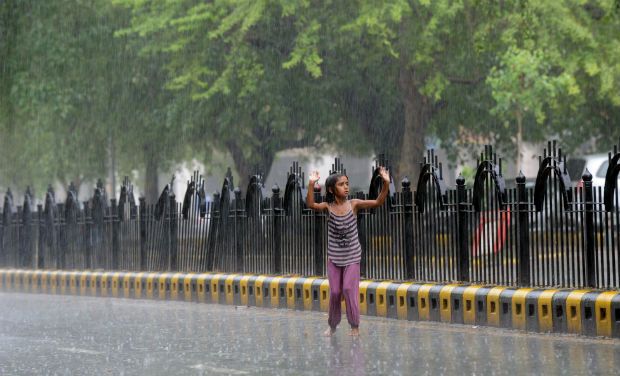
Off on an assignment in monsoon country.
Very light blogging for a week or so.
Title – apostrophe added for the pedantic!
Off on an assignment in monsoon country.
Very light blogging for a week or so.
Title – apostrophe added for the pedantic!
Of course in Brazil, football fanaticism is quite similar to the religious fanaticism seen elsewhere. But it does not bode well for the World Cup in 2014. After hosting the Confederation Cup – and fairly successfully – Brazil saw the street protests which have had the spending on the World Cup extravaganza in their sights. Along with the corruption that pervades politics and – of course – football. And violence is never far away when football is involved.
Football spectators in northern Brazil decapitated a referee after he fatally stabbed a player for refusing to leave the pitch, officials say.
An angry mob stormed the field during the amateur game in the state of Maranhao and stoned Otavio da Silva to death before severing his head.
Police said the murder was in retaliation for Mr Silva stabbing player Josenir dos Santos.
One man has been arrested over the killing and investigations continue.
The incident took place on 30 June in the remote town of Pio XII, but news of the event has been slow to emerge.
The state’s Public Safety Department said it started when the referee and Mr Santos got into fist fight after the player was sent off but refused to leave the pitch.
Mr Silva then pulled out a knife and wounded Mr Santos, who died on his way to the hospital.
The player’s friends and relatives rushed onto the field, stoned the referee to death and dismembered his body, the department said in a statement.
From Science is Beauty:
Following peak oil and peak gas it now seems that “peak copper” is also disappearing over the horizon. Researchers at Monash University show that known copper reserves with existing recovery technologies are sufficient at least for 100 years and not just 30.
The fundamental fault with the alarmist image of resources running out – following a classic M. King Hubbert curve – is that alternatives to the resource and new discoveries of the resource are not taken into account. Added to this is the changes to consumption patterns that come about with changes of technology and with changes of price as a resource dwindles in availability. In fact it is the price change which itself acts a spur to the finding of alternatives and new technologies which do not even need that particular resource. “Peak” scenarios are a consequence of using numbers without the exercise of mind.
MU Press Release: New research shows that existing copper resources can sustain increasing world-wide demand for at least a century, meaning social and environmental concerns could be the most important restrictions on future copper production.
Researchers from Monash University have conducted the most systematic and robust compilation and analysis of worldwide copper resources to date. Contrary to predictions estimating that supplies of this important metal would run out in around 30 years, the research has found there are plenty of resources within the reach of current technologies.
The database, published in two peer-reviewed papers, was compiled by Dr Gavin Mudd and Zhehan Weng from Environmental Engineering and Dr Simon Jowitt from the School of Geosciences. It is based on mineral resource estimates from mining companies and includes information vital for carbon and energy-use modelling, such as the ore grade of the deposits.
Dr Jowitt said the database could change the industry’s understanding of copper availability.
“Although our estimates are much larger than any previously available, they’re a minimum. In fact, figures for resources at some mining projects have already doubled or more since we completed the database,” Dr Jowitt said.
“Further, the unprecedented level of detail we’ve presented will likely improve industry practice with respect to mineral resource reporting and allow more informed geological exploration.”
Dr Mudd said the vast volumes of available copper meant the mining picture was far more complex than merely stating there were ‘x’ years of supply left. …..
…..
The researchers will now undertake detailed modelling of the life cycles and greenhouse gas impacts of potential copper production, and better assessment of future environmental impacts of mining.
They will also create similar databases for other metals, such as nickel, uranium, rare earths, cobalt and others, in order to paint a comprehensive picture of worldwide mineral availability.
It is seen as a “game changer” and the numbers are persuasive. It is certainly a step-change – and what a step!
Oil: Production data for April show how fracking has shattered not only the shale rock in formations like Texas’ Eagle Ford and Permian Basin but also the myths of “peak oil” and petroleum as an energy source of the past.
As Mark Perry notes on his Carpe Diem blog, Texas produced an average of 2.45 million barrels a day (bpd) of crude oil in April, according to the Energy Information Administration (EIA). That’s the highest average daily output for Texas in any month since April 1985 — 28 years ago.
In only 2-1/2 years, the Lone Star State has doubled its crude output, making it what Perry dubs Saudi Texas and reversing a 23-year decline that fueled speculation that the maximum rate of petroleum extraction has been, or will soon be, reached.
In only 2-1/2 years, the Lone Star State has doubled its crude output, making it what Perry dubs Saudi Texas and reversing a 23-year decline that fueled speculation that the maximum rate of petroleum extraction has been, or will soon be, reached.
As of February, the most recent month for which international oil production data are available, Texas would be the 12th largest oil producer in the world if it were a separate country, only slightly behind Kuwait and Venezuela. This is due to an oil boom that’s added the equivalent of the Bakken formation in North Dakota to the state’s output in just the past 16 months.
At the current pace of output gains, Texas’ production will likely surpass 3 million bpd by year-end, pulling it ahead of Venezuela, Kuwait, Mexico and Iraq to become the equivalent of the ninth largest oil-production “nation” in the world.
The Eagle Ford shale formation, a 400-mile-long, 50-mile-wide, crescent-shaped field in the south central part of the state, is still brimming with crude. Its production in March rose 77% from a year earlier to 529,900 bpd, the Texas Railroad Commission reported.
This of course has contributed to a job boom, just as in North Dakota. Over the 12 months ended in May, Texas payrolls swelled by 325,000 positions, equivalent to a 3% annual increase. Every business day over the past year, almost 1,500 new jobs were created in the Lone Star State.
A report by the University of Texas, San Antonio, showed that in 2011 alone Eagle Ford supported 38,000 full-time jobs, generated $10.8 billion in gross regional product and poured millions into state and local tax coffers.
Read More At Investor’s Business Daily: http://news.investors.com/ibd-editorials/070213-662299-texas-eagle-ford-shale-sparks-boom.htm#ixzz2Y9R2M2wr
Sea levels in the past have been 10 m higher than today and 150 m lower than today.
Alarmism will have us believe that +5 cm ±15 cm in sea level that may actually happen by 2100 will threaten the very existence of humanity!
A new paper from Nils-Axel Mörner.
SEA LEVEL CHANGES PAST RECORDS AND FUTURE EXPECTATIONS
by Nils-Axel Mörner
ABSTRACT The history and development of our understanding of sea level changes is reviewed. Sea level research is multi-facetted and calls for integrated studies of a large number of parameters. Well established records indicate a post-LIA (1850–1950) sea level rise of 11 cm. During the same period of time, the Earth’s rate of rotation experienced a slowing down (deceleration) equivalent to a sea level rise of about 10 cm. Sea level changes during the last 40-50 years are subjected to major controversies. The methodology applied and the views claimed by the IPCC are challenged. For the last 40-50 years strong observational facts indicate virtually stable sea level conditions. The Earth’s rate of rotation records a mean acceleration from 1972 to 2012, contradicting all claims of a rapid global sea level rise, and instead suggests stable, to slightly falling, sea levels. Best estimates for future sea level changes up to the year 2100 are in the range of +5 cm ±15 cm.
The Carbon cycle is far from being fully understood or quantified. The absorption and release of carbon dioxide by the oceans and from biological plants and fungii – both on land and in the ocean – are a long way from being established. The amount of Carbon locked up in the earths crust is equally subject to great uncertainty.
A new paper shows that deep soils hold much higher levels of carbon than is usually assumed.
R. J. Harper, M. Tibbett, The hidden organic carbon in deep mineral soils, Plant and Soil, July 2013, Volume 368, Issue 1-2, pp 641-648
Abstract: Current estimates of soil organic carbon (SOC) are based largely on surficial measurements to depths of 0.3 to 1 m. Many of the world’s soils greatly exceed 1 m depth and there are numerous reports of biological activity to depths of many metres. Although SOC storage to depths of up to 8 m has been previously reported, the extent to which SOC is stored at deeper depths in soil profiles is currently unknown. This paper aims to provide the first detailed analysis of these previously unreported stores of SOC. ….. Mean SOC mass densities for each of the five locations varied from 21.8–37.5 kg C m−2, and were in toto two to five times greater than would be reported with sampling to a depth of 0.5 m.
PhysOrg reports: Current estimates of soil organic carbon are based largely on measurements to depths of 30 cm. This approach has evolved in North America and Europe, where soil is generally more shallow.
However, many plant species have roots extending many metres deep, suggesting there is also carbon stored at such depth and inspiring researchers to explore the storage potential of deeper soils in older landscapes such as the Amazon or Australia. Researchers in the Amazon had previously sampled soils to 8 m.
The researchers took soil measurements from samples taken to almost 40 metres deep at a range of sites in south-western Australia. They found that small amounts of carbon were present throughout the soils all the way to the bedrock, and that deep soils store up to five times more carbon than is normally reported.
Lead researcher Professor Richard Harper, an expert in water management and sustainability at Murdoch University said the findings extend our concept of the amounts and potential of carbon stored in soils.
“This carbon has been previously overlooked, and this opens up several lines of inquiry – for example, what happens to this carbon with land use change such as deforestation and reforestation?” Professor Harper said.
“There is likely more carbon stored in the world’s soils than previously considered. What will happen to this carbon – that is, will it be released as a result of either land-use change or climate change – is unknown. This is what we are working on now,” he said.
I grew up in a solar system which had nine planets.
And then poor Pluto was stripped of the honour of being a planet and we had only eight.
But then the “dwarf planets” were defined and Pluto joined this group of 5.
… the International Astronomical Union (IAU) defines a dwarf planet as a celestial body in direct orbit of the Sun that is massive enough for its shape to be controlled by gravitation, but that unlike a planet has not cleared its orbital region of other objects.
The IAU currently recognizes five dwarf planets in the Solar System: Ceres, Pluto, Haumea, Makemake, and Eris.
It is suspected that another hundred or so known objects in the Solar System are dwarf planets.
And we now have at least 13 known planets. Pluto is not only a dwarf planet it also has at least 5 moons and the last 2 have just been named. The 5 are Charon, Styx, Nix, Kerberos and Hydra.
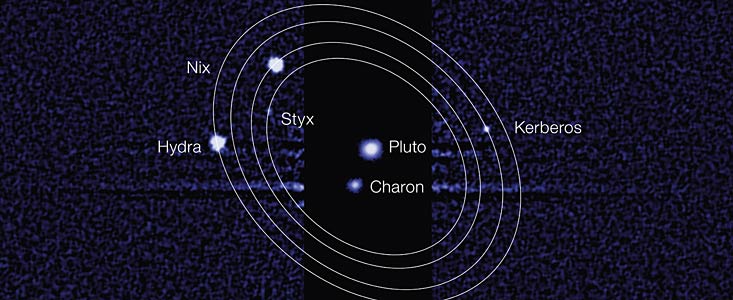
Pluto and its moons: IAU
The International Astronomical Union (IAU) is announcing that the names Kerberos and Styx have officially been recognised for the fourth and fifth moons of Pluto, which were discovered in 2011 and 2012. The names were submitted to the IAU by the leader of the team responsible for the discovery, who had called for the help of the general public in an open contest that attracted a substantial number of participants.
The IAU is pleased to announce that today it has officially recognised the names Kerberos and Styx for the fourth and fifth moons of Pluto respectively (formerly known as P4 and P5). These names were backed by voters in a recently held popular contest, aimed at allowing the public to suggest names for the two recently discovered moons of the most famous dwarf planet in the Solar System.
The new moons were discovered in 2011 and 2012, during observations of the Pluto system made with the NASA/ESA Hubble Space Telescope Wide Field Camera 3, and increasing the number of known Pluto moons to five. Kerberos lies between the orbits of Nix and Hydra, two bigger moons discovered by Hubble in 2005, and Styx lies between Charon, the innermost and biggest moon, and Nix. Both have circular orbits assumed to be in the plane of the other satellites in the system. Kerberos has an estimated diameter of 13 to 34 kilometres, and Styx is thought to be irregular in shape and is 10 to 25 kilometres across.
The goings-on in Egypt and Gaza and North Africa where democratically “elected” leaders – albeit leaders who are undemocratic and Islamist – cannot get acceptance in the rest of the “democratic” world brings to mind the story of the Irish, socialist monarch.
Two Irishmen were sorting out the problems of the world in the pub – as one usually does in a pub.
After the sixth pint they had resolved the Irish Unification Issue, the Palestinian Issue, the Syrian Issue and the Chinese-Japanese Territorial conflict. But they were floundering when they came to the issue of Poverty and Starving Children. They could not agree even on what constituted Poverty. Could it be if or when you could not buy the fourth pint?
This led to the seventh pint. And the eighth and the ninth and then suddenly Sean’s face lit up.
“Begorrah Mick”, he exclaimed. “I have it now! The solushun is simpul. All the wurld has to do is to moik me the King of the World”.
“And how will that help?” asked a skeptical Mick.
“It’s reely simpul,” explained Sean. “If Oi was the King of the Wurld, I would collect all the monny there was or ever would be and Oi would distribut it equally – but equally – to evry living pershun – Cathlick or not”.
Mick was still marshalling his many cogent arguments against this vision of King Sean when Sean continued. “And when I had spent all moine, why I would just do it all over again”!
The Egyptian military would recognise the solution.
Democracy by “free and fair” elections is by far the best alternative – provided of course that you can have another “free and fair” election if you don’t like the result of the first one.
And so on ad infinitum till you get the result you want.
I wrote this – following the words of the Bard – about something else
The quality of intelligence is not strain’d,
It may not be shaped or created or invented
to suit a man’s convenience. It is twice cursed:
It curses him who invents and curses the fool who believes.
and then realised it could easily be adapted to fit “hockey stick” climate science
The quality of climate science is not strain’d,
It may not be shaped or tricked into a hockey stick
to suit a Mann’s convenience. It is twice cursed:
It curses him who tricks and curses the fools who believe.


