July 3, 2013
A new paper describing a Swedish study:
Sandin S et al. Autism and mental retardation among offspring born after in vitro fertilization. JAMA 2013 Jul 3; 310:75. (http://dx.doi.org/10.1001/jama.2013.7222)
Newswise — In a study that included more than 2.5 million children born in Sweden, compared with spontaneous conception, any in vitro fertilization (IVF) treatment was not associated with autistic disorder but was associated with a small but statistically significantly increased risk of mental retardation, according to a study in the July 3 issue of JAMA. The authors note that the prevalence of these disorders was low, and the increase in absolute risk associated with IVF was small. …..
…… A total of 2,541,125 children were alive at 1.5 years of age and had complete data on all the covariates; 30,959 (1.2 percent) were born following an IVF procedure. Autistic disorder was diagnosed in 103 of 6,959 children (1.5 percent) and mental retardation in 180 of 15,830 children (1.1 percent) who were born after an IVF procedure. Cases had an average follow-up time of 10 years, median (midpoint) 14 years.
Analysis of the data indicated that compared with spontaneous conception, any IVF treatment was not associated with autistic disorder but was associated with a small but statistically significantly increased risk of mental retardation, although when restricted to singletons (single births), the risk for mental retardation was no longer statistically significant. “However, the results demonstrated an association between autistic disorder and mental retardation and specific IVF procedures with ICSI related to paternal origin of infertility compared with IVF without ICSI,” the authors write.
“The prevalence of these disorders was low, and the increase in absolute risk associated with IVF was small. These associations should be assessed in other populations.”
Tags: Autism, In vitro fertilisation, IVF, Mental retardation, Sweden
Posted in Medicine, Sweden | Comments Off on IVF with multiple births leads to small increased risk of mental retardation
July 3, 2013
“Intelligence” in the political sense is knowledge. But when “knowledge” is created or moulded or invented to suit a political purpose it loses its intelligence. Constrained intelligence is bad intelligence.
Following the Bard,
The quality of intelligence is not strain’d,
It may not be shaped or created or invented
to suit a man’s convenience. It is twice cursed:
It curses him who invents and curses the fool who believes.
The shameful subservience of European countries and their political classes to US “intelligence” when going to war in Iraq is now history. Of course Tony Blair was not merely subservient, he also helped to constrain the “intelligence” even further.
Reading this story about France and Portugal and Austria kowtowing to demands made – no doubt – by US “intelligence” while forcing down the Bolivian President’s plane yesterday, suggests that this subservience of their European counterparts still continues. The quality of the US “intelligence” that Snowden was on the plane was clearly very “strain’d”. The “constraining” of intelligence” to suit a political purpose will be with us for a long time and the poodle-like behaviour of the European countries is sometimes embarrassing to observe.
BBC: Bolivian President Evo Morales’s plane had to be diverted to Austria amid suspicion that US intelligence leaker Edward Snowden was on board, the Bolivian foreign minister has said.
Officials in both Austria and Bolivia said Mr Snowden was not on the plane.
France and Portugal reportedly refused to allow the Bolivia-bound flight to cross their airspace. Mr Snowden is reportedly seeking asylum in Bolivia and 20 other countries to avoid extradition to the US. Bolivian Foreign Minister David Choquehuanca told reporters on Tuesday that France and Portugal had closed their airspace over the “huge lie” that Mr Snowden, 30, was on board.
“We don’t know who invented this lie, but we want to denounce to the international community this injustice with the plane of President Evo Morales,” he said.
Austrian foreign ministry spokesman Alexander Schallenberg said Mr Snowden was not on board the Bolivian leader’s aircraft. The Bolivian defence minister, also on the flight, pilloried the US after the unscheduled landing. “This is a hostile act by the United States state department which has used various European governments,” Ruben Saavedra said.
The Falcon aircraft was reportedly allowed to refuel in Spain before the jet went on to Vienna. President Morales was said to be at the airport in Vienna discussing his return route to Bolivia early on Wednesday.
Tags: bad intelligence, Evo Morales, Intelligence, snowden, United States
Posted in Behaviour, Europe, Politics, US | 1 Comment »
July 2, 2013
It was always too grandiose for its own good. The economics were never sound but it was “visionary” and it was riding the fashionable “renewables wave”. It seemed to be much more of a public relations exercise to win brownie points than any real project. Domestic German politics and positioning of German companies in North Africa and the Middle East was of more interest than any real commitment to the project itself.
The concept was to generate solar and wind power in the worlds deserts and the transfer them by HVDC links to populous regions upto 3000 km away! The Desertec Foundation started in January 2009 and the Desertec project consortium (Dii gmbh) was established in October 2009 to handle the specific project for generating solar and wind power in North Africa and the Middle East for export to Europe. Now the Desertec Foundation has left the consortium and it is likely that the project and the consortium will quietly disappear into the sand.
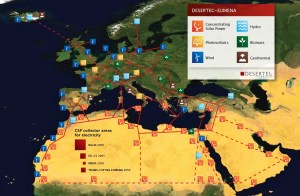
PV Magazine: Uncertainty shrouds the future of the Desertec project to generate energy from the world’s deserts after the foundation which developed the idea announced it had withdrawn from the scheme.
The Desertec Foundation was founded in January 2009 with the idea of generating solar and wind energy from the world’s deserts. The founding principle of the foundation is to use high voltage DC current – which loses only 3% every 1,000km it travels – to bring power to the 90% of the global population living within 3,000km of deserts.
In October 2009, the Dii GmbH consortium was founded in Munich to bring the concept to life using the deserts of the Middle East and north Africa, with the aim of supplying up to 15% of Europe’s energy from renewables by 2050.
But in an extraordinary press release, the Desertec Foundation has announced its withdrawal from the consortium, citing ‘irresolvable disputes’ with its partners over strategy, obligations, communications and ‘last but not least, the managerial style of Dii’s top management.’
Read the rest of this entry »
Tags: Desertec, DESERTEC Foundation, Dii, North Africa, RWE, Siemens
Posted in Business, Energy, Politics, Renewable Energy | Comments Off on Desertec Foundation deserts the Desertec project consortium
July 2, 2013
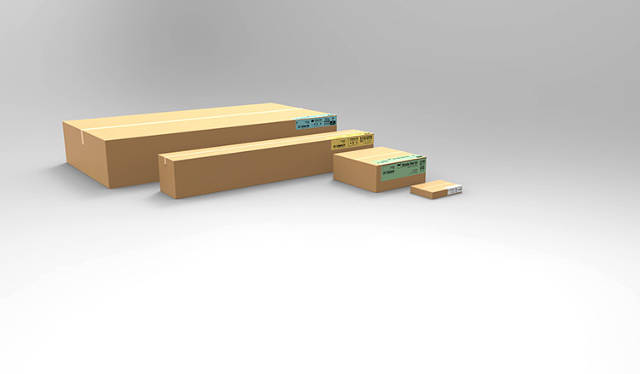
This is a project by the IKEA Foundation together with the UNHCR. The target is to produce these refugee shelters for less than $1000 each. Each flat-pack includes a solar panel which powers a built-in lamp and a USB outlet. Each shelter takes 4 hours to assemble, would house 5 people and last 3 – 5 years compared to the 6 months of a conventional refugee tent.

The shelter as a flat pack: image via Fast Company

The Ikea refugee shelter via gizmag.com
Read the rest of this entry »
Tags: IKEA, IKEA Foundation, Refugee shelter, refugee tent, United Nations High Commissioner for Refugees
Posted in Design, Engineering | Comments Off on IKEA’s flat-pack refugee shelter
July 1, 2013

Hendrick Avercamp – Frozen River with Skaters
Andrew McKillop has a new article posted at The Market Oracle.
Global cooling began at the end of the so-called Medieval Warm Period, by or before the year 1300, and was preceded by at least 200 years, and as long as 350 years, of warming on the same variable and unpredictable basis. Measurement problems include the type of proxies used – ice cores, tree rings, corals and shells, others – but at least as important, the ideological bias of climate science leads to extreme variations in reconstructed climate data for the same region, same period. One flagrant example is IPCC treatment of Medieval Warming Period data – as published by the IPCC in different editions of its reports and studies. Before year 2000, IPCC studies include papers showing Warm Period temperatures in certain high latitude locations at certain dates around 950-1200 as several full degrees celsius above present day temperatures.
That is, despite 213 years of anthropogenic global warming if with the IPCC we use a start date of 1800 for human “carbon pollution of the atmosphere”, we have in no way matched this natural warming. Which needed zero assistance from human-source CO2.
This is the global cooling fear
Flooding in the low countries in Europe was a common feature which accompanied the global cooling which succeeded the Medieval Warm Period. The cooling period he writes, lasted 450 years.
Read the rest of this entry »
Tags: global cooling, global warming, IPCC, Little Ice Age, Low Countries, Medieval Warm Period
Posted in Alarmism, Climate | Comments Off on Beware Global Cooling
July 1, 2013
“Artificial” jobs created by subsidies and government inspired market distortions are never sustainable. As is being evidenced by the boom and bust of solar energy and wind turbines riding the wave of subsidies. But the advent of shale oil (and shale gas) is a game changer in many many ways. Fossil fuels are now no longer all “bad” (though some of this sentiment is leading to another inane “War on Coal”), and the fundamental truth that true sustainability – of necessity – requires being commercially sound and not just subsidised is taking hold again.
The US is at least 3 years ahead of Europe in exploiting shale gas and shale oil – even though the deposits in Europe are quite considerable. But Europe is still stuck in the self-righteous and self-delusional “green” policy regimes which have raised energy prices unnecessarily, helped to sustain economic stagnation and have prevented some 15 million jobs from being created. Without a paradigm shift in energy policies and a whole-hearted pursuit of shale gas and nuclear power, Europe’s return to sustainable growth is difficult to define.
Reuters:
Thanks to the U.S. shale energy boom, the once-quiet niche of U.S.-flagged oil tankers is in unprecedented flux.
A half-dozen vessels that typically carried gasoline to Florida are now rushing crude oil along the Texas coast. Major investment at the port of Corpus Christi, which now exports more than half of all Eagle Ford shale oil, suggests more to come even as new pipeline projects promise further market shifts.
The shale oil revolution, now in its third year, has already scrambled the inland U.S. crude market, forcing pipelines to reverse direction and fuelling a revival in railway oil trade. …..
Read the rest of this entry »
Tags: Florida, Gulf Coast of the United States, shale oil, Texas, United States
Posted in Energy, European Union, Gas, Oil, US | Comments Off on Shale Oil leading to real jobs and real investment in the US
July 1, 2013
Croatia joined the EU today as the 28th member state.
(But I can’t help concluding that both Croatia and the EU are consequently disadvantaged. At least Croatia is not joining the Euro which it can ill afford to do).
After Slovenia it is the second of the former Yugoslavia countries to enter. In the meantime the “negotiations” for Turkey’s membership are proceeding at a glacial pace. Any possible excuse is used to slow down progress whenever possible. The opposition to Turkey’s membership is not restricted to Germany, Austria and France where it is particularly obvious.
Considering the other states deriving from Yugoslavia, Bosnia applied for membership in 2003 but has not yet been officially accepted as a candidate nation. Macedonia applied in 2005 and is accepted as a candidate country. Serbia applied for EU membership in 2009 and is accepted as a candidate nation. Negotiations with Montenegro started in 2012. Kosovo has not yet been allowed to apply.
While EU membership is ostensibly judged on economic and civil rights criteria there is an unspoken undercurrent which is undoubtedly connected to religion and perceptions of religious groups. Read the rest of this entry »
Tags: Bosnia, Croatia, European Union, Kosovo, Macedonia, Montenegro, religion, Serbia, Turkey, Yugoslavia
Posted in Behaviour, Europe, European Union, Politics, Religion | 1 Comment »
June 30, 2013
Pointman has an interesting essay here:
…. Climate alarmism was, and could only have been, a child born of good times. In the midst of an extraordinarily long fifteen year economic boom when most people had jobs, money, houses and not many real concerns, it was something that a number of people actually needed to invent. The politicians needed a danger they could save us from and as it happened, a few scientists raised some genuine concerns over the slight temperature uptick that occurred in the closing decades of the previous century. The political activists of the well left of centre group, still reeling from the double whammy of the death of the liberal dream in the eighties and the collapse of Soviet communism in the nineties, needed it even more desperately. ….
A few compliant third-rate scientists were catapulted blinking mole-like out of obscurity and up into that media firmament of stardom. Basking in their new-found adulation, they became masters of the climate universe. The media hung on every word they uttered, the politicians engaged them as climate advisers, big business paid them handsomely for the cachet of their time as consultants, little men suddenly became important little men and gradually, the details of the science not only became unquestioned but also unquestionable. …
A good read.
Tags: climate change, Climate change alarmism, global warming
Posted in Academic misconduct, Alarmism, Climate, Politics | Comments Off on “Climate alarmism was a child born of good times”
June 30, 2013
New Yorker article from 1994, by Jack Winter about man who describes meeting his wife at a party.

In his description, he drops many prefixes.
How I met my wife
It had been a rough day, so when I walked into the party I was very chalant, despite my efforts to appear gruntled and consolate. I was furling my wieldy umbrella for the coat check when I saw her standing alone in a corner. She was a descript person, a woman in a state of total array. Her hair was kempt, her clothing shevelled, and she moved in a gainly way. I wanted desperately to meet her, but I knew I’d have to make bones about it, since I was travelling cognito. Beknownst to me, the hostess, whom I could see both hide and hair of, was very proper, so it would be skin off my nose if anything bad happened. And even though I had only swerving loyalty to her, my manners couldn’t be peccable. Only toward and heard-of behavior would do. Fortunately, the embarrassment that my maculate appearance might cause was evitable. There were two ways about it, but the chances that someone as flappable as I would be ept enough to become persona grata or sung hero were slim. I was, after all, something to sneeze at, someone you could easily hold a candle to, someone who usually aroused bridled passion. So I decided not to rush it. But then, all at once, for some apparent reason, she looked in my direction and smiled in a way that I could make heads or tails of. So, after a terminable delay, I acted with mitigated gall and made my way through the ruly crowd with strong givings. Nevertheless, since this was all new hat to me and I had no time to prepare a promptu speech, I was petuous. She responded well, and I was mayed that she considered me a savory char- acter who was up to some good. She told me who she was. “What a perfect nomer,” I said, advertently. The conversation became more and more choate, and we spoke at length to much avail. But I was defatigable, so I had to leave at a godly hour. I asked if she wanted to come with me. To my delight, she was committal. We left the party together and have been together ever since. I have given her my love, and she has requited it. ..
Full text is here (subscription): Jack Winter, Shouts & Murmurs, “How I Met My Wife,” The New Yorker, July 25, 1994, p. 82
Found via Fossil words of yore in the offing
Tags: Jack Winter, New Yorker, Prefix
Posted in Language | Comments Off on Without the prefix (or should that be “with the pre”?)
June 30, 2013
That Banks and Bankers all over Europe have made a killing over all the “bailouts” is no great secret. Just how they have done it – and very often in collusion with friends within Governments – is slowly coming to light.
This week it has been the turn of the bankers at the Anglo Irish Bank. The Bank was finally nationalised costing Irish taxpayers some €30 billion. That is over €6,000 per head of population! No doubt the bankers made sure of their severance packages before they bowed out.
ABC News: In the age of austerity, senior bankers laughing about public-funded bail-outs is not a good look, but that is exactly what has happened in Ireland. There is outrage after a national newspaper published details of a taped phone conversation between bank executives mocking regulators and boasting they fooled them. The bank ended up collapsing, costing tax payers around 30 billion euros.

David Drumm ” We need the moolah”: CEO Anglo Irish
Irish Independent29th June:
Anglo Tapes: Anatomy of the bank that broke Ireland
Irish Independent 30th June: Fresh revelations in the Anglo-tapes scandal about Brian Cowen’s administration shows his party was willing to save the failing bank at any cost, his political opponents claimed. …….
……….. Fine Gael Dail finance committee member Dara Murphy alleged it was further proof of the cosy relationship that existed between Fianna Fail, developers and Anglo Irish. “While there is no doubt that the entire country has been sickened to its very core at what the Anglo tapes have revealed this week, the reality is that tens of thousands of families are living with a daily reminder of the greed, avarice and utter contempt that was shown to the Irish people in respect of the dealings at Anglo,” he said. Read the rest of this entry »
Tags: Anglo Irish Bank, Anglo Irish Bank hidden loans controversy, Bankers, David Drumm, fraud, Ireland
Posted in Behaviour, Ethics, Europe, Fraud, Ireland | Comments Off on Tapes expose Irish Bankers warts and .. warts!