Airbus invokes “Plan B” while Dreamliner remains grounded till the summer

February 20, 2013

The Boeing Dreamliner which was grounded globally on January 16th will remain grounded at least till the end of March and possibly till the summer. United Airlines has removed the Dreamliner from all its schedules till March 30th. But LOT Polish Airlines which flies Boeing 767’s and was hoping for these to be replaced by 5 Dreamliners at the end of March has extended the lease for the 767’s (apparently at Boeing’s insistence) for a further 6 months till October 2013.

All Nippon Airways, which has 17 Dreamliners in its fleet says it has lost 15.4 million of sales revenues just in January. But ANA has kept its profit forecast for the fiscal year through March unchanged at about $44 million.

All Nippon has not asked Boeing for compensation linked to the grounded 787s but will discuss the issue once the total financial effect is more clear, said the executive vice president, Kiyoshi Tonomoto, according to Reuters.

The battery problem has yet to be resolved but there was further evidence that the cells are prone to overheating and thermal runaways.

Bangkok Post: On January 16, the 50 Dreamliners in service around the world were grounded after a battery fire on a Japan Airlines plane parked in Boston, and battery smoke on an All Nippon Airways flight forced an emergency landing. On Tuesday, a Japanese safety board official said that investigators found a battery on the ANA flight that initially was believed to be intact had also been damaged. Detailed examination of the auxiliary power unit battery revealed that two of its eight cells were misshapen.

One market-matching family

The Airbus A350 family . image airbus.com

In the meantime Airbus has invoked Plan B and decided to drop the lithium-ion batteries for the A 350 so as not to jeopardise the intoduction of the aircraft in 2014. With the Dreamliner delays and teething problems, Airbus has a golden opportinity to break into the Dreamliner market with a timely introduction of the A350.

Reuters:  Airbus has dropped lithium-ion batteries of the type that forced the grounding of Boeing’s 787 Dreamliner and will use traditional nickel-cadmium batteries in its crucially important next passenger jet, the A350.

The European planemaker said on Friday it had taken the decision to adopt the batteries used on existing models such as the A380 superjumbo in order to prevent delays in the A350’s entry to service next year. ….. 

“We want to mature the lithium-ion technology but we are making this decision today to protect the A350’s entry-into-service schedule,” an Airbus spokeswoman said. ….

The A350 is due to enter service in the second half of 2014 compared with an initial target of 2012 when it was launched as Europe’s answer to the lightweight 787 Dreamliner. ….

….. Airbus will use the lithium-ion batteries for a maiden flight in mid-year and early flight trials but switch to traditional batteries in time for certification and delivery. …

The lithium-ion battery industry is concerned but not unduly so, since the market for aircraft batteries is just a tiny portion of their market.

Mississippi abolishes slavery!

February 19, 2013
Dr. Ranjan Batra

Dr. Ranjan Batra

I am not sure if this means that it would have been perfectly legal – until now – to have kept slaves in Mississippi.  A clerical error in 1995 is blamed for this “oversight”. The wheels of bureaucracy grind exceedingly slow but I cannot believe that such an “error” was not without motive. I also suspect that this was not addressed till as late as 1995 because – deep down – Mississippi still hankered for the “good old days”.

NY Daily News: Mississippi ratifies 13th Amendment abolishing slavery almost 150 years after its adoption.

The state thought it had approved the amendment in 1995, but a clerical error left the ratification unresolved, learned Dr. Ranjan Batra of Ole Miss, who was inspired by the film ‘Lincoln.’ The state took action, and its support for the amendment became official this month

The State of Mississippi officially ratified the 13th Amendment, which outlawed slavery … nearly 150 years after most of the states in the union did.

The gross delay, fixed earlier this month, was the result of a clerical error that left unrecorded what many state officials thought was its official ratification nearly 20 years ago.

The Mississippi Legislature had actually formally ratified the historic amendment in 1995, which even then was more than a century late, but because the ratification document was never presented to the U.S. archivist, it was never considered official.

According to The Clarion-Ledger, the bizarre error was discovered by a pair of patriotic Mississippians, who, after seeing the movie “Lincoln,” looked up historical accounts of Mississippi’s action and brought to the attention of state officials that they had never, in fact, ratified one of the most important documents in modern history.

The 13th Amendment, which outlawed all slavery and involuntary servitude except as punishment for a crime, was passed by the U.S. Senate on April 8, 1864, and by the House of Representatives on Jan. 31, 1865. …… 

“Bribes are necessary” – Berlusconi; but he does hit a nerve.

February 18, 2013

Bunga-bunga Berlusconi is at it again!

But he is describing a reality which applies not only in 3rd world and developing countries but also in the EU and Japan and the rest of the “developed” world.

This time he was reacting to a string of corruption cases in Italy culminating in the arrest of the Finmeccanica CEO Giuseppe Orsi for involvement in bribes allegedly paid to Indian government officials to secure a helicopter contract. This follows ENI’s CEO Paolo Scaroni being investigated for alleged bribes paid by its Saipem subsidiary to win contracts in Algeria.

From the FT:

Former prime minister Silvio Berlusconi has defended the need for bribery in winning contracts for Italy’s multinationals, as politicians campaigning in general elections have been forced to respond to a welter of corruption scandals revolving around the nexus of politics and business.

“Bribes are a phenomenon that exists and it’s useless to deny the existence of these necessary situations when you are negotiating with third world countries and regimes,” Mr Berlusconi, leader of a centre-right coalition and seeking his fourth stint in office, said on Thursday.

“These are not crimes,” said Mr Berlusconi, describing payments as “commissions”. He also defended state-controlled energy group Eni, whose chief executive Paolo Scaroni is under investigation for alleged bribes paid by its Saipem subsidiary to win contracts in Algeria. Mr Scaroni denies the allegations.

Corruption generally takes two forms:

  1. According to rule: Where a bribe is paid for preferential treatment  in an otherwise lawful process (i.e. to be preferred over a competitor, to have an application approved “out of turn”  or generally for the facilitation of a lawful process in favour of the briber)
  2. Against the rule: Where a consideration is provided to obtain some service that the receiver is not legally authorised to provide (i.e. to a judge for a favourable judgement or to a policeman to not do his bounden duty or to a Professor to pass a failing student).

For both the cases above of Finmeccanica and ENI, the corruption alleged is primarily of the “According to Rule” type. In the first Finmeccanica’s subsidiary Augusta-Westland apparently payed bribes totalling some €51 million to first have specifications altered so that they could bid and then paid bribes for preferential evaluation during technical trials where the trials themselves were tailored to suit their product. The value of the helicopter contract is about €480 million. In the ENI case, CEO Scaroni apparently arranged to pay some €197 million through a Hong Kong company who then paid bribes to Algerian officials to win Sonatrach and other Algerian contracts for their Saipem subsidiary. The contract values add up to some €8.5 billion.

In the Finmeccanica case the “bribes” make up some 10.6% of the contract value whereas for the ENI case the alleged bribes amount to some 2.4% of the contract value. This difference is itself interesting. Profit margins in energy contracts (oil and gas pipelines or equipment or power plants and power equipment)  are generally significantly lower than in defence contracts. Certainly in the power industry – from my own experience – “consultancy” and “agent” contracts – always ostensibly for the supply of specific services – were considered to be at an “acceptable” and justifiable level if they amounted to less than than about 3% of the contract value in a contract with a profit margin of something less than 10% and typically around 7 – 8%. This suggests to me that the helicopter contract probably has a true profit margin of around 25% with a visible margin of around 15% after paying the “commissions” and “software consultancy contracts” of around 10%.

This is bad enough but there is a particular kind of case where I am a little less certain of what the correct and ethical course of action is. I have seen many cases where the “bribe” is effectively structured as a kind of ” private tax” applying to whoever the winner is. A sort of level playing field as regards bribes.

It is made clear to all bidders that the bidder with the lowest visible evaluated price will win. But it is also made clear – privately – to all bidders that there is a minimum “commission” payment  – usually expressed as a percentage – which will apply. The bidder who makes the best (highest) private bid above this minimum also receives the largest amount of “support” during the evaluation procedure  to be able to declare his bid L1 (lowest evaluated price). The highest bribe-bidder does not necessarily win if his product/bid are not quite good enough to also achieve the lowest evaluated price.

The real question for a CEO then becomes:
“Should I decline to bid and jeopardise jobs – and profits – at my own factories, or join the prevailing game and pay the lowest possible bribe I can?”

And by the way – it is not only 3rd world and developing countries where this dilemma appears. And anybody who thinks this does not happen every day in the EU is living in a fantasy. Not least in the area of public procurement.

“Not peer-reviewed” but it seems to work – A new green revolution underway in Bihar

February 17, 2013

The System of Rice Intensification was discovered almost by accident in 1983-84 in Madagascar by the French Jesuit Father Henri de Laulanié. It is a system of managing crops and is not based on fertilisers or insecticides or new gene modifications. As such it does not give rise to a huge number of supposedly “peer-reviewed” publications. Politically correct “scientists” are not keen to accept the benefits of SRI since it is not a   “science”.

Father de Laulanié died in 1995 but SRI has spread globally largely due to the efforts of Norman Uphoff and the International Institute for Food, Agriculture and Development at Cornell University, Ithaca, New York.

SRI field

SRI field wikipedia

Father Laulanié’s unpublished paper from 1992 is here: Laulanie SRI unpublished

This System of Rice Intensification was discovered almost by accident in 1983-84. Due to a lack of time for letting rice seedlings grow for 30 days before being transplanted, students in a farm school at Antsirabe (1,500 meters a.s.l.) were obliged to use their very small nursery twice within a month. ….. Such was the beginning of the System of Rice Intensification.

But now some 3 decades after it was discovered SRI seems to be having a quite dramatic effect in the State of Bihar in India and rice yields have risen by a factor of 2 – 4. So much so that it is being called India’s secod “green revolution”. For Bihar and Chattisgarh – which have long had to put up with being labelled India’s least developed States – SRI is part of a new vigorous and  unexpected growth.

India Today: Bihar’s resurgence begins at the grassroots level. For many years, villages in Bihar saw their youths migrating to other states in large numbers in search of livelihood. It was left to the minuscule minority of do-gooders to stay back and contribute their mite towards a silent agricultural revolution in the state. 

Leading the pack of achievers are five young and doughty farmers from Darveshpura village from Nalanda district who recently created a new world record in paddy cultivation. Sumant Kumar had a bumper yield of 224 quintal per hectare which was enough to eclipse the world record set by a Chinese farm scientist Yuan Longping. Four of his friends from the same village – Krishna Kumar, Nitish Kumar, Ramanand Singh and Sanjay Kumar – also had extraordinary produce.

The achievements in Bihar and Chattishgarh are begining to attract international attention much to the chagrin of the International Rice Research Institute which does not like to acknowledge any advance which does not originate with them. Low tech solutions just aren’t sexy enough to attract funding especially when no large corporation will make any extra profit on new, expensive, high-tech products.
The Guardian: Sumant Kumar was overjoyed when he harvested his rice last year. There had been good rains in his village of Darveshpura in north-east India and he knew he could improve on the four or five tonnes per hectare that he usually managed. …. This was not six or even 10 or 20 tonnes. Kumar, a shy young farmer in Nalanda district of India’s poorest state Bihar, had – using only farmyard manure and without any herbicides – grown an astonishing 22.4 tonnes of rice on one hectare of land. This was a world record and with rice the staple food of more than half the world’s population of seven billion, big news. 
…… It beat not just the 19.4 tonnes achieved by the “father of rice”, the Chinese agricultural scientist Yuan Longping, but the World Bank-funded scientists at the International Rice Research Institute in the Philippines, and anything achieved by the biggest European and American seed and GM companies. ….
……. That might have been the end of the story had Sumant’s friend Nitish not smashed the world record for growing potatoes six months later. Shortly after Ravindra Kumar, a small farmer from a nearby Bihari village, broke the Indian record for growing wheat. ….
…. What happened in Darveshpura has divided scientists and is exciting governments and development experts. Tests on the soil show it is particularly rich in silicon but the reason for the “super yields” is entirely down to a method of growing crops called System of Root Intensification (SRI). It has dramatically increased yields with wheat, potatoes, sugar cane, yams, tomatoes, garlic, aubergine and many other crops and is being hailed as one of the most significant developments of the past 50 years for the world’s 500 million small-scale farmers and the two billion people who depend on them. ……  While the “green revolution” that averted Indian famine in the 1970s relied on improved crop varieties, expensive pesticides and chemical fertilisers, SRI appears to offer a long-term, sustainable future for no extra cost. ….
…… In its early days, SRI was dismissed or vilified by donors and scientists but in the past few years it has gained credibility…..
Low -tech crop management does not lead to a splurge of publications, corporate funding or scientific career advancement. It does not offer the chance for developing new high-tech plants or fertilisers or insecticides. In modern “science”- it would seem – being “peer-reviewed” is more important than being real!
…. The state will invest $50m in SRI next year but western governments and foundations are holding back, preferring to invest in hi-tech research. The agronomist Anil Verma does not understand why: “The farmers know SRI works, but help is needed to train them. We know it works differently in different soils but the principles are solid,” he says. “The biggest problem we have is that people want to do it but we do not have enough trainers.“If any scientist or a company came up with a technology that almost guaranteed a 50% increase in yields at no extra cost they would get a Nobel prize. But when young Biharian farmers do that they get nothing. I only want to see the poor farmers have enough to eat.”

The System of Rice Intensification (SRI)

was developed as a methodology aimed at increasing the yield of rice produced in irrigated farming without relying on purchased inputs. Its main elements were assembled in 1983 by the French Jesuit Father Henri de Laulanié in Madagascar after 20 years of observation and experimentation.[1] However, systematic evaluation and then dissemination of the system did not occur until some 10-20 years later. The productivity and merits of SRI have been debated between supporters and critics of the system since 2004, but the controversy has waned in recent years.

SRI concepts and practices have continued to evolve as they are being adapted to rain-fed (unirrigated) conditions and with transplanting being superseded sometimes by direct-seeding. Regarding the management of rice plants, the basic practices of SRI according to SRI-Rice at Cornell University are:

  • Rice plant seedlings should be transplanted very young (usually just 8-12 days old) with just two small leaves
  • Seedlings should be transplanted carefully and quickly to inflict minimum trauma on the roots
  • Seedlings should be transplanted singly, with only one per hill instead of 3-4 together to minimize root competition
  • Seedlings should be widely spaced to encourage greater root and canopy growth
  • Seedlings should be transplanted in a square grid pattern (25×25 cm, or wider in good quality soil)

Death image in the snow

February 15, 2013

The imprint is angelic in the pristine snow but it reflects the lost quest for survival for the one and survival assured for a few more days for another.  Just the death of a squirrel and a meal for an owl but a striking image.

A natural and extraordinary rendition!

The Wingprint

Angel of Death : image Gavin Murphy

Kyle Hill posts: We have to assume it was a squirrel, but we know how it died. It died squirming and convulsing in the talons of an owl, locked in by the bone ratchets the owl shares with other raptors. Based on what was left behind, we also know that the attacker was likely a Great Horned Owl or a Northern Hawk Owl with a wingspan between 86 and 87 centimeters. All of this we can glean from a striking impression of a deadly strike.

Indignation over N. Korea’s 3rd nuclear test rings hypocritical and hollow

February 12, 2013

(Reuters)North Korea conducted its third nuclear test on Tuesday in defiance of U.N. resolutions, angering the United States and Japan and likely to infuriate its only major ally, China, and increase penalties against Pyongyang.

But I find the indignation from all countries and the castigation of the North Koreans for a “provocative” and “dangerous” and “destabilising” action less than convincing. “This is in defiance of the UN Security Council resolutions” is the current refrain but it smacks of bully politics and is not rational. Of course the prevailing reality of international affairs is that “might is right”. Whether it is Iraq invading Kuwait or the US invading Iraq or France invading Mali or Russia invading Georgia or Chinese and Japanese  maneuverings around their disputed islands, the ultimate arbiter of international relations is still military strength and the readiness to use force. Force of argument comes a poor second and simple lying a la Bush/Blair is used to bolster military actions.

Israel and her friends are understandably disturbed about the possibility of Iran testing and deploying nuclear weapons. But their threats and exhortations for Iran to refrain from the nuclear path obviously is to maintain their military advantage. But it smacks of hypocrisy and carries little logical weight so long as they maintain their own stocks of nuclear weapons.

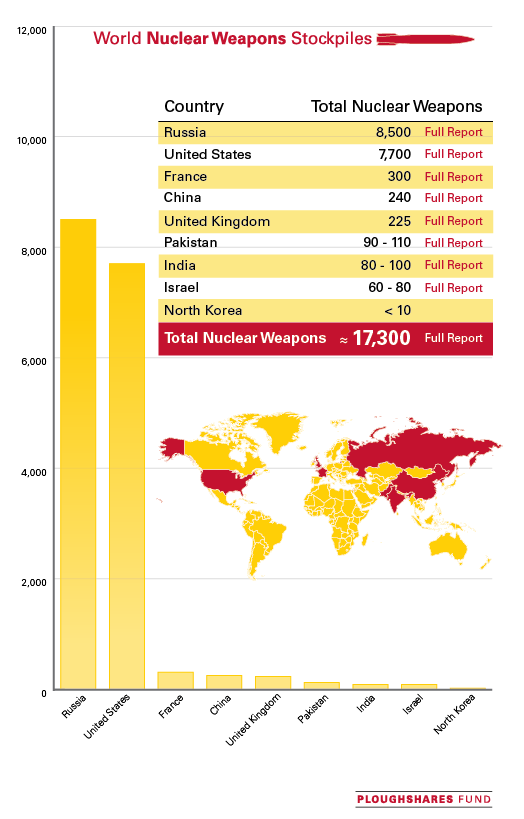
The US and Russia maintain their overwhelming stockpiles of weapons while China maintains (and even increases) its own. Pakistan and India will not give up their weapons and there is domestic pressure for India to be at least as “strong” as China and for Pakistan to be at least as “strong” as India. Israel, of course,  will not even admit to having a stockpile and will never permit its crushing military superiority in the Middle East to be undermined. For the UK and France it is now just a matter of lost pride and national ego to maintain their remaining nuclear weapons capability.

Since 16th July 1945 over 2,000 nuclear tests have been carried out all over the world by 10 countries.

  • The United States conducted 1,032 tests between 1945 and 1992.
  • The Soviet Union carried out 715 tests between 1949 and 1990.
  • The United Kingdom carried out 45 tests between 1952 and 1991.
  • France carried out 210 tests between 1960 and 1996.
  • China carried out 45 tests between 1964 and 1996.
  • Israel and South Africa carried out a nuclear test in the South Atlantic in 1979
  • India conducted two tests in 1998 (India had also conducted one so-called peaceful nuclear explosion in 1974.)
  • Pakistan conducted two tests in 1998.
  • The Democratic People’s Republic of Korea announced that it had conducted a nuclear test in 2006 and again in 2009 and now one in 2013.

One estimate of nuclear weapons worldwide (as of December 2012) is here.

World Nuclear Stockpile Infographic

World Nuclear Stockpile Infographic: http://www.ploughshares.org

Moreover

Under NATO nuclear weapons sharing, the United States has provided nuclear weapons for Belgium, Germany, Italy, the Netherlands, and Turkey to deploy and store. This involves pilots and other staff of the “non-nuclear” NATO states practicing, handling, and delivering the U.S. nuclear bombs, and adapting non-U.S. warplanes to deliver U.S. nuclear bombs.

Personally I believe that the N. Korean nuclear program is due to 2 things:

  1. a paranoia about what the South will do, and
  2. an attempt to develop a better bargaining position before opening up

But I have difficulty to see their 3rd nuclear test as any great threat to world peace (compared say to the possibility of Israel bombing Iran or the Arab Spring going wrong or an expanding African adventure for France and other European countries longing for a return to colonial times).

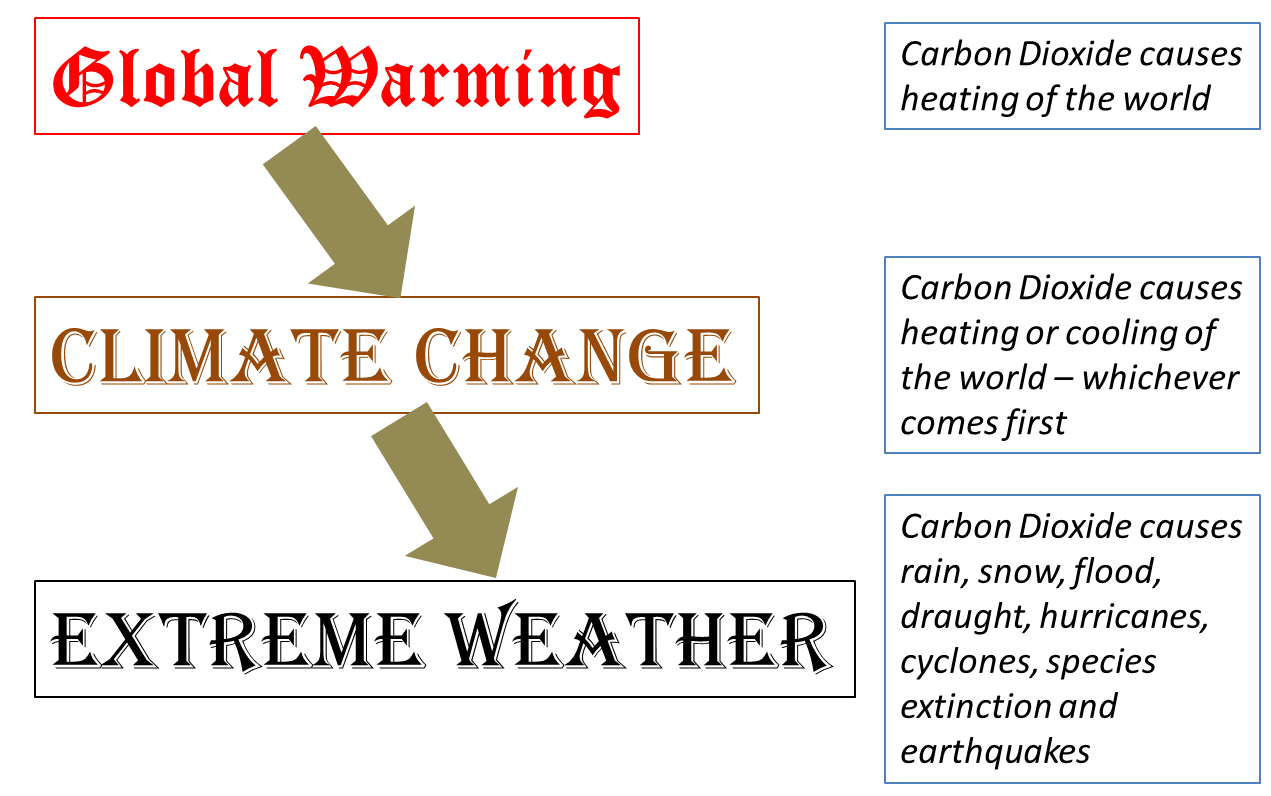
CO2 is bad, bad, bad……

February 12, 2013

Global warming morphs to climate change which morphs to extreme weather but CO2 is just plain bad!!!

CO2 is bad

Volkswagen is streets ahead with its common, global, modular concepts

February 11, 2013

Volkswagen’s Modularer Querbaukasten (MQB) which translates to Modular Transverse Matrix is a concept for sharing core components in a strategy for modular construction of all its transverse, front-engined, front-wheel drive cars. VW has probably taken this further than any other car-maker and are being bench-marked and closely watched by Toyota, Ford and others.  MQB is designed to stretch from the Polo to the Passat. At the top end Porsche are developing a comparable MSB concept (Modular standard matrix). Apart from only one dimension that must be held, the modular concept allows most dimensions to be stretched.

Golf 7 chasis: MQB Flexibility

Volkswagen Group brands (Volkswagen, Audi, Lamborghini, Seat, Skoda, Bentley, Bugatti, Porsche and more) comprise more than 200 individual models of cars. The complexity involved in trying to reduce costs and the number of components, meeting exceedingly strict emission and safety standards all the while reducing waste and consumption is obviously quite huge. MQB not only represents a new car specific part platform, but also an all-new modular engine program and modular production program. With MQB VW can build any vehicle from Polo to Mid-size SUV utilizing the same assembly line.

VW modular matrices

The MQB platform has a common engine mounting system and allows both petrol and diesel motors mounted in the same way and at the same angle of inclination. VW factories around the world could become multi-brand factories with VW’s, Seats, Skodas and even Audis to roll off the same line.

Reuter’s reports:

…. Since the heyday of Henry Ford and his Model T, the world’s automakers have considered the “global car” to be their Holy Grail – the same basic design that can be built, in subtle variations, and sold in different markets. 

Take that fundamental concept, stretch it across many different vehicle types, sizes and brands, then build them by the millions, and you begin to sense the enormity of Volkswagen’s rapidly evolving “mega-platform” strategy and its potential impact on competitors around the globe.

Auto engineer Hackenberg nurtured this bright idea for three decades, after early pitches to auto executives were largely ignored, until somebody finally bought it wholesale. The man who bit was Volkswagen Chief Executive Officer Martin Winterkorn. …… 

The strategy is not without risk. It could, for instance, expose Volkswagen to the threat of a massive global recall if a single part, used in millions of cars, fails.

But rivals have taken note of the power behind its move. Volkswagen’s modular platforms are being benchmarked by most of the world’s top automakers, including Toyota Motor Corp and Ford Motor Co, according to company executives. ….. 

…. VW’s work on its largest mega-platform, known internally as MQB, began in earnest in 2007 and is being implemented over the next four years at a cost of nearly $70 billion, estimates Morgan Stanley. The potential payoff is compelling: Projected annual gross savings by 2019 of $19 billion, according to the bank, with gross margins approaching 10 percent.

The automaker is expected to announce a record profit for 2012 of more than $30 billion later this month (February 22), according to Bernstein Research, whose senior analyst, Max Warburton, observes: “VW looks to have unstoppable momentum — in China, the U.S., Europe and most of the rest of the world.”

Even before MQB was launched in 2007, VW was a leader in using interchangeable components:

At a gathering in Japan five years ago, Renault and Nissan executives lifted the hoods on several VW Group vehicles side by side — including models from Skoda, Seat and Audi brands — and saw trouble.

“They had the same engines, the same clutches, the same ventilation — all identical parts,” says an executive who attended the presentation. “It was a level of commonality that didn’t exist at Renault-Nissan.” 

After a six-year gestation, VW has just begun to implement its sophisticated and highly flexible platform with the deceptively simple label MQB, a German acronym for “modular transverse matrix.” Virtually all of the group’s small and medium front-wheel-drive family models, including the latest generations of the VW Golf and Audi A3, are being designed around MQB as their base.

The new platform features a far greater degree of plug-and-play modularity, flexibility and parts commonality than at Toyota, General Motors Co, Ford and other competitors.

MQB “could be the single most important automotive initiative of the past 25 years,” says Michael Robinet, managing director of IHS Consulting in Northville, Michigan. “It really changes the game.”

With the new mega-platform strategy supporting its 12 brands, from spartan Skoda to Audi, Porsche and Lamborghini, VW is poised to snatch the global sales crown from Toyota as early as next year, according to investment bank Morgan Stanley.

VW envisions enormous leverage from MQB. The plan is to boost global sales to 10 million or more, with roughly two out of every three cars — some 40-plus models totaling 6.3 million sales a year — built on some variation of the MQB platform, according to U.S. research firm IHS Automotive.

None of VW’s competitors has the diversity of brands, the breadth of technology, the sweeping geographic footprint or the deep pockets necessary to support and take advantage of such a wide-reaching initiative as MQB.

Even Toyota, the current global sales leader, is playing catch-up with its German rival. … 

Pope Abdicates – Just old age or is a new church scandal about to break?

February 11, 2013

English: Pope Benedict XVI during general audition

He will be the first Pope to resign since Pope Gregory XII in 1415. A full list of current cardinals is here and his successor will come from those younger than 80 years.

BBC

Pope Benedict XVI is to resign

The Pope is to resign at the end of this month in an entirely unexpected development, the Vatican has confirmed.

The 85-year-old became Pope Benedict XVI in April 2005 following the death of John Paul II. The reasons behind the pontiff’s surprise resignation have yet to emerge. At 78, the former Cardinal Joseph Ratzinger was one of the oldest new popes in history when elected.

Certainly the Pope is not a young man but a health issue was not apparent. He says it is due to his age but I wonder.

Dear Brothers,

I have convoked you to this Consistory, not only for the three canonisations, but also to communicate to you a decision of great importance for the life of the Church. After having repeatedly examined my conscience before God, I have come to the certainty that my strengths, due to an advanced age, are no longer suited to an adequate exercise of the Petrine ministry.

I am well aware that this ministry, due to its essential spiritual nature, must be carried out not only with words and deeds, but no less with prayer and suffering. However, in today’s world, subject to so many rapid changes and shaken by questions of deep relevance for the life of faith, in order to govern the bark of Saint Peter and proclaim the Gospel, both strength of mind and body are necessary, strength which in the last few months, has deteriorated in me to the extent that I have had to recognise my incapacity to adequately fulfil the ministry entrusted to me.

For this reason, and well aware of the seriousness of this act, with full freedom I declare that I renounce the ministry of Bishop of Rome, Successor of Saint Peter, entrusted to me by the Cardinals on 19 April 2005, in such a way, that as from 28 February 2013, at 20:00 hours, the See of Rome, the See of Saint Peter, will be vacant and a Conclave to elect the new Supreme Pontiff will have to be convoked by those whose competence it is.

Dear Brothers, I thank you most sincerely for all the love and work with which you have supported me in my ministry and I ask pardon for all my defects. And now, let us entrust the Holy Church to the care of Our Supreme Pastor, Our Lord Jesus Christ, and implore his holy Mother Mary, so that she may assist the Cardinal Fathers with her maternal solicitude, in electing a new Supreme Pontiff. With regard to myself, I wish to also devotedly serve the Holy Church of God in the future through a life dedicated to prayer.

From the Vatican, 10 February 2013

BENEDICTUS PP XVI

30 million pilgrims seek salvation at the Maha Kumbh Mela today

February 10, 2013

This years Kumbh Mela – which is a “Maha” Kumbh being a one in 144 year event – started on 14th January and will continue  for 55 days. So far there have been 3 fires of significance in the various tent cities that have sprung up to cater for the 100 million visitors expected and some 20 people have been injured. Remarkably, considering the sheer volume of people, there have not been many other serious incidents or any fatalities attributable to the crowds.

(Update! 11th February

It is reported that 36 people – mainly women and children – died in a crush at the railway station on Sunday)

The Kumbh Mela web site tries to explain the fervor (but I don’t share the fervor and am not much the wiser):

The highlight for most pilgrims during a Kumbhmela festival is the observance of a holy bath at the sangam. A holy bath in either of a sacred river has purifying effects, but where the three rivers meet, the purification is said to increase one hundred times. It is further believed that when one takes a sacred bathe at the sangam during the Kumbhmela the potency of the holy water increased one thousand times. For this reason Indians believes that the Kumbhmela is the most auspicious place in the universe to take a holy bath. Armed with this faith pilgrims attend the Kumbhmela and bathe in the Ganges in a mood of solemn reverence.

Today is Mauni Amavasya  and is apparently a particularly auspicious day for these rituals. The Times of India also tries to explain the significance of the day – but their language is rather cryptic:

Astrologers believe that it’s a rare position when Sun and Moon enter and the zodiac sign of Capricorn, because of the transit, on this day. This day is also celebrated as the birthday of Manu Rishi. While Capricorn sign has the yoga of Sun and Moon which increases the significance of this Amawasya, taking a holy dip in Sangam will be giving virtues to an individual, on this day.

kalpavasi

A Kalpavasi

In Hindu mythology Mauna (silence) comes from Muni an ascetic who practised total silence in an effort to achieve a state of oneness with the self. It is therefore supposed to be a day of calmness, of silence and for the stilling of restless minds. It ought to be a day of meditation and contemplation and pilgrims are not supposed to talk to each other. Mauni Amavasya occurs annually on the 15th day of the dark fortnight of Magh (January-February) when both the Sun and the Moon are in Capricorn. It has a special relationship with the Kumbh Mela at Allahabad, being one of its major bathing days. This is reinforced in the annual Magha Mela of the Kalpavasis which views bathing on this day as extremely rewarding.

But I expect there may be some frayed tempers today when 30 million try to wash their sins away.

In any event some 30 million visitors are expected today and some 18,000 security personnel have been deployed. The Parliament House attacker Afzal Guru was executed yesterday in Delhi’s Tihar jail and there are some fears of a reaction