Haiti: The UN cholera tragedy continues…..

December 26, 2010

Port-au-Prince, Haiti (CNN) — At least 45 people, most of them voodoo priests, have been lynched in Haiti since the beginning of the cholera epidemic by angry mobs blaming them for the spread of the disease, officials said.

“People who practice voodoo have nothing to do with the cholera epidemic,” said Max Beauvoir, the head of a voodoo organization in the Caribbean country.

Beauvoir said Thursday that he has appealed to authorities to help before the situation gets worse.

Some of the victims were killed with machetes, others were burned alive by mobs that added tires and gasoline to stoke the fires. The cholera outbreak started in October.

Forty of the victims were found in a southwest area of Haiti called Grand Anse, said Moise Fritz Evens, a communications ministry official.

The victims have been targeted because of “misinformation” that had been circulating in the community that voodoo practitioners were spreading cholera by using witchcraft, according to communications Minister Marie-Laurence Lassegue.

“It was necessary to increase awareness of the disease and educate the population countrywide instead of getting into a religious war that has no ending,” Lassegue said.

The killings add to ongoing woes that have hit the island after the devastating earthquake in January. About 220,000 people were killed in the earthquake, and countless others left homeless. A cholera outbreak after the earthquake has killed more than 2,000 people, health officials said.

Before the current outbreak introduced by UN troops, Haiti had not seen cholera for over 100 years.

https://ktwop.wordpress.com/2010/11/19/un-cholera-and-protests-against-un-reach-port-au-prince/

Eco-friendly superyacht – a contradiction in terms!

December 26, 2010

Motor Yacht

Super Yacht "Exuma": image ypigroup.com

From CNN:

Every few years, a radically designed superyacht splashes into the water, grabbing the world’s attention. Right now it’s “Exuma,” a motor yacht intended to consume less fuel and produce less carbon emissions than other motor yachts of a similar size. The yacht, which won the Green Yacht of the Year award at this year’s Monaco Yacht Show, pays close attention to three key principles: that it should be sustainable, efficient and robust.

Featuring an elongated, slender hull designed for maximum hydrodynamic efficiency to reduce water resistance, it scythes effortlessly through the water like a shark stalking its prey. Designed with exploration in mind, it has a range of over 6,000 miles at a speed of 12 knots — which is impressive given it has a fuel tank with a 75,000-litre capacity.

I admire the yacht and the use of technology but I find the “eco-friendly” label somewhat presumptious and not just a little vulgar.

Specifications

  • Built by: Picchiotti – Perini Navi Group
  • Length: 50 mtr (164 ft)
  • Beam: 9.5 mtr (31.2 ft)
  • Draft: 2.3 mtr (8.37 ft)
  • Year Built: 2010
  • Main Engines: DIESEL CATERPILLAR
  • Engines model: 2 x C32 Acert
  • Max speed: 17 Knots
  • Cruising speed: 14 Knots
  • Classification: ABS
  • Hull construction: Aluminium
  • Superstructure material: Aluminium
  • Guests cruising: 12 persons
  • Guests sleeping: 9 persons
  • Crew: 9 persons
  • Flag: Malta
“Eco-Friendly” rates are:
Summer charter rate: from EUR 175 000 per week
Winter charter rate: from EUR 175 000 per week

Green hijack of the UK Met Office

December 26, 2010

Christopher Booker has an interesting article in The Sunday Telegraph describing how a supposedly science-based institution can be perverted by political dogma; in this case global warming dogma perverting the forecasts of the UK Met Office.

By far the biggest story of recent days, of course, has been the astonishing chaos inflicted, to a greater or lesser extent, on all of our lives by the fact that we are not only enjoying what is predicted to be the coldest December since records began in 1659, but also the harshest of three freezing winters in a row….. But central to all this – as the cry goes up: “Why wasn’t Britain better prepared?” – has been the bizarre role of the Met Office…… in these past three years the Met Office’s forecasting record has become a national joke. Ever since it predicted a summer warmer and drier than average in 2007 – followed by some of the worst floods in living memory – its forecasts have been so unerringly wrong that even the chief adviser to our Transport Secretary might have noticed.

The real question, however, is why has the Met Office become so astonishingly bad at doing the job for which it is paid nearly £200 million a year – in a way which has become so stupendously damaging to our country?

The answer is that in the past 20 years, as can be seen from its website, the Met Office has been hijacked from its proper role to become wholly subservient to its obsession with global warming. (At one time it even changed its name to the Met Office “for Weather and Climate Change”.) This all began when its then-director John Houghton became one of the world’s most influential promoters of the warmist gospel. He, more than anyone else, was responsible for setting up the UN’s Intergovernmental Panel on Climate Change and remained at the top of it for 13 years. It was he who, in 1990, launched the Met Office’s Hadley Centre for Climate Change, closely linked to the Climatic Research Unit in East Anglia (CRU), at the centre of last year’s Climategate row, which showed how the little group of scientists at the heart of the IPCC had been prepared to bend their data and to suppress any dissent from warming orthodoxy.

The full article is here.

King Coal: The global battle to control resources

December 26, 2010

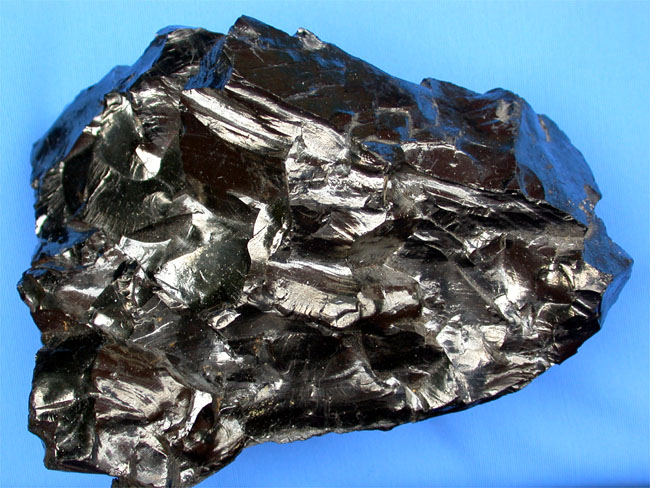
Riversdale Mining Ltd. has 13 billion metric tonnes of known coking and thermal coal reserves in its Benga and Zambeze projects in Mozambique. A global battle is now hotting up for the acquisition of Riversdale and the potential bidders clearly have no doubts about the continued use of coal and are not greatly impressed by the passing fad of Global Warming alarmism.

King Coal: image pitt.edu

Bloomberg reports:

International Coal Ventures Ltd., an Indian state-run joint venture, is studying an offer for Riversdale Mining Ltd. to counter a A$3.9 billion ($3.9 billion) bid from Rio Tinto Group.

ICVL appointed Citigroup Inc. to examine a possible takeover offer for the Sydney-based coal company with mines in Mozambique, the venture’s chairman C.S. Verma said yesterday. London-based Rio yesterday bid A$16 a share for Riversdale, securing 14.9 percent of the company in pre-bid agreements.

Indian companies are seeking coal mines overseas to ensure raw material supplies for producing steel and electricity. Brazil’s Vale SA or Eurasian Natural Resources Corp. may make bids, according to Sanford C. Bernstein & Co., as Tata Steel Ltd., Riversdale’s biggest holder, said it will study Rio’s offer “in the context of other alternatives” available to Tata. “The A$16 cash offer is unlikely to secure acceptance from all of Riversdale’s shareholders,” analysts led by Hayden Bairstow at CLSA Asia-Pacific Markets, said yesterday in a report, raising his price target for Riversdale by 3 percent to A$18. Riversdale’s “Benga and Zambeze coal projects are world class and we believe other suitors may show an interest in Riversdale now a formal bid has been tabled,” he said.

Tata Steel holds 24 per cent stake in Riversdale and is its largest shareholder. Sources say there have been talks between ICVL and Tata Steel for a joint bid or at the very least support from Tata Steel for ICVL’s bid. However, ICVL did not confirm that any talks took place between the consortium and Tata Steel reports The Hindu Business Line.

But more bidders are appearing and it is likely that the shareholders of Riversdale can expect a much higher price than what is on the table now. The Guardian reports that:

The global battle for control of the world’s natural resources flared again when it emerged that Anglo American could gatecrash Rio Tinto’s plans to buy Riversdale Mining, the Australian coking coal group, for £2.5bn.

Headed by chief executive Cynthia Carroll and chairman Sir John Parker, Anglo has joined a list of possible counter-bidders for Riversdale, whose African business produces coal for the fast-growing Asian steel industry.

Evidence of the importance of coking coal to China surfaced recently when Riversdale signed an agreement with Wuhan Iron and Steel to jointly develop Riversdale’s huge Zambeze coal reserves in Mozambique.

Anglo, which is believed to have appointed Morgan Stanley to advise on its options, will face stiff competition, with the Wall Street Journal reporting that Tata Steel of India, which controls 24% of Riversdale, is considering an offer.

Another potential bidder is ICVL, an Indian consortium that has appointed Citigroup as a financial adviser and mandated the bank to report back on the viability of a bid that would top Rio’s promise of A$16 a share.

Tata Steel has just received shareholder approval “for raising of additional long-term resources through issue of securities, including equity shares with differential rights as to voting and dividend, up to Rs 7,000 crore ($1,550 million)”. A company press release said “Tata Steel notes the takeover bid for Riversdale Mining announced by Rio Tinto. Tata Steel will evaluate the takeover bid in the context of other alternatives available to Tata Steel.” Riversdale is important for the long-term coking coal security for Corus. Tata Steel is already entrenched in its Mozambique coal mining project with a strategic stake and long-term supply contract. With Tata Steel’s share of Riversdale valued at almost $1 billion by the Rio Tinto bid it is likely that the final selling price will be significantly higher than Rio Tinto’s bid.

An educated guess would suggest a final selling price of over $5 billion or over A$20 per share.

Review of “3000 Miles to Freedom”

December 25, 2010

I posted in August about my father’s manuscript describing his escape from Singapore after its fall in 1942.

Mark Pillai as a Captain

Three Thousand Miles to Freedom

A review by Abhimanyu Singh appeared in last Sunday’s  New Sunday Express entitled:

Two takes on an obscure, yet epic journey

The meaning of Christmas?

December 25, 2010

25th December 2010.


Taliban maraud on Afghan-Pakistan border. Hundreds of militants attack military outposts on Pakistan-Afghan border: image telegraph.co.uk

Honda takes to the air

December 24, 2010

From the WSJ:

Honda Motor Co. says the first FAA-conforming version of the small business jet it has been working on for years made its first flight. The plane, called the HondaJet, flew from the company’s Honda Aircraft Co. operation at Piedmont Triad International Airport in Greensboro, N.C.

HondaJet first flight:image Honda Motor Co.

While an earlier version called a proof-of-concept aircraft has logged more than 500 hours of flight testing, flying the version built to Federal Aviation Administration rules is what really counts toward bringing the plane to market. Honda’s project is part of a renewed and growing intersection between automobiles and aviation that is occurring around personal- and business-transport. Honda touts the same qualities for the plane, such as “dynamic performance” and efficiency, as it does for its cars. The company has said it is essentially applying lessons learned in auto manufacturing to the aircraft business

HondaJet First Conforming Flight

HondaJet First Conforming Flight: image Honda Motor Co.

Honda says it will build five FAA-conforming jets for testing before ramping up production in 2012. The company says it has more than 100 orders for the light business jets, which have a top speed around 483 mph and a ceiling of 43,000 feet. Honda plans to deliver the first one in the third quarter of 2012.

HondaJet interior

First flight video is at http://hondajet.honda.com/

Using cerium oxide to mimic absorption of solar energy by plants

December 24, 2010

A new paper in Science:

Science 24 December 2010: Vol. 330 no. 6012 pp. 1797-1801 DOI: 10.1126/science.1197834

High-Flux Solar-Driven Thermochemical Dissociation of CO2 and H2O Using Nonstoichiometric Ceria by William C. Chueh, Christoph Falter, Mandy Abbott, Danien Scipio, Philipp Furler, Sossina M. Haile, and Aldo Steinfeld

In the prototype, sunlight heats a ceria cylinder which breaks down water or carbon dioxide

In the prototype, sunlight heats a ceria cylinder which breaks down water or carbon dioxide

Abstract:

Because solar energy is available in large excess relative to current rates of energy consumption, effective conversion of this renewable yet intermittent resource into a transportable and dispatchable chemical fuel may ensure the goal of a sustainable energy future. However, low conversion efficiencies, particularly with CO2 reduction, as well as utilization of precious materials have limited the practical generation of solar fuels. By using a solar cavity-receiver reactor, we combined the oxygen uptake and release capacity of cerium oxide and facile catalysis at elevated temperatures to thermochemically dissociate CO2 and H2O, yielding CO and H2, respectively. Stable and rapid generation of fuel was demonstrated over 500 cycles. Solar-to-fuel efficiencies of 0.7 to 0.8% were achieved and shown to be largely limited by the system scale and design rather than by chemistry.

The BBC says:

A prototype solar device has been unveiled which mimics plant life, turning the Sun’s energy into fuel. The machine uses the Sun’s rays and a metal oxide called ceria to break down carbon dioxide or water into fuels which can be stored and transported.

Conventional photovoltaic panels must use the electricity they generate in situ, and cannot deliver power at night. Details are published in the journal Science. The prototype, which was devised by researchers in the US and Switzerland, uses a quartz window and cavity to concentrate sunlight into a cylinder lined with cerium oxide, also known as ceria.

Ceria has a natural propensity to exhale oxygen as it heats up and inhale it as it cools down.

If as in the prototype, carbon dioxide and/or water are pumped into the vessel, the ceria will rapidly strip the oxygen from them as it cools, creating hydrogen and/or carbon monoxide. Hydrogen produced could be used to fuel hydrogen fuel cells in cars, for example, while a combination of hydrogen and carbon monoxide can be used to create “syngas” for fuel. It is this harnessing of ceria’s properties in the solar reactor which represents the major breakthrough, say the inventors of the device. They also say the metal is readily available, being the most abundant of the “rare-earth” metals. Methane can be produced using the same machine, they say.

The prototype is grossly inefficient, the fuel created harnessing only between 0.7% and 0.8% of the solar energy taken into the vessel. Most of the energy is lost through heat loss through the reactor’s wall or through the re-radiation of sunlight back through the device’s aperture.

But the researchers are confident that efficiency rates of up to 19% can be achieved through better insulation and smaller apertures. Such efficiency rates, they say, could make for a viable commercial device.

“The chemistry of the material is really well suited to this process,” says Professor Sossina Haile of the California Institute of Technology (Caltech). “This is the first demonstration of doing the full shebang, running it under (light) photons in a reactor.”

It has been suggested that the device mimics plants, which also use carbon dioxide, water and sunlight to create energy as part of the process of photosynthesis. But Professor Haile thinks the analogy is over-simplistic. “Yes, the reactor takes in sunlight, we take in carbon dioxide and water and we produce a chemical compound, so in the most generic sense there are these similarities, but I think that’s pretty much where the analogy ends.”

While cerium is quite abundant in the earth’s crust it is one of the “rare earths” and current production is dominated by China.  Cerium oxide, which is used to finish semiconductors and obtained from the rare earth element cerium, rose in price from $ 4.70 per kg on April 20 to 36 U.S. dollars a kilo on Tuesday, October 19. An increase of 665 percent.

Temperature rose 10°C today but we will still have a cold white Christmas

December 24, 2010

We had -22°C last night but tonight on Christmas Eve the temperature has risen to -12°C.

But the snow is thick on the ground and the views are spectacular. A little more snow is expected on Christmas Day and temperatures will then fall back to the -22°C level leading up to the New Year.

A Merry Christmas to one and all!

Rome embassy bombs set by “eco-terrorists”

December 23, 2010

From the Telegraph:

Anarchists are suspected of having launched parcel bomb attacks on the Swiss and Chilean embassies in Rome.

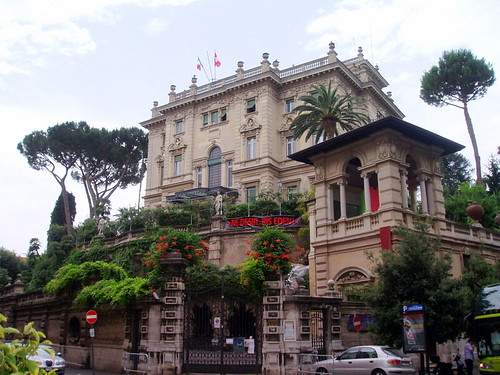
Swiss Embassy Rome: image flickr.com

The first explosion, which occurred at midday (11amGMT) seriously injured a caretaker at the Swiss embassy. The second, which occurred at around 3pm (2pm GMT), was at the Chilean embassy, also injuring one person. The Rome prosecutor’s office has opened an investigation on suspicion of “an attack with terrorist aims,” ANSA news agency reported

One of the investigators said that one of the main lines of inquiry was on “anarchist circles of the eco-terrorist movement.”

The parcel bomb delivered to the Swiss embassy in Rome exploded in the hands of a mail worker who opened the package. “A device hidden inside a package exploded in the embassy. at midday (1100 GMT),” the Swiss embassy said in a statement. “The postal worker’s hands were injured and he was immediately taken to hospital,” it added. The embassy said there had been no claim of responsibility. The injured man is a 53-year-old Swiss national and he risks the amputation of one or both his hands but his life is not in danger.