Mount Merapi ash cloud leads to cancellation of flights to Jakarta

November 6, 2010

Mount Merapi volcano lies 431 km from Jakarta. But the continuing eruptions over the last two weeks have pumped sufficient ash sufficiently high into the atmosphere that flights to Jakarta are beginning to be cancelled. Flights to Yogyakarta, the nearest large airport to Mount Merapi, were suspended a few days ago.

The Guardian reports:

Several airlines have suspended flights into Indonesia’s capital Jakarta after Mount Merapi’s worst eruption in a century spewed volcanic ash up to five miles (8km) into the air.

The move came as number of people killed by Mount Merapi in the last two weeks climbed to 138 after the volcano unleashed a surge of searing gas yesterday that torched houses and trees and incinerated villagers.

Officials at Singapore Airlines, Japan Airlines, Malaysia Airlines, Lufthansa, Cathay Pacific and AirAsia fear the ash is a safety threat and could damage aircraft.

“The volcanic ash presence in the airways surrounding Jakarta could cause severe damage to our aircraft and engines which could impair the safety of our operations including passengers and crew,” said Azharuddin Osman, director of operations for Malaysia Airlines.


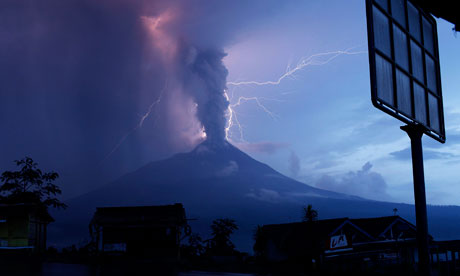
mt merapi erupting

Lightning strikes as Mount Merapi volcano erupted today, spewing out towering clouds of hot gas and debris, as seen from Ketep village in Magelang, Indonesia's Central Java province. Photograph: Beawiharta/Reuters


Obama in India: day 1: 10 billion $ of contracts worth 54,000 jobs in US

November 6, 2010

Reuters:

President Barack Obama announced $10 billion in business deals on Saturday as he arrived in India to boost U.S. exports and jobs after a mauling in mid-term polls, but he ran into immediate controversy over Pakistan. Obama flew into Mumbai, India’s financial hub, and announced the United States would also relax export controls over sensitive technology, a demand of India’s that will help deepen U.S. ties with the emerging global power and its trillion dollar economy.

Obama’s first act was to pay tribute to victims of the 2008 Mumbai attacks, but he was criticized for making no reference to India’s traditional foe Pakistan, which New Delhi blames for harboring anti-India militants. Pakistan-based militants killed 166 people in a 60-hour rampage through India’s financial hub, gunning down their victims at luxury hotels, a train station and a Jewish center. India says elements in the Pakistan state were behind the attacks.

But Obama’s trip is also about business, with China now ahead of the United States in trade with India. The $10 billion in deals will support 54,000 jobs in the United States, White House aide Michael Froman said. The White House also announced Obama would support India’s membership of four global non-proliferation organizations, a move that will reassure New Delhi — left out of these groups after its 1998 nuclear tests — that Washington is recognizing its global clout.

He spends the night at the The Taj Hotel and flies to Delhi tomorrow afternoon. I expect a few more contracts to be settled with the 215 strong corporate leaders who make up the accompanying business delegation.

Does the fault lie with Rolls Royce or with the RR / Qantas combination?

November 6, 2010

Between August 30th and November 5th there have been at least 4 engine incidents involving a Rolls Royce engine causing a shut down of one engine and an emergency landing.

  1. August 30th QF 74, Boeing 747-400, RR RB211-524 engines, returned to San Francisco after one engine exploded, holes found in engine casing
  2. September 28th, SQ 333, A380-800, RR Trent 900 engines, returned to Paris after  one engine failed, two and a half hours after take-off.
  3. November 4th, QF32, A380, Trent 900 engines, return to Singapore after one engine exploded over Batam shortly after take-off
  4. November 5th, QF6, Boeing 747-400, RR RB 211-524 engines, returned to Changi, Singapore after one engine failed shortly after take-off.

Four incidents with engine failure in just over two months is quite out of the ordinary. All incidents involve Rolls Royce engines, three incidents involve Qantas aircraft, two were with Airbus A 380 aircraft and two with Boeing 747-400 jets. All of the incidents were soon after take-off (though the Singapore Airlines incident was 2.5 hours after take-off). Two of the incidents were “uncontained”, catastrophic engine failures (both Qantas) and the other two engine failures involved – by witness accounts – oil leaks and/or fires but no “uncontained explosions”. It is not clear whether in the latter 2 cases the engines were shut down or failed.

  • The proximity to take-off suggests maintenance issues but two different airlines were involved (though it seems that Rolls Royce are still responsible for maintenance of the A 380 Trent 900 engines).
  • Rolls Royce engines are used by many airlines and on many different aircraft types. It appears therefore that aircraft type is not the issue.
  • Rolls Royce engines and perhaps some design fault (since even the RB 211 engines which failed on the Boeing 747s had some Trent features) looks like the prime culprit,
  • the Rolls Royce Trent/ Qantas combination seems particularly prone to incidents.

In order of probability then the engine failure issue would seem to be caused by a Rolls Royce Trent design fault (which has then been introduced also into some of the RB 211-524’s powering the B747-400s), or some fault arising from the Qantas / RR Trent combination, or a maintenance issue specific to Rolls Royce’s maintenance organisation or a more general maintenance issue.

It is a tribute to engineers and engineering and safety standards that these 4 incidents led to no injuries whatever and were followed by perfectly safe landings even after the loss of one engine.

But a little more communication and information from Rolls Royce is called for. Singapore Airlines is also very tight with releasing any information about its incident. It is insufficient and inappropriate for Singapore Airlines to brush it off as a non-event. Lack of information only suggests something is being hidden.

And what of the Trent 1000 for the Boeing Dreamliner?

“What the Green Movement got wrong” (cont’d)

November 6, 2010

A follow up to the post about the Channel 4 programme with environmentalists beating their breasts is this very succinct cartoon from Josh which encapsulates the whole story very nicely:


Obama travels to India looking to boost US jobs

November 6, 2010

The Times of India carries a smug story about President Obama’s visit to India which starts today:

President Barack Obama hasn’t been able to drive down unemployment in America, so he’s coming to India in search of US jobs. Four days after his party suffered heavy, economy-influenced losses in Congress, the president will arrive Saturday in Mumbai, India’s booming financial center, where he will meet with local business leaders and with American executives who have traveled to India in search of billions of dollars in trade deals.

The White House hopes to announce agreements on aircraft and other exports. The administration says that jobs and the US economy are the focus of Obama’s 10-day Asia trip, a message aimed at inoculating him against any criticism that he is concentrating on foreign affairs while Americans are suffering with unemployment at 9.6 percent. He left Washington shortly after the government reported the economy added 151,000 jobs in October but still not enough to lower the jobless rate.

Obama will be speaking to a gathering of Indian and American chief executives on Saturday, and he’s expected to announce the completion of job-producing commercial deals. The US has been looking for India to finalize purchases of Boeing aircraft and marine engines produced by Caterpillar, among other exports. However, serious disagreements remain, and they appear unlikely to be resolved during Obama’s visit.

President Obama will arrive in New Delhi with his largest business delegation ever to a country. The 215-member team of US business leaders will be looking to deepen commercial ties with India. Mr Obama will also address India’s Parliament – only the second US president to do so after Bill Clinton. India is hoping for an announcement on the lifting of nuclear curbs during the visit. New Delhi has long lobbied for Washington to allow the sale of sensitive technology that was denied to the country after it conducted a nuclear test.


Taj Hotel, Mumbai: Wikimedia Commons


The US wish list includes Defence agreements worth $ 12 billion among contracts creating upto 60,000 jobs in the US, verification processes for Indian nuclear plants and Indian promises for more market access.

On Saturday night President Obama will stay at the Taj Hotel in Mumbai which was the target of the terror attack on 26th November 2008 where 173 people were killed. India will be looking for the US support for Pakistan to be less forgiving of the terrorist training camps in Pakistan.

Discovery’s final mission delayed till end November

November 6, 2010


Space Shuttle Discovery approaches ISS for doc...

Discovery approaching ISS:Image by TopTechWriter.US via Flickr


BBC News:

The final mission of the space shuttle Discovery has been postponed again because of a fuel leak. After 26 years of service, the vehicle is due to make one last flight to the International Space Station (ISS) before being retired to a museum. Escaping hydrogen detected midway through fuelling left Nasa no choice but to stand Discovery down once more.

The agency is now planning a launch date on 30 November, to give plenty of time to fix the leak. Nasa has simply run out of time in the current launch window, which ends on Monday. There then follows a three-and-a-half-week period of unfavourable sun angles at the orbiting platform that make a docking very difficult because of the heating experienced by an approaching shuttle. The leak occured at the ground umbilical carrier plate, an attachment point between the external tank and a 18cm pipe that carries vented hydrogen safely away from Discovery to a flare stack, where it is burned off. Discovery’s six astronauts had yet to board the spaceplane when the leak was detected. When the ship does get up, she will deliver a storeroom to be attached to the ISS, along with much needed supplies and spares.

Discovery is the oldest of the surviving ships. First launched in 1984, it has since completed 38 missions, travelling some 230 million kilometres in the process. Its commander on the final mission, Steve Lindsey, says Discovery is probably the most important of three remaining shuttles. “It is obviously a very historical vehicle, having flown the ‘return to flight’ test missions after both the Challenger and Columbia accidents,” he said. “It deployed Hubble (and) it’s the fleet leader in terms of number of flights – it’ll have flown about a year on orbit by the time we’re done with it, which is pretty remarkable for a space shuttle.”

After Discovery returns, only the Endeavour shuttle has a firm date to launch, in February next year. Atlantis could fly in June if the budget allows. Beyond that, American astronauts will use Russian Soyuz rockets to get into space until a range of commercial US launch systems are introduced in the middle of the decade.

Robonaut 2, a dexterous, humanoid astronaut helper, will fly to the International Space Station aboard space shuttle Discovery on the STS-133 mission.


Internecine litigation: Pratt & Whitney counter-sue Rolls Royce

November 5, 2010

Bloomberg reports:

United Technologies Corp.’s Pratt & Whitney jet-engine unit filed patent-infringement complaints against Rolls-Royce Group Plc, a counterpunch in a dispute that may affect delivery of Boeing Co.’s Dreamliner airplanes.

Pratt & Whitney said it filed a complaint today at the U.S. International Trade Commission in Washington that claims the Trent 900 and Trent 1000 model engines made by London-based Rolls-Royce are infringing a patent for a swept-fan blade. A complaint making similar allegations was filed at the U.K. High Court in London, according to the company.

That the timing of the filing is unconnected and entirely coincidental with the current technical issues faced by Rolls Royce on their Trent 900 and 1000 engines is possible but unlikely. I am sure Pratt & Whitney’s lawyers are perfectly aware of the advantages of hitting an opponent when he is down.


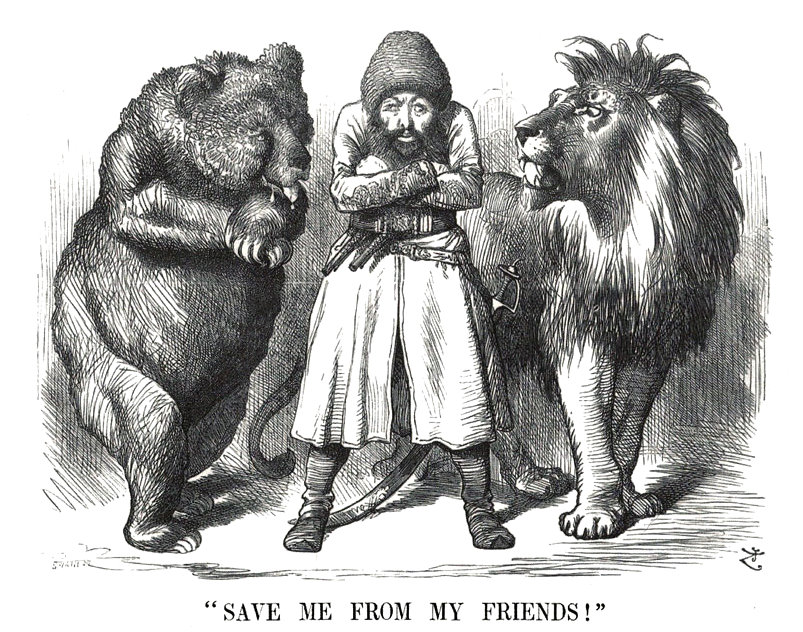
File:Great Game cartoon from 1878.jpg

The Great Game: wikimedia


Bloomberg continues:

A ruling in favor of Pratt & Whitney by the ITC would mean Rolls-Royce would be blocked from shipping engines for Boeing’s 787 Dreamliner, now in the final stages of flight testing. The U.K. lawsuit may limit shipments for the Airbus SAS A380, now in use by international carriers including Qantas Airways Ltd., and the Airbus A350XWB model powered solely by another version of the Trent engine.

“Pratt & Whitney’s case is very strong and we were left with no choice but to take these actions in light of Rolls- Royce’s aggression,” said Katy Padgett, a spokeswoman for East Hartford, Connecticut-based Pratt & Whitney. “We regret that these actions are necessary, and we continue to be willing to discuss a mutually acceptable resolution to this dispute.”

The complaints escalate a legal battle that started when Rolls-Royce sued Pratt & Whitney in May, claiming the GP7200 Fan Stage infringed a patent for a design that gives the largest part of a jet engine greater resistance to damage by foreign objects, more stability and lower noise levels. It later added Pratt’s Geared TurboFan engines, as Airbus and Boeing consider getting more efficient engines on the bestselling A320 and 737 planes.

Patent infringements must no doubt be fought but an internecine battle of this kind among the few engine manufacturers left may lead to some immediate competitive advantages to one or the other, but in the long-term could damage the entire industry to the ultimate detriment of the the consumers. The dispute has the potential of delaying engines to a variety of aircraft and to a number of airlines.

More woes for Rolls Royce?: Now a Qantas B747-400 in engine scare

November 5, 2010

BBC news has the story:

A Qantas airline jumbo jet has been forced to return to Singapore because of an engine problem. The Boeing 747-400 turned back shortly after take-off from Changi Airport, airline officials said. It comes a day after a Qantas Airbus A380 was forced to make an emergency landing in Singapore after one of its engines exploded. Qantas grounded its six-strong fleet of A380s and an investigation is under way into what caused the failure.

The latest incident affected Sydney-bound flight QF6, which managed to land safely. “Shortly after take-off the captain experienced an issue with one of its engines,” a Qantas spokeswoman said.

Qantas Boeing 747-400’s are usually equipped with 4 Rolls-Royce RB211-524G-T engines of the type which suffered an in-flight failure in August this year.


A Qantas jet was forced to turn back to San Francisco after a hole was blown in the shell of the engine.

Flight QF74 failure of RB211-524 engine in August 2010: Photo: Channel Ten


Battle lines are being drawn: EADS + Airlines versus Rolls Royce

November 5, 2010

After yesterdays midair failure of a Trent 900 engine on a Qantas Airways A 380 flight the German press today are unanimous in blaming Rolls Royce (and thereby protecting Lufthansa and EADS). Qantas is also positioning itself and questioning Rolls Royce’s engine design.

Der Spiegel writes:

‘Airbus and Qantas Are Victims’ of A380 Engine Problem

While the incident may be damaging to Airbus, German editorialists argue that the Rolls-Royce engine is to blame.

But I think the airlines (Qantas, Lufthansa and Singapore Airlines) and the manufacturer of the Airbus A380 (EADS) cannot so easily paint themselves as victims and absolve themselves of all responsibility. It is the airlines who pressurise the engine makers and the aircraft manufacturers for never ending improvements in fuel efficiency. EADS can ill-afford to market a plane which does not have more than one engine supplier.

Der Spiegel continues:

Qantas Airways CEO Alan Joyce said on Friday that it did not seem to be a maintenance problem. “This is an engine issue and the engines have been maintained by Rolls-Royce since they were installed on the aircraft,” he told a news conference in Sydney. Joyce confirmed that the engine failure had caused damage to the plane’s wing. “That was part of what made this a significant engine failure,” he said.

The center-left Süddeutsche Zeitung writes:

“The problem is not that one of the Airbus A380’s engines failed. … What makes the emergency landing such a serious incident is that parts of the debris damaged the wing. … Rolls-Royce, the manufacturer of the engines, now has to ensure that such a thing never happens again, even if this means that the A380 is grounded for a time.”

“Airplane manufacturer Airbus, as well as the airline Qantas, are the victims here. Yet the failed engine will not do their image much good, following the dramatic images of the damaged aircraft that were seen around the world on Thursday.”

“The A380 was two years late coming to the market. The delay cost the company billions, caused an internal revolution and undermined confidence. … Yet, despite all the criticism, one must not forget that the airlines and passengers praise the aircraft: A380 flights, despite somewhat higher ticket prices, are always full.”

The Financial Times Deutschland writes:

“The engine blow-out on the Airbus A380 that forced the Qantas flight to conduct an emergency landing on Thursday is above all a problem for the engine manufacturer Rolls-Royce.”

“The disaster highlights the dilemma that the entire industry faces. … The necessary and correct demand to make modern aircraft with lower emissions is taking its toll.”

“No one would imply that the testing was consciously sloppy. However, it is obvious that when it comes to a flagship aircraft like the A380 there is immense pressure to get it on the runway as soon as possible. Those who demand more tests do not make any friends. The close call shows, however, how much is at stake.”

In the meantime Singapore Airlines has resumed A380 flights following checks of the aircraft’s engines, despite the head of Qantas saying a design fault may be to blame for yesterday’s engine failure on one of the Australian carrier’s A380s.

Shares of Rolls-Royce Group PLC continued to get battered by the market, losing another 2.7% over fallout from the midair failure of one of its engines on a Qantas Airways flight. They lost 3.3% in value yesterday.

Trent 900 vs. GP7200: Competitive pressures getting too hot?

November 5, 2010

There are only two engines suitable for the A 380 – Rolls Royce’s  Trent 900 and its rival the GP7200 manufactured by the General Electric/Pratt & Whitney Engine Alliance.

Nov. 2012- Image updated: from http://www.enginealliance.com/engine_features.html

Engine Alliance GP7200: image http://www.enginealliance.com/

It is highly unlikely that the aircraft industry would ever allow a situation to arise where there was only one supplier of engines. A monopoly is something to be avoided at all costs in any purchaser / supplier arrangement. It follows that for the airlines and the airplane manufacturers that the market (in this case the number of A 380s) be split between the two suppliers such that:

  1. neither supplier gains a dominant market position such that it can dictate the engine price,
  2. each supplier has a large enough market share and sufficient earnings such that their continuation in the market is not jeopardised (for the sake of spares, service, development of new engines and, above all, to avoid a monopoly situation arising by the exit of one supplier).

Trent 900 cut away: epower-propulsion.com

If either engine supplier has an uncompetitive product – whether for price or for performance – the monopoly becomes inevitable and immediately jeopardises the continuation of the market itself. So if only one engine supplier was available, the A 380 itself becomes non-viable.

In this restricted market place, it would seem, a win-win situation should not be impossible. Yet the competition between the protagonists is intense and the technology boundaries are under constant pressure as each supplier tries to gain a competitive edge over the other. Each engine manufacturer knows that he will not be permitted to gain a market-dominant position. But the costs of engine development are so high that every little gain in market share is hotly pursued.

For the airline industry, fuel cost is a dominating cost element and even minute gains in fuel efficiency are well worth pursuing. The intense competition between the two engines for the A 380, is centred around fuel efficiency. The GP7200 is generally thought to have a 1% advantage. It also seems to be the strategy for the U.S. engine makers to constantly maintain this performance gap over their competitor as each tries to improve performance. The Trent 900 has a slightly higher thrust(about 3%) and prices are, of course, a closely guarded secret.

For fuel efficiency therefore it seems that Rolls Royce is playing catch-up. To get a decisive advantage each new improvement must be sufficient to go past the competitor – who in turn will introduce improvements to regain his advantage. But fuel efficiency is not easily gained.

  • Higher temperatures can give improved efficiency but lead to the need for new materials to handle the higher stresses at the higher temperatures,
  • reduced clearances can reduce leakage losses and increase efficiency but require increased manufacturing accuracy and can increase the possibilities of wear
  • more complex designs are devised where component positions can be changed during operation to optimise efficiency at different operating conditions but which increase the possibility of unwanted contacts within the engine.

That this competitive pressure leads to innovation is – I think – beyond doubt. But the Trent 1000 has had an “uncontained” explosion on the test bed. The Trent 900 has had one in flight.

The question that comes to mind is whether the competitive pressure and the quest for fuel efficiency has led to “too much – too quickly” for the Trent ?