Flight accuracy gives Chang’e-2 new options

October 14, 2010


Chang'e flies to the moon.

Chang'e flies to the moon: Image via Wikipedia


After requiring only one course correction en route to the moon the fuel left on board Chang’e-2 keeps open all its future options after it completes its 6 month mission. Since Chang’e-1 was already crashed intentionally onto the moon, a return to earth or a flight into outer space are more likely than another descent to the moon’s surface. If the instruments remain in working order a continued flight past other targets in space could be more rewarding than a tame return to Earth.

Xinhua reports:

Chang’e-2 was carried into lunar orbit by a rocket, and only corrected once during the transfer from earth orbit to lunar orbit, so a large amount of fuel will be left after its mission, Zhou Jianliang, the vice chief-designer of BACC, said.

It is s expected to have enough fuel to fly back to earth, the vice chief-designer of the Beijing Aerospace Control Center (BACC) said Tuesday.

Zhou said there are three possible “fates” for Chang’e-2 after it finishes its six-month mission: landing on the moon; flying to outer space; or returning to earth. The fate of Chang’e-2 will be decided according to its condition when the mission is complete.

The Long March-3C carrier rocket took Chang’e-2 into space from southwest China on Oct. 1. The probe completed its final braking on Oct. 9 and is now orbiting the moon at a 100 km-high orbit.

Chinese Science Ministry vindicates academic fraud journalists

October 13, 2010
Chinese Academy of Sciences

Chinese Academy of Sciences: Image via Wikipedia

The case of the two crusading journalists in China who were brutally attacked after they had exposed academic fraud has been reported by Retraction Watch and the risks they take has been reported here.

In one case after a quick trial, a local court in Beijing convicted urologist Xiao Chuang-Guo on 10 October of assaulting two well-known advocates of academic integrity in China.
One victim of the attacks was Fang Shimin, freelance writer and self-appointed watchdog of research misconduct. Fang had questioned Xiao’s academic achievements, but this was not what prompted the attack, Xiao claimed. Xiao told the court that he had a decade-long personal conflict with Fang, mainly because Fang had insulted Xiao’s wife and teacher.
http://news.sciencemag.org/scienceinsider/2010/10/doctor-sentenced-in-beijing-for.html

But the Chinese Science Ministry has today issued a statement castigating Xiao.

China’s Ministry of Science and Technology has lambasted a doctor at the center of an academic fraud scandal who masterminded two violent attacks on his critics, and denied he was still on the payroll of a medical research project. The ministry issued a statement on its website late Tuesday, claiming Doctor Xiao Chuanguo had no respect for the law and disrupted social order.

It said Xiao should be condemned for his vicious misconduct and lack of integrity. Xiao, 55, head of the Urology Department of Wuhan Union Hospital, was sentenced Sunday to five and a half months in detention by the Shijingshan District People’s Court of Beijing. The court found Xiao hired four men to attack two writers who had accused him of academic fraud.

Xiao believed the accusation had led to his failing to become a member of the Chinese Academy of Sciences.

The victims of the violent attacks were Fang Zhouzi, a science writer with a reputation for exposing academic fraud, and Fang Xuanchang, an editor at the economic journal, Caijing.

The ministry denied claims that Xiao was still a chief scientist on a ministry-sponsored science project.

According to the statement, Xiao used to be the chief scientist researching neurological damage repair on the “973 Plan,” a key national science project. The statement said Xiao’s program ran from 2003 to 2008 and that Xiao was no longer responsible for any “973 plan” projects. It said “chief scientist” was not an honorary title.


Indian stock market and cricket performance

October 13, 2010


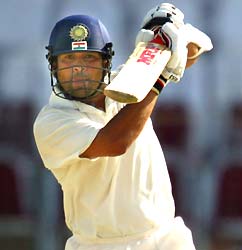
The Little Master: image rediff.com


Today Indian won the 2nd cricket test against Australia in Bangalore by a handsome 7 wickets. Sachin Tendulkar scored a second innings fifty after his double- century in the first innings which was his 49th Test century.

The Bombay Stock Exchange (Sensex) surged 484 points to 20,688 today.

This was immediately taken as corroboration of the street wisdom that the two are closely tied. The Indian Express is euphoric. Sensex wins on day of India’s triumph.

A superb ending for the stock markets happened in tandem with Team India’s victory against Australia in Bangalore. Coincidence? The 484-point surge in BSE benchmark Sensex today coincided with the triumph of Indian cricket team against Australia –thus corroborating claims of a correlation between trends in stock markets and cricket field.

A recent paper by Monash University economists did find a link between Cricket performance and the BSE Sensex.

Mishra, Vinod & Smyth, Russell, 2010. “An examination of the impact of India’s performance in one-day cricket internationals on the Indian stock market,” Pacific-Basin Finance Journal, Elsevier, vol. 18(3), pages 319-334, June 2010.

This study examines the impact of the Indian cricket team’s performance in one day international cricket matches on returns on the Indian stock market. The main conclusion of the study is that there exists an asymmetric relationship between the performance of the Indian cricket team and stock returns on the Indian stock market. While a win by the Indian cricket team has no statistically significant upward impact on stock market returns, a loss generates a significant downward movement in the stock market. When Sachin Tendulker, India’s most popular cricketer, plays the size of the downward movement in returns is larger.

So in fact the stock market surge today is not quite in line with the paper’s conclusions.

But, for once, a masterly performance by Tendulkar the “Master Blaster” has coincided with an India win!!

So the correlation is permitted some poetic licence.

Habitable exoplanet Gleise 581g may not exist

October 13, 2010


Artist's impression of the planetary system ar...

Gleise 581 system: Image via Wikipedia


An earlier post reported on the finding of a potentially habitable exoplanet.

But the planet may not exist:

Yesterday at an exoplanet meeting in Turin, Italy, Switzerland-based astronomers announced that they could find no trace of the prized planet in their observations of the same planetary system.

All the excitement has been over the subtlest of wiggles in the motion of the star Gliese 581 that lies just 20 light-years from the sun in the direction of the constellation Libra. A consortium of institutions led by the Observatory of Geneva in Switzerland had already discovered four planets circling Gliese 581 by sorting out the subtle motions of the star that are induced by the gravitational tugs of any orbiting planets.

On 29 September, a U.S.-based team led by astronomer Steven Vogt of the University of California, Santa Cruz, announced that it had discovered a fifth planet. The American team used a combined set of observations: One 11-year-long set consisted of 122 measurements made by the team, while the other set was 4.3 years long and consisted of 119 measurements published by the consortium.

Designated Gliese 581g, the new planet has at least three times the mass of Earth—large enough to hold on to a watery atmosphere—and orbits at a distance from its star that would allow any water to remain liquid. That would make 581g a happy home for life as we know it.

But at this week’s Astrophysics of Planetary Systems meeting, astronomer Francesco Pepe of the Geneva Observatory and the Swiss group reported that he and his colleagues could find no reliable sign of a fifth planet in Gliese 581’s habitable zone. They used only their own observations, but they expanded their published data set from what the U.S. group included in its analysis to a length of 6.5 years and 180 measurements. “We do not see any evidence for a fifth planet … as announced by Vogt et al.,” Pepe wrote Science in an e-mail from the meeting. On the other hand, “we can’t prove there is no fifth planet.” No one yet has the required precision in their observations to prove the absence of such a small exoplanet, he notes.

Currency war of words continues – time to be in Yuan?

October 13, 2010

For the layman currency investor these are dangerous times. Countries are intervening in currency markets to hold the value of their currencies down as a way of helping their own exports. The currency market is not that “free”. The only certainty for the long term is that the Chinese Yuan is undervalued. Even Gold where the price may keep rising in Dollars may not keep pace – in the long term – with the Yuan. The Korean Won is also undervalued  but whether this will hold in the long term is uncertain. In the Eurozone the Euro will not rise till the lowish values now can get the economies of Spain and Ireland and Greece and Portugal moving again. But the current values can help the export engines in Germany and the UK  to keep going.

The G20 finance ministers will meet in South Korea from October 22 and its leaders are to gather in Seoul next month to try to reach a consensus on the global currency system to prevent competitive devaluation from damaging growth. A weekend International Monetary Fund meeting failed to defuse tensions reports Reuters.

“As chair of the G20, South Korea’s role will be seriously questioned,” Japanese Finance Minister Yoshihiko Noda told a parliamentary panel when asked about South Korea’s currency intervention and its place in G20. Japan intervened in the currency market last month for the first time in more than six years to try to stem a rise in the yen that is putting a fragile economic recovery at risk. Noda declined to say whether Japan would step in again as the Japanese currency hovers near a 15-year high against the dollar. He drew a distinction, however, between Japan’s intervention, which appears so far to have been a one-off move, and more frequent intervention by South Korea and China. “In South Korea, intervention happens regularly, and in China, the pace of yuan reform has been slow.

“Our message is that we have confirmed at the Group of Seven that emerging market countries with current account surpluses should allow their currencies to be more flexible.”

Analysts say Tokyo is worried about Japanese exporters’ waning competitiveness against South Korean rivals, given that the yen has risen about 13 percent against the dollar so far this year, while the won has gained only about 4 percent.

Hopes for a G20 currency consensus look slim. “It’ll be impossible for the G20 to reach a consensus on currencies. Many emerging economies feel that they are being forced to intervene because of a weak dollar,” said Etsuko Yamashita, chief economist at Sumitomo Mitsui Banking Corp.

Japanese Prime Minister Naoto Kan urged Seoul and Beijing to act responsibly but acknowledged Tokyo’s delicate position. “I want South Korea and China to take responsible actions within common rules, though how to say this is difficult because Japan has also intervened,” he told the same parliamentary panel.

Japan sold 2.1 trillion yen ($25.65 billion) last month in its first currency intervention in more than six years to curtail the yen’s strength against the dollar. South Korea has intervened to the tune of about $13 billion since late September to try to cap the won’s rise, but analysts said its intervention had been more aggressive in relative terms.

Winning decoration for an electrical cabinet

October 12, 2010

From: http://www.byggvarlden.se/nyheter/byggprojekt/article2487490.ece

Grey is boring, thinks Fortum. Graffiti is not much better.

Therefore the Energy company organized a competition for the best decorated electrical cabinet on the street. In early October Fortum announced the winners of the “Electrical cabinet” compettion. More than 1200 contributions poured in. 180,000 people voted.

The background to the competition is that the energy company spends close to 10 million kronor every year just to get rid of graffiti.
“Now we’ll test it to see if the graffiti will diminish when thee cabinets are finer ” says Professor Molinder, adding that the contest was conducted in cooperation with the City of Stockholm.


Spännande tävling avgjord

Winning entry. "Stockholmskollaget" by Stefanie Hansson, Joanna Fransson, Anna Blomberg: Image Fortum


Spännande tävling avgjord

Peoples favourite:"Adress: St Eriksg 6b." by Kerstin Rikardson: image Fortum


Spännande tävling avgjord

Honourable mention."On the Inside"Samuel Nilsson: image Fortum


A mix of prudence and optimism: Swedish GDP forecast up to 4.8%

October 12, 2010

The Swedish moderate/centre/ right coalition government presents its autumn budget proposal today. The previously expected growth of 4.5% has been revised upwards to 4.8%. But a strong level of prudence is still included with GDP assumed to be 3.7% next year instead of 4.0%. Though the coalition government is only just in a minority the budget is expected to pass in parliament. The main focus is on unemployment and job creation with the objective to reduce unemployment from the current 8.4% to 8.0% next year.

Sweden sticks out in Europe with its relatively high export-led growth.

Free translation from SvT:

http://svt.se/2.22620/1.2188350/regeringen_andrar_prognos

Unemployment as a share of the workforce aged 15-74 years will be 8.4 % this year and fall to 8.0% next year. Unemployment will continue to fall gradually to 6.0% in 2014.
Consumer price index is expected to grow by 1.2 % this year and by 1.5 % next
year. “The government’s main goal is to bring Sweden back to full employment. We will therefore continue to work to strengthen employment and reduce exclusion, “said Finance Minister Anders Borg (M) according to a press release.
“But Sweden is still at a low activity level with high unemployment. And there are still risks that the development could be worse than expected. It is therefore important that we ensure that public finances are in surplus and that we prevent unemployment from remaining stuck at a high level. We must make use of the coming years of high growth to include those who have had difficulty to enter the labour market” said Finance Minister Anders Borg.

IPCC Meeting opens in Busan. Pachauri to go?

October 11, 2010

It is time for Pachauri to call it a day. Even though the Indian Government is forced to support the discredited Chairman, the recommendation that the Chairman not serve more than one term will probably be followed.

(400 delegates! And the UN meeting has just been held in Beijing. Cancun in November. A gravy train, hot air and not just a few ounces of carbon dioxide!!)

KBS World reports that

The 32nd general assembly of the Intergovernmental Panel on Climate Change (IPCC) opened in Busan today.
Attending the four-day meeting are IPCC Chairman Rajendra Pachauri, the heads of the World Meteorological Organization and the U.N. Environment Program, and some 400 other delegates from 194 countries. The participants will discuss 14 issues, including the publication of the IPCC’s fifth assessment report that will be announced in 2014.

The Times of India believes the Busan meet will decide Pachauri’s fate as IPCC head.

Though the Council had recommended that the “the term of the IPCC Chair should be limited to the timeframe of one assessment”, and Pachauri has already headed one such assessment report, which was released in 2007, the Indian government plans to back the director of The Energy Research Institute (TERI) at the meeting.
But, the Indian representatives at the meeting will ask for immediate implementation of all the other reforms of the committee set up after the Himalayan glacier scandal that had dented the IPCC’s reputation earlier this year.


THIRTY-SECOND SESSION OF THE IPCC

Busan, 11-14 October 2010

IPCC-XXXII/Doc. 1

(4.VIII.2010)

Agenda Item: 1

ENGLISH ONLY


PROVISIONAL AGENDA

1. OPENING OF THE SESSION

2. APPROVAL OF THE DRAFT REPORT OF THE 31st SESSION

3. IPCC PROGRAMME AND BUDGET FOR 2010-2014

4. THE IPCC 5TH ASSESSMENT REPORT (AR5)

4.1. Scope, content and process for the preparation of the AR5 Synthesis Report

4.2 Progress reports and schedule of AR5 related activities

5. REVIEW OF THE IPCC PROCESSES AND PROCEDURES:

REPORT BY THE INTER ACADEMY COUNCIL

6. ADMISSION OF OBSERVER ORGANIZATIONS

7. RULES OF PROCEDURES FOR THE ELECTION OF THE IPCC BUREAU AND ANY

TASK FORCE BUREAU

8. REPLACEMENT OF MEMBERS OF THE IPCC BUREAU

9. COMMUNCATIONS STRATEGY

10. MATTERS RELATED TO UNFCCC

11. OTHER PROGRESS REPORTS

11.1 Special Report on Renewable Energy Sources and Climate Change Mitigation

11.2 Special Report on Managing the Risks of Extreme Events and Disasters to Advance

Climate Change Adaptation

11.3 Task Force on National Greenhouse Gas Inventories

11.4 Task Group on Data and Scenario Support for Impact and Climate Analysis

(TGICA)

11.5 Development of new scenarios

11.6 IPCC Scholarship Programme

11.7 Implementation of decisions taken at the 30th Session

11.8 Any other progress reports

12. OTHER BUSINESS

13. TIME AND PLACE OF THE NEXT SESSION

14. CLOSING OF THE SESSION


New species found in Madagascar!

October 11, 2010

Where are they all coming from?

From Wired Science:

New, Cat-Sized Carnivore Found in Madagascar

An unknown, mongoose-like creature has been discovered in the wetlands of Madagascar. To the satisfaction of anyone who delights in new species discoveries but wishes they were a bit more charismatic, this cat-sized carnivore’s got heft. Biologists photographed the creature while surveying lemurs in 2004. It resembled the brown-tailed mongoose, an inhabitant of Madagascar’s eastern jungles that was first described in 1837 by French zoologist Isidore Geoffroy Saint-Hilaire.


Image: Durrell Wildlife Conservation Trust Salanoia durrelli


Further inspection, however, revealed differences between skulls, paws and teeth. The new creature is formally described in the journal Systematics and Biodiversity. Because it was discovered by researchers from the Durrell Wildlife Conservation Trust, founded by naturalist and author Gerald Durrell, the new animal has been named Salanoia durrelli, or the Durrell’s vontsira.

That the vontsira would be found on Madagascar is unsurprising. While most new land-dwelling species are small and easily overlooked, tropical jungles contain Earth’s last few unexplored and uninhabited pockets of terrestrial life. Madagascar is a biodiversity hotspot with no fewer than 15 unique families of animals.

Read More http://www.wired.com/wiredscience/2010/10/durrells-vontsira/#ixzz124iVGNOs

With a “good” monsoon in the bag Indian GDP should exceed 11%

October 11, 2010

The 4 month monsoon season in India ended on 30th September and total rainfall was 2% over the long term average, about 25% higher than last year and about 5% above the long range forecast made in the spring.


Total rainfall 2010 Monsoon: IMD


Expectations that a good monsoon could lead to double digit growth are stronger with the IMF now predicting a 9.7% growth rate for the calendar year 2010.

“India’s macroeconomic performance has been vigorous, with industrial production at a two-year high. Leading indicators — the production manufacturing index and measures of business and consumer confidence — continue to point up,” the IMF said.

“Growth is projected at 9.7 per cent in 2010 and 8.4 per cent in 2011, led increasingly by domestic demand. Robust corporate profits and favorable external financing will encourage investment,” it said.

“Recent activity (10 per cent year-over year growth in real GDP at market prices in the second quarter) was driven largely by investment and the contribution from net exports is projected to turn negative in 2011 as the strength in investment further boosts imports,” the IMF said.

But in spite of the IMF’s caveat on net exports turning down, I think the trickle-down effects of a good monsoon may have been under-estimated. Agricultural growth which was low should pick up and domestic demand will ensure the industrial growth continues. For the Fiscal Year 2010/11 (till 31st March 2011) I fully expect that the GDP will grow by just over 11%.

The establishing La Niña probably helped the monsoon somewhat.

A “moderate to strong” La Niña, which appeared in July, was now well estabished according to the WMO, and forecasts showed “rather a strengthening of this La Niña episode for the next four to six months.” La Niña is characterised by unusually cool ocean temperatures in the eastern equatorial Pacific and has been associated with strong rainfall in Asia and Australia, bitter cold snaps in North America, as well as drought in South America.