“Fake Togo football team” con

September 15, 2010
Passport of Togo

Image via Wikipedia

A most enterprising “agent”.

I cannot help but admire the cheek and the scope of the con. It is in the same league as “selling the Eiffel Tower“.

  1. Take a country which most people couldn’t find on a map (Togo)
  2. Take another country which is rich but not a front-line football nation (Bahrain).
  3. Short-circuit communication links by internet and e-mail between the football federations of Bahrain and Togo.
  4. Arrange a friendly international match to be played in the rich country.
  5. Show-up for the international match with a full team of officials and players (from where? on what passports?)
  6. Take full benefit of all on offer to the visiting team from the friendly (rich) host federation.
  7. Do a little gold trading and any other little money laundering needed on the side.
  8. Play the match – even though the players are huffing and panting after a few minutes.
  9. Leave the country before the sh** hits the fan

The Telegraph:

Bahrain won the friendly 3-0 but they were surprised by the poor quality of the Togolese team with head coach Josef Hickersberger describing the match in Riffa on Sept 7 as “boring” and “a wasted opportunity”. Togo sports minister Christophe Chao told Jeune Afrique: “Nobody has ever been informed of such a game. We will conduct investigations to uncover all those involved in this case.”

According to the Gulf Daily News, BFA vice-president Shaikh Ali bin Khalifa Al Khalifa confirmed Bahrain went through all the correct channels in organising the match. Shaikh Ali added all the paperwork received before the friendly were officially signed and stamped from the Togolese Football Federation.

The publication went on to report a letter listed a 20-member Togo team, including each player’s passport number and date of birth.

However, a completely different list of 18 players was provided by a team official a few minutes before the start of the match.

The Bahrain Football Association (BFA) said it had been arranged under all the usual official procedures and through an agent they had known for several years.

The real Togo team. image:morethanthegames.co.uk

Yvo de Boer: “Emissions targets and timetables are irrelevant”

September 15, 2010

I am an optimist and maybe I am over-reacting but I see clear signals that the “establishment” is beginning to back away from the hype and hysteria surrounding Global Warming and carbon dioxide. The reduction of temperatures in the last decade while carbon dioxide concentration has increased but where the increase is less than half of that which should have been caused by man-made emissions is beginning to bring common sense back into play.

Yesterday it was Caroline Spelman the new UK Environment Secretary. Today Yvo de Boer the former head of the UN climate negotiations, has acknowledged that the long debate over targets and timetables for the reduction of carbon dioxide emissions is irrelevant. Asked by Bloomberg about emissions reductions targets in the context of the upcoming climate negotiations in Cancun, de Boer replied:

“Discussions about targets have become largely irrelevant in the context of the Copenhagen outcome. I don’t think that we’re going to see a dramatic increase in the level of ambition.”

image: treehugger.com

The failure of both the UN climate negotiations and domestic cap-and-trade policies has opened up new opportunities for progress on our long-stalled climate and energy goals. That progress will be driven primarily by direct public investment in energy technology, not by carbon markets, and will focus explicitly on making clean energy cheap through innovation.

Even though I don’t believe that carbon dioxide has any significant impact on Climate change I can only agree that innovation and technology development – rather than carbon trading scams or futile subsidies for renewables (which can never be more than intermittent) is the way to go.

Reality Check:Since 2008 US constructing 17.9 GW of coal power

September 14, 2010
Hunter Power Plant, a coal-fired power plant j...

Image via Wikipedia

An Associated Press examination of U.S. Department of Energy records and information provided by utilities and trade groups shows that more than 30 traditional coal plants have been built since 2008 or are under construction.

“Building a coal-fired power plant today is betting that we are not going to put a serious financial cost on emitting carbon dioxide,” said Severin Borenstein, director of the Energy Institute at the University of California-Berkeley.

Sixteen large plants have fired up since 2008 and 16 more are under construction. Combined, they will produce an estimated 17,900 megawatts of electricity.

Carbon-neutralizing technologies for coal plants remain at least 15 to 20 years away.

Once the carbon dioxide hysteria dies away – as it surely will – the misguided and wasted effort on carbon sequestration can be redirected to real issues connected with power generation. These are the mundane but practical though unfashionable fields of development – such as energy storage, small scale distributed use of wind power sources (since they cannot ever provide base-load), increase of efficiency for conventional coal and gas plants, integration of solar- thermal contributions into fossil plant to get continuous sustainable generation, mini-hydro (run of the river) power and distributed micro-hydro plants. Subsidies wasted on renewables can also be redirected to more fruitful areas.

Anthracite coal, a high value rock from easter...

Image via Wikipedia

Coal has not gone away.

Indian superbug now in 14 countries

September 14, 2010

The widespread and indiscriminate use of antibiotics in India has probably helped in making the superbug NDM1 (New Delhi metallo-beta-lactamase-1) resistant to virtually every known antibiotic. The defensive attitude taken by the medical profession in India when the Lancet report was first published is less apparent now and the Government has been forced to address the issue of the use of antibiotics.

image:jetlib.com

Three cases have been found in the US. Three people returned to the US from India earlier this year infected with the newly described “superbugs” that are highly resistant to antibiotics, according to media reports. All three confirmed cases – one each in California, Illinois and Massachusetts – involved people who got medical care in India. The Illinois patient recovered, and there is no evidence the infection was transmitted to other people. Another person was treated at Massachusetts General Hospital and isolated, a measure that prevented the germ from spreading, said David Hooper, chief of the hospital’s infection control unit, the Boston Herald said. The Massachusetts patient too survived. The daily said the superbug seems to have been contained. All three patients developed urinary tract infections that carried a genetic feature that made their cases harder to treat.

Taiwan on Thursday decided to declare it a category-four communicable disease. According to Taiwan’s Centre for Disease Control, NDM-1 has the potential to become a serious public health problem as the superbug is extremely virulent and resistant to almost all antibiotics, even the most powerful ones.

Sify comments that:

The Government of India has constituted a committee to formulate a policy for the rational use of antibiotics. The 13-member task force, chaired by the Director-General of Health Services, is expected to submit a report within two months.

The task ahead is Herculean, because it requires a change of culture both on the part of doctors and patients. In a country where a significant portion of the people cannot afford most useful medicines, doctors routinely over-prescribe antibiotics to those who consult them. What is worse, patients are often dissatisfied with a doctor who may advise that, say, a viral infection should be roughed out if it does not get serious and not be pointlessly treated with antibiotics. This is, of course, just a little better than in China where many patients are not satisfied unless a doctor prescribes an injectable. Poor and uninformed patients in India also routinely use an older prescription to treat a new ailment whose symptoms appear similar, and then do not complete a course once undertaken. Further, although antibiotics are to be sold only against prescriptions, chemists routinely sell them over the counter, acting as makeshift doctors in response to patients’ narration of symptoms and request for some tablets.

It is also necessary to examine what can be done to counter the depredations (there is no other word for it) of drug companies and their armies of medical representatives at whose request most doctors do their prescribing. The best long-term weapon is right public awareness on these issues. Civil society has a larger role to play in this regard than government.

Forgeries of a Forger’s Forgeries

September 14, 2010
Konrad Kujau, author of the Hitler-Diaries, Ki...

Image via Wikipedia

A forgery of a forgery is no original but can still have considerable value……

From Der Spiegel:

A Dresden court has sentenced a woman for forging copies of masterpieces made by Konrad Kujau, famous as the author of the Hitler Diaries.” Copies of his copies allegedly earned the convict 300,000 euros.

The story sounds like it could be made up, an elaborate hoax meant to fool Germany’s media and public alike. A woman claiming to be the great niece of Konrad Kujau, author of the mother of all forgeries, the “Hitler Diaries,” has been convicted of selling forged versions of paintings made by Kujau in his later years, themselves copies of famous masterpieces.

The falsifications in question were, absurdly, fakes of Konrad Kujau’s own copies of masterpieces from artists such as Vincent van Gogh, Franz Marc and Claude Monet. A talented artist, Kujau, who died in 2000, turned to producing fakes in the late 1980s following his four-year stint in prison for fraud stemming from the “Hitler Diaries” case. Though clearly marked as fakes, Kujau’s newfound fame meant that people were willing to pay up to €3,500 for his work. He also sold many of his own pieces.

Petra Kujau worked for Konrad Kujau for a time in the 1990s. Prosecutors on Thursday, however, expressed doubt that she was in fact related to the famous forger.

Dresden prosecutors say that Petra Kujau and her accomplice purchased fakes produced in Asia before attaching Konrad Kujau’s signature to them and selling them on. She was convicted and sentenced on the basis of the 40 counts she ultimately confessed to.

http://upload.wikimedia.org/wikipedia/commons/thumb/3/31/The_Sower.jpg/75px-The_Sower.jpg

painting

Image via Wikipedia

A whiff of common sense

September 14, 2010

Perhaps a return to some common sense instead of the religious fervour of the global warming terrorists.

  • Climate change is inevitable and warming and cooling will continue till the earth dies a “heat death” in about 4 to 5 billion years

  • The little (relative to the distance from the centre of the earth to the sun) turbulent layer of crust and atmosphere within which we live is a “chaotic” system dominated by the sun’s radiation and with the oceans as the primary vehicle for heat transport in this layer. The next largest “heat transporter” is the volcanic activity around the world and its transient effects. The atmosphere comes next and effects of its composition are dominated first by clouds and only then by the trace gases, sub-micron particulates and aerosols such as carbon dioxide and soot.
  • Climate science (which is a hotchpotch of disciplines and still a long way from being a science) can only  speculate as to the causes of and directions of climate change – from coming ice ages in the 1970’s to global warming and the melting of the ice caps in the 1990’s and to the prospects of a new little ice-age now.
  • Resorting to alarmism and the nonsensical “precautionary principle” in an attempt to control climate while still not understanding the causes of change is more than futile – it is plain stupid.

The new UK  Environment Secretary, Caroline Spelman seems to have changed tack – ever so slightly but still significantly – to focusing on adaptation rather than on trying to control or brake climate changes.

Perhaps a whiff of common sense returning. And high time for that.

The Telegraph reports that she will express this shift in her first speech on climate change. For the past few years Government policy has concentrated on trying to make people turn off lights and grow their own vegetables in an effort to bring down carbon emissions. But as global greenhouse gases continue to increase, with the growth of developing countries like China and India, and the public purse tightens, the focus will increasingly be on adapting to climate change. Temperatures are expected to rise further because of greenhouse gases that are already “locked in” but will take decades to warm the atmosphere.

http://i.telegraph.co.uk/telegraph/multimedia/archive/01408/carolinespelmanabb_1408348c.jpg

Climate change is inevitable, says Caroline Spelman

Termites predict climate change!

September 13, 2010
Termietenheuvel

Image via Wikipedia

USA Today reports that Termites help predict impact of climate change.

They rely on instinct rather than mathematical models but they surely couldn’t do worse than Michael Mann & The Hockey Stick Gang

Termites are careful builders that locate their mounds in areas with the right balance of moisture and drainage. This intuitive understanding of geology and hydrology can help explain how a local ecosystem might evolve, according to the study by the Carnegie Institution’s Department of Global Ecology.

“By understanding the patterns of the vegetation and termite mounds over different moisture zones, we can project how the landscape might change with climate change,” explains co-author Greg Asner.

http://i.usatoday.net/communitymanager/_photos/green-house/2010/09/10/termitex-wide-community.jpg

http://www.nature.com/ncomms/journal/v1/n6/full/ncomms1066.html

Regional insight into savanna hydrogeomorphology from termite mounds

by Shaun R. Levick, Gregory P. Asner, Oliver A. Chadwick, Lesego M. Khomo, Kevin H. Rogers, Anthony S. Hartshorn, Ty Kennedy-Bowdoin & David E. Knapp

Can growth in India and China prevent the double-dip?

September 13, 2010

Chinese factories increased production in August and money growth easily topped analysts’ expectations, according to data on Saturday, showing that the economy remained buoyant despite government efforts to clamp down on bank lending and property speculation. Inflation in China sped to its fastest pace in 22 months, though the bulk of price rises stemmed from higher food costs, which analysts have said should be transitory after a spell of bad weather this summer.

image: buyusa.gov

Indian shares have risen to their highest level in more than two and a half years after data showed industrial output rose faster than expected. Figures released after Friday’s market close showed July’s factory output was up 13.8% compared with a year ago. India’s benchmark Sensex index rose 322 points, or 1.7%, to 19,122, its highest since January 2008. Banks led the gains as investors expect demand for loans to rise on the back of an expanding economy. Shares in State Bank of India, the country’s largest lender, were up 4.3%. ICICI Bank shares rose 3.5%, while HDFC Bank was 1.1% higher.

With a good monsoon this year inflation in food prices in India should now reduce sharply and if industry and manufacturing maintain their spurt, a total 10%+  GDP growth for 2010 -11 becomes probable.

Most Asian stocks too gained momentum on Monday. At 11.20 am today, the Sensex was trading up 293.53 points or 1.56% at 19,093.19, while Nifty was trading higher by 85.90 points or 1.52% at 5,725.95.

Europe and the US will continue to experience a prolonged period of low or choppy economic growth but this will have little impact on the growing domestic consumption of China and India. Companies selling into these nations are experiencing buoyant trading conditions.

This should be sufficient to mitigate the risks of a prolonged double-dip recession in Europe and the US  but will not be enough to avoid it.

Microscopic secrets

September 12, 2010

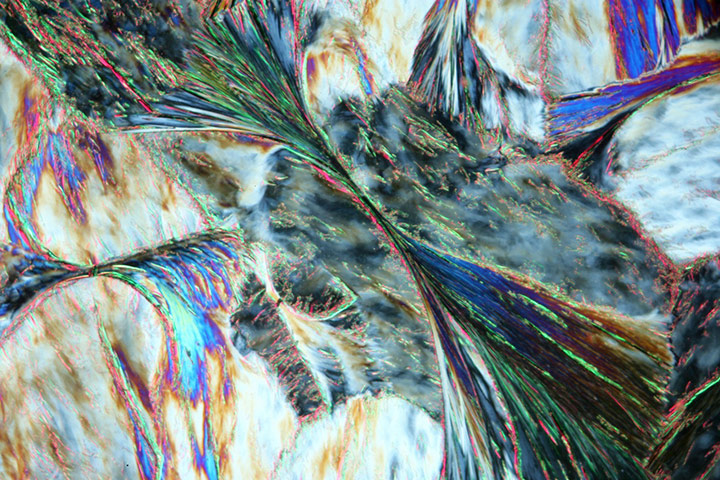
The Guardian reports that Spike Walker was awarded the Royal Photographic Society‘s combined Royal Colleges medal for his ‘outstanding contribution to photography and its application in the service of medicine’. A retired schoolteacher, Spike produces photomicrographs in his garage, which he has converted into a laboratory

Dopamine is a key neurotransmitter released in our brains when we do something rewarding. The dopaminergic system is behind most good feelings we have, and it is also the chemical that is targeted by highly addictive drugs such as cocaine.

http://thebeautifulbrain.com/wp-content/uploads/2010/09/Dophamine.jpg

The Beautiful Brain: To create this beautiful micrograph of dopamine crystals, Spike Walker, who won Thursday evening’s Royal Photographic Society‘s Combined Royal Colleges Medal, shone polarized light at the minute chemical structures. The crystals reflect light at different wavelengths depending on their orientations within the overall chemical structure. According to Walker, using this technique highlights more detail in the crystal structure than regular observation through a microscope.

Crystals of stearic acid, a saturated long-chain fatty acid found in animal fat and cocoa butter.

http://static.guim.co.uk/sys-images/Guardian/Pix/pictures/2010/9/8/1283953758659/Crystals-of-stearic-acid-010.jpg

Bike blog: Crystals of stearic acid

Indian monsoon has been “good”: 10%+ growth possible

September 12, 2010

The Indian monsoon season officially lasts from June to September. When average rainfall over these 4 months is close to or slightly above the long term average ( from about -5% to about +10%), the monsoon can be termed to be “good”.

With 3 weeks to go rainfall is running at 1% above the long term average and has been reasonably uniform over the whole country.

http://www.imd.gov.in/section/nhac/dynamic/Monsoon_frame.htm

Despite a steady decline in the share of agriculture and allied activities in GDP to about 14.6 percent, it continues to be the mainstay of majority of the population, of about 52 percent of the work force, and remains critical from the point of view of achieving the objectives of food security and price stability.

In 2009-10, there was a poor monsoon with rainfall being about 22% less than the long term average. Consequently the Agricultural growth rate was less than 2% (1.86%). The total GDP growth was held back to around 6%. The difference between a good monsoon year and a poor year is thought to be around 2% points for GDP:

For this year the pre-monsoon forecast was for 98% rainfall but with the La Niña conditions now prevailing, this has increased. Currently Agricultural growth (April – June  2010) is at 2.78% and the “good” monsoon is likely to see this increase sharply through the rest of the year.

Currently GDP is running at over 9% with industry and manufacturing each showing growth rates of close to 12%.

Inflation in food prices should now reduce sharply and if industry and manufacturing maintain their spurt, a total 10%+  GDP growth for 2010 -11 becomes probable.