Posts Tagged ‘global warming’

Good news today: “Green groups walk out of UN climate talks”

November 21, 2013

The UN Climate conferences must count as the most useless, misguided and profligate international cooperation ever.Therefore one hopes that this report in the Guardian is true. The best thing that could happen would be if everybody walked out of these orgies of decadence and the world could forget the last two decades of waste.

I doubt it will happen, since these UN jamborees provide a wonderful and regular forum for the do-gooders and the catastrophe mongers to gather and wallow in their delusions. Mostly financed by taxes. The IPCC is at best a disgrace to both science and to international cooperation. I suspect the green groups think they will get valuable publicity with their walk-out stunt but will all return tomorrow.

They are on to too good a thing and I doubt that they will walk out never to return. But I can always hope:

The Guardian: 

Environment and development groups together with young people, trade unions and social movements walked out of the UN climate talks on Thursday in protest at what they say is the slow speed and lack of ambition of the negotiations in Warsaw. 

Wearing T-shirts reading “Volverermos” (We will return), around 800 people from organisations including Greenpeace, WWF, Oxfam, 350.org, Friends of the Earth, the Confederation and ActionAid, handed back their registration badges to the UN and left Poland’s national stadium, where the talks are being held. 

“Movements representing people from every corner of the Earth have decided that the best use of our time is to voluntarily withdraw from the Warsaw climate talks. This will be the first time ever that there has been a mass withdrawal from a COP,” said a WWF spokesman. 

“Warsaw, which should have been an important step in the just transition to a sustainable future, is on track to deliver virtually nothing. We feel that governments have given up on the process,” he said.

Volcanic CO2 Levels Are Staggering

November 18, 2013

The carbon balance of the earth is far less understood – or quantified – than “climate scientists” would have us believe. The two largest sources and sinks (forests and the oceans) are generally assumed to be largely in balance. Volcanoes are estimated to produce a very small amount of carbon dioxide. Carbon in rocks brought up from the deep mantle by tectonic activities are assumed to be in balance with the return of sediments and rocks into the deep mantle by subduction. These assumed balances of the big numbers means that the relatively small numbers for emissions from fossil fuel combustion and changing land use then become dominant in explaining the observed increase of carbon dioxide concentration in the atmosphere. But these assumptions include many uncertainties:

Carbon dioxide emission sources (GT CO2/year)

  • Transpiration 440
  • Release from oceans 330
  • Fossil fuel combustion 26
  • Changing land use 6
  • Volcanoes and weathering 1

Carbon dioxide is accumulating in the atmosphere by about 15 GT CO2/ year. The accuracy of the amounts of carbon dioxide emitted by transpiration and by the oceans is no better than about 2 – 3% and that error band (+/- 20GT/year)  is itself almost as large as the total amount of emissions from fossil fuels.

But it now appears that even the carbon dioxide emissions from volcanoes have been grossly underestimated. Not only have the emissions from erupting volcanoes been underestimated but it also seems that many volcanoes emit carbon dioxide almost continuously and invisibly (a diffuse degassing).

Volcanic CO2 Levels Are Staggering 

Robin Wylie, University College London   |   October 15, 2013

…. Until the end of the 20th century, the academic consensus was that this volcanic output was tiny — a fiery speck against the colossal anthropogenic footprint. Recently, though, volcanologists have begun to reveal a hidden side to our leaking planet.

Exactly how much CO2 passes through the magmatic vents in our crust might be one of the most important questions that Earth science can answer. Volcanoes may have been overtaken in the carbon stakes, but in order to properly assess the consequences of human pollution, we need the reference point of the natural background. And we’re getting there; the last twenty years have seen huge steps in our understanding of how, and how much COleaves the deep Earth. But at the same time, a disturbing pattern has been emerging.

In 1992, it was thought that volcanic degassing released something like 100 million tons of COeach year. Around the turn of the millennium, this figure was getting closer to 200. The most recent estimate, released this February, comes from a team led by Mike Burton, of the Italian National Institute of Geophysics and Volcanology – and it’s just shy of 600 million tons. It caps a staggering trend: A six-fold increase in just two decades. ……

….. As scientific progress is widening our perspective, the daunting outline of how little we really know about volcanoes is beginning to loom large. ….

…. We now know that the CO2 released during volcanic eruptions is almost insignificant compared with what happens after the camera crews get bored. The emissions that really matter are concealed. The silent, silvery plumes which are currently winding their way skyward above the 150 or so active volcanoes on our planet also carry with them the bulk of its carbon dioxide. Their coughing fits might catch the eye — but in between tantrums, the steady breathing of volcanoes quietly sheds upwards of a quarter of a billion tons of CO2 every year. 

We think. Scientists’ best estimates, however, are based on an assumption. It might surprise you to learn that, well into the new century, of the 150 smokers I mentioned, almost 80 percent are still as mysterious, in terms of the quantity of CO2 they emit, as they were a generation ago: We’ve only actually measured 33.

If the 117 unsampled peaks follow a similar trend, then the research community’s current projection might stand. But looking through such a small window, there’s no way of knowing if what we have seen until now is typical or not. It’s like shining a light on a darkened globe: randomly, you might hit Australia, and think you’d seen it all – while on the edge of your beam, unnoticed, would be Asia. Our planet’s isolated volcanic frontiers could easily be hiding a monster or two; and with a bit of exploration, our estimate of volcanic CO2 output could rise even higher.

You’d think that would be enough. That might be my fault — I tend to save the weird stuff until the end. Recently, an enigmatic source of volcanic carbon has come to light that isn’t involved with lava — or even craters. It now seems that not only is there CO2 we can’t get to, there’s some we can’t even see.

Carbon dioxide is always invisible, but its presence can be inferred in volcanic plumes — betrayed by the billowing clouds of water vapour released alongside it. Without the water, though, it’s a different story. The new poster-child of planetary degassing is diffuse CO2 — invisible emanations which can occur across vast areas surrounding the main vents of a volcano, rising through the bulk of the mountains. This transparent haze is only just beginning to receive proper attention, and as such we have very little idea of how much it might contribute to the global output.

Even more incredibly, it even seems that some volcanoes which are considered inactive, in terms of their potential to ooze new land, can still make some serious additions to the atmosphere through diffuse COrelease. Residual magma beneath dormant craters, though it might never reach the surface, can still ‘erupt’ gases from a distance. Amazingly, from what little scientists have measured, it looks like this process might give off as much as half the CO2 put out by fully active volcanoes.

If these additional ‘carbon-active’ volcanoes are included, the number of degassing peaks skyrockets to more than 500. Of which we’ve measured a grand total of nine percent.
Related: Deep Carbon Emissions from Volcanoes


Broken link between carbon dioxide and global warming could be causing a paradigm shift in climate change theory

November 1, 2013

Dr. David Stockwell writing in Quadrant suggests that a paradigm shift in global warming theory may be underway.

Remember Thomas Kuhn and his paradigm shift?  According to his Structure of Scientific Revolutions, theories change only when anomalous observations stress the ”dominant paradigm” to the point that it becomes untenable. Until then, failure of a result to conform to the prevailing paradigm is not seen as refuting the dominant theory, but explained away as a mistake of the researchers, errors in the data, within the range of uncertainty, and so on. Only at the point of crisis does science become open to a new paradigm.  So, does Kuhn inform the current climate debate, help identify important information or an alternative paradigm?

The link between carbon dioxide concentrations and global warming effects is not based on any direct evidence. It is based on the absorption spectrum of the gas and then on assumptions about the “forcing” caused by the trace amounts of the gas in the atmosphere on other parameters such as clouds. This assumed impact is “confirmed” by correlations between global temperature (or temperature proxies) and carbon dioxide concentration and the assumption that anthropogenic effects (fossil fuel combustion)  dominate the undoubted increase of carbon dioxide concentrations in the atmosphere.  It is said that there is no better correlation but that is not true. Ocean cycles have been shown to have a much stronger correlation. But this assumed link is now looking decidedly shaky as long-ignored parameters (solar effects and the oceans) are also taken into account. Carbon dioxide concentrations have been increasing steadily but global temperatures have remained still for the last 17 – 18 years. In fact over the last 10 years global temperatures have shown a slight decline. Climate models have used the assumed carbon dioxide effect as input. But the predictions they have made about antarctic ice extent, sea level, hurricanes and stormy weather and hot spots in the troposphere have all proved wrong. Real global temperatures are increasingly diverging from these model results. The increase of information is increasing the uncertainty which is very odd.

Climate models can be seen as encapsulating the dominant theory, even though they are composed of many different theories regarding land, the ocean and atmosphere.  Despite their differences they are also similar in many ways, sharing terminology such as the ‘radiative kernel’.  Lets agree, for the purpose of argument, that the dominant AGW paradigm is of global temperature’s high sensitivity to  CO2 doubling, resulting in an increase of around 3°C, which appears to be about the central estimate of the climate models.

Does the 15-year ‘pause’ in global temperatures stress this theory? Certainly to some, the stress has already reached a ‘crisis’; while to others the divergence can be explained away by natural variation, uncertainty, and errors in the data. 

Do failed models and their predictions of increasing extreme events, like hurricanes, droughts and floods, stress the climate models?  Possibly not.  From a physical perspective, these phenomena lie at the boundaries of the theory.  Hurricanes, droughts and floods are ‘higher order’ statistics — extremes not climate averages. Surface temperature is only a part of the greater global climate system. Because anomalous behavior at the margins can be discarded without sacrificing the main theory, their power to confirm or reject the dominant paradigm is somewhat limited. 

Ocean heat content, however, is in a unique position.  The world’s oceans store over 90% of the heat in the climate system.  Arguably, therefore, increases in ocean heat determine overall global warming.  Ocean heat represents the physical bulk of the global heat store, and so should carry the most weight in our assessment of the status of AGW. Observations of ocean heat uptake represent the crucial experiment  — observations capable of decisively dismantling a theory despite its widespread acceptance in the scientific community.  The ARGO project to monitor ocean heat with thousands of drifting buoys is the crucial experiment of the AGW stable. 

A number of climate bloggers have remarked on the very low rate of ocean heat uptake (here, and here, and here), much lower than predicted by the models (herehere, and here).  The last link is about Nic Lewis, a coauthor on Otto et al. 2013, who feels that recent findings of low climate sensitivity, many based on ocean heat content, have led a number of prominent IPCC authors to abandon the higher estimates of climate sensitivity. That may not be a ‘catastrophe’ for the dominant AGW paradigm, but it is certainly a lurch by insiders towards the lower ends of risk and urgency. 

The IPCC panel preparing the AR5 report may not have been devastated when they changed the likely range of climate sensitivity, which had stood at 4.5–2°C since 1990. The lower extimate has now been dropped from 2°C to 1.5°C. What has not been appreciated is that increasing the range of uncertainty is impossible in a period of Kuhnian ‘normal science’, where new information always decreases uncertainty. 

The ‘blow-out’ in the range of likely climate sensitivity can only mean one thing: We are no longer in a period of ‘normal’ science, but entering a period of ‘paradigm shift’. ….

…..

Dr. Stockwell concludes:

Climate skeptics don’t want to say we told you so but, well, we told you so. Even though we do not yet have an accepted theory of solar influence, there are 25 unique models in the AR5-sponsored CIMP5 archive, most with a climate sensitivity untenable on observations from the last decade. 

Take out Occam’s razor and cull them – deep and hard.

Dr David Stockwell, Adjunct Researcher, Central Queensland University

Biofuels produce twice as much carbon dioxide per kWh as natural gas

October 31, 2013

Of course, carbon dioxide is proving to be of much less importance to global warming than the alarmists would have us believe. Sharply increasing carbon dioxide concentrations have had no impact on global temperatures for the last 17 – 18 years and the supposed link between man-made carbon dioxide emissions and global temperatures is looking very shaky.

It has been another “feel-good” assumption that burning wood, peat, bioethanol and biofuels in general are “carbon neutral”. But that is just wishful thinking. “… only about half as much CO2 per kWh is released when using natural gas rather than wood”.

“Both this and the original method used models of the forest. Models are by definition simplifications. The simplifications a researcher makes will vary according to the issues at hand, the questions being asked. You realise how much earlier analyses have oversimplified things when more refined models yield completely different answers.” 

ScienceNordic reports that scientists from the Cicero Centre for Climate Research and the Norwegian University of Science and Technology used a new method for quantifying the contributions of bioenergy to global warming as compared to fossil energy such as oil and gas.

But further research now indicates that the real climate effect of wood burning is less advantageous.

“By refining their method I determined that the emission of one kg of CO2 from biomass is the equivalent of about 1.25 to 1.5 kg fossil CO2.  So it’s much higher and less climate friendly,” says Bjart Holtsmark, a researcher at Statistics Norway.

In other words, if Holtsmark’s calculations are correct, the climate impact of using slow-growing forest wood for fuel is greater than the burning of fossil fuel, given a 100-year time frame.

Holtsmark says that the original method failed to account for how logging leaves behind dead tree parts. When trees are cut, a considerable amount of tree “waste” remains in the forest to rot and oxidise – and emit CO2.

“This aspect of the carbon balance sheet for bioenergy needs to be included,” he says. “The usual practice in forestry is to take out the trunks, while leaving the branches, treetops, stumps and roots. But the trunk only comprises half the tree’s living biomass.”

He explains that even if the branches and tops are taken out with the trunks, the stumps and roots will be left behind to oxidise into CO2. …… 

…. Holtsmark also asserts that the combustion of timber releases more carbon dioxide per kWh of heat energy than oil and gas.

“For example, only about half as much CO2 per kWh is released when using natural gas rather than wood. When this is taken into account, the picture for bioenergy from slow growing forests becomes even less advantageous.”

Power lines, the Army and arsonist kids helped ignite some NSW bushfires

October 29, 2013

The bushfires in New South Wales  seem – after great efforts by the fire services – to be under control. No doubt some rain has helped.

Of course some of the great unwashed immediately blamed “global warming”. The self proclaimed – and now self-employed – “Climate Council” was of course leading the charge. Tony Abbott called their claims “hogwash” but he was being rather polite. The bushfires are an annual event every spring and have occurred every year for at least the last 200 years. It may well be something that has ocurred annually for over 10,000 years.

It now transpires that in addition to natural causes, many of the fires were caused by accidents (the army’s exercises and power lines) and some were caused by juvenile delinquents – some as young as 8 years old! It could be that the power lines initiated this latest outbreak.

The Climate Council is drowning in its own self-importance and is indeed replete with hogwash –  and much of that is intentional.

  1. THE Department of Defence was last night found to have caused the State Mine Blaze near Lithgow, which has so far burnt out more than 46,000ha, led to one home being destroyed and three others damaged, and narrowly avoided turning into a “mega-fire”.

    The Rural Fire Service said an investigation had found a Department of Defence training exercise last week was responsible for the fire, west of the Blue Mountains, but the department said last night that there was still no definitive evidence that defence personnel had inadvertently started the blaze.

    “The investigation has concluded the fire started as a result of exploding ordnances on the range on (last) Wednesday,” a RFS spokesman said.

  2. POLICE detained two eight-year-old boys near East Maitland on the NSW North Coast last night after they were found trying to start a fire.Officers found the boys trying to use a lighter to set fire to dried leaves and grass on vacant land near Quarry St around 6:30pm AEST. A concerned resident called police to the scene and the lighter was later found to be “inoperable”, the law enforcement agency said in a statement.

    No charges were laid because of their age.

  3. AFTER one night in custody, the 11-year-old boy accused of lighting a 5000ha Hunter Valley bushfire walked free from court yesterday, flipping the bird to media waiting outside. …. The boy pleaded not guilty in Newcastle Children’s Court to two counts of starting a bushfire and recklessly causing its spread – a charge that carries a maximum sentence of two years’ detention for minors. But conviction records from the Bureau of Crime Statistics and Records show just one offender aged under 18 has ended up in detention for the offence in the past three years. The 11-year-old accused of lighting the October 13 Heatherbrae fire allegedly started another blaze earlier that day in the nearby suburb of Raymond Terrace.
  4. Bushfire risks posed by powerline failures are in the spotlight following last week’s crisis in New South Wales, …… In the wake of the NSW bushfire crisis, Four Corners has examined almost four decades worth of evidence into the cause and impact of major bushfires. Some of the most catastrophic bushfires in Australia’s history have been started by powerline failure. It is believed the most devastating fires in NSW last week began as a result of damaged powerlines.  In Victoria’s Murrindindi fire in 2009, which led to 40 deaths on Black Saturday, police initially focused their investigation on an alleged arsonist. However, after abandoning that line of inquiry, a case is now being made that a fallen powerline ignited the blaze. Law firm Maurice Blackburn is representing victims of the Murrindindi fire in a class action against power company SP Ausnet. The company rejects accusations its wire caused the fire. If proven, it means 93 per cent of the deaths on Black Saturday – Australia’s worst bushfire disaster – were caused by fires started by powerlines. ….. The issue of powerlines has not been at the centre of public debate. The program also found power companies have known since 1974 that their lines can cause fires. …… The Rural Fire Service, however, has said it believes fires in Salt Ash, Mount Victoria and Springwood were started by powerlines. Together, these fires destroyed 204 homes and damaged 110.

Winter time is here again – but “cyclical isn’t a scientific term”!

October 27, 2013

We put the clocks back by an hour last night – as we did a year ago.

I shall change to winter tyres tomorrow  – as I did a year ago.

Tomorrow will be another day – as it is every 24 hours.

Christmas day will come again – whether it is scientific or not.

We are surrounded and dominated by cycles. Without periodicity and cycles we would have no concept of time.

Daily cycles, monthly cycles, annual cycles, solar cycles every 11 years, the earth’s precession cycle with a period of 26,000 years, the earth’s axial tilt cycle of about 41,000 years and the Milankovitch cycles of about 100,000 years, are just some of the cycles that surround us.

Whether everything derives from the vibrations within the most fundamental particles and then are manifested by the periodic motion of bodies in our cosmos or whether the motion in the cosmos is the origin of everything else, periodicity and cyclic behaviour is ingrained within us and our world.

There are many more cyclic effects that we are continuously discovering (from the eons of slow cosmic cycles to multi-decadal ocean cycles to multi -hour cycles within living cells to the periodicity of the incredibly fast vibrations of atoms).

The only man-made repeating period that seems to have no corresponding cycle in the natural world is the weekly 7-day cycle.

Almost every cycle we discover seems to impact our weather and our climate.

But Nebraska “climate scientists” don’t believe that natural cycles are worth studying. In fact only studies which start with the assumption that global warming is man-made get any funding.

For one thing, “cyclical” isn’t a scientific term, said Barbara Mayes, a meteorologist with the National Weather Service.

Oh Dear!

The only response to Barbara Mayes and climate scientists in Nebraska must be (with apologies to Lerner and Lowe)

There’ll be spring every year without you
England still will be here without you
There’ll be fruit on the tree
And a shore by the sea
There’ll be crumpets and tea without you

Without your pulling it the tide comes in
Without your twirling it, the Earth can spin
Without your pushing them, the clouds roll by
If they can do without you, ducky so can I

The “Backfire Effect” and why Global Warmists ignore facts which contradict their opinions

October 21, 2013

This is about a study on how facts – especially corrective facts – are ignored when some opinion or perception is deeply held. The study is about political perceptions and it strikes me that it is very relevant to the IPCC and the alarmists for whom the Global Warming hypothesis (that man-made carbon dioxide emissions are the primary cause of Global warming) is a deeply held political belief.

Brendan Nyhan and Jason Reifler, When Corrections Fail: The persistence of political misperceptions

Abstract: We conducted four experiments in which subjects read mock news articles that included either a misleading claim from a politician, or a misleading claim and a correction. Results indicate that corrections frequently fail to reduce misperceptions among the targeted ideological group. We also document several instances of a “backfire effect” in which corrections actually increase misperceptions among the group in question.

The behaviour of the IPCC and the Global Warming coterie in ignoring or explaining away real observations in favour of their computer models has always smacked of religious fanaticism rather than scientific objectivity. They have shown a preference for coming up with ever more fanciful explanations about why their predictions are not panning out rather than accept that the basis of their predictions may be mistaken. The heat lurking in the deep oceans or Chinese pollution blocking out the sun or “old ice” declining invisibly while “new ice” increases have all been suggested as explanations for

  1. the recent lack of warming,
  2. the broken link between global temperature and carbon dioxide concentration, and
  3. increasing global ice extent.

It would seem that the global warming brigade are an “ideological sub-group” suffering from the “backfire effect”.

In this paper, we report the results of two rounds of experiments investigating the extent to which corrective information embedded in realistic news reports succeeds in reducing prominent misperceptions about contemporary politics. In each of the four experiments, which were conducted in fall 2005 and spring 2006, ideological subgroups failed to update their beliefs when presented with corrective information that runs counter to their predispositions. Indeed, in several cases, we find that corrections actually strengthened misperceptions among the most strongly committed subjects.

…. Political beliefs about controversial factual questions in politics are often closely linked with one’s ideological preferences or partisan beliefs. As such, we expect that the reactions we observe to corrective information will be influenced by those preferences. ……… Specifically, people tend to display bias in evaluating political arguments and evidence, favoring those that reinforce their existing views and disparaging those that contradict their views.

However, individuals who receive unwelcome information may not simply resist challenges to their views. Instead, they may come to support their original opinion even more strongly – what we call a “backfire effect.”

……

The backfire effects that we found seem to provide further support for the growing literature showing that citizens engage in “motivated reasoning.” While our experiments focused on assessing the effectiveness of corrections, the results show that direct factual contradictions can actually strengthen ideologically grounded factual beliefs – an empirical finding with important theoretical implications.

It is a little depressing that  just using facts (science) may not be of much use in getting people to correct their misperceptions when these take the form of religious belief.

Many citizens seem unwilling to revise their beliefs in the face of corrective information, and attempts to correct those mistaken beliefs may only make matters worse.

It is the sobering – and depressing – reality that facts (read science) are always subservient to even completely irrational religious beliefs.

Global Warming gone missing: Arctic ice back to “normal” and Antarctic ice at highest ever recorded levels

October 20, 2013

IF THE GLOBE IS WARMING, WHERE’S THE HEAT?

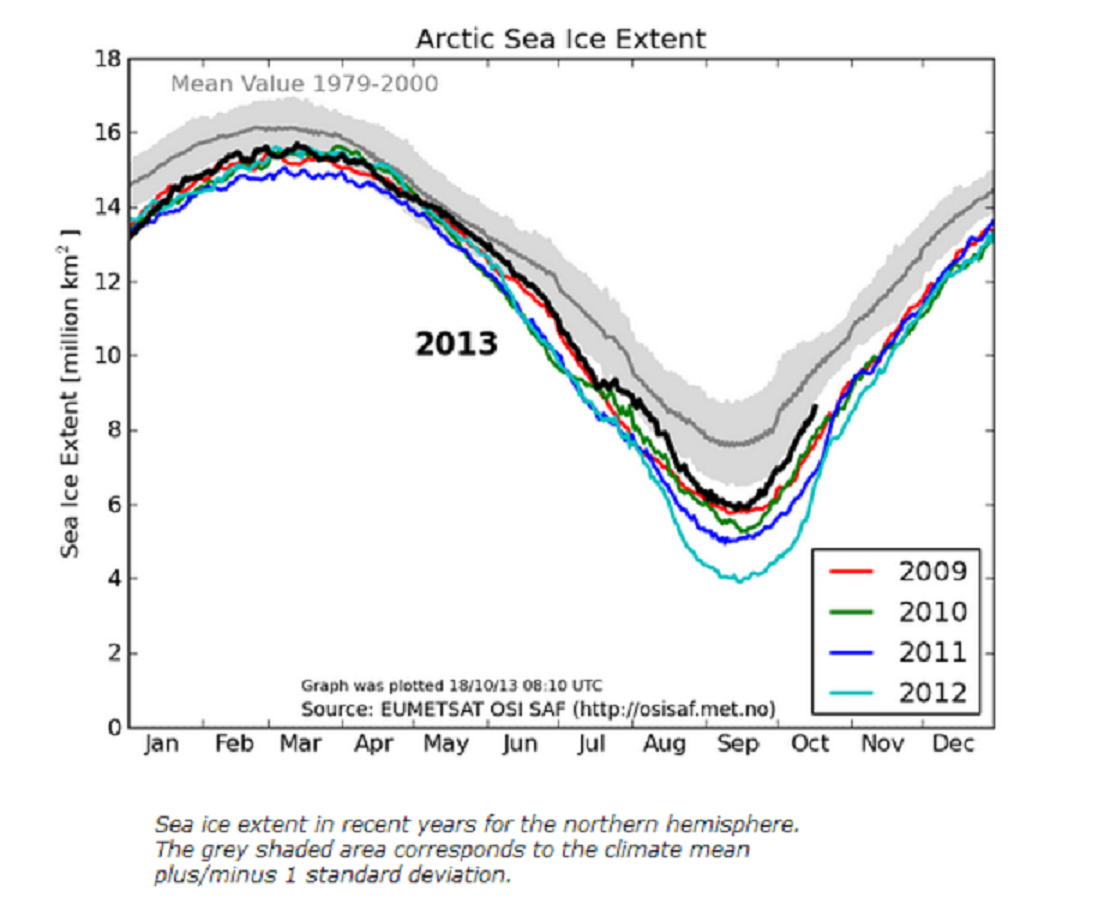
Arctic Ice levels are increasing fast and are within 1 standard deviation of the 1979-2000 mean.

Arctic Ice Extent 20131018 DMI Centre for Ocean and Ice

Arctic Ice Extent 20131018 DMI Centre for Ocean and Ice

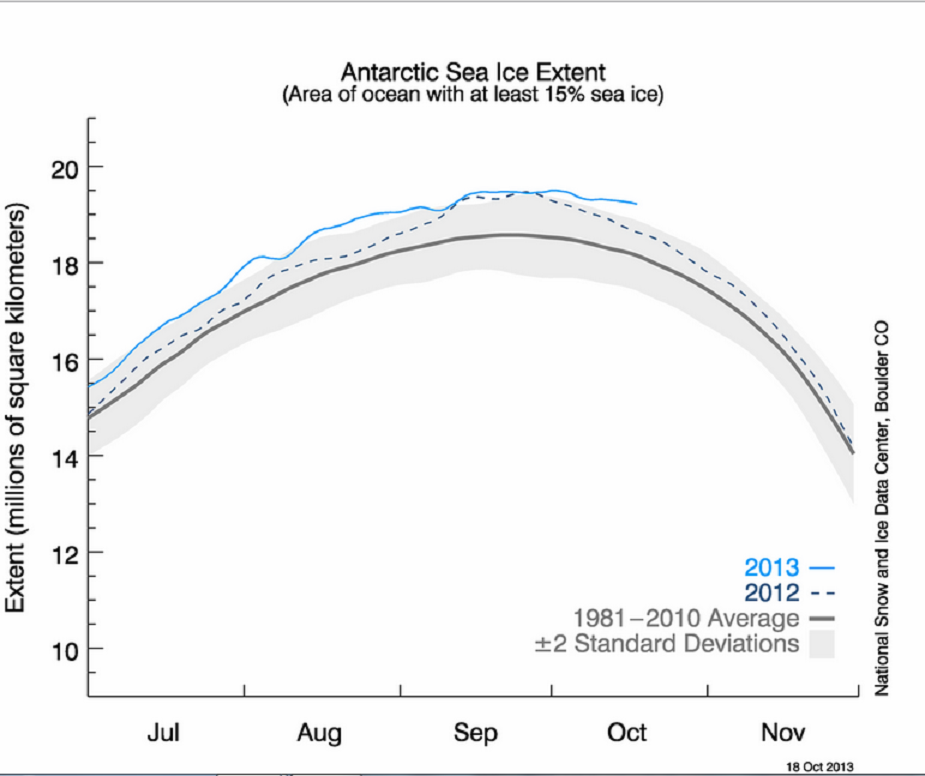
In the Anatrctic ice extent should normally have started reducing by 22nd Sepptember but kept increasing till about 1st October. At maximum it reached levels never recorded before. It is currently at a level more than 2 standard deviations higher than the long term 1981 – 2010 average.

Antarctic Ice Extent 20131018 NSIDC Boulder

Antarctic Ice Extent 20131018 NSIDC Boulder

This leads to obvious but simple conclusions:

  1. Over the last 34 years therefore, Arctic ice extent has shown great variability but is currently at values within one standard deviation of the 30 year average.
  2. Global warming – if it is taking place – has not left any significant signature in the extent of Arctic Ice which is larger than “natural variability”.
  3. Over the last 32 years Antarctic ice extent has consistently shown a small but steady increase.
  4. Global warming – if it is taking place – is completely absent in the record of the ice extent.

It could be argued – but it would stretch credulity – that heat is being stored in the deep ocean (having bypassed the surface waters by a hitherto unknown form of “deep sea radiation”)  and that this will all be released in a coming catastrophic event (to be known as the Ehrlich Rapture) in 2047.

Or, it could be argued – again with little credibility – that man-made particulate emissions from China in the Northern Hemisphere and from Indonesian forest fires in the Southern Hemisphere have reflected away the Sun’s radiation and prevented the warming that should have taken place. This argument then fails since it would appear to describe a very successful  application – if inadvertent – of geo-engineering.

Or we could choose the parsimonious explanation. There has been no global warming for the last 2 decades or so.

Any discussion about whether or how much warming is caused by carbon dioxide emissions becomes moot if there is no warming.

WHERE’S THE HEAT?

The IPCC 95% trick: Increase the uncertainty to increase the certainty

October 17, 2013

Increasing the uncertainty in a statement to make the statement more certain to be applicable is an old trick of rhetoric. Every politician knows how to use that in a speech. It is a schoolboy’s natural defense when being hauled up for some wrongdoing. It is especially useful when caught in a lie. It is the technique beloved of defense lawyers in TV dramas. Salesmen are experts at this. It is standard practice in scientific publications when experimental data does not fit the original hypothesis.

Modify the original statement (the lie) to be less certain in the lie, so as to be more certain that the statement could be true. Widen the original hypothesis to encompass the actual data. Increase the spread of the deviating model results to be able to include the real data within the error envelope.

  • “I didn’t say he did it. I said somebody like him could have done it”
  • “Did you start the fight?” >>> “He hit me back first”.
  • “The data do not match your hypothesis” >>> “The data are not inconsistent with the improved hypothesis”
  • “Your market share has reduced” >>> “On the contrary, our market share of those we sell to has increased!” (Note -this is an old one used by salesmen to con “green” managers with reports of a 100% market share!!)

And it is a trick that is not foreign to the IPCC  – “we have a 95% certainty that the less reliable (= improved) models are correct”. Or in the case of the Cook consensus “97% of everybody believes that climate does change”.

A more rigorous treatment of the IPCC trick is carried out by Climate Audit and Roy Spencer among others but this is my simplified explanation for schoolboys and Modern Environ-mentalists.

The IPCC Trick

The IPCC Trick

The real comparison between climate models and global temperatures is below:

Climate Models and Reality

Climate Models and Reality

With the error in climate models increased to infinity, the IPCC could even reach 100% certainty. As it is the IPCC is 95% certain that it is warming – or not!

German power play – silly EU CO2 rules for cars delayed at least till 2024

October 15, 2013

It’s the right decision of course. The proposal was for yet another one of the many EU rules where the benefits are doubtful and the implementation would have had no measurable effects on the desired outcome.

But entirely due to German protectionism for its performance car industry – and much to the disappointment of Ford – the limit of 95g of CO2 per km for any vehicle’s emissions has now been delayed at least till 2024!  Well Done Germany!

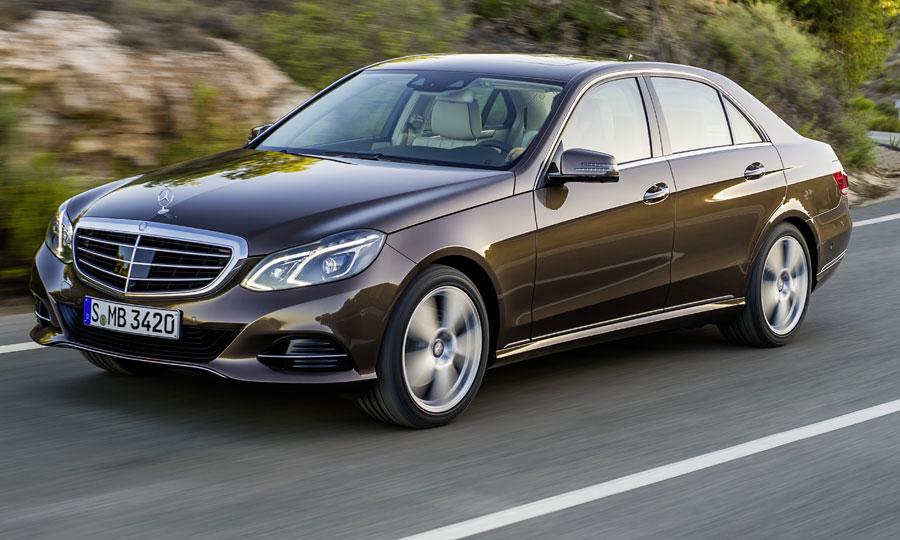
E 350 BlueTec

E 350 BlueTec

“The emissions limits are part of the EU’s drive to switch Europe to a low-carbon economy and slow the impact of climate change.”

The EU’s CO2 restrictions proposals for power plants and for aircraft and this one for cars are part of of a long line of  “feel-good” proposals which the Greens are so fond of — full of sound and idiocy, accomplishing nothing. So far the EU has not proposed any restrictions on CO2 in human breath.

Hopefully by 2024, the idiocy of CO2 restrictions will have been recognised.

BBC: 

The German government has persuaded its EU partners to delay introducing new limits on CO2 emissions from cars. Environment ministers agreed to revise a deal, reached in July, that set a limit of 95g per km for the average car. That target for CO2 emissions was to take effect in 2020.

But Germany, famous for its high-performance cars, says the 95g limit should not take full effect until 2024. 

Green activists deplored the new delay as a “shameful sop” to polluters.

A leading German Green Party MEP, Rebecca Harms, accused Germany’s Chancellor Angela Merkel of “riding roughshod” over the EU’s democratic process, because the 2020 agreement had already been reached between the European Parliament and the Council – the EU ministerial grouping.

“Weakening the agreed 2020 limits, which have long been known, is a shameful sop to German car manufacturers and will slow the development of new technologies to deliver more efficient and less polluting cars,” Ms Harms said after the ministers’ vote. …. 

The UK was among the countries that supported the German environment minister’s position on Monday, German ARD news reports.

The German minister, Peter Altmaier, said “it’s not a fight over principles but how we bind the necessary clarity in climate protection with the required flexibility and competitiveness to protect the car industry in Europe”.

Correspondents say there has been intense lobbying by luxury carmakers such as BMW and Daimler, maker of Mercedes, over the EU legislation.

The emissions limits are part of the EU’s drive to switch Europe to a low-carbon economy and slow the impact of climate change.