Posts Tagged ‘Japan’

The Great Sendai Quake was due: Miyagi earthquake frequency is approximately every 30 – 40 years with large tsunamis every 800 – 1100 years

March 13, 2011
Earthquake and Tsunami near Sendai, Japan

Earthquake and Tsunami near Sendai March 2011: image NASA

The north east of Japan is subject to major earthquakes every 30 – 40 years. The last major quake was 32 years ago in 1978. But we have to go back 1142 years to the 869 Jōgan earthquake to find a similar magnitude and accompanying tsunami. This has led Japanese analysts to call the Great Sendai Quake of 2011 a one in a thousand year event.

“Three tsunami deposits have been identified within the Holocene sequence of the Sendai plain, all formed within the last 3,000 years, suggesting an 800 to 1,100 year recurrence interval for large tsunamigenic earthquakes. In 2001 it was reckoned that there was a high likelihood of a large tsunami hitting the Sendai plain as more than 1,100 years had then elapsed”.

The 1978 Miyagi earthquake occurred at 17:14 local time on 12 June. It had a magnitude of 7.7 and triggered a small tsunami. The earthquake caused 28 deaths and 1,325 injuries.

Earthquakes with similar magnitudes have occurred in this region periodically, about every 40 years. Such earthquakes include the ones that occurred in 1793, 1835, 1861, 1897, 1936, and 1978. The 2005 Miyagi earthquake is not considered to be the one that was expected to follow the 1978 Miyagi earthquake. More recent comparisons have confirmed the differences between the 1978 and 2005 events.

In 1978

Over a thousand passengers were stranded in Sendai railway station after bullet train services were stopped. Ten families were evacuated from their homes for fear of landslides. About 35,000 homes lost power supplies but electricity was restored for most within a few hours.

A highway in northeastern Japan was temporarily closed. Phone networks were snarled. Regional utility Tohoku Electric Power Co Inc said an 825,000-kilowatt (kW) nuclear reactor, the Onagawa No.3 unit near Sendai automatically shut down due to the quake. Japan’s largest oil refiner, Nippon Oil Corp, said it had started shutting down its 145,000 barrels per day Sendai refinery, although its facilities appeared to be undamaged.

In Tokyo, buildings shook violently and lamps swayed, sending workers scurrying to doorways.

But the last time an earthquake with a magnitude similar to that 3 days ago on 11th March was on 13th July 869 AD where traces of a tsunami have been found about 4km inland.

The 869 Jōgan earthquake and tsunami struck the area around Sendai in the northern part of Honshu on the 13 July. The earthquake had an estimated magnitude of 8.6 on the surface wave magnitude scale. The tsunami caused widespread flooding of the Sendai plain, with sand deposits being found up to 4 km from the coast.

The tsunami caused extensive flooding of the Sendai plain, destroying the town of  Tagajō. Archaeological investigations have identified the remains of 8th and 9th century buildings beneath the town, covered by sediments dated to the middle of the 10th century.

The estimated magnitude of the earthquake as 8.6 on the surface wave magnitude scale, has been taken from modelling of the tsunami. A source area of 200 km long by 85 km wide with a displacement of 2 m is consistent with the observed distribution and degree of flooding.

Three tsunami deposits have been identified within the Holocene sequence of the Sendai plain, all formed within the last 3,000 years, suggesting an 800 to 1,100 year recurrence interval for large tsunamigenic earthquakes. In 2001 it was reckoned that there was a high likelihood of a large tsunami hitting the Sendai plain as more than 1,100 years had then elapsed.

This time 1142 years after the 869 Jōgan earthquake and tsunami the focal zone was some 500 km long and 200 km wide with three simultaneous quakes within the zone.

The Great Sendai Quake: Two reactors at Fukushima Dai-ichi nuclear plant have had partial meltdowns

March 13, 2011

0900 CET: Japanese SDF forces assigned for rescue operations doubled to 100,000. The focal zone for the quake was 500km long and 200km wide and the quake lasted 5 minutes. The highly unusual quake actually consisted of 3 massive quakes. Miyagi Police Dept Chief said the death toll in the prefecture will exceed 10,000. Fukushima Reactors 1 & 3 will probably not start again because of the ingress of sea water. Hydrogen has built up in Reactor no. 3 probably when the core was uncovered and could cause an explosion  as in Reactor No.1 but there is no risk of consequent radiation leakage. Cooling water levels have now increased . 210,000 people are being evacuated from the 20km exclusion zone . The hospital where 19 patients were found to have been exposed to some radiation is within the exclusion zone. A 63 old year man was rescued 15km out to sea on Sunday afternoon.

INES Level 4: Accident with local consequences

Impact on People and the Environment
Minor release of radioactive material unlikely to result in implementation of planned countermeasures other than local food controls.
At least one death from radiation.
Impact on Radiological Barriers and Control
Fuel melt or damage to fuel ­resulting in more than 0.1% release of core inventory.
Release of significant quantities of radioactive material within an installation with a high ­probability of significant public exposure.

Examples:

0800 CET: The 1999 event at the Tokai Uranium processing plant where 2 people died was also rated as a Level 4 incident. 19 patients at a hospital in Fukushima have been found to have been exposed to radiation and need to be decontaminated but are not in any danger.

Aftershocks of magnitude 7 or more have a probability of 70% and will continue for a week.  Magnitudes above 7 could generate tsunamis.

0730 CET: Chief cabinet secretary, Yukio Edano has just held a press conference.

Radiation measurements at Fukushima today rose from around 50 μSieverts to around 1557 μS for 1 hour between 1.44 and 2:42 pm and then came back to 184 μS. The spokesman stated on NHK that a deformation of part of the reactor cores has occurred but that we should be careful with terminology of a meltdown. Some part of some of the sheaths surrounding some of the fuel rods are thought to have melted. The level of 1557 μS should be compared with the 600 μS during a stomach X-Ray. There is no health risk he said.  Cooling and safety actions could still give small hydrogen accumulations and consequent explosions but these would not pose any danger or any radiation risks.

4 of the 6 reactors at Fukushima Dai-ichi may never operate again – partly because some of the measures being taken now for safety are irreversible.

Sunday 13th March: 0700 CET

The Quake magnitude has now been set at 9.0 and as more measurements come in it is likely that this probably will end up at 9.1 or 9.2. The number unaccounted for still remains very high.

TEPCO has declared a formal emergency around the Fukushima nuclear plants. Reactors No.1 and 3 at Fukushima Dai-ichi nuclear plant have probably had fuel rods exposed and with loss of cooling and have probably suffered core damage and melting – a partial if not a complete meltdown. However, so far it seems that the melted or partially melted cores have been confined within the containment. Temperatures are too high in 2 further reactors and radiation is still being released even if  at low but still unacceptable levels. Some deliberate venting of radioactive gases is still continuing.

The Japan Nuclear agency has (provisionally) rated the Fukushima nuclear plant incident at 4 on the 0 to 10 7 International Nuclear Event Scale developed by the IAEA. Three Mile Island was rated at 5 and Tjernobyl was rated at 7.

From CNN:

A meltdown may have occurred at at least one nuclear power reactor in Japan, the country’s chief cabinet secretary, Yukio Edano, said Sunday. He also said that authorities are concerned over the possibility of another meltdown at a second reactor.

“We do believe that there is a possibility that meltdown has occurred. It is inside the reactor. We can’t see. However, we are assuming that a meltdown has occurred,” he said of the No. 1 reactor at the Fukushima Daiichi nuclear facility. “And with reactor No. 3, we are also assuming that the possibility of a meltdown as we carry out measures.” Edano’s comments confirm an earlier report from an official with Japan’s Nuclear and Industrial Safety Agency, who said, “we see the possibility of a meltdown.”

A meltdown is a catastrophic failure of the reactor core, with a potential for widespread radiation release. However, Toshihiro Bannai, director of the agency’s international affairs office, expressed confidence that efforts to control the crisis would be successful.

The Great Sendai quake of 2011 is part of the Sun’s Dance

March 11, 2011

I was woken up in Tokyo in 1995 when the Great Hanshin Earthquake hit Kobe (having left Kobe 6 hours earlier on the last Shinkansen to Tokyo the night before) where the epicentre was just off Awaji Island but there was no tsunami then. The destruction was massive and Kobe burned and over 6,000 people perished.

All day today I have been watching the riveting pictures of the tsunami hitting the Sendai coast. The sheer power of the water sweeping irresistibly across the landscape picking up houses, ships, buses and cars like little cardboard models was terrible and awe-inspiring. The memories of 1995 came flooding back and it once again reminded me of the puny impact mankind has in the face of such forces.

And all the energy that is released by these great movements of the continents on Earth have their origin in the energy stored at the time of Earth’s creation and the energy it has received from the Sun since then. And all the energy of all these earthquakes and volcanoes and tsunamis and cyclones are as nothing to the energy released continuously by the Sun. To the Earth this Great Sendai quake of 2011 is just a very small adjustment of stresses and strains and is of little significance. The Great Dance orchestrated and choreographed by the  Sun will go on and the continents will keep drifting and moving under each other  and volcanoes will keep erupting. And our Science will continue to try and understand and predict when catastrophic events will occur. But we will have to tame the Sun if we are ever to be able to control these events.

The death toll in Sendai is rising and and as morning comes in a few hours to Japan the full extent of the destruction will begin to be revealed. Whole villages could well have been wiped out, entire trains have been carried away by the force of the waters and some ships are missing.  Fires are breaking out and the Fukushima nuclear plant was swamped.

Science and technology are our best defence against loss of life and loss of property by “natural” disasters. The preparedness of Japan is a tribute to this when comparing today’s tsunami with that after the Aceh quake of 2004. Science and technology will help us to cope with the consequences of these events and maybe – some day – will help us predict some of them. But they will not prevent such disasters.

The Sun is going through an unusual – but not unprecedented – minimum. There is no proof and there is no evidence of any causal relationship but there are correlations between increased earthquake and volcanic activity with solar minima and solar proton events. We have a further 2 or 3 years of increased earthquake and volcanic activity if this correlation holds true.

It seems not only plausible but also fitting that such great and terrible events can only be a part of the Great Dance of the Sun.

And Mount Kirishima in Japan is also spewing ash

January 28, 2011

The Japan Times:

News photo

Mount Kirishima's Shinmoedake peak, seen from Takaharu, Miyazaki Prefecture, spews ash Thursday morning. KYODO PHOTO

Mount Kirishima continued erupting Thursday on the border between Kagoshima and Miyazaki prefectures, spewing columns of smoke up to more than 2,500 meters, the weather agency said.

Rocks were blasted as far as 8 km from Kirishima’s Shinmoedake peak, according to the Meteorological Agency. Volcanic ash disrupted train and flight services in the area. The agency revised the scale of the eruption upward to “medium” from the initial “small,” after the smoke columns reached about 500 meters higher than Wednesday. …. Volcanic tremors indicating magma activities also continued Thursday.

The first in-depth eruption began Wednesday at around 7:30 p.m., when the 1,421-meter Shinmoedake peak began spewing debris in its second outburst since a small eruption Jan. 19, the agency said. According to the Miyazaki Observatory, ash is falling on a wide area that includes the cities of Miyazaki and Nichinan in Miyazaki Prefecture, and has partially closed expressways in Kyushu.

According to Bloomberg:

Japan’s government issued alerts after a volcano on the southern island of Kyushu erupted for the first time in 52 years, causing the evacuation of homes and cancellation of more than 60 flights.

Shinmoedake, in the Kirishima range, erupted yesterday, spewing ash as high as 2,500 meters (8,200 feet) into the air, Japan’s Meteorological Agency said in a statement on its website. A second eruption occurred today at about 1 p.m. local time, national broadcaster NHK reported. Ash from the volcano reached Miyazaki city, 50 kilometers (30 miles) to the east, according to the broadcaster.

Japan Airlines Corp. canceled 37 flights to or from nearby Miyazaki airport, according to its website today. Three additional flights will be scrapped tomorrow, it said. All Nippon Airways Co., Asia’s largest listed carrier, canceled 24 flights affecting 3,350 people, spokeswoman Nana Kon said by phone today.

Euro bail-out bond: Asia to the rescue with record demand

January 26, 2011

The Telegraph reports:

Asian and Middle-East investors have thronged to buy the first issue of AAA-rated bonds by the eurozone’s new bail-out fund, marking a key moment in the evolution of Europe’s monetary union.

The auction of €5bn (£4.3bn) of five-year bonds to fund the first stage of the Irish loan package was nine times subscribed, reflecting appetite for bonds ranked with core German or French debt but offering higher returns. The yield was 2.89pc, compared with 2.31pc for Bunds.

The outcome was not in doubt after Japan said it would buy 20pc of this month’s total issue by the European Financial Stability Facility (EFSF), and China emerged as a white knight for EMU debt. Asian investors bought 38pc of the issue.

“It is the biggest order book ever. We will check before notifying the Guinness Book of Records but nobody can remember anything like that in the world,” said Klaus Regling, head of the EFSF. Ralf Umlauf from Helaba said the auction was “a step in the direction of a eurobond”.

The demand came from over 500 investors and totalled over $ 60 billion (about €45 billion).


Demographics for 2030 look bleak in Japan

January 4, 2011

Ageing Japan is becoming a lonely Japan.

By 2030 living in Japan will be a lonely experience according to the Asahi Shimbun:

  • One in three men and one in 5 women would have never married by age 50
  • 25% of men and over 40% of the total population between 50 and 70 will be living alone
  • Single-member households will be especially pronounced among men who were the children of the baby-boomer generation and who will enter middle age in 2030.
  • Single person households exceed multi-person households already and this trend will continue
  • Among women born in 1990, it is estimated that more than one-third will not bear children and that half will not have grandchildren
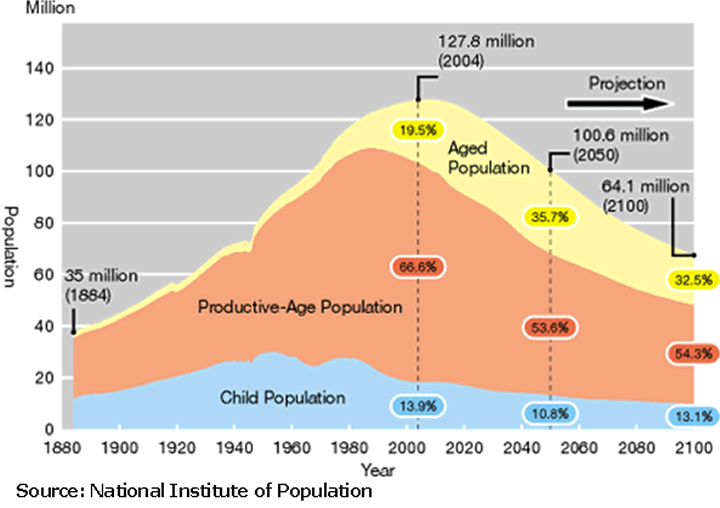
  • Fertility rate which was at the sustainable level of 2.1 in 1960 has been below this level since 1976 reaching a low of 1.26 in 2005
  • There will be over 300,000 people aged 100 and over
  • The ratio of just under 3 working age population for each retired person will decrease to less than 2
  • Working age population will decline by about 14 million

Japanese population development: graphic marketoracle.co.uk

Japan has few options except to open up its borders to immigration but this seems to be a subject that no political party or politician is prepared to face squarely. Instead the discussion veers off into trade alliances instead or restricting immigration to just skilled workers and only very specialised skills at that. The European experiences are often quoted as examples of the dangers of allowing immigration from Muslim countries. The extremely difficult (but flexible) residency and naturalisation regulations continue to be used to prevent the millions of immigrants from the Philippines, S. Korea, China, Indonesia and Malaysia already in the country from ever really settling in Japan. This even though all are aware that the functioning of Japanese society is already critically dependent upon these “less-skilled” workers.

That Japan needs a real leader as Prime Minister who can get the majority to face up to the difficult choices and carry them with him is apparent. There was a hope that Koizumi Jun’ichirō might be such a person when he was PM (3 times between 2001 and 2006) but he too drowned in the political quicksand. Perhaps it is a task for the Emperor together with the right Prime Minister. But it would need an Emperor prepared to appeal directly to his people and not be stifled by those of his Court.

Japan shelves carbon emissions trading scheme

December 29, 2010

Japan joins the growing list of nations who have shelved, postponed or cancelled carbon trading schemes (and there is not a single carbon trading scheme anywhere which is not built on fraud).

Reuters reports:

Japan postponed plans for a national emissions trading scheme on Tuesday, bowing to powerful business groups that warned of job losses as they compete against overseas rivals facing fewer emissions regulations.

The government has submitted a climate bill to parliament that includes a one-year deadline to design a national trading scheme. After Tuesday’s delay, that bill faces revisions in the next parliamentary session that begins in January.

The decision is a blow to the European Union’s hopes that other top greenhouse gas polluters will introduce emissions trading schemes and follows setbacks to similar efforts in the United States and Australia.

A U.N. meeting in Cancun, Mexico, this month failed to clear uncertainty over a global climate framework beyond 2012. This is likely to cause some big emitters to take their time in rolling out tougher greenhouse gas regulations, particularly for carbon dioxide (CO2) from burning fossil fuels such as coal and oil.

Neighboring South Korea has delayed the introduction of its emissions trading laws into parliament until February because of business concerns.

Japanese fishing firms fight back taxes: “necessary” bribes to Russian officials paid into Cyprus banks

December 28, 2010

An interesting defence by Japanese fishing firms that bribes paid to Russian officials and deposited in Cyprus bank accounts were properly booked as “expenditures” and therefore not to be taxed as profits!!

(And from my own experience I conclude that there is no Japanese businessman – or politician – who believes there is anything wrong or unethical in bribing officials – especially in other countries. The only wrong is in paying too much or being caught.)

The Japan Times has the story (but of course does not comment on the ethics involved):

KUSHIRO, Hokkaido (Kyodo) One of four fishery firms hit for back taxes for allegedly making illicit payments to Russian officials denied any impropriety Monday and said the payments were a necessary expense. “We booked the money in the expenditure category (in accounting). It was not illicit money,” said Munemoto Nakayama, who runs Kanai Gyoin Kushiro, Hokkaido. The president spoke with reporters following media reports Sunday that Kanai and three other fishery firms provided about ¥500 million to Russian officials in the three years to 2009 so they could fish in Russia’s exclusive economic zone beyond the limits set under a bilateral agreement with Japan.

Sources said the tax authorities discovered the firms made the payments using irregular accounting methods and concluded the act constituted income concealment, ordering them to pay about ¥200 million in back taxes and penalties. Nakayama confirmed, as claimed in fresh media reports Monday, that the four firms, in addition to having given the money to Russian officials aboard their ships, remitted part of the ¥500 million to bank accounts overseas, including in Cyprus. “We have been doing Russia-related business for over 10 years and have remitted money (overseas),” he said. He also revealed that his company had already filed a revised tax return in connection with the payments as demanded by tax authorities. The four firms admitted paying the Russians to look the other way when their fish catches exceeded the legal quota, the sources said.

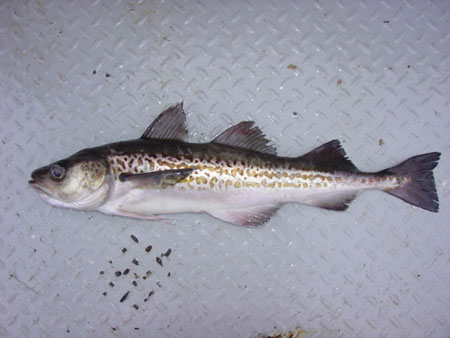
File:Walleye pollock.jpg

Walleye pollock: image wikimedia

Kanai, along with three other firms — Wakkanai Kaiyo in Wakkanai, Hokkaido, Kaiyo Gyogyo in Hachinohe, Aomori Prefecture, and Sato Gyogyo in Shiogama, Miyagi Prefecture — sends boats to Russia’s EEZ to catch walleye pollock. The annual catch quotas in Russia’s EEZ were set in the Russo-Japanese fisheries talks, and this year’s quota for walleye pollock was 10,925 tons, the Fisheries Agency said. Russian border security officials are usually present on Japanese boats to monitor their operations, the sources said. Investigative sources said they often hear of fishing companies paying the Russians and they appear to be wining and dining them as well.

Some good news from Cancun: Japan refuses to extend Kyoto protocol

December 2, 2010

Jun Arima, an official in the government’s economics trade and industry department, in an open session at Cancun bluntly stated that  “Japan will not inscribe its target under the Kyoto protocol on any conditions or under any circumstances.”

Kyoto stop

The Guardian is concerned which is a good sign in itself:

The brief statement…. was the strongest yet made against the protocol by one of the largest emitters of greenhouse gases.

“For Japan to come out with a statement like that at the beginning of the talks is significant,” said one British official. “The forthrightness of the statement took people by surprise.”

If it proves to be a new, formal position rather than a negotiating tactic, it could provoke a walk-out by some developing countries and threaten a breakdown in the talks. Last night diplomats were urgently trying to clarify the position. The move provoked alarm among the G77, the grouping of developing countries who regard the Kyoto protocol as the world’s only binding agreement on climate change cuts. Japan gave no reasons for making its brief statement on the second day of the talks, but diplomats said last night that it represented a hardening of its line. “Japan has stated before that it wants only one legal instrument and that it would be unfair to continue the protocol,” said one official who did not wish to be named.

Bloomberg writes:

China and Brazil led developing nations in saying Japan’s refusal to help extend the Kyoto Protocol to curb greenhouse gas emissions may halt work on a global accord to combat global warming.

A total of 37 developed countries, including Japan, ratified the Kyoto Protocol in 1997, agreeing to set limits on fossil fuel emissions. The Kyoto accord expires in December 2012 and with no other agreement to replace it, delegates at the United Nation climate talks in Cancun, Mexico, say extending the protocol is crucial.

“The Kyoto Protocol is the very basis of the framework to address climate change through international cooperation,” China’s envoy, Su Wei told reporters in Cancun. “If the pillar is collapsed, you can guess the consequences.”

In spite of strong yen, Japan Inc’s sales and profits soar

November 9, 2010

From Asahi News:

Japanese companies posted huge increases in sales and profits in the first half of fiscal 2010, but the “China risks” coupled with the strong yen threaten to pummel performances in the second half.

photo

Toyota Motor Executive Vice President Satoshi Ozawa releases business results in Tokyo on Friday. (The Asahi Shimbun)

Aggregate sales rose 11.6 percent from a year ago, while pretax profits increased 131.7 percent and net profits soared 179.8 percent, according to Nikko Cordial Securities Inc.’s survey of 650 companies listed in the First Section of the Tokyo Stock Exchange that had released their half-year results by Thursday.

But the companies say the business turnaround could be short-lived depending on what happens in China. Chinese exports of rare earth minerals, vital ingredients in high-tech production, were stalled in September when Beijing demanded the release of a Chinese captain whose fishing boat rammed Japan Coast Guard vessels near the disputed Senkaku Islands in the East China Sea. The de facto ban on rare earth exports to Japan came on top of China’s increasingly tight export quotas on the materials.

Chinese imports account for more than 80 percent of clothes sold in supermarkets and other stores operated by Aeon.

Many manufacturers say they have secured rare earth supplies for the short term, but a prolonged delay in delivery would inevitably hit them hard.

Japan is pursuing alternative supply sources in India and elsewhere to reduce Japan’s reliance on China, which accounts for 97 percent of the world’s supply. But such development will take time.

While trading firm Toyota Tsusho Corp. is developing rare earth mines in Vietnam, Executive Vice President Kenji Takanashi said the work “will take at least two to three years.”

Meanwhile, export-oriented companies say their efforts to fend off the impact from the yen’s appreciation are reaching their limits. Toyota Motor Corp., for example, expects currency exchange losses to total 320 billion yen ($3.94 billion) for the year ending in March, which will more than offset its estimated profit rise from sales increases totaling 280 billion yen.