In December NASA had reduced its forecasts for SC24 to a peak sunspot number of 64 being reached in June 2013. Now less than two months later, the latest forecast has been reduced again to a peak sunspot number of 59 to be reached in June / July 2013.
We find a starting time of May 2008 with minimum occurring in December 2008 and maximum of about 59 in June/July of 2013.
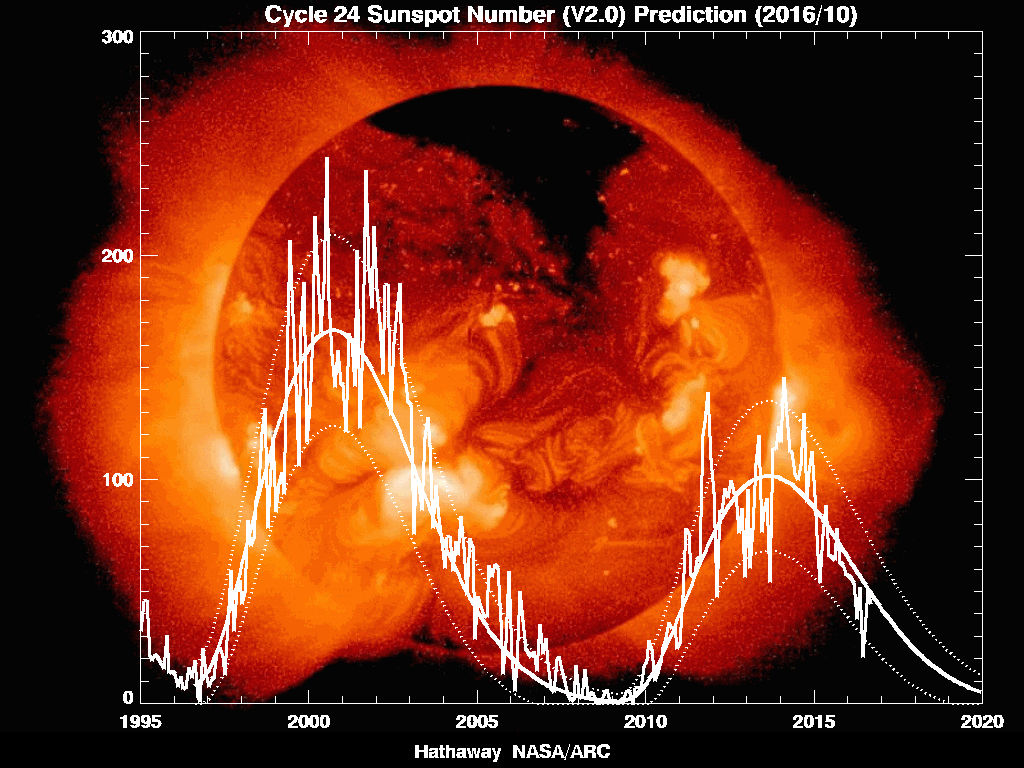
NASA SC24 forecast - January 2011: image NASA
At these levels the current Landscheidt minimum is comparable to SC5 and SC6 – the Dalton Minimum of 1790 to 1830 – where peak sunspot numbers were just over 50. (The earlier Maunder Minimum – 1645 to 1715- was before the modern period of sunspot number measurement and nominally was a period with no significant sunspots – presumably at sunspot numbers of less than 20 in today’s measurement values).
From my previous post:
It is not inconceivable that the SC24 will not peak till early 2014 and will only achieve peak sunspot numbers around 55. Solar cycle 24 could well have a length of 150+ months instead of the nominal 132 months.
The development of the NASA predictions are in the table below:
NASA Forecasts for SC24
| Date of
forecast |
Expected date
of peak |
Expected peak
sunspot number |
| March 2006 | June 2010 | 168 |
| October 2008 | March 2012 | 137 |
| January 2009 | June 2012 | 104 |
| January 2010 | June 2013 | 90 |
| December 2010 | June 2013 | 64 |
| January 2011 | June / July 2013 | 59 |
Related:
https://ktwop.wordpress.com/2010/12/23/is-the-landscheidt-minimum-a-precursor-for-a-grand-minimum/

 The k2p blog