Posts Tagged ‘Science’

Survey and review of integrity at Indian Research Institutions

October 10, 2010

Cases of plagiarism and other scientific misconduct is thought to be increasing in India. The rapid growth in the country in recent years has been mirrored by a growth in the number of research institutions, science publications and number of published papers. The pursuit of advancement of institutional reputations in newly established Universities and the development of personal careers has led to an increased pressure to publish. Scientific funding has not kept pace with the growth of institutions and numbers of people involved in research and this has led to increased competition in the seeking of limited funds. Quality assurance and oversight processes have not kept pace and in many young institutions may even be totally absent. There is little emphasis given to training for scientists or administrators regarding scientific rigour or ethics or integrity.

Indian graduates and scientists are generally highly regarded. There is an increasing focus from outside the country for establishing research and engineering centres in India and for commissioning research at Indian Research Institutions. But there is growing concern about standards and the proper selection and use of Indian scientists and Indian Research Institutions. A need has been expressed for an independent review of the level of integrity at various Institutions.

This need has only been emphasised by the recent high profile cases of plagiarism regarding GM crops where the Minister rejected a report by the 6 top Indian science academies including the Indian National Science Academy and the apparent, wide-spread plagiarism which has, for example, led to the retraction of 3 papers in the Journal Biotechnology Advances.

A survey and review to assess and rank Integrity at Indian Research Institutions has therefore been privately commissioned. The study is to be completed by 1st May 2011 and the first phase of information gathering is expected to continue through February 2011.

Institutions to be included in the survey will be requested individually to make a formal submission.

Institutions or individuals wishing to participate by making unsolicited submissions are invited to do so as detailed in the separate page established here.


Horror! Science cuts

September 25, 2010

science and funding

It is perfectly understandable, predictable and expected that the Science Establishment should find the idea of budget cuts unpalatable. Through the various recent financial crises Universities and Scientific establishments globally have come through relatively unscathed. But like all bubbles that have burst and are bursting it is perhaps time that the protected science funding bubbles took their share of the hit. It is also perhaps time for a return to the quest for scientific knowledge rather than the quest for science funding.

They cannot, on the one hand, use the excuse of “consensus science” to pour money down rotten drains and on the other demand a privileged position protected from the ills being suffered by the majority of society.

Democracy in Science to determine priorities and funding for paths of investigation is both inevitable and correct. But the science itself is indifferent to what the majority vote might think it should be.

In business and management it is almost a cliche that the greatest strides in productivity and effectiveness come at the time of budget and manpower cuts. I see no reason why this should not also apply to science and scientists. The weeping and the tearing of hair would be a little more convincing if it came from third parties and not the Scientific Establishment.

Martin Rees, the president of the Royal Society and all University Vice Chancellors are most perturbed at the spending cuts that might be implemented by the new UK government.

The New Scientist’s Roger Highfield bemoans the damage that could be done to SCIENCE.

Rees was speaking with five university vice chancellors as scientists steel themselves for deep cuts at the Department of Business, Innovation and Skills.

The gory details will be laid bare in October’s Comprehensive Spending Review, in which all government departments have been asked to prepare for budgets to fall by up to 25 per cent, perhaps even more.

In their submission to the Treasury, the Royal Society has described the potential effects of the cuts, where “an X per cent cut would lead to a much more than X per cent decrease in output, because we would lose the most talented people”. They outline three scenarios:

  • 20 per cent cuts are the “game over” scenario, which would cause irreversible destruction and be “very tragic”, said Rees.
  • 10 per cent is the “slash and burn” option with “serious consequences”.
  • Constant cash, a reduction in real terms, “could be accommodated”.

At the Royal Institution, during an event organised by the Campaign for Science and Engineering and the Science Media Centre, Rees also made the point that the UK will be less attractive to mobile talent and young people as other countries invest more in research.

Just to make sure that the Treasury gets the point, the Vice Chancellors also weighed in:

  • Glynis Breakwell of the University of Bath warned about “short termism” and the perils of stop-go funding, which would be “fatal”.
  • Malcolm Grant of University College London described how the cuts will damage research that “touches people’s lives”, squander the investment of the past two decades and damage an asset of great national importance.
  • Andy Haines of the London School of Hygiene and Tropical Medicine outlined how the cuts would harm health research as competitors, such as the US and China, are investing more in these areas.
  • Rick Trainor of King’s College London talked of the damage to long-term research capacity, and Simon Gaskell of Queen Mary, University of London once again underlined the harm to the pool of national talent.

Update: Two more papers retracted by Mount Sinai

September 24, 2010
Mount Sinai School of Medicine logo.png

Image via Wikipedia

There is an epidemic of retractions.

Retraction Watch reports that Gene therapy researcher Savio Woo has retracted two more papers in addition to the 4 retracted earlier.

Mount Sinai School of Medicine researcher Savio Woo, whom Retraction Watch reported last week has already retracted four papers from major journals as two postdocs have been fired from his lab, has retracted two more from Molecular Therapy: The Journal of the American Society of Gene Therapy.

The two papers, both from 2007, were “Metabolic Basis of Sexual Dimorphism in PKU Mice After Genome-targeted PAH Gene Therapy” and “Correction in Female PKU Mice by Repeated Administration of mPAH cDNA Using phiBT1 Integration System.” As Nature noted in its coverage of the other retractions, the papers apparently followed from a now-retracted paper in the Proceedings of the National Academy of Sciences that, as we noted in a previous post, “claimed to have discovered a possible cure for phenylketonuria, or PKU, in mice.”

Li Chen and Zhiyu Li were the pot-docs implicated.

New Scientist permits the sun to join the climate club

September 23, 2010

It does seem as if the AGW establishment are preparing the ground for admitting that the sun is perhaps critical for climate.

The New Scientist runs an editorial today grudgingly admitting that “The sun’s activity has a place in climate science”.

FOR many years, any mention of the sun’s influence on climate has been greeted with suspicion.

People who believe human activity has no effect on the climate staked a claim on the sun’s role, declaring it responsible for the long-term warming trend in global temperatures. Climate scientists were often uneasy about discussing it, fearful that any concession would be misunderstood by the public and seen as an admission that climate sceptics are right.

No one has ever denied that the sun has an effect on climate. But the consensus view has always been that variations in the sun’s activity, such as the 11-year sunspot cycle, have insignificant effects. While this remains true, the latest findings show that the sun might be significant on a more regional scale. It seems changes in solar activity can have consequences ranging from higher rainfall in the tropics to extreme weather events in the north.

Mighty sun

But then they go out of their way in this article (see “The sun joins the climate club”) to denigrate the sun.

THE idea that changes in the sun’s activity can influence the climate is making a comeback, after years of scientific vilification, thanks to major advances in our understanding of the atmosphere.

The findings do not suggest – as climate sceptics frequently do – that we can blame the rise of global temperatures since the early 20th century on the sun. “There are extravagant claims for the effects of the sun on global climate,” says Giles Harrison, an atmospheric physicist at the University of Reading, UK. “They are not supported.”

Where solar effects may play a role is in influencing regional weather patterns over the coming decades. Predictions on these scales of time and space are crucial for nations seeking to prepare for the future.

Over the famous 11-year solar cycle, the sun’s brightness varies by just 0.1 per cent. This was seen as too small a change to impinge on the global climate system, so solar effects have generally been left out of climate models. However, the latest research has changed this view, and the next report by the Intergovernmental Panel on Climate Change (IPCC), due in 2013, will include solar effects in its models.

But the sun does not much care (Beware the Icarus Syndrome) I think for the scientific establishment and will continue to do its own thing.

Habitable planet to be discovered in May 2011?

September 22, 2010

The only thing certain about forecasts is that they are more often wrong than right – and I exclude forecasts made entirely on known science or “laws” of nature where the level of uncertainty is insignificant (e.g. the sun will rise tomorrow). Nevertheless “Future History” which is a study of how forecasts evolve and how accurate they have been is a most powerful tool when making judgements about directions to follow and actions to be taken. In management “Future History” methodology is, I think, one of the most powerful tools for the development of corporate strategies and action plans.

The New Scientist reports that :

“Two researchers have used the pace of past exoplanet finds to predict that the first habitable Earth-like planet could turn up in May 2011”.

In 1965, Intel co-founder Gordon Moore observed that the number of transistors that fit on a chip doubles about once every two years – a trend now known as Moore’s law. Samuel Arbesman of Harvard Medical School in Boston wants to see if scientometrics – the statistical study of science itself – can similarly be used to not only study past progress but also to make predictions.

He and Greg Laughlin of the University of California, Santa Cruz, are testing the idea with exoplanets. Over the past 15 years or so, the pace of planet discoveries has been accelerating, with some 490 planets now known. “It is actually somewhat similar to Moore’s law of exponential growth,” Arbesman says.

To predict when astronomers might find the first planet similar in size to Earth that also orbits far enough from its star to boast liquid water, the team scoured the discovery records of 370 exoplanets.

They focused on two basic properties needed for habitability: a planet’s mass and its surface temperature. They used these two factors to assign each planet a ‘habitability metric’ ranging from 0 to 1, where 0 was uninhabitable and 1 is close to Earth’s twin.

A rough estimate of each planet’s habitability was then plotted against the date of its discovery. Using different subsets of the 370 planets, the researchers made curves from the individual points and extrapolated the curves to find when a planet would be found with a habitability of 1. They then analysed the range of discovery dates to determine which would be most probable.

Habitable planets: http://t2.gstatic.com/images

Their calculations suggest there is a 50 per cent chance that the first habitable exo-Earth will be found by May 2011, a 75 per cent chance it will be found by 2020, and a 95 per cent chance it will be found by 2264.

In fact, exoplanet researchers have made forecasts of the future informally, plotting the mass of planets against the date of discovery to see how the field is progressing. “We’ve done that for many years at conferences,” says Eric Ford of the University of Florida in Gainesville. “The new aspect of this paper is putting an uncertainty on those predictions and unfortunately the uncertainty is quite large.”

One source of uncertainty is how factors like changes in funding and the development of new techniques and technology can alter the pace of discovery. “Like the stock market, past returns are no guarantee of future performance,” Ford says.

“There are always these complex factors of how science is actually done,” Arbesman agrees. But he says the forecasting technique could still prove useful, even if these factors are not accounted for directly. In part, that is because new technologies tend to take a while to ramp up, so they may not lead to sharp jumps in the number of discoveries made.

Previously, Arbesman has quantified how the ease of discovering new mammalian species, chemical elements, and asteroids affects the rate of their discovery. New species and asteroids are more difficult to find the smaller they are, and indeed larger ones are found first. For chemical elements, the opposite is true, since the bigger they are, the rarer and more unstable they tend to be.

After Harvard’s Hausergate, now misconduct at Mount Sinai

September 21, 2010
Mount Sinai School of Medicine logo.png

Image via Wikipedia

Earlier this week, the blog Retraction Watch called attention to four recent paper retractions by noted gene therapy researcher Savio Woo of Mount Sinai School of Medicine in New York City. Today, the school said in a statement that two of Woo’s postdoctoral fellows have been fired for research misconduct and that an internal investigation has cleared Woo of any wrongdoing.

Two of Woo’s post-doctoral fellows at Mount Sinai School of Medicine were dismissed for “research misconduct,” said Ian Michaels, a spokesman for the institution. According to Michaels:

When Dr. Savio L C Woo came to suspect that two post-doctoral fellows in his laboratory may have engaged in research misconduct he notified the Mount Sinai Research Integrity Office. Mount Sinai immediately initiated institutional reviews that resulted in both post-doctoral fellows being dismissed for research misconduct. At no time were there allegations that Dr. Woo had engaged in research misconduct. As part of its review, the investigation committee looked into this possibility and confirmed that no research misconduct could be attributed to Dr. Woo, who voluntarily retracted the papers regarding the research in question. Mount Sinai reported the results of its investigations to the appropriate government agencies and continues to cooperate with them as part of its commitment to adhere to the highest standards for research integrity.

File:HippocraticOath.jpg

Wikipedia: A twelfth-century Byzantine manuscript of the Hippocratic Oath.

According to ScienceInsider, the names of postdocs Li Chen and Zhiyu Li were recently removed from Mount Sinai’s directory. Chen and Li were listed as first authors on the retracted papers. Three  major journals — Proceedings of the National Academy of SciencesHuman Gene Therapy, and the Journal of the National Cancer Institute — recently retracted papers authored by Woo and others.

In a retraction notice issued this month, Woo wrote that:

It was discovered that some of the micrographs in two papers we published [figure 4 in J Natl Cancer Inst 2008;100:1389-1400 (1), and figure 3 in Hum Gene Ther 2009;20:751-758 (2)] are apparently duplicated. This has been reported to the institutional research integrity committee by the authors and while the outcome of an investigation is pending, the undersigned co-authors respectfully request a retraction of both papers and sincerely apologize to our colleagues.

The four papers in question focus on two different areas of gene therapy research. One pair, published in 2008 in the Journal of the National Cancer Institute and in 2009 in Human Gene Therapy, investigate genetically engineered bacteria as a weapon against cancer. The other two papers describe a method for using bacterial enzymes to introduce therapeutic genes. A 2005 paper in the Proceedings of the National Academy of Sciences reports experiments in which mice with the metabolic disorder phenylketonuria appeared to be cured using this method. As a demonstration of the promise of gene therapy, that work garnered some media coverage, includingthis article in Science. A 2008 paper in Human Gene Therapy described the use of the technique in human cells.

Source: http://blog.the-scientist.com/2010/09/20/new-in-a-nutshell/

Harvard reviews Hauser’s work – but is the purpose investigation or vindication?

September 17, 2010
Harvard is reviewing all “relevant” work by Marc Hauser . But there is a large element of “damage control” and “vindication” of Hauser’s co-workers which is mixed in with the investigation. It is to be hoped that they will be able to resist the temptation to stand on the position that if further misconduct by others cannot be rigorously proven then these others can be acquitted. Now that Hauser’s misconduct has been established the onus of proof shifts – and must do so. The default position must be that all his work is now tainted unless shown beyond reasonable doubt to be otherwise.

The focus must be on investigation and not on a pre-planned vindication or on “rescuing” the money spent if the work is suspect.

http://www.thecrimson.com/

With a federal investigation now underway, much of Hauser’s research has been called into question—and with it, the annals of literature that have grown out of it. In response, the Psychology Department at Harvard has set in motion a project to review Hauser’s work and to determine the areas of his groundbreaking research that can be salvaged.

Cotton-top tamarind

In the last 10 years alone, Hauser has published 143 articles and four books, work that has helped form the foundation for an entirely new field of science. “It creates a lot of uncertainty for people in those fields,” said a Harvard psychology professor who asked to remain anonymous, stating that the situation is still evolving. “They may begin to worry about whether they can trust other findings from that lab.”

The department established a committee to begin a process that could include combing through decades of research. “We are starting a process in collaboration with the animal cognition community about how to deal with this,” Carey said. “Clearing the record is the way you deal with the integrity of the science.” Carey said that the department has also assumed the responsibility of vindicating any department members—students and colleagues alike—who may have worked with Hauser in the past.

According to his curriculum vitae, Hauser has advised 24 Ph.D. students and overseen 15 post doctoral students. The CV lists 221 published papers authored or co-authored by him. And in an academic web of peer research, hundreds of published articles cite and work off of Hauser’s research. And in an academic web of peer research, hundreds of published articles cite and work off of Hauser’s research.

Hauser has made a name for himself by executing novel research techniques in the field of animal cognition. His work with primates and cotton-top tamarinds—the subject of Hauser’s only article to have been retracted—has involved a unique set of research skills and costly access to the animals.

“You don’t want to throw out about two decades of groundbreaking work, but you also don’t want to build a science on shaky ground,” said the psychology professor. “How do we rescue millions of dollars of research?” the individual added.

Microscopic secrets

September 12, 2010

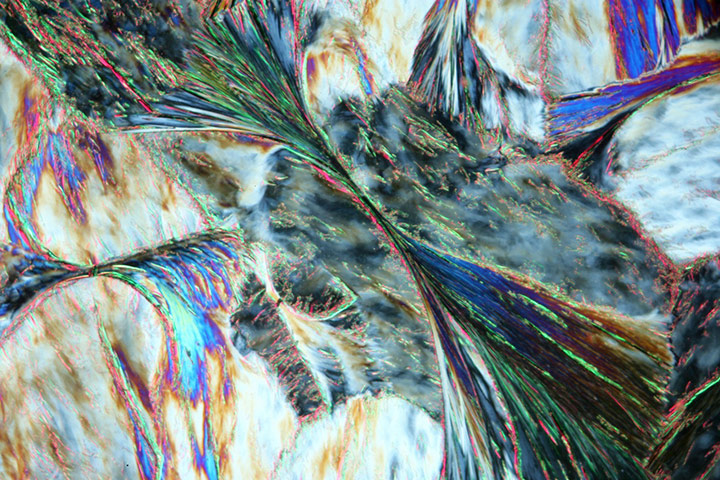
The Guardian reports that Spike Walker was awarded the Royal Photographic Society‘s combined Royal Colleges medal for his ‘outstanding contribution to photography and its application in the service of medicine’. A retired schoolteacher, Spike produces photomicrographs in his garage, which he has converted into a laboratory

Dopamine is a key neurotransmitter released in our brains when we do something rewarding. The dopaminergic system is behind most good feelings we have, and it is also the chemical that is targeted by highly addictive drugs such as cocaine.

http://thebeautifulbrain.com/wp-content/uploads/2010/09/Dophamine.jpg

The Beautiful Brain: To create this beautiful micrograph of dopamine crystals, Spike Walker, who won Thursday evening’s Royal Photographic Society‘s Combined Royal Colleges Medal, shone polarized light at the minute chemical structures. The crystals reflect light at different wavelengths depending on their orientations within the overall chemical structure. According to Walker, using this technique highlights more detail in the crystal structure than regular observation through a microscope.

Crystals of stearic acid, a saturated long-chain fatty acid found in animal fat and cocoa butter.

http://static.guim.co.uk/sys-images/Guardian/Pix/pictures/2010/9/8/1283953758659/Crystals-of-stearic-acid-010.jpg

Bike blog: Crystals of stearic acid

Michael Mann and Marc Hauser

September 4, 2010

I am not sure if the cases of Marc Hauser(Harvard)  of Hausergate and Michael E Mann (Penn State and the University of Virginia) of Climategate are strictly comparable since the two gates follow different routes in the faking of science.

Climategate was more of a group activity by a small clique with a great deal of group-think, whereas Hausergate was much more solitary.  The peer-review process was perverted to an end by the Climategate gang but this is not apparent with Hauser. Mann’s “hockeystick” was more a “fudging” of some data, “cherry-picking” and massaging statistical method to support a pre-determined result while Hauser seems to have just plain faked the data he wanted to support his personal theories. The pursuit of tenure and publications and fame (and some associated fortune) are probably common to both cases.

Climategate however affected policy and had a clear political agenda. Many involved around Climategate and the IPCC have murky ties to the multi-billion carbon scam. In Hausergate the political agenda, if any, is rather soft.

But what is noteworthy is the increase in the number of such comparisons being made and that such comparisons seem appropriate:

  1. If Michael Mann Had Worked At Harvard Instead Of Uva, Would He Now Be Working At Burger King Or Mcdonald’s?
  2. David Sheffield ’11: Scientific misconduct
  3. Monkey business?
  4. “HAUSERGATE” IS GOOD FOR SCIENCE
  5. Two Different Approaches to Academic Monkey Business

Amazing: Hauser “solely responsible” but still maintains control of his lab!!

September 3, 2010

Amazing!

The Harvard Crimson reports that:

Harvard Psychology Professor Marc D. Hauser will remain in charge of his laboratory in William James Hall under “supervision established by the Dean of the [Faculty of Arts and Sciences],” a University official said yesterday.

FAS spokesman Jeff Neal declined to elaborate on the nature of the supervision, stating only that FAS Dean Michael D. Smith had imposed the additional oversight.

Neal added that graduate and post-doctoral students were given the option of switching advisers or continuing their research under Hauser “in order to avoid potential disruption to their careers.

Meanwhile, University of Washington Psychology Professor Michael D. Beecher said “people should be patient and let this thing play out and not rush to judgment on Marc.”

“I’m not sure to what extent the problem is Marc was fast and sloppy—and I don’t think he will be anymore,” he said.

“Fast and sloppy” is the current euphemism it seems at the University of Washington for faking results. Fatuous words about “not rushing to judgement”. 15 years ought to be enough. Hauser has been playing this game at least since 1995.

The wagons indeed are circling but while Hauser’s ethics are in tatters those of Harvard with their reluctance to take a stand do not impress much either.

http://www.nonprofituniversityblog.org/wp-content/uploads/double-standards.png