Archive for September, 2010

Saudi Arabia vulnerable to volcanoes

September 28, 2010

Saudi Arabia’s deserts are not usually associated with volcanic activity but Reuter’s reports that:

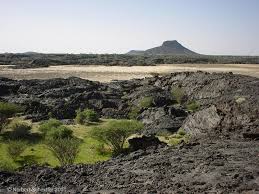
Fissures formed in western Saudi Arabia during the earthquake swarm

Magma has worked its way up to just under the surface in a remote region of northwest Saudi Arabia, causing a flurry of small to moderate quakes and threatening to form a new volcano, researchers said Sunday. A swarm of 30,000 quakes shook the region of Harrat Lunayyir from May to June last year and opened an 5-mile long rift, the U.S. Geological Survey team reported.

A wary Saudi government evacuated 40,000 residents at the time but has since let them move back home. But the residents should be ready to leave again if the ground starts to shake, the USGS team reported in the journal Nature Geoscience.

Harrat Lunayyir volcano is located in NW Saudi Arabia

“This finding indicates that the region is at risk from significant geohazards,” John Pallister of the USGS and colleagues at King Abdullah University of Science and Technology in Saudi Arabia and elsewhere wrote. The area is known for its lava fields, called harrat in Arabic, as well as small volcanic cones and volcanic ash called tephra. “The 2009 intrusive episode at Harrat Lunayyir, along with geomorphically young lava and tephra deposits are reminders that, although eruptions are not frequent, the harrat fields remain active and potentially hazardous,” they wrote.

Ancestors to the rescue? Mammoth ivory could reduce elephant poaching.

September 28, 2010

Elephant poaching in Africa continues fuelled by the demand for ivory – even illegal ivory. Yesterday 90kg of illicit ivory was seized entering Thailand from Ethiopia.

African elephant

Twenty years after the international trade in ivory was banned the killing of elephants for their tusks is still widespread. From a population of about 5 million African elephants in 1950, numbers reduced to about 450,000 in 1989 due to loss of habitat and the ivory trade. Since the ban in 1990 numbers have increased but only by about 100,000 and significantly less than hoped for. In 2007 45 elephants were killed by poachers in Kenya alone and in 2009 this had increased to 271. Mass poaching still occurs all over Africa and last year elephants in Sierra Leone were wiped out at its only Wildlife Park. One ton of ivory from about 100 elephants was seized in Cameroon last year on its way to China.

The Woolly Mammoth at the Royal BC Museum, Vic...

Wikipedia: Woolly Mammoth

But modern day elephants may get help from an unlikely source. Their woolly mammoth ancestors who became extinct 4000 years ago are beginning to throw their dead weight around as they emerge from under the Siberian permafrost. Every spring and summer mammoth carcases are revealed in Siberia and it is estimated that there are more than 150 million carcases preserved and recoverable. They have been recovered for thousands of years whenever they have been found. But now with the use of aerial surveys and with the high demand for ivory, mammoth ivory is beginning to be recovered in large quantities and used instead of illegal ivory. It is promoted as “ethical” ivory and the prices are high enough for Russian entrepreneurs to expand their digging.

“Russia’s mammoth ivory industry expands: what effect on elephants?”

by Esmond Martin, Chryssee Martin, Pachyderm No. 47 January–June 2010
http://www.pachydermjournal.org/index.php/pachy/article/view/171/107

Abstract: The commerce in woolly mammoth tusks (Mammuthus primigenius) in Russia, the main source for this raw material, has been going on for thousands of years, but during the communist period (1917-1989) the trade declined sharply. Since the early 1990s the domestic and international trade in these tusks has greatly expanded due to the freeing up of the Russian economy, more foreign visitors to the country and greater demand due to the prohibition of international trade in elephant ivory in 1990. In recent years, 60 tonnes of mammoth tusks have been exported annually from Russia, mostly to Hong Kong for carving in mainland China. Additionally, there are local carving industries in several areas of Russia, but most of the objects emerging from these locales are sold within the country. Many thousands of recently-made mammoth ivory items are for sale in Asia, Europe and North America. People wishing to buy an elephant ivory object may purchase a similar one crafted from mammoth ivory that is legal and free of cumbersome paperwork. Mammoth ivory items are not for sale in Africa. If mammoth objects were to be offered in Africa, they could serve as cover for elephant ivory items. There are pros and cons for supporting a mammoth ivory trade in respect to elephant conservation. At the moment, however, there is no evidence that the worldwide mammoth ivory trade is adversely affecting the African or Asian elephant. For this reason, and because the species is extinct and large quantities of tusks are still available in Siberia, the commerce in mammoth ivory should not be banned.

The Telegraph reports:

It is a phenomenon that has Russia’s businessmen rubbing their hands together as mammoth ivory can command a much higher price than elephant ivory and sells for as much as £330 per kilogram. Elephant conservationists are hoping that the guilt-free mammoth ivory trade continues to flourish and eventually squeezes out the illegal trade in elephant tusks altogether.

“The large quantities of mammoth tusks imported into Hong Kong, which are mostly sent to the Chinese mainland for carving, probably reduce demand for elephant ivory from Africa,” the report, in a specialist journal called Pachyderm, concluded. “This may in the long run lower elephant ivory prices and reduce incentives to poach elephants.”

Size comparison animalpicturesarchive.com

Is Greenpeace fabricating data?

September 28, 2010

In July this year Greenpeace trumpeted

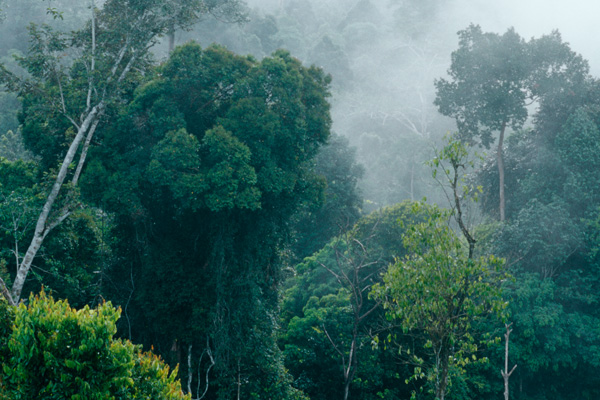
rain forest

“A new investigative report from Greenpeace, ‘How Sinar Mas is Pulping the Planet’, shows how major brands like Walmart, Auchan and Kentucky Fried Chicken (KFC) are fueling climate change and pushing Sumatran tigers and orang-utans towards the brink of extinction. These companies are using or selling paper made from Asia Pulp and Paper (APP), part of the notorious Sinar Mas group that is destroying Indonesia’s rainforests and carbon-rich peatlands.”

The Jakarta Globe reports

Sinar Mas commissioned an independent audit which has now accused Greenpeace of “false and misleading information to attack a company’s credibility”. International Trade Strategies Global (ITS) conducted a peer-review on Greenpeace’s report, “How Sinar Mas is Pulping the Planet.”

“The evidence shows that Greenpeace provided quotes that don’t exist, maps that show concessions that don’t exist, and used source material with high margins of error that was cited as absolute fact,” said Alan Oxley, chief executive office of the Melbourne-based ITS Global on the press release.

Oxley said the Greenpeace report was highly misleading and indefensible. In addition, the audit stated that a map in the Greenpeace report shows four concessions which don’t exist. “Sadly this is not an isolated incident. Greenpeace has exaggerated claims in the past.  When we see reports like this with such obvious factual inaccuracies it makes us call into question the real Greenpeace agenda, risking the greater good to achieve its own political ends.”

However, Bustar Maitar, lead forest campaigner for Greenpeace Indonesia, dismissed ITS’s report, saying it was biased. “If they claim it’s an independent report, it’s a joke because Alan Oxley is speaking as an APP representative,” he said.

New Zealand to use dung beetles to combat global warming!

September 27, 2010
Allot of dung beetles having a feast on horse ...

Dung beetles feasting on horse manure

The Dung Beetle Release Strategy Group (it really does exist) says the introduction of up to 11 foreign species of dung beetle into New Zealand, which hoover up animal dung for food, will lead to a reduction in the greenhouse gas byproduct of dung, nitrous oxide.

Group spokesman Andrew Barber said the introduction of the beetles from Australia, the south of France, Spain and South Africa, would bring several benefits for farmers. Among these were the beetles’ ability to improve pastures and soil profile by tunnelling 30cm to 60cm to bury manure, aerating the soil and enabling better water penetration, reducing the need for fertilisers.

Mr Barber said they would also reduce greenhouse gas emissions from dung. The beetles aid carbon sequestration by storing the carbon contained in the organic matter deep in the soil.

Dung beetle

Image via Wikipedia: Dung beetle

Entomologist Ruud Kleinpaste doubted the introduction of dung beetles would cause an ecological upheaval, despite earlier animal imports such as possums, rabbits and mustelids that have become expensive problems. He said it was unlikely that they would compete with the 17 species of native dung beetles in native forests. But he urged caution. “We have mammals here now and the poo is causing nitrification and causing major pollution on our farms,” he said.

Mr Barber said that if the idea were approved it could take 15 to 20 years for the beetles to become fully established and for their labours to become obvious.

Source: http://www.nzherald.co.nz/the-changing-world/news/article.cfm?c_id=1502962&objectid=10675713

UN appoints an “Alien Ambassador” – Alien travel to earth suspended.

September 27, 2010
Logo of UN Office for Outer Space Affairs

UNOOSA

This is probably the kiss of death for any prospective alien visits to earth.

An Alien Ambassador is to be appointed by the United Nations to act as the first point of contact for aliens trying to communicate with Earth.

In the midst of a global financial meltdown and a painful recovery the UN is displaying a remarkably insensitive – but not unsurprising – sense of priorities.

But the required quota of Malaysian UN appointees has probably been filled.

Take me to your leader

But good luck anyway to Mrs Mazlan Othman, a Malaysian astrophysicist, who is going to co-ordinate humanity’s response if and when extraterrestrials make contact. This sounds like a well-paid and tenured appointment which should last at least for life. Mrs Othman is currently head of the UN’s little known Office for Outer Space Affairs (Unoosa).

She is quoted to have said:

“The continued search for extraterrestrial communication, by several entities, sustains the hope that some day human kind will received signals from extraterrestrials. When we do, we should have in place a coordinated response that takes into account all the sensitivities related to the subject. The UN is a ready-made mechanism for such coordination.

Under the Outer Space Treaty of 1967, which Unoosa oversees, UN members agreed to protect Earth against contamination by alien species by “sterilising” them.

Alien travel agents must now be striking Earth off their tours.

Oh Dear !

Graphene Ultracapacitors

September 27, 2010

Graphene is very much the material of the moment.

But graphene actually dates back to 1961. Hanns-Peter Boehm and coauthors Clauss, Fischer, and Hofmann isolated and identified single graphene sheets by transmission electron microscopy (TEM) and X-ray diffraction in 1961 and authored the IUPAC (International Union of Pure and Applied Chemistry) report formally defining the term graphene in 1994. He must have been surprised to learn of its discovery in 2004.

Graphene is a flat monolayer of carbon atoms tightly packed into a two-dimensional (2D) honeycomb lattice, and is a basic building block for graphitic materials of all other dimensionalities. It can be wrapped up into 0D fullerenes, rolled into 1D nanotubes or stacked into 3D graphite.

“Electrons in graphene, obeying a linear dispersion relation, behave like massless relativistic particles. This results in the observation of a number of very peculiar electronic properties – from an anomalous quantum Hall effect to the absence of localization – in this, the first two-dimensional material. It also provides a bridge between condensed matter physics and quantum electrodynamics, and opens new perspectives for carbon-based electronics.” (M.I. Katsnelson)

Properties of graphene are still being discovered and are leading to new studies of relativity and a wave of potential applications in physics, electronics, chemistry and biology (transistors, gas molecule detection, nano-ribbons, nano-tubes, bio-devices and transparent electrodes).

graphene-structure

graphene-structure:www.thp.uni-koeln.de/graphene08/

The IEEE reports that the ultracapacitor—the battery’s quicker cousin—just got faster and may one day help make portable electronics a lot smaller and lighter.  John Miller, president of the electrochemical capacitor company JME, in Shaker Heights, Ohio, and his team reported the new ultracapacitor design this week in Science.

Ultracapacitors don’t store quite as much charge as batteries but can charge and discharge in seconds rather than the minutes batteries take. Using nanometer-scale fins of graphene, the researchers built an ultracapacitor that can charge in less than a millisecond. This agility, its designers say, means that the devices could replace the ubiquitous bulky capacitors that smooth out the ripples in power supplies to free up precious space in gadgets and computers.

ultracapacitor cell: venturebeat.com

One team member, Ron Outlaw, a material scientist at the College of William and Mary, in Williamsburg, Va., came up with an electrode consisting of up to 4 sheets of graphene —a one-atom-thick form of carbon with unusual electronic properties. The graphene was formed so that it stuck out vertically from a 10-nanometer-thick graphite base layer.

Miller’s team, which also included Brian Holloway, a program manager at the Defense Advanced Research Projects Agency (DARPA), tested its graphene ultracapacitor in a filtering circuit, part of an AC rectifier. Many rectifiers leave a slight AC echo behind, called a “voltage ripple,” and it’s the capacitor’s job to smooth it out. In order to do that, the capacitor needs to respond well at double the AC frequency—120 hertz in the United States. Most commercial ultracapacitors fail at this filtering role at around 0.01 Hz, but when Miller’s team tested its ultracapacitor in such a 120-Hz filtering circuit, it did the job. That means the smaller ultracapacitors could replace the big electrolytic capacitors that do the filtering now. Miller estimates that a commercial version, operating at 2.5 volts, could be less that one-sixth the size of any other 120-Hz filtering technology.

But even if graphene proves to be more promising than carbon nanotubes, silicon isn’t going away anytime soon.
Dyson spheres and Solar Wind Power by satellite

September 26, 2010

Freeman Dyson is credited with being the first to formalize the concept of the Dyson sphere in his 1959 paper “Search for Artificial Stellar Sources of Infra-Red Radiation”, published in the journal Science.

Dyson Sphere: centauri-dreams.org

However, Dyson was inspired by the mention of the concept in the 1937 science fiction novel Star Maker, by Olaf Stapledon, and possibly by the works of J. D. Bernal and Raymond Z. Gallun who seem to have explored similar concepts in their work. Such a “sphere” would be a system of orbiting solar power satellites meant to completely encompass a star and capture most or all of its energy output. Dyson speculated that such structures would be the logical consequence of the long-term survival and escalating energy needs of a technological civilization.

The New Scientist carries a report on  a speculation about using the solar wind to generate power for use on earth, based on the paper by  Harrop and Schulze-Makuch in the International Journal of Astrobiology, “The Solar Wind Power Satellite as an alternative to a traditional Dyson Sphere and its implications for remote detection”.

The concept for the so-called Dyson-Harrop satellite begins with a long metal wire loop pointed at the sun. This wire is charged to generate a cylindrical magnetic field that snags the electrons that make up half the solar wind. These electrons get funnelled into a metal spherical receiver to produce a current, which generates the wire’s magnetic field – making the system self-sustaining.

Dyson-Harrop Satellite

Any current not needed for the magnetic field powers an infrared laser trained on satellite dishes back on Earth, designed to collect the energy. Air is transparent to infrared so Earth’s atmosphere won’t suck up energy from the beam before it reaches the ground.

Back on the satellite, the current has been drained of its electrical energy by the laser – the electrons fall onto a ring-shaped sail, where incoming sunlight can re-energise them enough to keep the satellite in orbit around the sun.

A relatively small Dyson-Harrop satellite using a 1-centimetre-wide copper wire 300 metres long, a receiver 2 metres wide and a sail 10 metres in diameter, sitting at roughly the same distance from the sun as the Earth, could generate 1.7 megawatts of power – enough for about 1000 family homes in the US.

A satellite with the same-sized receiver at the same distance from the sun but with a 1-kilometre-long wire and a sail 8400 kilometres wide could generate roughly 1 billion billion gigawatts (1027 watts) of power, “which is actually 100 billion times the power humanity currently requires”, says researcher Brooks Harrop, a physicist at Washington State University in Pullman who designed the satellite.

Solar panels cost more per pound than the copper making up the Dyson-Harrop satellites, so according to Harrop, “the cost of a solar wind power satellite project should be lower than a comparative solar panel project”.

A smaller version of this satellite could help power some space missions perhaps in helping generate power for something like the Ulysses spacecraft, which went around the poles of the sun.


Fascinating stuff!

It occurs to me that getting a sharp enough focus for the laser beam may be restricted – everything else becoming feasible –  to “base stations” having no atmosphere and therefore located in space not too far from the satellite.

A point to note about all such schemes where man’s power generation needs on earth are satisfied by using off-earth sources of energy (including solar energy which does not normally get to earth) is that all such power will eventually be dissipated as heat into the first 100m of the earth’s atmosphere. If such power is significant with respect to the solar radiation reaching the earth then cooling will need to be arranged for.

http://en.wikipedia.org/wiki/Dyson_sphere

Kilimanjaro ice loss was due to tree felling

September 26, 2010

Mt. Kilimanjaro: blog.gohoto.com

The New Scientist reports a new paper by Nicholas Pepin from the University of Portsmouth and his colleagues which suggests that extensive local deforestation in recent decades has likely reduced this flow of  warm, moist air up the Kilimanjaro mountainside depleting the mountain’s icy hood. Trees play an important role here by providing moisture through transpiration which add to the ice cap.

The montane circulation on Kilimanjaro, Tanzania and its relevance for the summit ice fields: Comparison of surface mountain climate with equivalent reanalysis parameters

by N.C. Pepin, W.J. Duane and D.R. Hardy

Article in press: Global and Planetary Change

Of course it’s possible that global warming led – by some unknown mechanism – to the deforestation — but it seems highly unlikely.

“We don’t want to be poor any more” – but the WWF is not listening

September 26, 2010

Laos says it rejects calls for a dam moratorium on the Mekong River because it wants cheap power to develop its economy despite threats to fish habitats. The Southeast Asian nation moved this week to secure regional approval for the first major hydropower plant on its stretch of the lower Mekong in the face of protests from international conservation groups. The Sayaboury dam is to be built across a part of the Mekong that flows through Laos.

Mekong and its main tributaries.

Wikipedia: Mekong and tributaries

The backers of the 1260 MW Sayaboury Hydro project include the World Bank and the Electricity Generating Authority of Thailand (EGAT), a state utility that signed an agreement in Laos in June to buy power once the new dam’s turbines come to life. The BBC reports that the World Bank would provide loans and guarantees for the $1.2bn project. The decision comes after nearly 10 years of discussions with the Laos government.

Laos is a poor, landlocked country which has few viable industries. But it does have plenty of mountains and rivers, and that is why it is pinning its hopes for the future on hydroelectric power. Nam Theun 2 is the country’s largest dam project, on a tributary of the mighty Mekong. It is designed to produce electricity for export to neighbouring Thailand, earning valuable foreign currency that Laos says it will use to alleviate poverty.

“We don’t want to be poor any more,” said Viraphone Viravong, director general of the country’s energy and mines department. “If we want to grow, we need this dam.”

But needless to say the WWF and The Guardian are opposed:

Giant Catfish _Pangasianodon gigas_ ©Sut.jpg

Giant dog-eating Catfish

Catfish the length of cars and stingrays that weigh more than tigers are threatened by the proposed 800m barrier.

“This dam is the greatest challenge the Mekong River Commission has faced since it was formed. It is the most serious test of its usefulness and relevance,” said Marc Goichot, of the WWF. “It is already very clear this dam would amplify and accelerate the negative impacts of Chinese dams to the Mekong delta. What are the other impacts?”

It has taken 10 years to get this far, but WWF supports a delay in the approval of the mainstream dams, including the Sayabouly hydropower dam in Sayabouly Province, Laos — and let the poverty and misery continue.

Horror! Science cuts

September 25, 2010

science and funding

It is perfectly understandable, predictable and expected that the Science Establishment should find the idea of budget cuts unpalatable. Through the various recent financial crises Universities and Scientific establishments globally have come through relatively unscathed. But like all bubbles that have burst and are bursting it is perhaps time that the protected science funding bubbles took their share of the hit. It is also perhaps time for a return to the quest for scientific knowledge rather than the quest for science funding.

They cannot, on the one hand, use the excuse of “consensus science” to pour money down rotten drains and on the other demand a privileged position protected from the ills being suffered by the majority of society.

Democracy in Science to determine priorities and funding for paths of investigation is both inevitable and correct. But the science itself is indifferent to what the majority vote might think it should be.

In business and management it is almost a cliche that the greatest strides in productivity and effectiveness come at the time of budget and manpower cuts. I see no reason why this should not also apply to science and scientists. The weeping and the tearing of hair would be a little more convincing if it came from third parties and not the Scientific Establishment.

Martin Rees, the president of the Royal Society and all University Vice Chancellors are most perturbed at the spending cuts that might be implemented by the new UK government.

The New Scientist’s Roger Highfield bemoans the damage that could be done to SCIENCE.

Rees was speaking with five university vice chancellors as scientists steel themselves for deep cuts at the Department of Business, Innovation and Skills.

The gory details will be laid bare in October’s Comprehensive Spending Review, in which all government departments have been asked to prepare for budgets to fall by up to 25 per cent, perhaps even more.

In their submission to the Treasury, the Royal Society has described the potential effects of the cuts, where “an X per cent cut would lead to a much more than X per cent decrease in output, because we would lose the most talented people”. They outline three scenarios:

  • 20 per cent cuts are the “game over” scenario, which would cause irreversible destruction and be “very tragic”, said Rees.
  • 10 per cent is the “slash and burn” option with “serious consequences”.
  • Constant cash, a reduction in real terms, “could be accommodated”.

At the Royal Institution, during an event organised by the Campaign for Science and Engineering and the Science Media Centre, Rees also made the point that the UK will be less attractive to mobile talent and young people as other countries invest more in research.

Just to make sure that the Treasury gets the point, the Vice Chancellors also weighed in:

  • Glynis Breakwell of the University of Bath warned about “short termism” and the perils of stop-go funding, which would be “fatal”.
  • Malcolm Grant of University College London described how the cuts will damage research that “touches people’s lives”, squander the investment of the past two decades and damage an asset of great national importance.
  • Andy Haines of the London School of Hygiene and Tropical Medicine outlined how the cuts would harm health research as competitors, such as the US and China, are investing more in these areas.
  • Rick Trainor of King’s College London talked of the damage to long-term research capacity, and Simon Gaskell of Queen Mary, University of London once again underlined the harm to the pool of national talent.