Archive for the ‘Genetics’ Category

California Chrome is a great horse but no Big Red

June 8, 2014

Well, California Chrome came up short. He is not the “tremendous machine” that Big Red was!

I am no horse racing fanatic but much of my lingering interest was first engendered by Big Red (Secretariat) and his exploits. Over the years my interest has declined but it was rekindled this year as the California Chrome “rags to riches” story has unfolded.

WaPoHis humble origins — born to an $8,000 mare, by a sire with a $2,000 stud fee — turned him into a cult figure and then a superstar following his wins in Louisville and Baltimore. But was he a “one-in-a-bazillion” champion, as co-owner Coburn called him this week? Or another Triple Crown pretender who lacked the stamina, sturdiness or stomach to win for the third time in five weeks against a pack of rivals?

Only 11 horses have ever won the Triple Crown. Big Red was the ninth winner after a gap of 25 years in 1973. Then Seattle Slew triumphed in 1977 and Affirmed won the Triple in 1978. And now it will be at least a gap of 37 years before there is another Triple Crown winner.  This year, California Chrome had won the Kentucky Derby and the Preakness and was attempting to be the 12th winner. He was the odds-on favourite, but yesterday he came up short and finished fourth in the Belmont Stakes.

Secretariat was special. When he died in 1989 his heart was found to be almost twice as large as “normal”. Big Red still holds the record for all the 3 races (the Kentucky Derby, the Preakness Stakes and the Belmont Stakes). Maybe he was a freak. In any case, in forty odd years of trying, genetics and horse breeding “science” have failed to produce a horse to match.

Wiki: Secretariat’s genetic legacy may be linked in part to the likelihood that he carried the “x-factor” (a trait linked to a large heart, carried only on the X chromosome) and thus, a trait Secretariat could only pass on via his daughters. However, it is yet to be proven whether the x-factor increases athletic ability.

I listened to the running of the 1973 Belmont Stakes on radio (live telecasts across the Atlantic were not around). It was not an exciting race in itself because Big Red was never threatened. It was enormously exciting as the culmination of a season. It was awe-inspiring in the manner and margin of his winning. At the finish line he was 31 lengths ahead and still going away.

But nowadays with the magic of YouTube, his majestic run is universally available.

“THE TREMENDOUS MACHINE”

Why are Indian-Americans sweeping the US spelling bee?

May 30, 2014

I have watched the US spelling bee competition on TV a few times when visiting the US. For excitement and entertainment I would place it below the Olympics, the World Cup and a good cricket test match but above a 20/20 junket or the Eurovision song contest (which in recent times has just become ridiculous).

But there is something remarkable that is showing up. This year 6 out of the 12 championship finalists, and the top four, were of Indian origin.

The HinduIndian-Americans Sriram Hathwar of New York and Ansun Sujoe of Texas shared the title after a riveting final-round duel in which they nearly exhausted the 25 designated championship words. ………. The past eight winners and 13 of the past 17 have been of Indian descent, a run that began in 1999 after Nupur Lala’s victory, which was later featured in the documentary “Spellbound.”

American Bazaar:

…… although it’s an American competition open to students from all over the country, students of Indian origin have dominated the competition by a significant margin over the last several years. In fact, in both 2012 and 2013, all the top three contestants were of Indian origin.

From 2008-2013, the winner of the Scripps National Spelling Bee has been Indian American: Sameer Mishra, Kavya Shivashankar, Anamika Veeramani, Sukanya Roy, Snigdha Nandipati, and Arvind Mahankali. Since 1999, only five winners have not been of Indian descent, meaning 67% of winners over the last 15 years have been Indian.

Is the ability to spell then learned or is it genetic or both? From the manner in which Indian-Americans have swept this competition in the last few years, there is clearly some genetic component.

Spelling ability is not a measure of intelligence. But intelligence is a necessary – but not a sufficient – ingredient.  Excellent spelling ability as exhibited in the spelling bee competitions would seem to also need memory, drive, focus, education, supportive families and peers in addition. They also practice a very great deal.  A recent winner trained for 4 hours a day and a few thousand hours in total and committed some 100,000 words to memory. Spelling ability and reading skills are known to be linked but it is not too clear as to which depends upon which. Good spellers have been found in some surveys to be more organised than the “average”.

The Age: Kids who are good readers are often great spellers too, and now Australian scientists have uncovered a genetic explanation as to why. Researchers from Sydney, Melbourne and Brisbane tracked 650 sets of young twins to work out how much reading and spelling abilities are controlled by genes. 

The study found that the ability to read and spell were about 50 per cent inherited, with a child’s upbringing and schooling controlling the other half. But what was most remarkable, says University of Melbourne researcher Anne Castles, was the discovery that the same genes were involved in both activities. …… 

…… The scientists also evaluated the two main skills involved in reading – the ability to sound out words aloud and the ability to recognise words by sight that don’t follow the phonic rules, like “yacht”.

They discovered that these specific skills involved two distinctly different sets of genes, which explains why kids are often competent at doing one but not the other.

Poor spellers may be subject to a neurological deficiency. Lesions in the right brain which impaired some visual activity are known to have also causes spelling difficulties – a “spelling dyslexia”. It is also thought that personality traits have some connection to the ability to spell. It is thought that spelling ability is associated with a deep interest in language, its roots, in words and how they sound. Many good spellers make and use mental, visual representations of words.

There may not be a specific spelling gene, but genetics surely have a part to play.

Learn that word:

Why is a population that makes up roughly 1% of the US population so heavily represented at the event? 

1 –  The American school system and culture has a conflicted relationship with memory-based learning. Indian culture values academic achievement highly and values memorization as well, as a building block of higher-level knowledge. This, by the way, is also the reason why Indian Americans are not only dominating the Spelling Bee, but also produce much more than their statistical share of doctors, engineers and executives. 

2 –  Indian Americans/South Asians maintain tightly knit family and social communities, and place a paramount value within their community on academic performance. Social expectations around academic performance tend to be much higher than in other demographic groups. Academic success therefor has a big social pay-off.

3 –  Last but not least, the success at Spelling Bees is fostered by various initiatives that exclusively support Indian American/South Asian students. NorthSouth Foundation and the South Asian Spelling Bee are both set up to support the Indian American/South Asian community of aspiring champions. 

It’s great to win the first prize at the Scripps National Spelling Bee by competing with 10 million students for over $40,000 in prizes. There is certainly more incentive to dedicate the thousands of hours of intense study needed knowing that you can also apply these skills at the South Asian Spelling Bee, where you compete with just a few thousand other kids for a $10,000 first prize. 

Junk DNA is the genome’s hedging instrument

May 19, 2014

I have always been somewhat confused by the manner in which the word “junk” has been attached to the repeating sequences of DNA in our genes which – as far as was known – had no function, and also for high risk securities which offer high returns.

There is a new paper in PLOS Genetics called The Case for Junk DNA (which is a little beyond me) but there is also an eminently readable commentary by Carl Zimmer. My take-aways from Zimmer’s piece are:

  • Genomes are the pattern for life.
  • Genomes contain genes.
  • Genes are made up of DNA.
  • Our DNA is a string of units called bases.
  • Our cells read the bases in a stretch of DNA–a gene–and build a molecule called RNA with a corresponding sequence.
  • The cells then use the RNA as a guide to build a protein.
  • Our bodies contain many different proteins, which give them structure and carry out jobs like digesting food.
  • The human genome contains about 20,000 protein-coding genes.
  • Protein-coding genes only make up about 2 percent of the human genome. 
  • In the 1950’s the non-coding 98% began being called “junk” genes.
  • Functions performed by some of these “junk” gene are constantly being found. The ENCODE project has assigned some bio-chemical function to about 80% of the genome.
  • Having large amounts of truly “junk” DNA is a protection against mutation (by making most mutations of the junk portion of no consequence). Evolution requires “junk”. A junk-free genome would be too vulnerable to mutations to survive (mutational meltdown). This suggests that humans need about 90% junk DNA to avoid mutational meltdown.
  • Junk portions are also important for evolution since protein-coding genes can evolve from these non-coding regions.
  • Much of our genome is made up of viruses, and every now and then, evolution has used those viral genes. 

From all of this I come to the layman’s understanding that about 2% of our genome is made up of about 20,000 active protein-coding genes, another 10 – 30% has some active bio-chemical function (such as switching genes on of off), some unknown portion is passive material which could feasibly be activiated and the remainder is the buffer material which both provides protection from rampant mutation and provides a pool resource for future evolution.

Junk bonds are risky investments, but have speculative appeal because they offer much higher yields than safer bonds. Companies that issue junk bonds typically have less-than-stellar credit ratings, and investors demand these higher yields as compensation for the risk of investing in them. A junk bond issued from a company that manages to turn its performance around for the better and has its credit rating upgraded will generally have a substantial price appreciation. 

Now as it becomes  clear that not all sections of non-protein-coding  DNA are entirely useless, I begin to see an analogy between “junk DNA” and “junk bonds”. A high – but manageable – risk but giving high yield on the one hand and a high – but manageable –  genetic redundancy giving high evolutionary appreciation on the other.

Junk DNA is the genome’s hedging instrument.

Vertical species evolution (rather than horizontal evolution for mere survival) is then probably dependent upon achieving some optimum  balance between genome size, coding DNA and junk DNA.

This is my attempt to apply a similar description to junk DNA,

Junk DNA are the genome’s hedge instruments and have evolutionary appeal because they offer a much wider range of evolutionary possibilities. Species that build up massive genomes with very high levels of junk DNA typically lie lower on the evolutionary hierarchy and evolve horizontally rather than vertically. When junk DNA in a species high up on the vertical scale (mammals) achieves a balance with the coding genes and the size of the genome, the species will have its rating upgraded and will generally have a substantial evolutionary appreciation. 

Gender is a continuum, gayness is not gaiety and language has to catch up

March 30, 2014

Gender as a binodal continuum

The view that human gender is strictly dimorphic is giving way to the view that gender must be seen as a binodal continuum. How many people are “transgender” at birth  is uncertain both in number and in definition, but estimates range from 1 in 2000 all the way up to 10%. In addition to this modified view of genetic, gender variations in humans, the range  of socially “acceptable” behaviours is expanding. More countries are legalising “gay marriage”. LGBT (for  Lesbian, Gay, Bisexual, and Transgender) is becoming an accepted term.

Changes are happening faster than language can keep up with. Old terms are being used in new ways and new words will need to be found. Elljibeetee is almost a word. I find the term LGBT itself somewhat illogical since I take “gay” in its modern usage to mean “homosexual” and would have thought that “gay” would then encompass “lesbian”. There is no word for just male homosexuality. Also L, G and B are primarily behavioural traits whereas T is genetic and fixed by the time of birth. There are those who claim that sexual preference is also genetic but there is little evidence for that. What evidence there is speaks more to sexual preference being a behavioural trait acquired and developed largely after birth.

Unlike mathematics, the usage of most languages always trumps “correctness” or logic (and I like to think of mathematics as that special sub-set of language where logic prevails over usage). The spelling or even meaning of a word can be changed by weight of usage but 2+2 will not be 5 even if all 7 billion humans believe it is.

We now have the situation where monogamy refers not to one but to two people while bisexuality cannot be implemented without at least three people involved. Monosexual is taken to be a sexual preference for only one gender with a sub-set of homosexual (a preference for persons of the same gender) and a sub-set of heterosexual (a preference for persons of the opposite gender). Bisexual – in common usage – is taken to be a preference for any gender. The illogicality comes in that heterosexual is linguistically a sub-set of monosexual but is actually bisexualPolysexual or pansexual would make more sense than bisexual if gender is now to be seen as a continuum but they are rarely used. Having a gender continuum is going to get even more confusing for language.

Gaiety can still be used for the state of being gay (in the cheerful sense) and carries no connotations of sexual preferences. Gay however can no longer be used just to mean merry and cheerful since usage overwhelmingly means homosexual. Gayness is now presumably the state of being gay.

Currently monogamy is then the state where there is a permanent or semi-permanent partnership between a male and a female. If formalised by civil contract the state is called marriage. The male is termed the husband and the female the wife. Even if gender is a continuum and not dimorphic, these terms can continue to be used since societies expect these roles to be fulfilled. Perhaps we have to consider using grades of manliness and womanliness? In the diagram above a very manly man will be just as far from the “normal” (abnormal)  as a very womanly man or a very manly woman! The very manly man and the very womanly woman would be the most lonely.

A part of such a civil contract is the mutual exclusivity of sexual relations promised between the two individuals involved. Where a male breaks such exclusivity by having sexual relations with other females, such other females are called his mistresses. Where a female breaks such exclusivity by having sexual relationships with other males they are not her masters but are known as her lovers or paramours. Lovers and paramours can equally apply as the illicit partners of  errant husbandsIf either a male or a female breaks the exclusivity provisions by entering into another “exclusive” arrangement then it is called bigamy and the violator is called a bigamist. The term bigamist also applies in the case of multiple “exclusive” contracts being entered into by an individual (and using the more logical polygamist for such a person would go against current usage of polygamy).

When marriage is extended to include a new category of gay marriage, terms for the partners themselves and for any illicit partners are undefined. Husband, wife and mistress can no longer be used. New words will no doubt evolve. Language already lags behind socially accepted behaviour. Lover and paramour could still be used and I suppose that bigamy and bigamist would still apply. A conventional marriage would still need to be distinguished from a gay marriage. All marriage involving just two individuals should then be monogamy with conventional marriage being a bisexual monogamy and a gay marriage would be a monosexual monogamy. And with the continuum in mind some partnerships could be pansexual monogamies.

When there are more than two people involved things get complex. The possibilities that language must cope with increase in a geometric progression. Some societies permit a husband to have several wives simultaneously and this is termed polygyny whereas a wife having several husbands is polyandry. They are both forms of polygamy (or more logically both are bisexual polygamies assuming of course that sexual relationships in the group are always heterosexual or do I mean bisexual?). Group marriage has no special term and exists when several husbands are allied to several wives but any husband only has sexual relations with any wife (a poly-bisexual polygamy?) What should we then call a group consisting of a man with several husbands or a female with several wives? A poly-monosexual polygamy? And a group of people with no restrictions on sexual partners could then be a  polypansexual polygamy?

If gender were truly a continuum then the male/female distinctions could be dispensed with and many of the prefixes could be discarded. Misogyny and misandry would become obsolete. Misanthropy would still remain. But the gender continuum is weak  – even if real – and the fact remains that the distribution of gender characteristics among humans is very strongly binodal. “Binodal with a significant overlap” is probably the best description. As long as the clear nodal distribution exists then gender differences will also exist and legislating for gender equality will not remove those differences.

Prefixes from the Greek

  • mono = “one, only, single”
  • bi = “twice, two”
  • homo = “same”
  • hetero = “different, other”
  • pan =  “all, of everything”
  • poly = “much, many”

There are “keepers of language” who would like to guide its evolution and there others who are concerned about the “correctness” of usage. Both are futile exercises and actual usage will always prevail.

Plant and virus life revived after 30,000 years in the Siberian permafrost

March 4, 2014

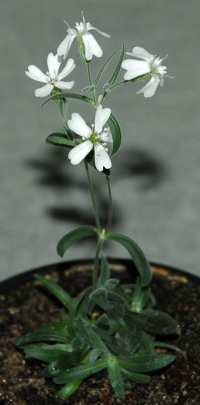
Two years ago we heard about plants being grown from seeds and pods preserved for 30,000 years in the Siberian permafrost. And now comes the news that a giant virus of that time has also been revived and is still capable of infecting other life.

This would have been about 1,500 generations ago. 30,000 years ago the Neanderthals had just disappeared, mammoths, woolly rhinoceros and long-horned bison roamed in Siberia. Modern humans had reached Europe but had not reached the Americas. It was at the peak of the last glacial and the spread of agriculture was still some 15,000 years in the future.

A prehistoric plant resurrected from frozen tissue. S. Yashina et al. Proc. Natl Acad. Sci. USA

1. Wild flower blooms again after 30,000 years on ice 

During the Ice Age, Earth’s northern reaches were covered by chilly, arid grasslands roamed by mammoths, woolly rhinoceros and long-horned bison. That ecosystem, known by palaeontologists as the mammoth steppe, vanished about 13,000 years ago. It has no modern counterpart.

Yet one of its plants has reportedly been resurrected by a team of scientists who tapped a treasure trove of fruits and seeds, buried some 30,000 years ago by ground squirrels and preserved in the permafrost 

The plant would be by far the most ancient ever revived; the previous record holder was a date palm grown from seeds roughly 2,000 years old. ….. . took samples of placental tissue from S. stenophylla fruits. The plant placenta — an example of which is the white matter inside a bell pepper — gives rise to and holds the seeds. The tissue produced shoots when it was cultivated in vitro, and the scientists used these to propagate more plants. They are the oldest living multicellular organisms on Earth, the team says.

The plants have already blossomed to produce fertile seeds, which were grown into a second generation of fertile plants. During propagation, the ancient form of the wild flower produced more buds but was slower to put out roots than modern S. stenophylla, which is found along the banks of the Kolyma. This suggests that the original has a distinct phenotype, adapted to the extreme environment of the Ice Age.

(S. Yashina et al. Proc. Natl Acad. Sci. USA http://dx.doi.org/10.1073/pnas.1118386109; 2012).

2. Giant virus resurrected from 30,000-year-old ice

In what seems like a plot straight out of a low-budget science-fiction film, scientists have revived a giant virus that was buried in Siberian ice for 30,000 years — and it is still infectious. Its targets, fortunately, are amoebae… The newly thawed virus is the biggest one ever found. At 1.5 micrometres long, it is comparable in size to a small bacterium. Evolutionary biologists Jean-Michel Claverie and Chantal Abergel, the husband-and-wife team at Aix-Marseille University in France who led the work, named it Pithovirus sibericum, inspired by the Greek word ‘pithos’ for the large container used by the ancient Greeks to store wine and food. “We’re French, so we had to put wine in the story,” says Claverie. The results are published in Proceedings of the National Academy of Sciences.

Legendre, M. et al. Proc. Natl Acad. Sci. USA http://dx.doi.org/10.1073/pnas.1320670111(2014).

Under a microscope, Pithovirus appears as a thick-walled oval with an opening at one end, much like the Pandoraviruses. But despite their similar shapes, Abergel notes that “they are totally different viruses”. …. Pithovirus has a ‘cork’ with a honeycomb structure capping its opening (see electron-microscope image). It copies itself by building replication ‘factories’ in its host’s cytoplasm, rather than by taking over the nucleus, as most viruses do. Only one-third of its proteins bear any similarity to those of other viruses. And, to the team’s surprise, its genome is much smaller than those of the Pandoraviruses, despite its larger size. ….

While “cloning” of ancient and extinct species is not really possible, it is not too fanciful to imagine that ancient DNA and modern hosts could give rise to creatures having characteristics beneficial during an ice age. And perhaps that could be of some interest when this interglacial ends – as it must – and we do enter into another glacial period.

Cold resistant, woolly cattle and well trained sabre-tooth tigers to mange the wandering herds perhaps. Maybe we might then even want some extra Neanderthal DNA injected into us!! Finally a use for biodiversity!

The Black Death altered European genes

February 25, 2014

A fascinating study and further support for my view that evolution is not about survival of the fittest but is about the deselection of the weakest.

Reblogged from Science magazine:

The Black Death didn’t just wipe out millions of Europeans during the 14th century. It left a mark on the human genome, favoring those who carried certain immune system genes, according to a new study. Those changes may help explain why Europeans respond differently from other people to some diseases and have different susceptibilities to autoimmune disorders.

Geneticists know that human populations evolve in the face of disease. Certain versions of our genes help us fight infections better than others, and people who carry those genes tend to have more children than those who don’t. So the beneficial genetic versions persist, while other versions tend to disappear as those carrying them die. This weeding-out of all but the best genes is called positive selection. But researchers have trouble pinpointing positively selected genes in humans, as many genes vary from one individual to the next.

Enter Mihai Netea, an immunologist at Radboud University Nijmegen Medical Centre in the Netherlands. He realized that in his home country, Romania, the existence of two very distinct ethnic groups provided an opportunity to see the hand of natural selection in the human genome. A thousand years ago, the Rroma people—commonly known as gypsies—migrated into Europe from north India. But they intermarried little with European Romanians and thus have very distinct genetic backgrounds. Yet, by living in the same place, both of these groups experienced the same conditions, including the Black Plague, which did not reach northern India. So the researchers sought genes favored by natural selection by seeking similarities in the Rroma and European Romanians that are not found in North Indians.

Celebrating differences. The migration of gypsies from India 1000 years ago (see map) set the stage for a telling study about how diseases can influence the genome.

Celebrating differences. The migration of gypsies from India 1000 years ago (see map) set the stage for a telling study about how diseases can influence the genome.

Netea; evolutionary biologist Jaume Bertranpetit of Pompeu Fabra University in Barcelona, Spain; and their colleagues looked for differences at more than 196,000 places in the genomes of 100 Romanians of European descent and 100 Rroma. For comparison, the researchers also cataloged these differences in 500 individuals who lived in northwestern India, where the Rroma came from. Then they analyzed which genes had changed the most to see which were most favored by selection.

Genetically, the Rroma are still quite similar to the northwestern Indians, even though they have lived side by side with the Romanians for a millennium, the team found. But there were 20 genes in the Rroma and the Romanians that had changes that were not seen in the Indians’ versions of those genes, Netea and his colleagues report online today in the Proceedings of the National Academy of Sciences. These genes “were positively selected for in the Romanians and in the gypsies but not in the Indians,” Netea explains. “It’s a very strong signal.”

Those genes included one for skin pigmentation, one involved in inflammation, and one associated with susceptibility to autoimmune diseases such as rheumatoid arthritis. But the ones Netea and Bertranpetit were most excited about were a cluster of three immune system genes found on chromosome 4. These genes code for toll-like receptors, proteins which latch on to harmful bacteria in the body and launch a defensive response. “We knew they must be important for host defense,” Netea says.

What events in history might have favored these versions of the genes in gypsies and Romanians, but not in Indians? Netea and his colleagues tested the ability of the toll-like receptors to react to Yersinia pestis, the bacterium that caused the Black Death. They found that the strength of the immune response varied depending on the exact sequence of the toll-like receptor genes.

Netea and Bertranpetit propose that the Rroma and European Romanians came to have the same versions of these immune system genes because of the evolutionary pressure exerted byY. pestis. Other Europeans, whose ancestors also faced and survived the Black Death, carried similar changes in the toll-like receptor genes. But people from China and Africa—two other places the Black Death did not reach—did not have these changes. (There have been multiple plagues throughout history around the world, but none have been so deadly as the Black Death, which killed an estimated one in every four Europeans, and so exerted very strong selection.) The similarities in the other genes were likely caused by other conditions experienced by Rroma and Europeans, but not Indians.

“The use of two populations living in the same geographic area is very clever,” says human population geneticist Oscar Lao of Erasmus MC in Rotterdam, the Netherlands, who was not involved in the study. “This experimental evidence is very important,” he adds. It shows that the Black Death bacterium does indeed interact with the proteins coded for by the genes favored by natural selection. “That should be the goal for all those type of analyses.”

“It’s a nice hypothesis that they are putting forward,” agrees Lluis Quintana-Murci, a human population geneticist at the Pasteur Institute in Paris who was not involved in the study. The genetic changes may have modern-day effects. “The presence of these particular versions of these genes may give the evolutionary basis for why certain populations are more at risk” for certain types of diseases, says Douglas Golenbock, an immunologist at the University of Massachusetts Medical School in Worcester. “The side effect seems to be that the Europeans have a more proinflammatory immune system than those who have never experienced Black Death.”

However, Lao and Quintana-Murci wonder if the convergence in these genes might be explained another way. It’s possible that these favorable versions were introduced into the Rroma by interbreeding between the Rroma and the Romanians, they suggest. Additional sequencing of the converged genetic regions should answer this question, Quintana-Murci says. It’s also important to check how these toll-like receptors respond to other deadly bacteria to see if other diseases might have been the cause of the changes. That will likely happen, Quintana-Murci adds. “This will inspire other labs to see if other bacterial infections could also explain the [selection].”

I am but a prisoner of my genes

January 20, 2014

I’d like to fly but but my genes don’t agree

And they determine how tall I will be,

I am but a lowly prisoner of my genes,

My apparent freedom is not quite what it seems.

But thanks to my genes I’m not a chimpanzee.

All abnormal behaviour is illness, says DSM-five,

Just following precisely what our genes do contrive.

Our genomes hold us tightly captive,

As slaves in their battle to survive,

So it matters not how much we strive.

Human evolution as a braided stream rather than a branching tree

January 4, 2014
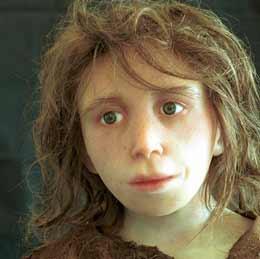
An interspecies love child? from Nature (Christoph P.E. Zollikofer)

An interspecies love child? from Nature (Christoph P.E. Zollikofer)

The genetic history of modern humans is creating a vast jigsaw puzzle. Genetic evidence is mounting that most people today carry some Neanderthal genes, that some carry what have been labelled “Denisovan” genes, that Denosivans and Neanderthals not only had a common ancestor but that there also was admixture between some Denisovans and some Neanderthals and that there was at least one other as yet unnamed archaic honim which interbred with the Denisovans. It now becomes clear that viewing all these various archaic humans as different species could be wrong. They could all well be the same species.

Chris Finlayson reviews the  paleoanthropology advances during 2013:

The conclusion of the Dmanisi study was that the variation in skull shape and morphology observed in this small sample, derived from a single population of Homo erectus, matched the entire variation observed among African fossils ascribed to three species – H. erectus, H. habilis and H. rudolfensis.

The five highly variable Dmanisi fossils belonged to a single population of H. erectus, so how could we argue any longer that similar variation among spatially and temporally widely distributed fossils in Africa reflected differences between species? They all had to be the same species. 

I have been advocating that the morphological differences observed within fossils typically ascribed to Homo sapiens (the so-called modern humans) and the Neanderthals fall within the variation observable in a single species.

It was not surprising to find that Neanderthals and modern humans interbred, a clear expectation of the biological species concept. …. If the fossils of 1.8 or so million years ago and those of the more recent Neanderthal-modern human era were all part of a single, morphologically diverse, species with a wide geographical range, what is there to suggest that it would have been any different in the intervening periods?

Probably not so different if we take the latest finds from the Altai Mountains in Siberia into account. Denisova Cave has produced yet another surprise, revealing that, not only was there gene flow between Neanderthals, Denisovans and modern humans, but that a fourth player was also involved in the gene-exchange game.

The identity of the fourth player remains unknown but it was an ancient lineage that had been separate for probably over a million years. H. erectus seems a likely candidate. Whatever the name we choose to give this mystery lineage, what these results show is that gene flow was possible not just among contemporaries but also between ancient and more modern lineages.

Just to show how little we really know of the human story, another genetic surprise has confounded palaeoanthropologists. Scientists succeeded in extracting the most ancient mitochondrial DNA so far, from the Sima de los Huesos site in Atapuerca, Spain.

The morphology of these well-known Middle Pleistocene (approximately 400,000 years old) fossils have long been thought to represent a lineage leading to the Neanderthals.

When the results came in they were actually closer to the 40,000 year-old Denisovans from Siberia. We can speculate on the result but others have offered enough alternatives for me to not to have to add to them. The conclusion that I derive takes me back to Dmanisi: We have built a picture of our evolution based on the morphology of fossils and it was wrong.

Some time ago we replaced a linear view of our evolution by one represented by a branching tree. It is now time to replace it with that of an interwoven plexus of genetic lineages that branch out and fuse once again with the passage of time

A braided stream rather than the branches of a tree is the better analogy where  – as John Hawkes describes it:

The “braided stream” analogy captures different information about human origins than the usual branching tree. The branches of a tree do not reconnect with each other above the point where they initially separate. A tree will never admit to exchanging sap between its branches, and there are no little xylem hyphae between branches to carry sap anyway. Our evolution was truly a network in which multiple populations existed and contributed to our process of adaptation.

But the braided stream is not quite satisfactory for the picture that is emerging:

promiscuity in the pleistocene

John Hawkes again:

I admit that the braided stream is not a perfect analogy. Diverging rivulets within a valley almost always come together again, forming a complicated network as they form sandbars and islets. None of them flow into a cul-de-sac. Some human populations of the past did become extinct, they did not inexorably flow back into the mainstream of our evolutionary history. Some of them may have flowed back into the mainstream only through very small channels of genetic exchange. When we go far enough back, some populations really did branch off into their own direction. It’s just not clear yet which populations those were. Maybe an evolutionary swamp would be a better analogy, full of algae-covered bayous.

I like the braided stream, and it’s clear that its time has come. Ancient DNA has begun to show the process of genetic exchange was not a minor player in our evolution. All human populations today evidence some mixture of ancient populations that existed well before the “origin of modern humans”. Genetic exchanges between different populations were dominant in the formation of some human adaptations. Some ancient populations can be understood only as the mixed descendants of other, yet more ancient ones. It’s mixing all the way back.

braided-stream-leone

A braided river from http://cloudman23.wordpress.com/ Image – Yann Arthus-Bertrand

The story will most likely become much more complex – as further pieces of the jigsaw are revealed – before the whole picture can be seen But it is already becoming apparent that the origin of modern humans includes genetic exchange with many “species” supposed to have predated AMH and this exchange was not insignificant.

Perhaps the concept of “Anatomically Modern Humans” has to be expanded and pushed back in time. Rather than an origin some 200,000 years ago the start of “modern humans” could need to be pushed back to about 500,000 years ago and has to somehow bring Neanderthals and Denisovans (and some others) back into the fold.

And maybe our ancestors of 20,000 generations ago were just as shocked at a Denisovan-Neanderthal marriage as some in India are today at an “inter-caste” marriage!

You are not just your genes, you are how they are expressed

December 8, 2013

As genetics advance it is becoming clear that an individual’s genes are only a part of the story. The same genes may be expressed in many different ways. And how a gene or a group of genes are expressed depends upon environmental and other triggers which are yet to be fully understood. Your genes may be your blueprint but you are what the manufacturer then produces depending upon the materials and resources available to him. In fact “blueprint” may not be the best analogy since a “blueprint” today may well even define the method of manufacture to be followed and the materials to be used. A set of genes being a “pattern” to follow may be a better representation. How the pattern is read and put into effect then determines the final product.

David Dobbs has an interesting article about how the simplistic view of the all-determining gene is changing.

… The grasshopper, he noted, sports long legs and wings, walks low and slow, and dines discreetly in solitude. The locust scurries hurriedly and hoggishly on short, crooked legs and joins hungrily with others to form swarms that darken the sky and descend to chew the farmer’s fields bare.

Related, yes, just as grasshoppers and crickets are. But even someone as insect-ignorant as I could see that the hopper and the locust were wildly different animals — different species, doubtless, possibly different genera. So I was quite amazed when Rogers told us that grasshopper and locust are in fact the same species, even the same animal, and that, as Jekyll is Hyde, one can morph into the other at alarmingly short notice. 

Not all grasshopper species, he explained (there are some 11,000), possess this morphing power; some always remain grasshoppers. But every locust was, and technically still is, a grasshopper — not a different species or subspecies, but a sort of hopper gone mad. If faced with clues that food might be scarce, such as hunger or crowding, certain grasshopper species can transform within days or even hours from their solitudinous hopper states to become part of a maniacally social locust scourge. They can also return quickly to their original form.

In the most infamous species, Schistocerca gregaria, the desert locust of Africa, the Middle East and Asia, these phase changes (as this morphing process is called) occur when crowding spurs a temporary spike in serotonin levels, which causes changes in gene expression so widespread and powerful they alter not just the hopper’s behaviour but its appearance and form. Legs and wings shrink. Subtle camo colouring turns conspicuously garish. The brain grows to manage the animal’s newly complicated social world, which includes the fact that, if a locust moves too slowly amid its million cousins, the cousins directly behind might eat it.

How does this happen? Does something happen to their genes? Yes, but — and here was the point of Rogers’s talk — their genes don’t actually change. That is, they don’t mutate or in any way alter the genetic sequence or DNA. Nothing gets rewritten. Instead, this bug’s DNA — the genetic book with millions of letters that form the instructions for building and operating a grasshopper — gets reread so that the very same book becomes the instructions for operating a locust. Even as one animal becomes the other, as Jekyll becomes Hyde, its genome stays unchanged. Same genome, same individual, but, I think we can all agree, quite a different beast. ….

…. Gene expression is what makes a gene meaningful, and it’s vital for distinguishing one species from another. We humans, for instance, share more than half our genomes with flatworms; about 60 per cent with fruit flies and chickens; 80 per cent with cows; and 99 per cent with chimps. Those genetic distinctions aren’t enough to create all our differences from those animals — what biologists call our particular phenotype, which is essentially the recognisable thing a genotype builds. This means that we are human, rather than wormlike, flylike, chickenlike, feline, bovine, or excessively simian, less because we carry different genes from those other species than because our cells read differently our remarkably similar genomes as we develop from zygote to adult. The writing varies — but hardly as much as the reading.

This raises a question: if merely reading a genome differently can change organisms so wildly, why bother rewriting the genome to evolve? How vital, really, are actual changes in the genetic code? Do we even need DNA changes to adapt to new environments? Is the importance of the gene as the driver of evolution being overplayed?

I think the idea that anything drives evolution is the wrong end of the stick. Evolution is a result of response to change. The resultant evolution is by deselection of those individuals who cannot survive the change – it is not a pro-active selection of desirable traits for some change yet to come.

So it seems to me that it is perfectly logical that a set of genes only describe and define an envelope of possibilities. It is gene expression which then – reacting to environmental or other triggers – determines the particular model from within the envelope that will materialise. But the set of genes are still critical in that they set the constraints – they define the envelope of possibilities. And no matter how creatively they are expressed, the constraints and the envelope still apply. I suspect that we have only just begun to understand the incredibly wide variation that gene expression permits with any given set of genes and how such expression can be triggered.

This variability is sufficiently wide that one twin can be a saint and the other can be a sinner but this variability is not so great that we can suddenly morph into chimpanzees.

He-she-it (der-die-das) now legal for babies in Germany

November 4, 2013

The German language has long had 3 genders. The rules are deceptively simple but I did not find it easy when learning the language.

German, besides capitalizing all nouns, goes them one better and adds a third gender: neuter. The masculine definite article (“the”) is der, feminine is die, and neuter is das.

It gets confusing when a girl can be masculine as in das Madchen or a boy can be feminine (die Junge) or when the sea can be all three genders – der Ozean, das Meer, die See. The sun is feminine (die Sonne) while the moon is masculine (der Mond).

If you’re going to guess, guess der. The highest percentage of German nouns are masculine. … All German nouns, regardless of gender, become die in the nominative and accusative plural. So a noun such as das Jahr (year) becomes die Jahre (years) in the plural. Sometimes the only way to recognize the plural form of a German noun is by the article: das Fenster (window) – die Fenster (windows). 

Rivers can be masculine (der Rhein) or feminine (die Donau) but never neuter. But rivers outside Europe are always masculine! Most chemical elements are neuter but some are particularly virile and masculine (hydrogen, carbon, oxygen, nitrogen, sulphur and phosphorous). Names of cars are masculine (der Mercedes, der VW, der BMW) but names of motorcycles, ships and aircraft are feminine (die BMW, die Titanic, die Boeing 787).

One in about 2,000 births is a transgender birth to some extent. Germany is now the first European country to acknowledge this legally. The view is growing that the gender paradigm is not the simple dimorphic view but represents a bimodal continuum.

Gender continuum blackless et al

Gender continuum blackless et al

BBC:  Germany has become Europe’s first country to allow babies with characteristics of both sexes to be registered as neither male nor female. Parents are now allowed to leave the gender blank on birth certificates, in effect creating a new category of “indeterminate sex”.

The move is aimed at removing pressure on parents to make quick decisions on sex assignment surgery for newborns.

As many as one in 2,000 people have characteristics of both sexes.