Archive for the ‘Humans’ Category

Vegetarians more susceptible to allergies, cancer, heart disease and depression

March 31, 2014

A new study from the University of Graz contradicts the politically correct advantages usually attributed to vegetarianism. “… our results showed that a vegetarian diet is associated with poorer health (higher incidences of cancer, allergies, and mental health disorders), a higher need for health care, and poorer quality of life”. 

It would seem that vegetarianism is “more about an ideological message that suggests false promises”.

Nutrition and Health – The Association between Eating Behavior and Various Health Parameters: A Matched Sample Study by Nathalie T. Burkert, Johanna Muckenhuber, Franziska Großschädl, Eva Rasky, Wolfgang Freidl, PLOS One, February 2014, Volume9, Issue 2.

DOI: 10.1371/journal.pone.0088278

Abstract: Population-based studies have consistently shown that our diet has an influence on health. Therefore, the aim of our study was to analyze differences between different dietary habit groups in terms of health-related variables. The sample used for this cross-sectional study was taken from the Austrian Health Interview Survey AT-HIS 2006/07. In a first step, subjects were matched according to their age, sex, and socioeconomic status (SES). After matching, the total number of subjects included in the analysis was 1320 (N = 330 for each form of diet – vegetarian, carnivorous diet rich in fruits and vegetables, carnivorous diet less rich in meat, and carnivorous diet rich in meat). Analyses of variance were conducted controlling for lifestyle factors in the following domains: health (self-assessed health, impairment, number of chronic conditions, vascular risk), health care (medical treatment, vaccinations, preventive check-ups), and quality of life. In addition, differences concerning the presence of 18 chronic conditions were analyzed by means of Chi-square tests. Overall, 76.4% of all subjects were female. 40.0% of the individuals were younger than 30 years, 35.4% between 30 and 49 years, and 24.0% older than 50 years. 30.3% of the subjects had a low SES, 48.8% a middle one, and 20.9% had a high SES. Our results revealed that a vegetarian diet is related to a lower BMI and less frequent alcohol consumption. Moreover, our results showed that a vegetarian diet is associated with poorer health (higher incidences of cancer, allergies, and mental health disorders), a higher need for health care, and poorer quality of life. Therefore, public health programs are needed in order to reduce the health risk due to nutritional factors.

Press Release (in German)

NoTricksZone summarises the findings:

The scientists examined a total of 1320 persons who were divided up into 4 groups of 330 persons each. All groups were comparable with respect to gender, age, and socio-economic status. The study also accounted for smoking and physical activity. Also the BMI was within the normal range for all four groups (22.9 – 24.9). The only thing that really was different among the four groups was the diet. The four groups were: 1) vegetarians, 2) meat-eaters with lots of fruit and veggies, 3) little meat-eaters and 4) big meat-eaters. More than three quarters of the participants were women (76.4%).

..the results contradict the common cliché that meat-free diets are healthier. Vegetarians have twice as many allergies as big meat-eaters do (30.6% to 16.7%) and they showed 166% higher cancer rates (4.8% to 1.8%). Moreover the scientists found that vegans had a 150% higher rate of heart attacks (1.5% to 0.6%). In total the scientists looked at 18 different chronic illnesses. Compared to the big meat-eaters, vegetarians were hit harder in 14 of the 18 illnesses (78%) which included asthma, diabetes, migraines and osteoporosis .

The Medical University of Graz confirms findings by the University of Hildesheim: More frequent psychological disorders among vegetarians, the press release writes.

…. the University of Graz found that vegetarians were also twice as likely to suffer for anxiety or depressions than big meat eaters (9.4% to 4.5%). That result was confirmed by the University of Hildesheim, which found that vegetarians suffered significantly more from depressions, anxiety, psychosomatic complaints and eating disorders [2]. The U of Graz scientists also found that vegetarians are impacted more by ilnessses and visit the doctor more frequently …….
On when speech may have originated

March 3, 2014

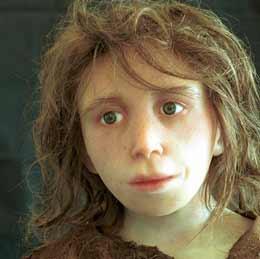
A new paper suggests that the Kebara 2 Neanderthals, some 60,000 years ago, not only had the capability but also used speech. The capability for speech itself has now been pushed back to the common ancestors of Anatomically Modern Humans, Neanderthals and Denisovans to about 500,000 years ago. The picture we have of Neanderthals is now of a fairly sophisticated and complex species:

  1. Neanderthals may have spoken in a similar way to modern humans.
  2. Neanderthals are our closest extinct human relatives.
  3. Neanderthal DNA is over 99% identical to modern human DNA.
  4. Several theories for Neanderthal extinction exist, including impacts of climate change, competition with human beings, and the possibility that Neanderthals and humans interbred and were ‘absorbed’ into the human species.
  5. Neanderthals lived in Eurasia 200,000 – 30,000 years ago in the Pleistocene Epoch
  6. Neanderthals and our human ancestors lived on Earth at the same time.
  7. Neanderthals lived in family groups and looked after their sick and infirm. 
  8. Neanderthals used tools made from bone, stone, antlers and other materials. 
  9. Neanderthals used fire, and even ate cooked vegetables. 

Moreover it is clear that all non-Africans carry some 3% of Neanderthal genes. And so – in my speculation – it would be perfectly consistent with not only the Neanderthals of the Kebara 2 study having speech, but also with all Neanderthals from about 200,000 years ago, having some form of – at least – rudimentary speech.

I have no doubt that speech originated from an intense need to communicate and developed in complexity and sophistication as the complex needs of the societies that developed required more nuanced communication. And if this happened 500,000 years ago then I find it not implausible that there are connections between the controlled use of fire, the growth of complex social interactions, the need for nuanced communications and the development of speech.

Visions arise of camp fires and a society with time for gatherings and then – inevitably – for story-telling! And for tall tales. Lying after all is a construct of language!

But speech was probably invented many times and only became language when some critical mass of people shared the same sounds for the same meanings. Within a single tribe or troop this critical mass for the beginnings of a rudimentary language was probably no more than a handful of individuals. What the first words ever spoken were can only be a matter of speculation. A case can be made for the “ma”, “ba” and “pa” sounds being the first to be repeated but also among the earliest ever words for communication would have been danger, here, there, up, down, you, me, stop, come and go.

Evolution is not – and never has been – the “survival of the fittest”

February 15, 2014

I was listening to a Professor expounding on evolution on the radio and found his glib assertions about the “survival of the fittest” both irritating and lightweight. (A person who talks down to his audience or who is incapable of explaining his theses to a lay audience should never – I think – be allowed to become a “Professor”).

Evolution does not lead to the excellence of survival traits.

While the individuals of any species best fitted to survival will likely survive, they are not the only individuals to survive. All those not weak enough to perish will also survive. And if these individuals – who only just clear the survival stakes – are adept (or lucky) in the reproduction competition then it is their genes which are carried forward. And the resultant genes carried forward we call “evolution”.

Evolution is only the result of survival x reproduction. As the environment around the individual changes (climate, competition…), the traits that will permit survival will also change. If a species has a wide variety of traits available among its individuals then it is more likely that some individuals will survive in the changing conditions. If this variability of the available traits is insufficient to cope with the magnitude of the change that species will become extinct as all its individuals perish.

Those individuals who succeed best in the “fitness for survival” stakes are not necessarily those who reproduce most. And in the reproduction stakes it is the number of offspring that counts. As genetic studies are now showing the leading lion in a pride is not always the sole male producing offspring. Sneaky young lions from outside the pride and some of the lionesses who have roving eyes often succeed in cuckolding the dominant male. Even birds who were presumed to mate for life apparently have little flings on the side from time to time. Birds of Paradise who have the showiest and most colourful displays are not necessarily the strongest or the fastest but they are the most expert at getting their way with their ladies. The traits needed for individual survival are not necessarily those most suited to successful reproduction (number of offspring).

Survival is not of the “fittest” but of all those not weak enough to perish.

Evolution is thus controlled first by individuals who are just good enough to survive but –  more importantly – who excel at reproduction. 

Human society now sees to it – or tries to – that a lack of “fitness” of any kind is not a bar to either survival or reproduction. In consequence the evolution of humans will then be controlled by individuals in stories like these who – by any stretch of the imagination – are far from being the “fittest”:

  1. Father of 22 children by 11 women …
  2. Man who fathered THIRTY kids ….
  3.  ….. fathered up to 600 children through sperm bank ….. 

Neanderthal genes are everywhere

January 30, 2014

Neanderthal genes are everywhere

We seek them here, we seek them there,

We met them often – but when? And where?

They are in our skins and in our hair,

Neanderthal genes are everywhere

From, Sriram Sankararaman et al, The genomic landscape of Neanderthal ancestry in present-day humansNature, 2014; DOI:10.1038/nature12961

Harvard Press ReleaseRemnants of Neanderthal DNA in modern humans are associated with genes affecting type 2 diabetes, Crohn’s disease, lupus, biliary cirrhosis and smoking behavior. They also concentrate in genes that influence skin and hair characteristics. At the same time, Neanderthal DNA is conspicuously low in regions of the X chromosome and testes-specific genes.

The first word(s) ever spoken

January 11, 2014

A recent conversation at a bar where – in the noise – I was served a whiskey instead of a beer led to a discussion of how sounds and/or gestures became words. Before the bar closed we came to the following conclusions:

  1. A sound becomes a  word only when at least two people use (both make and hear) the same sound for the same meaning.
  2. Probably many such words were “invented” by pairs of people but these never developed any further – either by spreading to others or becoming incorporated with other words to develop into language.
  3. Hand gestures are a consequence – indirectly – of human bipedalism.
  4. First came sounds. Then came sounds/gestures which became gestures/words.Words probably developed from sounds and hand gestures being used together with the words later coming to dominate.
  5. Fundamental hand gestures are almost universally understood today and probably have had similar meanings in antiquity and with the earliest humans.
  6. Fundamental gestures do not need sound for their basic meaning but cannot convey nuances and detail in themselves. Moreover the gestures were invisible in the dark or when out of sight but still within earshot.
  7. The sounds associated with these gestures were most likely among the earliest group of words. But we felt they must have been preceded by a sound – later a word – meaning “danger”. There may well have been a number of sounds describing different kinds of danger.
  8. These fundamental meanings that are readily communicated by gesture alone include: Here, there, up, down, you, me, stop, come and go.

So our considered opinion was that the earliest ever word was danger closely followed by here, there, up, down, you, me, stop, come and go.

But if man had not come down from the trees and freed his hands , sounds would not have become words and words would not have become language.

In Vino Veritas!

Human evolution as a braided stream rather than a branching tree

January 4, 2014
An interspecies love child? from Nature (Christoph P.E. Zollikofer)

An interspecies love child? from Nature (Christoph P.E. Zollikofer)

The genetic history of modern humans is creating a vast jigsaw puzzle. Genetic evidence is mounting that most people today carry some Neanderthal genes, that some carry what have been labelled “Denisovan” genes, that Denosivans and Neanderthals not only had a common ancestor but that there also was admixture between some Denisovans and some Neanderthals and that there was at least one other as yet unnamed archaic honim which interbred with the Denisovans. It now becomes clear that viewing all these various archaic humans as different species could be wrong. They could all well be the same species.

Chris Finlayson reviews the  paleoanthropology advances during 2013:

The conclusion of the Dmanisi study was that the variation in skull shape and morphology observed in this small sample, derived from a single population of Homo erectus, matched the entire variation observed among African fossils ascribed to three species – H. erectus, H. habilis and H. rudolfensis.

The five highly variable Dmanisi fossils belonged to a single population of H. erectus, so how could we argue any longer that similar variation among spatially and temporally widely distributed fossils in Africa reflected differences between species? They all had to be the same species. 

I have been advocating that the morphological differences observed within fossils typically ascribed to Homo sapiens (the so-called modern humans) and the Neanderthals fall within the variation observable in a single species.

It was not surprising to find that Neanderthals and modern humans interbred, a clear expectation of the biological species concept. …. If the fossils of 1.8 or so million years ago and those of the more recent Neanderthal-modern human era were all part of a single, morphologically diverse, species with a wide geographical range, what is there to suggest that it would have been any different in the intervening periods?

Probably not so different if we take the latest finds from the Altai Mountains in Siberia into account. Denisova Cave has produced yet another surprise, revealing that, not only was there gene flow between Neanderthals, Denisovans and modern humans, but that a fourth player was also involved in the gene-exchange game.

The identity of the fourth player remains unknown but it was an ancient lineage that had been separate for probably over a million years. H. erectus seems a likely candidate. Whatever the name we choose to give this mystery lineage, what these results show is that gene flow was possible not just among contemporaries but also between ancient and more modern lineages.

Just to show how little we really know of the human story, another genetic surprise has confounded palaeoanthropologists. Scientists succeeded in extracting the most ancient mitochondrial DNA so far, from the Sima de los Huesos site in Atapuerca, Spain.

The morphology of these well-known Middle Pleistocene (approximately 400,000 years old) fossils have long been thought to represent a lineage leading to the Neanderthals.

When the results came in they were actually closer to the 40,000 year-old Denisovans from Siberia. We can speculate on the result but others have offered enough alternatives for me to not to have to add to them. The conclusion that I derive takes me back to Dmanisi: We have built a picture of our evolution based on the morphology of fossils and it was wrong.

Some time ago we replaced a linear view of our evolution by one represented by a branching tree. It is now time to replace it with that of an interwoven plexus of genetic lineages that branch out and fuse once again with the passage of time

A braided stream rather than the branches of a tree is the better analogy where  – as John Hawkes describes it:

The “braided stream” analogy captures different information about human origins than the usual branching tree. The branches of a tree do not reconnect with each other above the point where they initially separate. A tree will never admit to exchanging sap between its branches, and there are no little xylem hyphae between branches to carry sap anyway. Our evolution was truly a network in which multiple populations existed and contributed to our process of adaptation.

But the braided stream is not quite satisfactory for the picture that is emerging:

promiscuity in the pleistocene

John Hawkes again:

I admit that the braided stream is not a perfect analogy. Diverging rivulets within a valley almost always come together again, forming a complicated network as they form sandbars and islets. None of them flow into a cul-de-sac. Some human populations of the past did become extinct, they did not inexorably flow back into the mainstream of our evolutionary history. Some of them may have flowed back into the mainstream only through very small channels of genetic exchange. When we go far enough back, some populations really did branch off into their own direction. It’s just not clear yet which populations those were. Maybe an evolutionary swamp would be a better analogy, full of algae-covered bayous.

I like the braided stream, and it’s clear that its time has come. Ancient DNA has begun to show the process of genetic exchange was not a minor player in our evolution. All human populations today evidence some mixture of ancient populations that existed well before the “origin of modern humans”. Genetic exchanges between different populations were dominant in the formation of some human adaptations. Some ancient populations can be understood only as the mixed descendants of other, yet more ancient ones. It’s mixing all the way back.

braided-stream-leone

A braided river from http://cloudman23.wordpress.com/ Image – Yann Arthus-Bertrand

The story will most likely become much more complex – as further pieces of the jigsaw are revealed – before the whole picture can be seen But it is already becoming apparent that the origin of modern humans includes genetic exchange with many “species” supposed to have predated AMH and this exchange was not insignificant.

Perhaps the concept of “Anatomically Modern Humans” has to be expanded and pushed back in time. Rather than an origin some 200,000 years ago the start of “modern humans” could need to be pushed back to about 500,000 years ago and has to somehow bring Neanderthals and Denisovans (and some others) back into the fold.

And maybe our ancestors of 20,000 generations ago were just as shocked at a Denisovan-Neanderthal marriage as some in India are today at an “inter-caste” marriage!

Promiscuity in the pleistocene

January 2, 2014

Svante Pääbo of the Max Planck Institute for Evolutionary Anthropology and his colleagues from various institutions are making stunning advances in the analysis of ancient DNA. The complete genome of a Neanderthal has now been reconstructed with a remarkable level of detail.

The complete genome sequence of a Neanderthal from the Altai MountainsKay Prüfer et al, Nature 505, 43–49 (02 January 2014),  doi:10.1038/nature12886

Editors Summary: Recent excavations in the Denisova Cave in the Altai Mountains of southern Siberia have yielded a wealth of hominin fossils from a site that has been occupied for perhaps 250,000 years or more. Now a high-quality genome sequence has been determined from a circa 50,000-year-old toe bone — a proximal toe phalanx — excavated from the east gallery of Denisova Cave in 2010. The sequence is that of a Neanderthal woman whose parents were closely related — perhaps half-siblings or uncle and niece. Such inbreeding was also common among her recent ancestors. Comparisons with other archaic and present-day human genomes reveal several gene-flow events among Neanderthals, the closely related Denisovans and early modern humans, possibly including gene flow into Denisovans from an unknown archaic group. The high-quality Neanderthal genome also helps to establish a definitive list of substitutions that became fixed in modern humans after their separation from the ancestors of Neanderthals and Denisovans.

promiscuity in the pleistocene

But what is also becoming clear is that there were more “species” of homo erectus who existed in parallel than has generally been assumed and also that sexual encounters and interbreeding between these cousin-species has been a regular occurrence over some 250,000 years. And so there have been times when Anatomically Modern Humans (AMH), Neanderthals, Denisovans and the “unknown” hominim have co-existed.

The AMH-Neanderthals split is thought to have occurred about 400,000 years ago. The split with the unknown hominims then must have been around 500,000 years ago. The Denisovans split off from the Neanderthals perhaps about 300,000 years ago. The Out-of-Africa split among AMH was around 100,000 years ago.

A Neanderthal in our time. (copyright Nenderthal Museum / H Neumann)

A Neanderthal in our time. (copyright Nenderthal Museum / H Neumann)

These ancient splits were all probably in and around Africa even if the Out-of-Africa event for AMH is now more likely to have been  many such events and an expansion out of Africarabia. But it also means that a wave of “unknown hominims” split off from the mainline after a mainline group had left Africa and then spread out to unknown areas. Neanderthals probably split from their parent line of descent also outside of Africa but there must first have come a migration from Africa. The Neanderthal-Denisovan split must also have taken place outside of Africa. Clearly there have been many migrations Out of Africa over the last 400,000 years.

Carl Zimmer writes, “Evolution is a mixture of flow–the cascade of genes from parents to offspring, and the criss-cross movement between populations and species”.

But this generates a myriad of new questions. How large were the troops or tribes or clans of these ancient hunter-gatherers that they could sustain such large migrations? For how long and in what proximity did these different species of man co-exist. These troops – it is thought – probably did not number more than about 50. Some critical population would have been required for sufficient interactions to have taken place between the species. At any one time the total human population – of all species – may have approached 10 million (for if this was – say – just 1 million the opportunities to interbreed would not have been many). They all had fire, but did they all have some form of speech?

But most fascinating of all is how the interbreeding took place. Was it just a product of normal rape and pillage? Did violent clashes lead to the victors impregnating the vanquished, or were there other scenarios for individuals to mate? At some point there must have been children who were 50% Neanderthal and 50% AMH. And some who were 50% Neanderthal and 50% Denisovan. How did they survive? What kind of society existed in these ancient times that would permit such offspring not only to survive but also to mate and produce offspring in their turn? But however it happened, our ancestors in the pleistocene were a promiscuous lot.

Could it be that it was only among AMH  – after they had been vanquished and raped and pillaged by Neanderthal raids – that such mixed children were allowed not only to survive but also to thrive?

When gender equality denies gender difference – limericks (6)

December 28, 2013

1. Sometimes, the “fight” for gender equality gets more than a little ridiculous when it denies gender difference. 

“Gender Equality” is the battle-cry that’s heard,

But just what that means can be a little bit blurred.

Must each and every known profession,

Comprise equally of men and women?

But fathers giving birth is just a little bit absurd.

2. In Sweden, “hen” is proposed by the politically-correct, gender-equalisers as a neutral form between “han” (him) and “hon” (her).

A politically correct young lady from Sweden,

Insisted on being referred to as a “hen”,

She objected strenuously to “she”,

and quite violently to “he”,

Which caused consternation among her young men.

3. Still in Sweden, poor Zlatan Ibrahimovic got into hot water for stating the blindingly obvious that it was more than a little idiotic to compare his game with that of a lady footballer. But – and especially in Sweden – political correctness has become a matter of faith and is often quite unconcerned with reality.

Zlatan the Viking footballer,

Took umbrage when an idiot reporter,

Compared him to a “hen”,

Who kicked a ball now and then,

And Ibrahim-ovic refused to idolise her.

4. In the UK, Thomas the tank engine is under attack from Mary Creagh. She seems rather a silly person – but she was probably only after the publicity.

A cross Labour MP of feminist gender,

More female train drivers would engender,

She demanded the State’s intervention,

To curb the masculinity of Thomas the tank engine,

And required that the “him” be changed into a “her”!

5. At Wimbledon, women now have the same prize money as the men, but they work far fewer hours and play even less. The ladies champion now has an hourly rate about 60% higher than the men’s champion.

Gender equality at Wimbledon has gone a little bit funny,

The men and the women get the same prize money,

But being of the much weaker sex,

The women play just the best of 3 sets,

And the men will be unable to reverse this calumny

6. And all over the world “quotas” for women/minorities/scheduled castes/disabled in various professions are proposed. But fighting discrimination with discrimination only legitimises discrimination.

Oppressing minorities is unacceptable persecution,

But discrimination to fight discrimination is still discrimination.

And if percentage of the population,

Is to be mirrored in every profession,

Competence must be ignored to follow some blind equation.

You are not just your genes, you are how they are expressed

December 8, 2013

As genetics advance it is becoming clear that an individual’s genes are only a part of the story. The same genes may be expressed in many different ways. And how a gene or a group of genes are expressed depends upon environmental and other triggers which are yet to be fully understood. Your genes may be your blueprint but you are what the manufacturer then produces depending upon the materials and resources available to him. In fact “blueprint” may not be the best analogy since a “blueprint” today may well even define the method of manufacture to be followed and the materials to be used. A set of genes being a “pattern” to follow may be a better representation. How the pattern is read and put into effect then determines the final product.

David Dobbs has an interesting article about how the simplistic view of the all-determining gene is changing.

… The grasshopper, he noted, sports long legs and wings, walks low and slow, and dines discreetly in solitude. The locust scurries hurriedly and hoggishly on short, crooked legs and joins hungrily with others to form swarms that darken the sky and descend to chew the farmer’s fields bare.

Related, yes, just as grasshoppers and crickets are. But even someone as insect-ignorant as I could see that the hopper and the locust were wildly different animals — different species, doubtless, possibly different genera. So I was quite amazed when Rogers told us that grasshopper and locust are in fact the same species, even the same animal, and that, as Jekyll is Hyde, one can morph into the other at alarmingly short notice. 

Not all grasshopper species, he explained (there are some 11,000), possess this morphing power; some always remain grasshoppers. But every locust was, and technically still is, a grasshopper — not a different species or subspecies, but a sort of hopper gone mad. If faced with clues that food might be scarce, such as hunger or crowding, certain grasshopper species can transform within days or even hours from their solitudinous hopper states to become part of a maniacally social locust scourge. They can also return quickly to their original form.

In the most infamous species, Schistocerca gregaria, the desert locust of Africa, the Middle East and Asia, these phase changes (as this morphing process is called) occur when crowding spurs a temporary spike in serotonin levels, which causes changes in gene expression so widespread and powerful they alter not just the hopper’s behaviour but its appearance and form. Legs and wings shrink. Subtle camo colouring turns conspicuously garish. The brain grows to manage the animal’s newly complicated social world, which includes the fact that, if a locust moves too slowly amid its million cousins, the cousins directly behind might eat it.

How does this happen? Does something happen to their genes? Yes, but — and here was the point of Rogers’s talk — their genes don’t actually change. That is, they don’t mutate or in any way alter the genetic sequence or DNA. Nothing gets rewritten. Instead, this bug’s DNA — the genetic book with millions of letters that form the instructions for building and operating a grasshopper — gets reread so that the very same book becomes the instructions for operating a locust. Even as one animal becomes the other, as Jekyll becomes Hyde, its genome stays unchanged. Same genome, same individual, but, I think we can all agree, quite a different beast. ….

…. Gene expression is what makes a gene meaningful, and it’s vital for distinguishing one species from another. We humans, for instance, share more than half our genomes with flatworms; about 60 per cent with fruit flies and chickens; 80 per cent with cows; and 99 per cent with chimps. Those genetic distinctions aren’t enough to create all our differences from those animals — what biologists call our particular phenotype, which is essentially the recognisable thing a genotype builds. This means that we are human, rather than wormlike, flylike, chickenlike, feline, bovine, or excessively simian, less because we carry different genes from those other species than because our cells read differently our remarkably similar genomes as we develop from zygote to adult. The writing varies — but hardly as much as the reading.

This raises a question: if merely reading a genome differently can change organisms so wildly, why bother rewriting the genome to evolve? How vital, really, are actual changes in the genetic code? Do we even need DNA changes to adapt to new environments? Is the importance of the gene as the driver of evolution being overplayed?

I think the idea that anything drives evolution is the wrong end of the stick. Evolution is a result of response to change. The resultant evolution is by deselection of those individuals who cannot survive the change – it is not a pro-active selection of desirable traits for some change yet to come.

So it seems to me that it is perfectly logical that a set of genes only describe and define an envelope of possibilities. It is gene expression which then – reacting to environmental or other triggers – determines the particular model from within the envelope that will materialise. But the set of genes are still critical in that they set the constraints – they define the envelope of possibilities. And no matter how creatively they are expressed, the constraints and the envelope still apply. I suspect that we have only just begun to understand the incredibly wide variation that gene expression permits with any given set of genes and how such expression can be triggered.

This variability is sufficiently wide that one twin can be a saint and the other can be a sinner but this variability is not so great that we can suddenly morph into chimpanzees.

DNA sequenced from a 400,000 year old hominin from Spain

December 4, 2013

After developing techniques for extracting and analysing DNA from ancient (c. 40,000 years ago) Neanderthal and Denisovan specimens the Max Planck team have now taken a giant leap backwards in time in extracting and analysing an almost complete mitochondrial genome sequence of a 400,000-year-hominin. The specimen is from  Sima de los Huesos, a unique cave site in Northern Spain. The results show that it is related to the mitochondrial genome of Denisovans, extinct relatives of Neandertals in Asia. DNA this old has until recently been retrieved only from the permafrost.

standard

The Sima de los Huesos hominins lived approximately 400,000 years ago during the Middle Pleistocene. © Kennis & Kennis, Madrid Scientific Films

The result itself is of great interest but it is the development of the techniques for extracting and analysing – without any contamination – and with sufficient confidence, the entire MtDNA sequence in such old specimens that is quite revolutionary. Archaeological evidence – and particularly of of such age – is subject to a great deal of subjective interpretation. But dating techniques and now DNA extraction techniques are removing much of this subjectivity and they are now providing the anchor points around which the evolutionary narrative must be built. And this narrative is now of a much more complex story of hominin expansions and admixture than has generally been thought. Ancient and presumed extinct hominin species are now showing themselves within us.

“Our results show that we can now study DNA from human ancestors that are hundreds of thousands of years old. This opens prospects to study the genes of the ancestors of Neandertals and Denisovans. It is tremendously exciting” says Svante Pääbo, director at the Max Planck Institute for Evolutionary Anthropology.

Matthias Meyer, Qiaomei Fu, Ayinuer Aximu-Petri, Isabelle Glocke, Birgit Nickel, Juan-Luis Arsuaga, Ignacio Martínez, Ana Gracia, José María Bermúdez de Castro, Eudald Carbonell, Svante PääboA mitochondrial genome sequence of a hominin from Sima de los HuesosNature, 2013; DOI: 10.1038/nature12788

Read the whole post in 6,000 Generations