Archive for the ‘Scandinavia’ Category

Update: Epstein files and Scandinavia

February 13, 2026

@grok Summarise further developments regarding the Epstein files and the Scandinavian fallout.


There have been significant further developments in the Scandinavian fallout from the Epstein files since early February 2026, particularly in Norway, where the scandal has intensified with resignations, ongoing police investigations, parliamentary inquiries, and mounting pressure on the royal family. Sweden and Denmark have seen more limited additional fallout, with no major new resignations or probes reported beyond earlier ones.

The U.S. Department of Justice’s release of over 3 million pages of documents (starting late January 2026) continues to drive scrutiny across Europe, but Norway has been hit hardest among Scandinavian countries, with multiple high-profile figures implicated in financial ties, emails, visits, and potential corruption.

Norway (Most Intense Fallout)
Norway has experienced a “political storm,” with investigations expanding and public confidence in institutions (including the monarchy and foreign ministry) under strain.

Crown Princess Mette-Marit:
– New details revealed extensive post-2008 contact (nearly 1,000 mentions), including emails joking about inappropriate topics, planning visits to Epstein properties, and her borrowing his Palm Beach home in 2013.
– She issued multiple apologies in early February, expressing “deepest regret” for the friendship, calling it “embarrassing,” and specifically apologizing to King Harald and Queen Sonja for the situation she put the royal family in.
– Pressure has mounted, with charities reviewing or cutting ties, public questions about her suitability as future queen, and Prime Minister Jonas Gahr Støre calling for more transparency while agreeing she showed “poor judgment.”
– No resignation or abdication, but combined with her stepson Marius Borg Høiby’s ongoing rape/assault trial (unrelated but amplifying royal scrutiny), it’s described as a potential “split” in the family and the biggest modern crisis for the Norwegian royals.

Mona Juul (Diplomat):
– Initially suspended (early February), she resigned as Norway’s ambassador to Jordan and Iraq around February 9, 2026, after revelations of ties, including Epstein’s will bequeathing $10 million to her and husband Terje Rød-Larsen’s children (signed shortly before his death).
– Norwegian Foreign Minister Espen Barth Eide cited a “serious lapse in judgment.”
– Ongoing ministry investigation into her knowledge/contact with Epstein.

Terje Rød-Larsen (her husband, former diplomat/UN envoy):
– Under police investigation for complicity in gross corruption (alongside Juul) by Økokrim (Norway’s economic crime unit), announced February 9, 2026.
– Files show visits to Epstein’s island (2011 with family), dinners (including 2019 in Paris), and financial dealings.

Thorbjørn Jagland (former PM, Nobel Committee chair, Council of Europe secretary-general):
– Police opened an “aggravated corruption” investigation (early February), including home searches (reported February 12).
– Council of Europe waived his immunity at Norway’s request to allow legal processes.
– Ties include emails, gifts/loans/benefits from Epstein during his Nobel/COE roles.

Broader Norwegian Actions:
– Parliament appointed a rare external inquiry into the Foreign Ministry’s Epstein links (around February 10).
– Økokrim confirmed comprehensive, long-term probes into multiple figures.
– Other mentions (e.g., former FM Børge Brende attending post-conviction dinners) but no major new fallout.

Sweden
Joanna Rubinstein (former chair of Sweden for UNHCR): Resigned February 2, 2026, after files showed her 2012 family visit to Epstein’s island (post-conviction) and a thankful email. No further developments; she distanced herself, calling abuses “horrific.”
Princess Sofia: Broke silence around February 10–11, addressing “a couple” of encounters/meetings but denying deeper involvement. Royal court maintains denials; no resignation or probe.
No new major resignations, investigations, or business/political fallout reported.

Denmark
Mentions of King Frederik (as former Crown Prince) in 2012 emails remain downplayed/denied by the royal family.
No confirmed resignations, investigations, or significant new revelations tied to Danish figures. Rumors about business leaders/politicians persist online but lack substantiation in reports.


The scandal has broader European ripples (e.g., UK, Slovakia), but Scandinavia – especially Norway – remains a focal point due to elite/diplomatic ties. Probes are ongoing, and more details could emerge as files are analyzed. No evidence of criminal charges yet in Scandinavia, but corruption angles are serious.

 

The Epstein fallout in Scandinavia – so far

February 3, 2026

@grok

ktwop:

There seems to have been a significant Scandinavian fallout from the Epstein files. What is the actual Scandinavian fallout so far?

grok: 

The Epstein files, which include millions of pages of documents released by the U.S. Department of Justice in early 2026, have revealed various connections between Jeffrey Epstein and individuals in Scandinavian countries (Norway, Sweden, and Denmark). These mentions primarily involve emails, messages, and references to meetings or communications, but they do not include direct accusations of criminal wrongdoing against the named Scandinavians. The fallout has been limited to public apologies, regrets, and one confirmed resignation, with no major legal actions or abdications reported as of February 3, 2026. Below is a breakdown by country, based on verified reports.

Norway

  • Crown Princess Mette-Marit: She is mentioned extensively in the files (over 1,000 times in some analyses), with emails and messages showing repeated contact between 2011 and at least 2014 – longer and more frequent than she previously admitted in a 2019 apology. Examples include her calling Epstein a “sweetheart,” joking about adultery, and discussing topics like “wife hunt” trips. She visited his Palm Beach property and used his staff for travel arrangements. In response to the 2026 releases, Mette-Marit issued a statement expressing regret, calling the association “simply embarrassing” and acknowledging poor judgment. Norwegian Prime Minister Jonas Gahr Støre publicly agreed with her self-assessment, stating she showed “poor judgment.” The Norwegian royal palace has denied any financial ties or deeper involvement, and there have been no calls for her to step down.
  • Other connections: Former Norwegian Prime Minister Thorbjørn Jagland (also former Nobel Committee chair and Council of Europe secretary-general) is referenced in messages with Epstein about politics, but no wrongdoing is alleged, and he has not commented or faced consequences.
  • No resignation: No Norwegian official has resigned due to the files. However, Ambassador Mona Juul—a celebrated Norwegian diplomat known for her pivotal role in brokering the 1990s Oslo Accords—was temporarily suspended from her duties on that date pending an investigation into her alleged ties to Jeffrey Epstein.
  • Broader impact: The revelations have coincided with unrelated scandals involving Mette-Marit’s stepson, Marius Borg Høiby, who faces 38 criminal charges including rape and assault (trial began February 2, 2026). This has amplified media scrutiny on the Norwegian royals, described by some historians as the biggest scandal in Norway’s modern royal history, but it’s not directly linked to Epstein.

Sweden

  • Princess Sofia: She is referenced in the files, but details are limited to mentions without specifics of meetings or wrongdoing. The Swedish royal court has denied any involvement or attendance at Epstein-related events. No public statement from Sofia has been reported, and there has been no significant backlash or calls for her to step back from duties.
  • UN official resignation: Joanna Rubinstein (sometimes spelled Rubinstein in sources) resigned on February 2, 2026, from her position as chair of Sweden for UNHCR—the fundraising arm of the United Nations High Commissioner for Refugees (UNHCR) in Sweden.
  • Other connections: The files allege a Swedish man (not named in summaries) helped recruit women for Epstein over years, but no confirmed identities or actions have led to fallout. Barbro C. Ehnbom, a Swedish leadership program organizer, is mentioned in emails with Epstein post-2008, but no consequences reported.
  • Broader impact: Public discussion has been muted, with the royal family focusing on family events amid the controversy.

Denmark

  • King Frederik (formerly Crown Prince): He is mentioned in 2012 emails between Epstein and businessman Ian Osborne, but without details of direct contact or wrongdoing. The Danish royal family has downplayed or denied any direct/recent ties.
  • Rumors about business leaders and politicians: No confirmed connections or fallout in the files or subsequent reports. Speculation exists online (e.g., about elite networks), but nothing substantiated has led to resignations or investigations.
  • Broader impact: Minimal public reaction; the mentions have not escalated into scandals.
Overall, the Scandinavian fallout remains contained to reputational damage and one resignation, with royals issuing statements of regret or denial.

No evidence of pregnancies, financial payouts, or deeper involvement (as rumored in some X posts) has been confirmed in official releases or reporting.

The files continue to be analyzed, so further developments are possible.


Danish revelations about Snowden suggest Swedish charges against Assange were trumped up for rendition to the US

February 5, 2016

The ridiculousness of the Swedish charges against Assange have always left with me with a sneaking suspicion that there is a very murky back story lurking somewhere. On the surface it just seems like Swedish feminism gone mad. But the Swedish Justice system does not pursue even murderers with the viciousness with which it has pursued Assange. It has seemed like just another crazy, paranoid, conspiracy theory to think that it was all engineered at the request of the US authorities to try and get Assange (by extraordinary rendition) to the US. But it does not look like such a crazy theory any more.

Assange and Wikileaks have been a thorn in the side of the US authorities. Just as Snowden and his associates were. The UK government was very active in helping the US authorities try to get hold of Snowden and his associates. It has now been revealed that by the Danish Justice minister that the Danish government of the time led by Social Democratic prime minister Helle Thorning-Schmidt was also ready to allow the rendition of Edward Snowden to the US on the flimsiest of paperwork. The FBI had requested the assistance from all the Scandinavian countries and it is pretty clear that Sweden and Norway and probably Finland would also have cooperated.

With the level of Danish cooperation with the FBI for the possible rendition of Snowden now being admitted, it does not seem that far fetched that Sweden, with its desire to join NATO, would also go to extraordinary lengths to be in the “good books” of the US.

The clear intention of the Danish government to cooperate with the US over Snowden suggested that Scandinavian governments “would probably do the same with Julian Assange”, were he to travel to Sweden to face rape allegations

I begin to suspect that the framing of charges against Assange – on extremely flimsy grounds – after the prosecutor’s office had first declined to proceed was a ruse devised at the highest levels of Reinfeld’s government to get Assange to the US via Sweden and gain a number of brownie points while doing so. Perhaps Assange has good reason to be paranoid.

The Guardian:

A US government jet was lying in wait in Copenhagen to extradite the whistleblower Edward Snowden if he had come to Scandinavia after fleeing to Moscow in June 2013, the Danish government has revealed.

……. Søren Pind, the justice minister, wrote to Danish MPs (pdf): “The purpose of the aircraft’s presence in Copenhagen airport is most likely to have been to have the opportunity to transport Edward Snowden to the United States if he had been handed over from Russia or another country.”

“I must note that my answer was not adequate at this point,” he wrote in the letter, dated Thursday 4 February and revealed by MPs on Friday. “Usually, information of this nature is confidential because of Denmark’s relations with foreign states. In view of the impression that my earlier answer may have created, I think it proper to inform parliament thereof. The US authorities have also been informed.”

Nicholaj Villumsen, MP and foreign affairs spokesman for the Red Green Alliance, said: “It is grotesque that the then government put the interests of the United States above citizens’ freedoms. They violated fundamental democratic rights. We owe Edward Snowden a big thank you for his revelations of illegal US mass surveillance. Denmark should therefore in no way participate in the hunt for him.”

The clear intention of the Danish government to cooperate with the US over Snowden suggested that Scandinavian governments “would probably do the same with Julian Assange”, were he to travel to Sweden to face rape allegations, Villumsen said. Assange’s insistence that he faces a risk of extradition was a central aspect of his appeal to the UN working group on arbitrary detention, which on Friday ruled in his favour.

“For Allah” inscribed on a 9th century Viking ring

March 19, 2015

A new paper in Scanning reports on SEM studies of a 9th century Viking ring found in Birka. The contact between the Vikings and the Islamic world (mainly the Abbasid Caliphate) were rather more extensive than is generally admitted. It was not just the occasional tales of Arab historians (Ahmad Ibn Fadlan – “handsome but filthy Vikings”) but quite extensive trade links with traders from both communities often visiting the others. The ring is of high grade silver (94.5/5.5 Ag/Cu) and is inscribed with Arabic Kufic writing, here interpreted as reading “il-la-lah”, i.e. “For/to Allah”The “violet stone” is now found to be glass rather than an amethyst as was once thought. Glass from Egypt and Mesopotamia was prized in ancient Scandinavia as long as 3,500 years ago . The Vikings too prized glass and silver (rather than gold). However the inside of the ring is not much worn which suggests that the woman with whom the ring was buried (who wore Scandinavian dress and was presumably Swedish) had obtained it fairly new and not long before her death.

KTS Sebastian et al, Analysis and interpretation of a unique Arabic finger ring from the Viking Age town of Birka, Sweden, ScanningDOI: 10.1002/sca.21189

Birka viking ring (Statens historiska museum / Christer Åhlin)

Birka viking ring (Statens historiska museum / Christer Åhlin)


Abstract: In this work we used non-destructive SEM imaging and EDS analysis to characterize the material composition of an Arabic finger ring, which was found in a 9th c. woman’s grave at the Viking Age (A.D. 793–1066) trading center of Birka, Sweden. The ring is set with a violet stone inscribed with Arabic Kufic writing, here interpreted as reading “il-la-lah”, i.e. “For/to Allah”. The stone was previously thought to be an amethyst, but the current results show it to be coloured glass. The ring has been cast in a high-grade silver alloy (94.5/5.5 Ag/Cu) and retains the post-casting marks from the filing done to remove flash and mold lines. Thus, the ring has rarely been worn, and likely passed from the silversmith to the woman buried at Birka with few owners in between. The ring may therefore constitute material evidence for direct interactions between Viking Age Scandinavia and the Islamic world. Being the only ring with an Arabic inscription found at a Scandinavian archaeological site, it is a unique object among Swedish Viking Age material. The technical analysis presented here provides a better understanding of the properties and background of this intriguing piece of jewelry.

I have only just started reading Farhat Hussain’s 3 volume The Vikings and the Islamic World which looks at this little addressed area of Viking history across 2 centuries:

The substantive links between the Vikings and the Islamic world resulted in very insightful writings by a number of Muslim travellers, scholars and many others, of the Vikings and many aspects of the Viking Age ranging from physical descriptions of Vikings and their places of habitation in Scandinavia and elsewhere to Viking customs, commercial activity and much else as addressed in this work. Moreover this work provides a vast range of archaeological in addition to historical evidence of the vast links between the Vikings and the Islamic world – a relationship that served to contribute to the Viking Age and served to enrich the Islamic world and the many lands and peoples that were also a part of this unique story. Islamic artifacts unearthed in Iceland, Faeroe Islands, Ireland, Britain, Scandinavia, Russia and the Ukraine all feature in this rich study of the Vikings as masters in trade between the Islamic world and much of northern and western Europe in the 9th and 10th centuries in addition to serving as intermediaries in trade between Byzantium and the Islamic world. ….

Volume 2 provides substantive and rich insight into the significance of Viking links with the Islamic world for Scandinavia itself in a variety of areas from economy to textiles, glass, language and much else. This unique volume also deals with the influence of Islamic civilization upon other parts of northern Europe via the Vikings including Britain, Ireland, Iceland, Greenland and beyond. Indeed volume 2 makes clear that quite aside from the influence of Muslim Spain upon Europe the Vikings served as intermediaries of Islamic civilization via northern Europe. …..

Volume 3 addresses a rich array of subject and issues pertaining to Vikings links with the Islamic world including trade in various goods such as falcons, flow and decline of Muslim silver coins into Russia and Scandinavia and the impact of this decline upon the fortunes of Viking trade centres such as Birka in Sweden and Danish settlement in England, medicine, geography and much else.


A total eclipse of the Sun – 20th March, 2015

March 12, 2015

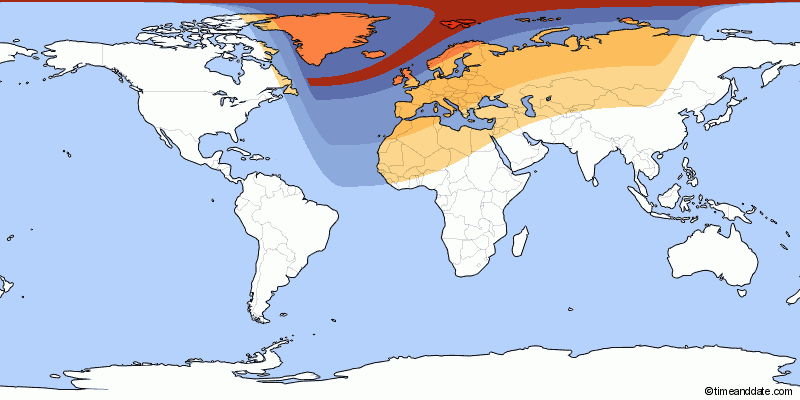
Though it’s a total eclipse only over Svalbard and the Faeroe Islands, it should be a partial but almost complete solar eclipse visible from Scandinavia on Friday March 20th. It should be visible in Europe, northern and eastern Asia and northern and western Africa. The eclipse starts at 07:41 UTC and ends at 11:50 UTC (0841 – 1250 CET).

The red zones will see a complete eclipse and the orange area will see more than 90% of Sun eclipsed by the moon.

total solar eclipse 20th march 2015 time and date.com

total solar eclipse 20th march 2015 timeanddate.com

Viking slaves were probably sacrificed and buried headless with their masters

November 7, 2013

Viking slaves were apparently decapitated and buried with their owners as grave gifts, new research shows. The slaves were buried headless. Moreover their diets differed. High status individuals who were accompanied by their – presumed – beheaded and sacrificed slaves, had much more meat in their diets. Their slaves along with other less exalted commoners had a predominantly marine diet.

Meat for the Viking Lords and fish for all the others but slaves had the dubious privilege of accompanying their masters, headless, into the after life!

Elise Naumann, Maja Krzewińska, Anders Götherström, Gunilla Eriksson Slaves as burial gifts in Viking Age Norway? Evidence from stable isotope and ancient DNA analyses  Journal of Archaeological Science, Volume 41, January 2014, Pages 533–540 http://dx.doi.org/10.1016/j.jas.2013.08.022

Full-size image (68 K)

The burial site of Flakstad is situated on Flakstad Island

PastHorizons reports:

Six Late Iron Age (AD 550–1030) graves were discovered in the northern Norwegian island of Flakstad and partially excavated in the period 1980–1983. There were ten individuals making up three single burials, two double and one triple and unusually for this region the bones were in a good state of preservation.

Although much of the contextual information had been lost due to farming activity, the double and triple burials contained one intact individual in each, along with the post-cranial bones of the other occupants. This situation has been interpreted as decapitated slaves buried with his/her master and the theory is supported by a number of double burials found within Norse societies indicating this practice.

Elise Naumann from the University of Oslo led a study to investigate stable isotope and ancient mitochondrial DNA fragments in order to better understand the social status, geographical and/or familial links within the Flakstad group

Graves with two or more individuals occur relatively frequently all over the Viking World. The choice to bury people together is not coincidental, but rather a deliberate action based on specific relationships between these individuals, which could either be:

  1. Family members or people with other close connections.
  2. Sacrifice, where one or more individuals are intended to accompany the “main” burial.

The research has revealed some intriguing results and indicates that the intact person in each grave had distinct isotope values from the other individuals with missing crania; the former having a predominately meat based diet, while the latter – in common with the single grave occupants – had consumed a much higher percentage of marine foodstuffs.

The research study noted that ” in a society where most of the daily activities were dedicated to the acquirement and preparation of food, where food shortage and harsh winters are assumed to have been a constant threat, it would seem likely that a different diet should be detectable in people of low social standing compared to the common population. However, isotopic data in this study show quite the contrary. Despite indications that the headless people in multiple graves might represent low-status members of the population, their diet was equivalent to those  in the single burials who are interpreted as representatives of the free population. ”

he ancient DNA results suggest that maternal relations between the individuals buried together are unlikely and backs up the isotope evidence. Therefore, the complete individuals from the multiple burials stand out as a distinct group and may be perceived as having a special social status. This is emphasised by a diet distinctly different from the slaves and the rest of the population and along with the lack of high status artefacts in the multiple burials could indicate that they were not necessarily wealthy, but special in another sense, who were  treated differently than others in death as well as in life.

Why the slaves were deprived of their heads is a little unclear. Perhaps it was to make sure that they stayed in the service of their owners in the after-life and didn’t just go wandering about on their own.

The authors conclude:

Results from stable isotope analyses show that individuals in multiple burials most likely were intentionally placed in the same burial, given the pattern in which the only person buried intact in each burial, had distinct isotope values. Thus, persons sharing a grave had distinctly different diets during their lifetime and were unlikely to share maternal kinship. A reasonable explanation for these observations could be that persons buried headless may have been slaves accompanying their masters in the grave. This interpretation corresponds well with other double burials from the Norse World with similar features, where decapitated and sometimes headless people were deposited as grave gifts. The resemblance in diet between headless persons and individuals buried in single burials was unexpected and calls for further investigation in the future. The present study indicates that also other double burials should be investigated using a bioarchaeological approach.

Late spring, early autumn this year?

August 26, 2013

This morning it feels like Autumn is here. Frost has not quite reached us but it is not very far away. The mist is rising thickly as the sun rises. And the deer are in the garden cleaning up all the fallen apples:

From my window 26th August 2013

From my kitchen window 26th August 2013

This year spring came about 3 weeks late.

SMHI defines spring in Sweden as the first day – after 15th February – of 7 continuous days with temperatures between 0 and 10 °C. The “normal” onset of Spring is as below:

  • Malmö: 22nd February
  • Stockholm: 16th March
  • Östersund: 11th April
  • Kiruna: 1st May

Admittedly I am at a latitude of 58.7057° N.  Spring should have come around 12th March and we are going to be around 3 weeks late (at least).

In calendar terms, spring should last from March till May  and summer from June till August. But the onset of Autumn is defined by SMHI – in meteorological terms – as the first day of the first occurrence of 5 consecutive days with an average temperature of less than 10°C.  Normally this should be around 25th September. But it looks like that it might also be around 3 weeks early.

So while it has not been a bad summer it seems summer may be about 5-6 weeks shorter than “normal” this year.

Many consecutive years of long winters and short summers will probably be the precursors of the coming of the next ice age. And these days I find it more relevant to look for signs that the next ice age (either a little ice age or even the end of the inter-glacial) is coming. It is no longer relevant or worthwhile to be looking for signs of man-made global warming!

Faroe Islands were colonised 300-500 years before the Vikings

August 20, 2013

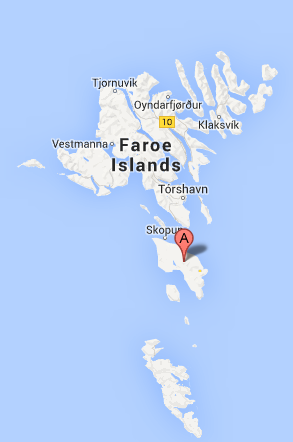
Somebody got there before the Vikings did – some 300 and 500 years earlier. Norse settlers reached Iceland in the 9th century and probably reached Greenland around the 11th century. But the archaeological evidence is that some unknown colonists had already reached the Faroes in the 4th- 6th century and again between the 6th -8th centuries. There is a theory that they could have been monks from Ireland (St. Brendan?) but I think it is still highly likely that these early explorers/colonists were sea-faring peoples out of Scandinavia.

Mike J. Church, Símun V. Arge, Kevin J. Edwards, Philippa L. AscoughJulie M. Bond, Gordon T. Cook, Steve J. Dockrill, Andrew J. DugmoreThomas H. McGovernClaire Nesbitt and Ian A. Simpson, The Vikings were not the first colonizers of the Faroe Islands, Quaternary Science Reviews (2013)

dx.doi.org/10.1016/j.quascirev.2013.06.011

Faroe Islands -Google Earth

Faroe Islands -Google Earth

Abstract

We report on the earliest archaeological evidence from the Faroe Islands, placing human colonization in the 4th–6th centuries AD, at least 300–500 years earlier than previously demonstrated archaeologically. The evidence consists of an extensive wind-blown sand deposit containing patches of burnt peat ash of anthropogenic origin. Samples of carbonised barley grains from two of these ash patches produced 14C dates of two pre-Viking phases within the 4th–6th and late 6th–8th centuries AD. A re-evaluation is required of the nature, scale and timing of the human colonization of the Faroes and the wider North Atlantic region.

Durham University Press Release:

The Faroe Islands were colonised much earlier than previously believed, and it wasn’t by the Vikings, according to new research.

New archaeological evidence places human colonisation in the 4th to 6th centuries AD, at least 300-500 years earlier than previously demonstrated. 

The research, directed by Dr Mike J Church from Durham University and Símun V Arge from the National Museum of the Faroe Islands as part of the multidisciplinary project “Heart of the Atlantic”, is published in the Quaternary Science Reviews.

The research challenges the nature, scale and timing of human settlement of the wider North Atlantic region and has implications for the colonisation of similar island groups across the world.

Sandoy, Faroes - Google Maps

Sandoy, Faroes – Google Maps

The Faroes were the first stepping stone beyond Shetland for the dispersal of European people across the North Atlantic that culminated on the shores of continental North America in the 11th century AD, about 500 years before Columbus made his famous voyage.

The research was carried out on an archaeological site at Á Sondum on the island of Sandoy. 

Analysis showed an extensive windblown sand deposit containing patches of burnt peat ash from human activity, dating human settlement to pre-Viking phases. These ash spreads contained barley grains which were accidentally burnt in domestic hearths and were then spread by humans onto the windblown sand surface during the 4th-6thcenturies and 6th-8th centuries, a common practice identified in the North Atlantic during this period to control wind erosion.

Lead author Dr Mike Church, from Durham University’s Department of Archaeology, said: “There is now firm archaeological evidence for the human colonisation of the Faroes by people some 300-500 years before the large scale Viking colonisation of the 9th century AD, although we don’t yet know who these people were or where they came from.

“The majority of archaeological evidence for this early colonisation is likely to have been destroyed by the major Viking invasion, explaining the lack of proof found in the Faroes for the earlier settlement. This also raises questions about the timing of human activity on other islands systems where similarly evidence may have been destroyed.”

Co-author, Símun V Arge from the National Museum of the Faroe Islands, said: “Although we don’t know who the people were that settled here and where they came from, it is clear that they did prepare peat for use, by cutting, drying and burning it which indicates they must have stayed here for some time.