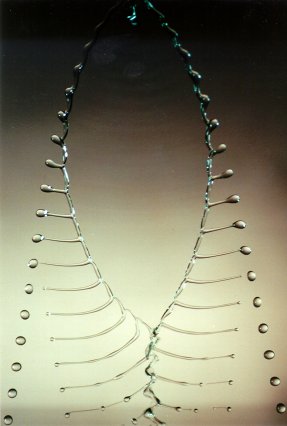
Archive for the ‘Science’ Category

Global warming hiatus confirmed – now the Pacific is to “blame”

August 28, 2013

Speculation is rife as to why there has been no global warming for the last 17 or 18 years. Some of this speculation is by those who believe the science is settled and is merely to try and “save” the discredited climate models used by the IPCC. Others – the real scientists – actually use it as an opportunity to investigate something that is not very well understood at all.

The lack of warming has been “blamed” on a variety of reasons. Some have blamed mysterious heat storage in the deep ocean where the heat has actually been transported from and through colder temperatures to higher temperatures! Others say that aerosols and soot in the atmosphere – due to pollution – have distorted the warming trend by hiding the sun. Some few point out that the models really don’t know how to treat clouds and moisture in the atmosphere and what actually drives cloud formation is still an unknown unknown. And there are those – like me – who put it down to natural variation which in turn is ultimately driven – via many still unknown mechanisms – by the Sun.

The El Nino-Southern Oscillation, has a major impact on global climate and is usually acknowledged but a new paper in Nature now suggests that the lack of warming is due to the Pacific Decadal Oscillation that lasts for a much longer period of time (15 – 30 years).  There may well be some influence of the Pacific Decadal Oscillation and no doubt it should be investigated further. But it does first need an acknowledgement that there is something to be investigated. As the authors begin “Despite the continued increase in atmospheric greenhouse gas concentrations, the annual-mean global temperature has not risen in the twenty-first century, challenging the prevailing view that anthropogenic forcing causes climate warming”.

Yu Kosaka & Shang-Ping Xie, Recent global-warming hiatus tied to equatorial Pacific surface cooling, Nature Letter (2013),

doi:10.1038/nature12534

Despite the continued increase in atmospheric greenhouse gas concentrations, the annual-mean global temperature has not risen in the twenty-first century, challenging the prevailing view that anthropogenic forcing causes climate warming. Various mechanisms have been proposed for this hiatus in global warming, but their relative importance has not been quantified, hampering observational estimates of climate sensitivity. Here we show that accounting for recent cooling in the eastern equatorial Pacific reconciles climate simulations and observations. We present a novel method of uncovering mechanisms for global temperature change by prescribing, in addition to radiative forcing, the observed history of sea surface temperature over the central to eastern tropical Pacific in a climate model. Although the surface temperature prescription is limited to only 8.2% of the global surface, our model reproduces the annual-mean global temperature remarkably well with correlation coefficient r = 0.97 for 1970–2012 (which includes the current hiatus and a period of accelerated global warming). Moreover, our simulation captures major seasonal and regional characteristics of the hiatus, including the intensified Walker circulation, the winter cooling in northwestern North America and the prolonged drought in the southern USA. Our results show that the current hiatus is part of natural climate variability, tied specifically to a La-Niña-like decadal cooling. Although similar decadal hiatus events may occur in the future, the multi-decadal warming trend is very likely to continue with greenhouse gas increase.

Imagined action from one brain converted to actual action by another brain

August 28, 2013

It is not quite telepathy but it is the stuff of science fiction. It could be the beginnings of mind-to-mind communication or perhaps it could be the beginnings of mind-control. An EEG signal was transmitted from one brain to a particular part of another brain and elicited a response from the body of the second. Admittedly only from that part of that body controlled by that part of the second brain.

Which begs the question as to whether any signal stimulating that part of that second brain would have elicited a similar response? But this is not the time to cavil or to find fault. The possibilities are endless. If I could imagine actions which would then be carried out by – say President Obama – we could all live in a better place!!

A brain-to-brain communication between two rats and also between a human and a rat have been reported from Duke University and from Harvard. Now from the University of Washington comes this report of the “first” brain-to-brain communication (via the internet) between two humans.

From the UoW press release:

Using electrical brain recordings and a form of magnetic stimulation, Rajesh Rao sent a brain signal to Andrea Stocco on the other side of the UW campus, causing Stocco’s finger to move on a keyboard.

Brain signals from the “Sender” are recorded. When the computer detects imagined hand movements, a “fire” command is transmitted over the Internet to the TMS machine, which causes an upward movement of the right hand of the “Receiver.” This usually results in the “fire” key being hit. – UoW

Rao, a UW professor of computer science and engineering, has been working on brain-computer interfacing in his lab for more than 10 years and just published a textbook on the subject. In 2011, spurred by the rapid advances in technology, he believed he could demonstrate the concept of human brain-to-brain interfacing. So he partnered with Stocco, a UW research assistant professor in psychology at the UW’s Institute for Learning & Brain Sciences.

 On Aug. 12, Rao sat in his lab wearing a cap with electrodes hooked up to an electroencephalography machine, which reads electrical activity in the brain. Stocco was in his lab across campus wearing a purple swim cap marked with the stimulation site for the transcranial magnetic stimulation coil that was placed directly over his left motor cortex, which controls hand movement.

The team had a Skype connection set up so the two labs could coordinate, though neither Rao nor Stocco could see the Skype screens.

Rao looked at a computer screen and played a simple video game with his mind. When he was supposed to fire a cannon at a target, he imagined moving his right hand (being careful not to actually move his hand), causing a cursor to hit the “fire” button. Almost instantaneously, Stocco, who wore noise-canceling earbuds and wasn’t looking at a computer screen, involuntarily moved his right index finger to push the space bar on the keyboard in front of him, as if firing the cannon. Stocco compared the feeling of his hand moving involuntarily to that of a nervous tic.

“It was both exciting and eerie to watch an imagined action from my brain get translated into actual action by another brain,” Rao said. “This was basically a one-way flow of information from my brain to his. The next step is having a more equitable two-way conversation directly between the two brains.”

The researchers captured the full demonstration on video recorded in both labs. This video and high-resolution photos also are available on the research website.

Super heavy element with atomic number 115 (Un un pentium) confirmed

August 27, 2013

Ununpentium is historically known as eka-bismuthUnunpentium is a temporary IUPAC systematic element name derived from the digits 115.

Eka -bismuth was the name assigned by Dmitri Mendelev to the then unknown element with atomic number 115. Eka-, dvi- and tri- derive from the Sanskrit words for one, two, and three, and Mendelev used these for unknown elements according to whether the predicted element was one, two, or three places down from the known element in his table with similar chemical properties. Eka-bismuth was thus predicted to be one position down from Bismuth with Atomic Number 83 in his table. His predicted Eka-aluminium became Gallium and Eka-silicon became Germanium. His original table was made in 1869 along with his initial predictions.

Photo ALAMY (via The Telegraph)

Photo ALAMY (via The Telegraph)

The first reported synthesis of this heavy element was in 2004 by a team composed of Russian scientists at the Joint Institute for Nuclear Research in Dubna, and American scientists at the Lawrence Livermore National Laboratory. It exists for less than a second and is highly radioactive. About 25 atoms of “Ununpentium” were synthesised at that time. Now it seems the synthesis of the element has been independently confirmed though it still has to be ratified.

File:Electron shell 115 Ununpentium - no label.svg

Expected electron configuration of “Ununpentium” – Wikipedia

Science2.0: 

An international team at the GSI research facility in Germany have confirmed the existence of a new element with atomic number 115, verifying earlier measurements performed by research groups in Russia. 

By bombarding a thin film of americium with calcium ions, the research team was able to measure photons in connection with the new element’s alpha decay. Certain energies of the photons agreed with the expected energies for X-ray radiation, which is a ‘fingerprint’ of a given element.

The new super-heavy element has yet to be named. A committee comprising members of the international unions of pure and applied physics and chemistry will review the new findings to decide whether to recommend further experiments before the discovery of the new element is acknowledged.

The new super-heavy element has yet to be named. A committee comprising members of the international unions of pure and applied physics and chemistry will review the new findings to decide whether to recommend further experiments before the discovery of the new element is acknowledged.

Beetles reduce methane production from cowpats

August 22, 2013

Leaving aside all the extraneous nonsense about global warming and cattle flatulence – which was not actually studied at all – this paper by an intrepid Finnish researcher does address the effect of dung beetles on methane production in dung. Perhaps someday it will not be necessary to wrap-up otherwise good research in a “global warming” cloak just to ensure publication or funding or both

 Penttilä A, Slade EM, Simojoki A, Riutta T, Minkkinen K, and Roslin T. (2013) Quantifying Beetle-Mediated Effects on Gas Fluxes from Dung Pats. PLoS ONE 8(8): e71454. doi:10.1371/journal.pone.0071454

Abstract: Agriculture is one of the largest contributors of the anthropogenic greenhouse gases (GHGs) responsible for global warming. Measurements of gas fluxes from dung pats suggest that dung is a source of GHGs, but whether these emissions are modified by arthropods has not been studied. A closed chamber system was used to measure the fluxes of carbon dioxide (CO2), methane (CH4) and nitrous oxide (N2O) from dung pats with and without dung beetles on a grass sward. The presence of dung beetles significantly affected the fluxes of GHGs from dung pats. Most importantly, fresh dung pats emitted higher amounts of CO2 and lower amounts of CH4 per day in the presence than absence of beetles. Emissions of N2O showed a distinct peak three weeks after the start of the experiment – a pattern detected only in the presence of beetles. When summed over the main grazing season (June–July), total emissions of CH4proved significantly lower, and total emissions of N2O significantly higher in the presence than absence of beetles. While clearly conditional on the experimental conditions, the patterns observed here reveal a potential impact of dung beetles on gas fluxes realized at a small spatial scale, and thereby suggest that arthropods may have an overall effect on gas fluxes from agriculture. Dissecting the exact mechanisms behind these effects, mapping out the range of conditions under which they occur, and quantifying effect sizes under variable environmental conditions emerge as key priorities for further research.

Dung beetles like Aphodius pedellus may aerate cow pats- Drawing of beetle by Kari Heliövaara

From EurekAlert:

Atte Penttilä, who undertook the study for his Masters, explains: “Cow pats offer a prime food for a large number of organisms. In fact, there are probably as many beetle species living in dung as there are bird species on this planet.”

Of the dung beetles living in Northern Europe, most spend their entire lives within the dung pats. “We believe that these beetles exert much of their impact by simply digging around in the dung. Methane is primarily born under anaerobic conditions, and the tunneling by beetles seems to aerate the pats. This will have a major impact on how carbon escapes from cow pats into the atmosphere.”

“You see, the important thing here is not just how much carbon is released” explains Tomas Roslin, head of the research team. “The question is rather in what form it is released. If carbon is first taken up by plants as carbon dioxide, then emitted in the same format by the cows eating the plants, then the effect of plants passing through cattle will be small in terms of global warming. But if in the process the same carbon is converted from carbon dioxide to methane – a gas with a much higher impact on climate – it is then that we need to worry.”

“If the beetles can keep those methane emissions down, well then we should obviously thank them – and make sure to include them in our calculations of overall climatic effects of dairy and beef farming.”


Update on the Dorta-Drinkel paper

August 20, 2013

To “close” the story on my previous posts (here and here), this post at the Chemistry blog brings a kind of “closure” though some more details will no doubt surface.

Prof Dorta has apparently responded recognising that his “just make up an elemental analysis..” comment was “inappropriate”. The Editor of Organometallics has also made a lengthy response – quite unusual for an Editor to be so forthcoming and to “step-up”:

….

Best wishes,

John Gladysz
(on whose desk “the buck stops” for everything, good and bad, at Organometallics)

He also leaves a comment at ChemBark (which itself is worthy of note as an interaction between the Editor of a Peer-reviewed Journal and a blog)

…..

Thus, with respect to the Dorta manuscript and Drinkel thesis, we will be focusing (apart from many other questions) on whether the reported procedures give solvated or unsolvated products (it cannot be both), and then whether the yields given are correct (we have done the calculations both ways, and also looked at the NMR spectra per the group handout).

Quite possibly there has been carelessness and there are clearly some mistakes, but – hopefully –  not much in the way of “underhand behaviour” or misconduct.

The full responses from Prof. Dorta and John Gladysz are over at the Chemistry blog.

Fluid jets and fishbones

August 9, 2013

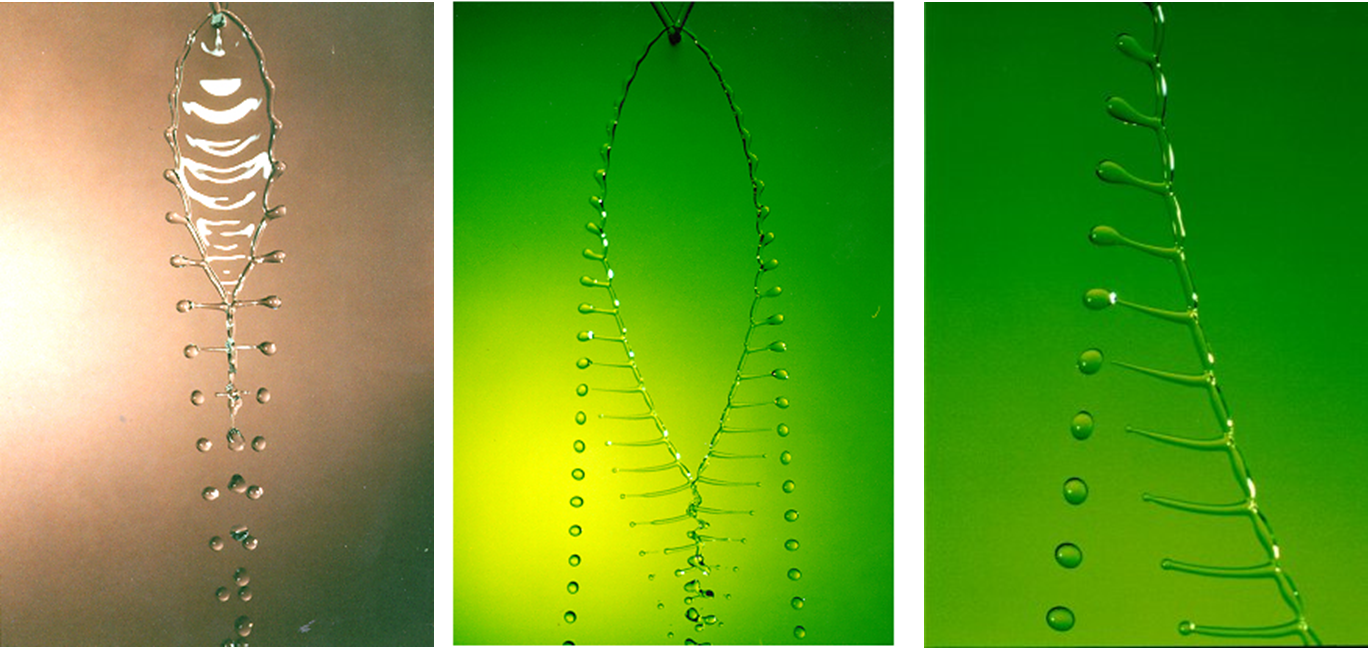
Just a few examples from a striking gallery of pictures by  John W. M. Bush (MIT Mathematics)

Colliding jets and the patterns that ensue.

Fishbone john bush

Fishbone john bush

fluids john bush

colliding jets john bush

We examine the form of the free surface flows resulting from the collision of equal jets at an oblique angle. Glycerol-water solutions with viscosities of 15-50 cS were pumped at flow rates of 10-40 cc/s through circular outlets with diameter 2 mm. … At low flow rates, the resulting stream takes the form of a steady fluid chain, a succession of mutually orthogonal fluid links, each comprised of a thin oval sheet bound by relatively thick fluid rims. The influence of viscosity serves to decrease the size of successive links, and the chain ultimately coalesces into a cylindrical stream. As the flow rate is increased, waves are excited on the sheet, and the fluid rims become unstable.  The rim appears blurred to the naked eye; however, strobe illumination reveals a remarkably regular and striking flow instability. Droplets form from the sheet rims but remain attached to the fluid sheet by tendrils of fluid that thin and eventually break. The resulting flow takes the form of fluid fishbones, with the fluid sheet being the fish head and the tendrils its bones. Increasing the flow rate serves to broaden the fishbones.  In the wake of the fluid fish, a regular array of drops obtains, the number and spacing of which is determined by the pinch-off of the fishbones. 

h/t Science is Beauty


Stopping the light fantastic

August 7, 2013

The speed of light in a vacuum (c) is the immutable constant. Every shadow in the world is proof absolute that it can be prevented from reaching some places (by prior reflection and absorption). But light can also be slowed-down and stopped and even stored.

Light propagates at speeds less than (c) in different media. 

In 1999, Danish physicist Lene Vestergaard Hau led a combined team from Harvard University and the Rowland Institute for Science which succeeded in slowing a beam of light to about 17 meters per second, and researchers at UC Berkeley slowed the speed of light traveling through a semiconductor to 9.7 km/s in 2004. Hau later succeeded in stopping light completely, and developed methods by which it can be stopped and later restarted.This was in an effort to develop computers that will use only a fraction of the energy of today’s machines.

Back in 2007, Lene Hau showed that light could be “stopped” and then “restarted” a little distance away.

LeneHau.jpg

Lene Hau (image photonics.com)

CAMBRIDGE, Mass., Feb. 8, 2007 — By converting light into matter and then back again, physicists have for the first time stopped a light pulse and then restarted it a small distance away. This “quantum mechanical magic trick” provides unprecedented control over light and could have applications in fiber-optic communication and quantum information processing. 

In quantum networks, information optically transmitted over the network is converted into matter, processed, and then converted back into light. The physicists at Harvard University hope that their discovery could provide a possible way to do this, since matter, unlike light, can easily be manipulated. Their findings were published this week in the journal Nature.  

“We demonstrate that we can stop a light pulse in a supercooled sodium cloud, store the data contained within it, and totally extinguish it, only to reincarnate the pulse in another cloud two-tenths of a millimeter away,” said Lene Vestergaard Hau, Mallinckrodt Professor of Physics and of Applied Physics in Harvard’s Faculty of Arts and Sciences and School of Engineering and Applied Sciences.

But now comes evidence that it can be “stopped” and stored for a whole minute – and maybe even longer.

Georg Heinze, Christian Hubrich, Thomas Halfmann. Stopped Light and Image Storage by Electromagnetically Induced Transparency up to the Regime of One MinutePhysical Review Letters, 2013; 111 (3) DOI: 10.1103/PhysRevLett.111.033601

Abstract: The maximal storage duration is an important benchmark for memories. In quantized media, storage times are typically limited due to stochastic interactions with the environment. Also, optical memories based on electromagnetically induced transparency (EIT) suffer strongly from such decoherent effects. External magnetic control fields may reduce decoherence and increase EIT storage times considerably but also lead to complicated multilevel structures. These are hard to prepare perfectly in order to push storage times toward the theoretical limit, i.e., the population lifetime T1. We present a self-learning evolutionary strategy to efficiently drive an EIT-based memory. By combination of the self-learning loop for optimized optical preparation and improved dynamical decoupling, we extend EIT storage times in a doped solid above 40 s. Moreover, we demonstrate storage of images by EIT for 1 min. These ultralong storage times set a new benchmark for EIT-based memories. The concepts are also applicable to other storage protocols.

Hugues de Riedmatten writes in Physics:

A solid-state device can now store light coherently for up to one minute.

The ability to store light while keeping its quantum coherence properties (e.g., entanglement) plays an important role in quantum information science. It makes it possible to build quantum memories for light, which could become crucial elements in many quantum information processing schemes based on the use of photons, from quantum communication networks to quantum computing protocols. A critical parameter for applications is the duration over which light can be stored. For example, the distribution of quantum bits over complex quantum information networks, and their storage for further manipulation, might require quantum memories with storage time from a few seconds to a few minutes. Writing in Physical Review Letters, Georg Heinze at the University of Darmstadt, Germany, and colleagues report an important step towards this goal by demonstrating a solid-state coherent optical memory capable of storing a classical light pulse, and even a full image, for a duration of more than one minute—the longest light-storage time reported in any system to date.

Apocalypse delayed – Himalayan researchers reverse earlier predictions of water shortages

August 6, 2013

I sense that some of the alarmism and the apocalyptic futures always associated with global warming hysteria are beginning to moderate.

Earlier predictions of water shortages due to the shrinkage of Himalayan glaciers are being reversed by new research which now predicts increased water flow in two Himalayan watersheds.

W. W. Immerzeel, F. Pellicciotti & M. F. P. Bierkens, Rising river flows throughout the twenty-first century in two Himalayan glacierized watersheds, Published online 04 August 2013, Nature Geoscience  (2013) doi:10.1038/ngeo1896

EnergyWire comments:

One of the big unknowns of climate change predictions — and one that has led to considerable contention — lies in knowing the future of water runoff from the Himalayas. The snow- and ice-rich region supplies water for billions of people in Asia and is sometimes referred to as the Earth’s “Third Pole.”

For years, scientists struggled to understand how precipitation will change in these mountains (ClimateWire, Oct. 24, 2011). They have also had difficulty determining how much glacier melt from the mountains contributes to water supply. 

A study out yesterday in Nature Geoscience by Walter Immerzeel, a physical geographer at Utrecht University, suggests that, in at least two major Himalayan watersheds, river flows and runoff should rise until 2100.

“We show that the peak in meltwater is later than we previously thought, which in combination with a projected increase in precipitation results in an increase in water availability until the end of the century,” he said.

The two watersheds Immerzeel reports on in the paper are those of the Baltoro and Langtang glaciers, which feed the Indus and Ganges rivers, respectively. In the Baltoro watershed, this is largely due to more glacier runoff from melt. In the Langtang, increased precipitation drives the extra runoff.

Immerzeel and his co-authors used the output of the latest global climate models from the Coupled Model Intercomparison Project (CMIP5) to look at temperature and precipitation projections. They combined that data with a hydrologic model of glacier responses to climate change.

They found that in both watersheds, runoff from glaciers should increase until the 2040s or 2060s, later than previous estimates, depending on which climate scenarios are applied.

….. In the paper, Immerzeel points out that his new finding contradicts previous work he has published, suggesting that runoff in the Indus and Ganges basin would decrease. At least for now, this is good news for people and farmers who rely on that water, he said.

“Strong increases in water demand are projected in the Indus as the food production needs to grow to feed the quickly rising population,” Immerzeel said. “An increased water availability from the mountains may help to sustain this growing demand.”

Abstract: Greater Himalayan glaciers are retreating and losing mass at rates comparable to glaciers in other regions of the world. Assessments of future changes and their associated hydrological impacts are scarce, oversimplify glacier dynamics or include a limited number of climate models. Here, we use results from the latest ensemble of climate models in combination with a high-resolution glacio-hydrological model to assess the hydrological impact of climate change on two climatically contrasting watersheds in the Greater Himalaya, the Baltoro and Langtang watersheds that drain into the Indus and Ganges rivers, respectively. We show that the largest uncertainty in future runoff is a result of variations in projected precipitation between climate models. In both watersheds, strong, but highly variable, increases in future runoff are projected and, despite the different characteristics of the watersheds, their responses are surprisingly similar. In both cases, glaciers will recede but net glacier melt runoff is on a rising limb at least until 2050. In combination with a positive change in precipitation, water availability during this century is not likely to decline. We conclude that river basins that depend on monsoon rains and glacier melt will continue to sustain the increasing water demands expected in these areas.

Asymmetric reversal of the Sun’s magnetic field is under way – NASA

August 6, 2013

The sun’s magnetic field reverses roughly every 11 years at solar maximum. We are now approaching solar maximum of solar cycle 24 (SC 24) but this magnetic reversal is strongly assymetric according to NASA:

“The sun’s north pole has already changed sign, while the south pole is racing to catch up,” says Scherrer. Soon, however, both poles will be reversed, and the second half of Solar Max will be underway.”

The North pole of the sun switched polarity in mid-2012 which seemed early at the time since solar maximum was not expected till the fall of 2013. It is difficult to imagine that there will not be consequences for the Earth but what those consequences might be is not a “settled science”.

Certainly geomagnetic reversals on Earth have more to do with the flow patterns in the earth’s liquid core and have quite different time periods. The time span between geomagnetic reversals on the Earth vary between 0.1 and 1 million years with an average of 450,000 years.

The latest one, the Brunhes–Matuyama reversal, occurred 780,000 years ago. However,a study published in 2012 by a group from the German Research Center for Geosciences suggests that a brief complete reversal occurred only 41,000 years ago during the last glacial period. The reversal lasted only about 440 years with the actual change of polarity lasting around 250 years.

From Dr. Leif Svalgaard’s research page:

Solar magnetic reversal cycle

The NASA press release says:

August 5, 2013:  Something big is about to happen on the sun.  According to measurements from NASA-supported observatories, the sun’s vast magnetic field is about to flip.

“It looks like we’re no more than 3 to 4 months away from a complete field reversal,” says solar physicist Todd Hoeksema of Stanford University. “This change will have ripple effects throughout the solar system.”

(more…)

Peter Ziegler RIP

July 29, 2013
PAZiegler s.jpg

Prof. Peter A Ziegler

Professor Peter Ziegler passed away a few days ago aged 84.

RIP

Prof. Peter Ziegler (1928 – 2013) was a Swiss geologist  and Titular Professor of Global Geology at the Geological-Paleontological Institute, University of Basel. He is a member of the Royal Netherlands Academy of Sciences, the Polish Academy of Arts and Sciences, the Russian Academy of Natural Sciences and the Academia Europaea.

I posted in March about his presentation on the “Mechanisms of Climate Change” from February this year.

Climate Change Ziegler 2013 (pdf)