Made-up science: “Liking” or “disliking” in general is a personality trait!

August 27, 2013

This comes into the category – not of bad science – but what I would call “made-up science” where something fairly trivial and obvious is made sufficiently complicated to be addressed by “scientific method”.

It is apparently called “dispositional attitude” and it has a 16-item scale to measure an individual’s propensity to generally like or dislike any stimulii! This surprising and novel discovery expands attitude theory by demonstrating that an attitude is not simply a function of an object’s properties, but it is also a function of the properties of the individual who evaluates the object,”  So a “liker” likes everything and a “hater” hates everything!

“Dispositional Attitude” seems neither surprising nor so very novel. Not so very different from what has been called the “Observer Effect” in physics or the “actor-observer assymetry” in attribution theory. It is unnecessarily trying to complicate what is little more than a cliche. Beauty – or liking or hating – lies in the eye of  the beholder and if your personality wears rose-coloured glasses – surprise, surprise – everything appears red.

Justin Hepler & Dolores Albarracin, “Attitudes without objects: Evidence for a dispositional attitude, its measurement, and its consequences,”J Pers Soc Psychol. 2013 Jun;104(6):1060-76. doi: 10.1037/a0032282. Epub 2013 Apr 15.

The Annenberg School of Communication at the University of Pennsylvania has come out with this Press Release:

New research has uncovered the reason why some people seem to dislike everything while others seem to like everything. Apparently, it’s all part of our individual personality – a dimension that researchers have coined “dispositional attitude.”
            People with a positive dispositional attitude have a strong tendency to like things, whereas people with a negative dispositional attitude have a strong tendency to dislike things, according to research published in the Journal of Personality and Social Psychology. The journal article, “Attitudes without objects: Evidence for a dispositional attitude, its measurement, and its consequences,” was written by Justin Hepler, University of Illinois at Urbana-Champaign, and Dolores Albarracín, Ph.D., the Martin Fishbein Chair of Communication and Professor of Psychology at Penn.
            “The dispositional attitude construct represents a new perspective in which attitudes are not simply a function of the properties of the stimuli under consideration, but are also a function of the properties of the evaluator,” wrote the authors. “[For example], at first glance, it may not seem useful to know someone’s feelings about architecture when assessing their feelings about health care. After all, health care and architecture are independent stimuli with unique sets of properties, so attitudes toward these objects should also be independent.”
            However, they note, there is still one critical factor that an individual’s attitudes will have in common: the individual who formed the attitudes.  “Some people may simply be more prone to focusing on positive features and others on negative features,” Hepler said.  …..  
“This surprising and novel discovery expands attitude theory by demonstrating that an attitude is not simply a function of an object’s properties, but it is also a function of the properties of the individual who evaluates the object,” concluded Hepler and Albarracín. “Overall, the present research provides clear support for the dispositional attitude as a meaningful construct that has important implications for attitude theory and research.”
Abstract:
We hypothesized that individuals may differ in the dispositional tendency to have positive versus negative attitudes, a trait termed the Dispositional Attitude. Across four studies, we developed a 16-item Dispositional Attitude Measure (DAM) and investigated its internal consistency, test-retest reliability, factor structure, convergent validity, discriminant validity, and predictive validity. DAM scores were (a) positively correlated with positive affect traits, curiosity-related traits, and individual pre-existing attitudes, (b) negatively correlated with negative affect traits, and (c) uncorrelated with theoretically unrelated traits. Dispositional attitudes also significantly predicted the valence of novel attitudes while controlling for theoretically relevant traits (such as
the big-five and optimism). The dispositional attitude construct represents a new perspective in which attitudes are not simply a function of the properties of the stimuli under consideration, but are also a function of the properties of the evaluator. We discuss the intriguing implications of dispositional attitudes for many areas of research, including attitude formation, persuasion, and behavior prediction.

Farmers’ Almanac caldron “toils and troubles” and predicts a bitterly cold winter

August 26, 2013

How exactly the Farmers’ Almanac makes its predictions is a closely guarded secret. But they tend to be right around 80% of the time.

Based on planetary positions, sunspots and lunar cycles, the almanac’s secret formula is largely unchanged since founder David Young published the first almanac in 1818.

For all we know the Farmers’ Almanac caldron may also contain some or all of the ingredients used by Macbeth’s favourite soothsayers. Certainly the climate caldrons (models) being used by the soothsayers of the IPCC could do with some new ingredients since what they use (eye of Mann and toe of Hansen) don’t seem to work.

IPCC Caldron

Poison’d entrails, venomous toad, Fillet of a fenny snake,

Eye of newt, and toe of frog, 
    Wool of bat, and tongue of dog, 
    Adder’s fork, and blind-worm’s sting, 
    Lizard’s leg, and owlet’s wing,….. 

Scale of dragon; tooth of wolf; 
    Witches’ mummy; maw and gulf 
    Of the ravin’d salt-sea shark; 
    Root of hemlock digg’d i the dark; 
    Liver of blaspheming Jew; 
    Gall of goat, and slips of yew ……

…. Nose of Turk, and Tartar’s lips; 
    Finger of birth-strangled babe ….

and not forgetting a tiger’s chaudron and the whole thing cooled with baboon’s blood!

The FA forecast for the coming winter for the US has just been published under the name of Caleb Weatherbee:

Caleb Weatherbee is the official forecaster for the Farmers’ Almanac. His name is actually a pseudonym that has been passed down through generations of Almanac prognosticators and has been used to conceal the true identity of the men and women behind our predictions.

FA Forecast 2013 winter

So, what’s in store for this winter? The “Days of Shivery” are back! 
For 2013–2014, we are forecasting a winter that will experience below average temperatures for about two-thirds of the nation. A large area of below-normal temperatures will predominate from roughly east of the Continental Divide to the Appalachians, north and east through New England. Coldest temperatures will be over the Northern Plains on east into the Great Lakes. Only for the Far West and the Southeast will there be a semblance of winter temperatures averaging close to normal, but only a few areas will enjoy many days where temperatures will average above normal.

Precipitation-wise, the Southern Plains, Midwest, and Southeast will see above-normal conditions, while the rest of the country will average near normal. With a combination of below-normal temperatures and above-normal precipitation the stage will be set for the Midwest, Great Lakes, and Central and Northern New England to receive lots of snow. Farther south, where the thermometer will be vacillating above or below the freezing mark, Southern New England, Southeast New York, New Jersey, and down through the Mid-Atlantic region will be seeing either copious rains and/or snows.

And yet, the Pacific Northwest (or is it “northwet?”) where indeed wet weather is almost a given during the winter months, the overall winter season could average out drier than normal.

Significant snowfalls are forecast for parts of every zone. Over the Northeast and Mid-Atlantic states, we are “red-flagging” the first ten days of February for possible heavy winter weather. More importantly, on February 2, Super Bowl XLVIII will be played at MetLife Stadium in New Jersey’s Meadowlands—the very first time a Super Bowl will be played outdoors in a typically cold weather environment. We are forecasting stormy weather for this, the biggest of sporting venues. But even if we are off by a day or two with the timing of copious wind, rain, and snow, we wish to stress that this particular part of the winter season will be particularly volatile and especially turbulent.

And mid-March could bring a wave of storminess stretching almost from coast to coast, bringing a wide variety of precipitation types as well as strong and gusty winds.

Late spring, early autumn this year?

August 26, 2013

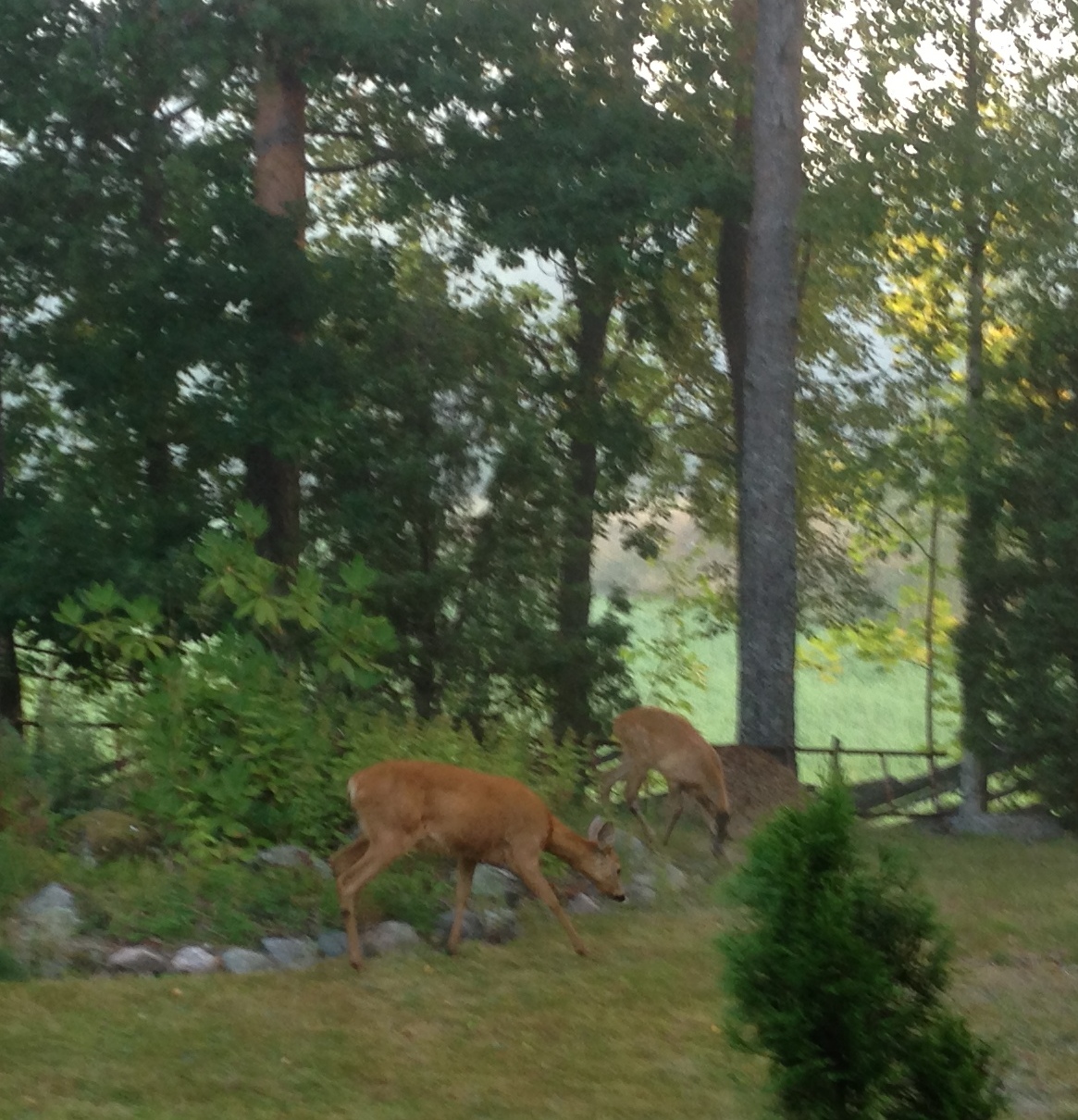
This morning it feels like Autumn is here. Frost has not quite reached us but it is not very far away. The mist is rising thickly as the sun rises. And the deer are in the garden cleaning up all the fallen apples:

From my window 26th August 2013

From my kitchen window 26th August 2013

This year spring came about 3 weeks late.

SMHI defines spring in Sweden as the first day – after 15th February – of 7 continuous days with temperatures between 0 and 10 °C. The “normal” onset of Spring is as below:

  • Malmö: 22nd February
  • Stockholm: 16th March
  • Östersund: 11th April
  • Kiruna: 1st May

Admittedly I am at a latitude of 58.7057° N.  Spring should have come around 12th March and we are going to be around 3 weeks late (at least).

In calendar terms, spring should last from March till May  and summer from June till August. But the onset of Autumn is defined by SMHI – in meteorological terms – as the first day of the first occurrence of 5 consecutive days with an average temperature of less than 10°C.  Normally this should be around 25th September. But it looks like that it might also be around 3 weeks early.

So while it has not been a bad summer it seems summer may be about 5-6 weeks shorter than “normal” this year.

Many consecutive years of long winters and short summers will probably be the precursors of the coming of the next ice age. And these days I find it more relevant to look for signs that the next ice age (either a little ice age or even the end of the inter-glacial) is coming. It is no longer relevant or worthwhile to be looking for signs of man-made global warming!

O Fontana! Is Rudd losing his election on rudeness?

August 24, 2013

Two weeks to go to the Australian election and maybe the campaign is now beginning to show some signs of life. But things are not looking very good for Kevin Rudd.

The campaign has been fairly lacklustre so far but some small events may be having an unexpectedly large impact on the electorate. Whereas Abbott’s slip-ups almost seem to be expected and are discounted, Rudd’s small missteps are instead tapping into perceptions of his long history on the political stage. A Rude Rudd meme is growing. Voters don’t usually choose their candidates just for being polite but it is possible that they may refuse to vote for someone considered rude.

Lily Fontana’s short-lived outburst on Facebook about Kevin Rudd’s relative rudeness before last weeks TV debate has brought all his many previous episodes of rudeness back to the forefront. Strangely Abbott’s “shut up” about Rudd is seen as being somewhat justified. His “suppository” instead of “repository” generated a few smutty jokes but does not seem to have caused much negative impact. Perhaps because expectations of Abott are sufficiently low. Perceptions relative to expectations give reality. Another make-up artist, Abigail Johnston, also described a similar episode with Rudd. She too took down (or was forced to take down) her Facebook post.

News.com: Make up artist Abigael Johnston backed up her friend Ms Fontana, saying Mr Rudd had previously been rude to her. “I second this Lily. I have had a very similar experience!” Ms Johnston said. Posting on Facebook Ms Johnston said: “Must run in the family as Mr Howard and Mr Costello were gentlemen with a capital G. Mr Abbott is following in their footsteps. The other, I could not even face book how he treated the crew. Just abhorrent!” When contacted this morning Ms Johnston said the incident she referred to had occurred before Mr Rudd was Prime Minister.

The electorate is beginning to remember that Rudd’s smile is just a little too smarmy and that he may not be such a nice bloke after all. His past reputation for bullying and rudeness is suddenly of great interest.

The Australian: A RETIRED air vice-marshal has accused Kevin Rudd of “bully standover tactics” and a make-up artist has declared he was rude as she prepared him for the people’s forum debate, reviving questions about the Prime Minister’s character that emerged in his first stint in the role. ….. The revelations blunted Labor’s attacks on Tony Abbott’s character, after the Opposition Leader snapped during the forum debate, asking of Rudd “does this guy ever shut up?” ….. echoed claims that Mr Rudd had been rude to air force staff during his first term as prime minister. In the lead up to his failed February 2012 leadership challenge against Julia Gillard, an expletive-laden video was leaked of him losing his cool as he prepared a Chinese-language video.

Herald Sun: In 2009 he famously had to apologise to an RAAF air hostess after it was revealed he reduced her to tears when the meal he requested was unavailable on a flight from Port Moresby to Canberra. .. In the same year it was reported Mr Rudd threw a “wobbly” when Diggers were unable to locate a hairdryer for a photo opportunity in Afghanistan. .. Again in 2009 Mr Rudd reportedly launched an expletive-ridden tirade at Labor’s factional bosses, including three female MPs. ….. In 2010 following the Copenhagen Climate Change Summit Mr Rudd told journalists: “Those Chinese f-ers, they are trying to ratf- us”. … Then in 2012 an expletive-ridden video was released. In the video, uploaded to YouTube under the heading “Kevin Rudd is a happy little vegemite” the PM slams the table and swears repeatedly in outtakes. “You can tell these d-heads in the embassy to just give me simple sentences. I’ve said this before,” Mr Rudd says. “Tell that bloody interpreter. This f-ing language just complicates it so much, you know. How can anyone do this.”

Furthermore his “despatch” of Julia Gillard has confirmed a perception of  his deviousness. What was once seen as “political skill” has flipped over to being seen as “underhanded” and Machiavellian. Of course the Australian Labour Party’s internal workings could be used as a script for The Borgias. (While Jeremy Irons is known to donate generously to Labour in the UK, I have not heard that he has shown much interest in the Australian election).

And now the latest polls show not only the Coalition increasing its lead but also that Rudd may have difficulty in defending his own seat:

The AgeKevin Rudd faces a fight to avoid becoming the third prime minister in the nation’s history to lose his own seat. A second poll in a week has shown Mr Rudd narrowly trailing his Liberal National Party opponent, Bill Glasson, in Griffith, prompting the Prime Minister to declare he was campaigning as hard as he could.

Long-serving prime minister John Howard lost his Sydney seat of Bennelong to Labor’s Maxine McKew as part of the Ruddslide in 2007, the first time an Australian PM had lost his own electorate since Stanley Bruce in 1929.

BloombergAustralia’s opposition Liberal-National coalition widened its lead over the Labor government in an opinion poll, signaling leader Tony Abbott may replace Kevin Rudd as prime minister after the Sept. 7 election. Support for the coalition rose to 53 percent on a two-party preferred basis this week from 52 percent two weeks earlier, while those voters backing the ruling Labor party fell one point to 47 percent, according to a Herald-Nielsen poll published in the Sydney Morning Herald newspaper today. Support for Rudd as preferred prime minister fell to 48 percent from 50 percent while 45 percent of those surveyed backed Abbott, up from 42 percent.

My forecast from far, far away (13,600km on a great circle route to Perth) would be for an Abbott win with about a 10 seat margin. It seems unlikely now that any “big” issue (economy, carbon tax, immigration …) is going to get further traction or to be decisive. But two weeks is a long time in politics. It is certainly long enough for either to snatch defeat.

Integrated Assessment Climate models tell us “very little”

August 24, 2013

Mathematical models are used – and used successfully – everyday in Engineering, Science, Medicine and Business. Their usefulness is determined – and some are extremely useful – by knowing their limitations and acknowledging that they only represent an approximation of real complex systems.  Actual measurements always override the model results and whenever reality does not agree with model predictions it is usually mandatory to adjust the model. Where the adjustments can only be made by using “fudge factors” it is usually necessary to revisit the simplifying assumptions used to formulate the model in the first place.

But this is not how Climate Modelling Works. Reality or actual measurements are not allowed to disturb the model or its results for the far future. Fudge factors galore are introduced to patch over the differences when they appear. The adjustments to the model are just sufficient to cover the observed difference to reality but such that the long-term “result” is maintained.

The assumption that carbon dioxide has a significant role to play in global warming is itself hypothetical. Climate models start with that as an assumption. They don’t address whether there is a link between the two. Some level of warming is assumed to be the consequence of a doubling the carbon dioxide concentration in the atmosphere. For the last 17 years global temperature has stood still while carbon dioxide concentration has increased dramatically. There is actually more evidence to hypothesise that there is no link (or a very weak link) between carbon dioxide and global warming than that there is. Nevertheless all climate models start with the built-in assumption that the link exists. And then use the results of the model as proof that the link exists! They are not just cyclical arguments – they are incestuous – or do I mean cannibalistic.

It is bad enough that economic models, developed to count the cost of carbon dioxide are first based on some hypothetical magnitude of the link between carbon dioxide emission and global warming as their starting point. But it gets worse. These “integrated assessment” models then themselves are strewn with new assumptions and further cyclical logic as to how the costs ensue.

A new paper by Prof. Robert Pindyck for the National Bureau of Economic Research takes a less than admiring look at the Integrated Assessment Climate models and their uselessness.

Robert S. PindyckClimate Change Policy: What Do the Models Tell Us?, NBER Working Paper No. 19244
Issued in July 2013

(A pdf of the full paper is here: Climate-Change-Policy-What-Do-the-Models-Tell-Us)

Abstract: Very little. A plethora of integrated assessment models (IAMs) have been constructed and used to estimate the social cost of carbon (SCC) and evaluate alternative abatement policies. These models have crucial flaws that make them close to useless as tools for policy analysis: certain inputs (e.g. the discount rate) are arbitrary, but have huge effects on the SCC estimates the models produce; the models’ descriptions of the impact of climate change are completely ad hoc, with no theoretical or empirical foundation; and the models can tell us nothing about the most important driver of the SCC, the possibility of a catastrophic climate outcome. IAM-based analyses of climate policy create a perception of knowledge and precision, but that perception is illusory and misleading.

Even though his assumptions about “climate sensitivity” are somewhat optimistic, he is more concerned with the assumptions made to try and develop the “damage” function to enable the cost to be estimated:

When assessing climate sensitivity, we at least have scientific results to rely on, and can argue coherently about the probability distribution that is most consistent with those results. When it comes to the damage function, however, we know almost nothing, so developers of IAMs [Integrated Assessment Models] can do little more than make up functional forms and corresponding parameter values. And that is pretty much what they have done. …..  

But remember that neither of these loss functions is based on any economic (or other) theory. Nor are the loss functions that appear in other IAMs. They are just arbitrary functions, made up to describe how GDP goes down when T goes up.

…. Theory can’t help us, Nor is data available that could be used to estimate or even roughly calibrate the parameters. As a result, the choice of values for these parameters is essentially guesswork. The usual approach is to select values such that L(T ) for T in the range of 2◦C to 4◦C is consistent with common wisdom regarding the damages that are likely to occur for small to moderate increases in temperature.

…… For example, Nordhaus (2008) points out (page 51) that the 2007 IPCC report states that “global mean losses could be 1–5% GDP for 4◦C of warming.” But where did the IPCC get those numbers? From its own survey of several IAMs. Yes, it’s a bit circular. 

The bottom line here is that the damage functions used in most IAMs are completely made up, with no theoretical or empirical foundation. That might not matter much if we are looking at temperature increases of 2 or 3◦C, because there is a rough consensus (perhaps completely wrong) that damages will be small at those levels of warming. The problem is that these damage functions tell us nothing about what to expect if temperature increases are larger, e.g., 5◦C or more.19 Putting T = 5 or T = 7 into eqn. (3) or (4) is a completely meaningless exercise. And yet that is exactly what is being done when IAMs are used to analyze climate policy.

And he concludes:

I have argued that IAMs are of little or no value for evaluating alternative climate change policies and estimating the SCC. On the contrary, an IAM-based analysis suggests a level of knowledge and precision that is nonexistent, and allows the modeler to obtain almost any desired result because key inputs can be chosen arbitrarily. 

As I have explained, the physical mechanisms that determine climate sensitivity involve crucial feedback loops, and the parameter values that determine the strength of those feedback loops are largely unknown. When it comes to the impact of climate change, we know even less. IAM damage functions are completely made up, with no theoretical or empirical foundation. They simply reflect common beliefs (which might be wrong) regarding the impact of 2◦C or 3◦C of warming, and can tell us nothing about what might happen if the temperature increases by 5◦C or more. And yet those damage functions are taken seriously when IAMs are used to analyze climate policy. Finally, IAMs tell us nothing about the likelihood and nature of catastrophic outcomes, but it is just such outcomes that matter most for climate change policy. Probably the best we can do at this point is come up with plausible estimates for probabilities and possible impacts of catastrophic outcomes. Doing otherwise is to delude ourselves.

….

“Preoccupied” and “fearful” types use Facebook for partner surveillance

August 23, 2013

Yet another Facebook survey. This time to try and discern types of people who use Facebook to monitor their partners. It’s all data I suppose. But I’m not sure if a plethora of little surveys such as this one (328 college students surveyed) allows greater insight or just muddies the ever expanding pool of “data”.

It is probably advisable to keep a large bucket of salt handy when looking at the conclusions of Facebook surveys.

In any case there are some new terms to show up my ignorance. IES stands for Interpersonal Electronic Surveillance and SNS stands for Social Networking Sites. There are apparently four distinct attachment stylessecurepreoccupieddismissing, and fearful. Relationship Uncertainty ia also a parameter to bear in mind.

The authors surveyed 328 college students who were Facebook users and tested 3 hypotheses:

  1. H1: Higher levels of relationship uncertainty will be associated with greater IES of the current or ex-partner.
  2. H2: Preoccupied individuals will report greater relationship uncertainty than secure, dismissing, or fearful individuals.
  3. H3: Preoccupied individuals will report greater IES than secure, dismissing, or fearful individuals.

It seems that Relationship Uncertainty – surprisingly – was not a predictor for IES. However preoccupied and fearful types were more likely to carry out surveillance of their partners via Facebook.

Jesse Fox and Katie M. Warber, Social Networking Sites in Romantic Relationships: Attachment, Uncertainty, and Partner Surveillance on FacebookCyberpsychology, Behavior, and Social Networking, doi:10.1089/cyber.2012.0667

Abstract:Social networking sites serve as both a source of information and a source of tension between romantic partners. Previous studies have investigated the use of Facebook for monitoring former and current romantic partners, but why certain individuals engage in this behavior has not been fully explained. College students (N=328) participated in an online survey that examined two potential explanatory variables for interpersonal electronic surveillance (IES) of romantic partners: attachment style and relational uncertainty. Attachment style predicted both uncertainty and IES, with preoccupieds and fearfuls reporting the highest levels. Uncertainty did not predict IES, however. Future directions for research on romantic relationships and online surveillance are explored.

It will not perhaps come as a complete surprise that for preoccupied and fearful types, their surveillance of their partners may well reinforce their preoccupations and their fears.

From Discussion:

This study contributed to recent research on attachment and new media technologies, and revealed that attachment theory is an effective framework for understanding interpersonal electronic surveillance between romantic partners and ex-partners on Facebook. Likely due to their high levels of relationship anxiety, preoccupied and fearful individuals experienced the highest levels of relational uncertainty and engaged in the highest levels of IES. Previous studies have noted the prevalence of using Facebook to monitor partners, and this study shed light on those findings by recognizing the role of attachment style in this process.It is important to recognize who engages in IES because it may affect levels of satisfaction, stability, and security within the relationship. Preoccupied and fearful individuals often identify or create problems in their relationship due to their levels of anxiety. Given the additional information available about one’s partner and their social interactions, Facebook may exacerbate preoccupieds’ and fearfuls’ anxiety about the relationship. For example, they might be more likely to interpret ambiguous content on Facebook in a negative way, which may create conflict or strain the relationship. ……

….. The lack of a relationship between uncertainty and IES was surprising. However, Muise et al. also found no relationship between relational uncertainty and Facebook-related jealousy. This finding may be an artifact of the sample, however; many college students may perceive their relationships as transient. Thus, although they are uncertain about the relationship, it may not concern them or influence their Facebook behaviors. Future studies should investigate different variables such as the desire to be in a relationship with the partner.

It was interesting that preoccupieds did not differ from fearful individuals in their levels of uncertainty or IES, but it may be because it is attachment-related anxiety rather than avoidance that predicts these outcomes. Our findings mirror previous studies on attachment which have shown that anxious attachment leads to more distress and partner monitoring after breakups. Facebook may appeal to these two types for different reasons. Preoccupieds might feel more control and closeness by using Facebook. Because fearfuls are both anxious and avoidant, Facebook may provide them with the perfect opportunity to monitor the partner and perceived relational threats passively without having to interact with or confront him or her directly. Future research should investigate different attachment styles’ motivations to engage in IES.

Humans are enabling some animals to evolve larger brains

August 23, 2013

As humans implement artificial selection on themselves – a process and a force for evolution operating much faster than natural selection could  – they are also changing the environment for evolutionary selection in which many animals live. Some of these species are enormously successful in adapting to their new environments while others cannot cope with the change. The changes are so profound that the evolutionary trajectories of these species are changing. It could be that the “urbansisation” of these species has led some species to follow an evolutionary path which includes increasing brain size in their new, man-made surroundings. Carl Zimmer writes in the New York Times:

Are We Making Animal Brains Bigger? 

Evolutionary biologists have come to recognize humans as a tremendous evolutionary force. In hospitals, we drive the evolution of resistant bacteria by giving patients antibiotics. In the oceans, we drive the evolution of small-bodied fish by catching the big ones.

In a new study, a University of Minnesota biologist, Emilie C. Snell-Rood, offers evidence suggesting we may be driving evolution in a more surprising way. As we alter the places where animals live, we may be fueling the evolution of bigger brains.

Dr. Snell-Rood bases her conclusion on a collection of mammal skulls kept at the Bell Museum of Natural History at the University of Minnesota. Dr. Snell-Rood picked out 10 species to study, including mice, shrews, bats and gophers. She selected dozens of individual skulls that were collected as far back as a century ago. An undergraduate student named Naomi Wick measured the dimensions of the skulls, making it possible to estimate the size of their brains.

Two important results emerged from their research. In two species — the white-footed mouse and the meadow vole — the brains of animals from cities or suburbs were about 6 percent bigger than the brains of animals collected from farms or other rural areas. Dr. Snell-Rood concludes that when these species moved to cities and towns, their brains became significantly bigger.

…..  Studies by other scientists have linked better learning in animals with bigger brains. In January, for example, researchers at Uppsala University in Sweden described an experiment in which they bred guppies for larger brain sizes. The big-brained fish scored better on learning tests than their small-brained cousins.

Animals colonizing cities and towns have to learn how to find food in buildings and other places their ancestors hadn’t encountered. ..

Anil Ambani chooses the “selective memory defense”

August 23, 2013

The saga continues.

The potential connection between the Indian 2G scam and the menagerie of companies in the Anil Ambani group (Swan, Tiger, Parrot, Zebra, Penguin and Giraffe.) surfaced in early 2011. But now it is reaching Court and Anil Ambani deposed yesterday. His wife Tina is due to depose today. His ADAG Group has lost much of its former gloss and he may not command the same level of political support and protection that he could a few years ago. He no longer has the unquestioning shareholder admiration his father once had (and which to a large extent his brother still has)

Amban's and friend

Ambani’s and friend

(Commentary removed – October 2014)

In Court, Ambani’s memory has suddenly become remarkably selective as the Hindu reports:

‘I am unable to recall if I was on the board of this company in 2007’

“I am not aware of any company by the name of Swan Telecom (P) Limited. Reliance Telecom Limited is a subsidiary of Reliance Communication Limited and I am non-executive chairman of the latter company. Earlier I was on the board of Reliance Telecom but I do not recall the period. I am unable to recall if I was on the board of this company in 2007,” Mr. Ambani said in reply to a prosecutor’s query, while recording his evidence as prosecution witness in the court of Special Judge O.P. Saini here.

But when he was shown a form for opening a bank account on behalf of Swan Consultants (P) Limited at an ICICI Bank branch in Mumbai and his attention was drawn to the signatures and photographs of persons authorised to operate the account, Mr. Ambani admitted that it bore his signature and that of his wife Tina.

He also admitted that copies of his and his wife’s PAN cards, tagged with the account opening form, bore their signatures. But he refused to identify a document captioned “declaration for promoter owned company.”

“I have also been shown annexure 2 under the caption ‘declaration for promoter owned companies’, which mentions the name of the parent company as Reliance Energy Limited and the names of common promoters as Anil Ambani [myself] and Tina Ambani … I am aware of neither this document nor the contents mentioned therein, as this is a document of the bank,” Mr. Ambani said.

However, he identified three of the accused. “I have been shown photographs of Gautam Doshi, Surendra Pipara and Hari Nair … against their names and I identify them. However, I cannot identify their signatures. I identify these three persons as they are part of the group. However, I cannot recall their designation now.”


(Commentary deleted)

Back in February Tehelka reported:

THE 2G spectrum scam is getting murkier by the day. A well-known Maharashtra politician and a Delhi- based real estate group have now come under the probe agencies’ scanner for their suspected role in the scam.

….

Now evidence is forthcoming from the banks involved in the jungle of transactions  involving the menagerie of companies controlled by Anil Ambani’s ADAG Group and which confirms that Anil Ambani was central to the games being played:

Anil Ambani and wife Tina were the only two individuals with unlimited powers to transfer money and make payments for the sevenAnil Dhirubhai Ambani Group (ADAG) companies that are now under CBI investigation for their links to the 2G scam-linked Swan Telecom, according to the testimony of Amit Khot, deputy branch manager of ICICI Bank’s Nariman Point branch, where these seven companies have their accounts. 

The menagerie included Swan, Tiger, Parrot, Zebra, Penguin and Giraffe.

The 2G Zoo

The 2G Zoo

Beetles reduce methane production from cowpats

August 22, 2013

Leaving aside all the extraneous nonsense about global warming and cattle flatulence – which was not actually studied at all – this paper by an intrepid Finnish researcher does address the effect of dung beetles on methane production in dung. Perhaps someday it will not be necessary to wrap-up otherwise good research in a “global warming” cloak just to ensure publication or funding or both

 Penttilä A, Slade EM, Simojoki A, Riutta T, Minkkinen K, and Roslin T. (2013) Quantifying Beetle-Mediated Effects on Gas Fluxes from Dung Pats. PLoS ONE 8(8): e71454. doi:10.1371/journal.pone.0071454

Abstract: Agriculture is one of the largest contributors of the anthropogenic greenhouse gases (GHGs) responsible for global warming. Measurements of gas fluxes from dung pats suggest that dung is a source of GHGs, but whether these emissions are modified by arthropods has not been studied. A closed chamber system was used to measure the fluxes of carbon dioxide (CO2), methane (CH4) and nitrous oxide (N2O) from dung pats with and without dung beetles on a grass sward. The presence of dung beetles significantly affected the fluxes of GHGs from dung pats. Most importantly, fresh dung pats emitted higher amounts of CO2 and lower amounts of CH4 per day in the presence than absence of beetles. Emissions of N2O showed a distinct peak three weeks after the start of the experiment – a pattern detected only in the presence of beetles. When summed over the main grazing season (June–July), total emissions of CH4proved significantly lower, and total emissions of N2O significantly higher in the presence than absence of beetles. While clearly conditional on the experimental conditions, the patterns observed here reveal a potential impact of dung beetles on gas fluxes realized at a small spatial scale, and thereby suggest that arthropods may have an overall effect on gas fluxes from agriculture. Dissecting the exact mechanisms behind these effects, mapping out the range of conditions under which they occur, and quantifying effect sizes under variable environmental conditions emerge as key priorities for further research.

Dung beetles like Aphodius pedellus may aerate cow pats- Drawing of beetle by Kari Heliövaara

From EurekAlert:

Atte Penttilä, who undertook the study for his Masters, explains: “Cow pats offer a prime food for a large number of organisms. In fact, there are probably as many beetle species living in dung as there are bird species on this planet.”

Of the dung beetles living in Northern Europe, most spend their entire lives within the dung pats. “We believe that these beetles exert much of their impact by simply digging around in the dung. Methane is primarily born under anaerobic conditions, and the tunneling by beetles seems to aerate the pats. This will have a major impact on how carbon escapes from cow pats into the atmosphere.”

“You see, the important thing here is not just how much carbon is released” explains Tomas Roslin, head of the research team. “The question is rather in what form it is released. If carbon is first taken up by plants as carbon dioxide, then emitted in the same format by the cows eating the plants, then the effect of plants passing through cattle will be small in terms of global warming. But if in the process the same carbon is converted from carbon dioxide to methane – a gas with a much higher impact on climate – it is then that we need to worry.”

“If the beetles can keep those methane emissions down, well then we should obviously thank them – and make sure to include them in our calculations of overall climatic effects of dairy and beef farming.”


Australian election: The battle of the zeros

August 22, 2013

The campaign is half over and two and a half weeks remain.

Maybe it is very exciting to those close the campaign. But to an observer on the other side of the world, it has all been rather dull and disappointing so far.  Gillard versus Abbott would surely have generated more heat and energised the voters a little more. Kevin Rudd’s ubiquitous  smiling – after his “treachery” in deposing Gillard – now seems more sinister than avuncular. If Kevin Rudd smiles at you – it is time to watch your back! Rudd had a little honeymoon in the polls but seems to have lost all his initial gains and is now at about the same level as Gillard was. If the present poll numbers hold till the election, the Coalition will win by 10 – 20 seats.

Rudd and Abbott have had two TV debates so far. The first was apparently a tie but Rudd is said to have won the second one on points. But the campaign – at least from this distance – has been lacking in any real energy. No major scandals revealed. No scintillating wit. No “cut and thrust” of great repartee. No fire. No brimstone.

Even after yesterday’s debate – which was a little difficult to watch in its entirety – only two real issues – of substance – came up.

1. Kevin Rudd was very unpleasant to the lady doing his make-up before the debate,

Bridal make-up artist and hair stylist Lily Fontana worked on both Mr Rudd and Opposition Leader Tony Abbott ahead of the televised debate at the Broncos Leagues Club on Wednesday.

Caused a stir: Lily Fontana put this post on Facebook.
Caused a stir: Lily Fontana put this post on Facebook. Photo: Screen grab via SMH

Ms Fontana took to Facebook afterwards to compare her interactions with the two leaders.

2. Tony Abbott told Rudd to “shut up”  though there is some talk that this was not a mistake by Abbott but was actually deliberate strategy. Such deviousness would have been consistent with Rudd’s methods but – I think – is beyond Abbott. Video of Abbott’s shut up moment is here.

Of course the Liberals are trying to make capital out of Rudd’s rudeness  to the make-up lady and Labour are trying to make capital of Abbott’s rudeness to Rudd.

(And why is it that Socialist leaders are always rudest to others of the “working classes”?)

Simple arithmetic tells us that there should be no difference between a few empty words and many empty words.

(zero substance x few words) = 0 = (zero substance x many words) 

But watching last night’s debate (or at least some parts of it), I realised that there was a significant difference.  Even with zero substance there can be a substantial difference in the level of irritation engendered in the audience. Many empty words produce a great “ZERO” while a few empty words only give us a little “zero”.

And in the battle of the ZEROs Kevin Rudd won hands down. Rudd spoke 5320 “empty” words while Abbott could only manage 3910 “empty” words and Rudd can therefore be declared the bigger zero (so far)!