Breaking weather records from a century ago only shows that it was hotter before CO2 emissions began

July 14, 2012

I am off again on an assignment for a few days and blogging will be light.

It’s summer and where I’m going torrential rain or blistering sunshine with temperatures over 45 °C  are quite normal for this time of year. If it is raining the temperature may be down to 25°C. So I’m prepared for a possible variation of some 20 deg C. It’s just weather.

I note the usual summer stories from around the world of heat waves in some places and “coldest” Junes in a 100 years in others. Some farmers are complaining about droughts and others are complaining about floods. Where societies have ignored repairs or have not built up their infrastructure to match the changing concentrations of urban populations – disasters occur. But I also note that when parts of the US declares that they have just had the hottest period for 50 years or 100 years or whatever and that this is “proof” of global warming they conveniently forget that 50 years ago or 100 years ago or whenever, man-made emissions of carbon dioxide were orders of magnitude lower. When weather records from a hundred years ago are broken it only proves that it was hotter/colder/stormier/wetter/drier or whatever long before the modern industrial age and before any significant man man-made carbon dioxide emissions.  Breaking an old record only shows cyclic behaviour – not “runaway” behaviour!

It’s summer and people are on vacation and journalists are looking for stories and the silly season has begun!

Spain to tax renewable energy

July 13, 2012

Yet another unwanted consequence of having subsidies in the first place.

First the Spanish Government encouraged a “renewables boom” by providing feed-in tariffs which were obscenely generous (about 4 times higher than the going rate) and irresistible to developers.  This was only one of the many acts of profligacy which has led to the current crisis.

And now the Spanish Government is to try and redress the balance by imposing “a levy to spread the expense of closing a gap between costs and revenue in the country’s electricity business, which has racked up debts of 25 billion euros” . Since the largest gap between true cost and revenue is of course with solar and wind plants they will be hardest hit by the levy.

Bloomberg:

Read the rest of this entry »

Higgs Boson may not have been found after all. Just a PR exercise?

July 12, 2012

Is this some new way to ensure that funding continues?

First some very high profile publicity to announce some fantastic new discovery – which then gradually gets debunked over the next few months but at a much lower level of interest. But the initial high-profile announcements probably help to maintain the perceptions necessary to ensure funding. The low profile debunking does not register. It seems to be getting to be a habit for CERN.

Last September the CERN PR apparatus went into overdrive with the announcements that FTL neutrinos may have been found. FTL particles were announced with great fanfare only to be debunked later. And by November the story had died but the publicity had no doubt helped to bolster the perception that CERN is important.

A few days ago the CERN PR operations went into full swing. Advance warnings of an “Important Announcement” were disseminated widely. Background information was spread to all the media. Physicists around the world were interviewed about what the Higgs Boson was and what the discovery would mean. It was not long before the new “discovery” was being hailed as “the most important scientific discovery of the 21st Century, and on par with Copernicus’s discovery that the sun is the center of our solar system”.  And now just one week later it appears that whatever was found may not be the Higgs Boson and may not even be a separate particle at all.

I am naturally cynical about the extravagant trappings that sometimes surround “big science” but lately CERN’s PR seems more impressive than any physics they do:

CERN PR in action: Rolf Heuer, CERN Director General (C), Fabiola Gianotti, ATLAS experiment spokesperson (L), and Joe Incandela, a spokesman of the CMS experiment, look at a screen during a scientific seminar to deliver the latest update in the search for the Higgs boson at the European Organization for Nuclear Research (CERN) in Meyrin near Geneva July 4, 2012. REUTERS/Denis Balibouse

Apple dumps “green” certification in favour of design freedom

July 10, 2012

It was inevitable!

Wall Street Journal:

Apple has pulled its products off the U.S. government-backed registration of environmentally friendly electronics.

Read the rest of this entry »

Solar influence confirmed by new high-res reconstruction of 2000 years of climate in northern Europe

July 10, 2012

It’s the sun of course and it cannot be ignored – even by the IPCC.

A new paper in Nature Climate Change shows that

“Solar insolation changes, resulting from long-term oscillations of orbital configurations, are an important driver of Holocene climate.

The forcing is substantial over the past 2,000 years, up to four times as large as the 1.6 W m−2 net anthropogenic forcing since 1750, but the trend varies considerably over time, space and with season. Using numerous high-latitude proxy records, slow orbital changes have recently been shown to gradually force boreal summer temperature cooling over the common era. Here, we present new evidence based on maximum latewood density data from northern Scandinavia, indicating that this cooling trend was stronger (−0.31 °C per 1,000 years, ±0.03 °C) than previously reported, and demonstrate that this signature is missing in published tree-ring proxy records. The long-term trend now revealed in maximum latewood density data is in line with coupled general circulation models indicating albedo-driven feedback mechanisms and substantial summer cooling over the past two millennia in northern boreal and Arctic latitudes. These findings, together with the missing orbital signature in published dendrochronological records, suggest that large-scale near-surface air-temperature reconstructions relying on tree-ring data may underestimate pre-instrumental temperatures including warmth during Medieval and Roman times.

Orbital forcing of tree-ring data by Jan Esper, David C. Frank, Mauri Timonen, Eduardo Zorita, Rob J. S. Wilson, Jürg Luterbacher, Steffen Holzkämper, Nils Fischer, Sebastian Wagner, Daniel Nievergelt, Anne Verstege & Ulf Büntgen Nature Climate Change (2012) doi:10.1038/nclimate1589 

Received 27 March 2012  Accepted 15 May 2012  Published online 08 July 2012

image Johannes Gutenberg University Mainz (JGU)

Read the rest of this entry »

“Even the dead don’t escape the carbon tax”

July 9, 2012

Julia Gillard’s carbon tax in action!

From news.com.au

AN apology has been issued to a grieving family by a cemetery which told them they were being charged a $55 carbon tax to bury a relative. ….. 

The family claimed that the cemetery slapped them with a $55 carbon tax bill for burying a relative – saying “even the dead don’t escape the carbon tax” – just days after the tax was introduced.

The outraged family complained to the Australian Competition and Consumer Commission, describing it as a “tax on the dying”.

Erica Maliki said the Melbourne cemetery told her and two other relatives that a $55 charge would be applied to her father-in-law’s burial due to the carbon tax. …..

Climate Change Minister Greg Combet said it would be “reprehensible” if any cemetery took advantage of grieving families by misleading them over funeral expenses.

It comes as three companies were reprimanded by the consumer watchdog for cashing in on the carbon tax.

The ACCC said that it was investigating solar panel suppliers

Polaris Solar and ACT Renewable Energy for providing false information on the cost impacts of the tax, while bakery chain Brumby’s was caught advising outlets to raise prices and blame the carbon tax.

While cemeteries are not liable entities under the carbon tax, the funeral industry has previously warned of indirect price rises for both burials as well as cremations through higher energy prices and councils passing on their carbon tax costs.

And as ACM points out:

In any event, technically, burial is carbon sequestration. If it had been a cremation, however…

As with peak gas, peak oil and rampant pessimism need to be postponed

July 9, 2012

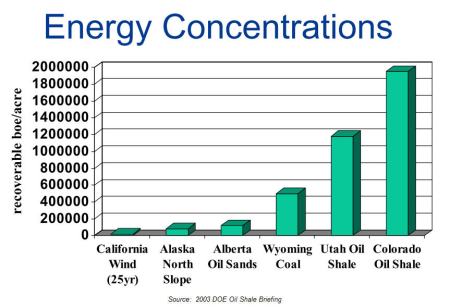
Recovery of gas and oil from shale is more than just a game changer – it is a mind-changer. The recoverability of oil and gas from shale postpones “peak oil” and “peak gas” indefinitely. For 3 decades we have suffered from the rampant pessimism of the alarmists and the coercive politics of fear. A change of mind-set from pessimistic environmentalism and backward-looking conservationism is called for. A shift of attitude from the joyless “glass half-empty and we are doomed” to the entrepreneurial “glass half-full but can be filled”  is over-due.

Resource depletion with usage is a trivial truth  – though matter at the elemental level is never destroyed by human use. However utilisation of resources does alter the composition and concentration of materials remaining available. But every alarmist and doom-sayer who has ever lived and has forecast impending catastrophe has been proven spectacularly wrong. Human ingenuity has faced every challenge and trumped the doom-sayers – every time.

The pictures say it all:

The scope of the US oil shale resource

The scope of the US oil shale resource

Related: “Peak Oil” hypothesis is following “Peak Gas” into oblivion

Moving peaks

Subsidy madness in the name of environmentalism is unsustainable

July 6, 2012

I don’t believe in subsidies.

In over 30 years in power generation I have yet to see a convincing case of public subsidies in the market place actually helping to commercialise new technologies. I have seen cases where Government support at the research stage has helped to bring new areas into focus and which has eventually led to commercially driven investments which have deployed the technology. But temporarily distorting the market place by means of public subsidy is unsustainable and does not – in itself – help to make a new technology commercially viable. In fact an artificially distorted market in favour of a new technology only helps to cuccoon and insulate it such that there is no incentive left to make it competitive. Subsidies shift the focus from technology development to  subsidy maximisation and when subsidies begin to be removed all creativity is wasted on prolonging subsidies.

The case of subsiding the market place for the deployment of renewable energy is a case in point. Developing technology for wind and solar power is desirable but distorting the market place to deploy wind and solar is just plain stupid and unsustainable.

1. Der Spiegel

Solar subsidies cost German consumers billions of dollars a year and are widely regarded as inefficient. Even environmentalists are concerned that Berlin’s focus on solar comes at the detriment of other renewables. But the solar industry has a powerful lobby, and politicians have proven powerless to resist.

…… A new study by Georg Erdmann, professor of energy systems at Berlin’s Technical University, reveals just how far Germany’s current center-right governing coalition — made up of Chancellor Angela Merkel’s CDU and the business-friendly Free Democrats (FDP) — has strayed from its own self-imposed goals. Erdmann has calculated the effects that the latest changes to the EEG will have between now and 2030. He believes that subsidies for renewable energy, including an expansion of the power grid, will saddle energy consumers with costs well over €300 billion ($377 billion). ….

2. BBC News

Fight on for wind power subsidies

Wind power firms warn they may take the government to court if they get caught in a political row over subsidies. After conducting technical studies, the energy department proposed a subsidy cut of 10% for power from onshore wind. But the chancellor is under pressure from back-benchers to scrap subsidies, and is said to favour a 25% cut.

The industry body, Renewable UK, says it may take legal action if the government makes a decision that overrides its own technical evidence. … 

3. GWPF / IVN

California’s Green Suicide

New economic impact study on California’s Global Warming Solutions Act finds that the average California family will end up paying an additional $2,500 annually by 2020. In addition, the state is expected to lose an additional 262,000 jobs, 5.6 percent of the gross state product, and a whopping $7.4 billion through decreased annual state and local tax revenues as a result.

The California Manufacturers and Technology Association released a new report last week that suggests costs associated with AB 32 may be a lot higher than previously estimated. AB 32, otherwise known as the California Global Warming Solutions Act of 2006, was signed into law by Governor Arnold Schwarzenegger- propelling California to the forefront in the fight against global warming. Successful passage of the law effectively turned the state into one of the most stringent regulators of green house gas emissions in the nation and globally. Some would argue that the move all but eliminated California’s competitive edge in today’s market. ……

Social psychology falls from grace

July 3, 2012

It is not only scientists in social psychology who indulge in fraud.  Anthropology for example has had its share of frauds. While corporations – such as Glaxo Smith Kline– can be held liable and sanctioned for fraud, it is very rare for individual academics who fake data in pursuit of their own agendas to be held liable. Why cannot a concept of tort or “product liability”apply to scientists? The members of the medical profession who aided and abetted GSK are unlikely to face any sanctions. But the recent scandals of social psychologists faking data to show statistical correlations between sets of propositions and then inferring causal relationships have demonstrated two things which I think apply in many more so-called “scientific” disciplines  than just social psychology. :

  1. The ease with which sampled data can be faked or cherry picked by workers from reputed institutions to show apparent correlations can then be provided a stamp of authority through the publication of “peer-reviewed” papers, and
  2. that there is a need to return to the scientific method of focusing on propositions that are falsifiable and to avoid the temptation of concluding that any positive statistical correlation provides proof of a causal relationship.

Read the rest of this entry »

On tour during coldest June in Sweden in 92 years

June 29, 2012
Sami flag.svg

Sami flag

Just back from our “Midsommar” tour of Northern Sweden. A fascinating 3,500km trip and I learned a little more about the Sami peoples and their history. I had not known how coercive and oppressive it had once been in Sweden when the Sami religion and language(s) were banned. There are some 80,000 Samis today ranging across Norway, Sweden, Finland and Russia.

Wikipedia

….. In 1913-1920, the Swedish race-segregation politic created a race biological institute that collected research material from living people, graves, and sterilized Sami women. …… 

The strongest pressure took place from around 1900 to 1940, when Norway invested considerable money and effort to wipe out Sami culture. Notably, anyone who wanted to buy or lease state lands for agriculture in Finnmark had to prove knowledge of the Norwegian language and had to register with a Norwegian name. This and similar actions in Scandinavian countries, e.g., the sterilization of Sami women by Swedish authorities, are debated to be an act of ethnic cleansing, and perhaps a genocide. 

We did not have too much rain but it was never very warm. Reindeer had calved (a little late this year) and the Sami were busy marking the new calves. While we saw many reindeer we only saw one moose (a large male) munching by the roadside but we were travelling too fast to get any good pictures. Midsommar itself was a very traditional Swedish experience in Sundborn.

Raising the Midsommar pole in Sundborn June 2012

June has been a cool month throughout Sweden (the coldest June in 92 years):

Temperatures have remained below average for the month, at just 13.3 degrees Celsius, compared with the usual 15.2 degrees, SMHI said. 
For the month of June, Stockholm usually has an average of 5.3 days with temperatures above 25 degrees, but this year the high for the month was just 21.6 degrees. 
That is only the second time since 1920 that the temperature has failed to hit 25 degrees in June in Sweden.