Rolls Royce profits down 76% as Trent 900 costs start to kick in

February 10, 2011

BBC reports:

Manufacturing giant Rolls-Royce has said the mid-air failure of one of its Trent 900 engines on a Qantas superjumbo had led to costs of £56m. The explosion in the engine forced an emergency landing of the A380 in November last year. The one-off cost contributed to annual pre-tax profits dropping 76% to £702m in 2010 from £2.96bn. Foreign exchange costs and interest rate and fuel hedging contracts also contributed to the profit fall.

But the Derby-based company said that underlying pre-tax profits – which strip out one-off costs – were up by 4% to £955m in 2010 and were a better indication of its performance.

Rolls Royce say that the may face further “modest costs” but this seems to be far too optimistic considering that all the engine servicing costs have yet to show up and all the various compensation claims from Qantas, Airbus, Lufthansa, and Singapore Airline will take some time to work their way through. Once all the claims are presented there is an even chance that some will need arbitration before settlement which will take some time.

Jorn Madslien also writes:

Investors will be scrutinising Rolls-Royce’s financial figures to try to find out how the recent engine failure that led to the grounding of six Qantas Airbus A380 aircraft affected the company. ……..

….. The long-term effects of the engine failure, for instance a potential fall in new orders over the months and years ahead, cannot be measured at this stage. Consequently, the final impact on the company’s bottom line is not yet known.

It does not seem as if Rolls Royce have made any provision for further costs which is a little worrying and I stay with my estimate of around $300 million as the total hit that Rolls will have to swallow for the Trent 900 for the A380 in addition to any impact on engine sales.

Judging from the delays the development cost of the Trent 1000 for the Dreamliner is also likely to be significantly more than budgeted or expected.

It will be at least 2012 before the full financial impact is known though some residual impacts will continue for many years.

The wrecked engine after QF32 landed in Singapore in Nov. 2010:Photo: AFP


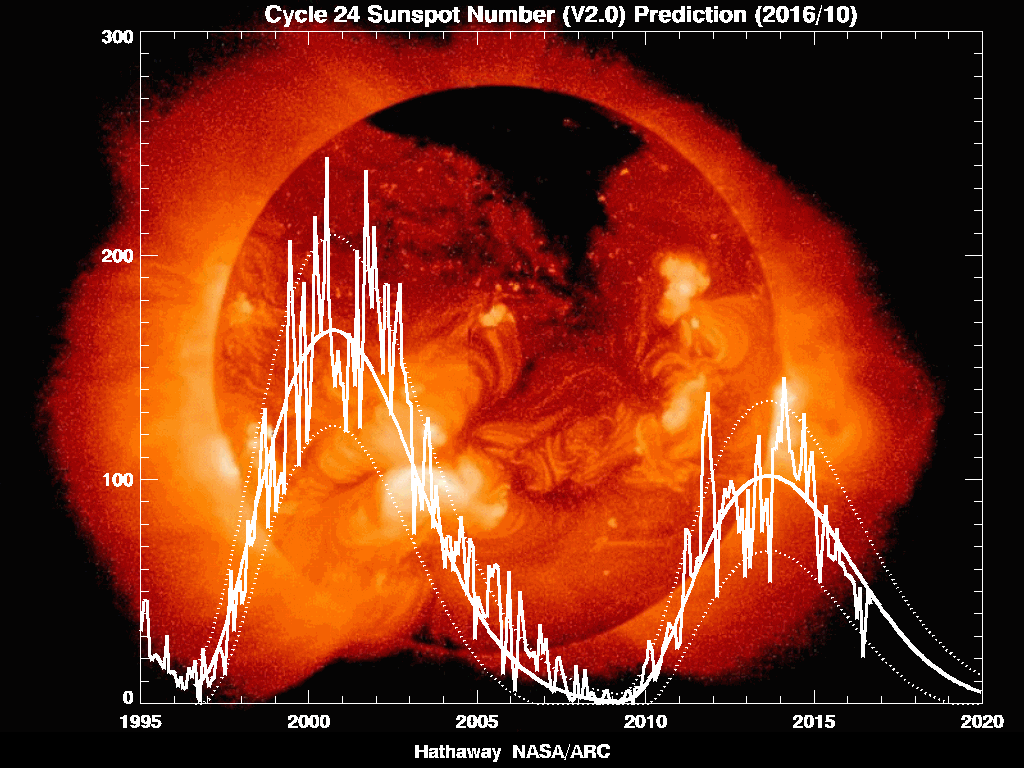
Solar Cycle 24 forecast reduced yet again

February 10, 2011

We had a reduced forecast from NASA just a month ago and it has reduced yet again.

The peak is now expected in July 2013 but this could well slip a month or two. This Landscheidt Minimum continues to look like a Dalton Minimum.

December 2010 forecast smoothed sunspot number maximum of 64 in June 2013

January 2011 forecast smoothed sunspot number maximum of 59 in June/July 2013

February 2011

Current prediction for the next sunspot cycle maximum gives a smoothed sunspot number maximum of about 58 in July of 2013. We are currently two years into Cycle 24 and the predicted size continues to fall.

The latest forecasts for sunspot number and 10.7 Radio flux and Ap progression are here: http://www.swpc.noaa.gov/SolarCycle/

Related:

https://ktwop.wordpress.com/2010/12/23/is-the-landscheidt-minimum-a-precursor-for-a-grand-minimum/

Very fishy: Dismissed from Cambridge, PhD from Imperial, misconduct at UCL, employed at UEL

February 9, 2011

The latest revelations about the chequered career of Jatinder Ahluwalia being dismissed from Cambridge for falsifying data seems like a film script for Leonardo DiCaprio and another Catch Me If You Can movie.

At Cambridge Dr M.D. Brand, Reader in Cellular Biochemistry was his advisor and in a letter dated November 10, 1997, wrote:

…I am no longer prepared to act as PhD supervisor for Jatinder Ahluwalia, and…recommend that he removed from the Board’s list of graduate students because I believe he has been inventing experimental results.

Brand sent Ahluwalia a copy of his letter, and offered again to let him repeat his experiments with witnesses. Ahluwalia evidently didn’t take advantage of that offer. He lost his studentship funding from the Engineering and Physical Sciences Research Council at the end of 1997, and was dismissed from the graduate studies program
on February 18, 1998.

While the actions at Cambridge and UCL seem to restore some faith in academic integrity some questions arise about his stint at Imperial College where he received his PhD and at the University of East London where he is currently employed as Senior Lecturer & Programme leader in Pharmacology but is writing papers about plagiarism.

He writes on the UEL site:

I undertook my PhD training at Imperial College, Chelsea & Westminster Hospital and Novartis London, studying the mechanisms by which cannabinoid (CB1) and vanilloid (VR1) receptors regulate nociceptive transmission at pre-synaptic nerve terminals.

I was based in Novartis (London) throughout my doctoral studies.

The question arises as to whether Imperial College were aware of his shenanigans at Cambridge. His apparent employment or  funding by Novartis during his PhD also raises questions about whether Novartis were aware of his dismissal from Cambridge and even about his discoveries for (or sponsored by) Novartis:

During my first year, we discovered that CB1 and VR1 receptors are expressed on pre-synaptic nerve terminals (Ahluwalia et al. Neuroscience 100, 685-688, 2000; Ahluwalia et al. Neuroscience 110, 747-753, 2002). The final year of my PhD was spent investigating the effect of the endocannabinoid anandamide on pre-synaptic neurotransmitter release from cultured dorsal root ganglion neurons  (Ahluwalia et al. Journal of Neurochemistry, 84, 585-591, 2003; Ahluwalia et al. EJN, 17, 1-8, 2003).

His paper on plagiarism while at UEL also has some obvious commercial implications.

Imperial College, UEL and Novartis ought to be worried and perhaps so also should be the editors of Neuroscience and the Journal of Neurochemistry.


The E-type turns 50

February 9, 2011

The London Design Museum is putting on a special display to celebrate 50 years of the Jaguar E-type from its launch at the Geneva Motor Show in 1961. In the late 1960’s as an apprentice in England, the E-type represented the stuff of our dreams. But back then when my weekly wage as an engineering apprentice was £3- 10s per week, the £2,000 price tag was as unattainable as a date with Sophia Loren!

In the 1970’s when I could aspire to more,  I actually considered the Triumph GT6 – also known as the “poor-man’s E-type” – but instead I settled for a much more sedate Renault -12. And by the time I could consider its price tag the E-type was no longer in production and my tastes had a decided preference for the comfort of a Mercedes.

The Design Museum celebrates 50 years of the iconic Jaguar E-Type with a display in the Design Museum Tank.

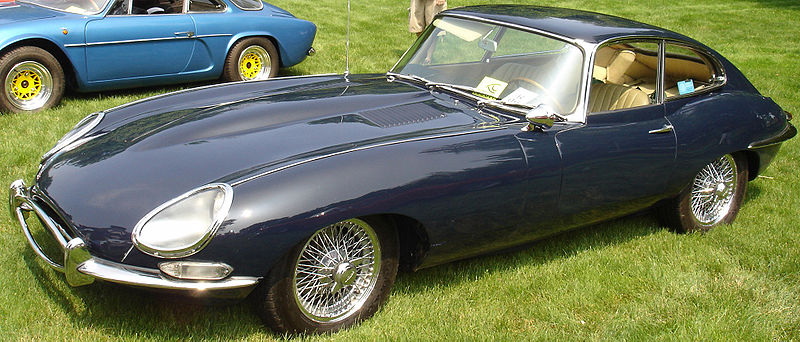
Jaguar E-Type series 1, 1961

Originally launched at the Geneva Motor Show in 1961, the E-Type’s caused an instant sensation. With a 3.8 litre XK engine, a top speed of 150 miles per hour and a price of £2000, the E-Type was an accessible dream and signalled the new era of modernity of the 1960s. Between 1961 and 1974 over 70,000 E-Types were produced.

The bullet-like design of the E-Type was the result of the mathematical and engineering talent of Malcolm Sayer and the E-type was the first large-scale production road car to be developed from the study of aerodynamics. The founder of Jaguar, Sir William Lyons combined his flare for style and luxury with his business and marketing skills to ensure the E-Type became the car of celebrities from George Harrison of the Beatles to footballer George Best

The E-Type on display was manufactured in 1961 and has been provided by Classic Motors Cars Limited.

On its release Enzo Ferrari called it “The most beautiful car ever made”.

File:SeriesoneJag.jpg

Jaguar e-Type series one: image Wikipedia

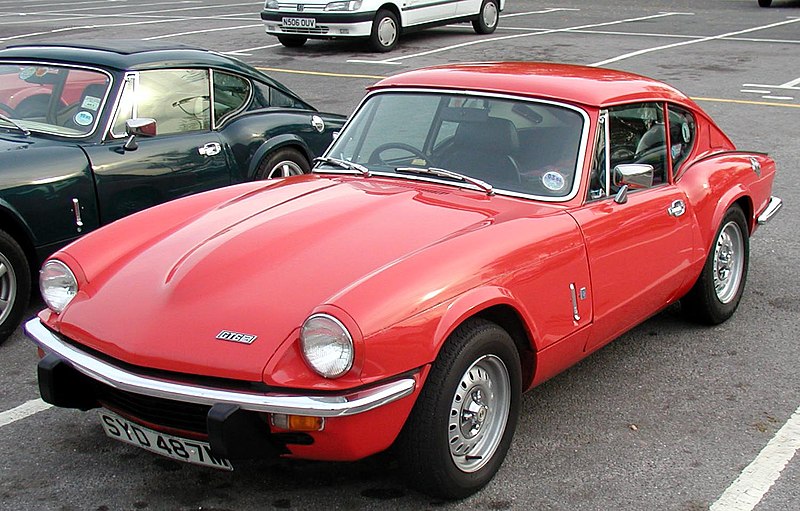
The E-type was 4.4 m long with a 3.8 litre engine while the GT6 had a length of 3.7 m and a 2 litre engine. Technically and in looks the Triumph GT6 never came close to the E-type, but it looked fast. On the few occasions when I drove a friend’s GT6, my main memory is that it had a decided “tail-wag” when cornering.

File:1973.triumph.gt6.red.arp.jpg

1973 Triumph GT6: image Wikipedia

Bot nowadays my tastes are much more sedate and the Jaguar E-type remains the dream it always was. So I shall make do with my Mercedes E-class.

Mercedes E-class 2010: image via Flickr


La Niña and NAO driving current stormy weather

February 8, 2011
During cold La Niña episodes the normal patter...

La Nina Regional impacts: Image via Wikipedia

It may seem obvious (or it should be) that it is ocean currents that dominate weather and man-made effects pale into insignificance in relation to these. But it has been more politically correct to find that every kind of weather event is due to man-made global warming.

But as this article in PhysOrg shows, perhaps the oceans (and the sun) are beginning to get their due (but of course they don’t really care whether anybody believes in them or not – they just carry on).

The term La Niña refers to a period of cooler-than-average sea-surface temperatures in the Equatorial Pacific Ocean that occurs as part of natural climate variability. This situation is roughly the opposite of what happens during El Niño (“the boy”) events, when surface waters in this region are warmer than normal. Because the Pacific is the largest ocean on the planet, any significant changes in average conditions there can have consequences for temperature, rainfall and vegetation in distant places. Scientists at the International Research Institute for Climate and Society (IRI), part of Columbia’s Earth Institute, expect moderate-to-strong La Niña conditions to continue in the tropical Pacific, potentially causing additional shifts in rainfall patterns across many parts of the world in months to come.

These shifts, combined with socioeconomic conditions and other factors, are making some countries more vulnerable. However, La Niña and El Niño conditions actually allow for more accurate seasonal forecasts and help better predict extreme drought or rainfall in some areas. ………..

“Based on current observations and on predictions from models, we see at least a 90 percent chance that La Niña conditions will continue through March,” said IRI’s chief forecaster, Tony Barnston.

Climate scientists have found La Niña’s fingerprints on a number of extreme weather events such as the devastating flood that occurred in Pakistan in 2010, as well as flooding in West Africa, South Africa and most recently in Queensland, Australia, where an area equal to the combined size of France and Germany was underwater. La Niña is also to blame for Cyclone Yasi, one of the strongest to hit Australia, which came ashore on Feb. 2. Cyclone Yasi is the second most damaging Australian cyclone on record after Cyclone Tracy, which struck in 1974.

But La Niña isn’t to blame for the recent severe weather affecting the Northeast. Winter weather for these regions is often driven not by La Niña but by large-scale weather patterns over the U.S., the northern Atlantic Ocean and the Arctic. These are often short-term, and are generally predictable only a week or so in advance. They are the culprits responsible for the dip in temperatures and spike in snow storms in the Midwest and Northeast.

…………

Since 1950, the world has experienced six major La Niña events, wreaking havoc in countries around the world. In 2000, for example, floods associated with La Niña affected 400,000 people in southern Africa, caused at least 96 deaths and left 32,000 homeless.

La Niña conditions typically persist for 9 to 12 months, peaking sometime during the end of the year. But 2010 was a lively year for climate scientists: For the first four months of this year, El Niño conditions prevailed in the tropical Pacific, but that quickly changed, and by June, a La Niña pattern had emerged.

“Last year’s transition from El Niño to La Niña was about the most sudden we’ve ever had,” Barnston said. “When we had rapid flips like this in the past, we sometimes ended up having a two-year La Niña, such as right after the El Niño episodes of 1972 to 1973 and 1997 to 1998.”

Barnston cautions that the likelihood of this happening with the current La Niña is unknown. “Even if we do have a second year of La Niña developing in northern summer 2011, we expect at least a brief return to neutral conditions from May to July of 2011.”

Related:

https://ktwop.wordpress.com/2011/02/03/la-nina-begins-to-show-up-in-global-temperature/

https://ktwop.wordpress.com/2011/02/05/la-nina-will-last-well-into-2011-and-could-extend-into-2012/

https://ktwop.wordpress.com/tag/la-nina/

Aero India 2011 kicks off tomorrow: MMRCA and technology transfer are the issues of the day

February 8, 2011

The 5 day Aero India 2011 airshow kicks off tomorrow in Bangalore and is expected to attract over 600 equipment vendors from over 60 countries. It also brings to a head the discussions within India as to how to stimulate the indigenous aviation industry and whether offset requirements in defence procurement are effective. There is a school of thought that technology transfer should be used and that offset requirements do not contribute to developing the industry. In the background is the competition for the $10 billion, 126 MMRCA aircraft contract that must be decided in March / April.

DNA reports:

In the premier Indian defence journal, Maj Gen (Retd) Mrinal Suman — who retired from the Indian Army in 2003 and currently heads the defence technical assessment and advisory service of Confederation of Indian Industry (CII) — prescribes that India, at present, urgently needs FDI in the defence and military aviation sector which is technology-centric with inherent flexibility. He has suggested that FDI could be 26% for low-tech products, while it could be 51%-74% for matured systems, and 75%-100% for cutting edge technologies.

Maj Gen Suman has decried the drastic fall in defence exports from ordnance factories from Rs41.07 crore in 2008-09 to a mere Rs12.28 crore in 2009-10, and has called it “a reflection of the nature of quality items being produced indigenously”. He has called for significantly increasing FDI and private sector’s participation in defence production and manufacture instead of just restricting to doors and frames of aircraft bodies. Suman also blasted India’s offset policy which envisages Indian companies to manufacture components worth 30% of any deal bagged by a foreign company as a seller to India. He termed it a “flawed policy” as it was not contributing to upgrading the indigenous technological base. He instead suggested that the current offset policy be amended to make transfer of technology the preferred mode.

While this is expected to take centre-stage at Aero India 2011, the intensifying contest for winning India’s $10 billion contract to procure 126 medium-weight multi-role combat aircraft (MMRCAs) will undoubtedly be the second most important issue in focus.

Not surprisingly, this is the first time ever that all six contenders for the contract are participating at an Aero India show — Boeing’s F/A-18 Super Hornet, Lockheed Martin’s F-16 Super Viper (both from USA), MiG Corporation’s MiG-35 (Russian), Dassault’s Rafale (French), EADS’s Eurofighter Typhoon (European Union’s) and SAAB’s Grippen (Swedish).

The contest between these six, this time round, will be there for all to see with these aircraft displaying their skills and manoeuvrability to win the hearts of the Indian Air Force and ministry of defence experts who are expected to place a finger on one of them for procurement.

The IAF is procuring the 126 MMRCAs to bolster its depleting squadron strength. The IAF squadron strength is at present below the sanctioned strength — just 34 squadrons as against the sanctioned strength of thirty-nine-and-a-half.

There is a formidable Russian presence at the air show.

Russia will exhibit over 80 types of weaponry and will be represented by 35 companies at the upcoming Aero India 2011 air show, state-run arms exporter Rosoboronexport said in a statement.
Russia will be represented by 35 companies, including MiG , Sukhoi, Almaz-Antei and Engineering Design Bureau.
Russia will traditionally promote MiG-35 and Su-35 fighter jets, the Yak-130 combat trainer, two versions of Il-76MD transport plane (with different engines), the Il-78MK aerial tanker and MiG-29K and MiG-29KUB naval fighters.
The Be-200 amphibious aircraft will most likely be one of the top attractions of the Russian exhibit as its popularity with foreign customers steadily grows. The plane could be used in a wide variety of roles, from maritime reconnaissance and rescue to firefighting.
Rosoboronexport and Russian helicopters will show the Mi-28NE attack helicopter, the light multirole Ka-226T and the heavy transport Mi-26. All three helicopters are currently taking part in separate Indian helicopter tenders.
The visitors will also be able to receive information about the Mi-35M combat transport helicopter, the Kamov Ka-31 radar surveillance helicopter and the Ansat and Kamov Ka-32A11BS multi-role helicopters.
The air defence part of the Russian exhibit will be represented by the Tor-M2E, the S-300VM, the Buk-M2E and the Tunguska-M1 systems.

Relatedhttps://ktwop.wordpress.com/2010/11/07/eurofighter-typhoon-leads-after-technical-evaluation-but-still-not-the-favourite-for-indian-m-mrca-contract/

Do super storms indicate that earth’s magnetic polarity is about to switch?

February 8, 2011


geomagnetic reversal is a change in the orientation of Earth’s magnetic field such that the positions of magnetic north and magnetic south become interchanged. These events often involve an extended decline in field strength followed by a rapid recovery after the new orientation has been established. These events occur on a scale of tens of thousands of years or longer, with the latest one (the Brunhes–Matuyama reversal) occurring 780,000 years ago.

On average geomagnetic reversals occur about every 500,000 years so it would seem that a reversal is overdue. How long a reversal takes and whether a reversal can happen very rapidly is not known. That the earth’s geomagnetic field is due to the flow of liquid metals in the earth’s interior – the dynamo theory – is also very likely. The sun’s magnetic reversals seem to happen at every sunspot maximum with an average period of 11 years between reversals giving a 22 year magnetic cycle.

The movement of Earth's north magnetic pole across the Canadian arctic, 1831-2001. Credit: Geological Survey of Canada.

The movement of Earth's north magnetic pole across the Canadian arctic, 1831--2001. Credit: Geological Survey of Canada.

The position of the magnetic poles is also continuously changing with a current drift (increasing) of the magnetic North Pole from N. Canada towards Siberia at about 40km /year. But this movement may be in some cyclic fashion and is unlikely to be directly connected to the half-million year reversals. For the last 200 years the strength of the earth’s magnetic field has been decreasing and could be the precursor of the overdue reversal.

How the earth will behave during a magnetic reversal is a known unknown and provides the basis of much speculation and cataclysmic theories which cannot be tested. The cataclysmic pole shift hypothesis is one such theory which predicts that the earth’s rotation will reverse, the magnetic field will reverse and mankind will be obliterated – probably in 2012!!

But it is thought that reversals take a few thousand years to complete, and during that time–contrary to popular belief–the magnetic field does not vanish.  Magnetic lines of force near Earth’s surface become twisted and tangled, and magnetic poles pop up in unaccustomed places. A south magnetic pole might emerge over Africa, for instance, or a north pole over Tahiti. Weird. But it’s still a planetary magnetic field, and it still protects us from space radiation and solar storms.

Terrence Aym suggests that we may be seeing the beginning of a reversal (and of course since this is overdue it may well occur at any time):

Forget about global warming—man-made or natural—what drives planetary weather patterns is the climate and what drives the climate is the sun’s magnetosphere and its electromagnetic interaction with a planet’s own magnetic field.

File:Magnetosphere rendition.jpg

Artist's rendition of Earth's magnetosphere: NASA via Wikipedia

Magnetic polar shifts have occurred many times in Earth’s history. It’s happening again now to every planet in the solar system including Earth. The magnetic field drives weather to a significant degree and when that field starts migrating super storms start erupting.

The superstorms have arrived.

The Earth’s northern magnetic pole was moving towards Russia at a rate of about five miles annually. That progression to the East had been happening for decades.

Suddenly, in the past decade the rate sped up. Now the magnetic pole is shifting East at a rate of 40 miles annually, an increase of 800 percent. And it continues to accelerate.

Recently, as the magnetic field fluctuates, NASA has discovered “cracks” in it. This is worrisome as it significantly affects the ionosphere, troposphere wind patterns, and atmospheric moisture. All three things have an effect on the weather.

Worse, what shields the planet from cancer-causing radiation is the magnetic field. It acts as a shield deflecting harmful ultra-violet, X-rays and other life-threatening radiation from bathing the surface of the Earth. With the field weakening and cracks emerging, the death rate from cancer could skyrocket and mutations of DNA can become rampant.

Another federal agency, NOAA, issued a report caused a flurry of panic when they predicted that mammoth superstorms in the future could wipe out most of California. The NOAA scientists said it’s a plausible scenario and would be driven by an “atmospheric river” moving water at the same rate as 50 Mississippi rivers flowing into the Gulf of Mexico……

According to some geologists and scientists, we have left the last interglacial period behind us. Those periods are lengths of time—about 11,500 years—between major Ice Ages. One of the most stunning signs of the approaching Ice Age is what’s happened to the world’s precessional wobble. The Earth’s wobble has stopped. ..

….So, the start of a new Ice Age is marked by a magnetic pole reversal, increased volcanic activity, larger and more frequent earthquakes, tsunamis, colder winters, superstorms and the halting of the Chandler wobble.

Unfortunately, all of those conditions are being met.

Read original article


Maryland and Washington begin to sound like Delhi

February 6, 2011

In India, planned blackouts are used commonly for the management of electricity load. Delhi is used to regular black-outs and there is is no likelihood in the near future that the availability and quality of electric power will be sufficient to eliminate this system of load management. There is no office or shopping mall or large home in Delhi which does not plan for this by installing diesel generators as back-up. Smaller households or those which cannot afford generators use inverters which are sufficient for lighting and perhaps a fridge during an outage but cannot supply enough power for long enough for any air-conditioners or any heating. Even when power is available, the voltage variation is so large that virtually all electrical equipment must be protected by voltage stabilisers.

The black-outs in Delhi occur most often at peak times (around breakfast or dinner) and commonly at night during low load when equipment is shut off for maintenance to be carried out. Unplanned outages are apt to occur at any time. It is on summer nights that the sounds of Delhi are drowned by those of generators cutting in to keep air-conditioners running. There is no possibility of sound regulations being implemented to limit this noise and for those who have difficulty to sleep there is no alternative but to sound-proof their bed-rooms or to use ear-plugs.

The quality and reliability and availability of electric power in the more developed countries (Europe, Japan, US) is often quoted as the target for the Indian power generation and distribution system to aspire to.

But it seems that the US grid is now so weak that parts of Maryland and Washington are beginning to sound like Delhi. The Wasington Post reports:

map

Blackouts 2010 in Maryland and Washington

In Pepco territory, blackouts mean more home generators, more noise complaints

For Arthur Bennett, blackouts now come with a soundtrack.When last month’s “thundersnow” knocked out power in Bennett’s Montgomery County neighborhood, the preindustrial hush inside his house – when even the refrigerator seemed to hold its breath – soon gave way to the two-stroke roar of engines up and down his block.

Bennett, like many residents of Pepco‘s service area in Maryland and the District, has concluded that blackouts are likely to get even louder as the utility’s fed-up customers turn increasingly to backup power. According to retailers and electricians, home generator sales are booming in the area Pepco serves, especially since the company has been plagued by repeated, prolonged outages
over the past few years. Portable generators sold out at several home stores after the latest storm, and installers report that sales of high-end whole-house units have skyrocketed.

Jim Holt of Gaithersburg’s Holt Electrical said his sales of home generators have been climbing steadily and reached a near “level of panic” after the last blackout – mainly on Pepco’s turf. …….

…………. One thing both generator owners and their juiceless neighbors can agree on is the frustration of having to debate this issue at all. “I really think it’s kind of scandalous that in the capital of the world, we’ve got third-world reliability for electric power,” said Larry Posner of Shepherd Park in Northwest.

Read the entire article.

Not a very sporting day today

February 5, 2011

Former Pakistan captain Salman Butt was banned for 10 years, and fast bowling pair Mohammad Asif for seven years and Mohammad Aamer for five years on Saturday after being found guilty of corruption. The head of the International Cricket Council tribunal Michael Beloff announced the verdict after a lengthy nine-hour hearing in the Qatari capital.


Text messages of sumo wrestlers provided by police indicate that one purpose of the suspected match-fixing in the ancient sport was to keep struggling wrestlers in the juryo division. The juryo division is the second of the top two divisions for established sekitori wrestlers, who receive generous monthly pay and are allowed to wear ornate kesho-mawashi sashes at ceremonies and specially formed top notches that set them apart from junior wrestlers.

The text messages showed a rampant and intricate trading of favors, such as diving, among juryo wrestlers desperate to remain in this elite group. Favors could be returned, and traded, from tournament to tournament.


Paid news: The cancer in the Indian media

February 5, 2011

The Hindu stands out as one of the few main-stream media prepared to discuss the insidious and increasing trend towards “paid news” in Indian newspapers and on the multiplicity of Indian TV channels fighting for advertising revenue. The TV “news” channels abandoned the rigour of traditional journalism some time ago and are mainly in the business of manufacturing or sensationalising news or of presenting “paid news”. TV anchors are chosen on their ability to rant and programmes are dominated by

  • instant “breaking” news – much of it manufactured – or
  • revelations of scams filmed by “secret” cameras – but usually provoked, or
  • so-called chat shows and panel discussions where  only antagonistic participation is permitted (and the more one can screech over the other the more likely it is to be re-invited to participate – paid of course).

The Hindu writes:

In newspapers and TV channels, choking with stories on corruption, this is the one story you are the least likely to see. The media are their own worst censors when it comes to reporting on ‘Paid News.’

Just before the 2009 Assembly elections in Maharashtra, a large newspaper group in the State brought its editors together for a meeting in Pune. Generally, it was agreed, winning a seat in the State legislature would cost Rs. 3 crore to Rs. 5 crore. ($700,000 to $1.1 million). ….. If there’s that kind of money being spent, said the cash-box boys, we should get a decent share of it. What, after all, is election expenditure but campaign and propaganda expenses? Detailed plans for ‘pay-to-print’ were soon under way in one of the biggest media groups in the State. ……

Paid news comes in many packages: pre-paid, post-paid and yet-to-be-paid, for instance. There are also deluxe tariffs and aam aadmi tariffs, the former in crores (10s of millions), the latter in lakhs (100,000’s). Sadly, these media groups met, even exceeded, their targets.

But it’s not just during elections that paid news or its Euclidian variants occur. The crazy saturation coverage of Davos in some channels was not caused by breathless public interest or media curiosity. It had a lot to do with ‘partnerships’ and corporate subsidies the public can’t see, and won’t be allowed to see. Some channels sent out ‘rules’ to their journalists of things that just had to be done. Rules with no particular journalistic rationale at all. …..

It is a scam worth more millions than anyone can accurately estimate. Most other institutions of Indian democracy and regulatory structures have tried doing something about it. But in the free media, there was a costly silence…..

So the ECI, Parliament, SEBI and top political leaders have all contributed to the fight against the slaughter of honest journalism. Even the spineless PCI did so, before deserting ship. But in the media there is near-total silence. True, there are the exceptions. And the fact that all those journalists went public at those meetings shows how deep their resentment runs. But institutionally, the media’s failure is huge and, if not reversed, will extract a terrible price. The corporate media have censored the Paid News story, browbeaten their own journalists and cheated the public of information it has every right and need to know.

Read the entire article.

Related: India’s Election Commission To Address It’s Paid News Problem

Paid news syndrome is a full blown cancer in Indian Media