China retracts a national scientific award for plagiarism

February 14, 2011

From Xinhua News:

Li Liansheng: photo China Daily

BEIJING, Feb. 10 (Xinhua) — The recent revocation of a national scientific award due to academic fraud was the first of its kind in China, National Office for Science and Technology Awards told Xinhua Thursday.

China’s Ministry of Science and Technology, on Feb. 1, issued a statement revoking the State Scientific and Technological Progress Award (SSTPA) given to Li Liansheng, former professor of Xi’an Jiaotong University.

According to the statement, the investigation found Li had plagiarized others’ works and fabricated data in his winning project, and his prize will be canceled and money awarded retrieved.

Zhao Baojing, senior officer with the National Office for S&T Award, told Xinhua that it was the first time China had withdrawn a national scientific honor.

Li Liansheng, former professor and doctoral tutor of Xi’an Jiaotong University, received the second-place prize of the SSTPA in 2005 for his research on key technologies for designing and manufacturing scroll compressors.

In 2008, he was accused of plagiarism and providing false data in the winning project by six professors of Xi’an Jiaotong University. An investigation was later carried out.

Xi’an Jiaotong University suspended Li from working at the university and rescinded his employment contract in March, 2010.

AsiaOne.com writes:

News that the ministry is stripping him of his award for scientific and technological progress comes three years after six colleagues first claimed that the energy and power studies expert had plagiarized the work of others.

Wan Gang, the minister of science and technology, had earlier vowed that there would be a “zero tolerance” policy toward research frauds and academic plagiarism amid growing criticism about the country’s academic integrity.

“We will dig up the past of those researchers who fake their works and punish them,” he told China Daily in November 2010.

The country has more than 2.3 million workers in the science and technology field and the number of research papers published on the subject has topped the world.

The intense competition to get work published has led some researchers to exaggerate their achievements, said critics.

“In China, we care whether a paper is published in a magazine more than we care about the paper’s quality and academic influence,” Rao Yi, dean of the School of Life Sciences at Peking University, was quoted as saying in a report in China Youth Daily.

Universities and colleges are ranked according to the number of academic papers their staff can get published and the number of references they get in influential journals

Related:

https://ktwop.wordpress.com/2010/10/13/chinese-science-ministry-vindicates-academic-fraud-journalists/

An active Sunday for the Sun

February 14, 2011

An unusually active Sunday for the Sun yesterday mainly from the very large sunspot 1158 with magnetic flux values not seen since 2006.

From Solarcycle24.com:

Solar Flares: Mutiple Solar flares took place around Sprawling Sunspot 1158 on Sunday, including an M6.6 Flare which was the 2nd largest of Cycle 24 thus far.  ….. . There will continue to be a chance for M-Class flares and NOAA also lists a 5% chance for an X-Class event.

Solar Flux 107: For the first time in Cycle 24, the official daily solar flux number measured in Penticton, BC closed above 100. The solar flux of 107 is the highest since September 2005. The last time the solar flux finished above 100 was in December 2006.

Solar Update: Huge sunspot 1158 which is located in the southern hemisphere will continue to be a threat for strong solar flares. Elsewhere, Sunspot 1157 which is in the northern hemisphere showed growth late on Sunday and Sunspot 1160 which rotated into view on the eastern limb has sprouted a few new spots as well. The M6.6 Solar Flare did cause a Radio Blackout on HF which was short lived.

Sunspots (Early Monday): image solarcycle24.com

NOAA forecast:

Solar Activity Forecast: Solar activity is expected to be low to moderate with a chance for a major x-ray event for days one thru three (14-16 February). Region 1158 continued growth and recent major flare make this region the most likely source for a major event. There is a slight chance for C-class activity from Region 1157 and Region 1159.

Geophysical Activity Forecast: The geomagnetic field is expected to be predominately quiet on day one (14 February). Quiet to unsettled with a chance for active conditions are expected on days two and three (15-16 February), due to a recurrent coronal hole high speed stream becoming geoeffective.

JAXA to go fishing for space debris

February 13, 2011

Space junk: image discovery.com

http://www.jaxa.jp/projects/engineering/research/index_e.html

From the Telegraph

The Japan Aerospace Exploration Agency (JAXA) and Nitto Seimo Co aim to tackle the increasingly hazardous problem of rubbish in orbit around the Earth damaging space shuttles and satellites once and for all.

Last year, a US report concluded that space was so littered with debris that a collision between satellites could set off an “uncontrolled chain reaction” capable of destroying the communications network on Earth. It is estimated there are 370,000 pieces of space junk.

The Japanese plan will see a satellite attached to a thin metal net spanning several kilometres launched into space. The net is then detached, and begins to orbit earth, sweeping up space waste in its path.

During its rubbish collecting journey, the net will become charged with electricity and eventually be drawn back towards earth by magnetic fields – before both the net and its contents burn upon entering the atmosphere.

It is likely the nets will target the orbital paths of space shuttles which are constantly monitored for debris.

It is thought that the net will remain in orbit for several weeks, collecting enough rubbish to make the trip financially worthwhile, before sending another net into space.

Inspired by a basic fishing net concept, the super-strong space nets have been the subject of extensive research by Nitto Seimo for the past six years and consist of three layered metal threads, each measuring 1mm diameter and intertwined with fibres as thin as human hair.

The company, which became famous for inventing the world’s first machine to make strong knotless fishing nets in 1925, is aiming for the fuel-free system to be completed within two years.


Dark chocolate is a “super-food”

February 13, 2011
Dark chocolate.

Dark chocolate: Image via Wikipedia

Cacao seeds are a super-fruit and dark chocolate is a super-food with health giving properties superior to many fruit juices.

This comes from a peer reviewed paper in Chemistry Central Journal even if the study was conducted by scientists at the Hershey Centre for Health & Nutrition. To satisfy my own preferences for dark chocolate I am willing to overlook the fact that the Hershey Centre for Health and Nutrition has probably never found any negative effects of chocolate!!

However heating chocolate destroyed its health giving properties.

Cacao seeds are a “Super Fruit”: A comparative analysis of various fruit powders and products by Stephen J Crozier, Amy G Preston,  W Jeffrey Hurst , Mark J Payne , Julie Mann, Larry Hainly  and Debra L Miller, Chemistry Central Journal 2011, 5:5

doi:10.1186/1752-153X-5-5

The Telegraph reports:

Researchers found that chocolate contains more healthy plant compounds, gram-for-gram, than many fruit juices.

In a test, they found that powdered dark chocolate contained more antioxidants and polyphenols – all of which are thought to protect the body from diseases such as cancer, and heart conditions.

Superfoods are usually classed as those high in antioxidants – compounds which prevent oxidisation and can stop healthy cells from being damaged.

Researchers made comparisons between single servings of dark chocolate, cocoa, hot chocolate mix, and fruit juices including acai berries, cranberries and pomegranates

The research showed that both dark chocolate and cocoa had more antioxidant activity and more flavonols than fruit.

Dr Debra Millar, the lead author, said that the results showed that chocolate should be labelled a “superfruit”.

“Cacao seeds should be considered a ‘super fruit’ and products derived from cacao seed extracts, such as natural cocoa powder and dark chocolate, as ‘super foods’,” she said. …….  However heating chocolate destroyed any health giving properties, they discovered.


Indian MMRCA decision in two weeks – Eurofighter Typhoon still leads

February 13, 2011

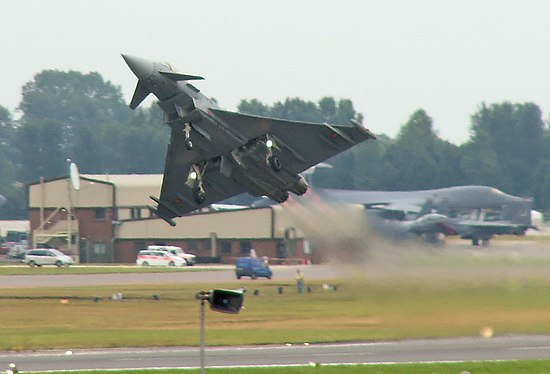
A decision on the winner of the $10 billion Indian MMRCA deal for 126 fighters could be announced in two weeks and the contract signed by September. But in the normal way of these things I expect that a number of the losing contractors will object to whoever is chosen and some of the objections may well be in Court. There is no large Government contract placed in India without allegations of biased and “fixed” evaluations by the losers. But eventually the number of decisions overturned by such objections is very few. Whoever is called for negotiations when the winner is announced is 95% certain of being awarded the contract.

Eurofighter take-off: image india-defence.com

The word on the street is that the 4-nation European consortium’s Eurofighter Typhoon still leads after the commercial and strategic evaluation having already won the technical evaluation . But all the offset proposals put forward by the contractors may not have been fully evaluated yet. It would seem that technical considerations for one ( Lockheed Martin’s F-16IN Super Viper) and strategic considerations for the other ( Boeing’s F/A-18 Super Hornet) may disallow the choice of the US fighters. The Saab JAS 39 Gripen is probably running second.

But there may yet be a surprise.

Business Standard reports:

Electrifying aerospace vendors at Aero India 2011 in Bangalore, Indian Air Force chief, Air Chief Marshall PV Naik, announced today that New Delhi would decide within two weeks about which medium multi-role combat aircraft (MMRCA) it would buy, and actually sign the US $10 billion contract by September.

A panoramic view of Aero India 2011: image Broadsword (4.bp.blogspot.com)

“The CNC (Cost Negotiation Committee) is likely to start in a week or two. Taking that as the datum and giving [the CNC] another 6-8 months, the contract is likely to be signed in September”, declared Naik.
The CNC is a group of officials that negotiates, between the Ministry of Defence and the winning vendor, a final price for the sale.
Naik’s boss, defence minister AK Antony, had stated at Aero India 2011 yesterday that the globally-watched contract would be finalised by the end of the next financial year 2011-2012, i.e. by March 2012. By setting the deadline six months earlier, Naik appears to have put the MoD under pressure.
Asked for a clarification by Business Standard, Naik’s officiating deputy, Air Marshall RK Sharma, confirmed his chief’s announcement. Sharma clarified that the winning vendor would be issued an invitation within two weeks to appear for cost negotiations, while the CNC would actually meet within two months. An invitation to a vendor to appear in a CNC is tantamount to announcing the winner of a contract.
“The DAC (the MoD’s apex Defence Acquisition Council) will formalise the winner soon; we will then invite that company for negotiations”, said Sharma.
Six fighters are competing for the IAF contract: Boeing’s F/A-18 Super Hornet; Lockheed Martin’s F-16IN Super Viper; the MiG Corporation’s MiG-35; Saab’s Gripen NG; Dassault’s Rafale; and a four-nation European consortium’s Eurofighter. Executives from these companies say they are baffled by Naik’s announcement. Asked in late-2010 to rework their offset bids, and with no date yet given for resubmission, the MoD does not have a key element needed to decide a winner.
“Is the MoD going to decide the contract winner without examining the offset bids?” asks a bemused executive, from one of the competing aircraft manufacturers.
……….

The air chief also voiced his apprehension that the contract could be delayed by “dissatisfied vendors (who) put a spoke in the wheel”, using allegations of wrongdoing to trigger long-running probes by investigation agencies.
Yesterday, a defensive Antony had announced that political considerations would play no role in deciding the winner. That seemed to suggest that the Cabinet Committee on Security (CCS), which will be required to approval the contract after the CNC negotiates a final price, would merely rubber-stamp the IAF/MoD decision.
Other than the impending contract for 126 medium fighters to boost the IAF’s dwindling numbers, the IAF chief also announced the impending conclusion, “within this financial year”, of the contract to upgrade the air force’s 20-year-old fleet of 52 Mirage-2000 medium fighters. This upgrade, which has been the subject of bitter negotiations between the IAF and French contractor, Thales, will give the Mirage-2000 another 20 years of service life by fitting on a new radar and a modern cockpit with state-of-the-art avionics and electronic warfare equipment.
While Thales had initially demanded US $52 million per aircraft, the deal has been concluded, say IAF sources to Business Standard, at US 39 million per aircraft.
Related:
https://ktwop.wordpress.com/2010/11/07/eurofighter-typhoon-leads-after-technical-evaluation-but-still-not-the-favourite-for-indian-m-mrca-contract/
https://ktwop.wordpress.com/2011/01/04/no-surprise-secret-technical-evaluation-in-indian-mmrca-deal-found-on-the-street/

Proof that at the UN diplomats often do not think

February 13, 2011
Indian Minister of External Affairs S.M. Krish...

Image via Wikipedia

When making his speech at the UN Security Council, the Indian External Affairs minister S. M. Krishna started by reading the speech of the Portuguese Foreign Minister instead of his own. It took three whole minutes before another member of the Indian delegation stopped him and asked him to start again!!

One wonders how long the Minister would have continued before realising it was not his own speech. One wonders also if his colleagues were sleeping if it took them 3 minutes to realise what was happening. Of course UN speeches are so full of platitudes and phrases “signifying nothing” that it is sometimes difficult to distinguish one speech from another.

Another confirmation of my belief that the UN is not a place given to thought but serves only for reading out prepared positions by rote (prepared by others of course). Neither politicians / ministers, diplomats or their speech writers come out with much credit.

India Today has the story:

While delivering his speech at the UNSC, Krishna read out portions of the Portuguese foreign minister’s speech instead.

The occasion was significant as it was the Indian foreign minister’s first speech at the UNSC after New Delhi entered the coveted body on January 1 as a non-permanent member after nearly two decades.

Krishna was scheduled to speak after his Portuguese counterpart Luis Amado at a session on Friday on ‘Maintenance of International Peace and Security: Interdependence between Security and Development’. Portugal has also been elected to the UNSC for a two- year period.

As soon as the minister started speaking, almost everyone present realised that he was reading from Amado’s speech, as a few lines were out of place. Krishna apparently did not realise his mistake and went on.

“On a more personal note, allow me to express my profound satisfaction regarding the happy coincidence of having two members of the Portuguese Speaking Countries, Brazil and Portugal, together here today,” the minister said as a horrified Indian contingent watched. “The European Union is also responding in this manner in coordination with the United Nations.”

It was after three minutes that India’s permanent representative to the UN, Hardeep Puri, intervened and asked him to start afresh.

Clearly embarrassed, the ministry of external affairs (MEA) on Saturday tried to play down the minister’s gaffe.

It insisted that the “mistake” was not so crucial because the initial paragraph of all formal addresses contains ” certain salutations and courteous references and he had used such expressions from the address of the previous speaker”. Sources in the MEA said it was a “genuine” mistake. Amado had delivered an extempore speech and its written summary was distributed to all other 14 ministers of the UNSC members and five invitee ministers.

Krishna spoke immediately after Amado and he mixed the text of his own speech with the summary of what the Portugese minister had said. The copy of Amado’s speech in a folder did not bear either his name or the name of his country. Hence, the ” honest and inadvertent mistake”, a source said.

A former foreign minister, who did not wish to be named, put the blame on the Indian diplomats and ministerial staff present. “They should have alerted the minister within a few seconds. It was their responsibility to ensure that he had the correct speech before he began,” he said. Apart from Puri, other Indian diplomats present included MEA additional secretary (international organisations) Dilip Sinha and adviser to the minister Raghavendra Shastry. All of them were sitting right behind Krishna.


Rivers in the sky

February 12, 2011

Weather (and climate) which are contained within the thin chaotic layer around the earth’s surface are very far away from being “settled science” in spite of what Al Gore and those of his ilk like to pretend.

Unmanned aircraft are now being used in a new programme to study the “atmospheric rivers” which transport vast quantities of rain around the globe.

They’re called atmospheric rivers – narrow regions in Earth’s atmosphere that transport enormous amounts of water vapor across the Pacific or other regions. Aptly nicknamed “rivers in the sky,” they can transport enough water vapor in one day, on average, to flood an area the size of Maryland 0.3 meters (1 foot) deep, or about seven times the average daily flow of water from the Mississippi River into the Gulf of Mexico. The phenomenon was the subject of a recent major emergency preparedness scenario led by the U.S. Geological Survey, “ARkStorm,” which focused on the possibility of a series of strong atmospheric rivers striking California – a scenario of flooding, wind and mudslides the USGS said could cause damages exceeding those of Hurricane Katrina in 2005.

JPL airborne sensor to study 'Rivers in the Sky'

NASA's Global Hawk soars aloft from Edwards Air Force Base, Calif., on a functional check flight of the WISPAR aircraft payload system and science instruments. Credit: NASA Dryden Flight Research Center

While atmospheric rivers are responsible for great quantities of rain that can produce flooding, they also contribute to beneficial increases in snowpack. A series of atmospheric rivers fueled the strong winter storms that battered the U.S. West Coast from western Washington to Southern California from Dec. 10 to 22, 2010, producing 28 to 64 centimeters (11 to 25 inches) of rain in certain areas. The atmospheric rivers also contributed to the snowpack in the Sierras, which received 75 percent of its annual snow by Dec. 22, the first full day of winter.

To improve our understanding of how atmospheric rivers form and behave and evaluate the operational use of unmanned aircraft for investigating these phenomena, NASA scientists, aircraft and sensors will participate in a National Oceanic and Atmospheric Administration-led airborne field campaign slated to begin Feb. 11.

Called Winter Storms and Pacific Atmospheric Rivers, or WISPAR, the field campaign, which continues through the end of February, is designed to demonstrate new technology, contribute to our understanding of atmospheric rivers and assist NOAA in potentially conducting offshore monitoring of atmospheric rivers to aid in future weather predictions.

Read original article.

Essence of a Manager – separate page

February 12, 2011

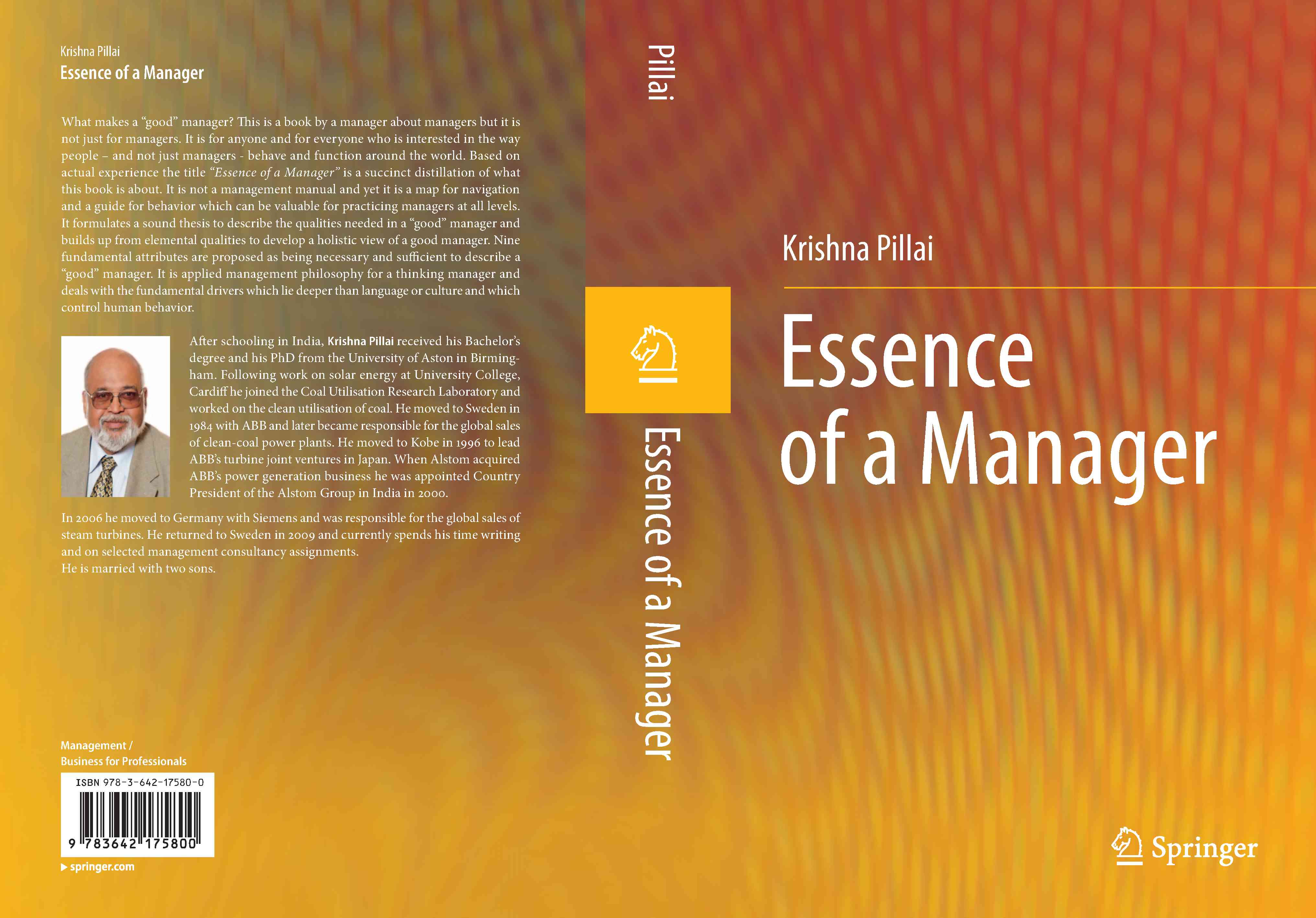
On advice from some experts on the marketing of books – which is a field in which I am a beginner – I have created a separate page for my book Essence of a Manager which is due to be published on 29th March 2011 by Springer.

In addition to practising managers and students of management I am hoping it will be of interest for HR practitioners and generally for anyone interested in behaviour around the world.

Extracts, quotations and reviews will be posted on this page as will any comments.


Oil price drops as Mubarak steps down – will Saudi Arabia follow?

February 12, 2011

We are in for a period with very volatile oil prices as the Middle East enters the age of “people power”. It is quite unlikely that this wave of popular “revolt” will stop with Tunisia and Egypt. Yemen is already showing signs and Libya, Algeria, Morocco, Jordan and the Gulf States are all regimes with a potential for revolution. Saudi Arabia is the big one though for oil price.

But the events in Egypt with no clear political leader and with no retaliatory violence to deliberate provocation are both amazing and encouraging. There is a widespread political maturity that is quite fantastic after 30 years of authoritarian rule.

The Hindu reports:

Besides Egyptian President Hosni Mubarak’s stepping down, the rising dollar index and rally of U.S. stocks triggered oil selling and sent the price to a 10-week low. …

… Light, sweet crude for March delivery dropped 1.15 dollars to 85.58 dollars a barrel on the New York Mercantile Exchange, its lowest settlement since Nov. 30, 2010. The crude oil price went up and down following Egypt’s fears and joys. The commodity had experienced an approximately 6 percent price increase since the crisis began on Jan. 25. Much of that move pertained to the uncertainty surrounding the leadership of Egypt. Although Egypt is not a main oil producer, it controls the Suez Canal, which is an important transportation route for oil from the Middle East.


The short term consequences for oil price when (and it has to be “when” and not “if”) the Saudis finally dismantle the anachronistic regime they have cannot be predicted. But the long-term consequences will probably be a reduction of the base price.

The key is when. It is also amazing in this information and “spying” dominated world that the entire intelligence community had no inkling  of what was coming in Tunisia and Egypt. Information was probably available but clearly no one made the correct analysis or drew the right conclusions.

Essence of a Manager

February 11, 2011

My book now has a publication date in March 2011 and advance copies can be ordered from Springer.

It can also be obtained through Amazon (UK) and Bokus.

Springer Science+Business Media


Essence of a Manager

Pillai, Krishna, 1st Edition., 2011, XIV., Hardcover

ISBN: 978-3-642-17580-0

Due: March 2011

What makes a “good” manager? This is a book by a manager about managers but it is not just for managers. It is for anyone and for everyone who is interested in the way people – and not just managers – behave and function around the world. Based on actual experience the title “Essence of a Manager” is a succinct distillation of what this book is about. It is not a management manual and yet it is a map for navigation and a guide for behaviour which can be valuable for practicing managers at all levels. It formulates a sound thesis to describe the qualities needed in a “good” manager and builds up from elemental qualities to develop a holistic view of a good manager. Nine fundamental attributes are proposed as being necessary and sufficient to describe a “good” manager. It is applied management philosophy for a thinking manager and deals with the fundamental drivers which lie deeper than language or culture and which control human behaviour.

Amazon (UK)

Bokus.com

Some reviews can be found here: Reviews EOAM – Around the world and back to Finspång

Lars-Otto Gullman, retired, former Director Metallurgy, Gränges, Finspång

I wish I had read Essence of a Manager some 40 years ago, prior to my own industrial career!  A similar presentation of the demands on a manager and how a manager can develop his abilities I have not seen till now. In Essence of a Manager the author analyses the nature of the personal qualities a good manager must possess to be able to perform his tasks in a satisfactory way. A method, based upon interview technique, is presented as an effective means of identifying potentially good managers. Many examples are given from the author´s long and worldwide experience of managements styles in different countries and cultures.