Why body temperature is what it is – perhaps

December 28, 2010

American Society For MicrobiologyA new on-line paper in mBio hypothesises that mammalian body temperature is the result of an optimisation between a high enough temperature to ward of fungal species invading the body on the one hand and a low enough temperature on the other to minimise the quantity of fuel needed to support metabolism.

Mammalian Endothermy Optimally Restricts Fungi and Metabolic Costs

by Aviv Bergman and Arturo Casadevall

Albert Einstein College of Medicine

In this study the researchers hypothesis was tested by modeling the fitness increase with temperature versus its metabolic costs.  They analysed the tradeoff involved between the costs of the excess metabolic rates required to maintain a body temperature and the benefit gained by creating a thermal exclusion zone that protects against environmental microbes such as fungi. Their result yielded an optimum at 36.7°C, which closely approximates mammalian body temperatures. The commonly accepted average core body temperature (taken internally) is 37.0 °C (98.6 °F).

Authors Abstract: Endothermy and homeothermy are mammalian characteristics whose evolutionary origins are poorly understood. Given that fungal species rapidly lose their capacity for growth above ambient temperatures, we have proposed that mammalian endothermy enhances fitness by creating exclusionary thermal zones that protect against fungal disease. According to this view, the relative paucity of invasive fungal diseases in immunologically intact mammals relative to other infectious diseases would reflect an inability of most fungal species to establish themselves in a mammalian host. In this study, that hypothesis was tested by modeling the fitness increase with temperature versus its metabolic costs. We analyzed the tradeoff involved between the costs of the excess metabolic rates required to maintain a body temperature and the benefit gained by creating a thermal exclusion zone that protects against environmental microbes such as fungi. The result yields an optimum at 36.7°C, which closely approximates mammalian body temperatures. This calculation is consistent with and supportive of the notion that an intrinsic thermally based resistance against fungal diseases could have contributed to the success of mammals in the Tertiary relative to that of other vertebrates.

Mammals are characterized by both maintaining and closely regulating high body temperatures, processes that are known as endothermy and homeothermy, respectively. The mammalian lifestyle is energy intensive and costly. The evolutionary mechanisms responsible for the emergence and success of these mammalian characteristics are not understood. This work suggests that high mammalian temperatures represent optima in the tradeoff between metabolic costs and the increased fitness that comes with resistance to fungal diseases.

Japanese fishing firms fight back taxes: “necessary” bribes to Russian officials paid into Cyprus banks

December 28, 2010

An interesting defence by Japanese fishing firms that bribes paid to Russian officials and deposited in Cyprus bank accounts were properly booked as “expenditures” and therefore not to be taxed as profits!!

(And from my own experience I conclude that there is no Japanese businessman – or politician – who believes there is anything wrong or unethical in bribing officials – especially in other countries. The only wrong is in paying too much or being caught.)

The Japan Times has the story (but of course does not comment on the ethics involved):

KUSHIRO, Hokkaido (Kyodo) One of four fishery firms hit for back taxes for allegedly making illicit payments to Russian officials denied any impropriety Monday and said the payments were a necessary expense. “We booked the money in the expenditure category (in accounting). It was not illicit money,” said Munemoto Nakayama, who runs Kanai Gyoin Kushiro, Hokkaido. The president spoke with reporters following media reports Sunday that Kanai and three other fishery firms provided about ¥500 million to Russian officials in the three years to 2009 so they could fish in Russia’s exclusive economic zone beyond the limits set under a bilateral agreement with Japan.

Sources said the tax authorities discovered the firms made the payments using irregular accounting methods and concluded the act constituted income concealment, ordering them to pay about ¥200 million in back taxes and penalties. Nakayama confirmed, as claimed in fresh media reports Monday, that the four firms, in addition to having given the money to Russian officials aboard their ships, remitted part of the ¥500 million to bank accounts overseas, including in Cyprus. “We have been doing Russia-related business for over 10 years and have remitted money (overseas),” he said. He also revealed that his company had already filed a revised tax return in connection with the payments as demanded by tax authorities. The four firms admitted paying the Russians to look the other way when their fish catches exceeded the legal quota, the sources said.

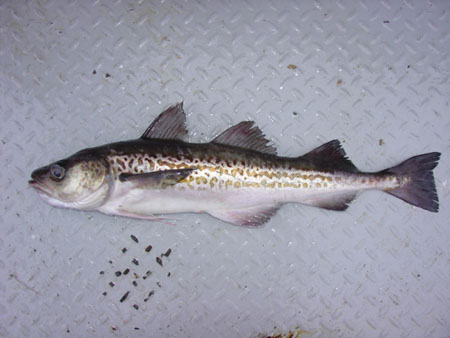
File:Walleye pollock.jpg

Walleye pollock: image wikimedia

Kanai, along with three other firms — Wakkanai Kaiyo in Wakkanai, Hokkaido, Kaiyo Gyogyo in Hachinohe, Aomori Prefecture, and Sato Gyogyo in Shiogama, Miyagi Prefecture — sends boats to Russia’s EEZ to catch walleye pollock. The annual catch quotas in Russia’s EEZ were set in the Russo-Japanese fisheries talks, and this year’s quota for walleye pollock was 10,925 tons, the Fisheries Agency said. Russian border security officials are usually present on Japanese boats to monitor their operations, the sources said. Investigative sources said they often hear of fishing companies paying the Russians and they appear to be wining and dining them as well.

China and the use of rare earth elements trade as a tool for diplomacy

December 28, 2010

Currently China produces about 97% of the global demand for “rare earth elements” used industrially but China has only about 36% of the world’s resources. In the last few months the Chinese have created a “crisis” both by throttling exports and by sharp price increases which have alarmed the auto and electronics industry. Japanese industry has been particularly disturbed. But it would seem that China had very clear diplomatic goals for their trade actions.

The 17  “rare earth elements” are not rare at all.

Rare Earth Elements: graphic ggg.gl


From Wikipedia: http://en.wikipedia.org/wiki/Rare_earth_element

Despite their name, rare earth elements (with the exception of the highly unstable promethium) are relatively plentiful in the Earth’s crust, with cerium being the 25th most abundant element at 68 parts per million (similar to copper). However, because of their geochemical properties, rare earth elements are not often found in concentrated and economically exploitable forms. Instead, they are usually found in rare earth minerals. It was the very scarcity of these minerals (previously called “earths”) that led to the term “rare earth”. The first such mineral discovered was gadolinite, acompound of cerium, yttrium, iron, silicon and other elements. This mineral was extracted from a mine in the village of Ytterby,  Sweden; many of the rare earth elements bear names derived from this location.

A table listing the seventeen rare earth elements, their atomic number and symbol, the etymology of their names, and their main usages is provided here. Some of the rare earths are named for the scientists who discovered or elucidated their elemental properties, and for their geographical discovery.

Z Symbol Name Etymology Selected Usages
21 Sc Scandium from Latin Scandia (Scandinavia), where the first rare earth ore was discovered. Light Aluminium-scandium alloy for aerospace components, additive in Mercury-vapor lamps.
39 Y Yttrium for the village of Ytterby, Sweden, where the first rare earth ore was discovered. Yttrium-aluminum garnet (YAG) laser, YBCO high-temperature superconductors, yttrium iron garnet (YIG) microwave filters.
57 La Lanthanum from the Greek “lanthanein”, meaningto be hidden. High refractive index glass, flint, hydrogen storage, battery-electrodes, camera lenses, fluid catalytic cracking catalyst for oil refineries
58 Ce Cerium for the dwarf planet Ceres. Chemical oxidizing agent, polishing powder, yellow colors in glass and ceramics, catalyst for self-cleaning ovens, fluid catalytic cracking catalyst for oil refineries
59 Pr Praseodymium from the Greek “prasios”, meaningleek-green, and “didymos”, meaningtwin. Rare-earth magnets, lasers, core material for carbon arc lighting, colourant in glasses andenamels, additive in Didymium glass used in welding goggles, ferrocerium firesteel (flint) products.
60 Nd Neodymium from the Greek “neos”, meaning new, and “didymos”, meaning twin. Rare-earth magnets, lasers, violet colors in glass and ceramics, ceramic capacitors
61 Pm Promethium for the Titan Prometheus, who brought fire to mortals. Nuclear batteries
62 Sm Samarium for Vasili Samarsky-Bykhovets, who discovered the rare earth oresamarskite. Rare-earth magnets, lasers, neutron capture, masers
63 Eu Europium for the continent of Europe. Red and blue phosphors, lasers, mercury-vapor lamps
64 Gd Gadolinium for Johan Gadolin (1760–1852), to honor his investigation of rare earths. Rare-earth magnets, high refractive index glass or garnets, lasers, x-ray tubes, computer memories, neutron capture
65 Tb Terbium for the village of Ytterby, Sweden. Green phosphors, lasers, fluorescent lamps
66 Dy Dysprosium from the Greek “dysprositos”, meaning hard to get. Rare-earth magnets, lasers
67 Ho Holmium for Stockholm (in Latin, “Holmia”), native city of one of its discoverers. Lasers
68 Er Erbium for the village of Ytterby, Sweden. Lasers, vanadium steel
69 Tm Thulium for the mythological northern land ofThule. Portable X-ray machines
70 Yb Ytterbium for the village of Ytterby, Sweden. Infrared lasers, chemical reducing agent
71 Lu Lutetium for Lutetia, the city which later became Paris. PET Scan detectors, high refractive index glass

As long as China’s own industry was not sufficiently developed to use these materials there was no crisis and production from resources in many other countries (rare earth elements are quite plentiful around the globe and not “rare” at all) were discontinued in the face of Chinese competition. The current crisis comes about because Chinese industry is now sufficiently advanced to make use of these elements and its industrial volume is large enough to absorb a large part of the production. This allowed China to use of reduction of exports and increase of prices to send strong diplomatic signals. Firstly to counter the US pressure to revalue the Yuan and second to warn Japan regarding their territorial dispute.

But this “crisis” can only be short-lived. The price increase has already led to production of rare earth elements being restarted in the US and many other countries are now planning to start production (Sweden, India, Vietnam and countries in Central Asia for example). China is no doubt well aware that their manufactured “rare earth elements” crisis will only accelerate the production of these elements from alternate sources. But what it shows is that China has the economic muscle and the willingness to now use “trade wars” as a weapon in diplomacy. But what is also a new development is the concerted response from many countries in acting together to find alternate sources and counter the Chinese might.

That Japan feels particularly vulnerable is to be expected since it does not have its own resources and is a major user. The Asahi Shimbun writes:

One reason for China’s dominance in production is the cheap cost of labor. But the country also has an advantage because deposits there can be extracted through relatively rough methods. In southern China, the weathering of a particular type of granite containing large amounts of rare earths has progressed to the right degree. Unwanted substances have been washed away in the rain, leaving soil with high concentrations of rare earth metals exposed on the surface.

“Erosion proceeds quickly in places that are warm and have a high rainfall, but if there is too much rain, erosion proceeds too quickly,” said Mitsuya Hirokawa of Japan Oil, Gas and Metals National Corp. “The necessary conditions are the existence of granite that contain lots of rare earths and the right amount of rainfall.” Southern China fulfills these conditions.

Japan has the right type of granite, but it has not eroded at the proper pace. But environmental concerns are arising from the cheaper method of extraction in China. In normal mines, rare earths are extracted by chemically processing ore that has already been removed from the ground. But in the method used in southern China, the mine itself becomes a processing factory. Acidic liquid is poured on the ground, and the dissolved rare earths are recovered from the liquid that oozes out. If the toxic liquid leaks into rivers, it could have serious consequences for the environment. “There are paddy fields in the vicinity, and there are concerns about the impact on human health,” said a researcher who observed the procedure in southern China.

This is the context under which China cites environmental concerns as the reason for restricting exports of rare earth metals. But this cheaper method of extraction is one reason why production is concentrated in China. Many mines in the United States and elsewhere could not afford to continue operating and were closed down.

Apparently, similar “convenient” deposits exist in Vietnam. Studies are under way, but production there has not yet started.

The Wall Street Journal analyses the Chinese use of trade flows as a tool of diplomacy:

Beijing’s decision earlier this year to stop shipments of rare earth minerals to Japan apparently as part of a territorial dispute raised a lot of concerns about the strategic implications of China’s growing economic strength. And well it should. Up to now, Beijing has worked hard to separate economics from politics on the world stage as part of a strategy to minimize global unease with its rise. That it is now willing to use an economic lever in a political matter suggests that approach is changing in ways that could cause trouble for the rest of the world and for China itself……..

……….Before now, trading partners were willing to take the temporary hit to trade, since they knew the episode would quickly blow over. This time, though, all major trading partners are seriously contemplating alternatives to Chinese markets in rare earth supplies. Japan, naturally, has been most active in looking for alternative sources, signing agreements with Vietnam and Australia to develop new mines or renewing production in existing mines.

A Christmas tale – but all’s well that ends well

December 27, 2010

Over 500 parishioners at Luleå Cathedral were treated to something of an improvised Christmas Day service when the pastor overslept and only made it in time for the after service- coffee.

Luleå Cathedral: image panoramio.com

http://www.thelocal.se/31088/20101227/

Those thronging the packed pews early on Saturday morning began to get restless after a while as it became apparent that something was amiss, the local Norrbottens Kuriren daily reported.
When it was confirmed that the duty pastor, Stefan Widman, had not awoken from his slumbers, the Christmas service was saved by the initiative of churchwardens Georg Johansson and Hans Brusevitz.
The pair read the Christmas gospel and the Lord’s Prayer and the organist Lena Stenlund ensured that the faithful were given a musical accompaniment to their song, the newspaper reported.
When the pastor did eventually make it to the church, after the guests had retired for coffee, he was deeply apologetic, but was met with laughter by forgiving parishioners.
“In the church hall, when I asked for forgiveness for the whole thing, I was told that it is human to oversleep. And I have rarely had such nice discussions with people,” Stefan Widman told Norrbottens Kuriren. Widman, meanwhile, expressed concern that his tardiness would lead to congregation gossip. “You become something of the ‘talk of the town,’ but that you have to take when you have been sloppy with your clock radio,” he said.

The New City of Luleå in Sweden * Engraving made sometime between 1690-1710 * Scanned from Erik Dahlberg, ''Svecia Antiqua et Hodierna'', facsimile, 1983: wikimedia.org

Weather may not be climate but weather is a subset of climate !

December 27, 2010

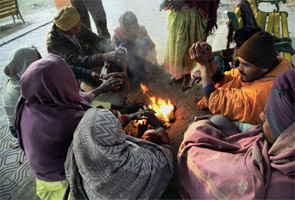
The cold wave in India led to 4 deaths on 26th December 2010: image ndtv.com

This winter’s extremes are all due to Global Warming I hear!!

My incredulity at the arrogance of global warming dogma and its high priests is getting rather strained. But gullibility and greed remain inherent in the human condition.

First white Christmas in Atlanta since 1882, NCDC gets new snow record in their own backyard

Europe hit with coldest December in 100 years

Sweden in ‘coldest December in 100 years’

Coldest December since records began as temperatures plummet to minus 10C  bringing travel chaos across Britain

NSW hit by snow, wind, floods – and locusts

Wintry weather brings snow to Australia in midsummer

Icy highway causes traffic jam in Guangdong

Cold snap drops Beijing’s temperature to 10-year low

(Korea) Lowest temperatures in 30 years

Cold wave kills 4 in north India

North India reels under severe cold wave

Haiti: The UN cholera tragedy continues…..

December 26, 2010

Port-au-Prince, Haiti (CNN) — At least 45 people, most of them voodoo priests, have been lynched in Haiti since the beginning of the cholera epidemic by angry mobs blaming them for the spread of the disease, officials said.

“People who practice voodoo have nothing to do with the cholera epidemic,” said Max Beauvoir, the head of a voodoo organization in the Caribbean country.

Beauvoir said Thursday that he has appealed to authorities to help before the situation gets worse.

Some of the victims were killed with machetes, others were burned alive by mobs that added tires and gasoline to stoke the fires. The cholera outbreak started in October.

Forty of the victims were found in a southwest area of Haiti called Grand Anse, said Moise Fritz Evens, a communications ministry official.

The victims have been targeted because of “misinformation” that had been circulating in the community that voodoo practitioners were spreading cholera by using witchcraft, according to communications Minister Marie-Laurence Lassegue.

“It was necessary to increase awareness of the disease and educate the population countrywide instead of getting into a religious war that has no ending,” Lassegue said.

The killings add to ongoing woes that have hit the island after the devastating earthquake in January. About 220,000 people were killed in the earthquake, and countless others left homeless. A cholera outbreak after the earthquake has killed more than 2,000 people, health officials said.

Before the current outbreak introduced by UN troops, Haiti had not seen cholera for over 100 years.

https://ktwop.wordpress.com/2010/11/19/un-cholera-and-protests-against-un-reach-port-au-prince/

Eco-friendly superyacht – a contradiction in terms!

December 26, 2010

Motor Yacht

Super Yacht "Exuma": image ypigroup.com

From CNN:

Every few years, a radically designed superyacht splashes into the water, grabbing the world’s attention. Right now it’s “Exuma,” a motor yacht intended to consume less fuel and produce less carbon emissions than other motor yachts of a similar size. The yacht, which won the Green Yacht of the Year award at this year’s Monaco Yacht Show, pays close attention to three key principles: that it should be sustainable, efficient and robust.

Featuring an elongated, slender hull designed for maximum hydrodynamic efficiency to reduce water resistance, it scythes effortlessly through the water like a shark stalking its prey. Designed with exploration in mind, it has a range of over 6,000 miles at a speed of 12 knots — which is impressive given it has a fuel tank with a 75,000-litre capacity.

I admire the yacht and the use of technology but I find the “eco-friendly” label somewhat presumptious and not just a little vulgar.

Specifications

  • Built by: Picchiotti – Perini Navi Group
  • Length: 50 mtr (164 ft)
  • Beam: 9.5 mtr (31.2 ft)
  • Draft: 2.3 mtr (8.37 ft)
  • Year Built: 2010
  • Main Engines: DIESEL CATERPILLAR
  • Engines model: 2 x C32 Acert
  • Max speed: 17 Knots
  • Cruising speed: 14 Knots
  • Classification: ABS
  • Hull construction: Aluminium
  • Superstructure material: Aluminium
  • Guests cruising: 12 persons
  • Guests sleeping: 9 persons
  • Crew: 9 persons
  • Flag: Malta
“Eco-Friendly” rates are:
Summer charter rate: from EUR 175 000 per week
Winter charter rate: from EUR 175 000 per week

Green hijack of the UK Met Office

December 26, 2010

Christopher Booker has an interesting article in The Sunday Telegraph describing how a supposedly science-based institution can be perverted by political dogma; in this case global warming dogma perverting the forecasts of the UK Met Office.

By far the biggest story of recent days, of course, has been the astonishing chaos inflicted, to a greater or lesser extent, on all of our lives by the fact that we are not only enjoying what is predicted to be the coldest December since records began in 1659, but also the harshest of three freezing winters in a row….. But central to all this – as the cry goes up: “Why wasn’t Britain better prepared?” – has been the bizarre role of the Met Office…… in these past three years the Met Office’s forecasting record has become a national joke. Ever since it predicted a summer warmer and drier than average in 2007 – followed by some of the worst floods in living memory – its forecasts have been so unerringly wrong that even the chief adviser to our Transport Secretary might have noticed.

The real question, however, is why has the Met Office become so astonishingly bad at doing the job for which it is paid nearly £200 million a year – in a way which has become so stupendously damaging to our country?

The answer is that in the past 20 years, as can be seen from its website, the Met Office has been hijacked from its proper role to become wholly subservient to its obsession with global warming. (At one time it even changed its name to the Met Office “for Weather and Climate Change”.) This all began when its then-director John Houghton became one of the world’s most influential promoters of the warmist gospel. He, more than anyone else, was responsible for setting up the UN’s Intergovernmental Panel on Climate Change and remained at the top of it for 13 years. It was he who, in 1990, launched the Met Office’s Hadley Centre for Climate Change, closely linked to the Climatic Research Unit in East Anglia (CRU), at the centre of last year’s Climategate row, which showed how the little group of scientists at the heart of the IPCC had been prepared to bend their data and to suppress any dissent from warming orthodoxy.

The full article is here.

King Coal: The global battle to control resources

December 26, 2010

Riversdale Mining Ltd. has 13 billion metric tonnes of known coking and thermal coal reserves in its Benga and Zambeze projects in Mozambique. A global battle is now hotting up for the acquisition of Riversdale and the potential bidders clearly have no doubts about the continued use of coal and are not greatly impressed by the passing fad of Global Warming alarmism.

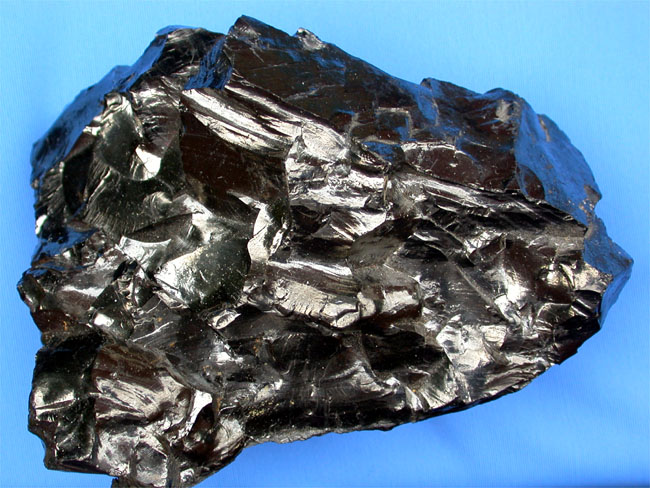
King Coal: image pitt.edu

Bloomberg reports:

International Coal Ventures Ltd., an Indian state-run joint venture, is studying an offer for Riversdale Mining Ltd. to counter a A$3.9 billion ($3.9 billion) bid from Rio Tinto Group.

ICVL appointed Citigroup Inc. to examine a possible takeover offer for the Sydney-based coal company with mines in Mozambique, the venture’s chairman C.S. Verma said yesterday. London-based Rio yesterday bid A$16 a share for Riversdale, securing 14.9 percent of the company in pre-bid agreements.

Indian companies are seeking coal mines overseas to ensure raw material supplies for producing steel and electricity. Brazil’s Vale SA or Eurasian Natural Resources Corp. may make bids, according to Sanford C. Bernstein & Co., as Tata Steel Ltd., Riversdale’s biggest holder, said it will study Rio’s offer “in the context of other alternatives” available to Tata. “The A$16 cash offer is unlikely to secure acceptance from all of Riversdale’s shareholders,” analysts led by Hayden Bairstow at CLSA Asia-Pacific Markets, said yesterday in a report, raising his price target for Riversdale by 3 percent to A$18. Riversdale’s “Benga and Zambeze coal projects are world class and we believe other suitors may show an interest in Riversdale now a formal bid has been tabled,” he said.

Tata Steel holds 24 per cent stake in Riversdale and is its largest shareholder. Sources say there have been talks between ICVL and Tata Steel for a joint bid or at the very least support from Tata Steel for ICVL’s bid. However, ICVL did not confirm that any talks took place between the consortium and Tata Steel reports The Hindu Business Line.

But more bidders are appearing and it is likely that the shareholders of Riversdale can expect a much higher price than what is on the table now. The Guardian reports that:

The global battle for control of the world’s natural resources flared again when it emerged that Anglo American could gatecrash Rio Tinto’s plans to buy Riversdale Mining, the Australian coking coal group, for £2.5bn.

Headed by chief executive Cynthia Carroll and chairman Sir John Parker, Anglo has joined a list of possible counter-bidders for Riversdale, whose African business produces coal for the fast-growing Asian steel industry.

Evidence of the importance of coking coal to China surfaced recently when Riversdale signed an agreement with Wuhan Iron and Steel to jointly develop Riversdale’s huge Zambeze coal reserves in Mozambique.

Anglo, which is believed to have appointed Morgan Stanley to advise on its options, will face stiff competition, with the Wall Street Journal reporting that Tata Steel of India, which controls 24% of Riversdale, is considering an offer.

Another potential bidder is ICVL, an Indian consortium that has appointed Citigroup as a financial adviser and mandated the bank to report back on the viability of a bid that would top Rio’s promise of A$16 a share.

Tata Steel has just received shareholder approval “for raising of additional long-term resources through issue of securities, including equity shares with differential rights as to voting and dividend, up to Rs 7,000 crore ($1,550 million)”. A company press release said “Tata Steel notes the takeover bid for Riversdale Mining announced by Rio Tinto. Tata Steel will evaluate the takeover bid in the context of other alternatives available to Tata Steel.” Riversdale is important for the long-term coking coal security for Corus. Tata Steel is already entrenched in its Mozambique coal mining project with a strategic stake and long-term supply contract. With Tata Steel’s share of Riversdale valued at almost $1 billion by the Rio Tinto bid it is likely that the final selling price will be significantly higher than Rio Tinto’s bid.

An educated guess would suggest a final selling price of over $5 billion or over A$20 per share.


Review of “3000 Miles to Freedom”

December 25, 2010

I posted in August about my father’s manuscript describing his escape from Singapore after its fall in 1942.

Mark Pillai as a Captain

Three Thousand Miles to Freedom

A review by Abhimanyu Singh appeared in last Sunday’s  New Sunday Express entitled:

Two takes on an obscure, yet epic journey