Krypton kills nine in Sweden

December 30, 2010

Krypton the drug (and not the element nor the fictional planet nor anything related to Superman’s kryptonite) is thought to have led to the deaths of 9 young people in Sweden.

http://www.thelocal.se/31134/20101229/ reports:

A team of Swedish forensic physicians have concluded that nine young people have died over the past year after having taken the legal drug Krypton. Krypton is sold widely over the internet and is marketed as a safe drug but the risk of overdosing is high, the physicians have observed.

“Krypton reminds me of other opiates such as morphine. It is not some sort of party drug,” said Björn Bäckström, who works at the National Board of Forensic Medicine in Umeå, to the local Västerbottens Kuriren daily. Bäckström, together with colleagues Gisela Classon, Peter Löwenheim and Gunilla Thelander, have penned an article published in the medical journal Läkartidningen warning of the risks of Krypton.

The National Board of Forensic Medicine receives intakes after deaths from across Sweden and one case involving Krypton led the physicians to consider the effects of the drug and found several more cases. The Krypton-related deaths are spread across Sweden and involve both heavy addicts and occasional users, while they all concern people born in the 1970s and 1980s, the newspaper reported.

Krypton is derived from the south-east Asian plant kratom which has been traditionally used for potency and to improve mood. Aside from the leaves and extracts from kratom, Krypton has also been found to contain caffeine and the synthetic opioid O-Desmethyltramadol.
O-Desmethyltramadol is a breakdown of the product tramadol, which is prescribed in moderation to alleviate severe pain and when taken as Krypton is turned into tramadol in the liver and becomes more potent. It is due to this high potency contained in the O-Desmethyltramadol that the risk of overdosing is considered high, leading to respiratory paralysis. The Swedish physicians expect the extract and opiate to turn up in other forms if they are not classified as narcotics.

“That is one of the purposes of the article – to bring attention to this drug so that it should be narcotics classified,” Björn Bäckström told the newspaper.

(news@thelocal.se)

Time to bring in an “Olive Euro” or to bring back the Deutsche Mark?

December 30, 2010

50 Deutsche Mark banknote: image commons.wikimedia.org

As long as there is no economic and fiscal union in Europe, the Euro is going to be plagued by the inherent weaknesses of errant nations. The current economic weakness in Greece, Portugal, Spain and Italy and the political inability – or unwillingness – to deal with the simple financial housekeeping that any competent housewife would handle as a matter of course suggests that the fiscal union will never happen. Non-compliance with the stability rules by nations lead to few sanctions. This in turn leads to the question whether the Euro has any long term future in the absence of fiscal rectitude across all the participating nations.

100 Euro banknote from Germany

100 Euro banknote from Germany

The weakness of the Euro has in fact helped to boost exports from Germany and the relatively strong growth in Germany is mainly export driven. Nevertheless many Germans are beginning to worry about the value of their Euro when this value is being diluted by the “less responsible” nations. Germans are remembering that “German” Euro notes are easily identifiable (as are the notes printed in the different countries). There are calls for the German government to maintain the value of the “German” Euro when the Euro loses value! (German Euro banknotes can be identified by their serial number, which will always start with the letter “X”.) It is already noticeable that money changers in Asia are beginning to check the country of origin of the Euro banknotes they are dealing with. I can imagine their future reluctance to deal with notes having serial numbers beggining with “Y” (which would be a note from Greece). Some are calling for the Euro to be separated into a “Northern Euro” and an “Olive Euro”. It is only a short step to different values appearing unofficially for Euros from different countries.

Der Spiegel reports on the growing calls for the return of the Deutsche Mark:

Surveys show that many Germans are worried about the future of the euro, but the country’s political parties are not taking their fears seriously. The number of grassroots initiatives against the common currency is increasing, and political observers say a Tea Party-style anti-euro movement could do well.

Rolf Hochhuth is campaigning against the euro — and his stage is Germany’s Constitutional Court. “Why should we help rescue the Greeks from their sham bankruptcy?” he asks. “Ever since Odysseus, the world has known that the Greeks are the biggest rascals of all time. How is it even possible — unless it was premeditated — for this highly popular tourist destination to go bankrupt?”In the spring, he joined a group led by Berlin-based professor Markus Kerber that has filed a constitutional complaint against the billions in aid to Greece and the establishment of the European stabilization fund, which was set up in May 2010. Hochhuth wants the deutsche mark back. “I don’t know if this is possible. I only know that Germany lived very well with the mark.”

It’s an opinion that suddenly places this nearly 80-year-old man in a rather unusual position, at least for him: on the side of the majority of Germans.

Read the rest of this entry »

Japan shelves carbon emissions trading scheme

December 29, 2010

Japan joins the growing list of nations who have shelved, postponed or cancelled carbon trading schemes (and there is not a single carbon trading scheme anywhere which is not built on fraud).

Reuters reports:

Japan postponed plans for a national emissions trading scheme on Tuesday, bowing to powerful business groups that warned of job losses as they compete against overseas rivals facing fewer emissions regulations.

The government has submitted a climate bill to parliament that includes a one-year deadline to design a national trading scheme. After Tuesday’s delay, that bill faces revisions in the next parliamentary session that begins in January.

The decision is a blow to the European Union’s hopes that other top greenhouse gas polluters will introduce emissions trading schemes and follows setbacks to similar efforts in the United States and Australia.

A U.N. meeting in Cancun, Mexico, this month failed to clear uncertainty over a global climate framework beyond 2012. This is likely to cause some big emitters to take their time in rolling out tougher greenhouse gas regulations, particularly for carbon dioxide (CO2) from burning fossil fuels such as coal and oil.

Neighboring South Korea has delayed the introduction of its emissions trading laws into parliament until February because of business concerns.

Yellow River freezes early

December 29, 2010

China’s Yellow River has frozen up to 677 kilometers in Inner Mongolia so far. The freezing is more typical of mid-to-late January. Preventive work has been organised for possible ice damage.

http://news.xinhuanet.com/english2010/photo/2010-12/29/c_13669452.htm

Dec. 29, 2010 Frozen Yellow River at Sanshenggong Water Project. (Xinhua/Li Yunping)

Recent strong cold air made Yellow River freeze up quickly in Shandong as the flow decreased in lower Yellow River.

December 29th 2010. Floating ice on Yellow River in Jinan, capital of east China's Shandong Province. (Xinhua/Guo Xulei)

Solar Cycle 24 is unusually quiet but not unprecedented

December 29, 2010

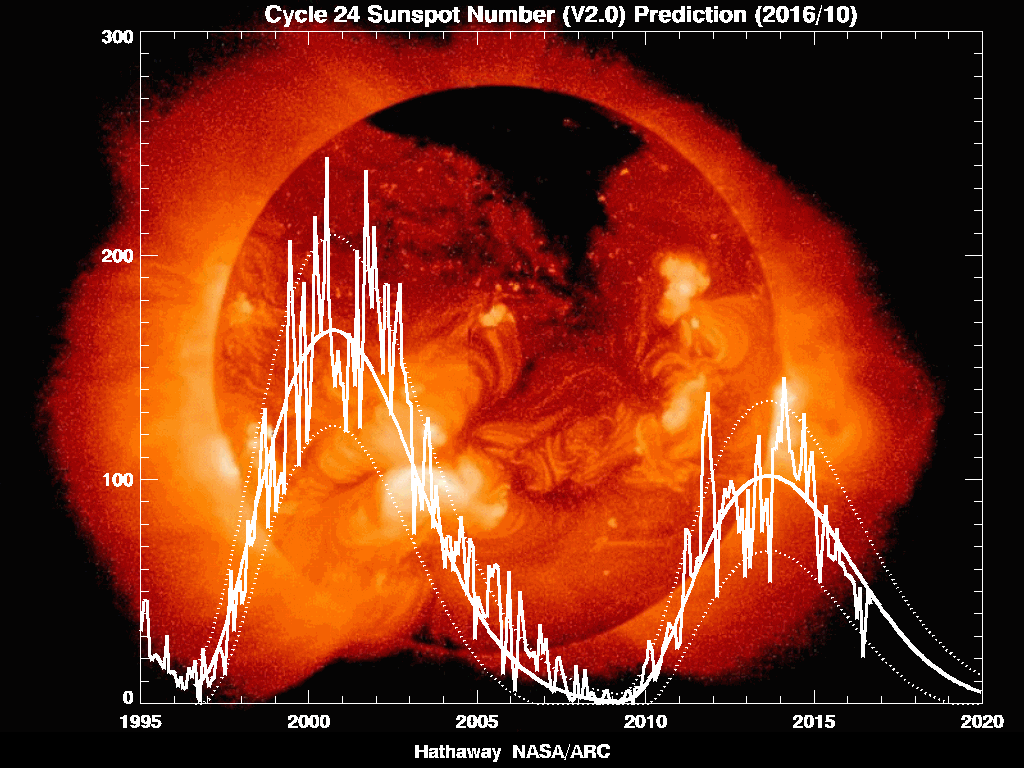
NASA has made a new reduced forecast for the peak sunspot number and the time of occurrence of the peak of Solar Cycle 24. The peak number has been reduced from 90 to 64 and the time of the peak is unchanged at June 2013.

I have superimposed the development of the forecast peak and time of the peak on the base forecast. This is not any criticism of the forecast. It only emphasises that the forecasts are about something which is not very well understood. So far the forecast development is only in the direction of reducing sunspot numbers and delays in the time of attaining the peak. As the peak actually approaches the forecasts should stabilise but there is still some room for further reduction. It is not inconceivable that the SC24 will not peak till early 2014 and will only achieve peak sunspot numbers around 55. Solar cycle 24 could well have a length of 150+ months instead of the nominal 132 months.


SC24 forecast development superimposed on NASA forecast (http://solarscience.msfc.nasa.gov/images/ssn_predict_l.gif)

That SC24 represents a very quiet sun and that taken together with SC23 this Landscheidt minimum represents a behaviour similar to the period leading up to the Dalton minimum is quite clear insofar as sunspot number is concerned. But the length of Solar Cycle 23 and its extended quiet period also has precedence.

Further similarities to SC4 and 5 were reported in

Agee, Ernest M., Emily Cornett, Kandace Gleason, 2010: An Extended Solar Cycle 23 with Deep Minimum Transition to Cycle 24: Assessments and Climatic Ramifications. J. Climate, 23, 6110–6114.
doi: 10.1175/2010JCLI3831.1

The extended length of solar cycle 23 and the associated deep quiet period (QP) between cycles 23 and 24 have been examined using the international sunspot record from 1755 to 2010. This study has also introduced a QP definition based on a (beginning and ending) mean monthly threshold value of less than 10 for the sunspot number. Features addressed are the length and intensity of cycle 23, the length of the QP and the associated number of spotless days, and the respective relationships between cycle intensity, length, and QP. The length of cycle 23 (153 months) is second only to cycle 4 (164 months), with an average of 132.5 months for the 11-yr cycle. The length of the QP between cycles 23 and 24 ranks eighth, extending from October 2005 through November 2009 (but subject to continued weakness in cycle 24). The number of spotless days achieved within this QP was 751 (and for all days within the transition from cycle 23 to cycle24, a record number of 801 spotless days had been observed through May 2010). Shortcomings of solar-convection-model predictions of sunspot activity and intensity are also noted, including the failure in the initial predictions of cycle-24 onset.

It would not be too surprising if SC24 only reached levels which were  lower than the Dalton minimum and perhaps even approaching the lows of the Maunder minimum.


Why body temperature is what it is – perhaps

December 28, 2010

American Society For MicrobiologyA new on-line paper in mBio hypothesises that mammalian body temperature is the result of an optimisation between a high enough temperature to ward of fungal species invading the body on the one hand and a low enough temperature on the other to minimise the quantity of fuel needed to support metabolism.

Mammalian Endothermy Optimally Restricts Fungi and Metabolic Costs

by Aviv Bergman and Arturo Casadevall

Albert Einstein College of Medicine

In this study the researchers hypothesis was tested by modeling the fitness increase with temperature versus its metabolic costs.  They analysed the tradeoff involved between the costs of the excess metabolic rates required to maintain a body temperature and the benefit gained by creating a thermal exclusion zone that protects against environmental microbes such as fungi. Their result yielded an optimum at 36.7°C, which closely approximates mammalian body temperatures. The commonly accepted average core body temperature (taken internally) is 37.0 °C (98.6 °F).

Authors Abstract: Endothermy and homeothermy are mammalian characteristics whose evolutionary origins are poorly understood. Given that fungal species rapidly lose their capacity for growth above ambient temperatures, we have proposed that mammalian endothermy enhances fitness by creating exclusionary thermal zones that protect against fungal disease. According to this view, the relative paucity of invasive fungal diseases in immunologically intact mammals relative to other infectious diseases would reflect an inability of most fungal species to establish themselves in a mammalian host. In this study, that hypothesis was tested by modeling the fitness increase with temperature versus its metabolic costs. We analyzed the tradeoff involved between the costs of the excess metabolic rates required to maintain a body temperature and the benefit gained by creating a thermal exclusion zone that protects against environmental microbes such as fungi. The result yields an optimum at 36.7°C, which closely approximates mammalian body temperatures. This calculation is consistent with and supportive of the notion that an intrinsic thermally based resistance against fungal diseases could have contributed to the success of mammals in the Tertiary relative to that of other vertebrates.

Mammals are characterized by both maintaining and closely regulating high body temperatures, processes that are known as endothermy and homeothermy, respectively. The mammalian lifestyle is energy intensive and costly. The evolutionary mechanisms responsible for the emergence and success of these mammalian characteristics are not understood. This work suggests that high mammalian temperatures represent optima in the tradeoff between metabolic costs and the increased fitness that comes with resistance to fungal diseases.

Japanese fishing firms fight back taxes: “necessary” bribes to Russian officials paid into Cyprus banks

December 28, 2010

An interesting defence by Japanese fishing firms that bribes paid to Russian officials and deposited in Cyprus bank accounts were properly booked as “expenditures” and therefore not to be taxed as profits!!

(And from my own experience I conclude that there is no Japanese businessman – or politician – who believes there is anything wrong or unethical in bribing officials – especially in other countries. The only wrong is in paying too much or being caught.)

The Japan Times has the story (but of course does not comment on the ethics involved):

KUSHIRO, Hokkaido (Kyodo) One of four fishery firms hit for back taxes for allegedly making illicit payments to Russian officials denied any impropriety Monday and said the payments were a necessary expense. “We booked the money in the expenditure category (in accounting). It was not illicit money,” said Munemoto Nakayama, who runs Kanai Gyoin Kushiro, Hokkaido. The president spoke with reporters following media reports Sunday that Kanai and three other fishery firms provided about ¥500 million to Russian officials in the three years to 2009 so they could fish in Russia’s exclusive economic zone beyond the limits set under a bilateral agreement with Japan.

Sources said the tax authorities discovered the firms made the payments using irregular accounting methods and concluded the act constituted income concealment, ordering them to pay about ¥200 million in back taxes and penalties. Nakayama confirmed, as claimed in fresh media reports Monday, that the four firms, in addition to having given the money to Russian officials aboard their ships, remitted part of the ¥500 million to bank accounts overseas, including in Cyprus. “We have been doing Russia-related business for over 10 years and have remitted money (overseas),” he said. He also revealed that his company had already filed a revised tax return in connection with the payments as demanded by tax authorities. The four firms admitted paying the Russians to look the other way when their fish catches exceeded the legal quota, the sources said.

File:Walleye pollock.jpg

Walleye pollock: image wikimedia

Kanai, along with three other firms — Wakkanai Kaiyo in Wakkanai, Hokkaido, Kaiyo Gyogyo in Hachinohe, Aomori Prefecture, and Sato Gyogyo in Shiogama, Miyagi Prefecture — sends boats to Russia’s EEZ to catch walleye pollock. The annual catch quotas in Russia’s EEZ were set in the Russo-Japanese fisheries talks, and this year’s quota for walleye pollock was 10,925 tons, the Fisheries Agency said. Russian border security officials are usually present on Japanese boats to monitor their operations, the sources said. Investigative sources said they often hear of fishing companies paying the Russians and they appear to be wining and dining them as well.

China and the use of rare earth elements trade as a tool for diplomacy

December 28, 2010

Currently China produces about 97% of the global demand for “rare earth elements” used industrially but China has only about 36% of the world’s resources. In the last few months the Chinese have created a “crisis” both by throttling exports and by sharp price increases which have alarmed the auto and electronics industry. Japanese industry has been particularly disturbed. But it would seem that China had very clear diplomatic goals for their trade actions.

The 17  “rare earth elements” are not rare at all.

Rare Earth Elements: graphic ggg.gl


From Wikipedia: http://en.wikipedia.org/wiki/Rare_earth_element

Despite their name, rare earth elements (with the exception of the highly unstable promethium) are relatively plentiful in the Earth’s crust, with cerium being the 25th most abundant element at 68 parts per million (similar to copper). However, because of their geochemical properties, rare earth elements are not often found in concentrated and economically exploitable forms. Instead, they are usually found in rare earth minerals. It was the very scarcity of these minerals (previously called “earths”) that led to the term “rare earth”. The first such mineral discovered was gadolinite, acompound of cerium, yttrium, iron, silicon and other elements. This mineral was extracted from a mine in the village of Ytterby,  Sweden; many of the rare earth elements bear names derived from this location.

A table listing the seventeen rare earth elements, their atomic number and symbol, the etymology of their names, and their main usages is provided here. Some of the rare earths are named for the scientists who discovered or elucidated their elemental properties, and for their geographical discovery.

Z Symbol Name Etymology Selected Usages
21 Sc Scandium from Latin Scandia (Scandinavia), where the first rare earth ore was discovered. Light Aluminium-scandium alloy for aerospace components, additive in Mercury-vapor lamps.
39 Y Yttrium for the village of Ytterby, Sweden, where the first rare earth ore was discovered. Yttrium-aluminum garnet (YAG) laser, YBCO high-temperature superconductors, yttrium iron garnet (YIG) microwave filters.
57 La Lanthanum from the Greek “lanthanein”, meaningto be hidden. High refractive index glass, flint, hydrogen storage, battery-electrodes, camera lenses, fluid catalytic cracking catalyst for oil refineries
58 Ce Cerium for the dwarf planet Ceres. Chemical oxidizing agent, polishing powder, yellow colors in glass and ceramics, catalyst for self-cleaning ovens, fluid catalytic cracking catalyst for oil refineries
59 Pr Praseodymium from the Greek “prasios”, meaningleek-green, and “didymos”, meaningtwin. Rare-earth magnets, lasers, core material for carbon arc lighting, colourant in glasses andenamels, additive in Didymium glass used in welding goggles, ferrocerium firesteel (flint) products.
60 Nd Neodymium from the Greek “neos”, meaning new, and “didymos”, meaning twin. Rare-earth magnets, lasers, violet colors in glass and ceramics, ceramic capacitors
61 Pm Promethium for the Titan Prometheus, who brought fire to mortals. Nuclear batteries
62 Sm Samarium for Vasili Samarsky-Bykhovets, who discovered the rare earth oresamarskite. Rare-earth magnets, lasers, neutron capture, masers
63 Eu Europium for the continent of Europe. Red and blue phosphors, lasers, mercury-vapor lamps
64 Gd Gadolinium for Johan Gadolin (1760–1852), to honor his investigation of rare earths. Rare-earth magnets, high refractive index glass or garnets, lasers, x-ray tubes, computer memories, neutron capture
65 Tb Terbium for the village of Ytterby, Sweden. Green phosphors, lasers, fluorescent lamps
66 Dy Dysprosium from the Greek “dysprositos”, meaning hard to get. Rare-earth magnets, lasers
67 Ho Holmium for Stockholm (in Latin, “Holmia”), native city of one of its discoverers. Lasers
68 Er Erbium for the village of Ytterby, Sweden. Lasers, vanadium steel
69 Tm Thulium for the mythological northern land ofThule. Portable X-ray machines
70 Yb Ytterbium for the village of Ytterby, Sweden. Infrared lasers, chemical reducing agent
71 Lu Lutetium for Lutetia, the city which later became Paris. PET Scan detectors, high refractive index glass

As long as China’s own industry was not sufficiently developed to use these materials there was no crisis and production from resources in many other countries (rare earth elements are quite plentiful around the globe and not “rare” at all) were discontinued in the face of Chinese competition. The current crisis comes about because Chinese industry is now sufficiently advanced to make use of these elements and its industrial volume is large enough to absorb a large part of the production. This allowed China to use of reduction of exports and increase of prices to send strong diplomatic signals. Firstly to counter the US pressure to revalue the Yuan and second to warn Japan regarding their territorial dispute.

But this “crisis” can only be short-lived. The price increase has already led to production of rare earth elements being restarted in the US and many other countries are now planning to start production (Sweden, India, Vietnam and countries in Central Asia for example). China is no doubt well aware that their manufactured “rare earth elements” crisis will only accelerate the production of these elements from alternate sources. But what it shows is that China has the economic muscle and the willingness to now use “trade wars” as a weapon in diplomacy. But what is also a new development is the concerted response from many countries in acting together to find alternate sources and counter the Chinese might.

That Japan feels particularly vulnerable is to be expected since it does not have its own resources and is a major user. The Asahi Shimbun writes:

One reason for China’s dominance in production is the cheap cost of labor. But the country also has an advantage because deposits there can be extracted through relatively rough methods. In southern China, the weathering of a particular type of granite containing large amounts of rare earths has progressed to the right degree. Unwanted substances have been washed away in the rain, leaving soil with high concentrations of rare earth metals exposed on the surface.

“Erosion proceeds quickly in places that are warm and have a high rainfall, but if there is too much rain, erosion proceeds too quickly,” said Mitsuya Hirokawa of Japan Oil, Gas and Metals National Corp. “The necessary conditions are the existence of granite that contain lots of rare earths and the right amount of rainfall.” Southern China fulfills these conditions.

Japan has the right type of granite, but it has not eroded at the proper pace. But environmental concerns are arising from the cheaper method of extraction in China. In normal mines, rare earths are extracted by chemically processing ore that has already been removed from the ground. But in the method used in southern China, the mine itself becomes a processing factory. Acidic liquid is poured on the ground, and the dissolved rare earths are recovered from the liquid that oozes out. If the toxic liquid leaks into rivers, it could have serious consequences for the environment. “There are paddy fields in the vicinity, and there are concerns about the impact on human health,” said a researcher who observed the procedure in southern China.

This is the context under which China cites environmental concerns as the reason for restricting exports of rare earth metals. But this cheaper method of extraction is one reason why production is concentrated in China. Many mines in the United States and elsewhere could not afford to continue operating and were closed down.

Apparently, similar “convenient” deposits exist in Vietnam. Studies are under way, but production there has not yet started.

The Wall Street Journal analyses the Chinese use of trade flows as a tool of diplomacy:

Beijing’s decision earlier this year to stop shipments of rare earth minerals to Japan apparently as part of a territorial dispute raised a lot of concerns about the strategic implications of China’s growing economic strength. And well it should. Up to now, Beijing has worked hard to separate economics from politics on the world stage as part of a strategy to minimize global unease with its rise. That it is now willing to use an economic lever in a political matter suggests that approach is changing in ways that could cause trouble for the rest of the world and for China itself……..

……….Before now, trading partners were willing to take the temporary hit to trade, since they knew the episode would quickly blow over. This time, though, all major trading partners are seriously contemplating alternatives to Chinese markets in rare earth supplies. Japan, naturally, has been most active in looking for alternative sources, signing agreements with Vietnam and Australia to develop new mines or renewing production in existing mines.

A Christmas tale – but all’s well that ends well

December 27, 2010

Over 500 parishioners at Luleå Cathedral were treated to something of an improvised Christmas Day service when the pastor overslept and only made it in time for the after service- coffee.

Luleå Cathedral: image panoramio.com

http://www.thelocal.se/31088/20101227/

Those thronging the packed pews early on Saturday morning began to get restless after a while as it became apparent that something was amiss, the local Norrbottens Kuriren daily reported.
When it was confirmed that the duty pastor, Stefan Widman, had not awoken from his slumbers, the Christmas service was saved by the initiative of churchwardens Georg Johansson and Hans Brusevitz.
The pair read the Christmas gospel and the Lord’s Prayer and the organist Lena Stenlund ensured that the faithful were given a musical accompaniment to their song, the newspaper reported.
When the pastor did eventually make it to the church, after the guests had retired for coffee, he was deeply apologetic, but was met with laughter by forgiving parishioners.
“In the church hall, when I asked for forgiveness for the whole thing, I was told that it is human to oversleep. And I have rarely had such nice discussions with people,” Stefan Widman told Norrbottens Kuriren. Widman, meanwhile, expressed concern that his tardiness would lead to congregation gossip. “You become something of the ‘talk of the town,’ but that you have to take when you have been sloppy with your clock radio,” he said.

The New City of Luleå in Sweden * Engraving made sometime between 1690-1710 * Scanned from Erik Dahlberg, ''Svecia Antiqua et Hodierna'', facsimile, 1983: wikimedia.org

Weather may not be climate but weather is a subset of climate !

December 27, 2010

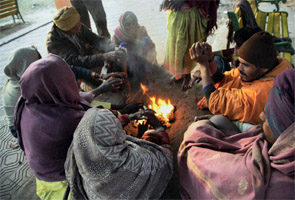
The cold wave in India led to 4 deaths on 26th December 2010: image ndtv.com

This winter’s extremes are all due to Global Warming I hear!!

My incredulity at the arrogance of global warming dogma and its high priests is getting rather strained. But gullibility and greed remain inherent in the human condition.

First white Christmas in Atlanta since 1882, NCDC gets new snow record in their own backyard

Europe hit with coldest December in 100 years

Sweden in ‘coldest December in 100 years’

Coldest December since records began as temperatures plummet to minus 10C  bringing travel chaos across Britain

NSW hit by snow, wind, floods – and locusts

Wintry weather brings snow to Australia in midsummer

Icy highway causes traffic jam in Guangdong

Cold snap drops Beijing’s temperature to 10-year low

(Korea) Lowest temperatures in 30 years

Cold wave kills 4 in north India

North India reels under severe cold wave