Former head of India’s counter-terrorism division expects next Wikileaks release to be about corruption

November 28, 2010

Update!

2030 hrs CET, 28th November,

The Wikileaks release has started and will likely continue through the night. The Guardian, Der Spiegel, The New York Times, El Pais and Le Monde have received the material in advance under embargo and have all started releasing the  US State Department cables.

Wikileaks has been subjected to a cyber-attack today and its site is currently inaccessible.

Link to Guardian ability to download all cables

=======================================

The BBC headline is

US warns Wikileaks’ Assange on possible leak

The US has stepped up its threats of legal action against Wikileaks while at the same time rushing to contact all “friendly” governments to try and defuse some of the expected fallout of such a release. The flurry of US government activity seems almost panicky and constant repetition of the claim that “countless lives could be put at risk” does not carry much credibility. Instead of taking responsibility for whatever might have been done or written in the past – and presumably they had good reason to believe it was the right and proper thing to do at the time – the strategy seems to be one of “shooting the messenger”.  But in the current paradigm of ease of information dissemination and increased covert operations by governments around the world, attacks on the messenger only reduce the credibility of the attacker and are counter-productive.
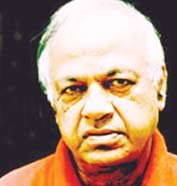
B. Raman: image intellibriefs.blogspot.com

B. Raman is a former Additional Secretary (retired), Cabinet Secretariat of the Government of India. He is the former head of the counter-terrorism division of India’s external intelligence agency Research and Analysis Wing (RAW). He has been applying his mind to the imminent release of confidential US State Department information by Wikileaks and he expects the main subject to be corruption in high places. His thoughts make fascinating reading.

B. Raman writes on his blog:

1. Wikileaks announced through Twitter on November 22,2010, that it will be shortly releasing its third instalment of classified US documents.

2. The first instalment of 77,000 documents related to Afghanistan. The second instalment of 400,000 documents related to Iraq. According to the Twiiter message, its third instalment will contain a much larger number of documents.

3. Wikileaks did not say in its message what will be the subject-matter of the third instalment. However, a Reuters despatch from Washington DC said that classified US diplomatic cables reporting corruption allegations against foreign governments and leaders are expected in the official documents that Wikileaks plans to release. It added: “Three sources familiar with the US State Department cables held by Wikileaks say the corruption allegations in them are major enough to cause serious embarrassment for foreign governments and politicians named in them. They said the release was expected next week, but it could come earlier. The detailed, candid reports by US diplomats also may create foreign policy complications for the administration of US President Barack Obama, the sources said. Among the countries whose politicians feature in the reports are Russia, Afghanistan and former Soviet republics in Central Asia. But other reports also detail potentially embarrassing allegations reported to Washington from US diplomats in other regions, including East Asia and Europe. State Department spokesman Philip J. Crowley said Washington was assessing the implications of what Wikileaks may reveal and was notifying foreign governments about the possible release. “We wish that this would not happen, but we are obviously prepared for the possibility that it will,” he said.

4.The media has reported that the US has warned India and other key governments across the world about the expected release. Crowley has been quoted as saying: “We have reached out to India to warn them about a possible release of documents.” Among other Governments reportedly cautioned are those of Israel, Russia, Turkey, Canada and the UK.

5. After October last year when Wikileaks reportedly developed electronic access to the data bases of the US State Department and the Pentagon and the US military formations in Afghanistan and Iraq, the US authorities were reported to have tightened document security to prevent further leaks. If this tightening has been effective, it is likely that the latest load of documents acquired by Wikileaks (is) related to the period before October last year.

6.While corruption allegations as collected by the US Embassis in these countries could form a part of these documents, it is likely that considering the large number of documents mentioned by Wikileaks, the documents also cover US Embassy reporting on other subjects. Previously, Pakistan’s relations with the US were the focus of Wikileaks. It now seems to be focusing on India’s relations with the US too. It is, therefore, possible that in addition to corruption involving Indian personalities, the documents about India which have reached Wikileaks also relate to India’s policies on Afghanistan, Iraq and Iran.

7. Among the various events relating to Afghanistan, Iraq and Iran in which India figured during this period, four could be sensitive from India’s point of view. Firstly, the pressure on the Atal Behari Vajpayee Government by the administration of George Bush to send a Division of the Indian Army to Iraq. By July,2003, the Vajpayee Government had decided to say no to Washington DC, but there was a lot of voices in Delhi in favour of accepting the US request. Secondly, the papers captured by the US intelligence after the occupation of Iraq from the Iraqi Government Departments showing or corroborating the alleged involvement of a leader or leaders of the Congress (I) in contacts with the Saddam Hussein Government for acquiring preferential quotas for the import of oil from Iraq (the oil for food scandal). Thirdly, the pressure exercised by the Bush Administration on the Manmohan Singh Government for voting against Iran in the International Atomic Energy Agency in Vienna. The Government of India succumbed to this pressure as a quid pro quo for the Indo-US civil nuclear co-operation agreement of July,2005. Fourthly, the analysis and assessment made in the State Department and the Pentagon regarding Pakistani allegations of Indian involvement in Balochistan.

8. Is it possible that Wikileaks might have also got hold of diplomatic cables between the US Embassy in New Delhi and Washinton DC on Indian political leaders, bureaucrats and policy-making? Has it also got hold of messages sent by the US Embassy in New Delhi to Washington DC about the escape of Major Rabinder Singh, the mole of the Central Intelligence Agency in the Research & Analysis Wing, to the US in 2004 and about the detection by the Indian counter-intelligence of a US mole in the sensitive National Security Council Secretariat in 2006? The documents to be released by Wikileaks need to be carefully scrutinised.. ( 28-11-10)

Cancún – Follow the money

November 28, 2010

Cancun Hotels & Resorts : image cancun-travelnet.com

While winter comes early to Europe and China with heavy November snow and temperatures down to minus 37 Celcius in N. Sweden, 15,000 of the faithful travel to the balmy, holiday resort of Cancún (min 21 deg C, max 29 deg C) for the UN / IPCC conference on climate change and to try and blow some life back into the carbon trading scheme.

That Cancún is just about money has become apparent especially since Copenhagen and Nagoya. But it is the unrestrained greed represented by the carbon-trading, money trail that is most telling.

Global Investor Statement on Climate Change has been issued by:

259 investors – both asset owners and asset managers – that collectively represent assets of over US$15 trillion.

Reducing Risks, Seizing Opportunities & Closing the Climate Investment Gap

Investors are interested in the large potential economic opportunities that the transition to a low-carbon economy presents. In particular, investors are calling for:

  • Domestic policy frameworks to catalyze renewable energy, energy efficiency, and other low-carbon infrastructure, so as to provide investors with the certainty needed to invest with confidence in receiving long-term risk-adjusted returns.
  • International agreement on climate financial architecture, delivery of climate funding, reducing deforestation, robust measurement, reporting, and verification, and other areas necessary to set theglobal rules of the road, bolster investor confidence, and allow financing to flow.
  • International finance tools that help mitigate the high levels of risk private investors face inmaking climate-related investments in developing countries, enabling dramatic increases inprivate investment.

But Christopher Booker in The Telegraph gets it right:

These are the bodies (major banks, insurance companies and pension funds) calling most stridently for “government action on climate change”, because they are the ones who hope to make vast sums of money out of it. They are desperate for a treaty of the type they failed to get at Copenhagen – even more so since the collapse of the US cap and trade bill – because they see their chance of turning global warming into the most lucrative fruit machine in history dwindling by the month.

Top of their wish list is “a rapid time-frame” for implementing the UN’s REDD scheme, which would enable them to make hundreds of billions of dollars by selling the CO2 locked up in the world’s tropical rainforests as “carbon offsets”, thus allowing firms from the developed world to continue emitting CO2. Under this scheme, for instance, environmental bodies including the WWF hope to share in the $60 billion which they estimate as the “carbon value” of the Brazilian rainforest.

But nothing better betrays their gloom about any result from Cancún than that they at least want it to give “a clear mandate” for the adoption of “a legally binding agreement” at the UN’s next conference, due in South Africa next year.

(Seen first at http://climaterealists.com/index.php)

Why cannot a concept of tort or “product liability”apply to scientists?

November 28, 2010

Cases of scientific misconduct do not seem to lead to any significant sanctions. Scientists are not subject to the codes of ethics that other professions have (even if they are not always complied with). Lawyers and doctors and engineers can be “disbarred” or otherwise forbidden from practising their professions when found guilty of incompetence or fraud.  Why then can a physicist or a chemist or a biochemist not be subject to the same professional sanctions for misconduct? Learned Institutes of Physics or Chemistry or Mathematics rarely get involved in the ethics breaches of their members. Scientists also need to be held responsible (liable) for their work and in cases of fraudulent science or misconduct, the sanctions applied need to be seen to be in balance with the extent of the offence.

There have been many cases of scientific misconduct where the offender seems to get little more than a slap on the wrist or a mild reprimand. In some cases they leave one institution and merely move to another. Their degrees are rarely revoked and they usually continue “working” or faking work in some other institution.

Retraction Watch addresses the details of the case of the fraud committed by Dr Jatinder Ahluwalia at University College London which led to the retraction of a paper in Nature.

Earlier this month, we posted an item about the retraction of a 2004Nature paper, “The large-conductance Ca2+-activated K+ channel is essential for innate immunity.” (That post was followed up with provocative comments from a researcher not affiliated with the authors, about what should happen to papers whose results can’t be replicated.)

One of the paper’s authors, Jatinder Ahluwalia, hadn’t signed the retraction, and the notice referred to “Supplementary Information” that hadn’t yet been made available. Today, University College London (UCL) posted that supplementary information, which was the report of a panel that investigated charges of research misconduct against Ahluwalia. That report fills in a lot of details about what preceded the retraction.

UCL’s investigation found that Ahluwalia:

  • falsified the results of experiments conducted by him, on UCL premises, thereby committing research fraud, as defined by paragraph 1.1.iv of the UCL Procedure for Investigating and Resolving Allegations of Misconduct in Academic Research. It was alleged that Dr Ahluwalia altered the numbering of files of research results so as to misrepresent the results of experiments conducted by him;
  • further falsified and misrepresented the results of experiments conducted by him, on UCL premises, by the use of materials other than those specified in the reports of the results of those experiments, thereby committing research fraud, as defined by paragraph 1.1.iv of the UCL Procedure for Investigating and Resolving Allegations of Misconduct in Academic Research;
  • interfered with the experiments of others so as to distort their results, thus falsifying the results of research experiments conducted by others employed by UCL on UCL premises, thereby committing research fraud, as defined in paragraph 1.1.iv of the UCL Procedure for Investigating and Resolving Allegations of Misconduct in Academic Research. It was alleged that Dr Ahluwalia deliberately contaminated chemicals used by other researchers in their experiments so as to falsify the results of those experiments, in order to conceal the falsification by him of the results of his own experiments.

Dr Ahluwalia is currently employed as a Senior Lecturer & Programme leader in BSc & MSc Pharmacology at the School of Health and Biosciences, University of East London,  Stratford Campus, Romford Road, London E15 4LZ, United Kingdom. For having committed fraud and engaged in sabotage and even though he is no longer employed by UCL, it does not seem that his behaviour has led to any significant sanctions.

Recently a Harvard University investigation found its high-profile Professor Marc Hauser guilty of 8 counts of misconduct and sent him on a year’s “book leave” and he will resume his activities next year. He does not lose tenure and his degrees are not revoked and the sanction seems relatively mild in relation to his behaviour.

The product that researchers and scientists produce is publications – mainly as papers published in scientific journals and as books. Scientific misconduct (whether plagiarism or faking data or inventing data or cherry picking data) leads occasionally to dismissals (but not always) and generally very little else. It seems to me that the concept of tort or “product liability” should be applicable to the work of scientists and researchers where their work is the result of faking data, fraud or other misconduct since it would be work that “had not been done in good faith”. Tort would apply because the ramifications of their misconduct would extend far beyond their employment contracts with their employers.

Tort  (from Wikipedia) is a wrong:

that involves a breach of a civil duty owed to someone else. It is differentiated from criminal wrongdoing which involves a breach of a duty owed to society, and also does not include breach of contract. Tort cases may comprise such topics as auto accidents, false imprisonment, slander and libel, product liability (such as defectively designed consumer products), and environmental pollution (toxic torts).

Clearly a researcher has a civic duty to his co-workers, his department, his institution, his publishers and to the global community working in the same field. Scientific misconduct is a clear breach of these duties and any such researcher must then be both accountable and liable. Sanctions in such cases must be commensurate and seen to be commensurate with the offence. A year’s sabbatical from Harvard or merely moving across town to be employed at another university does not seem to be in balance with the weight of the misconduct.

The employment contract of a researcher with any institution no doubt has the appropriate language which allows sanctions (including dismissal) for breach of contract. However the liability of a fraudulent researcher – especially with published papers and books – goes beyond a simple breach of contract with his employer and extends to the entire community of workers in the field and even to all readers who may be influenced by the fraudulent work. For commensurate sanctions to be possible it becomes necessary for the concept of tort to be introduced and for  “product liability” to reside with the researcher whereby he can be held accountable by the entire audience his “product” is addressed to.

Authors of scientific papers and books need to be responsible and liable for their products.

A380 resumes flying but Qantas has another engine failure on a B747

November 27, 2010

http://www.news.com.au/travel/news/grounded-jet-mars-return-of-airbus-a380/story-e6frfq80-1225962092705#ixzz16VrjhJ7P

As Qantas staged a major PR exercise to mark the return of its A380 fleet to service, another plane from Sydney, a 747, was grounded last night with engine failure.

The flight, QF1 from Sydney to London, was due to leave at 6.05pm – but passengers were pulled off the plane after a loud noise emanated from the engine while they were taxiing towards the runway. The flight was later cancelled.

Earlier, passengers watched as Qantas CEO Alan Joyce staged a media conference to assure the public the company was now “100 per cent confident” A380 planes were safe. But while passengers on the A380 flight to London got away on time, passengers on board flight QF1 to London via Bangkok were pulled off their flight because of an engine fault.

The passengers disembarked about 7pm and were given meal vouchers, while engineers examined the engine. But at 9pm they were told the flight was cancelled. It was expected to leave at 9am today.A passenger on the plane told The Sunday Telegraph he could hear the engine die. “We were on the tarmac and then the captain said there was a mechanical problem; he said there was an electrical fault and that every time they tried to start the engine up it cut out,” he said. “We sat for 45 minutes and then they took us off the plane.”

The captain of yesterday’s flight, David Evans, who was part of the cockpit crew onboard flight QF32, said as “a precaution” Qantas had decided to use “reduced thrust” on the engines for the initial flights.

Heavy November snowfall in China as well

November 27, 2010

Scandinavia and the UK are not alone in seeing November snowfall and bitterly cold temperatures – the coldest November in 15 years.

China issued a “blue” alert as heavy snowfall battered most of the north east of the country for a second day.

People walk against strong wind in Jilin City, northeast China's Jilin Province, Nov. 27, 2010. Snowfall hit most parts of the province from Friday night. Local meteorologic authority has issued a blue alarm against cold wave Saturday morning. (Xinhua/Zhu Wanchang)

The National Meteorological Center issued the blue alert for snowstorms on a second consecutive day as heavy snowfalls hit southern and eastern Heilongjiang and neighboring Jilin Province in the east on Saturday reports Xinhua. China has a four-color snow warning system: red, orange, yellow and blue. Blue is the least serious level.

But of course this is weather – not climate.


Shooting the messenger to discredit the message

November 27, 2010

From ancient times, envoys, messengers, heralds and town criers have all had to live with the risk of the messages they delivered incensing their audiences sufficiently to cause a backlash against the messenger. “Shooting the messenger” is then the metaphoric expression of this illogical but understandable lashing out against the bearer of bad news. Envoys and heralds were sometimes arrested or beheaded and sent back not just because the message was disliked but to create and transmit a new message by the action itself.

But it is only in modern times with the advent of readily available duplication (micro-film, photocopiers, magnetic tapes, electronic scanning and now cut-and-paste) and of easy dissemination across the globe (fax, computers, email and internet) that the leaking of confidential documents has come into its own. That confidential documents have always existed and will always exist is axiomatic and it is not only governments that have an interest in keeping documents secret. While the act of keeping some information secret may well be to hide some wrongdoing, it is not in itself indicative of illegality. Nevertheless the judgement that something needs to be kept secret is in itself  acknowledgement that the information would cause harm – to someone – if disclosed.

“Whistleblowing” – defined as revealing wrongdoing which is being kept secret – is now taken to be  admirable whether the wrongdoings are by politicians or governments or corporations.  Legislation is in place in many countries ostensibly to “protect” whistleblowers but is usually quite ineffective in preventing reprisals against the whistleblower. Often the legislation is intentionally ineffective and the only purpose is to project an image of “open government” but not actually to permit the disclosure of government secrets. Reprisals have often been crude and violent. In India, whistleblowers have even been killed out of hand. So-called Freedom of Information legislation also strives to maintain this balance of creating an impression of openness but where what is desired to be kept secret can be maintained secret (either by rejection of the request or by introducing delays or by deletion of sensitive information).

The messengers today are often a part of the message. Whistleblowing may have a political agenda. Whistleblowers may be political activists trying to mobilise the forces of public opinion. “Shooting the messenger” in the form of discrediting the messenger or his objectives has now come to be seen as a legitimate method of trying to discredit the message. This was attempted in the Climategate disclosures. Numerous articles were written to label the disclosure the work of a “hacker” (and therefore an illegal act) rather than that of a “leaker” (and therefore the act of an internal whistleblower). In the event the substance of the revelations carried their own weight and even so called “whitewash” enquiries carried out to downplay the substance of the revelations have not been very successful.

Logo used by Wikileaks

Wikileaks: image via Wikipedia

In October this year Wikileaks disclosed the Iraq War Logs. Governments around the world first tried to prevent the release by claiming that people would be in danger of their lives and security would be undermined. Nobody denied that the information was authentic. Once the material had been released, the objectives of the release and the people behind the release were attacked. Governments across the world cooperated to try and discredit the messages. “National Security concerns” became the common theme for the governments in the US and Australia and the UK. The Swedish authorities have accused the Wikileaks founder (Julian Assange) of rape and attempted rape in a crude and rather bizarre incident – but presumably as part of a concerted effort to prevent further revelations. But the information revealed about the number of civilians killed in Iraq and the manner of their killing can no longer be kept secret.

Now, further revelations of confidential US State Department information are expected from Wikileaks. The attacks on the messenger have started. The US government has contacted scores of other governments to try and defuse and discredit the information before it is disclosed. As the BBC writes:

The plan by whistleblower website Wikileaks to release millions more classified US documents will put lives at risk and damage national security, the state department has warned. A spokesman said it would do harm to US international relations if the leaks contained diplomatic cables.

The Pentagon said US military interests could also be damaged. The Wikileaks website said the US authorities were afraid of being held to account.

The state department spokesman, PJ Crowley, said the release of confidential communications was “harmful to our national security. It does put lives at risk. It does put national interests at risk”. Mr Crowley said that diplomatic cables involved discussions with governments and private citizens, and their release could erode trust in the US as a diplomatic partner. “They are going to create tension in relationships between our diplomats and our friends around the world,” he said. “When this confidence is betrayed and ends up on the front pages of newspapers or lead stories on television or radio, it has an impact,” Mr Crowley said.

It is notable that when information is disclosed there is not much effort expended in denying the authenticity of the information. Instead the focus is more and more on attacking the purpose of the disclosure and on attacking the messengers. But even the most horrifying disclosures do not seem to have increased the accountability of governments or their desire to justify their behaviour. “National Security” is the new mantra they can hide behind.

But I cannot help thinking that this tendency of governments, politicians and officials increasingly to attack the messenger is ultimately due to an inability to stand up for one’s own behaviour. It boils down to a lack of courage.


Oxygen – carbon dioxide atmosphere found on Saturn’s moon Rhea

November 27, 2010

From The New Scientist:

On its journey around Saturn and its moons, the Cassini mission – jointly run by NASA and the European Space Agency – has made another breathtaking discovery. The findings, published in Science (DOI: 10.1126/science.1198366), show that Rhea, the second biggest moon of the giant planet, has an atmosphere that is 70 per cent oxygen and 30 per cent carbon dioxide. This adds to the picture of Rhea that Cassini has already provided by imaging its craters anddiscovering its rings.

“This really is the first time that we’ve seen oxygen directly in the atmosphere of another world”, Andrew Coates, from University College London’s Mullard Space Science Laboratory, told The Guardian. Layers containing oxygen had already been detected around the Jovian moons Europa and Ganymede in the 1990s, but only from a distance using NASA’s Hubble Space Telescope.

This time, Cassini’s instrument had the chance to “smell” that oxygen, as it flew through it over Rhea’s north pole, just 97 kilometres above the surface, according to the details given on Space.com. This layer – with an oxygen density probably about 5 trillion times less than on Earth – was “too thin to be remotely detected”, said Ben Teolis of the Southwest Research Institute in San Antonio.

These three views of Saturn's moon Rhea from NASA's Cassini spacecraft are enhanced to show colorful splotches and bands on the icy moon's surface. New observations have shown Rhea has an oxygen-rich atmosphere. Credit: NASA/JPL/SSI/LPI

Cassini Finds an Oxygen–Carbon Dioxide Atmosphere at Saturn’s Icy Moon Rhea B. D. Teolis, G. H. Jones, P. F. Miles, R. L. Tokar, B. A. Magee, J. H. Waite, E. Roussos, D. T. Young, F. J. Crary, A. J. Coates, R. E. Johnson, W.-L. Tseng and R. A. Baragiola

Science DOI: 10.1126/science.1198366, Published Online 25 November 2010

Abstract: The flyby measurements of the Cassini spacecraft at Saturn’s moon Rhea reveal a tenuous oxygen–carbon dioxide atmosphere. The atmosphere appears to be sustained by chemical decomposition of the surface water ice under irradiation from Saturn’s magnetospheric plasma. This in situ detection of an oxidizing atmosphere is consistent with remote observations of other icy bodies such as Jupiter’s moons Europa and Ganymede, and suggestive of a reservoir of radiolytic O2 locked within Rhea’s ice. The presence of CO2suggests radiolysis reactions between surface oxidants and organics, or sputtering and/or outgassing of CO2endogenic to Rhea’s ice. Observations of outflowing positive and negative ions give evidence for pickup ionization as a major atmospheric loss mechanism.

“Root canal” performed successfully on elephant

November 26, 2010

Dentists in India have successfully carried out a “root canal” procedure on a 27 year old elephant which had been suffering from tusk-ache for 5 years.

From AFP:

A three-member team of dentists helped by a veterinary surgeon carried out the two-and-a-half-hour operation on the male pachyderm which developed a cavity in one of its tusks, they said. The operation took place in early November after the owner of the pet elephant brought the animal for an examination of the infection that had damaged the tusk. “We decided to use the traditional root canal process as a remedy,” dentist Sunil Kumar told AFP in state capital Thiruvananthapuram.

The elephant had a six centimetre cavity in its tusk: photo AFP

The Hindu reports:

In a procedure claimed to be the first of its kind in the world, an elephant in Kerala has successfully undergone a conservative dental treatment to repair his cracked tusk. Twenty-seven-year-old Devidasan, the tusker from Thrissur, had been living with a crack on its tusk for the past five years which was causing him discomfort.

The elephant’s owner and Dr. V. Sunil Kumar, Forest Veterinary officer, approached Dr. C. V. Pradeep, Conservative dentist and Endodontist of Kannur, to see if the crack could be treated and beauty of the tusk restored. Dr. Pradeep, former principal of Pariyaram Dental College, and currently professor and head of the Department, PSM Dental College, Thrissur, first extensively studied the structure of the tusk and found that that the elephant tusk and human teeth had similar structure. He chose a method of treatment based on the histology of the tusk. Dr. Pradeep told PTI that the 50 cm long and 4 cm deep crack was filled using micro and macromechanical bonding using light cure composite resin. The resin was bonded to the elephant dentin by using nano-filled bonding agent. The dentin was cleaned, microblasted and etched. Bonding agent was applied layer by layer and light cured two weeks ago.

The animal was not tranquilised during the treatment which took two and half hours and it was fully cooperative throughout the procedure, Dr. Pradeep said.

Lot of water and dirt was accumulating in the tusk and if the crack was not treated, it would lead to the death of the pulp and result in pus formation which could endanger the animal’s life, he said. The elephant could not be taken for temple festivals as the crack on the tusk was not pleasing to the eye. The treatment was a challenge and this was the first time in the world that a ‘conservative approach’ was followed and no part of the tusk was removed, he said.

Finding the equipment to treat the pachyderm was an elephantine task. “We had to modify and customise some of the equipment”, he said adding some of the equipment had to be made specially for the procedure. About 47 tubes of composite resin was used to fill the crack, he said. The cause of the crack in the tusk is unknown. However the owner of the elephant was conscious of the consequences of the widening crack and hence had requested for the treatment. The animal has now recovered and has already started going for temple festivals.

Dr. Pradeep was assisted by Dr. Jayaprasad Kodoth, Prof. of Periodontics, Kanhangad and Dr. George Jacob, of PSM Dental College, Thrissur.


New pictures show the return of Jupiter’s lost stripe

November 26, 2010

In May this year one of Jupiter’s characteristic stripes (the South Equatorial Belt) disappeared. Then  two weeks ago a turbulent plume was observed breaking through the giant planet’s cloudtops in the south equatorial zone heralding the possible re-emergence of the stripe.

Now the latest infrared pictures of Jupiter show the turbulent plume developing into a “trail” suggesting that the SEB is re-emerging from under the ammonia clouds. The BBC reports:

Jupiter's returning stripe highlighted (JPL, University of Oxford, UC Berkeley, Gemini Observatory, University of San Carlos)

Jupiter's returning stripe highlighted (JPL, University of Oxford, UC Berkeley, Gemini Observatory, University of San Carlos)

The South Equatorial Belt had blended into surrounding white clouds but an “outbreak” spotted by an amateur astronomer heralds the stripe’s return. The stripe’s disappearing act is due to clouds shifting altitudes, with white ammonia clouds obscuring clouds below. This performance will give astronomers their first chance to study the weather and chemistry behind the phenomenon.

As part of the show, the Great Red Spot has darkened, but astronomers say it will lighten again as the South Equatorial Belt comes back. The stripe has come and gone several times in recent decades but the mechanism by which it returns remains mysterious. The first signs of the return were spotted by Christopher Go of the Philippines and was confirmed by the Infrared Telescope Facility and Gemini and Keck telescopes in Hawaii.

“At infrared wavelengths, images in reflected sunlight show that the spot is a tremendously energetic ‘outburst,’ a vigorous storm that reaches extreme high altitudes,” said Imke de Pater, professor of astronomy at the University of California, Berkeley. “The storms are surrounded by darker areas, bluish-grey in the visible, indicative of ‘clearings’ in the cloud deck.”

Airbus vs. Boeing: or a tale of the marketing of delays and engine problems

November 26, 2010

For large, complex, expensive, high-technology products (airplanes, turbines, power plants or ships for example) it is usually not worth indulging in too much negative marketing based on a competitor’s technical difficulties. Early technical difficulties and “teething” problems are common and when a competitor has difficulties it usually leads to some feeling of satisfaction but it is tempered by the knowledge that one could easily suffer similar difficulties. So when GE experiences some problem with its gas turbines or Areva has delays in its nuclear plants there will never be an overt, negative marketing campaign by Siemens against GE or by Westinghouse against Areva.

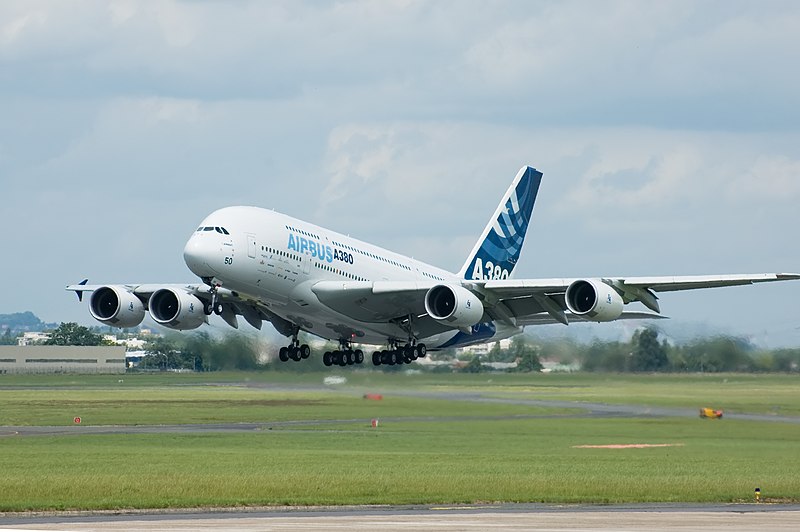
File:Airbus A380.jpg

A380: image wikipedia

And this is the current situation between the Airbus A380 and Boeing’s 787 Dreamliner. The A380 had its share of delays and was over 2 years late in coming into service. Right now the troubles that Rolls Royce are having with their Trent 900 engines is not helping the A380 image. (There are only two engines available for the A380 but it is noteworthy that the General Electric / Pratt & Whitney Alliance which manufacture the GP7200 engine which competes with the Trent 900 are not indulging in any overt negative marketing). The “Rolls Royce effect” for Airbus is currently negative because of the Trent 900 issues but it is indirectly mitigated by the reports of delays in developing the Trent 1000 which is one of the engines for Boeing’s 787.

File:Boeing 787first flight.jpg

B787 First flight: image Wikipedia

As Airbus fights to get airlines to accept the A380 their “best friend” strangely is the delays to the B787 Dreamliner program. The Dreamliner has been further delayed by an electrical system fault which caused a fire on a test flight in early November. For an airline the decision of choosing between Boeing and Airbus has become not one of comparing the advantages each has to offer but instead one of judging the risk exposure that a choice may bring. It becomes a comparison of potential “downsides” and risk mitigation possibilities rather than selecting between potential “upsides”.

For Airbus and Boeing, their sales processes now have to emphasise the risk mitigation available with their products rather than promoting all the advantages their products have to offer. This is unusual for a “sales process” but nothing new in the history of marketing of technologically new products. But it is not so easy for corporations, their salesmen and for sales processes to shift from promoting advantages to the much more difficult task of showing that the risks (whether of delay or of technical difficulties) they pose are less than that of the competitor. Even in terms of financing, the usual offers of financing and leasing packages for the customer must now additionally address the mitigation of financial and consequential exposures in the event that a risk materialises. When a single A380 costs around $320 million, a Boeing 747-400 about $250 million and a Dreamliner has a price tag of $150 -200 million, then downtime and delays have enormous financial consequences for the customer. Marketing strategy for new products in the face of heightened risk perceptions is quite different to the marketing of “tried and tested” products. But this is a fascinating marketing challenge!

The latest reports of delays to the Dreamliner has led to harsh words about Boeing from a potential customer. CityAM reports:

QATAR Airways has threatened to hand extra business to European aircraft giant Airbus after attacking Boeing over problems with its new 787 Dreamliner. Chief executive Akbar Al Baker said the airline was considering increasing its order for five Airbus A380 super-jumbo planes and might order a re-engined version of the A320 single-aisle jetliner. He did not say how many more A380s it might order.

Qatar has expanded its fleet from four to 94 aircraft in 13 years and has orders for 200 more from Airbus and its US rival Boeing worth $40bn, including 30 Dreamliners. Al Baker said Boeing had “failed” in developing its 787 Dreamliner, which is expected to suffer further delays following a fire on a test flight.

Boeing’s development of the carbon-composite 787 is running around three years late and brokers expect a further delay as it addresses the cause of a fire which led to the test flight being grounded two weeks ago.

But I would expect that there is a strong element of price negotiation in Qatar Airways’ statement!