Statistician wins India Science Prize

October 19, 2010

Prime Minister Manmohan Singh on Tuesday inaugurated the 21st general meeting of the Academy of Sciences for the Developing World (TWAS) at the Hyderabad International Convention Centre here.

Dr.  Singh presented the India Science prize, on behalf of the Indian National Science Academy, to  C. Radhakrishna Rao. The prize carried a reward of Rs. 25 lakh (550,000$) in cash and a 200 gram gold medal.


Calyampudi Radhakrishna Rao: image connect.in.com


C R Rao (born September 10, 1920) is an Indian statistician. He is currently Professor Emeritus at Penn State University and Research Professor at the University at Buffalo.  The American Statistical Association has described him as “a living legend whose work has influenced not just statistics, but has had far reaching implications for fields as varied as economics, genetics, anthropology, geology, national planning, demography, biometry, and medicine.” Among his best-known discoveries are the Cramér-Rao bound and the Rao-Blackwell theorem both related to the quality of estimators. Other areas he worked in include multivariate analysis, estimation and differential geometry. His other contributions include the Fisher-Rao Theorem, Rao distance, and orthogonal arrays.

CR Rao uses these lines from Robert Frost’s “Pertinax” to begin his book Statistics and truth: putting chance to work

Let chaos storm!

Let cloud shapes swarm!

I wait for form.


Resource depletion is imaginary

October 19, 2010


Limits of growth

Doomsaying: Image by net_efekt via Flickr


“Humanity’s demands on natural resources are sky-rocketing to 50 per cent more than the earth can sustain”

trumpets the WWF.

Similar headlines have been common-place for the last 40 years. “The Limits to Growth” in 1972 was not the first time such dire predictions were made. They only carried on from where Malthus left off with his  An Essay on the Principle of Population in 1798. And before Malthus there were plenty of alarmists and doom merchants  at least as far back as mankind has lived in complex societies where opportunists could exploit people by fears of catastrophes and impending doom.

Unfortunately, today’s so-called conservationists have descended to the level of doom “merchants”. Either they are propagating fears of humanity running out of food or oil or coal or metals or water or rare earths or they are screaming about the Earth running out of biological species or of polar ice or sustainability.

But I am not convinced.

Actually, mankind destroys nothing. At the elemental level we neither create or destroy anything (except in the use of nuclear energy where some elemental transformation takes place and where some little mass is converted to energy). All the metals we use or the fuels we use are merely transformed from one compound to another and occasionally some molecules are reduced to their elemental form. The Earth as a system loses only heat (and if the global warming maniacs are to be believed we are not even losing that). The mass of the earth changes only by the accretion of meteors and the leakage of atmosphere and this change is of no material significance.

All the elements that were available remain available. The forms of compounds that we currently use and which have been created slowly by slow natural processes may well be used up. But so what? Mankind has always used what is available and when natural rubber was not enough we made synthetic rubber. We usually take what is available and transform it into the form we want. We take metal oxides, reduce them to the elemental metals and then recombine them into the qualities of steel or alloys we need. We take oil and convert it into plastics. We take plant material and make paper. We take other plant material and make oils. We take sand and make glass. We take limestone and make cement or concrete. We are a carbon-based life form. We use carbon in all its forms as diamonds and all organic materials and now as graphene for nano-materials. We take oil and make food. Nearly all the drugs we use are synthesised.

Even if we restrict ourselves to the known form of the resources we use, we cannot forget that 70% of the Earth’s surface is covered by water. We have not even begun to see what can be found there. Even the off-shore oil and gas we extract hardly scratches the (submerged) surface. We are crowding out some particular species but keep finding new ones. The number of mammals (but not necessarily species) in existence is increasing rather than reducing. The diversity of life in the sea is hardly touched.

The overwhelmingly pessimistic view of mankind and its future which drives the current-day conservationists to their creed of “stop everything” goes nowhere. “Stop the World, I wan’t to get off” is not something for me. A strategy for humanity – like any other strategy – cannot be based on “what not to do”.

I suppose it is the difference between an optimist and the doom sayers. I see no energy crisis – only some technological challenges to be met. I see no food crisis – only some tasks to be carried out, and these tasks do not need any technological breakthroughs. The Earth and the Sun will take care of climate as they see fit and our task is to adapt to whatever changes may come and not to waste our time in any futile attempt to try and control it. We could stop using all energy today and the Earth and the Sun will still cause climate change to happen and mankind is not even a bit player in that music.

I remain an optimist and I believe in the human ability to develop technology. As educational standards improve, human population will probably increase till about 2050, then reduce slightly from about 10 billion people and then stabilise at a very slow rate of growth. This development will be dynamically coupled to our rate of technological development which will continue but where we cannot predict the rate of breakthroughs appearing. A breakthrough in transportation methods (and since the invention of the modern internal combustion engine for transport in 1862, this is now overdue) or a breakthrough in food synthesising technology or finding new sources of energy (and I do not mean wind or solar) will have an obvious effect on quality of life and on rate of population growth.

A true environmentalist must be first concerned with the quality of life for humankind. The “environment” devoid of humans is no environment at all. I wish the so-called conservationists (who are not in my opinion true environmentalists) would stop telling me what not to do.

There is no resource crunch. There may come shortages of resources in the form we are used to but I have supreme confidence in our ability to develop the required technologies to keep improving on our quality of life – and to keep evolving.

Now UK joins the nuclear renaissance with 8 plants approved

October 18, 2010

The quiet nuclear renaissance continues with the UK now announcing its plans.

http://www.telegraph.co.uk/earth/energy/8070810/Eight-new-nuclear-power-stations-despite-safety-and-clean-up-concerns.html

Chris Huhne, the UK Energy Secretary, has given the go-ahead for eight new nuclear power stations in Britain despite concerns about safety and the clean-up costs.

The new nuclear power stations will be built near existing sites in in Bradwell in Essex, Hartlepool, Heysham in Lancashire, Hinkley Point in Somerset, Oldbury in South Gloucestershire, Sellafield in Cumbria, Sizewell in Suffolk and Wylfa in Anglesey.

Three sites in Dungeness in Kent and Braystones and Kirksanton in Cumbria were ruled out due to concerns over the impact on wildlife and the Lake District National Park. The new stations will not start generating power until 2018 so the Government also plans to allow existing nuclear stations to extend their life.

Nuclear Engineering International reports that


AREVA EPR


The government also signed a regulatory justification for the AP1000 and EPR reactor designs. Following 2004 regulations, it is required to justify that new reactors are worth the potential radiological risk. Following three consultations have taken place—one on the regulatory review, and one on each design—the government decided not to launch a further public consultation on the matter.

The AP1000 is a Westinghouse designed  1154 MWe PWR nuclear power plant. The EPR reactor is an advanced Pressurized Water Reactor (PWR) offered by AREVA and which is being built in Finland, France and China.


Westinghouse AP1000: Westinghouse


Benoît Mandelbrot RIP

October 17, 2010

Benoît Mandelbrot, the father of fractals, passed away on 14th October at the age of 85. He was suffering from pancreatic cancer.

I used to spend hours generating fractals for no other reason than to see what they looked like.

Born in Poland, on 20th November 1924 he moved to France with his family when he was a child. Mandelbrot spent much of his life living and working in the United States, acquiring dual French and American citizenship.

File:Mandelbrot Set - Periodicites.png

The Mandelbrot Set: Wikipedia


Indian MMRCA deal seems to be going to the US

October 17, 2010

I posted a few days ago about the joint RAF / IAF  exercises and its connection to the Indian need to acquire some 126 combat aircraft.

The $10.4 billion project to acquire 126 medium multi-role combat aircraft (MMRCA) for the Indian Air Force is in the final stages of the selection process. Apart from the Eurofighter, the other five contenders in the hotly-contested race for the lucrative MMRCA project are the F/A-18 `Super Hornet’ and F-16 `Falcon’ (both US), Gripen (Swedish), Rafale (French) and MiG-35 (Russian).


F/A-18E/F Super Hornet  (Neg#: Super Hornet )

F/A-18E/F Super Hornet: Boeing


While all the technical evaluations will no doubt be done by air-force  and MoD personnel, ultimately this is a political decision and the geo-political need to balance the growing Chinese might and to keep Pakistan in check will be paramount. The clear favourites in this game will be the US or the Russian aircraft. Domestically for the US government, an Indian order for either of the American fighters would be worth 27,000 jobs in the US. The commercial delegation accompanying Obama will be looking for a number of orders for nuclear power plant equipment to be finalised.


F-16 Figfhting Falcon: Lockheed-Martin


Considering

  • the timing of President Obama’s visit to India next month,
  • the visit of President Medvedev in December,
  • the political lobbying strength of the US,
  • the current concern in India about Chinese games in Kashmir and Arunachal Pradesh,
  • the technical rather than political lobbying of Europe for the Eurofighter,
  • the absence of any political advantage with the Swedish Gripen,
  • the international weakness of Sarkozy in being able to support the French Rafale

the choice, I think comes down to Boeing’s F/A Super Hornet or Lockheed Martin’s F-16 Falcon. The strength of the MIG-35 lies in its continuity with the MIG’s that the IAF already has and the familiarity of HAL in Bangalore with the MIG. But, I think the US will be seen as much more politically useful in the balance-of-power game and India would not like that the Russian aircraft enjoy a monopoly position. Europe will be fobbed off with the British Hawk trainers.

But the play between the US and Russia is complex:

In return for Washington removing strategic hurdles (withdrawing entities like the Defence Research and Development Organisation from the US Entities List; easing the curbs on US high-tech exports to India), India could open up some of its lucrative markets to American companies.

The big-ticket transactions are the ones involving the defence market. India is expected to sign a deal with Boeing to buy 10 C-17 transport aircraft for about $3.5 billion during the Obama visit.

The Americans are hoping that the Indian government will also opt for what The Financial Times described as the world’s biggest military hardware deal and buy 100 multi-combat aircraft worth $11.8 billion from US defence manufacturers.

Agreement on the latter aircraft will be more complicated since India is also negotiating with the Russians to jointly build a Fifth Generation Fighter Aircraft, which is expected to be the finest of its kind when operational. The Russians will also sell 150 Sukhoi-30 MKI fighters, the best of its kind, to the Indian Air Force.

India expects to conclude the agreement for the FGFA with the Russians when President Dmitri Medvedev visits New Delhi in December, a visit which will probably match the Obama excursion in its strategic significance, if not in its symbolism.

But Obama cannot return from India “empty-handed” and my “guess” would be that the Boeing F-18 Super Hornet will be the winner but that the “price” will include some other advanced US equipment as well. And perhaps the Russians will  supply some 200 Sukhoi-30 MKI but maybe not the MIG 35.

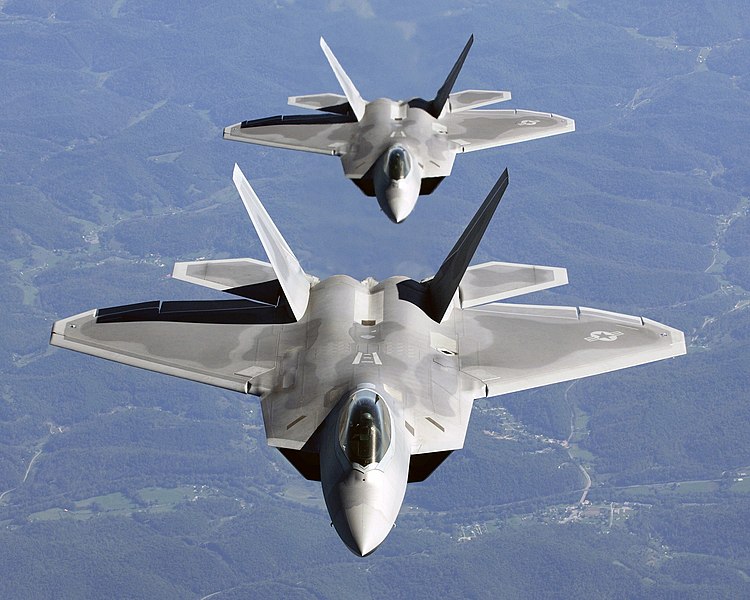
But none of  of these is as advanced as the F-22A Raptor from Lockheed-Martin. But that is not on the table – yet.


File:Two F-22A Raptor in column flight.jpg

Two F-22A Raptor in column flight: Lockheed Martin


Commonwealth Games: The inquest begins

October 17, 2010

The “last minute syndrome” is a unique and peculiar asset in India

The Games were supposed to cost under Rs 2,000 Crores (about 450 Million$).

The actual cost is likely to be around Rs. 30,000 Crores (about 6.7 Billion $).

About 500 Million $ has probably been paid for fictitious work, over-invoiced and overpaid to contractors, skimmed off or pocketed by individuals connected to the Organising Committee headed by Kalmadi. Some individual fortunes have been made and squirrelled away into Swiss and Channel Island and Caribbean bank accounts.

CWG Delhi Closing ceremony: image bharatchronicle.com


The investigations have begun. Some scapegoats will have to be found. Shrill voices are questioning whether it was worth it or not. There is no shortage of suggestions about how all the money could have been better spent.

For example Vir Singhvi writes in the Hindustan Times:

We could have overhauled healthcare in our cities. We could have built thousands of new schools. We could have overhauled the chaotic traffic system. We could have spent that money on recruiting more policemen and giving them the facilities they need. We could have built hundreds of new courts and recruited more judges to reduce the backlog in our judicial system.

But I have a somewhat different take.

None of the predicted or feared catastrophe’s occurred. There were no terrorist attacks. There was no epidemic of dengue fever. The facilities at the Games village largely functioned well.  The logistics were chaotic to begin with but also largely functioned satisfactorily. As the performance of India’s athletes started bringing in the medals at the Games, the crowds which were initially absent started showing up. The opening ceremony was well carried out but the logistics on the opening day were chaotic and stressful for many athletes. But this was transformed by the time of the spectacular closing ceremony in front of a packed house.

In transforming an apparently hopeless situation into a qualified success by means of India’s patented “last minute syndrome” some heroes appeared. Sheila Dikshit the Chief Minister of Delhi and Dr Manmohan Singh, the Prime Minister can I think be credited with the success of the final mobilisation of effort. Politicians who were busy distancing themselves from the Games the week before it started were clamouring to be seen at the closing ceremony. The Delhi Police must take a bow not only for the security aspects but also for the handling of traffic. The organisers (and even the newly activated Committee who were now under the whip) and all the officials and “volunteers” and even the Delhi population pulled out all the stops. Many private contractors with their contract labour carried out a minor miracle on the last few days.

And this brings me to my point. One of the key issues in India is not – in the first instance – the availability of funding. The Indian weakness is in implementation, in using the money available well. Whatever the Games cost, the money was forthcoming when needed. About 10% was probably wasted. But because of the attention and pride (or more accurately the potential loss of face), a fiasco was averted. The “last minute syndrome” was activated. Implementation, and rather effective implementation, took place.

Even if there had been no Games and even if all the money had been poured into health care or traffic improvements or overhaul of the judicial system it would have achieved virtually nothing. Without attention and without visible deadlines to create a potential loss of face and -therefore – without a means of activating the “last minute syndrome” the money would have been frittered away.

It would be much more constructive if, instead of moaning about what could have been, every project being implemented in India could figure out a way of creating the real deadlines which could activate the “last minute syndrome”.

Summer delayed in the Southern Hemisphere?

October 15, 2010

The Northern Hemisphre is anticipating a long cold winter which might even be a little early, but summer is a little late in the Southern Hemisphere.

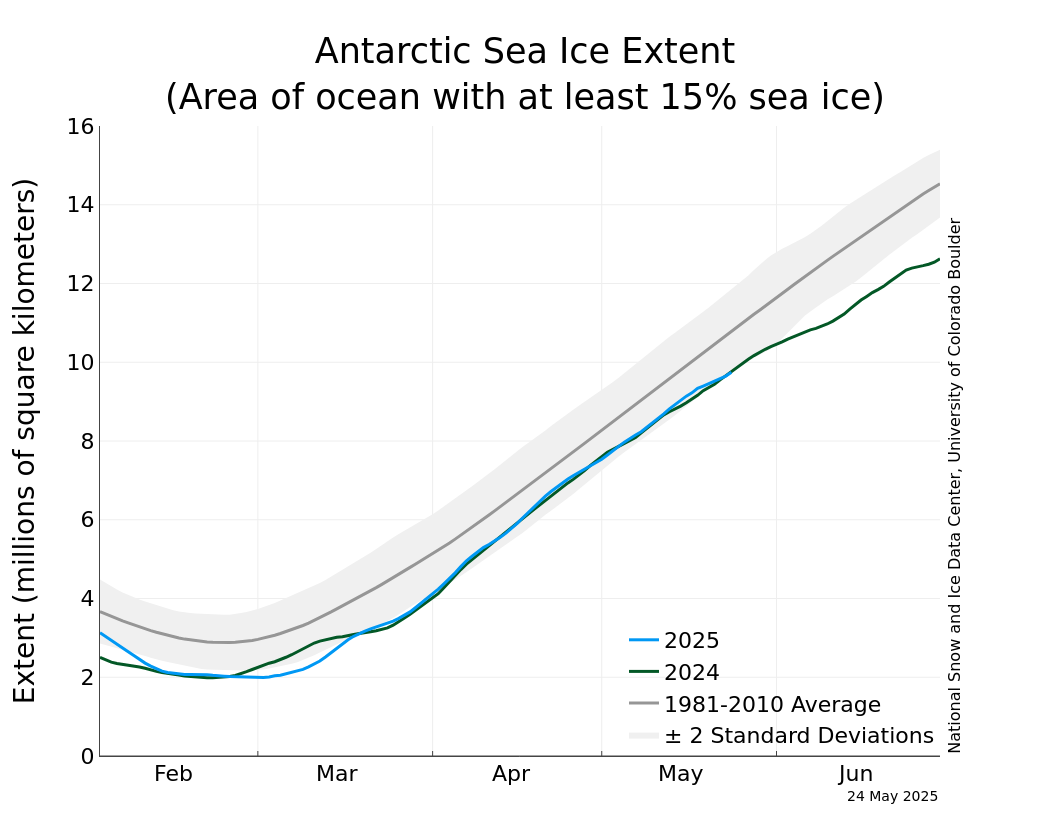
Usually Antacrtic ice starts decreasing around 15th September but this year it seems to be still quite high and delayed by about a month.

http://nsidc.org/data/seaice_index/images/daily_images/S_stddev_timeseries.png

Meanwhile in Australia,

WARM weather may have teased the state into believing summer was on its way, but the wild weather predicted for the weekend could be winter’s last hurrah.

Meteorologists are warning of a wet and windy weekend with widespread rain, potential flash-flooding, and wind gusts of up to 110km/h. Snow is likely to fall on the alps and southern ranges, and even Orange could get a light dusting. The shift is being caused by a broad trough moving over NSW, which is expected to deepen into a low pressure system today, causing heavy rain and strong winds across central NSW.

Earth is starting to crumble due to global warming !

October 15, 2010


The Peteroa (burning bushes) volcano lies at t...

Planchón-Peteroa: Image via Wikipedia


Alarmism is alive and well at ENTRIX and at the New Scientist.

When in doubt it seems you can always get a paper published if you put it down to global warming. The key finding in this new paper seems to be that “large-scale glacial melting, including at the end of the Pleistocene, caused a significant increase in the incidence of large volcanic sector collapse and debris flows on then-active volcanoes”.

The Pleistocene is the period from  2.588 million to 12000 years ago. But since there is no explanation for the above finding there is no hesitation in jumping to the conclusion about the present “With current accelerated rates of glacial melting, glaciated active volcanoes are at an increasing risk of sector collapse, debris flow and landslide. These catastrophic events are Earth’s most damaging erosion phenomenon, causing extensive property damage and loss of life”.

The New Scientist then chips in with the headline “EARTH is starting to crumble under the strain of climate change”.

Daniel Tormey of ENTRIX, an environmental consultancy based in Los Angeles, studied a huge landslide that occurred 11,000 years ago on Planchón-Peteroa. He focused on this glaciated volcano in Chile because its altitude and latitude make it likely to feel the effects of climate change before others.

“Around one-third of the volcanic cone collapsed,” Tormey says. Ten billion cubic metres of rock crashed down the mountain and smothered 370 square kilometres of land, travelling 95 kilometres in total (Global and Planetary Change, DOI: 10.1016/j.gloplacha.2010.08.003). Studies have suggested that intense rain cannot provide the lubrication needed for this to happen, so Tormey concludes that glacier melt must have been to blame. With global temperatures on a steady rise, Tormey is concerned that history will repeat itself on volcanoes all over the world.

He thinks that many volcanoes in temperate zones could be at risk, including in the Ring of Fire – the horseshoe of volcanoes that surrounds the Pacific Ocean . “There are far more human settlements and activities near the slopes of glaciated active volcanoes today than there were 10,000 years ago, so the effects could be catastrophic,” he says.

Maybe I am just a little cynical but I suspect that the author’s environmental consultancy business would be advantaged by getting a few more studies funded and that would be more likely if catastrophes were imminent. A clear case of a conflict of interest I would think.


German twin satellites now orbiting in close formation

October 15, 2010

The German aerospace centre announced today that

On 14 October 2010, the radar satellite TanDEM-X moved into close formation with its ‘twin’, TerraSAR-X. Before this, the two satellites were orbiting 20 kilometres apart – a flight time of almost three seconds. Now, there are only 350 metres separating the pair, which means their antennas are able to acquire radar images of the same area simultaneously.


 Premiere – TerraSAR-X and TanDEM-X now flying in close formation

Premiere – TerraSAR-X and TanDEM-X now flying in close formation


The objective of the mission is to create a high-precision, three-dimensional digital elevation model of Earth’s land surface. The project needs the satellites to operate in parallel for a period of three years. The transition to close formation flight marks the beginning of the final preparatory stage of the TanDEM-X mission. The routine operations phase is due to start in early January next year.

The TerraSAR-X and TanDEM-X orbit trajectories, patented by DLR researchers, are like the strands of a double helix – they circle around one another without crossing. The team of scientists based in DLR Oberpfaffenhofen took just three days to carry out the approach in preparation for the final formation flight. “First, we had to manoeuvre TanDEM-X to reduce its orbital period, so that the satellite could ‘catch up’, reducing the 20 kilometre gap between it and TerraSAR-X. After two further manoeuvres we brought the distance between the pair down to 350 metres,” explains DLR flight dynamics expert Ralph Kahle.

The reduced distance between the satellites means that the two radar systems can be synchronised for the first time. TerraSAR-X and TanDEM-X can also monitor each other’s ‘health’ via an inter-satellite link. “This is completely uncharted territory. Never before have two satellites worked in such close formation over a period of several years,” says Manfred Zink, Project Manager for the TanDEM-X Ground Segment. Eckard Settelmeyer, Director of Earth Observation and Science at Astrium, adds: “This dual mission will give another boost to satellite-supported applications and science.”

Read the whole article:

http://www.dlr.de/en/desktopdefault.aspx/tabid-1/117_read-27086/

Purple coloured wind turbines might save some bats

October 15, 2010

Reported by the BBC:


purple windmill


A study has revealed that a wind turbine’s colour affects how many insects it attracts, shedding more light on why the turbines occasionally kill bats and birds. Scientists say that turbines, most commonly painted white or grey, draw in insects. These then lure bats and birds – as they pursue their prey – into the path of the turbine blades. Support for the idea comes from another study showing that bats are most often killed by turbines at night and in summer, when insects are most abundant.

Bats are more likely to be killed by wind turbines at night and during the summer, researchers have discovered. The reason is thought to be because the turbines attract migrating insects. At some sites, 20 to 40 bats are killed each year per turbine, although rates of one to three bats are more typical.

Now scientists have ascertained that 90% of bat mortality occurs in northern Europe between late July and early October. A similar pattern occurs in North America. Observations from both continents also show that most bats are killed on relatively warm nights with low wind speed.

While the review by scientists does not provide all the answers, it suggests wind turbines are tall enough to attract insects migrating at night, which typically fly at heights of over 60m. Bats and birds are then killed by turbine blades as they feed on this insect bonanza.

PhD student Chloe Long of Loughborough University, UK. and her Loughborough colleagues, Dr James Flint and Dr Paul Lepper, conducted the first empirical study of insect attraction to wind turbines, the results of which are published in the European Journal of Wildlife Research.

In particular, they measured how a turbine’s colour alters how many insects gather around it. Most turbines are painted pure white or light grey, in a bid to make them as visually unobtrusive as possible. But insects, it seems, are unlikely to ignore these muted tones. The researchers measured how many insects were attracted to a range of paint colours, including pure white, light and dark grey, sky blue, red and purple.

Turbines painted pure white and light grey drew the most insects bar just one other colour; yellow. The colour they found least attractive was purple.


EUROPEAN JOURNAL OF WILDLIFE RESEARCH


The researchers also found that the ultraviolet and infrared components of paint colour, which humans cannot see but insects can, also had a significant impact, with higher levels of both attracting more insects.

Insect attraction to wind turbines: does colour play a role? by C. V. Long, J. A. Flint and P. A. Lepper

Mortality of bats at wind turbines links to nocturnal insect migration? by Jens Rydell, Lothar Bach, Marie-Jo Dubourg-Savage, Martin Green, Luísa Rodrigues and Anders Hedenström