Posts Tagged ‘environment’

Is Greenpeace fabricating data?

September 28, 2010

In July this year Greenpeace trumpeted
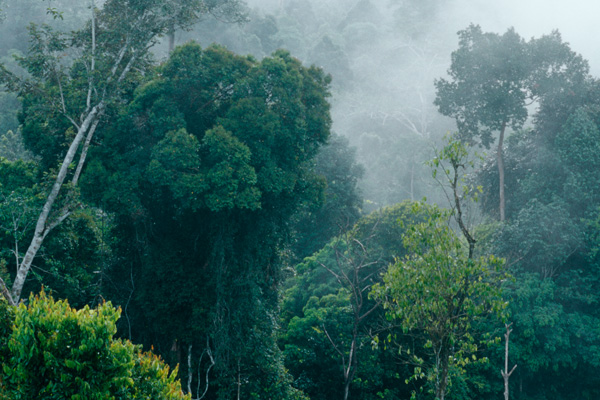
rain forest

“A new investigative report from Greenpeace, ‘How Sinar Mas is Pulping the Planet’, shows how major brands like Walmart, Auchan and Kentucky Fried Chicken (KFC) are fueling climate change and pushing Sumatran tigers and orang-utans towards the brink of extinction. These companies are using or selling paper made from Asia Pulp and Paper (APP), part of the notorious Sinar Mas group that is destroying Indonesia’s rainforests and carbon-rich peatlands.”

The Jakarta Globe reports

Sinar Mas commissioned an independent audit which has now accused Greenpeace of “false and misleading information to attack a company’s credibility”. International Trade Strategies Global (ITS) conducted a peer-review on Greenpeace’s report, “How Sinar Mas is Pulping the Planet.”

“The evidence shows that Greenpeace provided quotes that don’t exist, maps that show concessions that don’t exist, and used source material with high margins of error that was cited as absolute fact,” said Alan Oxley, chief executive office of the Melbourne-based ITS Global on the press release.

Oxley said the Greenpeace report was highly misleading and indefensible. In addition, the audit stated that a map in the Greenpeace report shows four concessions which don’t exist. “Sadly this is not an isolated incident. Greenpeace has exaggerated claims in the past.  When we see reports like this with such obvious factual inaccuracies it makes us call into question the real Greenpeace agenda, risking the greater good to achieve its own political ends.”

However, Bustar Maitar, lead forest campaigner for Greenpeace Indonesia, dismissed ITS’s report, saying it was biased. “If they claim it’s an independent report, it’s a joke because Alan Oxley is speaking as an APP representative,” he said.

New Zealand to use dung beetles to combat global warming!

September 27, 2010
Allot of dung beetles having a feast on horse ...

Dung beetles feasting on horse manure

The Dung Beetle Release Strategy Group (it really does exist) says the introduction of up to 11 foreign species of dung beetle into New Zealand, which hoover up animal dung for food, will lead to a reduction in the greenhouse gas byproduct of dung, nitrous oxide.

Group spokesman Andrew Barber said the introduction of the beetles from Australia, the south of France, Spain and South Africa, would bring several benefits for farmers. Among these were the beetles’ ability to improve pastures and soil profile by tunnelling 30cm to 60cm to bury manure, aerating the soil and enabling better water penetration, reducing the need for fertilisers.

Mr Barber said they would also reduce greenhouse gas emissions from dung. The beetles aid carbon sequestration by storing the carbon contained in the organic matter deep in the soil.

Dung beetle

Image via Wikipedia: Dung beetle

Entomologist Ruud Kleinpaste doubted the introduction of dung beetles would cause an ecological upheaval, despite earlier animal imports such as possums, rabbits and mustelids that have become expensive problems. He said it was unlikely that they would compete with the 17 species of native dung beetles in native forests. But he urged caution. “We have mammals here now and the poo is causing nitrification and causing major pollution on our farms,” he said.

Mr Barber said that if the idea were approved it could take 15 to 20 years for the beetles to become fully established and for their labours to become obvious.

Source: http://www.nzherald.co.nz/the-changing-world/news/article.cfm?c_id=1502962&objectid=10675713

“We don’t want to be poor any more” – but the WWF is not listening

September 26, 2010

Laos says it rejects calls for a dam moratorium on the Mekong River because it wants cheap power to develop its economy despite threats to fish habitats. The Southeast Asian nation moved this week to secure regional approval for the first major hydropower plant on its stretch of the lower Mekong in the face of protests from international conservation groups. The Sayaboury dam is to be built across a part of the Mekong that flows through Laos.

Mekong and its main tributaries.

Wikipedia: Mekong and tributaries

The backers of the 1260 MW Sayaboury Hydro project include the World Bank and the Electricity Generating Authority of Thailand (EGAT), a state utility that signed an agreement in Laos in June to buy power once the new dam’s turbines come to life. The BBC reports that the World Bank would provide loans and guarantees for the $1.2bn project. The decision comes after nearly 10 years of discussions with the Laos government.

Laos is a poor, landlocked country which has few viable industries. But it does have plenty of mountains and rivers, and that is why it is pinning its hopes for the future on hydroelectric power. Nam Theun 2 is the country’s largest dam project, on a tributary of the mighty Mekong. It is designed to produce electricity for export to neighbouring Thailand, earning valuable foreign currency that Laos says it will use to alleviate poverty.

“We don’t want to be poor any more,” said Viraphone Viravong, director general of the country’s energy and mines department. “If we want to grow, we need this dam.”

But needless to say the WWF and The Guardian are opposed:

Giant Catfish _Pangasianodon gigas_ ©Sut.jpg

Giant dog-eating Catfish

Catfish the length of cars and stingrays that weigh more than tigers are threatened by the proposed 800m barrier.

“This dam is the greatest challenge the Mekong River Commission has faced since it was formed. It is the most serious test of its usefulness and relevance,” said Marc Goichot, of the WWF. “It is already very clear this dam would amplify and accelerate the negative impacts of Chinese dams to the Mekong delta. What are the other impacts?”

It has taken 10 years to get this far, but WWF supports a delay in the approval of the mainstream dams, including the Sayabouly hydropower dam in Sayabouly Province, Laos — and let the poverty and misery continue.

New Scientist permits the sun to join the climate club

September 23, 2010

It does seem as if the AGW establishment are preparing the ground for admitting that the sun is perhaps critical for climate.

The New Scientist runs an editorial today grudgingly admitting that “The sun’s activity has a place in climate science”.

FOR many years, any mention of the sun’s influence on climate has been greeted with suspicion.

People who believe human activity has no effect on the climate staked a claim on the sun’s role, declaring it responsible for the long-term warming trend in global temperatures. Climate scientists were often uneasy about discussing it, fearful that any concession would be misunderstood by the public and seen as an admission that climate sceptics are right.

No one has ever denied that the sun has an effect on climate. But the consensus view has always been that variations in the sun’s activity, such as the 11-year sunspot cycle, have insignificant effects. While this remains true, the latest findings show that the sun might be significant on a more regional scale. It seems changes in solar activity can have consequences ranging from higher rainfall in the tropics to extreme weather events in the north.

Mighty sun

But then they go out of their way in this article (see “The sun joins the climate club”) to denigrate the sun.

THE idea that changes in the sun’s activity can influence the climate is making a comeback, after years of scientific vilification, thanks to major advances in our understanding of the atmosphere.

The findings do not suggest – as climate sceptics frequently do – that we can blame the rise of global temperatures since the early 20th century on the sun. “There are extravagant claims for the effects of the sun on global climate,” says Giles Harrison, an atmospheric physicist at the University of Reading, UK. “They are not supported.”

Where solar effects may play a role is in influencing regional weather patterns over the coming decades. Predictions on these scales of time and space are crucial for nations seeking to prepare for the future.

Over the famous 11-year solar cycle, the sun’s brightness varies by just 0.1 per cent. This was seen as too small a change to impinge on the global climate system, so solar effects have generally been left out of climate models. However, the latest research has changed this view, and the next report by the Intergovernmental Panel on Climate Change (IPCC), due in 2013, will include solar effects in its models.

But the sun does not much care (Beware the Icarus Syndrome) I think for the scientific establishment and will continue to do its own thing.

Hannibal – killer swan could use insanity defence?

September 17, 2010

A swan dubbed Hannibal is to have blood tests to find the reason for its aggression after it killed 15 other swans in just a few months in a quiet rural pond.

The killer swan attacks other birds by beating them with his beak, wings and feet. Conservationists have even reported seeing him hold the head of rivals underwater until they drown in the pond in the grounds of the historic Pembroke Castle, West Wales.

Hannibal's most recent victim was being treated yesterday at an animal rescue centre

Now wildlife workers are to carry out a series of tests on “Hannibal” after parents expressed concern over the psychological effect it may have on their children if they witness an attack.

Maria Evans, an animal worker at Pembroke Castle’s pond, said: “I’ve never come across such an aggressive bird. He is an absolutely horrible swan and people really don’t like him.

“I’ve lost count of the times I’ve been to pick up dead and injured swans.”

Ruth Harrison, 25, said: ““I’ve seen Hannibal attacking other swans and it is quite unpleasant. Afterwards, he swims around the pond with his wings up, looking so proud of what he has done. And if his victims are injured on the bank, he just won’t let them back in the water.” Hannibal’s most recent victim was being treated yesterday at an animal rescue centre after being saved by a local vet. The swan, called Trevor, suffered terrible injuries to his feet in the attack by Hannibal. Hannibal carried out its first attack in February. Ms Evans said: “The water in the pond is very brackish, salty and not particularly clean, and pollution and lack of nutrients can both be responsible for nasty behaviour in swans.

He may be a serial killer and he may be single-wingedly threatening biodiversity but lack of nutrients and the consequent physiological and psychological stresses might support an insanity defence.

Oh my ! Canada Goose will need a visa for Europe

September 17, 2010
Canada Goose (Branta canadensis)

Canada Goose (Branta canadensis)

Biodiversity be hanged ! Alien wildlife must be banned from Europe.

Urgent call on EU to stop billion-euro ‘alien invasion’

http://www.bbc.co.uk/news/science-environment-11286432

The Canada Goose (Branta canadensis) was the worst culprit, having the biggest impact on both the environment and economy.

Leading experts on invasive species are demanding Europe-wide legislation be put in place by next year to tackle the threat to native wildlife. The researchers want urgent action from the EU to protect Europe’s indigenous species from these “alien invaders”. The scientists are meeting at the Neobiota conference in Copenhagen. They are demanding Europe-wide legislation to be in place by next year to ensure the threat doesn’t worsen. Invasive species are defined as those that are introduced accidentally or deliberately into a place where they are not normally found.

Piero Genovesi is chair of the Invasive Species Specialist Group (ISSG), a global network of experts on invasive species. He told BBC News that the figure of 12 billion Euros represents a significant underestimate of the impact of alien species. “We’re asking the EU to rapidly develop and approve a policy on invasive species, fulfilling the formal commitment agreed by the council of European ministers in June 2009,” Mr Genovesi told BBC News. “This is urgent, we would like this to be in place by next year.”

A Ruddy Duck drake

The Ruddy Duck is just one of more than 1,300 alien species living in Europe which threaten biodiversity.

Scientists gathered at the conference are calling for urgent action by the European Union to implement laws similar to those that already exist in countries like New Zealand and Australia.

Wolfgang Nentwig, from the Institute of Ecology and Evolution in Switzerland has just published one of the first detailed studies of the impact of alien birds in Europe. The Canada Goose (Branta canadensis) was the worst culprit, having the biggest impact on both the environment and economy.

There is something somewhat paradoxical in banning the adventurous and entrepreneurial wild life to protect the diversity of those that are failing !

Update!!

Dr Guy Consolmango, curator of the Pope's meteorite collection

Dr Guy Consolmango

The Catholic church is more open minded than EU scientists. Pope Benedict XVI’s astronomer has said that the Catholic Church welcomes aliens. Highly evolved extra terrestrial lifeforms may be living in space and would be welcomed into the church – “no matter how many tentacles”, the Pope’s astronomer has said.

Doomsday postponed!

September 17, 2010
Ozone Hole

Ozone hole - Wikipedia

There is hope. Doomsday is being postponed

But no doubt some new catastrophic scenarios will be found (invented).

    Yvo de Boer: “Emissions targets and timetables are irrelevant”

    September 15, 2010

    I am an optimist and maybe I am over-reacting but I see clear signals that the “establishment” is beginning to back away from the hype and hysteria surrounding Global Warming and carbon dioxide. The reduction of temperatures in the last decade while carbon dioxide concentration has increased but where the increase is less than half of that which should have been caused by man-made emissions is beginning to bring common sense back into play.

    Yesterday it was Caroline Spelman the new UK Environment Secretary. Today Yvo de Boer the former head of the UN climate negotiations, has acknowledged that the long debate over targets and timetables for the reduction of carbon dioxide emissions is irrelevant. Asked by Bloomberg about emissions reductions targets in the context of the upcoming climate negotiations in Cancun, de Boer replied:

    “Discussions about targets have become largely irrelevant in the context of the Copenhagen outcome. I don’t think that we’re going to see a dramatic increase in the level of ambition.”

    image: treehugger.com

    The failure of both the UN climate negotiations and domestic cap-and-trade policies has opened up new opportunities for progress on our long-stalled climate and energy goals. That progress will be driven primarily by direct public investment in energy technology, not by carbon markets, and will focus explicitly on making clean energy cheap through innovation.

    Even though I don’t believe that carbon dioxide has any significant impact on Climate change I can only agree that innovation and technology development – rather than carbon trading scams or futile subsidies for renewables (which can never be more than intermittent) is the way to go.

    A whiff of common sense

    September 14, 2010

    Perhaps a return to some common sense instead of the religious fervour of the global warming terrorists.

    • Climate change is inevitable and warming and cooling will continue till the earth dies a “heat death” in about 4 to 5 billion years

    • The little (relative to the distance from the centre of the earth to the sun) turbulent layer of crust and atmosphere within which we live is a “chaotic” system dominated by the sun’s radiation and with the oceans as the primary vehicle for heat transport in this layer. The next largest “heat transporter” is the volcanic activity around the world and its transient effects. The atmosphere comes next and effects of its composition are dominated first by clouds and only then by the trace gases, sub-micron particulates and aerosols such as carbon dioxide and soot.
    • Climate science (which is a hotchpotch of disciplines and still a long way from being a science) can only  speculate as to the causes of and directions of climate change – from coming ice ages in the 1970’s to global warming and the melting of the ice caps in the 1990’s and to the prospects of a new little ice-age now.
    • Resorting to alarmism and the nonsensical “precautionary principle” in an attempt to control climate while still not understanding the causes of change is more than futile – it is plain stupid.

    The new UK  Environment Secretary, Caroline Spelman seems to have changed tack – ever so slightly but still significantly – to focusing on adaptation rather than on trying to control or brake climate changes.

    Perhaps a whiff of common sense returning. And high time for that.

    The Telegraph reports that she will express this shift in her first speech on climate change. For the past few years Government policy has concentrated on trying to make people turn off lights and grow their own vegetables in an effort to bring down carbon emissions. But as global greenhouse gases continue to increase, with the growth of developing countries like China and India, and the public purse tightens, the focus will increasingly be on adapting to climate change. Temperatures are expected to rise further because of greenhouse gases that are already “locked in” but will take decades to warm the atmosphere.

    http://i.telegraph.co.uk/telegraph/multimedia/archive/01408/carolinespelmanabb_1408348c.jpg

    Climate change is inevitable, says Caroline Spelman

    Termites predict climate change!

    September 13, 2010
    Termietenheuvel

    Image via Wikipedia

    USA Today reports that Termites help predict impact of climate change.

    They rely on instinct rather than mathematical models but they surely couldn’t do worse than Michael Mann & The Hockey Stick Gang

    Termites are careful builders that locate their mounds in areas with the right balance of moisture and drainage. This intuitive understanding of geology and hydrology can help explain how a local ecosystem might evolve, according to the study by the Carnegie Institution’s Department of Global Ecology.

    “By understanding the patterns of the vegetation and termite mounds over different moisture zones, we can project how the landscape might change with climate change,” explains co-author Greg Asner.

    http://i.usatoday.net/communitymanager/_photos/green-house/2010/09/10/termitex-wide-community.jpg

    http://www.nature.com/ncomms/journal/v1/n6/full/ncomms1066.html

    Regional insight into savanna hydrogeomorphology from termite mounds

    by Shaun R. Levick, Gregory P. Asner, Oliver A. Chadwick, Lesego M. Khomo, Kevin H. Rogers, Anthony S. Hartshorn, Ty Kennedy-Bowdoin & David E. Knapp