Posts Tagged ‘global cooling’

Back again

July 19, 2010
  1. Watched the World Cup final at a bar in Bilbao. Spain were worthy winners but watch out for Germany in the next 2 Cups. Thank goodness it did not go to penalties. The Dutch approach was a little disturbing. The celebrations in Bilbao were not as exuberant as shown on TV in Madrid. Not too many Spanish flags to be seen.
  2. Paul (Pablo) the psychic octopus can retire with flying colours. He should be granted free Spanish mussels for life. A psychic elephant (named Bua) has been discovered in Sweden!
  3. Southern hemisphere suffering from a cold wave. Even after the record winter in the Northern Hemisphere, alarmists still persist in believing that 2010 will be the hottest year ever!!! But the “homogenisation” of data to show this is less than convincing.
  4. La Nina conditions are establishing themselves and cool temperature for the next few years are likely. However, also coming is major drop of .5 to .7C in the global temps which will take us below normal for a time. In addition, the reason for the drop will easily be linked with the cooling of the Pacific, which will remain in its cool stage for the next 30 years. Once the Atlantic, still warm, goes into its cool stage in 10-15 years, global temps will fall even further, back to where they were in the 1970s. Some of the warming alarmists of today were alarmist about a coming ice age in 1976.
  5. The sun is remarkably quiet and undershooting even the low predictions for Solar Cycle 24 for flux and sunspot numbers. Perhaps SC24 will even undershoot SC5. Landscheidt minimum probability is increasing.

Volcano Katla on Iceland getting ready to erupt?

July 10, 2010

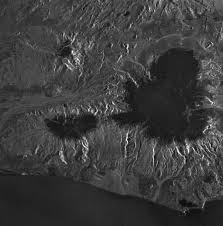
For the last 1000 years eruptions of Eyjafjallajökull on Iceland have always triggered subsequent Katla eruptions. After the ash clouds in the spring caused by the eruptions under Eyjafjallajökul glacier, the region under Katla is rumbling.

There have been 14 earthquakes under the Mýrdalsjökull glacier in the last 48 hours. reported by the Iceland Meteorological Office.

Katla Volcano usually erupts every century, says Iceland’s President Olafur Grimsson. and the last eruption was in 1918. “The time for Katla to erupt is coming close.”

“I don’t say if, but I say when Katla will erupt,” Grimsson says. “We have been waiting for that eruption for several years.”

“It can create, for a long period, extraordinary damage to modern advanced society.”

Map of earthquake epicentres

Significant ash clouds from a Katla eruption could compound the global cooling which has already started. Perhaps we shall soon have another year without a summer!!
Silly Season

July 9, 2010

It’s summer even here in Sweden and the silly stories are coming thick and fast:

  1. Speculation and fantasy become real when coated with science. Carbon emissions threaten fish populations
  2. Inquiries set up by an establishment do tend to support the establishment that feeds them. The Pearce Inquiry into the Climategate scandal found evidence that emails had been deleted to avoid revealing them but concluded that the science was sound!
  3. There is a movement to convert Paul the Octopus to calamari since all his predictions are correct and he could remove all the suspense before Sunday’s World Cup final. Perhaps his keepers should shift Paul’s predictions to something less dangerous – Global warming or the stock market come to mind.
  4. The Met Office has signed a new 5 year deal with the BBC although they might still have to correct their forecasts for a hot summer to account for floods. It is however understood to involve a “significant” reduction in cost, according to BBC sources.
  5. Rajendra Pachauri, head of the United Nations Intergovernmental Panel on Climate Change (IPCC), has defended his science body’s work, saying any errors in its reports were minor.
  6. Increase of Antarctic sea ice taken to be proof of the effect of greenhouse gases.

No comment needed.

High probability of La Nina: Good news for the Indian monsoon

June 26, 2010

Good news for the Indian monsoon

The Indian Meteorological Department has increased their rainfall forecast from being 98% of normal to being 102% of normal because of the La Nina conditions developing from the cooling of  the Central Pacific. The monsoon is expected to be “on time” and Northern India will get some relief from the sweltering temperatures they have been suffering.

Development of La Nina will also lead to global temperatures continuing to show the decline which has been apparent for the last decade.

The monsoon is formally defined to last for the 4 months of June to September every year and the onset and progress of the northern front of the monsoon is closely watched and can have a major impact. Even though the Indian economy is not as vulnerable to bad monsoons as it used to be, the importance of the monsoon to agriculture (and therefore also to related industries such as fertilisers, pesticides,pumps and even tractors) means that the difference between a “good” monsoon and a “bad” monsoon can be as much as 2% of annual GDP.

‘‘The latest forecasts from a majority of the dynamical and statistical models indicate continued and rapid cooling of the equatorial Pacific to below La Nina threshholds. There is a very high probablity (about 60%) for the La Nina conditions to develop during the monsoon season, which favours stronger than normal monsoon,’’ said IMD Director General Ajit Tyagi.

(photo credit: worldslatestnews.com/…/)

La Nina is also expected to bring more rain to Australia.

While La Nina will be welcomed in India and may disrupt the Ashes Tests in Australia it is not good news for the soya bean crops in Brazil.

Solar Cycle 24: Landscheidt minimum looking more likely

June 14, 2010

soho

The sunspot numbers and the solar flux for May are not keeping up even with the reduced expectations for this cycle.

Are we in the Landscheidt minimum or is it still to come?

Even though many of the alarmists of Global Warming reject the notion of the Solar Cycle having much influence on climate, there is little doubt that the period of the Maunder Minmum coincided with the Little Ice Age. It has been unfortunate that the so-called mathematical models on which Global Warming conclusions are based have descended to the level of glorified arithmetic even though there is little understanding of what the arithmetic represents.

It is time for science to return into the debate and for incomplete mathematical models relying on “fudge factors” to validate the model against temperature proxies (which are themselves highly unlikely to be solely dependant upon temperature) to be treated with the utmost scepticism. In fact it is time for scepticism to return to science.

Predictions of a global cooling over the next 20 or 30 years seem to be gaining substance.

Solar cycle 24

April 16, 2010

Spring has come to Sweden but observing the slowness with which ice melts on cloudy days, even with temperatures well above zero is just a reminder that surface air temperatures are much less effective in transferring heat to oceans than direct solar radiation.

There are fascinating indications that the current solar cycle (24) is very similar to solar cycle no.5 which started in January 1798. The inference is that the current minimum could resemble the Dalton minimum. The Landscheidt minimum it seems.  http://www.landscheidt.info/

Does this tie in to the North Atlantic Oscillation which could have caused climate warming for the 30 years prior to 1998 and is now going to lead to 30 years of global cooling?

http://wattsupwiththat.com/2010/01/11/ipcc-scientist-global-cooling-headed-our-way-for-the-next-30-years/