Archive for the ‘China’ Category

Yellow River freezes early

December 29, 2010

China’s Yellow River has frozen up to 677 kilometers in Inner Mongolia so far. The freezing is more typical of mid-to-late January. Preventive work has been organised for possible ice damage.

http://news.xinhuanet.com/english2010/photo/2010-12/29/c_13669452.htm

Dec. 29, 2010 Frozen Yellow River at Sanshenggong Water Project. (Xinhua/Li Yunping)

Recent strong cold air made Yellow River freeze up quickly in Shandong as the flow decreased in lower Yellow River.

December 29th 2010. Floating ice on Yellow River in Jinan, capital of east China's Shandong Province. (Xinhua/Guo Xulei)

China and the use of rare earth elements trade as a tool for diplomacy

December 28, 2010

Currently China produces about 97% of the global demand for “rare earth elements” used industrially but China has only about 36% of the world’s resources. In the last few months the Chinese have created a “crisis” both by throttling exports and by sharp price increases which have alarmed the auto and electronics industry. Japanese industry has been particularly disturbed. But it would seem that China had very clear diplomatic goals for their trade actions.

The 17  “rare earth elements” are not rare at all.

Rare Earth Elements: graphic ggg.gl


From Wikipedia: http://en.wikipedia.org/wiki/Rare_earth_element

Despite their name, rare earth elements (with the exception of the highly unstable promethium) are relatively plentiful in the Earth’s crust, with cerium being the 25th most abundant element at 68 parts per million (similar to copper). However, because of their geochemical properties, rare earth elements are not often found in concentrated and economically exploitable forms. Instead, they are usually found in rare earth minerals. It was the very scarcity of these minerals (previously called “earths”) that led to the term “rare earth”. The first such mineral discovered was gadolinite, acompound of cerium, yttrium, iron, silicon and other elements. This mineral was extracted from a mine in the village of Ytterby,  Sweden; many of the rare earth elements bear names derived from this location.

A table listing the seventeen rare earth elements, their atomic number and symbol, the etymology of their names, and their main usages is provided here. Some of the rare earths are named for the scientists who discovered or elucidated their elemental properties, and for their geographical discovery.

Z Symbol Name Etymology Selected Usages
21 Sc Scandium from Latin Scandia (Scandinavia), where the first rare earth ore was discovered. Light Aluminium-scandium alloy for aerospace components, additive in Mercury-vapor lamps.
39 Y Yttrium for the village of Ytterby, Sweden, where the first rare earth ore was discovered. Yttrium-aluminum garnet (YAG) laser, YBCO high-temperature superconductors, yttrium iron garnet (YIG) microwave filters.
57 La Lanthanum from the Greek “lanthanein”, meaningto be hidden. High refractive index glass, flint, hydrogen storage, battery-electrodes, camera lenses, fluid catalytic cracking catalyst for oil refineries
58 Ce Cerium for the dwarf planet Ceres. Chemical oxidizing agent, polishing powder, yellow colors in glass and ceramics, catalyst for self-cleaning ovens, fluid catalytic cracking catalyst for oil refineries
59 Pr Praseodymium from the Greek “prasios”, meaningleek-green, and “didymos”, meaningtwin. Rare-earth magnets, lasers, core material for carbon arc lighting, colourant in glasses andenamels, additive in Didymium glass used in welding goggles, ferrocerium firesteel (flint) products.
60 Nd Neodymium from the Greek “neos”, meaning new, and “didymos”, meaning twin. Rare-earth magnets, lasers, violet colors in glass and ceramics, ceramic capacitors
61 Pm Promethium for the Titan Prometheus, who brought fire to mortals. Nuclear batteries
62 Sm Samarium for Vasili Samarsky-Bykhovets, who discovered the rare earth oresamarskite. Rare-earth magnets, lasers, neutron capture, masers
63 Eu Europium for the continent of Europe. Red and blue phosphors, lasers, mercury-vapor lamps
64 Gd Gadolinium for Johan Gadolin (1760–1852), to honor his investigation of rare earths. Rare-earth magnets, high refractive index glass or garnets, lasers, x-ray tubes, computer memories, neutron capture
65 Tb Terbium for the village of Ytterby, Sweden. Green phosphors, lasers, fluorescent lamps
66 Dy Dysprosium from the Greek “dysprositos”, meaning hard to get. Rare-earth magnets, lasers
67 Ho Holmium for Stockholm (in Latin, “Holmia”), native city of one of its discoverers. Lasers
68 Er Erbium for the village of Ytterby, Sweden. Lasers, vanadium steel
69 Tm Thulium for the mythological northern land ofThule. Portable X-ray machines
70 Yb Ytterbium for the village of Ytterby, Sweden. Infrared lasers, chemical reducing agent
71 Lu Lutetium for Lutetia, the city which later became Paris. PET Scan detectors, high refractive index glass

As long as China’s own industry was not sufficiently developed to use these materials there was no crisis and production from resources in many other countries (rare earth elements are quite plentiful around the globe and not “rare” at all) were discontinued in the face of Chinese competition. The current crisis comes about because Chinese industry is now sufficiently advanced to make use of these elements and its industrial volume is large enough to absorb a large part of the production. This allowed China to use of reduction of exports and increase of prices to send strong diplomatic signals. Firstly to counter the US pressure to revalue the Yuan and second to warn Japan regarding their territorial dispute.

But this “crisis” can only be short-lived. The price increase has already led to production of rare earth elements being restarted in the US and many other countries are now planning to start production (Sweden, India, Vietnam and countries in Central Asia for example). China is no doubt well aware that their manufactured “rare earth elements” crisis will only accelerate the production of these elements from alternate sources. But what it shows is that China has the economic muscle and the willingness to now use “trade wars” as a weapon in diplomacy. But what is also a new development is the concerted response from many countries in acting together to find alternate sources and counter the Chinese might.

That Japan feels particularly vulnerable is to be expected since it does not have its own resources and is a major user. The Asahi Shimbun writes:

One reason for China’s dominance in production is the cheap cost of labor. But the country also has an advantage because deposits there can be extracted through relatively rough methods. In southern China, the weathering of a particular type of granite containing large amounts of rare earths has progressed to the right degree. Unwanted substances have been washed away in the rain, leaving soil with high concentrations of rare earth metals exposed on the surface.

“Erosion proceeds quickly in places that are warm and have a high rainfall, but if there is too much rain, erosion proceeds too quickly,” said Mitsuya Hirokawa of Japan Oil, Gas and Metals National Corp. “The necessary conditions are the existence of granite that contain lots of rare earths and the right amount of rainfall.” Southern China fulfills these conditions.

Japan has the right type of granite, but it has not eroded at the proper pace. But environmental concerns are arising from the cheaper method of extraction in China. In normal mines, rare earths are extracted by chemically processing ore that has already been removed from the ground. But in the method used in southern China, the mine itself becomes a processing factory. Acidic liquid is poured on the ground, and the dissolved rare earths are recovered from the liquid that oozes out. If the toxic liquid leaks into rivers, it could have serious consequences for the environment. “There are paddy fields in the vicinity, and there are concerns about the impact on human health,” said a researcher who observed the procedure in southern China.

This is the context under which China cites environmental concerns as the reason for restricting exports of rare earth metals. But this cheaper method of extraction is one reason why production is concentrated in China. Many mines in the United States and elsewhere could not afford to continue operating and were closed down.

Apparently, similar “convenient” deposits exist in Vietnam. Studies are under way, but production there has not yet started.

The Wall Street Journal analyses the Chinese use of trade flows as a tool of diplomacy:

Beijing’s decision earlier this year to stop shipments of rare earth minerals to Japan apparently as part of a territorial dispute raised a lot of concerns about the strategic implications of China’s growing economic strength. And well it should. Up to now, Beijing has worked hard to separate economics from politics on the world stage as part of a strategy to minimize global unease with its rise. That it is now willing to use an economic lever in a political matter suggests that approach is changing in ways that could cause trouble for the rest of the world and for China itself……..

……….Before now, trading partners were willing to take the temporary hit to trade, since they knew the episode would quickly blow over. This time, though, all major trading partners are seriously contemplating alternatives to Chinese markets in rare earth supplies. Japan, naturally, has been most active in looking for alternative sources, signing agreements with Vietnam and Australia to develop new mines or renewing production in existing mines.

Heavy November snowfall in China as well

November 27, 2010

Scandinavia and the UK are not alone in seeing November snowfall and bitterly cold temperatures – the coldest November in 15 years.

China issued a “blue” alert as heavy snowfall battered most of the north east of the country for a second day.

People walk against strong wind in Jilin City, northeast China's Jilin Province, Nov. 27, 2010. Snowfall hit most parts of the province from Friday night. Local meteorologic authority has issued a blue alarm against cold wave Saturday morning. (Xinhua/Zhu Wanchang)

The National Meteorological Center issued the blue alert for snowstorms on a second consecutive day as heavy snowfalls hit southern and eastern Heilongjiang and neighboring Jilin Province in the east on Saturday reports Xinhua. China has a four-color snow warning system: red, orange, yellow and blue. Blue is the least serious level.

But of course this is weather – not climate.


Duke Danfu’s 3000 year old fruit cellar found

November 21, 2010

Chinese archeologists have found an ancient fruit cellar containing well-preserved apricot and melon seeds from more than 3,000 years ago in today’s Shaanxi Province reports Xinhua.

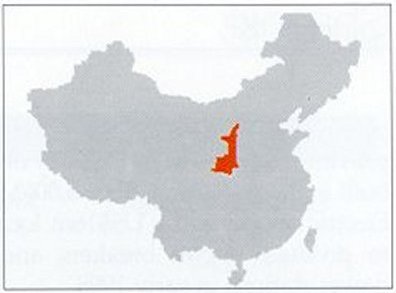
Shaanxi Province

Xian, the capitol of Shaanxi Province is better known for its tombs and terra-cotta soldiers. Xian was also the starting point of the Silk Road and home of the Banpo people, a Neolithic culture that lived in the area 8,000 years ago.

Situated at the south foot Qishan Mountain in the west of Shaanxi Province, Zhouyuan was the home of Duke Danfu, an early leader of the Zhou clan. It was the centre for the rise of the Western Zhou.

Covered ritual wine vessel (gong) 1050-900 BCE...

Western Zhou dynasty bronze c. 1000 BC: Image by mharrsch via Flickr

Nearly 800 pieces of bronzeware of the Western Zhou Dynasty, in varied sizes, have been excavated form the Zhouyuan Site, together with large palace foundations and inscribed oracle bones.

From Xinhua

The cellar was a rectangular pit about 105 cm long, 80 cm wide and 205 cm deep, said Dr. Sun Zhouyong, a researcher with the Shaanxi Provincial Institute of Archeology. Sun and his colleagues found the pit in 2002, about 70 cm underground the Zhouyuan site, ruins of Western Zhou dynasty (1046-771 BC) 100 km from Xi’an. After eight years of research, they concluded it was a cellar used to preserve fruits for aristocrats.

In each corner of the pit, Sun and his colleagues found a little round hole. “We assume the cellar had something like a shade that was fixed on the four holes but had decayed over the years.” Inside the cellar the researcher could see, even with naked eye, huge piles of nuts and seeds. “We sorted them out with care, and found about 500 apricot nuts — 108 of which were complete with carbonized pulp, at least 150 melon seeds and 10 plum seeds,” said Sun. They also found millet and grass seeds.

“Most of the seeds were intact and very few were carbonized,” said Sun. “It was so amazing that scientists who conducted lab work suspected they were actually put away by rodents in more recent times.” Sun and his colleagues sent three apricot nuts to Beta Analytic in Florida, the United states, last year for carbon 14 test to determine their age. “The test results indicated they were about 3,000 years old, dating back to a period between 1380 B.C. and 1120 B.C.,” said Sun. “Seemingly the fruits had been stored in an acidic and dry environment, so dehydration was extremely slow and the nuts were not carbonized even after so many centuries.”

Zhouyuan site, where the cellar was unearthed, was believed to be a dwelling place for Duke Danfu, an early leader of the Zhou clan. It was known as the cradle of the Western Zhou Dynasty, one of the earliest periods of China’s written history. “Presumably, the aristocrats had stored fruits in their family cellar,” said Sun. The cellar, with roughly 1.7 cubic meters of storage, could store up to 100 kilograms of fruits, he said.

The Book of Rites, a Chinese history book compiled in the Western Han Dynasty (202 BC-9), put melons, apricots, plums and peaches among the 31 categories of food favored by aristocrats of the time. It said people in the Zhou Dynasty had also learned to grow fruit trees in orchards. A poem in the “Book of Songs”, a collection of poetry from the Western Zhou Dynasty (11th century -771 BC) to the Spring and Autumn Period (770 – 475 BC), says food kept in “ling yin” — meaning cool places — will stay fresh for three days in the summer.

Before the fruit cellar was reported, archeologists in Shaanxi Province found a primitive “icebox” that dated back at least 2,000 years ago in the ruins of a temporary imperial residence of the Qin Dynasty (221 BC – 207 BC). The “icebox”, in the shape of a shaft 1.1 meters in diameter and 1.6 meters tall, was unearthed about 3 meters underground in the residence.

Former head of Chinese Nuclear corporation sentenced to life for corruption

November 19, 2010

Kang Rixin: photo china-defense-mashup.com

In August 2009 China National Nuclear Corporation’s head Kang Rixin (born 1953), was suspended and put under investigation for misusing $260 million that was earmarked for the construction of three nuclear plants and allegedly used for playing the stock market sustaining heavy losses. Kang Rixin was also accused of accepting bribes of several million dollars of corrupt payments from Areva, a leading French nuclear engineering company.

Sun Qin was appointed President to replace the suspended Kang Rixin.

Today Xinhua reports

that a Chinese court sentenced Kang Rixin, a former head of Chinese nuclear giant China National Nuclear Corporation (CNNC), to life imprisonment Friday for corruption and accepting almost one million U.S. dollars in bribes. Kang, CNNC’s former general manager, was also deprived of his political rights for life and had his personal assets confiscated, a statement from the Beijing No.1 intermediary court said.

Kang, 57, was convicted of having abused his power to enable others to profit. He accepted bribes totaling 6.6 million yuan (970,000 U.S. dollars) between 2004 and 2009. The sentence was lighter because Kang cooperated with investigators and returned all his ill-gotten gains.

Kang became a member of the Communist Party of China (CPC) Central Committee in October 2007. He was stripped of his post in and membership of the CPC for “serious violations of the law and discipline breaches” in December 2009.

China’s Comac enters market to challenge Airbus and Boeing

November 16, 2010

http://www.flightglobal.com/articles/2010/11/16/349735/zhuhai-10-comac-announces-launch-c919-order-for-up-to-100-jets.html

The Commercial Aircraft Corp of China (Comac) has announced a launch order of up to 100 aircraft for its C919 narrowbody. Chinese carriers Air China, China Southern Airlines, China Eastern Airlines, Hainan Airlines, Chinese lessor CDB Leasing Company (CLC) and GECAS are the launch customers, says Comac at Airshow China 2010 in Zhuhai.

Comac C919

Half of the 100 orders are firm while the remaining are options, says Comac general manager Jin Zhuanglong. Air China, China Southern and China Eastern have ordered up to 20 C919s each, he adds. He did not give a detailed breakdown for the remaining orders. GECAS says it has ordered up to 10 aircraft, half of which are firm orders.

“Today is a very important milestone for us. The order shows that our product has been accepted by the market,” says Jin. The C919 is scheduled to have its first flight in 2014, with entry into service in 2016. The joint definition phase is ongoing, and is scheduled to wrap up early next year following a design review at the end of this year.

Comac says it aims to complete its detailed design work in 2012, before first flight in 2014.

The C919 comes in two initial versions for 156 or 168 passengers and will compete with the Boeing 737 (next generation) and the Airbus A320. CFM will supply a version of the LEAP-X engine, the LEAP-X1C, to power the aircraft

Asian Games in China: Spectators must conform to etiquette but cheering still allowed!

November 11, 2010

The 16th Asiad begins tomorrow (Friday) in Guangshou.

The organisers have published the rules that must be followed by all spectators prominently outside all stadiums:

AFP reports:

The list (of banned items), prominently displayed outside venues, includes whistles, lighters and matches, drink, food in large amounts that can be easily thrown, balls, rackets, frisbees and balloons.

A local government official confirmed that the plastic trumpet, (the Vuvuzela) often in garish colours, will be banned from all venues.

Zhang Youquan, deputy director of the Civilisation Office of the Guangzhou government, named the vuvuzela amid the list of banned items. According to a report by the Guangzhou Daily, spectators violating etiquette during the Games featuring 45 countries and regions competing in 42 sports will be advised by volunteers, and may be referred to security if they refuse to obey the rules.

The (vuvuzelas) have since (the World Cup) been banned by UEFA, European football’s governing body, and by several English Premier League club grounds, as well as at the Commonwealth Games last month in New Delhi.

Cheering is still allowed but should not get too boisterous!

But Chinese athletes will also have to be on their best behaviour. In a separate report AFP reports:

Thousands of athletes began settling in for the Asian Games Thursday, but for one man it has been a nightmare start after a humbling apology to China for calling fans “a bunch of dogs”.

The Olympic Council of Asia officially confirmed the 16th Asiad as the biggest ever with 9,704 athletes and nearly 5,000 team officials in the booming southern Chinese city. Among them are dozens of Olympic and world champions with Chinese superstars Liu Xiang (110m hurdles) and Lin Dan (badminton) and Japanese swimmer Kosuke Kitajima among the biggest names.

With athletes from 45 countries and regions competing for 476 gold medals, tensions are starting to build ahead of the opening ceremony on Friday and the official start of competition Saturday, when 28 titles will be decided.

While most athletes were enjoying the atmosphere, Chinese football goalkeeper Wang Dalei was not one of them after sparking outrage for calling home fans “morons” and “a bunch of dogs”. The highly-rated 21-year-old, linked with European champions Inter Milan and big-spending Manchester City, let loose on a micro-blogging site after being singled out for his failure to stop Japan’s second goal on Monday.

After being suspended by the Chinese delegation – and dropped for Wednesday’s 2-1 win over Kyrgyzstan – he issued an apology. Cai Jiadong, secretary general of the Chinese Asian Games delegation, said Wang’s action were “unsportsmanlike and irrational and hurt the feelings of Chinese soccer fans.”

The football competition got underway last Sunday, the only event to start ahead of the official opening of a mulit-sports event traditionally dominated by China, Japan and South Korea.

The Games run until November 27


China downgrades US bonds as trade surplus expands

November 10, 2010

The Telegraph:

One of China’s leading credit rating agencies has downgraded United States of America government debt in response to what it sees as deliberate devaluation of the dollar by quantitative easing and other means.

If China, now the second biggest economy in the world, stops buying US government bonds this could have a very negative effect on the global recovery. The Dagong Global Credit Rating Company analysis is highly critical of American attempts to borrow their way out of debt. It criticises competitive currency devaluation and predicts a “long-term recession”.

Dagong Global Credit says: “In order to rescue the national crisis, the US government resorted to the extreme economic policy of depreciating the U.S. dollar at all costs and this fully exposes the deep-rooted problem in the development and the management model of national economy.

The analysis concludes:  “The potential overall crisis in the  world resulting from the US dollar depreciation will increase the uncertainty of the U.S.  economic recovery. Under the circumstances that none of the economic factors  influencing the U.S. economy has turned better explicitly it is possible that the US will continue to expand the use of its loose monetary policy, damaging the interests the creditors.

“Therefore, given the current situation, the United States may face much unpredictable risks in solvency in the coming one to two years. Accordingly, Dagong assigns negative outlook on both local and foreign currency sovereign credit ratings of the United States.”

Max King, global investment strategist at Investec Asset Management, said: “Dagong is well respected as an independent credit rating agency which takes a more conservative view than better-known American credit rating agencies.

“It is interesting to see what people with money outside the American sphere of influence think.  Until recently, the US had been regarded as beyond reproach but now independent analysts say the position is deteriorating and likely to deteriorate further.

Meanwhile Xinhua reports the trade figures for October:

China’s exports rose 22.9 percent in October from a year earlier to 135.98 billion U.S. dollars, while imports increased 25.3 percent to 108.83 billion U.S. dollars, the General Administration of Customs (GAC) said Wednesday.

China’s trade surplus expanded sharply to 27.15 billion U.S. dollars last month from 16.88 billion U.S. dollars in September, making the October figure the second highest this year after July’s 28.73 billion U.S. dollars.

The higher-than-expected trade surplus would add pressure for the yuan’s appreciation and exacerbate the already grave inflation problem in China, said ANZ Bank economist Liu Ligang.

In the first 10 months, China’s trade surplus totaled 147.77 billion U.S. dollars, down 6.7 percent compared with the same period last year.

Foreign trade with the European Union, China’s largest trade partner, grew 32.9 percent year on year to 388.42 billion U.S. dollars in the first 10 months.

Trade with the United States climbed 29.8 percent to 310.71 billion U.S. dollars during the January-October period. China-Japan trade totaled 239.28 billion U.S. dollars, up 31.3 percent year on year.


Chinese Premier Wen Jiabao unveils Chang’e-2 pictures

November 8, 2010

Xinhua reports the success of the Chang’e-2 mission.

Chinese Premier Wen Jiabao Monday unveiled the first pictures of the moon’s Sinus Iridum, or Bay of Rainbows, marking the success of China’s Chang’e-2 lunar probe mission.

Chinese Premier Wen Jiabao attends an unveiling ceremony for pictures of the moon's Sinus Iridum, or Bay of Rainbows, taken and sent back by the Chang'e-2, China's second lunar probe, in Beijing, capital of China, Nov. 8, 2010. (Xinhua/Huang Jingwen)

The pictures were taken and sent back by the Chang’e-2, China’s second lunar probe, which was launched on October 1.

Chang’e-2 entered into its final 118 min orbit and formally started its mission of mapping the moon and preparing the way for Chang’e-3 on October 9th.

China: Cutting power generation to cut emissions makes things worse

November 7, 2010


The Skyline of the City

Guiyang-skyline: Image via Wikipedia


Xinhua reports on a diesel shortage because electricity consumers are forced to use diesel generators as authorities shut down power generation to reach “emissions targets”. Needless to say the emissions from the diesel generators are a lot worse than the forced power shut-downs they replace!

An unprecedented diesel shortage is sweeping through Chinese cities, as numerous enterprises have to resort to diesel fuel to generate electricity to continue operation during periods of forced power outages. Local governments are rushing to switch off electricity as part of their commitment to the central government on energy conservation and emissions reductions.

However, the blackouts have apparently led to the linking effect of the diesel shortage. Long queues of cars and even “Sold-out” signs at gas stations are increasingly common scenes in many cities. Additionally, the market monitoring of the China Chamber of Commerce for the Petroleum Industry has acknowledged that more than 2,000 privately-owned gas stations in southern China had shut down due to their not having diesel fuel to sell.

During the period of the 11th Five-Year Plan (2006-2010), China sought to reduce energy consumption per GDP unit by 20 percent. In the first four years of the 11th five-year plan, a 15.6 percent reduction (compared to between year 2005 and year 2009) was reached. But energy consumption per unit of GDP increased 0.09 percent in the first half of 2010, year on year. In a hurry to meet their regional targets assigned by the central government, many local governments chose the blackout method for enterprises in the remaining two months. This method quickly spread to many provinces around China.

In Wenzhou city of Zhejiang Province, with China’s most prosperous private economy, power supplies for some enterprises will be cut for two to four days following one day with electricity. “My company’s electricity consumption is about 150,000 kw-hr, but the local government’s allotment is only 60,000 kw-hr.” said the owner of an export-oriented farm products deep-processing company, who only gave his surname, Ye. Just as is being done by many of his peers, Ye had to purchase a diesel generator with 200,000 yuan (about 30,000 U.S. dollars). It will cost him an additional 10,000 yuan (about 1,500 U.S. dollars) to generate electricity, twice the normal cost for electricity.

“The irrational blackout policy by some local governments is contrary to the energy conservation and emissions reduction target as was set by China’s 11th Five-Year Plan,” said Dr.Zhang Jianyu, China Program manager of the U.S. Environmental Defense Fund. Also, more emissions and fuel consumption might be produced by the diesel generators. “The blackout is not a wise choice. What the local governments need to do now is to pay attention to change the mode of economic growth with high efficiency and low energy consumption,” said Zhong Yongsheng, deputy director of the Center for China’s Urban-Rural Development Studies.

Environmentalism gone mad.